How to Choose the Best Upholstered Dining Table Chairs


A dining room can look finished on a screen and still feel wrong at the table. The chairs may appear beautiful beside the wood, yet elbows collide, knees press against the apron, or a seat becomes uncomfortable before the meal is over. Upholstered dining table chairs deserve closer attention because their softness can hide the details that determine comfort, durability, and repairability.
For homeowners in Ann Arbor and across Southeast Michigan, the most useful showroom test isn't a quick glance at fabric colors. It's the sound of a solid frame settling under weight, the feel of a cushion returning to shape, and the clearance between an armrest and the table. A made-to-order, hand-crafted chair can become an heirloom, but only when its structure, dimensions, covering, and maintenance requirements suit the household.
Understanding Upholstered Dining Chair Craftsmanship
A dining-room search often begins with too many attractive choices. One chair has a curved back, another has a generous cushion, and a third has a beautiful fabric that seems to glow under showroom lighting. A guided approach starts somewhere less visible: beneath the upholstery.
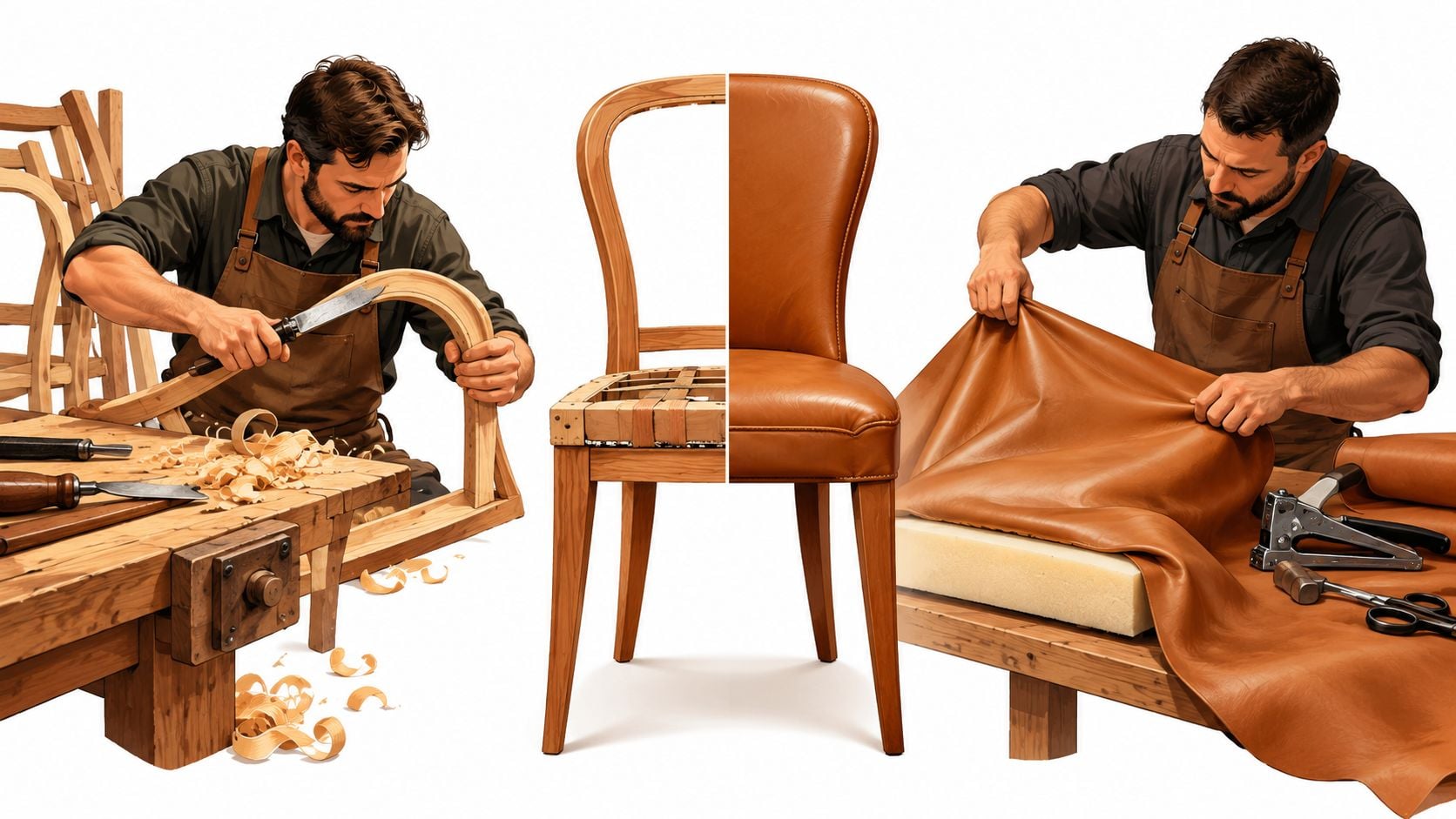
Upholstered seating brings together two specialized crafts. Chairmaking creates the frame, legs, rails, joints, and stability. Upholstery adds padding, a textile or leather cover, and the tactile comfort that makes a wooden structure welcoming. Research from the Smithsonian Rhode Island Furniture Archive documents at least 16 chairmakers and 9 upholsterers working in Newport between 1730 and 1790, with upholstered-seating production recorded as early as 1733. Those records show that the relationship between frame construction and upholstery has deep roots in organized furniture craftsmanship.
What the upholstery conceals
A plush seat can make a weak frame feel acceptable during a short sit test. Repeated movement tells a different story. Dining chairs receive downward force, sideways movement, and pressure at the front rail as people sit, shift, and stand. The covering may remain attractive while a loose joint begins to make a small click.
Amish hand-crafted furniture places attention on material integrity and time-honored joinery. Solid North American hardwoods such as cherry, oak, and maple provide a substantial foundation, while techniques such as dovetailing and mortise-and-tenon construction connect the frame more deliberately than many mass-produced alternatives. Testing of solid-wood furniture joints found that open mortise-and-tenon joints produced the highest ultimate bending strength among the joint types evaluated within each wood species, while a separate mechanical comparison found mortise-and-tenon joints stronger than dowel joints in the study. The mortise-and-tenon construction guide offers a useful visual reference for this hidden part of chair quality.
Practical rule: A chair shouldn't be judged by the softness of its cushion until the frame, joints, and attachment points have earned confidence.
A better showroom conversation
A knowledgeable local furniture specialist asks more than whether the color matches the room. The conversation should include:
- Frame material: Is the load-bearing structure solid wood, and which species does the maker use?
- Joint design: How are the rails and legs connected, and are joints reinforced for repeated movement?
- Cushion construction: Can the cushion be replaced or refreshed rather than forcing the entire chair into disposal?
- Cover attachment: Are seams neat, even, and properly tensioned around corners and edges?
- Future service: Can the chair be professionally reupholstered if the household design changes?
An upholstered chair shifts from a temporary purchase to a functional legacy. The visible fabric creates the first impression, but the frame determines whether the chair can remain part of a dining room through changing meals, homes, and generations.
Selecting Fabric Versus Leather for Your Dining Room
Fabric and leather solve different household problems. A woven textile can bring color, pattern, and a softer visual texture to the room. The buttery feel of top-grain leather creates a smooth, substantial surface that can develop character with use. Neither covering should be selected by appearance alone.
Fabric performance depends on fiber composition, weave, cover construction, cleaning code, and exposure. A buyer comparing upholstery samples should request the full specification sheet rather than accepting an isolated “high durability” description. The upholstery materials guide can help organize that conversation around real household conditions.
Reading abrasion ratings correctly
North American specifications commonly use the Wyzenbeek double-rub test, while European specifications commonly use Martindale cycles. The methods use different motions and abradants, so their numbers aren't interchangeable. For frequently used dining chairs, practical guidance generally places the procurement range at 15,000 to 30,000 Wyzenbeek double rubs in upholstery durability guidance. Another industry reference describes approximately 12,000 to 20,000 double rubs as generally adequate for medium-use household seating when the test method is Wyzenbeek.
Those figures screen for abrasion. They don't predict stain resistance, fading, pilling, snagging, seam slippage, or the effect of cleaning chemicals. A high rating can't compensate for a fragile weave, poor seam construction, or a chair placed in strong sunlight.
Fabric and leather comparison
| Covering | Everyday strength | Maintenance question | Design character |
|---|---|---|---|
| Woven fabric | Broad range of textures and patterns, with performance depending on fiber and weave | Is the cleaning code water-based, solvent-only, or vacuum-only? | Warm, layered, and adaptable |
| Treated performance fabric | Spill response may be simpler, depending on the treatment and manufacturer instructions | What chemicals are permitted, and are added treatments important to household priorities? | Practical without sacrificing color choice |
| Top-grain leather | Smooth surface with a rich hand and clear material presence | What care products and cleaning methods does the manufacturer permit? | Tailored, durable-looking, and capable of aging gracefully |
Safety belongs in the material decision
Upholstery choice also has safety implications. U.S. Consumer Product Safety Commission research found that chairs covered predominantly with thermoplastic fabrics such as polyester, polypropylene, or nylon were much less likely to ignite from cigarettes, while leather, vinyl-coated fabrics, and wool were described as resistant to cigarette ignition. In the historical test data summarized by the agency, approximately 1.5% of test cigarettes resulted in ignition for furniture covered with thermoplastic fabrics in the CPSC report.
The same report estimated upholstered furniture broadly as the first item ignited in an average of 4,500 U.S. residential fires annually, causing approximately 440 fire deaths each year. These figures concern upholstered furniture generally, not dining chairs specifically. Household smoking practices, fabric composition, cover construction, and applicable fire-safety requirements should all be part of a responsible selection.
A practical choice balances spill response, abrasion, appearance, comfort, safety, and repairability. A family that values an expressive woven fabric may accept more careful maintenance. Another household may prefer leather for its smooth surface. The right covering is the one that performs reliably under the table where it will live.
Ergonomics and Seat Geometry for Comfort
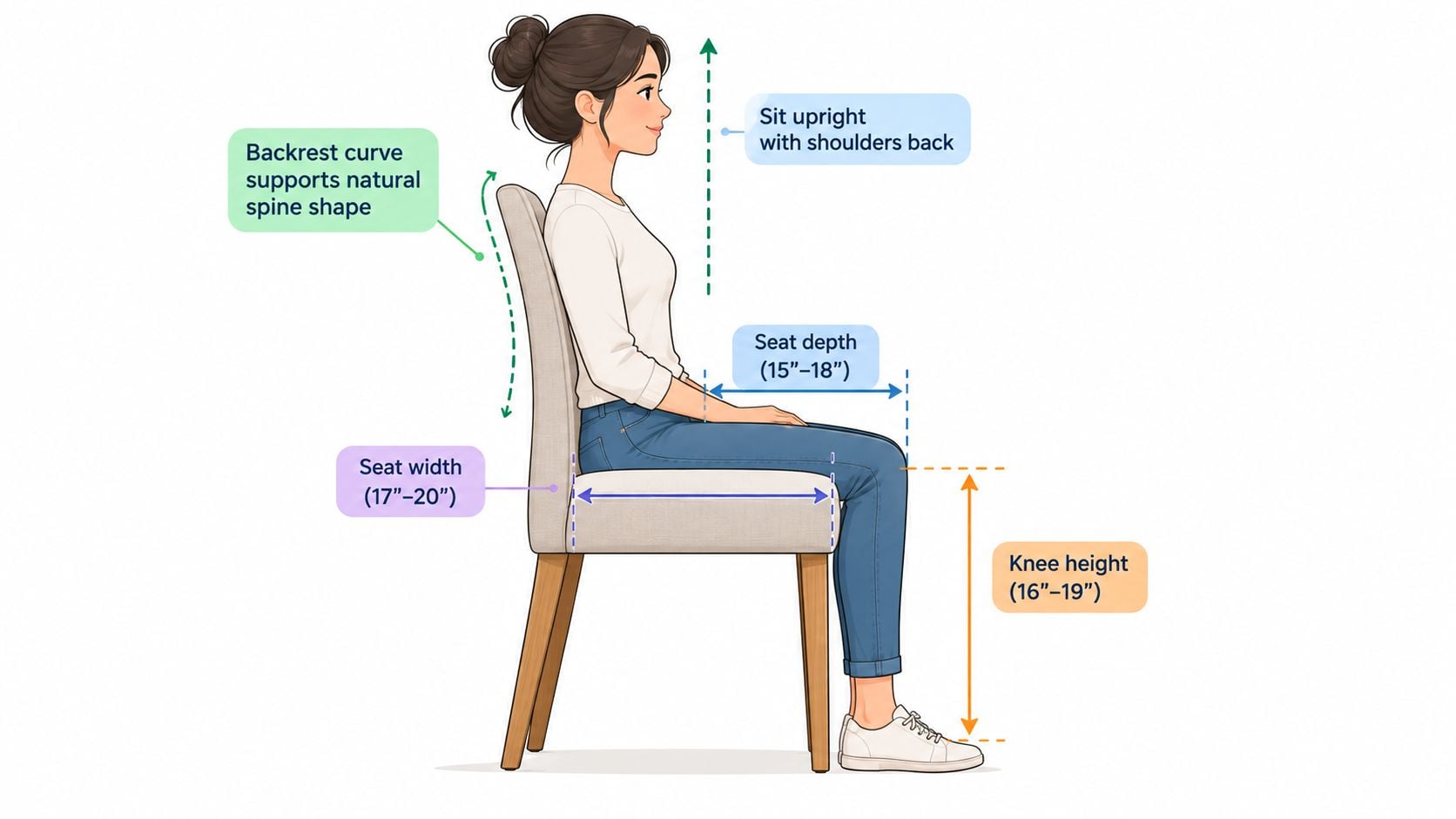
A soft cushion doesn't automatically create an ergonomic chair. Comfort depends on how the seat supports the thighs, how the back guides the torso, and whether the chair fits the table and the person using it.
Cornell ergonomics guidance places a typical clothed-person seat width at approximately 20 to 22 inches, or 51 to 56 centimeters, which provides lateral room without making the chair unnecessarily wide for the table in its sitting guidance. The useful measurement is the clear sitting area, not the outside width of the frame. Padding, arms, side rails, and curved upholstery can reduce usable space.
Height, depth, and the lower legs
Seat height should be compared with popliteal height, the distance from the floor to the underside of the knee. One ergonomic design study places optimal seat height between 88% and 95% of the user's popliteal height in its analysis of seat-height relationships. A seat that's too high can leave the feet unsupported and create pressure beneath the thighs. A seat that's too low can alter posture and make the tabletop feel awkwardly high.
Seat depth creates a different compromise. Excessive depth may prevent a shorter diner from reaching the backrest while keeping both feet grounded. Insufficient depth can reduce thigh support for a taller diner. During a showroom sit test, the knees should remain free of hard pressure, the feet should rest flat, and the back should make contact without forcing the sitter to slide forward.
Arms and table clearance
Armchairs can provide welcome support during a long meal, especially for guests who benefit from assistance when entering or leaving a seat. They also create a practical problem: the arms must slide beneath the table apron. A chair can fit by width yet fail by arm height, leaving it permanently pulled away from the table.
A comparison at the actual table should check:
- Usable width: Does the seat accommodate the intended body sizes without squeezing?
- Seat depth: Is there thigh support without pressure behind the knees?
- Seat height: Do feet remain flat and knees stay near a comfortable angle?
- Back angle: Does the back support relaxed dining rather than force a rigid posture?
- Arm clearance: Can the chair move fully beneath the apron?
- Entry and exit: Can older or mobility-limited guests sit down and rise without twisting?
The ergonomic seating solutions resource reflects the same principle used in careful furniture planning: dimensions should serve real bodies, not just a product photograph. Comfort after a long meal can't be determined by abrasion testing or visual proportion. It requires the table, chair, and intended user to be evaluated together.
Exploring Customization and Bespoke Options
In-stock is just the beginning. A dining chair that looks close to the desired style may still have the wrong seat height, fabric hand, leg profile, or arm configuration. Made-to-order furniture gives the household a chance to solve those details before the chair enters the room.
A bespoke selection works best when the buyer follows a clear sequence rather than choosing a finish first.
Start with the room
Measure the dining table, including the underside of the apron, then measure the available space around each seating position. Record the table shape, the number of everyday seats, and whether additional chairs will be used when the table expands. Armchairs require special attention because the arms can limit both table clearance and the usable space between neighboring seats.
The showroom sample should be placed beside a table with a similar height. A beautiful chair that works at one table may feel cramped or disconnected at another.
Fit the person
Next, record the popliteal height of the people who use the chairs most often. The measurement should guide seat height, while seat depth and width should be checked against body proportions. If several household members differ substantially in size, a design consultation can identify a compromise, alternate chair styles, or a seating arrangement that gives priority to the people who spend the most time at the table.
Custom sizing isn't limited to dining. Stressless seating, available through the Ann Arbor showroom, uses Small, Medium, and Large options to support a more personalized fit in recliners. That same fit-first thinking improves dining furniture decisions, even when the chair itself remains within standard dimensions.
Build the visual language
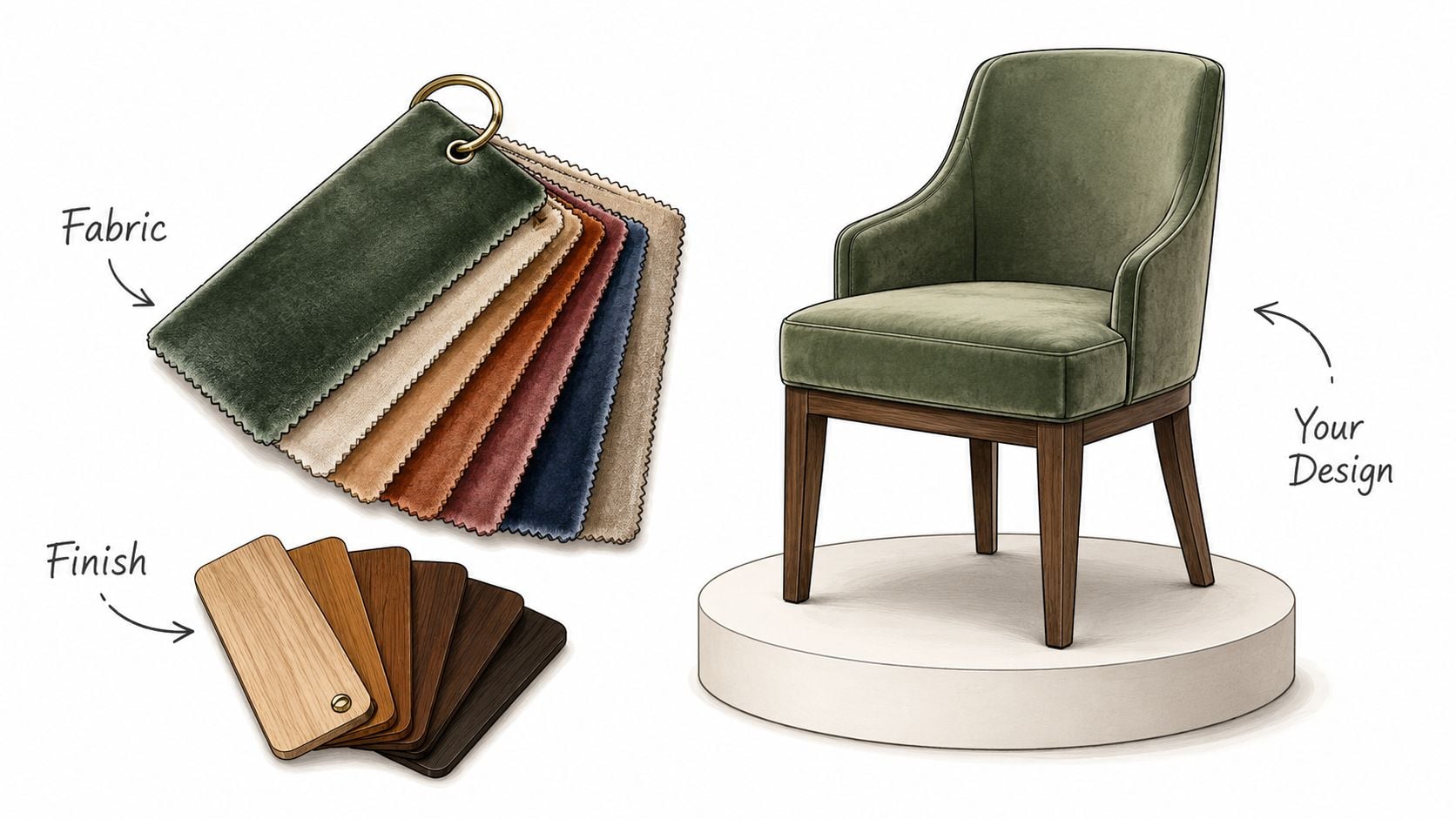
Canadel made-to-order programs allow a dining plan to move beyond a single showroom configuration. The selection can include leg styles, table edges, wood finishes, distress levels, fabrics, and upholstery configurations, creating a coordinated interior design rather than a collection of disconnected pieces. The custom upholstered dining chairs selection shows how upholstery can be treated as part of the architecture of the room.
A useful sample review includes:
- Wood finish: Does it complement existing flooring, cabinetry, or a solid cherry table?
- Fabric or leather: Does the surface feel inviting under the hand and suit the household's cleaning habits?
- Profile: Does the chair have enough visual weight for the table without crowding the room?
- Configuration: Will side chairs, armchairs, or a bench create the best movement around the table?
- Future service: Can the cushion or covering be replaced when the room evolves?
Customization isn't decoration added after construction. It is a way to align ergonomics, material integrity, and appearance before an investment becomes difficult to change.
Sustainable Choices and Indoor Air Quality
A chair that resists every spill isn't automatically the healthiest or most sustainable choice. Stain resistance may come from treatments that affect household exposure, cleaning chemistry, repair options, and what happens to the chair at the end of its useful life.
A 2025 sustainability white paper recommends considering low-VOC-certified foam, natural latex, and fabrics without added flame-retardant or stain-guard chemicals when evaluating lower-emission upholstery.pdf). Those materials don't eliminate every maintenance challenge, but they give households a more complete decision than the simple label of “performance fabric.”
Four material questions
Untreated natural fibers can offer a familiar hand and a straightforward material story, but food spills may require quicker attention. Certified low-VOC materials address emissions more directly, while treated performance fabrics may simplify cleaning at the cost of additional chemical treatment. Leather offers a distinct surface and can be maintained differently from a woven textile, yet its production and eventual disposal deserve consideration as part of the full lifecycle.
Before approving a fabric or cushion, the buyer should ask:
- What is certified: Does the foam carry a low-VOC certification, and is the certification documented?
- What is treated: Does the fabric include stain-guard or flame-retardant chemistry?
- What can be repaired: Is the cushion foam replaceable, and can a professional reupholster the cover?
- What can be cleaned: Which cleaning chemistry does the manufacturer permit?
- What happens later: Can the frame remain in use if the cover wears out?
Health-conscious choice: The easiest chair to wipe clean isn't necessarily the best choice for every household. Material disclosure, ventilation, repairability, and maintenance should be considered together.
Families with children, allergies, or limited ventilation may want to explore broader guidance on reducing indoor pollutants at home. The conversation belongs beside the fabric swatches, not after delivery, because cushion chemistry and cover treatments are difficult to evaluate once the chair is already in the dining room.
Sustainable purchasing also favors longevity over replacement. A hand-crafted solid wood frame with a replaceable cushion or professionally serviceable cover can remain useful through a change in color palette. The sustainable wood furniture collection supports that broader approach, where bespoke living means choosing materials that can continue serving the household rather than treating the whole chair as disposable when one component needs attention.
Investing in Heirloom-Quality Local Furniture
The strongest argument for quality upholstered dining table chairs isn't a momentary impression in the showroom. It is the cost-per-year logic of choosing a frame, covering, and fit that can remain useful for a long time.
A mass-produced chair may offer visual appeal with limited information about its hidden structure. An heirloom-quality chair invites closer questions. What wood carries the load? How are the rails joined? Can the covering be renewed? Does the seat remain comfortable for the people who gather around the table? Those questions turn furniture from a decorative purchase into a considered household asset.
Material integrity has a daily feel
Solid cherry has a warm, changing tone. Oak brings a clear grain and a grounded presence. Maple can feel clean and substantial under the hand. These woods aren't interchangeable with thin surface treatments because the material continues through the structure, allowing craftsmanship to be assessed as more than a finish.
The most useful inspection points include:
- Joint movement: A frame should feel stable when a sitter shifts naturally.
- Rail connection: The front and side rails should support repeated sitting without a loose response.
- Seat support: The cushion should distribute pressure rather than collapse at the edges.
- Seam work: Piping, corners, and attachment points should look even and deliberate.
- Serviceability: A replaceable cushion or recoverable frame extends the chair's practical life.
For Southeast Michigan households, local guidance adds value because a furniture professional can evaluate the chair beside the table, not just from an isolated product image. Since 1957, Tyner Furniture has served the community from its Ann Arbor base, with a South State St. showroom where homeowners can compare upholstery, wood finishes, dining configurations, and ergonomic seating in person. Its range extends from the Home Office to Outdoor Spaces, making it possible to consider the dining room as part of a coordinated home rather than a separate purchase.

Value includes support after selection
High-quality furniture becomes easier to justify when the purchase process includes clear specifications and practical support. Special Financing, subject to credit approval, can help households plan for a made-to-order purchase, while the Low Price Promise keeps value and competitive market positioning part of the conversation. Financing availability and terms can change, so the current details should be confirmed before an order is placed.
The more important calculation is still ownership over time. A chair with sound joinery, replaceable components, and a covering matched to daily use can support family meals, holiday gatherings, homework, and conversations without demanding replacement at the first sign of wear. That is the difference between buying a set of seats and acquiring an heirloom dining environment.
The American-made dining chairs collection gives homeowners another starting point for examining construction, upholstery, and design together. A local legacy doesn't replace careful measurement, but it gives the buyer a place to ask better questions and make the decision with real materials under consideration.
Tyner Furniture offers upholstered dining chairs with fabric or leather options, made-to-order configurations, and guidance for coordinating dining furniture with the wider home. Visit the Ann Arbor showroom for a proper sit test at the South State St. location, or browse the online Quick Specs for special orders through Tyner Furniture.