Mortise and Tenon Construction Your Guide to Heirloom Value

The first time a family leans on a dining table and feels it give a little, the room changes. Chairs shift, glasses rattle, and everyone notices that the piece meant to gather people has turned into a reminder of how short-lived some furniture really is. In a good home, the better table doesn't announce itself with flashy details. It announces itself by staying quiet, staying square, and holding steady year after year.
That quiet confidence usually comes from mortise and tenon construction, one of the oldest ways woodworkers have joined solid wood. The same basic idea has carried furniture, frames, doors, and boats across centuries, because the joint is simple, sturdy, and honest. For shoppers in Ann Arbor and across Southeast Michigan, that matters, because lasting value isn't just about how a piece looks on delivery day, it's about how it lives in the house over time, and what the cost-per-year of ownership really becomes. A local legacy that's been serving the community since 1957 should speak in those terms, with craftsmanship that feels like an investment, not a compromise.
One useful outside perspective on lasting construction comes from how DK Fabrications builds durable furniture, where durability is treated as a design choice, not an afterthought. That mindset fits the way thoughtful buyers should read a showroom floor. The same attention to structure shows up in American-made solid wood furniture, where the point isn't novelty, it's heirloom value.
The Unseen Strength in Your Forever Furniture
A wobbly table can look fine in a showroom and still feel wrong at home. The difference usually shows up when a chair is pulled out, a casserole is set down, or kids lean on the edge during a holiday meal. In that moment, the buyer doesn't care about marketing language, they care about whether the piece feels grounded.
Why solid joinery feels different
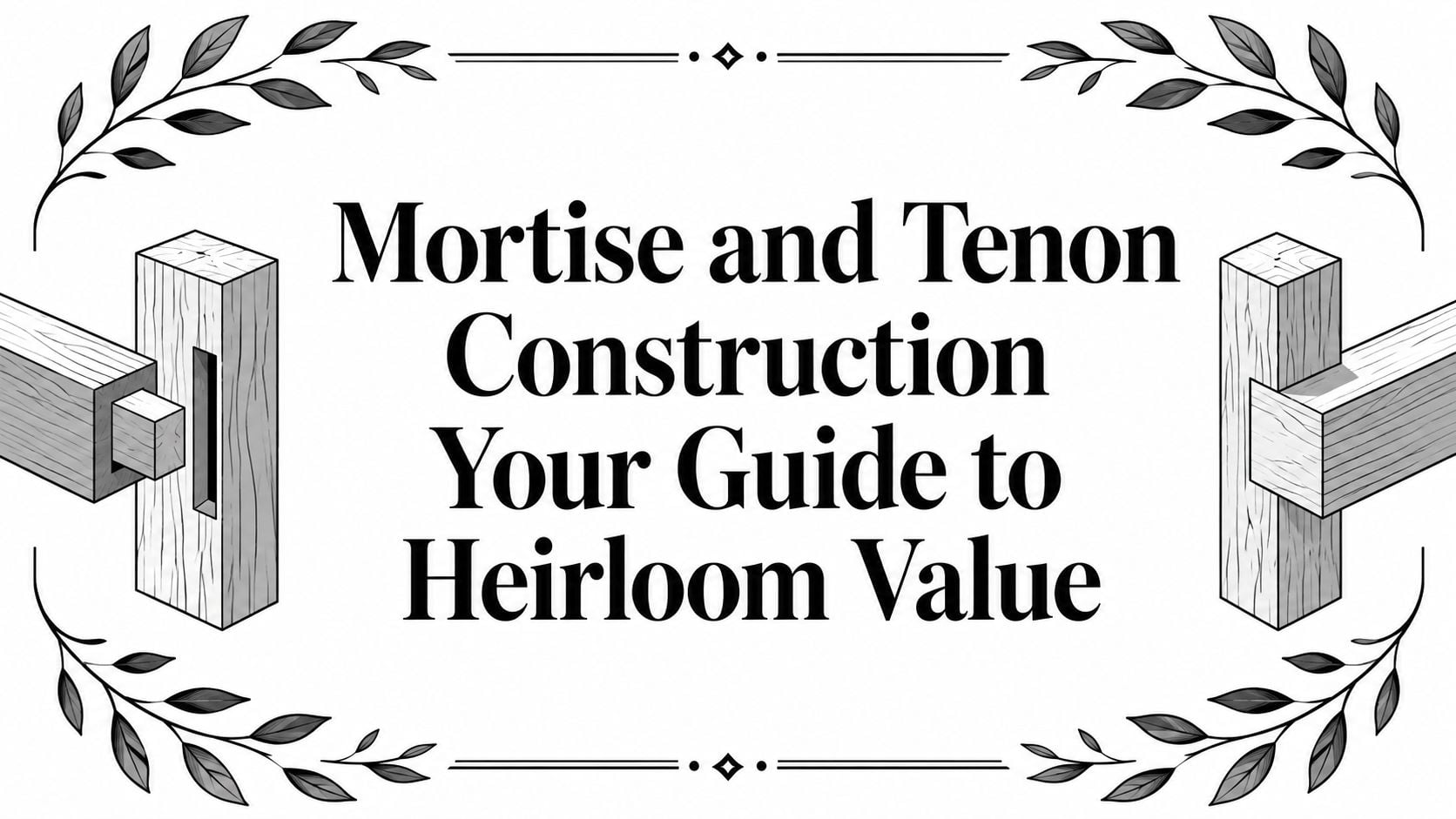
Mortise and tenon construction gives furniture that grounded feeling because the parts fit together like they belong there. A mortise is the opening, a tenon is the projecting tongue, and the two lock into one another with purpose rather than pressure alone. That's why a well-made dining table, bed frame, or chair can feel calm under use instead of nervous under load.
Practical rule: if a piece feels steady when someone shifts weight, that steadiness usually starts with what's hidden inside the frame.
In family-owned furniture stores, that hidden structure matters more than surface polish. A table with beautiful finish work but weak frame joins can disappoint quickly, while a hand-crafted piece built around solid wood and careful joinery keeps earning trust. For buyers in Ann Arbor who want a piece to serve as a heirloom, the real question isn't “Does it look good today?” It's “Will it still feel right after years of dinners, homework, and holiday hosting?”
The best part is that strong construction doesn't have to feel mysterious. It just has to be consistent. When shoppers compare solid wood frames to mass-produced alternatives, they're often comparing calm confidence to the kind of looseness that starts small and becomes obvious later. That's why a trusted showroom experience should help people feel the difference with their hands, not just read about it on a tag.
For a deeper look at build quality and longevity, Tyner's solid wood furniture page is a helpful companion to the showroom conversation.
What Is a Mortise and Tenon Joint
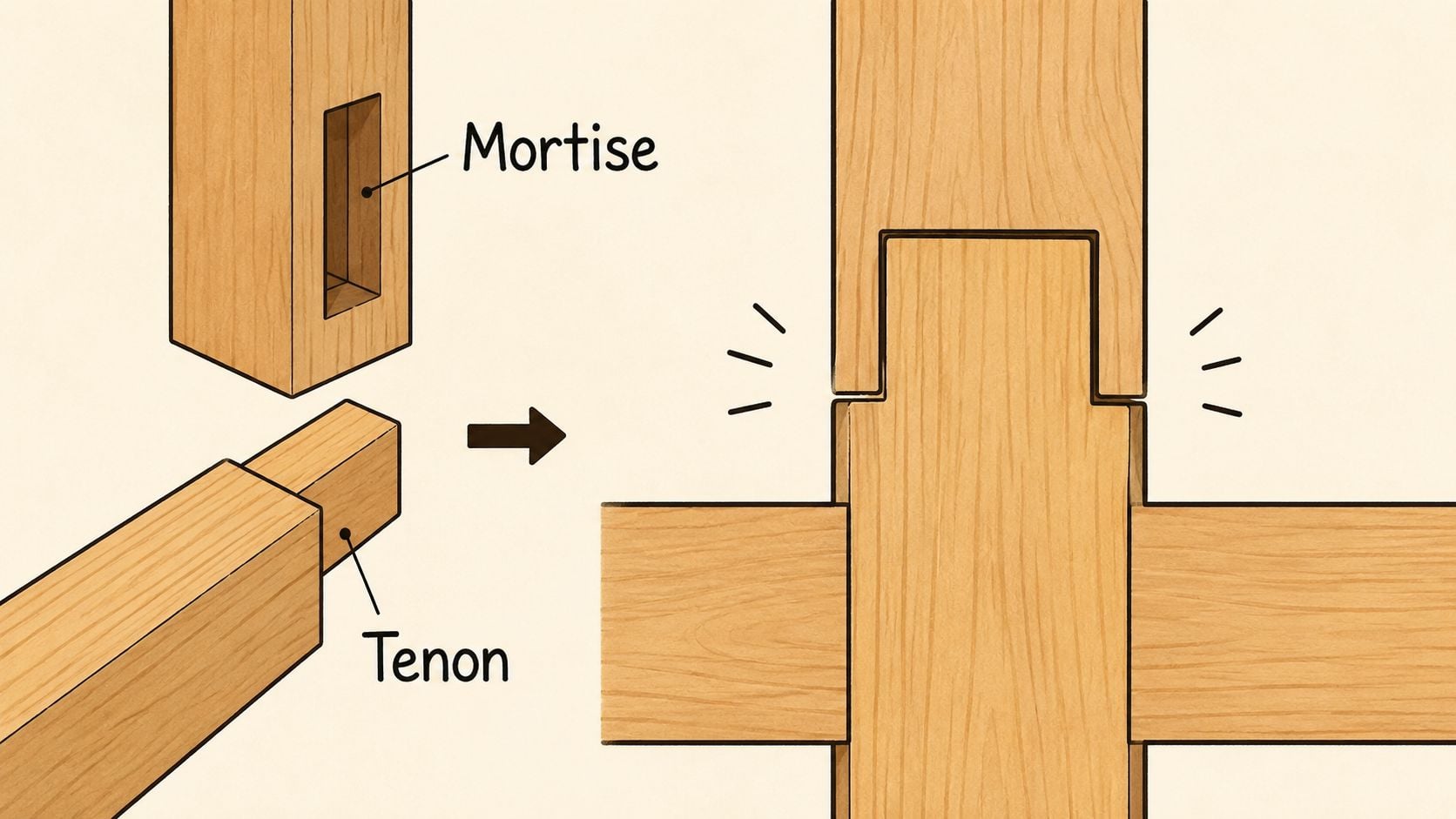
At its simplest, this joint is a lock-and-key arrangement in wood. One board carries a cutout, the other carries a matching tongue, and the two fit together so the frame holds its shape instead of relying on surface fasteners alone. That straightforward geometry is why the technique has stayed relevant for so long.
The two parts that matter
A mortise-and-tenon joint has two named parts, the mortise and the tenon. The mortise is a hole or slot cut into one piece of wood, and the tenon is the projecting tongue on the other piece. The joint is commonly used at roughly 90 degrees and may be held with glue, pins, wedges, or friction. Study.com's overview of mortise-tenon construction gives that basic definition clearly, and it's exactly the kind of simple structure shoppers should learn to recognize.
The connection is akin to two parts of a puzzle that don't just touch, they interlock. A table apron meeting a leg, or a rail meeting a stile, needs more than a surface bond if it's going to stay square through daily use. That's where the joint earns its reputation.
The most reassuring joints don't draw attention to themselves. They disappear into the frame and let the furniture do its job.
A buyer doesn't need to become a woodworker to appreciate that logic. The useful takeaway is that mortise and tenon construction signals intent. It says the maker expected the piece to be used hard, moved carefully, and passed along rather than replaced at the first sign of stress. In a home where furniture is part of daily life, that's a meaningful difference.
For shoppers comparing dining pieces, custom solid wood dining tables offer a practical place to see how this kind of joinery supports both beauty and everyday durability.
A Legacy of Strength Proven Over Millennia
Mortise and tenon construction didn't appear because of a modern trend. It's one of the oldest woodworking techniques known, with evidence placing it in ancient Egyptian furniture around 3000 BCE and in Neolithic Europe over 7,000 years ago. The Khufu ship, dating to about 2500 BCE, used pegged mortise-and-tenon joints to fasten planks without nails, which shows how capable the method already was in large, load-bearing work. The historical summary of mortise and tenon joinery captures that longevity well.
Why age matters to a furniture buyer
Old methods survive because they keep solving real problems. Wood moves, seasons change, and frames take load in ways that weaker assembly methods don't handle gracefully. A technique that has stayed useful through thousands of years has already passed a long stress test, and that matters when the goal is to buy once and enjoy for decades.
This is why many shoppers talk about heirloom furniture with a different tone than they use for ordinary household pieces. An heirloom isn't just attractive, it's structurally confident enough to remain useful through changing households and changing tastes. The joinery underneath the finish is a big part of that confidence.
For anyone restoring older pieces, restoring antique furniture is a useful way to think about how traditional construction and careful repair can preserve value rather than erase it. That same respect for original structure is what makes solid wood furniture feel timeless in the first place.
Good craftsmanship is patient craftsmanship. It doesn't chase shortcuts that save a little effort today and cost a lot of stability later.
In an Ann Arbor showroom, that history isn't abstract. It shows up in the language used about craftsmanship, in the weight of a frame, and in the quiet assurance that a piece was made to belong in a home for the long run. That's the kind of legacy buyers in Southeast Michigan are really choosing when they invest in solid wood.
For regional shoppers comparing styles and construction, Amish furniture in Michigan gives a useful local lens on why tradition still matters.
Why This Joint Creates Lasting Value
The reason mortise and tenon construction gets so much respect is simple. It helps furniture resist the kind of sideways wobble called racking, where a frame starts to lean out of square under everyday use. A properly built joint stays snug, and that snugness is what keeps a chair from feeling loose and a table from developing that frustrating side-to-side sway.
What a structurally sound fit looks like
Expert carpentry guidance recommends a tenon that slides together with hand pressure and shows zero lateral play. Glue belongs on the mortise walls and tenon cheeks, because that's where the working bond lives, and the result is a joint that stays square and resists loosening over time. The Carpenter's Guide explains that relationship directly, and it's one of the clearest ways to judge true quality.
That matters because weak assembly methods often depend too much on small fasteners or surface connections. They may hold for a while, but they don't create the same broad, stable contact between parts. Mortise and tenon construction spreads the load through the wood itself, which is a better match for the way solid wood behaves in daily life.
Here's the practical value lesson for the buyer:
- Less wobble over time. A well-fit frame keeps its shape longer and feels steadier during normal use.
- Better behavior under load. Chairs, beds, and tables stay more reassuring when the joints are doing real structural work.
- Stronger long-term value. A piece that lasts well usually has a better cost-per-year than furniture that needs to be replaced sooner.
- Cleaner living in solid wood homes. The joint works with wood movement instead of pretending wood never changes.
The point isn't that every piece must be overbuilt. The point is that quality furniture should be built in a way that respects stress, movement, and repeated use. That's what makes it feel calm rather than fragile.
For a helpful comparison point, Tyner's best solid wood furniture brands page can support a buyer who wants to understand what separates durable craftsmanship from furniture that only looks finished.
Spotting True Craftsmanship in Our Ann Arbor Showroom
The best way to judge joinery is still to stand in front of the piece and feel it. A solid cherry table has a different presence than a light, hollow-feeling substitute, and a maple bed frame with tight corners looks and feels deliberate in a way that flimsy veneers rarely do. The eye notices the finish first, but the hand usually tells the truth.

What to look for in a solid wood piece
A careful shopper can spot quality by paying attention to a few visible cues. Mortise and tenon construction often shows up in the clean meeting of rails and legs, in the way the frame stays square, and in the overall sense that the piece was built as one coherent structure instead of as a collection of attached panels.
- Solid Wood Integrity: Solid cherry, oak, and maple feel substantial in a way that veneers can't imitate.
- Tight Corners: Neat intersections often signal that the maker cared about frame accuracy and assembly.
- Finish That Fits the Wood: A well-chosen stain should enhance the grain, not hide weak construction.
- Made-to-order Flexibility: Bespoke finishes and configurations can turn a strong frame into a piece that fits a specific room and style.
A key appeal of hand-crafted furniture is that the structure and the style work together. That's why shoppers interested in interior design often like pieces that can be customized from the ground up. In-stock is only the beginning, because true bespoke work can often adapt wood species, finish, and layout to match the home rather than forcing the home to adapt to the furniture.
For people drawn to calm seasonal styling, a guide to winter white cottagecore living can be a useful visual reference when thinking about how warm woods and soft finishes create a lived-in, inviting room.
A strong frame gives the designer more freedom, because the piece can be chosen for proportion and character instead of being chosen only for survival.
That combination, solid wood plus thoughtful customization, is what makes a dining room or bedroom feel curated rather than assembled. It's also where the difference between mass-produced and hand-crafted furniture becomes easiest to understand. One is built to fill space, the other is built to hold meaning.
Understanding Variations in Hand-Crafted Furniture
Not every mortise and tenon joint looks the same, and that's part of the charm. Skilled makers choose different forms depending on whether the piece should appear continuous, show its structure, or support a particular design goal. The joint isn't just hidden engineering, it can also be part of the visual language of the furniture.
Why some joints stay hidden
A blind or stopped tenon is used when the maker wants a cleaner exterior line. Woodworking guidance in the provided sources says hidden mortises should penetrate about halfway into a stile, and another source says to leave the tenon about 1/16 inch short of the end wall so it doesn't bottom out before the shoulders seat. In the same guidance, the tenon thickness is about 1/3 to 1/2 of the mortised member's thickness. Kreg's mortise-and-tenon guidance gives those proportions in a way that helps buyers understand why some pieces look so well integrated.
That hidden approach often suits cabinet doors, bed rails, and other pieces where the maker wants the focus on grain and proportion. The craftsmanship is still there, it's just doing its job quietly.
Why some joints are allowed to show
A visible tenon can become a design feature. In some pieces, the maker leaves the joint proud or expressive because the exposed structure adds character and a sense of honesty. Buyers who appreciate hand-crafted work often notice that this kind of detail feels intentional rather than decorative for decoration's sake.
A thoughtful showroom comparison can reveal that these variations aren't random. They reflect choices about strength, appearance, and how the furniture will live in the room. A dining table can feel formal, rustic, or contemporary depending on how those joints are treated, even before the finish is chosen.
For shoppers who want the material itself to guide the look, choosing the right hardwood for longevity and style offers a helpful next step. The wood species, the joinery, and the finish all work together, and that's where bespoke furniture starts to feel personal instead of generic.
Your Questions on Investing in Quality Furniture
Why does furniture with this joinery cost more?
Because the maker spends more time fitting parts accurately and building a frame that's meant to last. That extra care shows up in stability, in the feel of the piece, and in the longer cost-per-year that buyers often appreciate once they've lived with it for a while. Special Financing can help spread out the purchase, and a Low Price Promise helps keep the value conversation grounded in actual market value rather than in sticker shock.
How can a shopper spot good joinery?
Look for tight corners, square frames, and a piece that feels steady when gently moved. A good mortise and tenon joint should assemble with hand pressure and not feel loose from side to side, because play in the frame usually becomes obvious during everyday use. If the furniture is solid wood, the structure should feel reassuring even before the finish gets a second glance.
Is this type of furniture repairable?
Often, yes. Solid wood construction is more serviceable than many mass-produced alternatives because the parts are wood, not a disposable shell. That doesn't mean every repair is simple, but it does mean the underlying material has a better chance of being maintained, adjusted, and preserved over time.
What should a careful buyer do next?
A visit to the South State St. showroom in Ann Arbor helps answer questions that photos can't. A good sit test makes the difference between appearance and real comfort obvious, especially for dining chairs, bedroom pieces, and ergonomic seating. For special orders, browsing the online Quick Specs can also help narrow choices before the visit.
A CTA for Tyner Furniture. Visit the Ann Arbor showroom on South State St. for a sit test, or browse the online Quick Specs to explore special orders, custom finishes, and made-to-order pieces that are built to live beautifully for years.