Budget Friendly Home Decor That Lasts a Lifetime

A lot of homes in Ann Arbor and across Southeast Michigan sit in that frustrating middle ground. The room needs help, the budget is real, and every search result seems to offer either disposable accents or a full-room makeover that doesn't match everyday life. That's usually where decorating gets expensive, not because the first purchase costs too much, but because the wrong purchases have to be replaced.
Good budget friendly home decor starts with a different question. Not “What costs the least today?” but “What will still look right, function well, and earn its keep years from now?” That shift matters in a home office, a dining room, a first apartment, or a forever home. It matters whether someone is choosing a reading chair, a bedroom foundation, or finishing touches for outdoor spaces.
Since 1957, trusted local guidance in Southeast Michigan has always come back to the same principle. A beautiful room doesn't need to be filled all at once. It needs a plan, a few durable anchors, and enough flexibility to make the space feel personal. That approach leaves room for bespoke choices, ergonomic comfort, hand-crafted quality, and smart value instead of regret.
Table of Contents
- Rethinking Budget Decor Beyond the Price Tag
- The Foundation of a Smart Decor Budget
- The Art of Mixing Investment Pieces with Affordable Finds
- Making Heirloom Quality Accessible Today
- High-Impact Personalization on a Small Budget
- Designer Styling Tricks to Elevate Your Space
Rethinking Budget Decor Beyond the Price Tag
Overspending on home decor doesn't typically stem from a love for excess. It often occurs because a room feels unfinished, and low upfront prices seem like the fastest fix. The trouble is that a low ticket price and good value aren't the same thing.
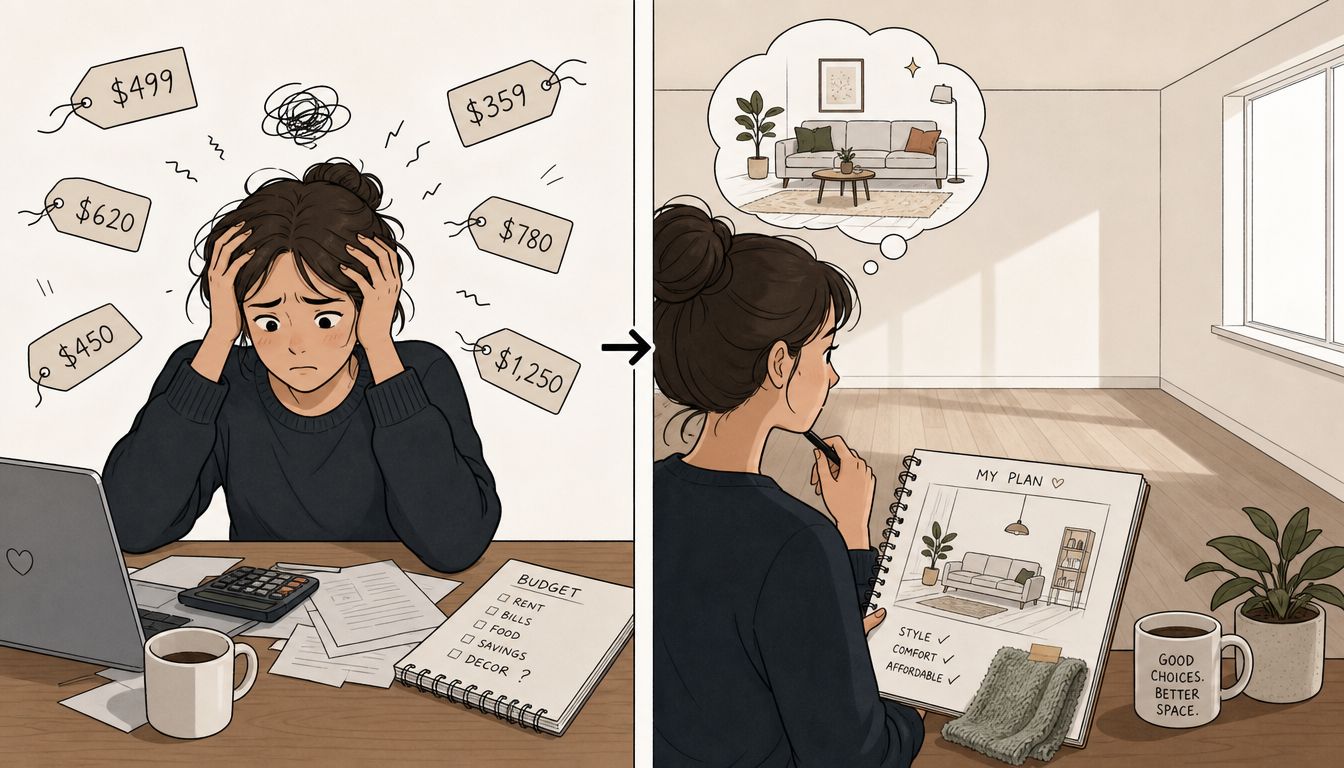
The better lens is cost per year. A dining chair that wobbles, a veneer top that peels, or a sofa that loses support too quickly can turn an “affordable” room into a repeat-purchase cycle. A durable piece costs more upfront, but it often costs less over the life of the home.
The broader market is huge and still growing. The global home decor market is projected to reach USD 1,299.88 billion by 2034, according to Fortune Business Insights home decor market projections. At the same time, the same verified dataset notes a shift in behavior: 58% of homeowners now prioritize “buying better, less often,” yet only 12% of budget decor articles address that desire for longevity. That gap explains why so much advice feels off. It talks about price, but not staying power.
Cost per year changes buying decisions
A smart budget doesn't treat every object equally. It puts more money where wear, comfort, and visual weight are highest.
- High-use seating: The chair used every evening needs support, durability, and fabric or leather that ages gracefully.
- Dining surfaces: Tables take impact, heat, spills, and constant cleaning. Material integrity matters.
- Bedroom foundations: Bed frames, dressers, and nightstands should feel stable, not hollow or temporary.
- Accent layers: Pillows, art, greenery, and baskets can be more flexible because they're easier to change.
Practical rule: Spend for structure. Save on accessories.
That mindset also fits today's style direction. In 2026, decor trends lean toward warm minimalism, natural textures, and thoughtful updates rather than constant replacement, as described in affordable home decor trends for 2026. Wood, cotton, linen, and sustainable choices work especially well because they don't look dated after one season.
In a local showroom setting on South State St., this often becomes obvious the moment someone touches materials in person. The buttery feel of top-grain leather, the weight of solid cherry wood, and the steadiness of a hand-crafted drawer change the conversation. Budget friendly home decor isn't about buying less quality. It's about buying fewer mistakes.
The Foundation of a Smart Decor Budget
The room should be planned before anything gets ordered. That's what prevents the classic budget errors: a sectional that blocks the walkway, a table that's too small for the room, or a dresser that fits the wall but not the traffic flow.
Start with function before style
Every room needs a job description. A living room might need to handle reading, television, conversation, and an occasional overnight guest. A dining room might also be homework central. A home office might need storage, ergonomic seating, and lighting that works in all seasons.
A quick planning list helps:
- Name the room's top use. If the room serves two purposes, write both down.
- List the essentials. Seating count, storage needs, work surface, pet concerns, or kid-friendly durability.
- Identify the anchor piece. Usually that's the sofa, dining table, bed, or desk.
- Separate needs from finishing touches. A lamp may be essential. Decorative extras may wait.
For readers who want a practical companion resource, these budget-friendly decorating tips from Striped Circle pair well with a room-by-room planning approach.
Measure like a designer, not a guesser
Most costly mistakes happen with scale. A tape measure and a simple sketch solve more problems than impulse ever will.
Use this checklist before shopping:
- Wall lengths: Record each wall, not just the one where the furniture will sit.
- Openings: Measure doors, stair turns, elevators, and hall widths.
- Traffic paths: Leave comfortable space where people naturally walk.
- Window and vent locations: These affect bed placement, dining layout, and desk position.
- Rug and lighting notes: Mark where a room needs softness or a visual center.
Good rooms aren't crowded. They're edited before they're purchased.
A floor plan doesn't need drafting software. Painter's tape on the floor works. So does graph paper. What matters is proportion. In tighter Southeast Michigan homes, this step is especially helpful because older layouts often have charming proportions but less wasted space.
Prioritize the room with the biggest daily payoff
Not every room deserves first place in the budget. Start where the family spends the most time or where discomfort is most noticeable.
| Room type | Best first investment |
|---|---|
| Living room | Supportive seating with lasting upholstery |
| Dining room | Solid table with dependable joinery |
| Bedroom | Stable bed and quality storage |
| Home office | Ergonomic chair and functional desk |
That kind of prioritizing keeps budget friendly home decor from becoming random decor. It turns purchases into a sequence. Readers weighing big decisions can also use this smart furniture shopping guide to think through sizing, use, and timing before committing to a piece.
The strongest plans also leave room for customization later. In-stock can solve a need quickly, but it's often just the starting point. When a room needs a precise finish, fabric, or configuration, made-to-order options become part of a smarter budget, not an indulgence.
The Art of Mixing Investment Pieces with Affordable Finds
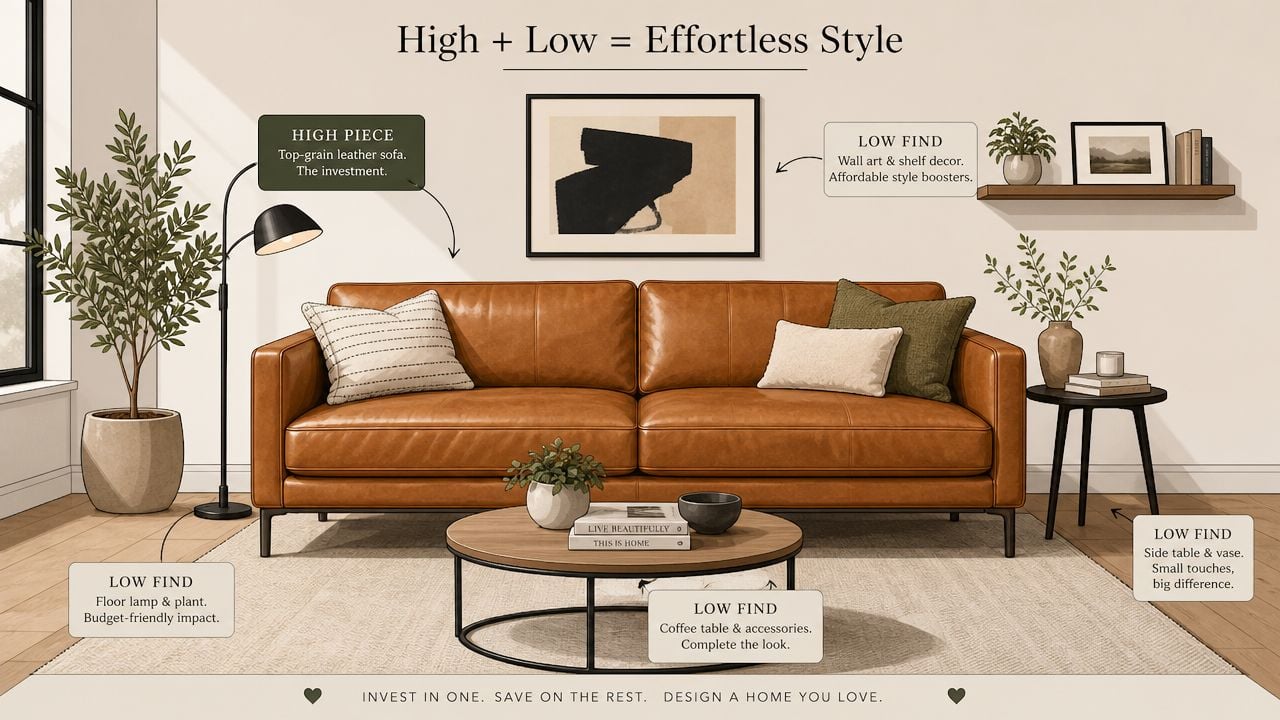
Professional rooms rarely rely on all-expensive or all-inexpensive furnishings. They use contrast. One or two investment pieces carry the visual and functional load, then more accessible layers make the room feel lived-in and personal.
Choose one anchor that carries the room
An anchor piece should do at least two things. It should perform well, and it should steady the whole design visually. In a living room, that might be a sofa or ergonomic recliner. In a dining room, it's often the table. In a bedroom, it may be the bed.
Solid wood earns its place here because structure matters. Verified product information states that Tyner's Amish hand-crafted furniture utilizes traditional joinery like dovetailing and mortise-and-tenon construction. Those methods have been proven over centuries and create joints with structural integrity that mass-produced alternatives often can't match. For buyers comparing long-term value, that matters more than surface styling alone.
The difference is tactile. Solid maple, oak, or cherry has real weight. Drawers glide with authority. A table edge feels substantial under the hand. Rooms read that stability immediately, even before anyone notices the accessories around it.
Use customization where it matters most
Customization isn't only for luxury projects. It's often the best way to avoid compromise. A made-to-order dining set can be sized for a tricky breakfast nook. A recliner can be selected for ergonomic fit rather than generic scale. A sectional can be configured to preserve the walkway instead of swallowing the room.
Two names matter here because they solve practical problems in different ways:
- Canadel: Useful when finish, shape, size, and dining configuration need to feel bespoke rather than close enough.
- Stressless: Important when comfort isn't negotiable and ergonomic sizing changes how a chair supports the body.
That's why in-stock should be viewed as the beginning, not the limit. If the room needs a specific leather tone, a washable fabric, a narrower depth, or a different base, customization protects the budget from a wrong decision.
The most affordable room is often the one that doesn't need correcting six months later.
Affordable finds still play an important role. Lamps, framed art, bowls, woven baskets, secondhand side tables, and textiles can soften the seriousness of a room. They add warmth without forcing every dollar into the headline piece. Seasonal inspiration can help here too. Readers looking for ways to mix timeless furniture with approachable updates may enjoy these end-of-season furniture finds to love year-round.
A simple high-low mix that works
- Invest in the table or seating. These pieces take use and dominate sightlines.
- Save on accents with texture. Linen-look pillows, pottery, greenery, and books do a lot of visual work.
- Keep finishes coherent. A room feels richer when woods, metals, and fabrics relate instead of competing.
- Let one piece lead. The anchor should make the room feel intentional before the accessories arrive.
That's the heart of budget friendly home decor that lasts. Put durability and craftsmanship where they count, then build character around them slowly.
Making Heirloom Quality Accessible Today
A lasting piece can still feel intimidating at first glance. That's normal. Furnishing a home isn't a casual errand, especially when the goal is durability instead of a temporary fix.
Think in monthly rhythm, not sticker shock
A long-term purchase becomes easier to evaluate when the conversation shifts from total price to household fit. If a family uses a dining set every day, or if a recliner supports someone through evening reading, recovery, or remote work, the value sits in repeated use over time.
That's where Special Financing can be a useful budgeting tool rather than a pressure point. Spreading a larger purchase into manageable payments can make a hand-crafted or made-to-order piece realistic now, while preserving the cost-per-year advantage that comes from buying something built to last. For shoppers considering solid wood specifically, this guide to American-made solid wood furniture helps clarify what makes material quality worth the step up.
Know where long-term value really comes from
A thoughtful purchase usually combines several forms of value at once:
- Material value: Solid hardwood wears differently than surface-applied substitutes.
- Construction value: Joinery and craftsmanship affect how a piece behaves after years of use.
- Design value: A classic profile stays relevant longer than trend-driven styling.
- Service value: Local guidance reduces ordering mistakes and helps match the piece to the room.
The Low Price Promise matters here too. It lowers the barrier to entry without reducing the focus on quality, which is exactly how a community business with roots back to 1957 should approach value. The point isn't to chase the lowest number on paper. It's to help households in Ann Arbor and across Southeast Michigan buy with confidence.
A good budget protects the home from regret, not just from spending.
This approach also works across the house. The same principles apply whether someone is shopping for the dining room, bedroom, home office, or outdoor spaces. Durable basics first. Bespoke details where they improve daily life. Financing and price protection used as planning tools, not shortcuts.
High-Impact Personalization on a Small Budget
Once the foundational pieces are settled, the room needs personality. That doesn't require a cart full of trendy accessories. It usually comes from a few careful updates that make the space feel collected, not copied.
Use finishes and fabric to make a room feel bespoke
Some of the most effective changes happen on surfaces that are already there. Verified data shows that painting walls and trim the same color in different sheens achieves a “custom” look with an 85% success rate, while reupholstering an existing bed frame has a 90% satisfaction rate. Those are strong reminders that a room can change dramatically without replacing every major item.
That kind of update works especially well when the palette is calm. Warm whites, earthy greens, muted clay tones, and natural wood finishes support the current preference for warm minimalism. The result feels quieter and more expensive because there's less visual noise.
A few personalization ideas consistently punch above their cost:
- Refresh a headboard or bed frame: New fabric can soften the whole bedroom.
- Repaint a side table or cabinet: Better color can tie older pieces to newer ones.
- Swap hardware thoughtfully: A small detail can change the perceived quality of a piece.
- Move art before buying art: The right scale often matters more than the subject.
For plant lovers, even greenery can become a low-cost layer of personality. This guide on how to expand your succulent collection for free offers a practical way to build out living decor without adding much cost.
Avoid the project pileup
Rooms go sideways when too many small upgrades start at once. One unfinished paint project makes another one feel urgent, and soon the home looks mid-decision instead of finished.
A better rhythm is simple:
- Choose one visible surface first.
- Finish it completely.
- Live with it for a few days.
- Decide what still needs attention.
That sequence protects the budget and the room's cohesion. It also helps separate meaningful updates from ideas that only looked appealing online. The best personalization supports everyday life. It doesn't create a maintenance burden.
Personal touches work best when they support the furniture, not compete with it.
Color can also come from textiles, art, and accessories rather than another painting project. That's especially useful for renters or anyone who wants flexibility. Readers exploring that route may find practical ideas in this guide on adding color to a home without painting.
Budget friendly home decor becomes far more convincing when it reflects the people living there. A recovered headboard, a repurposed table, a propagated plant, or a moved lamp often says more than a shelf full of new objects ever could.
Designer Styling Tricks to Elevate Your Space
The final layer is styling. This is where a room stops looking furnished and starts looking finished. Good styling doesn't mean adding more. It means arranging what's there so the eye understands the room.
Style surfaces with intention
Professional home stagers use the Group by Three vignette technique with a 92% success rate to make small spaces feel intentionally styled, according to Extra Space's staging guidance on the Group by Three technique. The rule is simple: place a large, medium, and small complementary object together on a surface.
That works on almost anything:
- Coffee table: Tray, candle, and small floral element
- Console: Lamp, framed art, and a bowl
- Nightstand: Book stack, compact vase, and personal object
- Dining sideboard: Tall branches, serving piece, and low sculptural accent
A styled surface also needs breathing room. If every item is meaningful, the room feels calm. If every item is shouting, nothing stands out. For more help with tabletop balance, this foolproof guide to a perfectly styled coffee table is worth bookmarking.
This visual can help spark ideas from a local furniture perspective.
Layer light, texture, and reflection
Rooms feel expensive when they engage more than one sense. A matte wall beside satin trim, the grain of wood under the hand, the softness of linen, and the glow from a lamp at dusk all make a space feel intentional.
Three finishing moves usually do the most work:
- Add varied lighting: A room needs more than overhead light. Table lamps and floor lamps create comfort.
- Bring in texture: Wood, cotton, linen, baskets, and pottery make a room feel grounded.
- Use mirrors carefully: Reflection expands light and can make a tighter room feel more open.
For homes with wood floors, decor choices often look better when they respond to the floor rather than fight it. This resource on decorating with hardwood floors offers helpful visual ideas for keeping furniture, rugs, and finishes in balance.
A polished room doesn't have to be full. It has to be coherent. That's why the strongest budget friendly home decor choices usually look restrained, tactile, and personal. They let the room breathe while giving every major piece a reason to be there.
A home should feel good to live in now and still make sense years from now. For shoppers in Ann Arbor and across Southeast Michigan who want that balance of comfort, craftsmanship, and value, Tyner Furniture is a practical next stop. Visit the South State St. showroom for a sit test, explore everything from the Home Office to Outdoor Spaces, and experience made-to-order options from Canadel and Stressless in person. For special orders, browse the online Quick Specs, ask about Special Financing and the Low Price Promise, and see how a local legacy that began in 1957 can help turn in-stock inspiration into a bespoke, heirloom-quality home.