Cherry vs Maple Furniture: Which Wood Fits Your Home

A dining table looks just right online, but the wood options turn a straightforward purchase into another decision. Cherry looks inviting and familiar. Maple looks bright and practical. For a household balancing family meals, workdays, pets, and a room's existing colors, choosing between them can feel surprisingly complicated.
The useful question in cherry vs maple furniture isn't which wood wins overall. It's whether a household prefers furniture that visibly gains character or furniture that better resists everyday dents. Both can make an excellent long-term investment when the construction suits the job.
Cherry and Maple Side by Side
A shopper runs a hand across a cherry dining chair, then across a maple tabletop. The cherry's color suggests warmth; the maple looks crisp and understated. Both surfaces can feel beautifully smooth, because the finish and sanding influence that first touch as much as the species.
Tyner Furniture's Ann Arbor roots go back to 1957, a local legacy built around helping households choose furniture for lasting use. Its guide to North American hardwoods provides useful context for comparing materials without treating one species as universally superior.
Cherry and maple at a glance
The hardness and density figures in this comparison come from Builderology's cherry and maple comparison, which lists black cherry at approximately 950 lbf and 35 lb/ft³, compared with hard maple at approximately 1,450 lbf and 44 lb/ft³ at 12% moisture content.
| Attribute | Cherry | Maple |
|---|---|---|
| Janka side hardness | About 950 lbf, black cherry | About 1,450 lbf, hard maple |
| Average density | About 35 lb/ft³ | About 44 lb/ft³ at 12% moisture |
| Freshly cut color | Pale pink to salmon | Creamy white to ivory |
| Color after years of light | Deepens to warm reddish-brown | Warms gently to light honey or amber |
| Grain and texture | Fine, uniform and close-grained | Fine, even and tight-grained |
Hardness describes resistance to indentation. Density helps explain weight, particularly when comparing similarly sized solid-wood pieces. Neither figure reveals whether a drawer runs smoothly or a chair joint will stay tight.
Freshly cut color is a starting point, not a delivery-day guarantee. Drying, storage, light exposure, and the selected finish all influence the furniture that arrives at home.
- Check the species: Hard maple and soft maple aren't interchangeable performance descriptions.
- Compare equivalent pieces: A substantial cherry table can weigh more than a smaller maple table.
- Separate wood from finish: A silky surface doesn't establish dent resistance or construction quality.
Cherry suits shoppers seeking warmth and evolving character. Maple suits those prioritizing a lighter appearance and greater dent resistance. Both are furniture hardwoods capable of lasting service; fit matters more than a simple quality ranking.
Durability and Room-by-Room Fit
Which wood holds up better to the way a household lives? For repeated knocks and concentrated pressure, hard maple has the advantage. For furniture where small marks are acceptable and appearance matters most, cherry remains a sensible choice.
The Janka test measures the force needed to embed a steel ball halfway into wood, as explained in Vinson Fine Furniture's species comparison. The U.S. Forest Products Laboratory's wood guide places hard maple about 52.6% harder than black cherry, a meaningful difference for heavily contacted surfaces.
Where greater hardness helps
Consider a dining table that doubles as a homework station. Plates slide, laptop corners land, and someone occasionally presses hard while writing. Maple offers more resistance to dents, although a desk pad, placemats, and a suitable finish still matter.
A dresser bumped by a vacuum cleaner presents a different problem from a chair with a loosening joint. Hardness helps with the former, not the latter. Likewise, pet claws can damage a finish even when the wood underneath is hard.
Weight deserves attention before delivery. Maple's denser construction can make a comparable solid-wood table more demanding to carry upstairs, turn through a landing, or reposition for guests. Table dimensions and removable components should be checked before an order is finalized.
Best wood by room and household
| Room or Household | Better Choice | Why |
|---|---|---|
| Dining table for daily family meals | Maple | Higher dent resistance on a heavily used top |
| Home office desk or work surface | Maple | Better resistance to indentation from equipment and daily handling |
| Formal dining room or heirloom piece | Cherry | Warm color and traditional character that deepen with age |
| Primary bedroom dresser or bed | Cherry | Warmth and patina suit a restful, traditional room |
| Bright, light contemporary living room | Maple | Preserves a pale appearance more readily |
| Home with young children or pets | Maple | Greater resistance to dents on high-contact surfaces |
| Entertainment or accent piece | Either | Finish, proportions, and room color can guide the decision |
These are starting points, not rules. A careful household can enjoy a cherry kitchen table, while a pale maple bed can feel perfectly restful.
Visible wear is also a design preference. Amanda Yoder Studio's comparison makes the useful distinction between high-abuse surfaces and furniture selected for warmth and developing patina. Small impressions on cherry may become acceptable signs of use rather than reasons to replace it.
That doesn't mean every scratch becomes attractive. A shallow mark and a torn finish are different problems, and neither species benefits from neglect.
Tyner Furniture sells Amish hand-crafted solid-wood furniture that's fully customizable. Compared with mass-produced alternatives, the useful inspection points are material integrity, properly fitted joinery, drawer construction, and how the piece accommodates wood movement, not a solid-wood label.
Most pieces can be customized to personal style and comfort. Canadel's Bespoke options offer thousands of combinations, allowing practical choices such as table shape and configuration to accompany the wood decision.
Pro-Tip: Hardness describes the wood, not the whole piece. Joinery, panel thickness, finish quality, and moisture control still determine how successfully furniture handles daily life.
How Each Wood Ages Over the Years
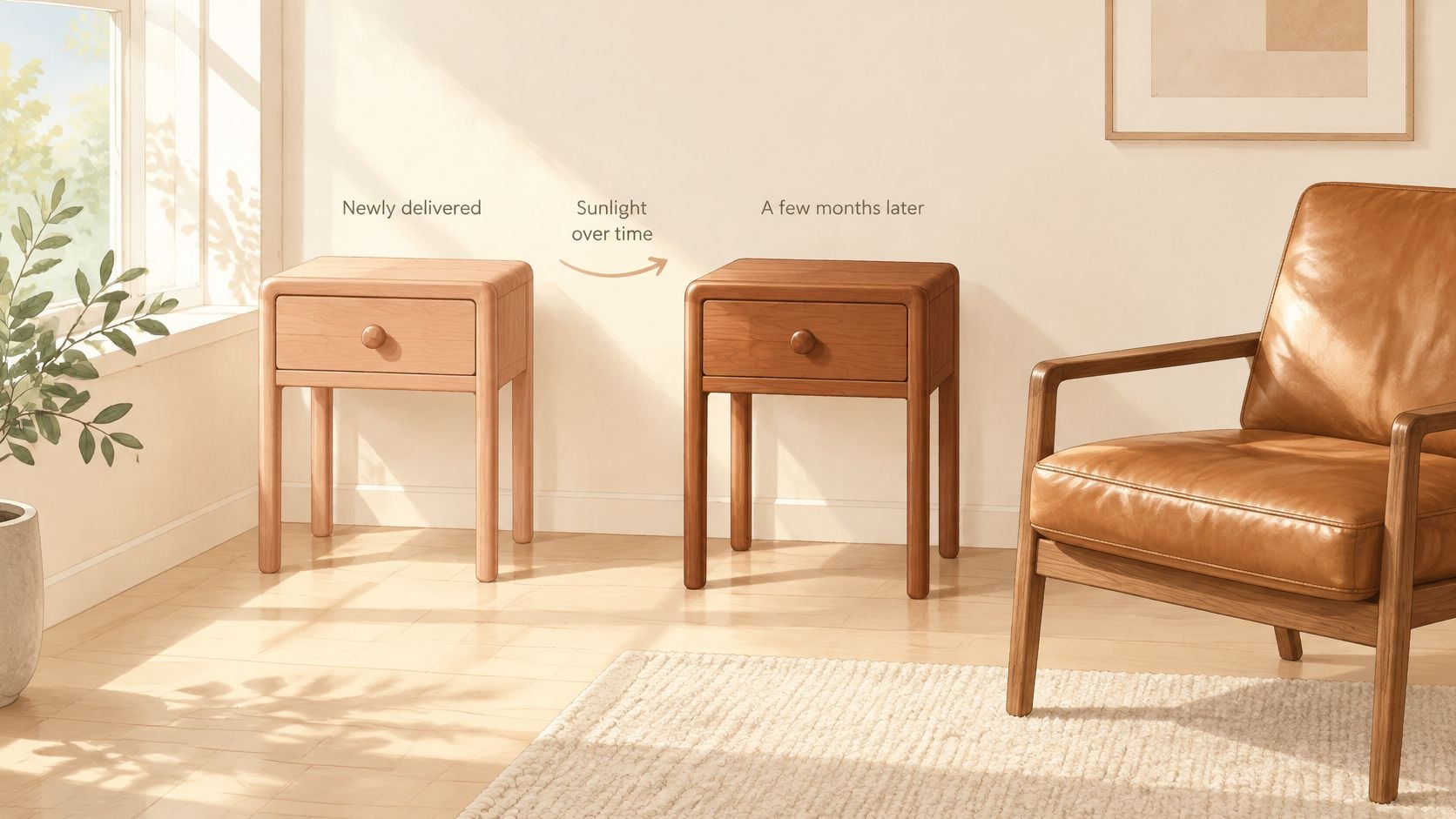
Consider a new cherry bedside table placed beside a bedroom window. Its starting color may be gently pink beneath a clear finish, although the wood may already have darkened before delivery. As daylight reaches the surface, the appearance grows richer rather than staying fixed.
According to Woodworking Clarity's cherry and maple guide, cherry's most dramatic color change generally occurs during the first several months, with additional mellowing possible for roughly five years. The same guide describes maple's subtler progression from creamy white or ivory toward light honey or amber.
Light changes the result
In a typical room, the window-side surface of a cherry chest may develop differently from the side facing a shaded corner. The result isn't a precise calendar effect. Exposure, finish, and the original boards all influence what happens.
A maple dining table presents another practical example. A leaf stored in a dark closet may not match the exposed tabletop perfectly when brought out for a gathering. The difference can be subtle, but shoppers who expect an exact match should discuss leaf storage and finish choices before ordering.
The explanation of why cherry darkens over time helps set expectations for matching new furniture with an established room.
- Compare samples at home: Morning daylight and evening lamps can make the same finish look different.
- Move decorative objects: Rotating lamps, trays, and centerpieces helps avoid sharply uneven exposure.
- Plan the placement: Window coverings can reduce strong direct sunlight without making a room feel closed off.
- Discuss the finish: A stain sample represents a finish on a particular board, not a promise that natural wood will remain unchanged.
The goal isn't to stop wood from looking like wood. It's to choose an aging pattern the household will enjoy. Aged cherry offers a glowing, reddish warmth; maple retains a clearer, quieter presence that supports a light interior.
Grain, Color and Style Character
Cherry has a long cabinetmaking heritage for good reason. The U.S. Forest Service's black cherry profile describes its value as a close-grained, workable furniture wood that finishes smoothly; the accompanying consumer findings place black cherry second overall for end-table tops and sugar maple fifth, with cherry receiving favorable responses for warmth, color, and natural appearance.
Those preferences aren't a universal design verdict. A homeowner furnishing a bright contemporary room may prefer maple's restraint to cherry's stronger color presence.
Match the wood to the room's palette
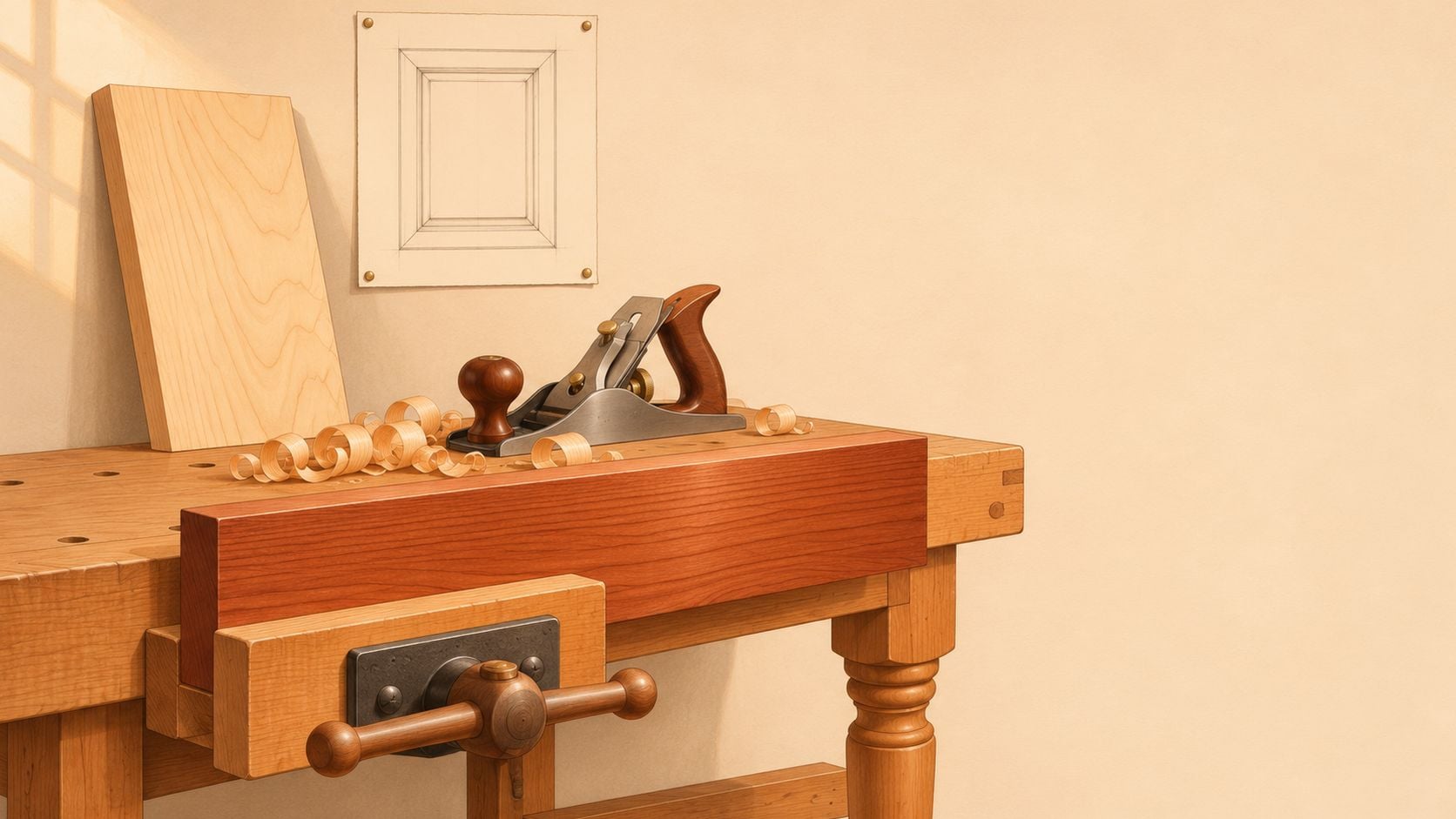
Cherry works especially well with brass hardware, cream linens, and deep green walls. Its understated grain allows the silhouette to remain visible without introducing the bold pattern associated with more open-grained woods. A satin finish can give a cherry top a soft sheen rather than a formal gloss.
Maple pairs comfortably with Scandinavian forms, modern farmhouse rooms, and pale textiles. Its fine figure keeps a large cabinet from looking visually busy, especially when the surrounding room already contains patterned rugs or upholstery.
For homeowners deciding between related decorating styles, Flawless Painting's style guide for North Atlanta homeowners offers a useful way to compare modern Americana and modern farmhouse palettes. The location differs, but the exercise of coordinating wood, wall color, and silhouette applies equally well to Southeast Michigan interiors.
Customization without disguising the material
Both woods accept stain, but stain doesn't erase the underlying species. Maple can be finished darker; cherry can receive lighter-looking specialty finishes, though a light finish won't turn its natural heartwood into maple. Physical samples matter more than color names.
The guide to wood stain colors helps narrow a palette before comparing actual boards. Made-to-order Amish pieces allow species, stain, and configuration to work together.
In-stock is just the beginning. Canadel offers customizable dining finishes and forms, while Stressless provides model-specific choices in upholstery, finishes, sizing, and configurations. Fabrics and Ergonomic fit belong to the seating decision, not the hardwood comparison, but both contribute to cohesive Interior design.
What Each Wood Costs Over Its Life
Cost-per-year is more useful than comparing purchase prices alone. A piece that remains comfortable, functional, and welcome in the room can offer better value than a lower-priced piece that gets replaced early. Species matters, but construction and continued enjoyment matter just as much.
Material pricing also needs careful interpretation. Different units and stages of production can make apparently conflicting prices entirely reasonable.
Reported 2025 wood prices
| Measure | Cherry | Maple |
|---|---|---|
| Retail hardwood per sq ft | $9.25 to $11.75, reported by Coloria Group in 2025 | $6.75 to $8.25, same retail listing |
| 4/4 lumber per board foot | $6.00, listed by Accio in 2025 | $7.25, hard maple in the same listing |
| Stumpage per MBF, northeastern Pennsylvania | $779 average for black cherry, based on three responses, in Penn State Extension's first-quarter 2025 report | No corresponding maple figure supplied in this comparison |
The retail listing places cherry above maple, while the lumber listing reverses that order. These aren't equivalent products measured in equivalent units. Stumpage concerns standing timber, not prepared boards or a finished dresser, so it isn't a useful shortcut to a showroom price.
Evaluate the finished investment
A finished furniture quote includes board selection, waste, machining, joinery, finishing, hardware, and labor. The guide to Amish furniture cost explains why craftsmanship belongs in the value discussion.
For a busy desk, greater dent resistance may reduce the desire for cosmetic restoration. For a cherry heirloom table, an owner's willingness to accept modest wear may keep the piece in service without unnecessary refinishing. Neither outcome is guaranteed by species alone.
A Sustainable buying approach starts with furniture that can remain useful, be maintained, and suit the household through changing rooms. Wood species alone doesn't establish responsible sourcing or environmental performance.
Long-term value check: Divide the total purchase price, including delivery and anticipated care, by the expected years of use. Compare realistic ownership plans rather than assuming either wood has a fixed lifespan.
Care, Refinishing and Repairs
Both woods benefit from the same uncomplicated routine: soft-cloth dusting, prompt spill removal, coasters, and placemats. Furniture should sit away from heating vents and strong direct sunlight. Seasonal indoor conditions matter because solid wood responds to changes in moisture.
For grime, a soft cloth barely dampened with a mild soap solution is a sensible starting point, followed by a clean damp wipe and immediate drying. The finish determines the maintenance product. Furniture wax may suit some surfaces, and maintenance oil belongs on compatible oil finishes, not automatically on lacquered or varnished furniture.
Match the repair to the damage
Light scratch: A matching wax repair marker can disguise a superficial line. A stain pen may help exposed wood, but excess pigment should be removed before it colors the surrounding finish.
White ring: Trapped moisture sometimes responds to gentle warmth through a cloth and a compatible mild polish. Heat can also soften or cloud a coating, so valuable furniture deserves professional assessment before experimentation.
Small dent: A professional may use controlled steam to raise compressed bare wood, followed by localized fine sanding. Steam isn't suitable for every coating and won't repair fibers that have been cut away.
Deep dent or worn finish: Professional refinishing is usually the safer route. Broad sanding can create a shallow hollow or change the appearance of an entire tabletop.
Cherry's workability can help with localized repairs, but its softer surface doesn't make every touch-up easier. Color matching an aged piece can be more demanding than filling a shallow scratch.
The guide to protecting wood furniture from scratches and stains supports prevention. For a broader decorative change, Hayes Painting and Decorating's explanation of softening orange pine with whitewash illustrates how a finish can alter a wood's appearance, but that pine treatment isn't a repair prescription for finished cherry or maple.
Care reminder: Keep a labeled stain sample and inspect the finish annually under consistent lighting. Test any compatible maintenance product on a concealed area first.
For a product already in the home, customers can call or email Tyner Furniture. If a component is defective, the store repairs or replaces that component rather than the entire product; the Ann Arbor showroom can explain the current policy applicable to the issue.
Confirm Your Choice in the Ann Arbor Showroom
Maple is the stronger starting point when dent resistance and a light, clean appearance lead the decision. Cherry is the natural candidate when warmth, traditional character, and an evolving surface matter more.
An in-person comparison should test more than color. At the South State St. showroom in Ann Arbor, shoppers can compare finishes under the same lighting, feel the weight of solid cherry components, and check whether a chair supports a comfortable sitting position. An attractive table still needs suitable legroom and chairs that work for daily meals.
Bring the room into the decision
A productive showroom visit starts with a small set of practical information:
- Room measurements: Include walkways, door openings, and the space needed to pull chairs out.
- Existing finishes: Bring flooring, paint, or fabric samples rather than relying entirely on phone photographs.
- Daily uses: Describe homework, remote work, entertaining, and the marks most likely to cause frustration.
- Comfort priorities: Check seat depth, back support, arm height, and ease of standing during a sit test.
The Ann Arbor furniture and mattress store serves Southeast Michigan households across Home Office, living, bedroom, dining, entertainment, and Outdoor Spaces. That breadth allows a wood selection to fit a coordinated home rather than an isolated purchase.
Make the purchase fit the plan
Tyner Furniture offers a Custom Order option for shoppers who need a different species, finish, or available configuration. Special Financing, subject to credit approval, can spread the purchase into manageable monthly payments, while the Low Price Promise matches a local competitor's lower price on the spot for the same product.
The final design step includes coordinated white-glove installation managed by the dedicated team. Delivery access deserves attention before ordering, especially for substantial tables, tall dressers, and rooms reached through narrow turns.
There's no need to select the hardest wood only because it scores higher, or the warmest wood because it carries an heirloom reputation. The better investment is the piece whose feel, construction, and appearance fit the household well enough to keep.
Tyner Furniture offers customizable solid-wood furniture and guidance for choosing cherry or maple around real household needs. Visit the Ann Arbor showroom on South State Street for a sit test and a side-by-side finish comparison, or browse the online Quick Specs to begin a special order.