Custom Wood Table Top Guide: From Specs to Heirloom

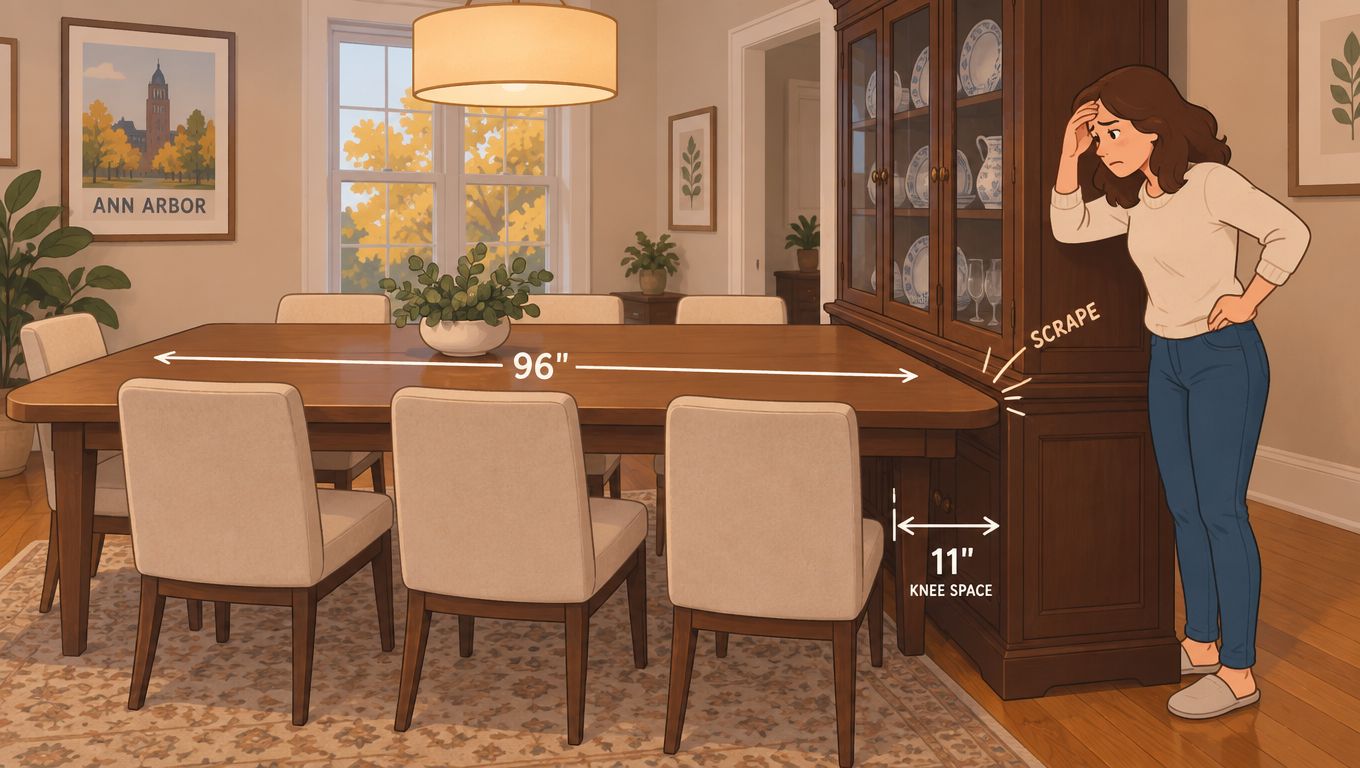
A homeowner in Ann Arbor can spend weeks choosing a stain, then discover that the finished table top crowds the china cabinet, traps knees against the base, or leaves too little room for chairs to move. That frustration usually starts before the wood is selected. A custom wood table top succeeds when its dimensions, base, seating plan, construction, and finish are considered as one design.
The right top can also preserve a sound pedestal or trestle instead of forcing a complete furniture replacement. For Southeast Michigan homeowners furnishing a dining room, home office, or mixed-use space, in-stock is just the beginning. Made-to-order options can extend to species, edge profile, finish, configuration, fabrics, and ergonomic seating through programs associated with Canadel and Stressless.
Why Order a Custom Wood Table Top in the First Place
A custom top isn't automatically better because it costs more. It earns its place when a standard size creates compromises that the household will notice every day. A 96-inch store-bought top might scrape a cabinet, overrun a walkway, or leave an awkward amount of knee room. A made-to-order top starts with the room and the base, not with a warehouse dimension.
Five decisions shape the order
Exact dimensions: The top should fit the room, preserve walkways, and align with the pedestal, trestle, or leg base. A top that looks generous in a showroom can feel oversized beside a buffet or doorway.
Species and grain direction: Oak, maple, walnut, and cherry remain popular because solid hardwood resists dents and holds fasteners better than softwoods or engineered panels. The grain also determines how scratches, light, and surrounding cabinetry read across the room. Guidance on American-made furniture materials and construction explains why solid hardwood, sound joinery, and repairability matter over a long service life.
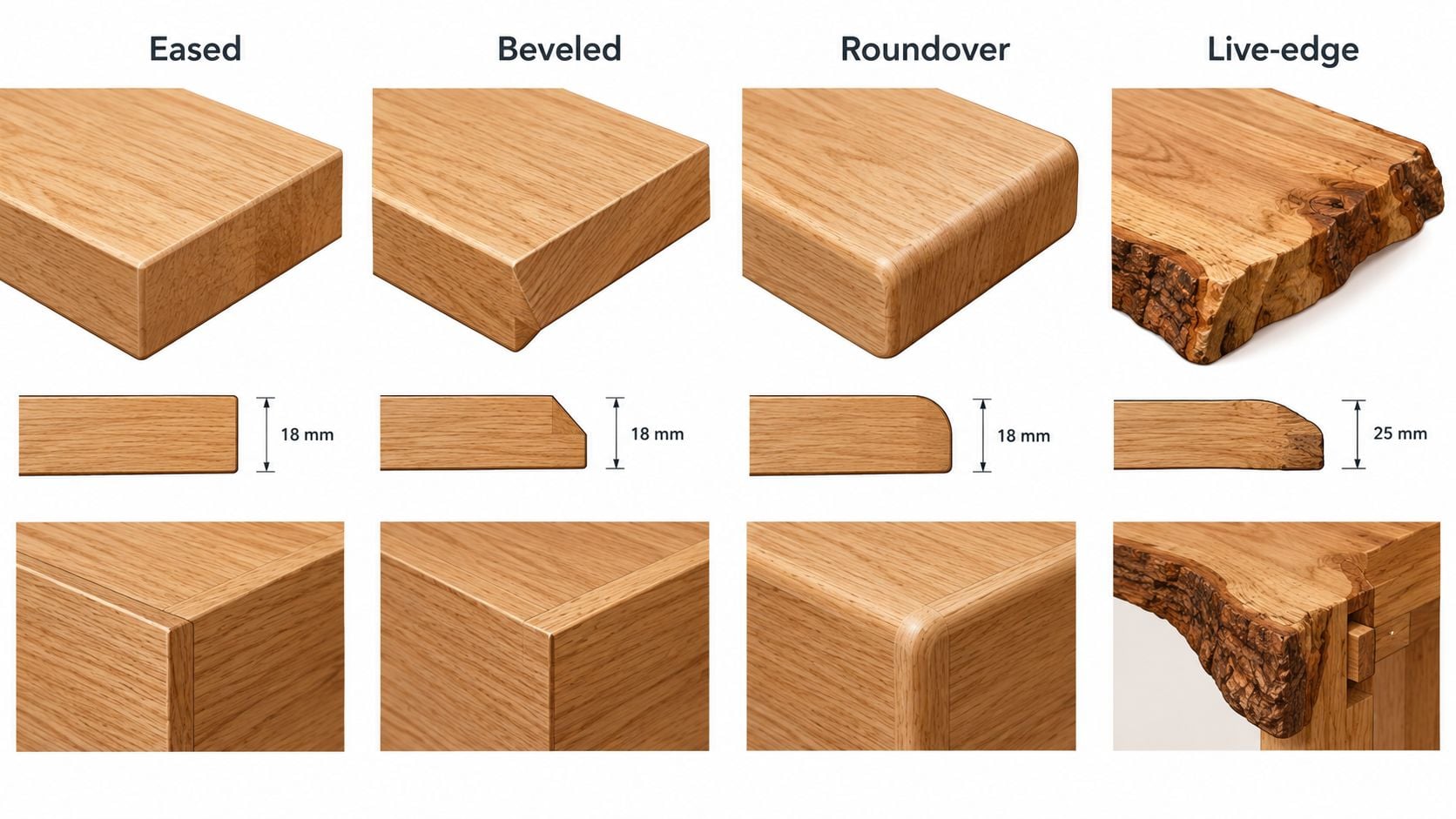
Edge profile and thickness: The edge is visible from a seated position and across the room. An eased edge feels approachable, a bevel adds definition, and a live edge makes the top a stronger visual statement. Thickness changes the furniture's presence, weight, and structural requirements.
Finish and household habits: A family that eats at the table every night needs a different surface strategy from a household using the table mainly for occasional entertaining. Film-forming finishes generally provide stronger resistance to abrasion, stains, and spills than penetrating oils or waxes, although no finish stops solid wood from moving.
Movement-friendly construction: Wood expands and contracts across the grain as humidity changes. A top needs fasteners, clips, or elongated holes that hold it securely while allowing that movement. Rigid cross-grain fastening can create cracking, cupping, or joint stress.
A new solid top on an existing base is often the most efficient route to a bespoke look. If the pedestal is stable and proportioned correctly, replacing only the surface can preserve its character while correcting the room fit. It also lets the buyer invest in the part of the table that receives the most visual and physical attention.
Showroom advice: A custom order should solve a room problem first and express a design preference second. The best-looking top is the one that still works when chairs are occupied, dishes are served, and people move around it.
A homeowner researching related built-in proportions can also consult the Jennifer Gilmer Kitchen & Bath guide, especially when a table shares visual space with an island, cabinetry, or an open-plan kitchen. The useful lesson is simple: dimensions should support circulation and function, not merely fill an available opening.
Measure the Room, the Base, and the Seating
The measuring process should happen in a fixed order. Start with the room, then document the base, then map the seating. Reversing that order often produces a top that fits the furniture but not the household's movement around it.
Start with the room
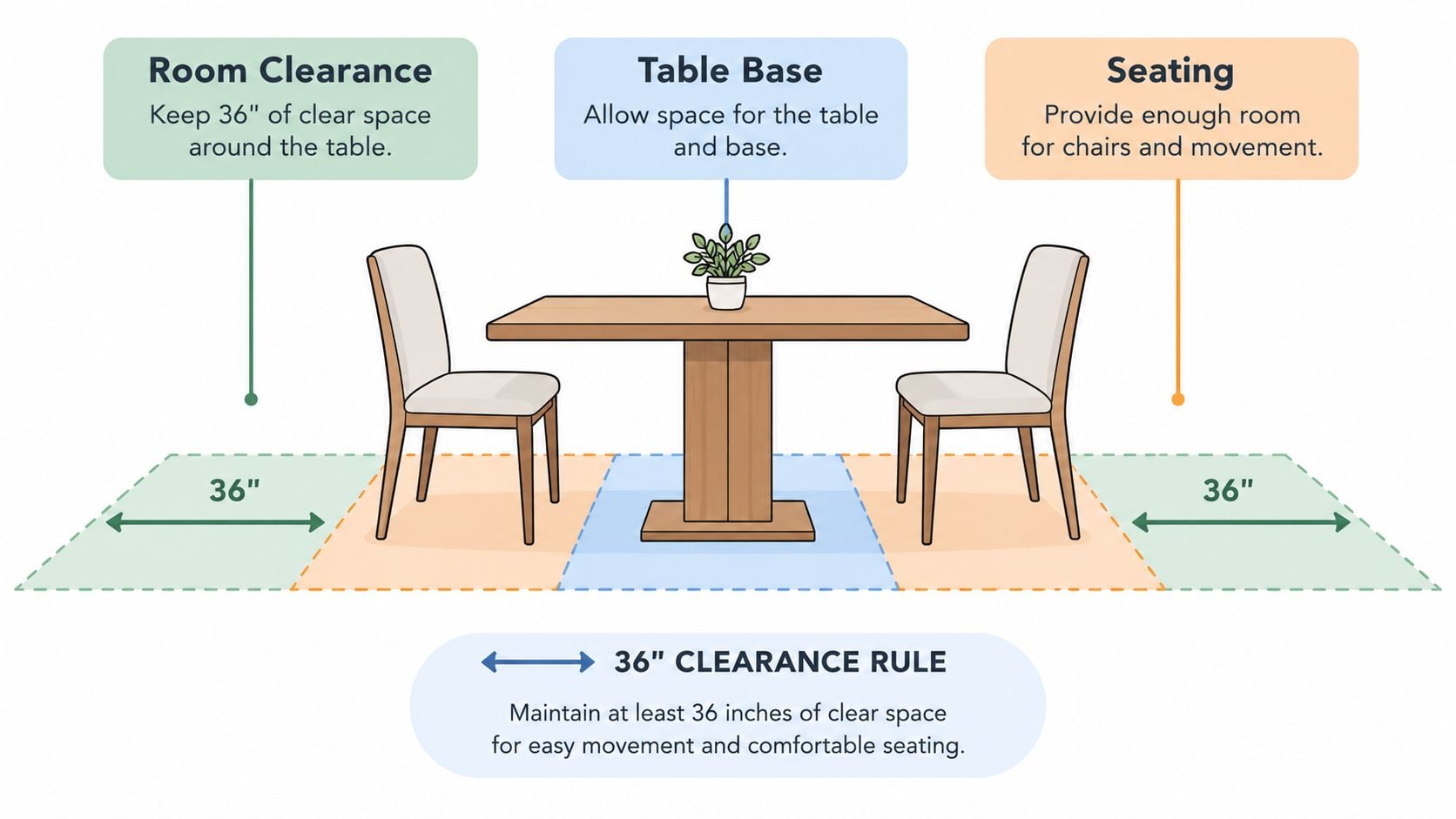
Measure the distance from the proposed table edge to walls, cabinets, buffets, and other fixed pieces. Mark the places where someone will pull out a chair, walk behind a seated person, or carry a serving dish through the room. A comfortable plan needs meaningful clearance on every active side, with extra breathing room wherever traffic passes behind chairs.
Use painter's tape on the floor to mark the proposed top. Leave the tape in place while household members walk around it and pull out the actual chairs. This quick test reveals problems that a drawing can hide, particularly near door swings, peninsula corners, and cabinet hardware.
The furniture measuring guide can help organize the room survey before a showroom consultation. Photos should show the full room, not only the intended table location.
Document the base before choosing the top
A replacement top needs more than the outside dimensions of a pedestal or trestle. Record:
- Top-plate dimensions: Measure the surface that contacts the underside of the top.
- Post and support locations: Note where the pedestal, trestle, or legs sit in relation to the center and ends.
- Existing mounting holes: Photograph holes and hardware, then measure their position from the edges.
- Corner-to-corner geometry: This matters especially for broad pedestals and angled trestles.
- Overhang on every side: Check how far the current top extends beyond the base and whether chairs can approach comfortably.
A new top can be drilled to match existing mounting points, or the workshop can specify figure-eight fasteners, clips, or a Z-clip arrangement. The important point is that the top should attach independently enough to move with seasonal humidity rather than being locked rigidly across the grain.
Plan seating before finalizing length
A useful baseline is to allow about 24 inches of table edge per person, with more space for a work-and-dining hybrid where laptops, papers, or broad place settings compete for elbow room. The exact result depends on chair width, armrests, table legs, and whether diners sit at the ends.
A 42-by-72-inch top is often discussed as a six-person arrangement without leaves and an eight-person arrangement with a 16-inch center leaf. Those dimensions are common planning examples, but they shouldn't be treated as a guarantee. A thick armchair, a trestle brace, or a pedestal that interrupts knee space can reduce practical capacity.
Solid wood also needs a humidity plan. Furniture stock intended for conditioned interiors is commonly targeted around 6% to 8% moisture content, while indoor relative humidity around 40% to 60% helps reduce stress from seasonal swelling and shrinkage, as explained in wood movement guidance. The table should be installed in a reasonably stable interior, and the mounting method should leave room for the top to breathe.
Choosing the Right Wood Species for Your Home
Species selection should follow the household, not a trend board. Oak, maple, cherry, and walnut each produce a different balance of hardness, grain movement, color, and visual warmth. The best choice is the one that makes daily wear look intentional while supporting the room's interior design.
Compare the surface and the grain
Maple has the hardest surface among these four choices and a tight grain that suits clean, restrained rooms. Its light color can make a dining area feel open, but a smooth pale surface may reveal small marks more clearly because there is less grain variation to disguise them.
Oak offers pronounced grain and a more active surface. It reads naturally in traditional, farmhouse, and transitional interiors, and its visual character can help minor marks blend into the overall pattern. Oak also remains a practical choice for a household that wants durability without the deeper color of walnut.
Cherry is softer than the other three species in this comparison, but it remains suitable for ordinary dining use when properly built and finished. Its defining feature is color development. Exposure to sunlight can deepen cherry noticeably, creating the warm patina associated with an heirloom table.
Walnut brings a chocolate tone and expressive figure. Depending on how the boards are cut, the grain can appear calm and cathedral-like or show stronger streaks and variation. Walnut usually carries a higher material premium because buyers are paying for both the species and the visual character.
The North American hardwood guide gives shoppers a useful starting point for comparing domestic species before looking at individual boards. The final decision should still be based on actual samples, because one board can look markedly different from another within the same species.
Wood Species Comparison for Custom Table Tops
| Species | Janka Hardness | Grain Character | Color Over Time | Best For |
|---|---|---|---|---|
| Oak | High relative durability | Open, pronounced, and character-rich | Generally develops a warmer, settled appearance | Busy dining rooms, traditional interiors, and households wanting grain that disguises minor wear |
| Hard maple | Highest surface hardness among these four | Tight, clean, and comparatively restrained | Usually remains light, with finish affecting warmth | Minimalist rooms, sleek interiors, and lighter visual palettes |
| Black cherry | Softer than oak, maple, and walnut, yet suitable for ordinary daily use | Smooth, refined, and understated | Darkens noticeably with sunlight and develops patina | Heirloom buyers who appreciate color change and aging |
| Walnut | Strong hardwood performance with a premium visual character | Chocolate-toned, ranging from calm cathedral grain to expressive streaks | Deepens and settles into a rich, warm appearance | Statement dining rooms, refined interiors, and buyers who want a darker top |
Families hosting frequent meals often lean toward oak or walnut because active grain can make small scratches less conspicuous. Buyers seeking a clean, light surface often prefer maple. Someone choosing for long-term patina rather than color stability may accept cherry's shift because the change becomes part of the table's story.
A sustainable, heirloom-minded choice also means selecting a top that can be refinished or repaired rather than replaced when its surface eventually shows years of use. That is where solid hardwood construction has an advantage over a thin decorative surface bonded to an engineered panel.
Edge Profiles, Thickness, and How the Top Is Built
The top carries more than plates and serving bowls. It establishes the visual scale of the base, determines how a person experiences the edge with a forearm, and transfers everyday loads into the support structure. A successful design balances appearance with the way solid wood moves.
Choose an edge people will live with
An eased edge removes the sharp corner without drawing attention to itself. It suits family tables and modern rooms because it feels comfortable against an arm and doesn't make every small ding look dramatic. A beveled edge creates a crisper shadow line and can make a substantial top appear lighter.
A roundover is softer and more traditional. It works well where children use the table or where the surrounding room already has curved furniture. A live edge preserves the natural contour of a slab, but it demands more attention to seating positions because the usable edge isn't uniform.
A Mission-style profile supports a stronger architectural expression and can coordinate with a substantial trestle or Arts and Crafts-inspired base. Sharp, formal profiles show precise craftsmanship, while softened profiles are more forgiving in active households.
Thickness has structural and visual consequences
Standard tops may be built in the 3/4-inch to 1-1/2-inch range, but the right choice depends on span, species, support placement, and the desired proportion. Tops exceeding 42 inches in length or width are commonly specified at at least 1 inch to reduce sag risk. A 44-by-72-inch top, for example, deserves a careful review of its support points rather than an automatic thin profile.
A thicker top adds visual weight and can make a modest base appear undersized. It also adds material cost and physical weight. A thinner top can look elegant, but it needs well-positioned support and a fastening plan that won't force the boards into an unnatural position.
Breadboard ends can help control the visual end grain on a wide top, provided they are attached with elongated holes or another movement-friendly method. The ends should not be treated as a rigid clamp across the entire width.
Joinery should serve the structure
Edge-glued boards form the foundation of many solid tops. Tongue-and-groove splines can help align boards during assembly, while butterfly keys can stabilize selected cracks or add a deliberate decorative detail. None of these techniques replaces proper drying, grain planning, and movement allowance.
Traditional joinery also matters in the base. Mortise-and-tenon construction creates strong connections at aprons and legs, while dovetailing resists separation in drawers and storage components. The mortise-and-tenon construction guide offers helpful context on why these methods are structural rather than ornamental.
The top should attach to the base with clips, tabletop fasteners, elongated holes, or a comparable system. That independent connection allows seasonal movement and makes future re-leveling or service more practical. A builder who focuses only on glue lines and finish but rigidly traps the top has missed the central engineering requirement.
Finishes That Survive Real Family Dinners
Finish choice should begin with the worst ordinary event in the household. That might be a hurried breakfast, a child's craft project, a serving dish set down too hot, or a red-wine spill during a long dinner. A surface that looks beautiful under showroom lighting but demands constant anxiety isn't the right finish.
Expert guidance generally favors film-forming finishes, including wiping polyurethane, for high-traffic dining surfaces because they provide stronger abrasion, stain, and spill resistance than penetrating oils or waxes. The finish moderates moisture exchange, but it cannot stop a solid wood top from expanding and contracting.
Finish Families Compared
| Finish Type | Spill Resistance | Spot Repair | Sheen Options | Best For |
|---|---|---|---|---|
| Conversion varnish or polyurethane | Strong resistance to routine spills, abrasion, and stains | Often requires broader refinishing when damage breaks the film | Satin through glossier options | Households prioritizing protection and easy cleanup |
| Penetrating oil or hardwax oil | Moderate protection with a natural surface feel | Usually more practical for localized maintenance | Matte and low-sheen appearances | Buyers who value touch, repairability, and visible wood character |
| Low-sheen wax topcoat | Limited compared with a film finish | Simple maintenance, but not a substitute for full surface protection | Soft matte and subdued sheen | Decorative or lower-traffic use where tactile feel leads |
Conversion varnish handles demanding dining conditions well, including exposure to spills and hot serving pieces, but scratches may appear as pale marks in the film and often require shop refinishing. Hardwax oils are easier to refresh locally. A light abrasion with a suitable pad and a fresh coat can restore a worn area without rebuilding the entire surface, provided the original finish system allows it.
Matte and satin sheens usually hide everyday wear better than gloss. Gloss reflects more light, so fine scratches, fingerprints, and uneven wear become easier to see. A showroom sample can also appear glossier than the final coat because lighting, viewing angle, and fresh application change the way the surface reflects.
Penetrating finishes need a full cure before the first major dinner. The shop should provide the actual care and cure schedule rather than relying on a generic label. Direct sunlight can also amber a film finish unevenly, so window placement and daily light exposure belong in the decision.
The tabletop finishes guide can help a buyer prepare questions about sheen, maintenance, and repair before approving a sample. Every side of the top should receive a comparable finish build-up. Uneven finishing can make one face exchange moisture faster than another and increase warp risk.
Lead Times, Budgeting, and What to Have Ready
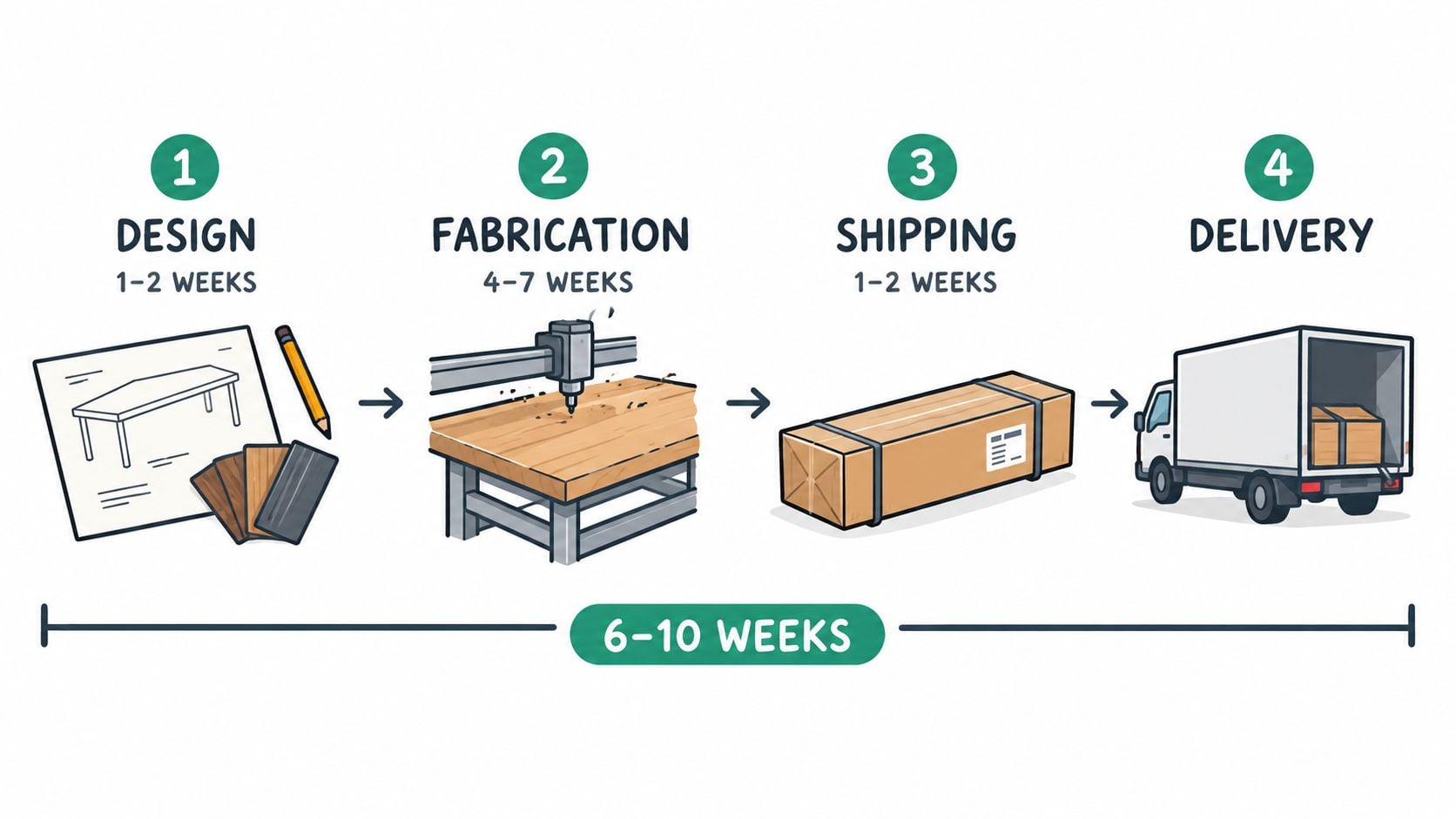
A custom order runs on decisions made in sequence. The buyer chooses the proportions, the workshop confirms the construction, samples are approved, the top is built and finished, and delivery is coordinated around the room. A kitchen remodel, move, or new baby can make timing important, so the order should begin with an honest conversation about the required date.
Plan around the build, not a shelf
A standard rectangular top in an available species may fit a shorter production window than walnut, unusually wide stock, or a live-edge design. Seasonal demand can extend the schedule further, particularly around the fall wedding and holiday period. The showroom should provide a current estimate for the specific species, dimensions, finish, and base rather than promising one universal lead time.
The process can include:
- Design review: Room dimensions, seating, base geometry, species, edge, and finish are assembled into a working specification.
- Material confirmation: The workshop confirms stock availability and whether the requested grain direction or width is practical.
- Construction and finishing: Boards are prepared, joined, sanded, finished, and inspected.
- Delivery coordination: The finished piece is checked against the order and scheduled for placement.
Price follows the same logic. A 1-1/2-inch walnut top with a hand-distressed edge requires more material and labor than a 3/4-inch oak top with an eased edge, so it can run roughly twice the price of that simpler specification. Premium walnut, cherry, and custom tables commonly occupy a much higher tier than entry-level solid pine or rubberwood pieces. Published market pricing places entry-level solid pine or rubberwood tables around $200 to $400, mid-market solid oak or maple tables around $500 to $1,500, and premium walnut, cherry, or custom tables often around $1,500 to $6,500, while luxury bespoke work can exceed $10,000 to $30,000. These ranges come from the global solid wood dining table market report, and a custom top quote will vary with construction, base, delivery, and finish.
Prepare a complete order packet
A buyer can prevent avoidable delays by bringing:
- Room dimensions: Include walls, doorways, cabinets, traffic paths, and a taped floor layout if possible.
- Base measurements: Record top-plate size, support locations, existing holes, and corner-to-corner measurements for pedestals.
- Seating intention: State the usual number of diners and the occasional hosting requirement.
- Material preferences: List preferred species, grain character, edge profile, finish, and tolerance for natural variation.
- Room photos: Two or three wide photographs are more useful than close-ups of one corner.
- A simple sketch: Draw the top, base, overhang, and chair positions. It doesn't need to look professional.
A clear sketch often saves more time than another round of color samples. It shows the workshop how the table must function, not only how the top should look.
Cost-per-year is the right way to judge a premium top. A solid hardwood surface that can be refinished, repaired, and adapted to a new base may serve through several room changes. That is a different value proposition from replacing a damaged or poorly fitted surface because its material and construction leave no practical path forward.
Finalizing Your Order with Tyner and the Amish Workshop
A local showroom gives you information photographs cannot. You can handle cherry, walnut, and oak samples, compare their grain and weight, and see how each finish looks beside your flooring, cabinetry, and actual room light. Sit near the edge samples to judge comfort from a diner's position. That small test often changes the profile you choose.
Bring the measurements and drawings from your planning work. The showroom should review the top's overhang, seating clearance, grain direction, and independent fastening method before the workshop approves a final drawing. Independent top-to-base fastening deserves special attention on a replacement top. The new surface must attach securely without assuming the existing holes or mounting points are correct.
Approve the order in a fixed sequence
Use a written approval process so the finished top matches the room, the base, and the way your household uses the table.
- Species confirmation: Approve the wood family and accept the natural color and grain variation of solid hardwood.
- Grain review: Review available boards or a representative layout to confirm grain direction, board character, and the visual balance of the top.
- Edge sign-off: Feel the proposed profile while seated and check that its shape works with the base and chair positions.
- Finish sample: View a sample on comparable wood beside the room's flooring and cabinetry. Sheen and color read more accurately in person than on a screen.
- Final specification: Record dimensions, seating overhang, thickness, edge profile, fastening method, finish, and delivery details before production begins.
Ask for the fastening plan in writing. A top that can be removed independently from its base is easier to repair, refinish, or adapt if the room changes later. That choice costs attention during ordering, but it protects the usefulness of the table over time.
The Amish hand-crafted approach keeps material quality visible in the finished piece, as explained in this custom Amish furniture guide. Solid North American hardwood, traditional joinery, and individual craftsperson accountability distinguish the work from standardized furniture made with fixed dimensions and limited repair options. Mortise-and-tenon and dovetail construction serve a practical purpose. They help connections remain strong as the furniture ages.
A showroom serving Southeast Michigan can also coordinate dining furniture with pieces for a home office, living area, bedroom, entertainment space, or outdoor setting. Keep the rooms related without forcing them into one matching style. Each purchase should suit the household's routines, available space, and maintenance expectations.
Special Financing may reduce the immediate cost for a qualifying purchase, subject to approval and promotional terms. A Low Price Promise can support a clear value discussion. Neither option replaces a careful review of dimensions, construction, finish, humidity planning, and delivery access. Plan for the piece you can maintain and live with, not just the lowest initial price.
For a local legacy founded in 1957, Tyner Furniture offers a practical final review. Bring your room information, inspect the samples, sit at the proposed height, and request the completed specification sheet before approving production. You can visit Tyner Furniture in Ann Arbor for a hands-on review or browse online Quick Specs before placing a special order.