Interior Design Consultation: A Michigan Homeowner’s Guide

A lot of homeowners and renters in Ann Arbor hit the same wall. They save inspiration, compare sofas, scroll dining sets, and still feel less certain than when they started. One chair looks right but scales wrong. One table fits the room but not the household. One sectional feels comfortable online, yet no one knows whether it will still feel supportive after a long week of work, guests, and everyday living.
That's where an interior design consultation becomes useful. It turns scattered ideas into a plan. Instead of shopping piece by piece and hoping everything works together, the homeowner gets a clearer path based on how the room needs to function, what should last, and where customization matters.
In Southeast Michigan, that kind of guidance matters because homes vary so much. A downtown condo, a family room in a newer subdivision, and a classic Ann Arbor home near South State St. all ask different questions of furniture, layout, and finish choices. A thoughtful consultation helps people make decisions with more confidence and less friction, especially when they're investing in craftsmanship, durability, and long-term value.
Table of Contents
- Your Guide to an Interior Design Consultation
- What Is an Interior Design Consultation
- The Consultation Process What to Expect
- How to Prepare for a Successful Consultation
- The Tyner Furniture Design Consultation Advantage
- Your Partner in Creating a Home for a Lifetime
Your Guide to an Interior Design Consultation
An interior design consultation is often misunderstood as something reserved for luxury new builds or magazine-worthy homes. In practice, it's much more approachable. It's a working conversation that helps a person stop guessing and start choosing with purpose.
For many households, the hardest part isn't taste. It's translating taste into a room that works. A homeowner may know they love warm wood, fitted upholstery, and a calmer palette, but still struggle to choose the right scale, layout, and material mix. A consultation closes that gap.
Since 1957, Southeast Michigan shoppers have leaned on local expertise when furnishing spaces meant to last. That matters because furniture buying can feel high-stakes. People don't want a room that looks polished for a season and frustrating the rest of the year. They want durable comfort, practical flow, and pieces that age well.
Why guidance changes the outcome
An interior design consultation brings structure to decisions that often get made too quickly:
- Layout first: It checks whether the room can support the furniture being considered.
- Function before finish: It asks how people really live in the space, not just how they want it photographed.
- Investment thinking: It frames purchases around longevity, craftsmanship, and cost-per-year, rather than impulse.
Practical rule: The more permanent the piece, the more planning it deserves.
That principle is especially useful when the room includes bedroom storage, dining furniture, a home office setup, or even transitions into outdoor spaces. A single consultation can help connect those decisions so the home feels coherent instead of pieced together.
Some homeowners also benefit from seeing how another design firm frames the first step. For anyone wanting a broader reference point before meeting locally, this simple way to schedule a consultation shows how professionals typically start with goals, needs, and space details.
For readers who want to see how a local showroom-based process can work, Tyner's design services page gives a practical overview of what guided support can look like in a real furnishing environment.
What Is an Interior Design Consultation
An interior design consultation is a planning session for the future of a home. It isn't just about picking attractive furniture. It's about creating a roadmap so each choice supports the next one.
When people shop without a plan, they often buy in isolation. A sofa gets chosen because the fabric looks good. A table gets picked because the finish feels current. Then the room starts to fight itself. Proportions feel off. Traffic flow tightens. Storage gets forgotten. The consultation helps prevent that chain reaction.
A roadmap instead of random purchases
A good consultation usually addresses three things at once:
| Focus | What it answers | Why it matters |
|---|---|---|
| Style | What feeling should the room have | Keeps selections cohesive |
| Function | How the room needs to perform every day | Prevents beautiful but impractical choices |
| Investment | Which pieces should last longest | Helps prioritize quality where it counts |
That planning mindset is one reason demand has grown. The global interior design consultation market is projected to reach USD 305.8 billion by 2036, with a 7.2% CAGR, fueled by residential end-users who increasingly prioritize personalized, functional living spaces over generic solutions, according to Fact.MR's interior design consultation market analysis.
That projection says something important about how people now furnish their homes. More households see design guidance as part of the purchase process, not as an extra layer added afterward.
What homeowners are really buying
The value of a consultation isn't limited to aesthetics. People are often buying clarity on questions like these:
- Will this room feel open or crowded?
- Should this budget go toward a bespoke dining table or upgraded seating comfort?
- Is this an in-stock solution, or should it become made-to-order?
- Will this choice still make sense years from now?
That last question matters most. A well-run consultation shifts the conversation from short-term appeal to long-term use. That's why heirloom materials, ergonomic fit, and durable construction become part of the discussion so early.
For readers who want a practical first step before meeting with a design guide, this article on how to start the interior design process for a room is a helpful companion.
The Consultation Process What to Expect
The process is usually much more comfortable than people expect. It's less like being judged on taste and more like working through a smart checklist with someone who can connect the dots.
In the United States, that guidance sits inside a substantial profession. The U.S. interior design industry, with its 157,000 businesses and $26.5 billion in revenue in 2026, relies on skilled professionals whose median annual wage was $63,490 in May 2024, reflecting the high value placed on their expert guidance in project outcomes, as shown in the BLS interior designers occupation profile.
The first conversation
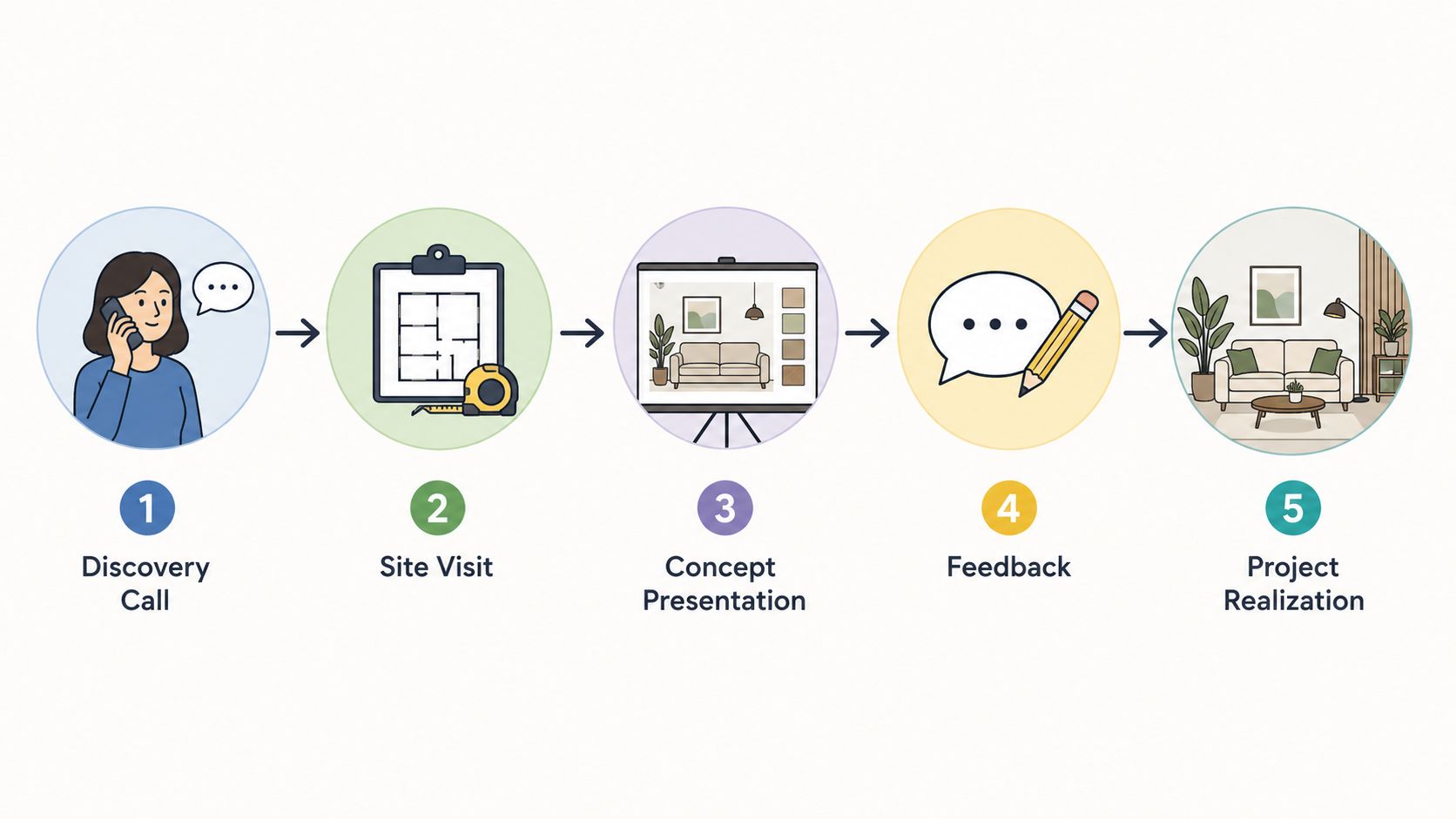
Most consultations begin with discovery. The designer asks how the room is used, who uses it, what feels frustrating now, and what success looks like.
A family room discussion might uncover that the television isn't the main issue. It may be that the seating doesn't support conversation, the rug is undersized, and lighting leaves one corner unused after dark. In a dining room, the problem may not be style at all. It may be that the current table shape wastes circulation space.
The strongest consultations solve the problem behind the problem.
Space review and layout thinking
Once goals are clear, the space gets reviewed in more detail. That may happen in-home or through measurements, photos, and floor plans. The point is to understand scale, pathways, windows, architectural constraints, and how furniture should relate to the room.
This is also where overlooked details matter. Angled walls, slanted ceilings, awkward corners, or offset openings can change everything. Many shoppers assume those features limit them. A skilled consultation can instead assign those irregular areas a purpose, such as storage, transition space, or a more intentional visual pause.
Early recommendations and concept direction
After the room has been assessed, the homeowner usually gets a clearer direction rather than a flood of options. That direction may include:
- Furniture scale guidance: what size sectional, bed, or dining table makes sense
- Material suggestions: where solid wood, leather, or performance fabric may fit best
- Layout options: one plan for entertaining, another for daily family life
- Priority decisions: what should be purchased first if the room will come together in phases
A living room example makes this easy to understand. If the household needs durable seating, comfortable reading posture, and a cleaner view line through the room, the consultant may recommend fewer but better pieces. That often feels counterintuitive at first. Yet it's usually what gives a space calm.
What the meeting should feel like
The best consultations don't overwhelm people with jargon. They make the homeowner feel informed enough to judge options for themselves.
A useful meeting should leave a person able to answer questions such as:
- What's the room trying to do?
- Which pieces carry the most long-term value?
- Where should customization happen?
- What can wait without hurting the final result?
That clarity is what turns a consultation from a pleasant conversation into a practical decision tool.
How to Prepare for a Successful Consultation
Preparation doesn't need to be elaborate. It just needs to be honest. The more clearly a household can describe how a room works, or doesn't work, the more useful the consultation becomes.
A professional consultation relies on a structured Client Design Questionnaire to capture lifestyle routines and functional needs, because that information directly shapes layout decisions and helps avoid revisions later, as explained in this guide to the client design questionnaire and essential interior design documents.
What to bring
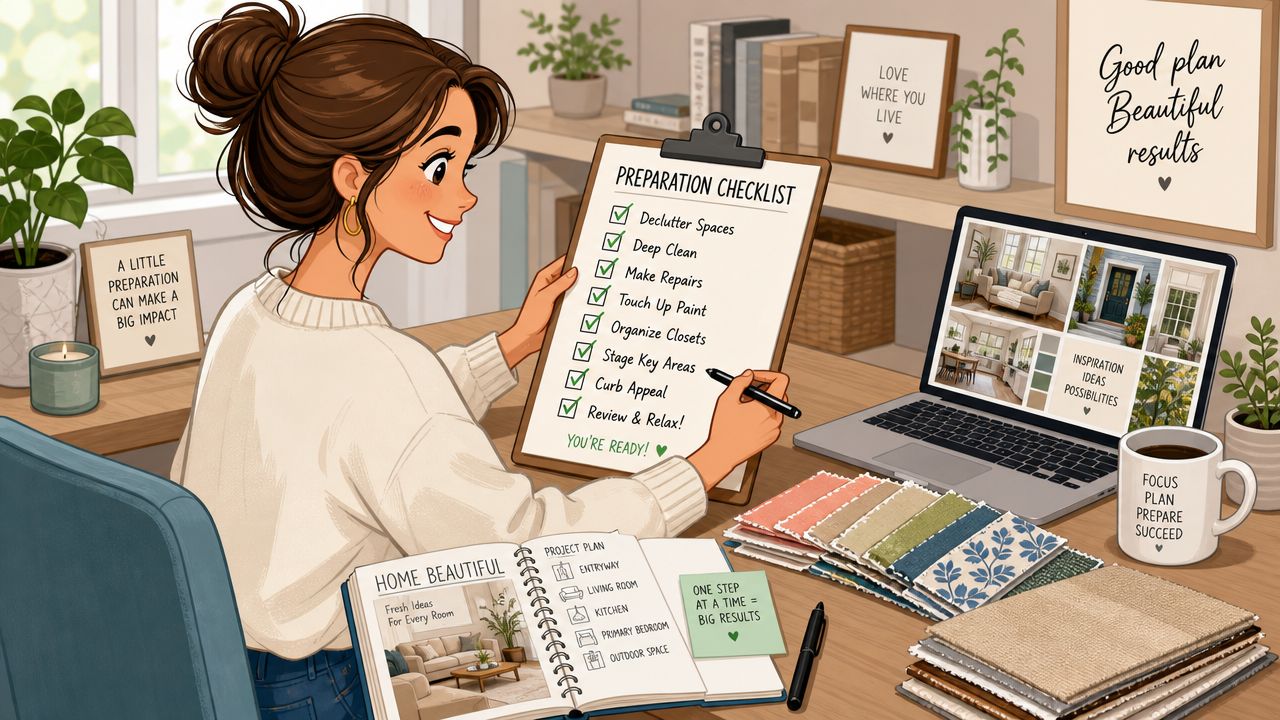
Some of the most productive consultations start with simple, concrete materials:
- Room measurements: wall lengths, ceiling height, window placement, and door swings
- Photos from multiple angles: daytime shots are especially useful
- Inspiration images: saved rooms, finishes, colors, or furniture silhouettes
- Existing pieces worth keeping: especially rugs, art, heirloom items, or case goods
- A rough spending plan: enough to identify priorities, not every penny
For anyone unsure about dimensions, this practical guide on how to measure furniture helps prevent one of the most common mistakes in room planning.
What to think through before the meeting
The strongest answers usually aren't about style labels. They're about daily life.
Consider these examples:
- Morning routine: Is the bedroom calm and efficient, or cluttered and cramped?
- Meals and gathering: Does the dining area serve quick weekday dinners, long holiday seating, or both?
- Comfort needs: Does someone need firmer support, deeper seating, or easier chair entry and exit?
- Storage pressure: Are blankets, office supplies, or children's items overtaking the room?
A beautiful room that doesn't match the household routine won't stay beautiful for long.
A short preparation checklist
| Bring or know | Why it helps |
|---|---|
| Accurate dimensions | Keeps scale realistic |
| Daily-use habits | Guides function before styling |
| Must-keep items | Builds around what already matters |
| Finish preferences | Narrows custom options |
| Decision priorities | Prevents budget drift |
One area that often gets missed is problem-solving history. If a household has already tried rearranging the room three times, that's valuable information. It tells the consultant where the friction lives.
Another is architectural awkwardness. If the room has a slanted ceiling, a narrow pass-through, or one difficult angled wall, that should be mentioned early. Those features can be absorbed gracefully, but only if they're addressed with intention.
The Tyner Furniture Design Consultation Advantage
A showroom consultation is useful because it turns vague preferences into decisions you can test with your hands and eyes. "Warm wood" means one thing in your head and another once you stand in front of a walnut finish, a cherry finish, and a painted option under real lighting. The same goes for comfort. A seat that looks inviting in a photo may feel too deep, too firm, or too upright after five minutes in person.
That is one reason a local showroom matters. At Tyner Furniture, the consultation does not stop at style talk. It connects room planning, material samples, comfort testing, and custom-order choices in one visit, which makes higher-quality furniture feel far less intimidating.
Floor samples are reference points
Many shoppers treat the piece on the floor like a finished answer. A better consultation treats it like a working model.
A sofa can be shown in one fabric but ordered in another that suits a brighter family room or a home with pets. A dining table can start with one shape and finish, then shift to a size, edge detail, or stain that sits more naturally with existing trim and flooring. A recliner can look right in the room yet still need a different scale or support profile for the person who will use it every evening.
That is the practical advantage of working inside a showroom instead of trying to piece everything together from swatches and product thumbnails alone.
Custom becomes easier when someone edits the choices
Large custom programs often overwhelm people for a simple reason. Too many options without a filter can feel like being handed a paint deck with no wall color, no lighting notes, and no plan.
A good consultant acts like that filter. Instead of asking you to sort through every possible table base, finish, chair style, leather, fabric, and arm shape, they narrow the field based on how the room works, who uses it, and what should still look right years from now. The process becomes less about browsing and more about matching.
For shoppers who want to understand that path before they visit, this guide to getting started with a custom furniture order helps explain how selections come together.
Why construction quality matters more in the showroom
Quality is easier to judge in person than online. You can open drawers, check how a chair supports your back, study grain patterns, and compare the feel of true hardwood with lighter, surface-driven construction.
That matters most in dining rooms and bedrooms, where people often want furniture that stays with the home for a long time. Hand-crafted solid wood pieces usually stand apart because the materials, joinery, and finish options support long-term use and future refinishing. The conversation changes at that point. Instead of asking only what fits the budget today, clients can judge what is likely to wear well, age well, and still belong in the room years later.
A consultation should reduce buying friction
The strongest showroom consultations also make the purchase process clearer. Details such as special-order specs, financing options, delivery timing, and value protections are easier to sort out when they are explained alongside the furniture itself.
That is part of the Tyner Furniture advantage. The consultation helps shoppers move from uncertainty to a specific plan, with custom possibilities, heirloom-level materials, and real comfort testing all in the same place. For anyone furnishing a home with long-term use in mind, that makes high-end design feel more approachable and much easier to act on.
Your Partner in Creating a Home for a Lifetime
A good interior design consultation does more than help someone choose furniture. It helps them become a steadier decision-maker in their own home. This is the underlying shift. The shopper who arrived overwhelmed leaves with a better eye for scale, comfort, craftsmanship, and what deserves long-term investment.
That matters in homes meant to last. Whether a household is furnishing a bedroom, refining a dining room, improving a home office, or extending comfort into outdoor spaces, the goal isn't just to fill rooms. It's to create places that support daily life and still feel right years from now.
How to judge the person giving the advice
Portfolio images can be helpful, but they don't reveal how a design professional handles pressure, tradeoffs, or mistakes. One of the most useful questions a client can ask is how the designer responds when a project goes wrong.
As noted in this article on what to expect from an interior design consultation, asking about a designer's “worst mistake” and how it was resolved reveals problem-solving ability and character far better than a polished aesthetic presentation alone.
Ask for evidence of judgment, not just evidence of taste.
That question is especially useful when a room has constraints. Angled architecture, hard-to-fit dimensions, inherited furniture, or changing family routines all demand more than decoration. They require clear thinking.
Why local legacy still matters
In a category filled with major decisions, local trust carries weight. A business rooted in Southeast Michigan since 1957 has seen changing styles come and go. What remains constant is the need for durability, support, honest guidance, and pieces that earn their place over time.
That's also why handcrafted wood furniture continues to appeal to so many households. The appeal isn't nostalgia. It's performance. Solid wood, strong joinery, and made-to-order flexibility still solve real furnishing problems better than disposable construction ever could. For readers exploring that route, this collection of custom Amish furniture shows how bespoke craftsmanship can fit modern homes without feeling formal or heavy.
The best homes rarely come together by accident. They come together through better questions, steadier choices, and a willingness to invest where the return is felt every day.
A next step can be simple. Visit Tyner Furniture in Ann Arbor for a sit test on South State St., explore the feel of bespoke upholstery and ergonomic seating in person, or browse the online Quick Specs for special orders to see how made-to-order finishes, fabrics, and configurations can shape a home built for the long run.