Coordinated Living Room Furniture: Create a Cohesive Space

The most popular advice about coordinated living room furniture is also the least useful: buy a matching sofa, loveseat, and table, then stop thinking. That shortcut can create order, but it can also leave a room feeling staged, dated, or disconnected from the people who live there. A more durable approach builds harmony through scale, color undertones, material family, and comfort, while allowing each piece to bring its own character.
For homeowners and renters across Ann Arbor and Southeast Michigan, this distinction matters. Furniture needs to work with real architecture, real traffic patterns, changing household needs, and the sensory demands of everyday life. A coordinated room should feel welcoming when someone drops into a buttery top-grain leather chair, reaches for a coffee cup, or runs a hand across the weight of solid cherry wood. Since 1957, Tyner Furniture has served as part of the region's local legacy, helping households furnish everything from the Home Office to Outdoor Spaces with a focus on value, craftsmanship, and lasting comfort.
What Coordinated Living Room Furniture Really Means
A matching set is one way to furnish a room. It isn't the definition of coordination.
Consider two Southeast Michigan living rooms. The first contains a sofa, loveseat, coffee table, and end tables purchased from the same collection. Every silhouette matches, every finish is identical, and the room looks complete immediately. The second pairs a deep charcoal sofa with a lighter upholstered chair, a solid wood table in a related warm tone, and an area rug that repeats the sofa's undertone. Nothing is identical, yet the second room feels more personal because the pieces share the same design DNA.
That shift reflects a broader change in how shoppers think about living spaces. One market summary reports that worldwide living room furniture revenue reached US$215.6 billion in 2023 and is projected to reach US$273 billion by 2029, while another estimate places the market at US$240.4 billion in 2026 and projects US$339.6 billion by 2035. These projections, reported by Statista's worldwide living room furniture market overview, show the category's commercial scale, but they don't mean every room should follow one catalog page.
Harmony without duplication
Historical consumer preferences also reveal why shoppers feel pulled in different directions. A Furniture Today survey cited by Mordor Intelligence's living and dining room furniture research found that 35% of shoppers wanted matched living room furniture, exactly equal to the share who preferred buying individual pieces and coordinating them independently. Millennials were more likely to choose matching furniture, at 41%, compared with 30% of Baby Boomers.
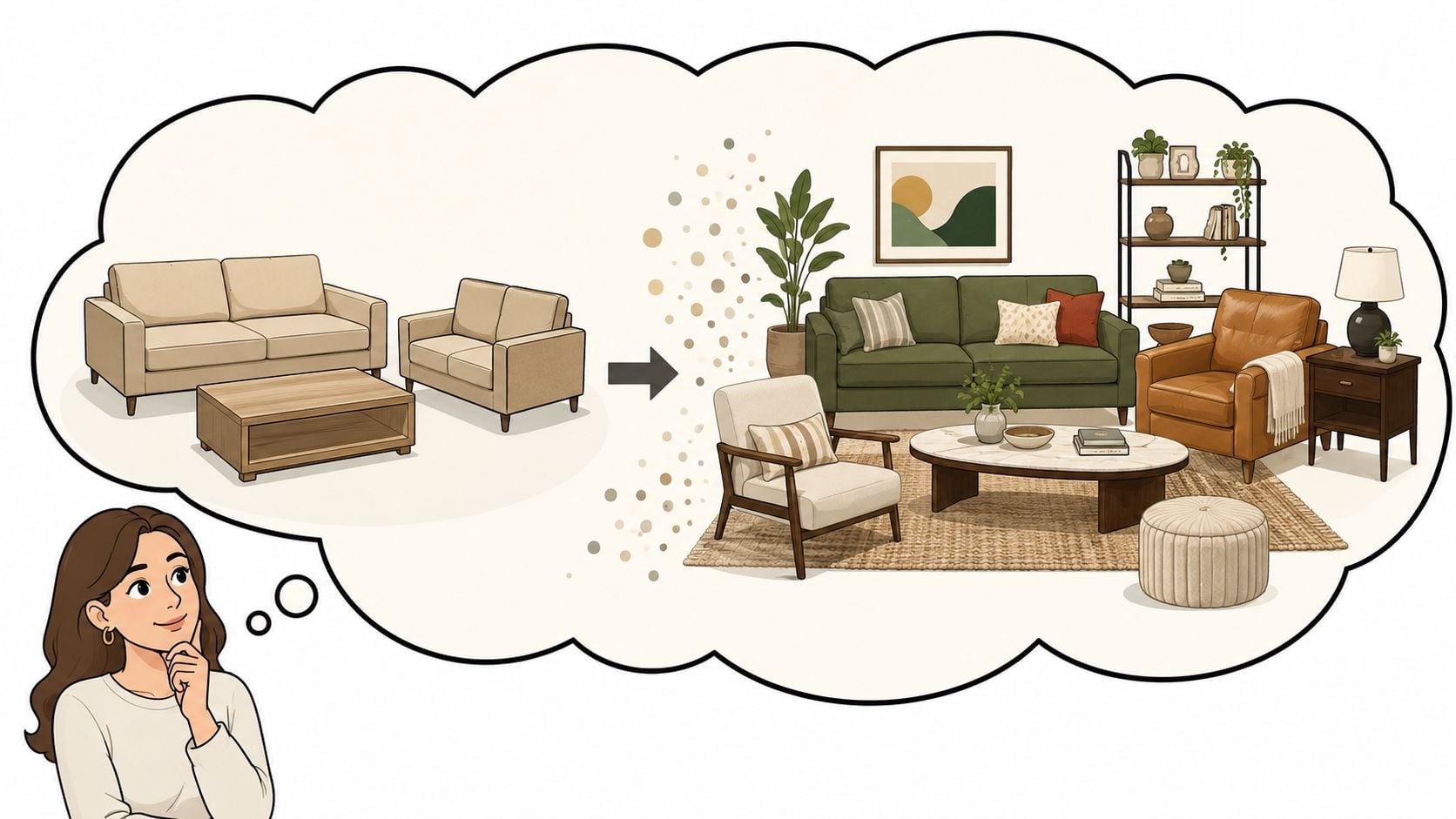
Both preferences make sense. A matched group offers reassurance and a ready-made visual solution. Individual pieces provide flexibility for shoppers who want a collected, bespoke look. Coordinated living room furniture sits between those choices. The room works as a whole, but each item doesn't have to look like its neighbor.
Practical rule: Match the relationship between pieces, not necessarily the pieces themselves.
That relationship can come from repeated wood tones, related upholstery colors, consistent proportions, or a shared shape language. A rounded sofa can coordinate with a chair featuring curved arms. A rectangular coffee table can balance a linear media console. The result feels intentional without looking like a showroom display.
Getting the Scale and Proportion Right
A coordinated room can still feel awkward when the furniture is the wrong size. Scale describes how large each piece feels in relation to the room, while proportion describes how its parts relate to one another and to nearby furnishings. A broad sectional may suit a generous family room but overwhelm a compact Ann Arbor bungalow. A small apartment sofa may look tidy in a narrow room yet seem lost in an open-concept layout.
Begin with the room rather than the furniture catalog. Measure the wall where the main seating will sit, then record doorways, windows, radiators, vents, stairs, and television sightlines. Include the route each piece must take through the home. Tyner's guide to how to measure furniture helps organize those dimensions before a showroom visit or custom order.
A practical sizing sequence
Mark the main focal point. Identify the fireplace, television, window view, or conversation area. Arrange seating to support that focus while keeping architectural features visible and accessible.
Choose the anchor piece. In many living rooms, the sofa or sectional sets the baseline. Its length and depth determine how much space remains for chairs, tables, lamps, and circulation.
Check the visual weight. A low, minimal sofa pairs naturally with a lower coffee table and lighter occasional chairs. A tall, substantial sofa needs supporting pieces with enough presence to feel connected. Similar visual weight creates harmony even when silhouettes differ.
Leave room for movement. Preserve a clear circulation path of about 700 mm to 900 mm, or roughly 28 to 36 inches, between major pieces. This spacing supports access to doors, clearer sightlines, and a less crowded room, according to furniture arrangement guidance from Essence of Home.
The space between a sofa and coffee table deserves its own check. About 45 to 50 cm gives people room to reach a drink or book while reducing bumped knees and blocked passageways. In a smaller room, a round or nesting table can provide the same function with less visual bulk.
Proportion also affects long-term value. Custom-order and heirloom-quality furniture can be specified to suit unusual walls, ceiling heights, or room layouts, rather than forcing the space to accept a standard size. Modular and freestanding pieces offer another practical option. Movable sectional components can support family gatherings now and a more open arrangement later, which helps in rental homes, multipurpose rooms, and households that host overnight guests.
Building a Cohesive Color Palette
Color coordination doesn't require exact matching. It requires a repeatable visual connection.
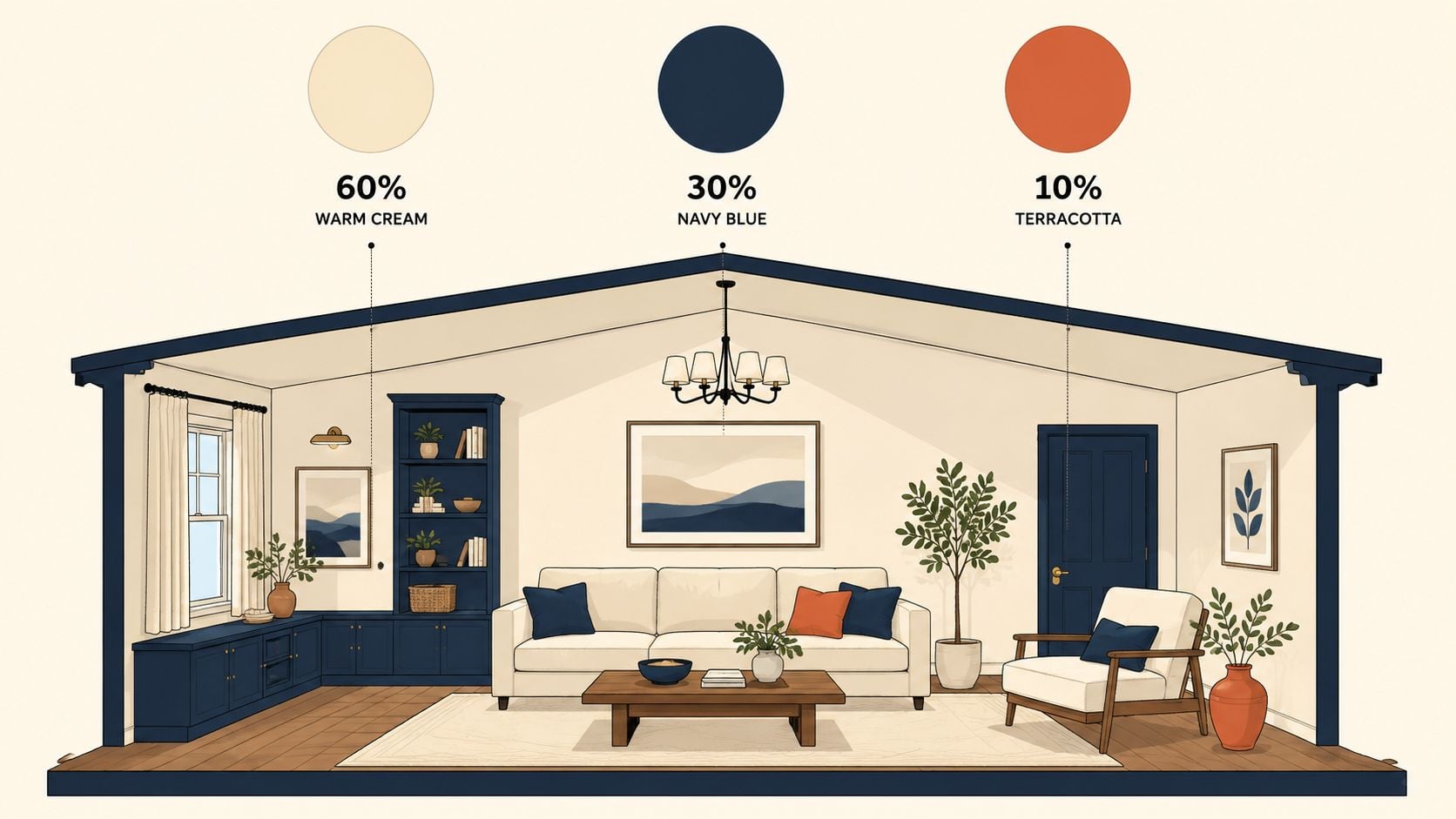
A practical starting point is the 60-30-10 framework. The dominant color covers most of the room, the secondary color supports it, and the accent color adds energy. In a living room, the dominant tone might appear on walls, a rug, or the main sofa. The secondary tone can show up in a chair, curtains, or wood finish. Accent color belongs in pillows, artwork, ceramics, or a small upholstered piece.
Use undertones as the connecting thread
A cream rug with warm yellow or red undertones will usually sit more comfortably beside warm wood and brown leather than beside icy gray finishes. A charcoal sofa can work beautifully with cream, provided both share a compatible warmth. The colors don't need to be close on a paint chip. They need to feel related under the room's lighting.
2025 design commentary has also questioned the appeal of overly coordinated furniture sets, warning that a perfectly matched sofa, loveseat, and coffee table can make a room feel dated and strip away character. The critique from Apartment Therapy's discussion of dated living room trends supports a layered approach built around mixed pieces, sculptural seating, mixed woods and metals, and personal collections.
A simple palette test
Before ordering, gather fabric swatches, a flooring sample, a paint card, and a photograph of the room in daylight. Check whether the undertones cooperate in both natural and evening light. A neutral base becomes more engaging when texture does the work, such as woven upholstery beside smooth leather, nubby pillows against a shaped sofa, or a matte ceramic lamp beside a softly finished wood table.
For households making smaller changes, these affordable living room refresh tips offer useful ideas for adjusting color through covers, textiles, and accessories rather than replacing every major piece. For a more deliberate approach, Tyner's expert guide to the perfect color palette can help organize the choices before a made-to-order selection is finalized.
Coordinating Materials and Finishes
Material coordination gives a living room its physical character. Solid wood brings visible grain and stability. Top-grain leather offers a buttery feel that changes with use. Woven textiles soften the room, while metal accents add structure and a cooler note. The room becomes cohesive when these materials belong to the same visual conversation, not when every surface comes from one collection.
Solid hardwood also changes the value discussion. Cherry, oak, and maple carry different grain patterns, color tones, and finishing possibilities. Mass-produced alternatives may imitate those appearances through veneer or composite construction, but shoppers comparing furniture should ask how the piece is built, how the joints handle movement, and whether the finish can be renewed.
Solid Wood Species for Coordinated Living Spaces
| Wood Species | Color Tone | Durability | Best Finish |
|---|---|---|---|
| Cherry | Warm reddish brown that deepens with age | Strong choice for lasting interior furniture | Clear natural finish or warm stain |
| Oak | Pronounced grain with light to medium warmth | Durable and visually resilient | Natural, medium stain, or softly distressed finish |
| Maple | Light, clean tone with subtle grain | Hard, stable hardwood for everyday use | Clear finish or restrained light stain |
The finish should support the rest of the room. Warm stains generally sit naturally with warm metal details, while cooler wood tones can complement brushed nickel or other restrained gray finishes. A natural or lightly finished table can connect leather seating to woven textiles without making the room feel overly formal.
Joinery is part of the design decision
A solid wood table or cabinet deserves attention beyond its surface. Mortise-and-tenon joinery creates broad wood-to-wood contact and resists twisting and wobble. In a well-fitted hardwood application, it can withstand about 1,200 pounds of racking force before failure, according to joinery comparison guidance from JB Woodworks. Another furniture joinery source reports mortise-and-tenon construction at more than 4,500 PSI of shear capacity in solid hardwood applications, while describing its resistance to cyclic stress and racking as stronger than dowel construction. That information appears in Evergo Casa's furniture joinery overview.
These figures don't replace a hands-on inspection, but they illustrate why hand-crafted construction and material integrity matter. A piece made from solid North American hardwood with time-honored joinery can serve as an heirloom anchor, while contemporary upholstery supplies softness and flexibility.
For households coordinating existing pieces with new furniture, custom wood finishes make it possible to pursue harmony through undertone and depth rather than forcing an exact match. That approach preserves contrast while keeping the room visually connected.
Arranging Furniture for Flow and Function
A room can have excellent furniture and still feel awkward if people must walk through the conversation area to reach a doorway. Ergonomic planning starts by observing how the household uses the room. The primary route might run from the entry to the kitchen, from the sofa to a reading chair, or from a hallway to an outdoor door.
Begin with the sofa and place chairs so people can speak without turning their bodies sharply or shouting across the room. A coffee table should sit close enough for comfortable reach, while remaining outside the main walking route. The circulation standard of 700 mm to 900 mm, or approximately 28 to 36 inches, provides a useful target between major pieces, and the 45 to 50 cm sofa-to-table spacing helps preserve access without crowding, as described in the previously cited arrangement guidance.
Zones make open rooms feel intentional
In an open-concept home, a rug can define the living zone without blocking sightlines. The front legs of seating may sit on the rug, or a smaller arrangement can use the rug as a centered visual field beneath the coffee table. A console, bookcase, or pair of chairs can suggest a boundary while keeping the room flexible.
Modular furniture supports this kind of adaptability. Recent trend coverage points toward freestanding, modular, and multifunctional pieces for compact or changing homes. One 2025 market report estimates a modular sofa market base of about 5.7 billion, while another projects a 6.8% CAGR from 2025 to 2033, as reported in Homes & Gardens' living room furniture trends coverage. These are projections and estimates, not a requirement that every household buy a modular sofa.
Layout check: If a guest has to turn sideways, step around a table, or cross directly in front of a seated person to reach a door, the arrangement needs revision.
Common problems include pushing every piece against the wall, placing a large table in the traffic lane, or selecting a sectional that leaves no practical route behind it. Moving seating inward can often improve conversation and make a room feel more purposeful. For sellers preparing a home, how to stage a house for sale offers additional context on creating clear, welcoming rooms. For everyday living, Tyner's living room arrangement ideas can help translate those principles into a workable plan.
Mixing Heirloom and Modern Pieces
A coordinated room can carry family history without looking old-fashioned. One Amish hand-crafted chest, solid wood end table, or carved occasional piece can establish a sense of permanence. Contemporary upholstery, sculptural lighting, and a simpler rug can then keep the setting current.
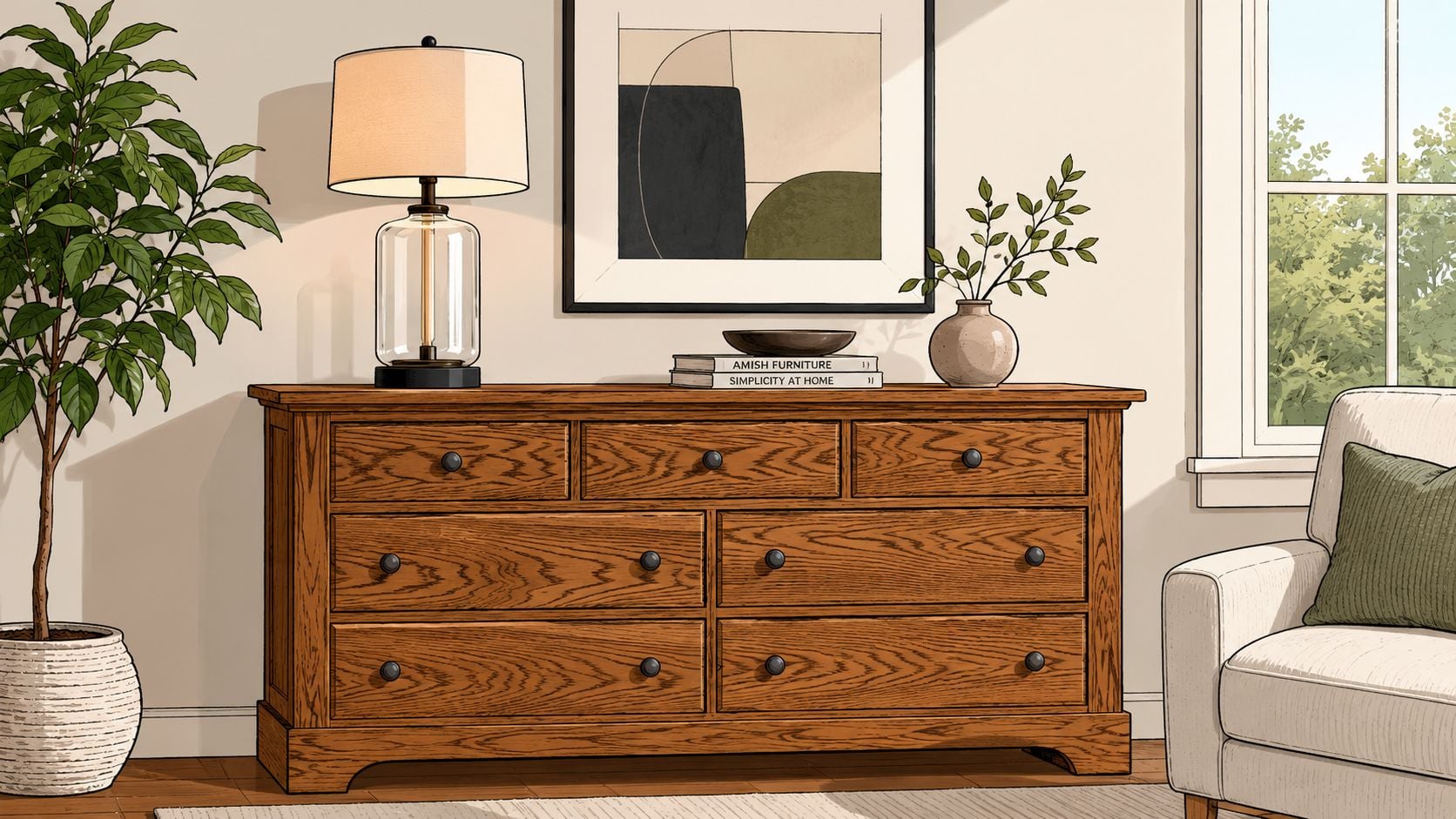
Let the room tell a connected story
A collected interior works because old and new pieces share points of conversation. Repetition can happen through:
- Material: A cherry table can relate to a wood-framed mirror or a smaller cabinet without requiring identical stains.
- Shape: Curved chair arms can echo a rounded lamp, an arched artwork frame, or a soft-edged ottoman.
- Color: A muted blue in a modern chair can reappear in a traditional rug or decorative object.
- Proportion: A substantial heirloom table needs seating and accessories with enough visual weight to feel intentional.
The strongest arrangements usually give one or two statement pieces room to lead. A large solid wood table may become the anchor, while the sofa and chairs provide comfort without competing through excessive ornament. Alternatively, an heirloom chair can serve as the focal point when the main sofa has a quieter silhouette.
Traditional joinery helps explain why some furniture earns a place in a family's long-term story. Dovetailing and mortise-and-tenon construction support structural strength and material integrity, especially when paired with solid hardwood. The result is furniture that can move between rooms or generations rather than being tied to one short-lived decorating phase.
Comfort still sets the rules
Modern living often demands deeper seating, reclining support, performance fabrics, and flexible configurations. That doesn't weaken an heirloom scheme. It gives the room practical balance. A hand-crafted wood table can coexist with a contemporary sofa if both pieces respect the room's scale and color story.
Comfort deserves its own inspection. Shoppers comparing modern silhouettes can review sofa support tips from Meliusly, especially when evaluating cushion support, frame behavior, and seating posture. The showroom sit test remains valuable because a photograph can't reveal whether a seat feels upright, relaxed, firm, or enveloping.
Tyner Furniture's Amish solid wood pieces, custom upholstery programs, Canadel dining options, and Stressless ergonomic seating give Southeast Michigan households ways to build a room around both character and use. The goal isn't to recreate a display. It's to create a room that looks collected because its choices are connected.
Your Next Steps Toward a Coordinated Living Room
A coordinated living room becomes easier when decisions happen in the right order. First, measure the room and protect circulation. Next, choose the anchor piece, establish a color story through undertones, and add materials that create contrast without visual conflict. Finally, test the arrangement with daily habits in mind, including reading, conversation, television viewing, guests, and reconfiguration.
The in-stock selection is just the beginning. Made-to-order programs can extend the design process through customized finishes, fabrics, depths, and configurations. Canadel supports bespoke dining choices with thousands of finish and configuration combinations, while Stressless offers ergonomic recliners in Small, Medium, and Large sizing so shoppers can evaluate support more precisely.
A cost-per-year perspective can also clarify the value of heirloom furniture. One industry comparison estimated a basic kit at about 83 €/year, compared with approximately 130 to 155 €/year for custom-made furniture over 25 to 30 years, based on the comparison described by Mestravaux's custom versus flat-pack joinery guide. Promotional financing may include structures such as 24 months with no interest if paid in full or 36 months at 0% APR for larger purchases, subject to applicable terms and approval, as outlined in furniture financing information. Tyner also offers Special Financing and a Low Price Promise, giving shoppers additional ways to plan a substantial purchase.
For personalized planning, an interior design consultation can help connect measurements, finishes, fabrics, and comfort priorities. Tyner Furniture has served Southeast Michigan since 1957, with an Ann Arbor showroom on South State Street and selections spanning the Home Office, living and dining spaces, bedrooms, entertainment areas, and Outdoor Spaces.
Visit Tyner Furniture in Ann Arbor for a proper sit test, where the feel of top-grain leather, the support of ergonomic seating, and the weight of solid wood can be evaluated in person. Shoppers can also browse Quick Specs online for special orders and bring room measurements to the South State St. showroom for practical guidance on coordinated living room furniture.