Oak vs Maple Furniture: Your Guide to Choosing Heirloom

A couple stands in a showroom on South State Street, palms resting on two very different dining tables. One has the familiar, expressive grain of oak. The other has the smoother, quieter face of maple. Both feel substantial. Both look like they could anchor holidays, homework, and weeknight dinners for decades.
That's where furniture shopping often becomes harder than expected. The question isn't only what looks good today. The true question is what will still feel right after years of chair scooting, spilled coffee, moving days, and changing paint colors.
For many households in Ann Arbor and across Southeast Michigan, oak vs maple furniture isn't a style debate alone. It's a 30-year decision about durability, maintenance, interior design, and value over time. That's why it helps to start with the long view, especially when shopping for bedroom and dining pieces that need to do more than fill a room.
A local business that has served the community since 1957 has seen that moment many times. Families often arrive thinking they need a quick answer, then realize they need a clearer framework. A good place to begin is with a solid understanding of American-made solid wood furniture, because the wood species is only part of what makes a piece heirloom-worthy.
Choosing Furniture Meant to Last a Lifetime
A dining table rarely stays just a dining table. Over time, it becomes a desk, a craft station, a landing place for groceries, and a gathering point when the house is full. That's why the oak vs maple furniture decision deserves more care than a quick glance at a finish sample.
Some shoppers walk in certain they want oak because it feels timeless and familiar. Others lean toward maple because the surface looks cleaner and more contemporary. Both instincts make sense. Oak has presence. Maple has restraint. The better choice depends on how the room will live, not only how it will photograph.
What makes this decision feel so weighty
Furniture shopping can feel crowded with half-answers. One tag talks about style. Another mentions hardwood. A website compares maple and oak without saying which kind of maple it means. That's where confusion starts.
A patient approach helps:
- Start with use: A kitchen table, a formal dining room set, and a home office desk don't all face the same wear.
- Think in decades: A lower upfront cost may or may not deliver better cost-per-year.
- Look past the surface: Grain, joinery, finish options, and material integrity matter as much as color.
Practical rule: The right wood should fit the household's habits first, and the decorating plan second.
This long-view mindset is part of a local legacy. Since 1957, families in Southeast Michigan have looked for furniture that can hold up through everyday life and still feel worthy of passing down. That's different from shopping for a temporary look. It's shopping for an heirloom.
An Introduction to Oak and Maple
Oak and maple are both North American hardwoods, and both show up often in hand-crafted Amish furniture because they bring real structural substance to dining and bedroom pieces. But they don't look or feel the same in a room.
Oak usually announces itself. The grain is more visible, more textured, and often more traditional in appearance. Maple is quieter. Its grain tends to read smoother and more uniform, which gives it a cleaner, more refined feel.
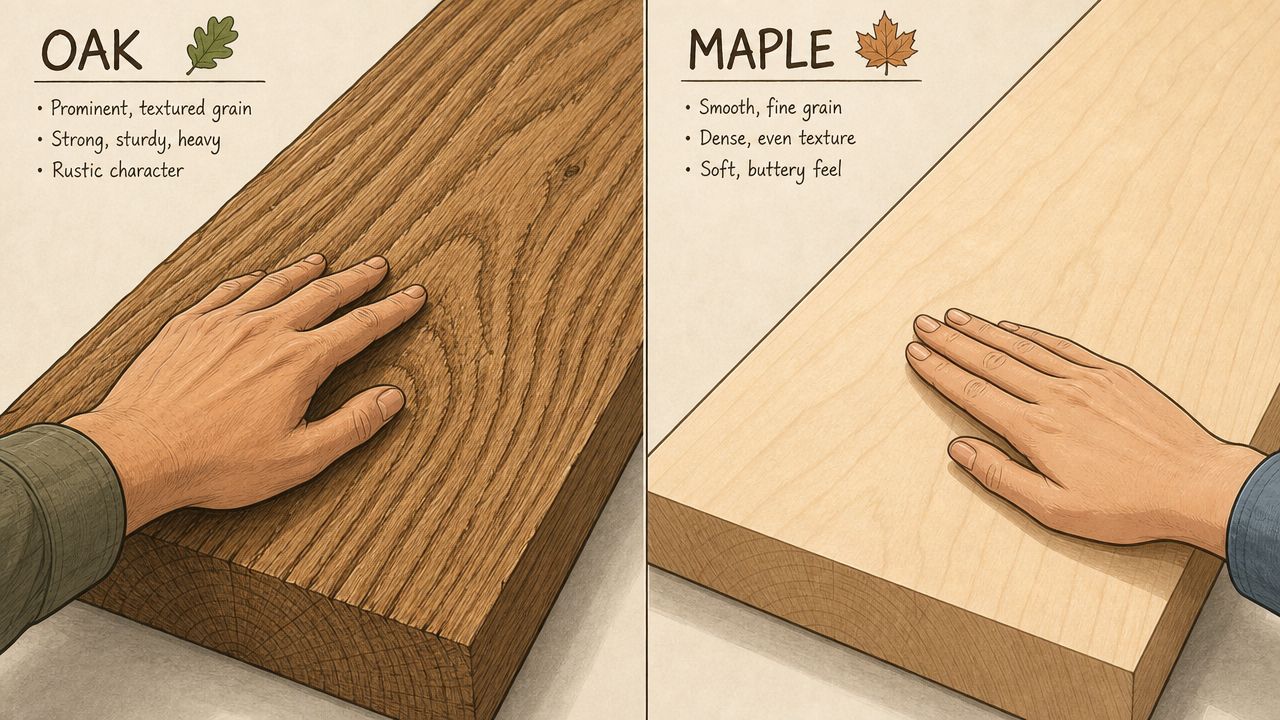
For shoppers comparing samples, a guide to North American hardwoods can help connect a wood's appearance to the room's overall plan.
Oak vs Maple Quick Comparison
| Feature | Oak (Red Oak) | Maple (Hard Maple) |
|---|---|---|
| Grain | Prominent, open, visually active | Fine, closed, more uniform |
| Color | Warm, classic, often richer in character | Light, clean, understated |
| Hardness | Janka rating of 1,290 | Janka rating of approximately 1,450 |
| Common styles | Traditional, Mission, rustic, transitional | Contemporary, Scandinavian-leaning, transitional, modern farmhouse |
How each wood reads in a room
Oak tends to bring more movement to the eye. In a dining room, that can make a trestle table or slat-back chair feel grounded and architectural. In a home office, oak can give a bookcase or desk the kind of visual weight that makes the whole room feel settled.
Maple often works differently. It doesn't compete with other elements as much. In a brighter room with lighter walls, metal accents, or softer fabrics, maple can keep the design feeling calm and open.
A simple way to think about it is this:
- Oak suits homes that want grain to be part of the design story
- Maple suits homes that want a smoother, more edited surface
- Both can work in transitional interiors when the finish is chosen well
Oak tends to show its personality on the surface. Maple tends to let the shape of the furniture do more of the talking.
That's why the first decision usually isn't which wood is “better.” It's which wood feels more at home with the architecture, lighting, and pace of the room.
The Real Story on Durability and Hardness
When households ask which wood will stand up better to real life, the conversation shifts from appearance to performance. That's where the Janka Hardness Scale matters. It's the standard used to compare a wood's resistance to dents and wear.
The numbers are clear. Hard maple possesses a Janka hardness rating of approximately 1,450, making it roughly 12% harder than red oak (1,290) and 6.6% harder than white oak (1,360). This quantitative metric confirms hard maple's superior resistance to dents and scratches in high-traffic furniture, an important consideration for heirloom quality, according to Bruce's hardwood comparison.
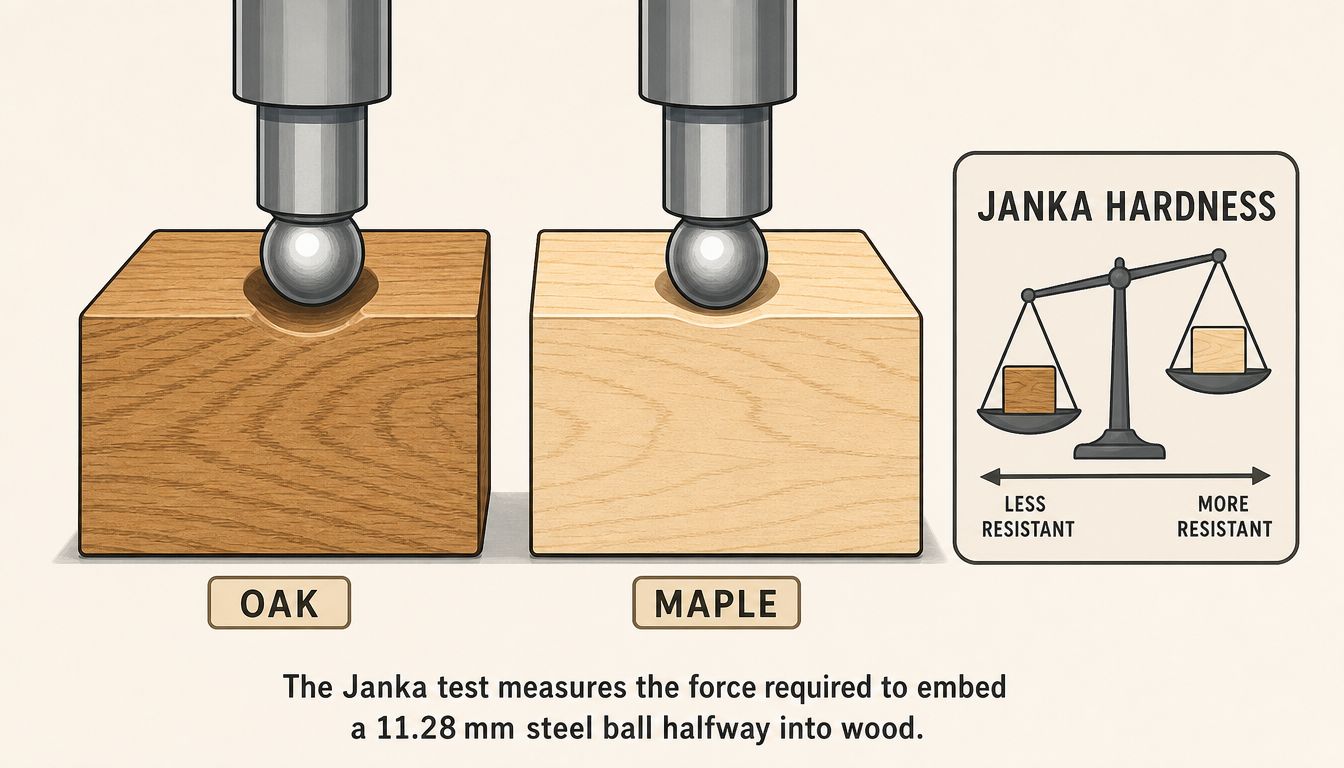
That matters most on surfaces that take daily hits. Dining tables, kitchen chairs, desks, and dressers in busy bedrooms all see repeated contact. A harder wood won't make a piece indestructible, but it does improve resistance to everyday indentation.
Where many buyers get misled
The biggest point of confusion in oak vs maple furniture is that many comparisons aren't really comparing oak to hard maple. They're comparing oak to brown maple, which is softer and often chosen for different reasons.
That distinction changes the whole conversation. Someone who reads that “maple is softer” may be reading about brown maple, not true hard maple. For a household choosing an investment-grade dining set, that's not a small technicality. It can lead to the wrong conclusion.
A deeper look at choosing the right hardwood for longevity and style helps sort out those categories before a custom order is placed.
What hardness means for cost-per-year
A piece that resists dents better can keep its finish and shape-looking surface longer under normal use. That's where cost-per-year becomes more useful than sticker price.
Consider the difference in practical terms:
- For households with children or pets: Hard maple can be a smart match for heavy daily use.
- For active dining spaces: Oak still offers strong durability and long service life.
- For heirloom expectations: The build quality has to match the wood quality, or the advantage gets wasted.
A durable species helps, but durability isn't only in the board. It's also in the way the piece is built and fitted together.
That last point matters because a hard top on a weak frame won't age gracefully. Wood species and craftsmanship have to work together.
How Grain and Color Affect Your Final Design
Two tables can share the same silhouette and feel completely different once stain hits the wood. Grain structure plays a big role in that result. Oak's open grain takes stain in a way that highlights texture and contrast. Maple's tighter grain usually produces a smoother, more even appearance.
That's one reason custom ordering matters. A made-to-order piece can be tuned to the home instead of forcing the room to adjust around a floor sample. For households refining a dining room, breakfast nook, or bedroom set, the finish decision is where the wood's personality becomes visible.
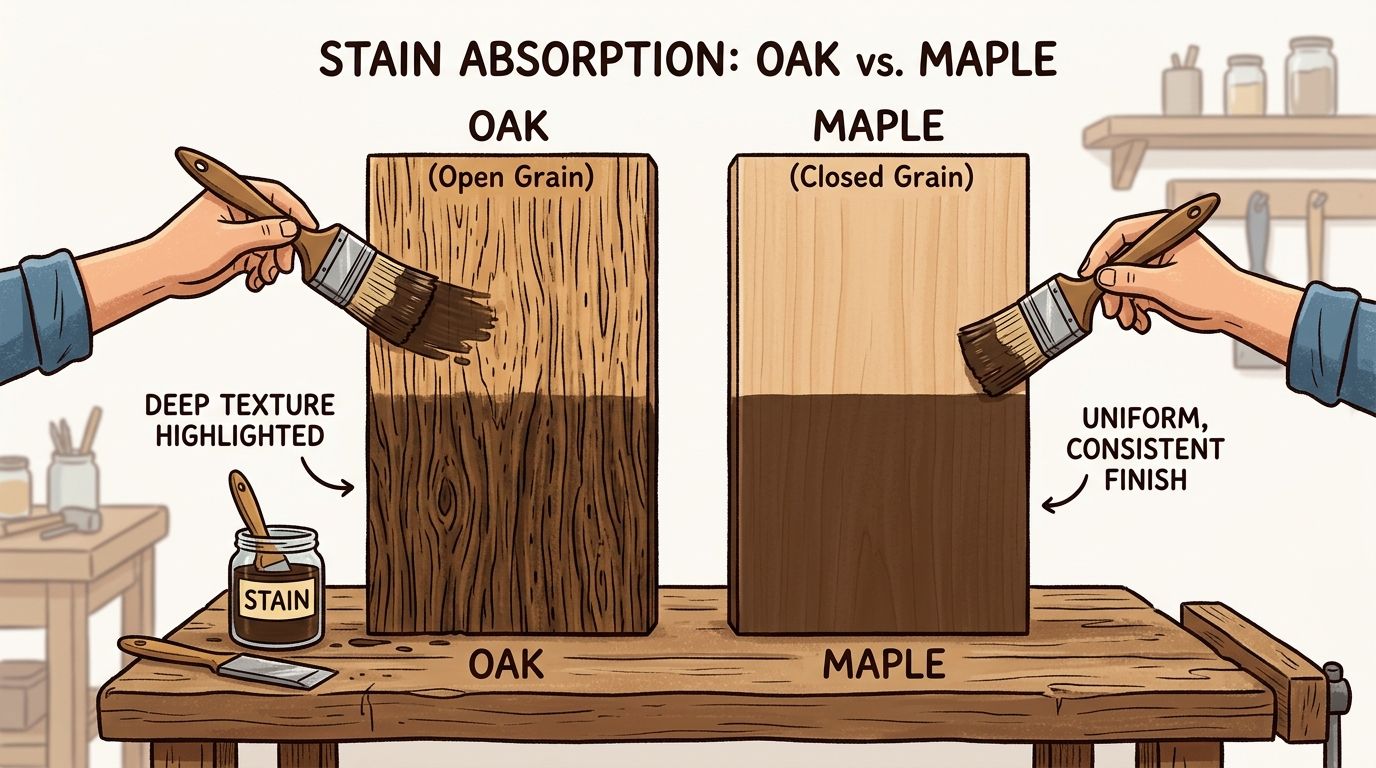
How oak and maple behave under finish
Oak often delivers the more dramatic result. The stain settles into its visible grain, creating depth and a more textured face. That's why oak is often a natural fit for traditional, rustic, Craftsman, and Mission-inspired interiors.
Maple usually behaves with more restraint. The surface reads finer and less busy, which can support lighter stains, natural finishes, or a softer modern palette.
A practical stain-matching guide can help households compare undertones before committing to a final look, especially when coordinating multiple rooms through custom wood stain options.
The hard maple versus brown maple design trap
Again, the oak vs maple furniture conversation becomes complex. The most significant gap in 'oak vs maple' coverage is the misleading conflation of 'brown maple' with true hard maple. While most content compares oak to the softer, cheaper brown maple, hard maple ranks 1400+ on the Janka hardness scale, outperforming both red and white oak in scratch resistance, making it a superior choice for high-use furniture, as explained by DutchCrafters in its discussion of oak and brown maple.
That matters for design as much as durability. Brown maple is often chosen because it stains flexibly and carries a smoother, more contemporary appearance. Hard maple can also look refined and clean, but it shouldn't be treated as the same material choice when performance matters.
Some shoppers choose “maple” for the look, then assume all maple performs the same. It doesn't.
Building a bespoke room, not just buying a table
Customization is where wood selection becomes personal. A homeowner may prefer oak for the visual character of a dining top, then soften the room with upholstered seating. Another may choose maple for a cleaner table surface, then warm it up with fabric, lighting, and wall color.
That's also where made-to-order collections like Canadel make sense. They allow adjustments to finishes, proportions, and configurations so the furniture supports the room instead of dominating it. On the comfort side, Stressless shows the same principle in ergonomic seating, where size, leather, and support can be adjusted to the person using it. The buttery feel of top-grain leather next to the quiet grain of maple can create a beautifully balanced room.
For shoppers working through the full visual layer of a space, these expert tips on vintage home lighting can help connect wood tone, finish warmth, and fixture style in a more cohesive way.
Choosing the Right Wood for Your Space
The right answer often becomes clearer when the wood is matched to the room instead of judged in the abstract. Oak and maple both belong in a well-furnished home. They shine in different roles.
Where oak often feels right
Oak usually fits spaces that benefit from visible grain and classic structure. A dining room with a substantial table, ladder-back chairs, or a Mission-style bookcase often welcomes oak's character. It gives the eye something to hold onto.
Good uses often include:
- Dining rooms: Oak brings presence to a gathering table.
- Home office pieces: Desks and bookcases gain a traditional, grounded look.
- Statement storage: Buffets and hutches often look richer when the grain is part of the design.
Where hard maple often earns its place
Hard maple is often a smart choice where a cleaner look and stronger wear resistance are both desirable. In children's furniture, active kitchen-adjacent spaces, or a sleek desk setup, that combination can be especially useful.
It often suits:
- High-use tables: A smoother visual surface with investment-grade toughness.
- Bedroom furniture: Dressers and nightstands with a quieter, refined appearance.
- Contemporary home office settings: Especially where lighter finishes support a calmer interior design plan.
The structure beneath the finish matters just as much as the species. Amish craftsmen exclusively use solid North American hardwoods like oak, maple, and cherry for furniture construction, strictly avoiding particle board, MDF, or thin veneers. This ensures consistent wood grain and structural integrity throughout the piece, a hallmark of heirloom quality, as described in this overview of Amish furniture construction.
Why craftsmanship changes the outcome
A hand-crafted solid wood piece uses the wood all the way through. That affects stability, repairability, and the way the furniture ages. It also changes the feel. The weight of solid wood is noticeable the moment a drawer opens or a chair is pulled back from the table.
For households choosing bedroom or dining furniture, it helps to compare finish samples only after checking the build details:
- Joinery: Look for construction that supports long-term use
- Material integrity: Solid hardwood behaves differently than a veneer over composite core
- Finish coordination: Bespoke stain choices can align a new piece with existing flooring or trim through custom wood finishes
That's the difference between buying a look and investing in a functional legacy.
Understanding the Investment and Value
Price matters, but with heirloom furniture, value is the more useful lens. A piece that lives well for decades often delivers a better cost-per-year than one that needs replacing far sooner.
On the species side, the general market picture is straightforward. Wood species selection is heavily influenced by cost. Oak and brown maple are categorized as the 'least expensive hardwoods' compared to cherry or walnut, with oak often being slightly cheaper. True hard maple commands a higher price due to its superior hardness and clean aesthetic, positioning it as a premium option, according to Cabinfield's discussion of brown maple and oak.
How to think about value without getting stuck on price
Oak is often the accessible starting point for solid hardwood furniture. It gives shoppers real substance, time-tested character, and strong long-term potential. Hard maple usually sits a step higher because of its cleaner grain and stronger resistance to wear.
That doesn't mean one is automatically the smarter buy. It depends on the household:
- Choose oak when visible grain, traditional styling, and budget discipline matter most.
- Choose hard maple when the room needs a smoother look and the furniture will take heavier daily use.
- Choose customization carefully so money goes toward the details that matter most, such as finish, fabric, or configuration.
For households exploring secondhand options before buying new, this guide to estate furniture sales can help clarify what to inspect in older wood pieces and what signs point to long-term value.
Making a long-term purchase easier
A higher-quality piece doesn't have to mean a harder path to purchase. Special Financing can help spread the investment over time, and a Low Price Promise helps reduce some of the hesitation that comes with stepping into premium, made-to-order furniture.
That's especially useful when a household is furnishing more than one area at once. A home might need dining furniture today, an ergonomic recliner next season, and eventually pieces for the Home Office or Outdoor Spaces. Thoughtful planning keeps the investment manageable while protecting quality.
Experience the Difference at Tyner Furniture
Screens help narrow choices, but they can't replace touch. Oak and maple don't just look different. They register differently in the hand, in the light, and in the room. The visual texture of oak and the smoother face of hard maple become much easier to judge when a shopper can stand beside both.
For bedroom and dining furniture, construction details are worth checking up close. Dovetail joints, characterized by angled cuts that lock together, are the standard for Amish drawer construction because they create a bond significantly stronger than nails or screws. Their visible, precise fit is a guarantee of strength and durability for decades of use, as outlined in this explanation of Amish furniture joinery.
What to notice during a showroom visit
A useful in-person visit isn't only about deciding between finishes. It's about seeing how the whole piece is built and how it fits daily life.
Shoppers often learn the most by checking:
- Drawer interiors: Dovetail fit tells a lot about the maker's standards
- Table edges and undersides: These reveal whether craftsmanship stayed consistent beyond the visible top
- Seating comfort: A sit test matters, especially when dining chairs or ergonomic recliners will see daily use
- Material feel: Solid wood has a different weight and steadiness than composite construction
This is also where a broader furnishing plan comes together. A household may start with a dining table and then connect the look across the Home Office, bedroom, and even Outdoor Spaces. For anyone comparing exterior materials too, this ultimate guide to teak outdoor furniture offers a helpful look at what durability means outside the home.
Since 1957, the South State Street showroom in Ann Arbor has served as a place where Southeast Michigan shoppers can slow down, compare real materials, and make a decision that fits both lifestyle and interior design goals. In-stock pieces can provide a starting point, but made-to-order options open the door to bespoke finishes, fabrics, ergonomic sizing, and configurations that are better suited to the home.
A visit to Tyner Furniture gives shoppers a chance to do the sit test, compare the feel of oak and hard maple in person, and browse online Quick Specs for special orders before choosing an heirloom piece for the years ahead.