Sustainable Wood Furniture: A Complete Buyer’s Guide

The showroom questions usually start the same way. A family walks in with a room that needs to work harder than it used to, a budget that has room for some flexibility but not waste, and a stack of labels that all promise something different. One tag says certified, another says reclaimed, another says handcrafted, and all of them sound responsible until the buyer has to decide what lasts.
That's where sustainable wood furniture stops being a marketing phrase and starts being a practical decision. The right piece can carry a family through daily use, look better as it ages, and keep a room from being replaced every few years. In Southeast Michigan, that matters because smart shoppers are usually thinking about more than the first price, they're thinking about cost-per-year, repairability, and whether a piece still feels right after the first season wears off.
Why Sustainable Wood Furniture Matters More Than Ever
A family can stand in front of a dining table and still feel unsure. The finish may look warm, the grain may seem honest, and the salesperson may say the wood is sustainable, but the central question is simpler. Which piece keeps its value in the home and asks less of the planet over time? That question matters because sustainable furniture is no longer a niche category. It is part of mainstream buying, and the market for eco-friendly furniture continues to grow. The global market was valued at USD 53.77 billion in 2025 and is projected to reach USD 113.94 billion by 2033, with a 10.0% CAGR from 2026 to 2033, according to Grand View Research's market summary.
That growth matches how families shop. People want pieces that fit the room, but they also want healthier interiors and less waste later on. A circular-economy report estimated that the EU28 generated about 10.78 million tonnes of furniture waste annually, and 80% to 90% of that waste was incinerated or landfilled rather than recycled. An industry summary also reported that Americans discard over 12 million tons of furniture and furnishings each year, and only 0.1% of discarded furniture is recycled into new furniture. The European circular-economy report helps explain why long service life matters so much.
Practical rule: if a piece can be repaired, refinished, or reconfigured instead of replaced, it usually creates better long-term value than a piece that only looks good on delivery day.
The hidden advantage shows up in the cost-per-year calculation. A cheaper piece that needs replacing sooner often costs more across the years than a well-made one that keeps working, keeps looking right, and can be refreshed instead of thrown out. That is why local buyers who care about value often focus on construction, wood selection, and finish quality before they focus on a low sticker price. If you want a clear guide to how hardwood choices affect longevity and style, wood furniture explained and choosing the right hardwood for longevity and style is a useful place to start.
Healthy homes matter too. Families usually notice the look of a table or bed first, then think later about finishes and indoor air. For a practical companion on healthier refinishing choices in another part of the home, low VOC refinishing for healthier homes is worth reading because it shows how finishes can affect day-to-day living. The same idea carries into furniture, where material transparency and lower-emission construction can make a real difference in how a room feels.
Understanding Certifications and Material Standards
A label can tell a buyer a lot, but only if the label means something. FSC and PEFC are the most familiar third-party forestry certifications, and for furniture they matter because they connect the finished piece back to how the wood was managed before it became a table, dresser, or chair. The strongest procurement benchmark in major public standards is chain-of-custody verification plus a minimum 70% certified-sustainable wood content for virgin wood, wood chips, or wood fibres, while EU furniture criteria also accept FSC, PEFC, or equivalent third-party certification and allow recycled wood to count as sustainably sourced material (EU furniture criteria, EU furniture ecolabel technical report).

What the buyer should ask for
A good retailer can usually answer these questions without hesitation:
- Where does the wood come from? Ask whether the piece uses certified virgin wood, reclaimed material, or recycled content.
- Can the wood be traced? Chain-of-custody paperwork should show how the material moved from forest or reclaimed source to finished product.
- What part of the piece is certified? Solid wood, chips, and fibres may not all be covered the same way, so the bill of materials matters.
- Are the finishes low emission? A wood label alone doesn't tell the whole story if adhesives or coatings introduce avoidable indoor-air issues.
That last point is where many shoppers get tripped up. A piece can be made from responsibly sourced wood and still rely on glues, coatings, or composite parts that weaken the overall environmental case. The internal guide on choosing the right hardwood for longevity and style is useful here because it helps readers think beyond the species name and into how the material will age.
For buyers who want a plain-English explanation of certification choices in a real project setting, FSC certified wood products for Chicago offers another angle on how documentation supports accountable sourcing. That kind of verification is the difference between a strong sustainability claim and a decorative one.
Reclaimed, recycled, and responsibly harvested
Reclaimed wood usually means the material already had a previous life in a building or older piece of furniture. Recycled content may be processed back into new panels or components. Responsibly harvested hardwood still comes from a living forest, but the sourcing is managed and documented. Those differences matter because they affect both footprint and traceability, and the right choice depends on the project, the room, and the buyer's priorities.
Solid Wood Versus Veneers and Engineered Alternatives
A lot of confusion starts when a piece looks like solid wood from across the room but tells a different story up close. Veneers can be attractive, and engineered panels have their place, but they don't behave the same way as solid wood when a family lives with the furniture for years. A well-made solid cherry dining table, for example, has weight, depth, and a surface that can be renewed. A lighter composite piece may look fine at first, then show wear in ways that are hard to reverse.
The environmental picture isn't separate from the structural one. A review of furniture materials noted that timber is renewable, while plastics and metals are not, and that adding metal, plastic, glue, and varnish can sharply increase a piece's environmental burden (furniture material review). A life-cycle assessment of 25 furniture pieces found that the pre-production stage contributed an average of 76% of total life-cycle impact, and material weight was a major driver of impact, while wood furniture accounts for 57% of EU furniture production value (life-cycle assessment study). In plain language, what the piece is made from matters before it ever reaches the showroom floor.
Material Comparison for Sustainable Furniture
| Material Type | Durability | Repairability | Environmental Impact | Typical Lifespan |
|---|---|---|---|---|
| Solid hardwood | High, especially with good joinery | Strong, can often be refinished or repaired | Better when responsibly sourced and built with fewer mixed materials | Long-term, often suitable for heirloom use |
| Veneer over core materials | Moderate, depends on substrate and wear | Limited, surface damage can be hard to restore | Can use less hardwood, but depends on adhesives and core material | Middle range |
| MDF and similar engineered boards | Lower in heavy-use settings | Weak for repairs, swelling can end the piece | Often relies on more processing and adhesives | Shorter, especially in moist or demanding rooms |
The best clue at the showroom is often hidden in the joints. Dovetailing and mortise-and-tenon construction signal a piece that's meant to stay put and carry stress without falling apart. That's why Tyner's Amish hand-crafted pieces matter in bedroom and dining spaces, they're built with material integrity first, not cosmetic shortcuts. The internal guide on solid wood vs engineered wood gives a useful way to think about where a veneer might work and where a solid build is the safer long-term bet.
What solid wood feels like
The difference is easy to sense in person. Solid cherry has a quiet density when a drawer closes. Oak has a steadier, grounded feel under the hand. Maple feels clean and firm, with a surface that can hold up to daily use without looking fragile. Those tactile cues matter because a piece that feels substantial usually tells a better durability story.
The True Cost of Sustainable Furniture Over Time
A lower sticker price can look smart on delivery day, then turn expensive when the piece wears out early. A family may replace a cheap table, chair, or dresser more than once, while a sturdier wood piece keeps doing its job year after year. That is why cost-per-year belongs in the conversation. The point is not only to spend less today, it is to own something that keeps serving the home without constant replacement.
That longer view also explains why so many buyers are willing to pay a bit more for better construction. A recent industry report found that many consumers are open to paying more for sustainable furniture, with an average premium willingness of 9.7%. That does not mean every household should reach for the highest-priced piece in the showroom. It does mean the logic is familiar, families often recognize the value of paying for durability, especially when the design stays useful through room changes and changing needs.
Cost-per-year works best when the piece can be repaired, refinished, or reupholstered instead of replaced.
That is where heirloom value starts to matter. A dining table built from solid wood can be refinished after years of use. A well-made chair can be passed on. A custom piece can outlast a trend because it was selected for the room, not for a season. For shoppers who want a broader sense of how durability shows up across construction styles, the internal guide on best solid wood furniture brands gives a useful way to compare long-term value with first cost.
Financing can also change the equation. When a household can spread the purchase over manageable payments, it becomes easier to choose the piece that still makes sense years from now instead of the one that only fits the budget on delivery day. Tyner Furniture also offers Special Financing and a Low Price Promise, which lowers the barrier to making a long-life purchase without turning the decision into a rush.
Smart Purchasing and Long-Term Care Strategies
A buyer can avoid most mistakes by slowing down and asking better questions in the showroom. The first one is simple, what parts of the piece are wood, and what parts are veneers, panels, or composites? The second is about use, will the piece live in a busy dining room, a quiet bedroom, or a home office where laptop cords and daily movement will test the finish? In Southeast Michigan, seasonal humidity swings make these questions more than academic, because wood that's assembled well and cared for well tends to stay truer over time.
A short checklist for the showroom
- Check joinery first. Drawers, aprons, and chair frames should feel tight, not loose or over-reliant on visible fasteners.
- Ask about finish maintenance. Some finishes handle daily life better than others, and some can be refreshed more easily.
- Look for made-to-order options. Custom finishes, sizes, and configurations make it easier for one piece to stay useful for longer.
- Confirm the care routine. A retailer should be able to explain cleaning, humidity, and what not to use on the surface.
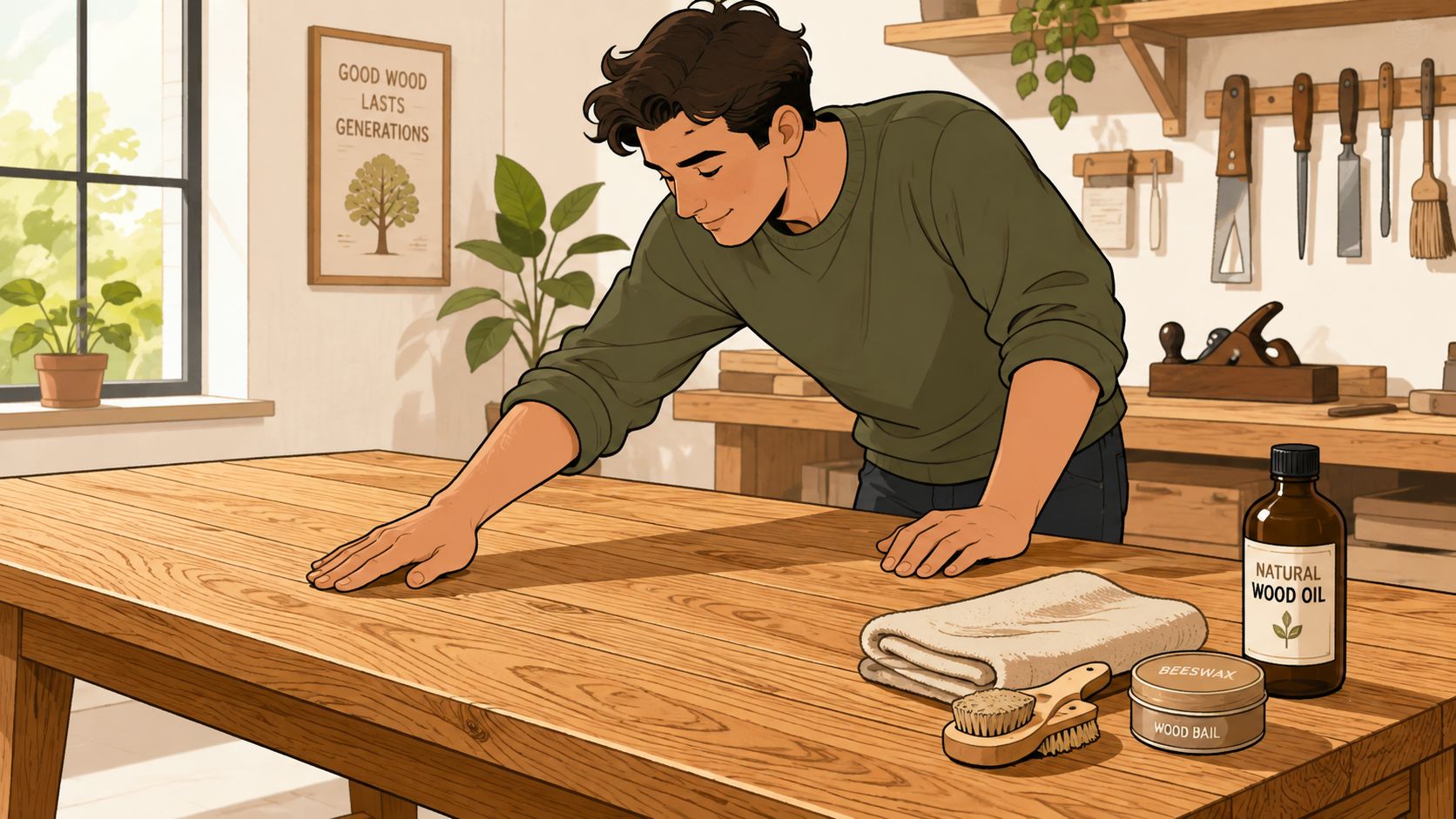
Keep wood furniture out of the harsh-cleaner cycle. Gentle cleaning, periodic dusting, and stable indoor conditions do more for longevity than aggressive products ever will.
Long-term care is where many furniture investments are won or lost. Harsh chemicals can dull a finish, while neglecting humidity can stress joints and surfaces. The internal guide on protecting wood furniture from scratches and stains is worth checking because it reinforces the basic habits that preserve appearance and value.
One more point matters for shoppers who want the piece to fit instead of force the room to adapt. In-stock is only the beginning. Custom options for finishes, fabrics, and configurations can make a sustainable purchase more practical, and that's true whether the buyer is looking at Canadel dining pieces, Stressless seating, or a made-to-order solid wood table. A piece that fits the home from day one is less likely to be replaced later.
Supporting Local Craftsmanship and American Manufacturing
Sustainable buying isn't only about the tree. It's also about the people who turn material into furniture that lasts. Amish hand-crafted construction has long reflected a practical kind of sustainability, using time-honored joinery and careful build methods before modern certification systems even existed. When a piece is made with patience and repairability in mind, it supports a longer use cycle and a stronger local economy at the same time.
That's especially relevant in Southeast Michigan, where families often want accountability as much as style. A business that's served the community since 1957 brings a kind of memory that online-only sellers can't match. It knows which rooms tend to need flexible storage, which finishes live well in family homes, and how to steer a shopper away from a piece that looks attractive but won't fit the way they live. Tyner Furniture's collection reaches from the Home Office to Outdoor Spaces, so the sustainability conversation doesn't stop at one room.
The other advantage is customization. Made-to-order furniture lets a household choose wood species, finish tone, dimensions, and configuration so the piece fits the space instead of becoming a compromise. That matters for sustainability too, because a better fit usually means a longer stay in the home. The internal page on American made solid wood furniture sits naturally alongside that thinking, since local sourcing and skilled construction often work together.
The showroom experience still matters because wood has a physical presence online can't fully capture. A buyer can feel the weight of solid cherry wood, see the grain shift in natural light, and notice the buttery feel of top-grain leather next to a handcrafted frame. Those details help families choose with confidence rather than hope.
Your Path to Sustainable Furniture Decisions
A good decision usually comes down to four questions. First, is the wood traceable and properly documented? Second, will the construction hold up to real life, including repair and refinishing? Third, does the piece make sense on a cost-per-year basis, not just at checkout? Fourth, does the material choice fit the room, the climate, and the household's long-term needs?
For some buyers, certification should lead the decision. That's the right call when traceability matters most, especially for new wood purchases. For others, reclaimed material may be the stronger environmental choice because it avoids new harvesting entirely. And for families who want a piece that can live through move after move, local craftsmanship and solid wood construction may be the most practical answer. The best option depends on the job the furniture has to do.
A simple decision path helps:
- Start with the use case. Dining, bedroom, office, and outdoor pieces all face different kinds of wear.
- Verify the material story. Ask whether the piece is solid wood, veneer, reclaimed, or a blend.
- Check the documentation. Chain-of-custody and certification matter when a buyer wants a claim that can be verified.
- Think past the first year. Repairability, refinishing, and resale value all affect true ownership cost.
The local part of the decision matters too. Ann Arbor shoppers can compare finish samples, sit on seating, and get honest guidance from people who understand both sustainability and daily life in Southeast Michigan. That's where a showroom visit becomes useful, because the hands-on check often reveals what the label can't.
Visit Tyner Furniture to compare sustainable wood furniture, test the feel of solid wood construction in person, and explore custom options for dining, bedroom, home office, and outdoor spaces. The Ann Arbor showroom can help with a sit test or a special-order review, and the online Quick Specs make it easier to narrow choices before the visit.