Custom Upholstery Dining Chairs: A Buyer’s Guide


The dining chairs looked right online, but the color felt too cold beside the table. Another set had the right silhouette, yet the seat became uncomfortable before dinner was over. A third option fit the room but left too little space around the table. This familiar search for an “almost perfect” chair is exactly where custom upholstery dining chairs become practical.
Made-to-order furniture lets a household choose the fabric, finish, scale, and configuration instead of adjusting the room around an in-stock compromise. The decision matters because dining chairs are handled, moved, cleaned, and occupied repeatedly. A chair that feels comfortable, suits the interior design, and holds up over time can offer better value than replacing an unsuitable set after a short period.
Tyner Furniture has served Ann Arbor and Southeast Michigan since 1957, giving local shoppers a place to compare materials in person and ask detailed questions before ordering. A helpful starting point is this guide to planning a dining room, especially for households still deciding how chairs, tables, lighting, and circulation should work together.
Beyond the Showroom Floor
“In-stock” is only the beginning. A showroom chair can reveal the general direction, but a made-to-order program gives shoppers more control over the details that determine whether the piece feels settled in the room.
The fabric may be attractive, but it might not coordinate with the rug. The legs may be sturdy, but the finish may fight with nearby wood. The seat may look elegant, but its proportions might not suit the table or the people who use it most. Custom upholstery addresses those mismatches before production rather than asking the household to live with them afterward.
The broader market reflects this shift toward comfort and personalization. In the U.S. dining chair market, upholstered chairs are estimated to represent 45% to 50% of retail unit sales, according to U.S. dining chair market analysis. Upholstered seating has moved well beyond a niche preference. It has become a mainstream way to bring softness, color, and fabric choice into everyday dining.
Custom means intentional, not extravagant
Custom furniture doesn't have to mean ornate furniture. A clean-lined chair in a durable woven fabric can be just as bespoke as a tufted chair in velvet. The value comes from selecting the right elements for the home, not from adding decoration for its own sake.
A useful order begins with the room's demands:
- Daily use: Determine whether the chairs serve quick breakfasts, long family dinners, entertaining, or all three.
- Visual relationship: Consider how the upholstery will work with the table, flooring, lighting, and adjacent rooms.
- Physical comfort: Check seat height, back support, cushion feel, and arm placement.
- Long-term value: Think about durability, repairability, and how the chair may age.
That last point changes the buying conversation. A well-built chair can become an heirloom, while a poorly fitted chair can become an expensive reminder that appearance alone isn't enough. Cost-per-year, and even cost-per-sit, offers a more useful lens than the initial ticket alone. A durable chair used regularly may provide more value than a lower-cost chair that needs early replacement.
Practical rule: A chair is a successful custom order when its material, dimensions, construction, and style all serve the household at the same time.
Decoding Your Customization Options
Custom upholstery becomes easier once the choices are separated into a few manageable categories. Most orders involve the upholstery, wood finish, silhouette, and smaller design details. Each choice affects both appearance and use.
Start with the surface
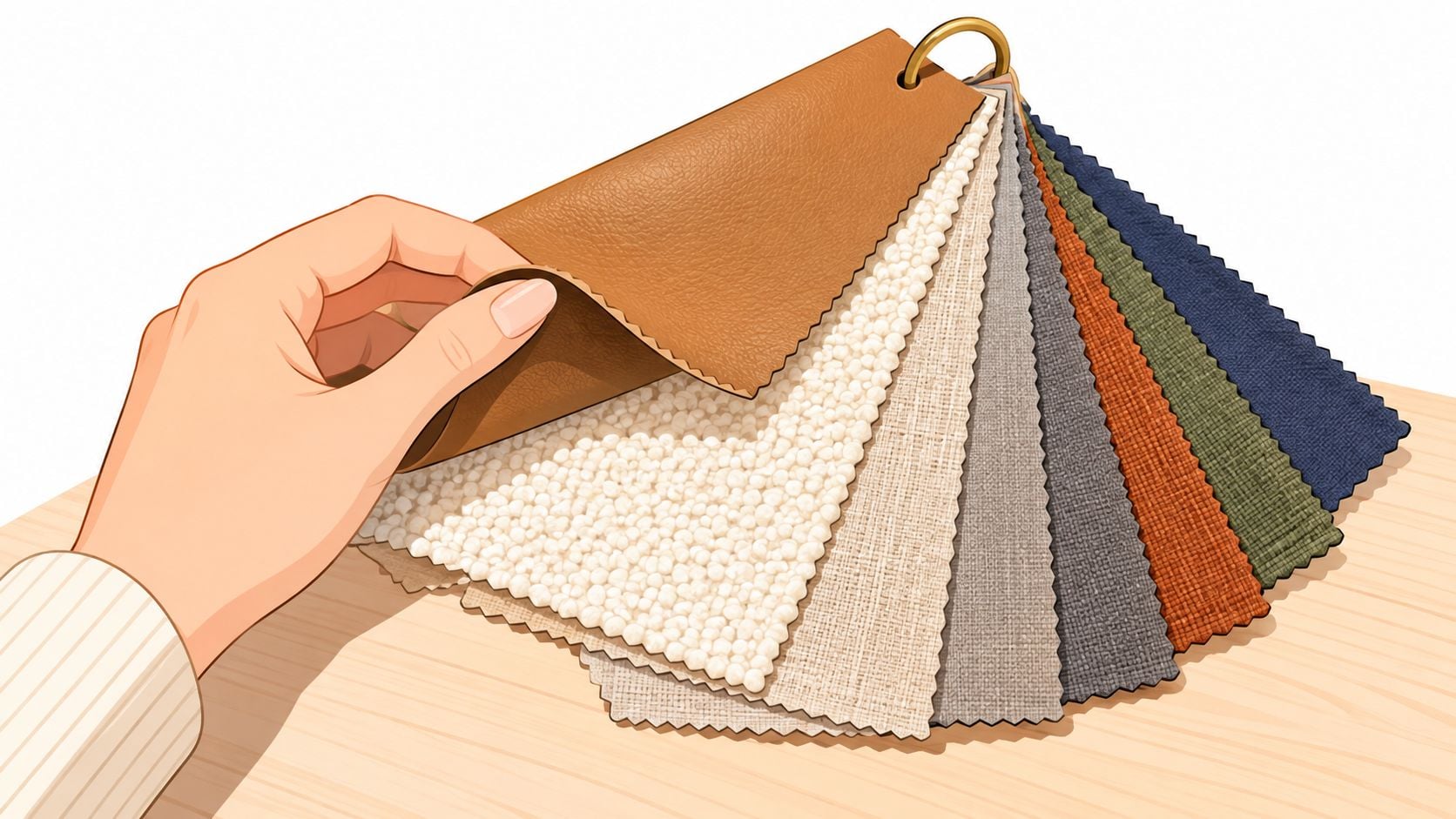
A tightly woven textile can create a relaxed, family-friendly look. The buttery feel of top-grain leather brings a more refined character, while a textured fabric can soften a room with painted cabinetry or hard flooring.
Color should be judged beside the actual table and surrounding finishes. A swatch that looks warm under showroom lighting may appear different beside daylight, wall color, or a nearby wood species. Sample review is more reliable than choosing from a small screen image.
Choose the frame and finish
The frame does more than support the upholstery. It establishes the chair's visual weight and affects how the chair relates to the table.
- Solid cherry: A warm, traditional presence with visible richness in the wood.
- Maple: A clear, refined grain that can suit a lighter or more contemporary interior.
- Dark finish: A stronger outline that can ground pale upholstery.
- Natural finish: A quieter appearance that lets the wood's character remain visible.
Tyner's Amish hand-crafted furniture reflects the Solid Wood Standard, using material integrity and joinery as part of the design decision. The weight of solid cherry wood in the hand feels different from a thin, lightweight frame, and that physical difference can matter every day.
Shape the chair's personality
The silhouette includes the back profile, arm design, leg shape, seat outline, and overall scale. A curved back can feel welcoming, while a straighter profile may suit a more formal dining room. Armchairs can add comfort at the head of the table, but they also require careful clearance so they can move in and out without catching on the apron.
Subtle details finish the order. Nailhead trim, contrasting welt, visible wood edges, and finish changes can shift a chair from understated to decorative. Canadel's program offers particularly broad choice, with over 40 wood finishes and more than 150 fabrics, along with options for sizes, shapes, and bases, as described in this Canadel customization overview.
For a practical checklist before visiting a showroom, the guide to choosing dining chairs can help organize measurements and preferences.
Choosing the Perfect Upholstery Material
The right upholstery material depends on the household's habits, not just the room's color palette. A formal dining room used occasionally can accommodate a different textile from a kitchen dining area that handles children, pets, guests, and repeated cleaning.
Performance fabrics are often a sensible choice for busy Southeast Michigan homes. They can provide a soft, residential appearance while offering easier maintenance than delicate textiles. The exact finish still matters, though. Some textured fabrics conceal small marks better than smooth, pale surfaces, while tightly woven materials may resist snagging more effectively.
Natural fibers such as linen and cotton offer an appealing hand and relaxed visual character. Linen can look cool and refined, while cotton often feels familiar and approachable. These materials may require more attentive care, particularly in a dining space where spills and friction are part of normal use.
Velvet brings depth and softness. Its directional pile can create rich changes in tone as light moves across the chair, but the texture may show pressure marks or require more deliberate maintenance. Leather offers a refined surface that develops character with use. The buttery feel of top-grain leather can be especially appealing when the chair needs to bridge dining and living areas.
Read durability specifications correctly
A durability rating doesn't describe the entire quality of a fabric, but it gives the buyer a useful comparison point. Residential-grade fabrics are commonly considered workable around 25,000 Wyzenbeek double rubs, while higher-use builds often target 50,000 to 100,000 double rubs, according to this upholstered dining chair construction guide.
Wyzenbeek double rubs measure resistance to repeated abrasion. In practical terms, stronger abrasion performance can slow surface wear, pilling, seam stress, and fiber breakage as people sit, slide, and clean the chairs. It doesn't mean a fabric is stain-proof or immune to damage, so care instructions remain important.
Foam is equally significant. A dining seat typically performs well with medium-firm foam around 25 to 35 ILD and at least 35 kg/m³ density, as explained in the same construction guide. Higher-density, high-resilience foam can retain support longer, while low-density foam may flatten and bottom out under repeated compression.
Match the material to the household
A useful material comparison looks like this:
- Performance textile: Practical for frequent meals and active households. Ask about cleaning instructions, texture, and abrasion performance.
- Linen or cotton: Comfortable and naturally appealing. Best suited to households prepared for more attentive care.
- Velvet or boucle: Tactile and expressive. Evaluate pile, texture, and maintenance before choosing them for heavy daily use.
- Top-grain leather: Smooth, substantial, and easy to coordinate with wood. It develops a distinct patina and should be maintained according to the maker's guidance.
For a broader explanation of weave, fiber, and wear considerations, this resource on fabric types for furniture durability can help shoppers prepare better questions. A more detailed overview of upholstery materials can also clarify the differences before sample selection.
The most fashionable fabric isn't automatically the most suitable fabric. Daily habits should decide whether tactile appeal or simplified maintenance carries more weight.
What Lies Beneath Heirloom Quality Construction
Upholstery gets attention because it's visible. Construction determines whether the chair remains stable after years of movement and use. A beautiful fabric cannot compensate for a frame that flexes excessively, weakens at the joints, or loses its support.
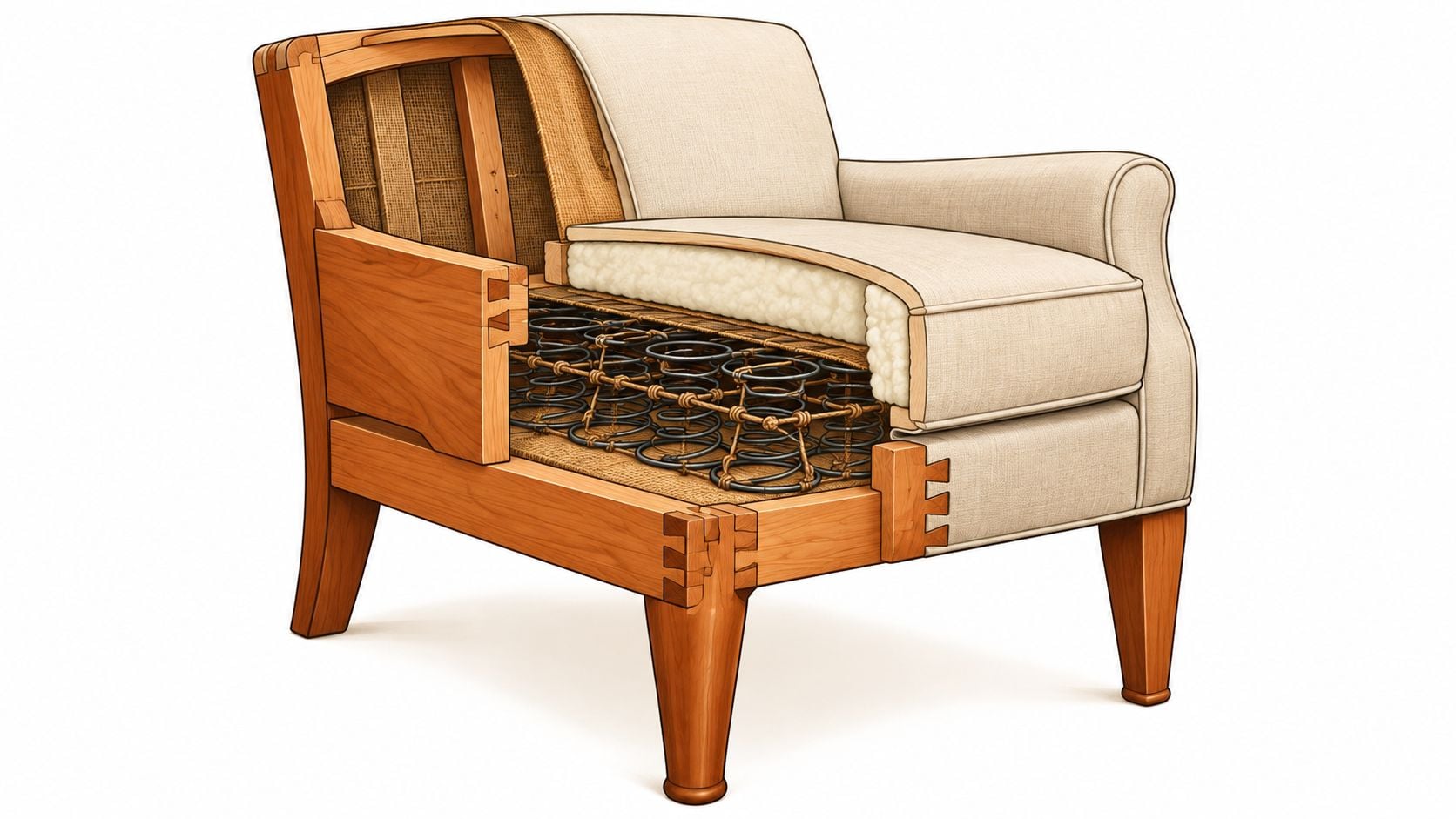
Tyner's Amish hand-crafted dining furniture illustrates the difference between material integrity and surface imitation. Solid North American hardwoods such as cherry, oak, and maple provide a substantial foundation, while time-honored joinery connects the parts with more purpose than staples and glue alone. The result is furniture designed as a functional heirloom rather than a temporary room accessory.
Joinery is a quality marker
Many solid-wood Amish dining chairs use mortise-and-tenon joinery and corner braces. In a mortise-and-tenon joint, one piece is shaped to fit securely into a corresponding opening in another. Corner braces add reinforcement where the frame experiences stress. This construction approach is described in the guidance on Amish dining chair joinery.
The point isn't that every mass-produced chair fails. The point is that construction methods affect how a chair handles repeated loading, shifting, and everyday movement. Shoppers evaluating an investment piece should ask how the frame is joined, what material forms the structure, and whether the manufacturer can explain the build clearly.
Ergonomics belongs in the order
Dining comfort depends on fit. Standard dining seat height typically falls between 17 and 19 inches, or 43 to 48 centimeters, and many experts recommend about 11 inches of vertical clearance below the table apron. These measurements and their practical effects are outlined in dining chair comfort guidance.
A seat that's too high can press against the thighs and encourage the sitter to slide forward. A seat that's too low can reduce table compatibility and weaken posture. A cushion of more than 2 inches may improve comfort, but only when the internal foam has enough density to resist compression creep.
A proper evaluation should include:
- Seat height: Confirm the chair works with the table apron, not just the tabletop.
- Back angle: Look for support that allows conversation without forcing a rigid posture.
- Seat depth: Check whether the sitter can use the back support without pressure behind the knees.
- Footprint: Make sure chairs can pull out, turn, and circulate without crowding the room.
A chair's cost-per-sit improves when the frame remains sound, the foam retains support, and the dimensions continue to feel comfortable. That is the reasoning behind treating construction as part of the investment, not as a hidden technical detail.
For readers interested in the underlying joint method, Tyner's explanation of mortise-and-tenon construction offers a useful reference.
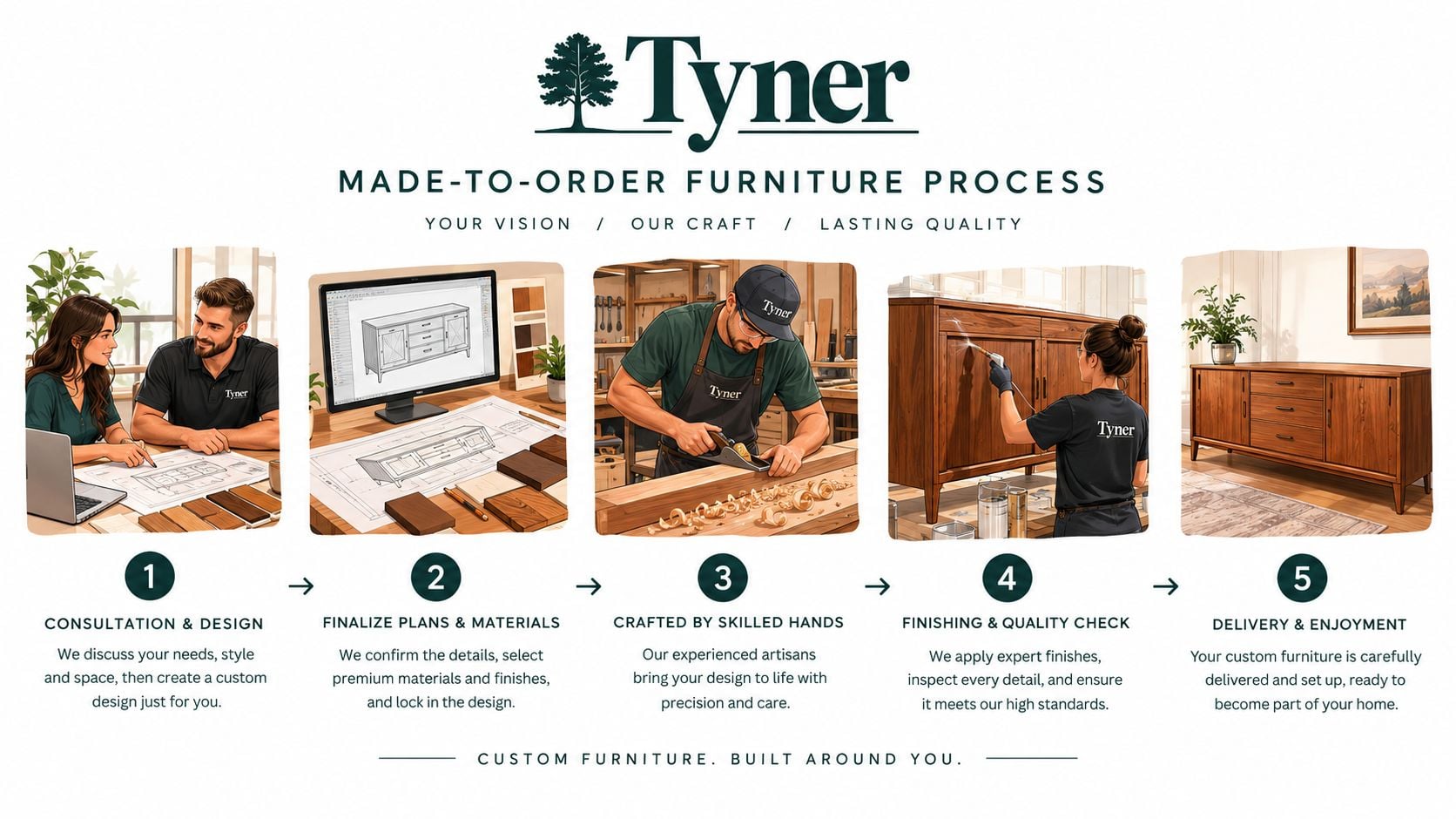
The Tyner Made-to-Order Furniture Process
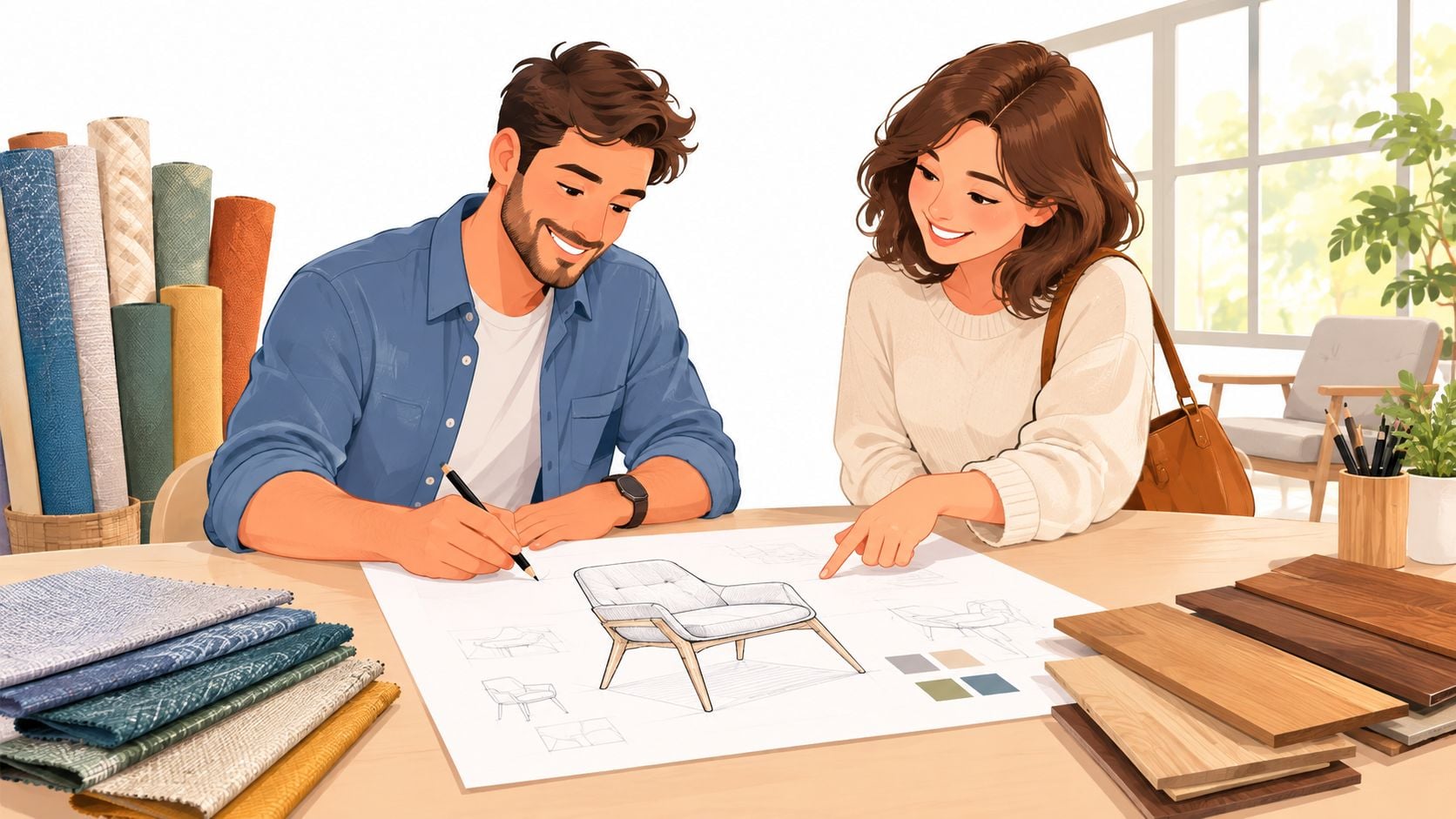
A custom order should feel guided, not confusing. The most productive showroom visits begin with the room's measurements, a photo of the table, and a clear description of how the chairs will be used. From there, a design professional can help narrow the choices without taking control away from the customer.
At the Ann Arbor showroom, the process can begin with a sit test. The shopper compares an armless chair with an armchair, notices the difference between firm and yielding foam, and studies fabric against wood finishes. This physical review matters because a chair's scale and support are difficult to judge from a product image alone.
A practical sequence
- Discuss the room. The conversation covers the table, available circulation, household routines, and preferred interior design direction.
- Test the proportions. The shopper sits in representative chairs and checks knee position, back support, arm clearance, and ease of standing.
- Review materials. Fabric and leather samples are compared with wood species and finishes under showroom light.
- Refine the configuration. The order can address chair shape, base, finish, upholstery, and other available details.
- Confirm the order. Dimensions, selections, production expectations, delivery details, and care requirements should be reviewed before approval.
Canadel is a useful example of how “custom” can work within a structured program. Its Signature documentation describes options such as adding or changing nail heads, color matching, changing finishes from other collections, rescaling some chairs, and modifying table dimensions. The program has defined possibilities and limits, so a conversation with an authorized retailer helps distinguish available changes from requests that fall outside the collection.
Value includes the buying experience
Made-to-order furniture takes planning. Production timing can vary by program and selection, so shoppers should ask about expected lead times before placing an order. That waiting period is easier to evaluate when the final piece solves a real problem, fits the room, and uses materials selected for its intended life.
Budget planning also deserves a direct conversation. Tyner Furniture offers Special Financing subject to approval and a Low Price Promise, which can help households evaluate a higher-quality order without reducing the decision to the lowest initial price. The relevant question remains whether the chair provides lasting comfort, sound craftsmanship, and useful flexibility.
A simple overview of the process is available through custom furniture made simple. The same made-to-order mindset can extend beyond dining, including Stressless ergonomic seating with available Small, Medium, and Large sizing, as well as coordinated furniture for the home office and other rooms.
Your Invitation to a Sit Test in Ann Arbor
The strongest reason to see custom upholstery dining chairs in person is that comfort is physical. A photograph can't reveal whether the seat supports the thighs properly, whether the back angle encourages relaxed conversation, or whether an armchair clears the table apron.
At the South State St. showroom in Ann Arbor, shoppers can compare upholstery textures, feel the weight of solid wood, and assess a chair's scale beside other furniture. A fabric that looks ordinary on a screen may have a beautiful hand in person. A finish that seemed too dark online may provide exactly the grounding a light dining room needs.
The sit test should answer practical questions:
- Does the seat support the body without feeling rigid?
- Can the chair move under the table comfortably?
- Does the back encourage conversation during longer meals?
- Will the fabric suit the household's cleaning and use patterns?
- Do the finish and silhouette belong with the existing room?
The choice also sits within a broader local legacy. Tyner Furniture has served Southeast Michigan since 1957, with selections that reach from the Home Office to Outdoor Spaces. That range makes it possible to consider the dining room as part of the whole home rather than as an isolated purchase.
Custom furniture is a sustainable choice when it prevents repeated replacement and remains useful as a household changes. A well-fitted chair can support daily meals, celebrations, work sessions, and long conversations while preserving the character of the room. Shoppers who can't visit immediately can begin with online Quick Specs for special orders, then bring questions and measurements to the showroom.
Tyner Furniture offers made-to-order dining options through Canadel, alongside hand-crafted solid wood furniture and comfort-focused seating from brands such as Stressless. Visit Tyner Furniture in Ann Arbor for a personal sit test, or browse the online Quick Specs before planning a special order.