Chest of Drawers with Mirrors: A Buyer’s Guide for 2026


A bedroom often asks one piece of furniture to solve several problems at once. It has to store clothing, support a daily routine, look balanced against the bed, and hold up to years of opening, closing, and shifting seasonal humidity. That's why so many shoppers pause at the idea of a chest of drawers with mirrors. It seems simple until the details start piling up.
The confusing part isn't whether this style is useful. It is. The primary question is whether the piece is built well enough to stay safe, square, and attractive over the long haul. For households in Ann Arbor and across Southeast Michigan, that long view matters. A mirrored dresser isn't just another box for folded clothes. It's a visible bedroom centerpiece, a grooming station, and, if chosen well, an heirloom investment with a low cost-per-year.
Finding the Perfect Bedroom Centerpiece
A good bedroom feels settled. Not crowded, not improvised, and not pieced together from short-term fixes that never quite work. A chest of drawers with mirrors often solves that problem because it combines storage and a daily-use surface in one footprint.
That matters when a room needs to do more than one job. Many homeowners want folded-clothing storage, a place for a lamp, and a practical spot to get ready in the morning without adding several separate pieces. A mirrored dresser pulls those needs together and gives the wall a finished look.
Why this piece carries so much weight
Unlike a standalone chest tucked in a corner, a mirrored dresser becomes part of the room's rhythm. It's where jewelry trays land, where morning light reflects back into the room, and where small clutter can either stay contained or get out of hand.
A smart purchase starts with three questions:
- How much storage is needed: Everyday clothing, linens, accessories, or a mix of all three.
- How the room is used: Shared primary bedroom, guest room, rental, or smaller city bedroom.
- Whether the piece is meant to last: Temporary convenience and long-term durability are rarely built the same way.
A bedroom usually feels calmer when one well-made piece handles several functions instead of forcing the room to rely on multiple smaller pieces.
For shoppers who want a practical starting point before choosing style or finish, this guide on how to select the perfect bedroom furniture helps frame the bigger decisions.
The investment mindset
Furniture shopping can feel overwhelming because every option looks acceptable in a photo. The difference shows up later. Drawers rack. Veneers lift. Mirror mounts loosen. Surfaces scratch. What looked like value at the register can become expensive over time.
That's why durability, craftsmanship, and material integrity deserve more attention than trend-driven details. A hand-crafted piece made with real joinery and thoughtful proportions usually costs less per year of use than a replaceable one. That's the kind of purchase that earns its place in a bedroom.
The Enduring Appeal of a Dresser with a Mirror
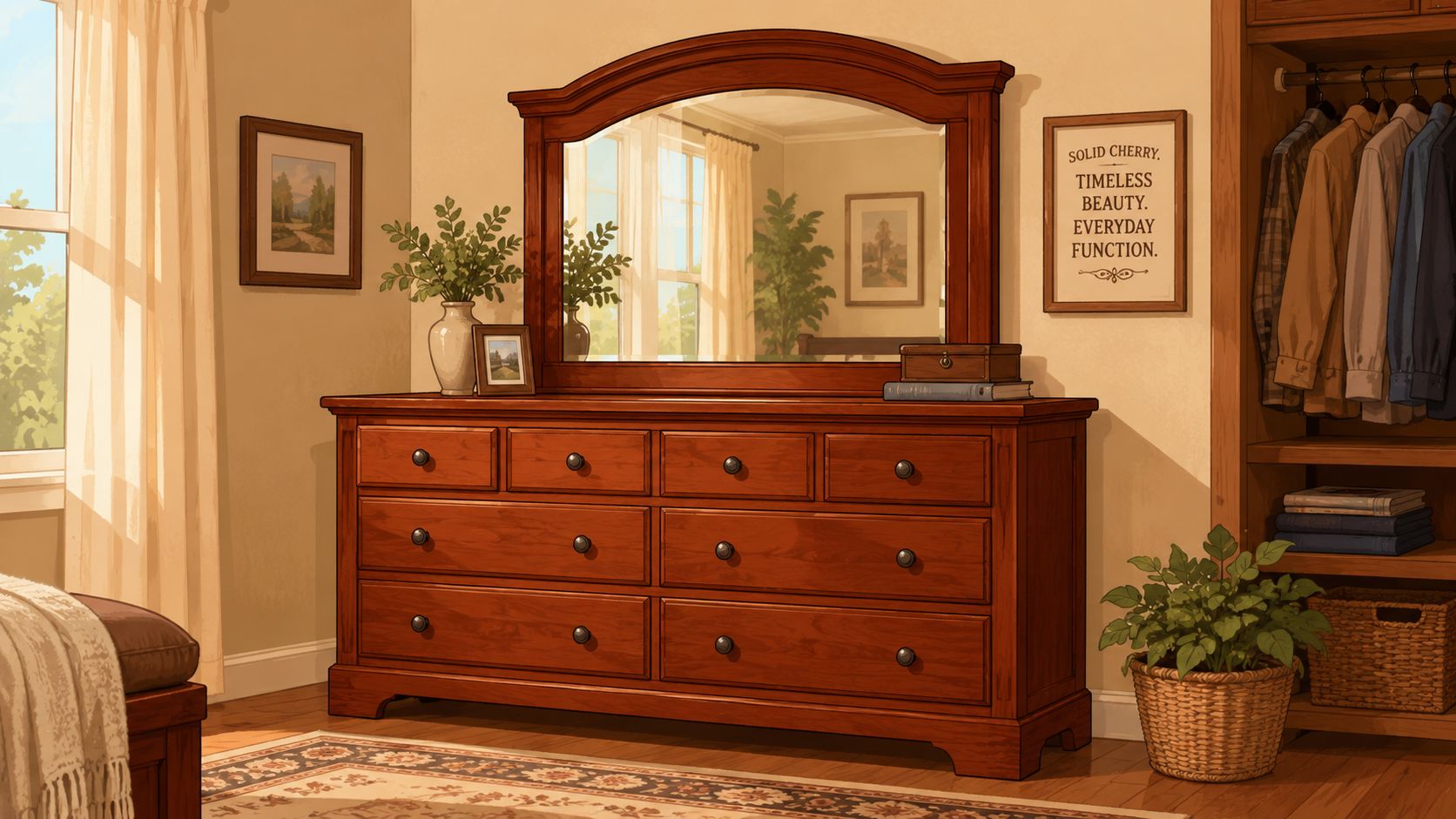
A mirrored dresser has lasted because it handles two jobs elegantly. It stores clothing in an organized way, and it creates a dedicated place for grooming and dressing. That dual purpose is why the form still works in traditional, transitional, and contemporary interiors.
In North American homes, many people call this piece a dresser rather than a chest of drawers. That wording reflects how the piece evolved from simple storage into a station for dressing and styling, with a flat top and mirror becoming part of the expected function.
A design that solved a real problem
The form didn't appear by accident. The chest of drawers evolved in the mid-17th century from a simple chest with drawers in the base. This innovation replaced the medieval coffer by introducing drawers that allowed access to clothing without lifting a heavy lid, establishing the foundational design that would later incorporate mirrors for grooming, as noted in Britannica's history of the chest of drawers.
That shift matters because it explains why this furniture still feels intuitive. Drawers brought better organization. Mirrors added convenience. The combination turned a storage object into a daily-use bedroom tool.
For buyers comparing shapes, drawer arrangements, and case construction, this article on what to look for when buying chests, dressers, and cabinets helps sharpen the eye.
Why it still works in modern bedrooms
Some bedroom pieces come and go with trends. A dresser with a mirror has more staying power because it offers practical benefits that don't age out.
- It simplifies the layout: One piece can reduce the need for extra wall decor, a separate vanity, or another storage cabinet.
- It reflects light: A mirror can brighten a room and help the bedroom feel more open.
- It creates routine: The top surface and mirror naturally become a grooming zone instead of scattering those items around the room.
The best bedroom furniture earns its footprint every day. A mirrored dresser does that by combining storage, surface space, and visual balance in one piece.
There's also a deeper appeal. This style connects current homes to a long furniture tradition. That's one reason it suits the idea of an heirloom purchase so well. A well-built example doesn't feel disposable. It feels rooted.
Choosing the Right Size and Layout for Your Room
The wrong size can ruin even a beautiful piece. A chest of drawers with mirrors needs enough width to feel proportionate, enough height to work comfortably, and enough clearance to let drawers open without forcing awkward traffic patterns.
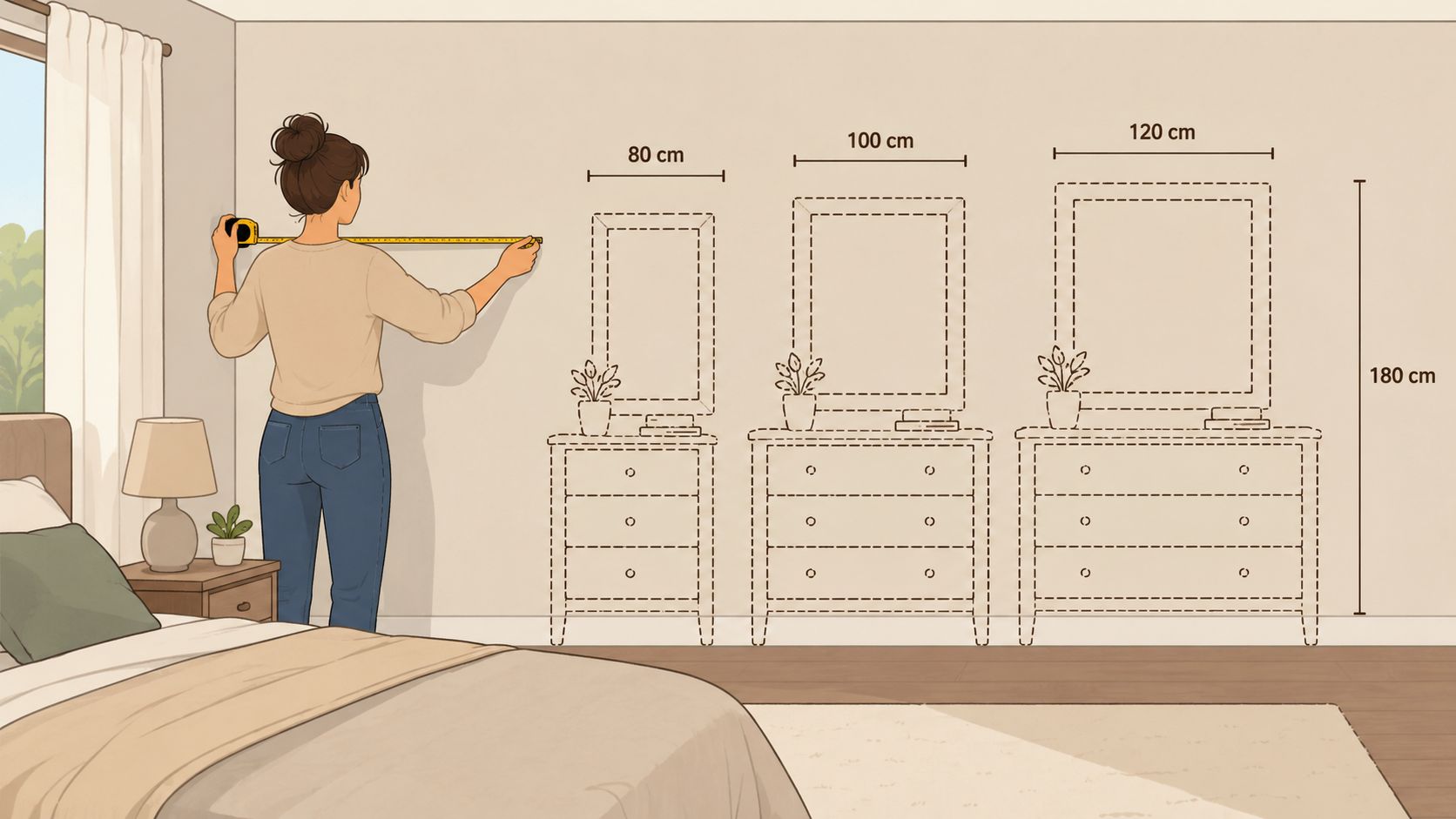
The first step is simple. Measure the wall, note nearby doors and windows, and look at how people move through the room. The goal isn't just to make the dresser fit. It's to make the room function well when the drawers are in use.
Start with the wall, then the walkway
Many people measure only the furniture footprint. That misses the bigger issue. Drawers need swing space in front, and the person using them needs room to stand, bend, and move.
A practical measuring routine includes:
- Wall width so the piece doesn't overpower the bed or nearby nightstands.
- Overall height so the mirror doesn't fight a window trim line or low ceiling slope.
- Walking clearance so the dresser remains usable every day, not just technically installed.
- Drawer projection because deep drawers can change how the whole room feels once open.
For anyone double-checking dimensions before shopping, this guide on how to measure furniture is worth keeping open while measuring.
The ergonomic sweet spot
Height matters more than most shoppers expect. For a chest of drawers with an integrated mirror, the optimal dresser height is 30–36 inches, which places the mirror at eye level for most adults during grooming and helps prevent neck strain, according to this dresser dimension guide.
That recommendation is useful because it affects both comfort and appearance. A dresser in that range usually leaves enough top surface for a lamp, tray, or framed photo without making the mirror feel awkwardly high or low.
Layout choices that help smaller bedrooms
A mirrored dresser can make a room feel bigger when it's sized carefully and placed with intent. In tighter spaces, details like sightlines, reflected light, and floor visibility matter more than adding more furniture.
Helpful design ideas often overlap with broader tips to make bedrooms feel bigger, especially when working with compact rooms in Ann Arbor condos, older homes, or guest spaces.
| Area to check | What to look for |
|---|---|
| Bed relationship | The dresser should feel centered in the room's visual balance, not crowded by the bed |
| Mirror placement | Reflection should add light, not bounce clutter back into view |
| Top surface | Leave room for daily-use items without turning it into overflow storage |
A room works best when the furniture supports movement. If opening the drawers forces someone to sidestep around a bench, bed corner, or closet door, the piece is too large or placed on the wrong wall.
Material Matters The Solid Wood Difference
Material is where the long-term story begins. A chest of drawers with mirrors may look fine on day one in several different constructions. The difference shows up after years of seasonal expansion, repeated drawer use, moving day stress, and the added weight of a mirror assembly.
Mass-produced case goods often rely on lighter engineered components, thin veneers, and hardware that does the minimum. By contrast, hand-crafted solid wood furniture built from North American hardwoods like cherry, oak, and maple offers a different kind of reliability. The weight feels different. The drawer action feels different. Even the sound of a drawer closing is different.
What the hand notices first
Solid wood has presence. A cherry drawer has weight in the hand. Oak shows grain with depth instead of a printed imitation. Maple can read clean and bright, but it still carries the density that makes a piece feel grounded.
That tactile quality isn't just about beauty. It usually points to better structural behavior over time.
- Drawer boxes with dovetail joinery tend to resist loosening better than stapled construction.
- Mortise-and-tenon framing gives larger furniture sections stronger connections.
- Solid hardwood components generally age with more dignity than thin surface materials bonded over weaker cores.
A useful primer on choosing the right hardwood for longevity and style can help narrow down which species fits both the room and the expected wear.
Why structure matters more with mirrors
A mirror changes the engineering of the piece. It adds weight above the case, places rotational stress where the mount connects, and increases the importance of keeping the dresser square. If the case flexes, the mirror connection can suffer.
Hand-crafted Amish construction stands apart from many mass-produced options. Joinery isn't just a tradition. It's part of how the whole unit stays aligned. A dresser with a stable, well-built case gives the mounted mirror a stronger foundation.
Practical rule: If a dresser feels light, twists easily, or shows case movement when drawers are operated, it's a poor candidate for carrying a substantial mirror over the long term.
Cost per year beats sticker shock
A lot of people focus on purchase price because it's easy to compare. Cost per year is the more useful measure. A well-made solid wood dresser that serves a family for many years often delivers better value than a lower-priced piece that needs replacement, repair, or constant caution.
That's especially true in primary bedrooms where drawers open daily and top surfaces collect regular use. The finish has to hold up. The joints have to hold up. The mirror mount has to hold up.
A sustainable and bespoke choice
There's also a sustainability argument for buying better. Furniture that stays in use longer creates less waste and fewer replacement cycles. A made-to-order solid wood dresser can also be more personal, especially when the finish is chosen to work with the room rather than against it.
That customization edge matters across the home. In-stock is only the beginning. Many shoppers want bespoke choices in finish, configuration, or comfort, whether they're selecting bedroom furniture, a Canadel dining set, or a Stressless recliner sized for ergonomic support. A home comes together more gracefully when those choices are intentional, not improvised.
Coordinating Styles and Custom Finishes
A mirrored dresser doesn't have to be the loudest piece in the room, but it should feel like it belongs there. The shape of the mirror, the line of the base, the hardware, and the finish all affect whether the piece feels settled or slightly off.
That's why style matching isn't just about picking “modern” or “traditional.” It's about how the furniture speaks to the rest of the room. A crisp maple finish can suit a cleaner interior design direction. A darker cherry can add gravity and warmth. Oak often brings visible grain and a grounded, enduring character.
Matching the room without forcing it
The most successful bedrooms usually repeat cues instead of duplicating everything exactly. A dresser can connect to the room through tone, texture, or silhouette.
Consider these pairings:
- Traditional rooms: Framed mirrors, richer stains, and classic drawer fronts often feel appropriate.
- Transitional spaces: Cleaner hardware and simpler case lines help bridge old and new.
- Rustic or organic bedrooms: Visible grain and hand-crafted details add authenticity.
- More minimal interiors: Lighter finishes and restrained profiles keep the room airy.
For couples sharing a space, color and style choices are often easier when the room avoids extremes. This piece on relationship-safe decor makes that point in a playful way, but the underlying principle is sound. Bedrooms tend to age better when they lean balanced rather than polarizing.
Why made-to-order changes the result
Showroom pieces are helpful, but they're only a sample of what's possible. A made-to-order dresser allows a better fit with existing flooring, trim color, bed style, and lighting. That's where a bespoke approach pays off.
A custom finish can solve problems that off-the-floor shopping can't:
- a stain that complements warm wood floors instead of clashing with them
- a wood species selected for grain character, not just color
- a mirror shape or case scale better suited to the architecture of the room
That flexibility is part of what makes a piece feel intentional. The room stops looking assembled and starts looking designed.
Understanding Mirror Types and Secure Installation
Most buying guides treat the mirror like a style choice. That's only half the story. The more important issue is whether the mirror is mounted to a case strong enough to support it safely over time.
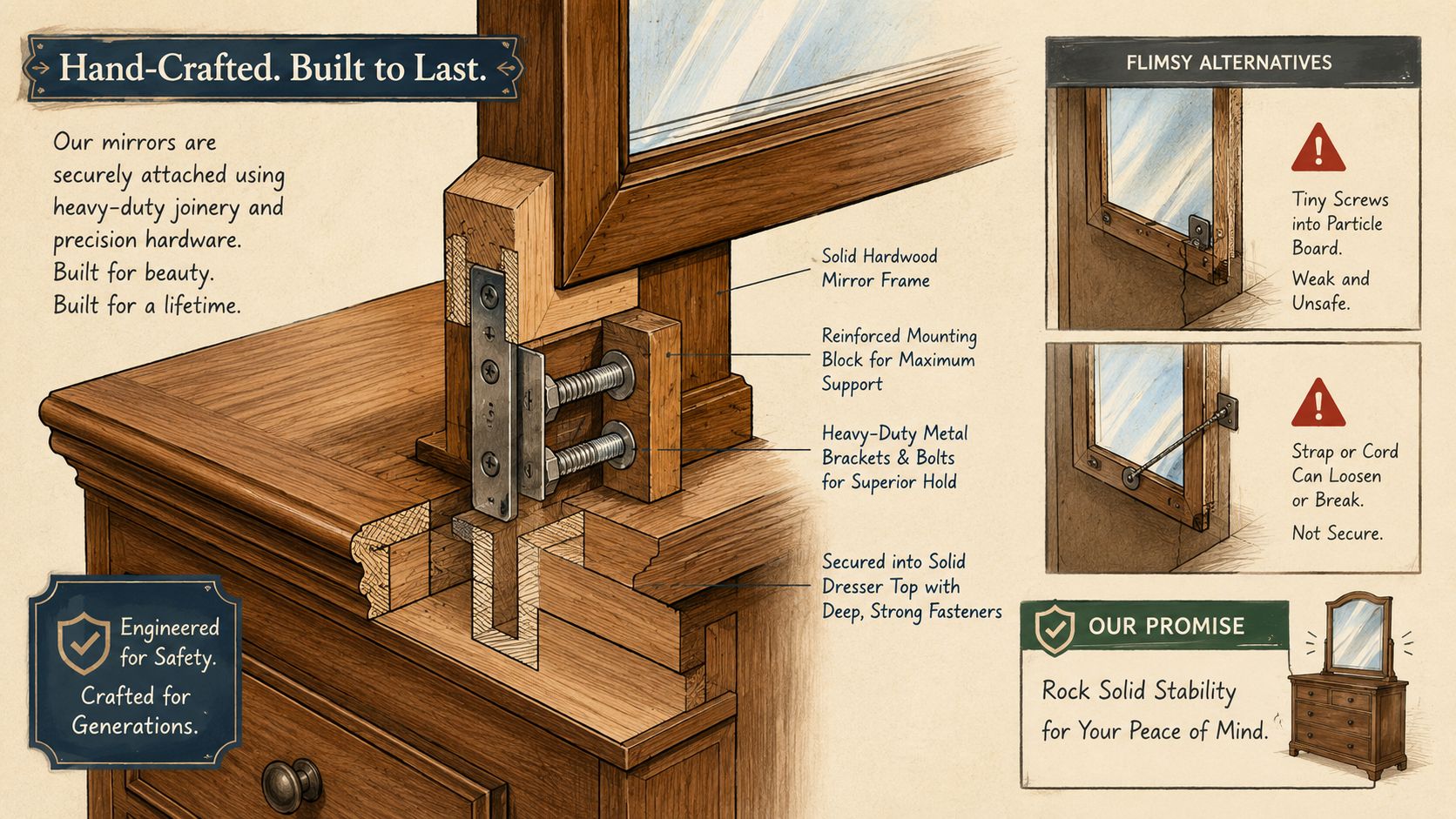
Shoppers ought to exercise greater skepticism. Not every chest of drawers with mirrors is engineered with the same attention to load, stress, and long-term movement. A mirror attached to a stable solid wood frame behaves differently than one fastened to a weaker case that flexes when drawers move.
The safety gap most shoppers never hear about
Existing furniture guides often fail to address the long-term safety of mirror mounting. That matters because 90% of glass fixture failures in furniture are due to improper mounting stress, not manufacturing defects, according to this industry discussion of mounting stress and glass failures.
That statistic should change how people shop. The danger often isn't the glass itself. It's the strain created by poor attachment, frame movement, or a case that isn't rigid enough to support the mirror consistently.
A mirror can stay tight at delivery and still become a problem later if the dresser case flexes, the mount points carry uneven stress, or the structure below was never robust enough.
Attached mirror or separate wall mirror
An attached mirror gives a cohesive look. It can feel classic and visually complete, especially in larger bedrooms where the dresser has room to breathe. But it isn't always the best answer.
A separate wall mirror can be smarter in a compact room because it gives more freedom around drawer operation and wall spacing. That can matter in smaller Southeast Michigan bedrooms where every inch of clearance counts. It also simplifies future changes if the room layout evolves.
Attached mirror tends to work best when
- The dresser case is sturdy: Strong joinery and a stable frame matter.
- The room has breathing room: The mirror won't crowd adjacent trim or windows.
- A unified look is the goal: The piece reads as one composed centerpiece.
Separate mirror often makes more sense when
- The bedroom is tight: Drawer access needs to stay easy.
- The wall is more flexible than the furniture: Art, lighting, and placement may change.
- The buyer wants less weight on the case: Especially important with larger reflective surfaces.
What to inspect before buying
Shoppers don't need engineering calculations to ask better questions. They do need to look past finish color and drawer count.
Check for these signs:
- Case rigidity: The dresser shouldn't feel loose or rack under normal use.
- Mounting hardware quality: Mirror supports should feel substantial, not token.
- Drawer alignment: Poor alignment can signal a case that isn't built square.
- Wall anchoring options: A well-designed piece should support safer installation practices.
For households hanging complementary wall art or balancing a separate mirror above a case, this guide to hanging your picture with precision offers helpful placement basics.
Secure installation isn't glamorous, but it's central to value. An heirloom piece should be beautiful, ergonomic, and safe. If the mirror system can't meet that standard, the style isn't worth much.
Your Heirloom Piece Awaits in Ann Arbor
A chest of drawers with mirrors earns its keep when it does more than look good in a product photo. It should store well, fit the room, support a daily routine comfortably, and remain structurally sound as the years pass. That's what turns furniture into an investment instead of a recurring expense.
The strongest choices usually share the same traits. They use solid materials. They rely on proven joinery. They respect ergonomics. They don't treat the mirror as an afterthought. For shoppers furnishing a primary suite, a guest room, or a smaller bedroom in Southeast Michigan, those details matter far more than a temporary trend.
A thoughtful purchase also fits into the broader home. The same value mindset that guides a bedroom upgrade often shapes decisions across the dining room, home office, living room, and even outdoor spaces. Customization helps there too. In-stock can be a starting point, but made-to-order options, including Canadel for bespoke dining and Stressless for ergonomic comfort, often create a better long-term result.
Since 1957, Tyner Furniture has built a local legacy around helping families choose durable, hand-crafted furniture with real staying power. That includes Amish solid wood pieces designed for longevity, along with practical support such as Special Financing and a Low Price Promise that make quality more approachable.
For anyone ready to compare a chest of drawers with mirrors in person, Tyner Furniture is worth a visit. Stop by the South State St. showroom in Ann Arbor for a hands-on look at solid wood craftsmanship, a comfort-focused sit test for other rooms in the home, and guidance on special-order possibilities. If an in-stock piece isn't quite right, browse the online Quick Specs and ask about made-to-order options that fit the room, the finish, and the long-term plan.