Best Leather Furniture for Lasting Comfort and Style


A Sunday morning in an Ann Arbor living room often starts with the same small negotiations. Someone sets a coffee mug on the arm, a dog claims the warmest cushion, and a reader settles into the corner that already fits the body perfectly. The right leather sofa doesn't sit untouched like a display piece. It absorbs daily life, grows more comfortable, and earns its place through years of use.
Choosing the best leather furniture takes more than comparing colors online. Leather grade matters, but so do the frame, joinery, suspension, cushion design, finish, room conditions, and the way a household sits. A thoughtful purchase should be judged by cost per year, not just the price on the tag. In Southeast Michigan homes, a well-built sofa, recliner, dining set, or bedroom piece can become an heirloom rather than another item waiting for replacement.
Why Leather Furniture Earns Its Place in Your Home
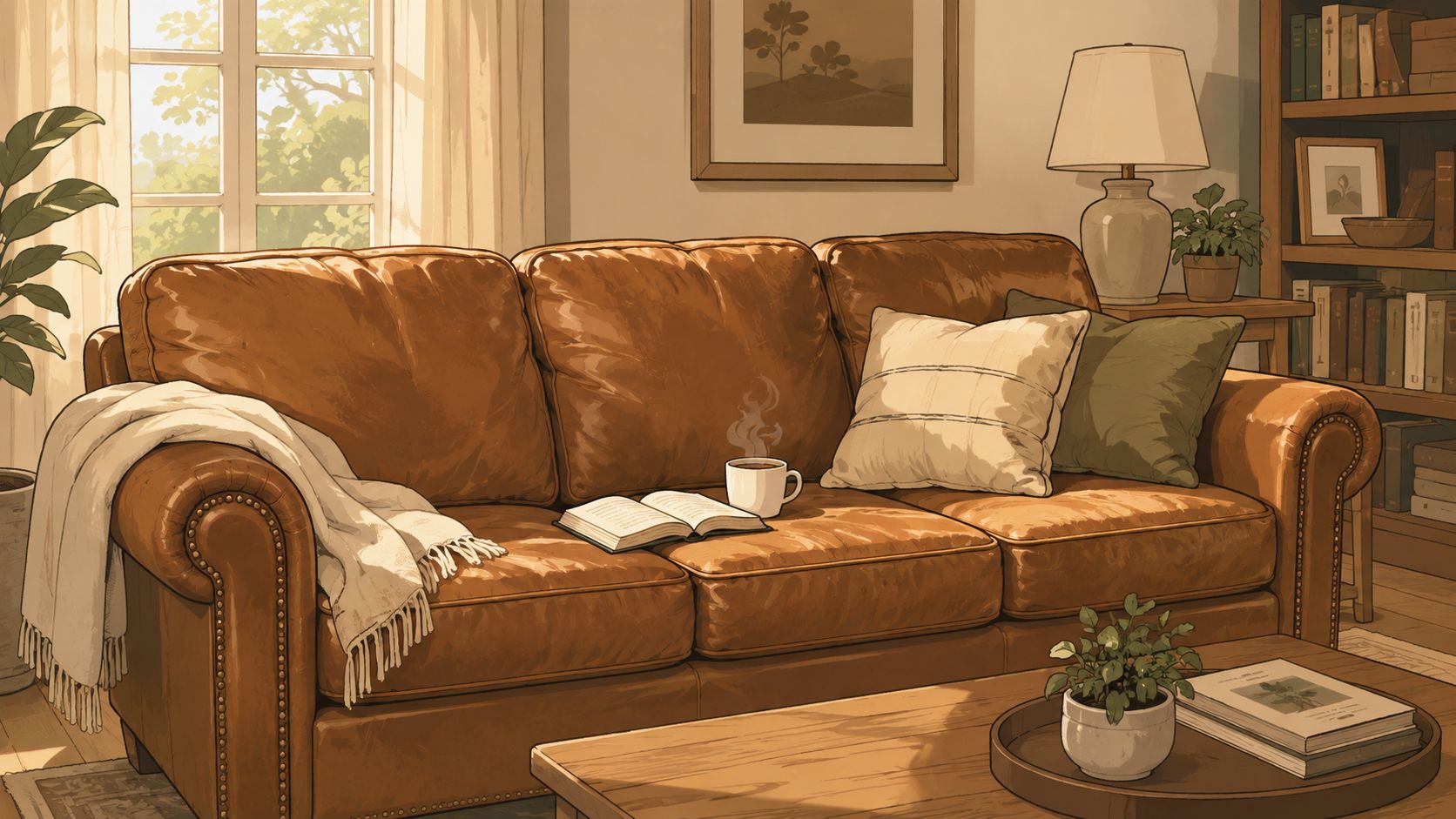
Leather furniture feels personal because it changes with the household. A new hide may feel firm and look precise, while years of sitting soften the surface and introduce creases, tonal variation, and patina. Those marks tell the story of morning coffee, movie nights, quiet reading, visiting relatives, and pets stretching out after a walk.
That aging pattern is one reason leather has remained a substantial part of upholstered furniture. One industry report found that leather represented 34% of upholstery sales at retail and 29% of upholstery unit sales, while another estimated leather retail sales at $7.4 billion in 2009. Furniture Today's leather industry overview presents leather as a major upholstery material, particularly across sofas, chairs, recliners, and motion furniture.
Leather also has a long furniture tradition. Early dynastic leather chairs in ancient Egypt date to roughly 3100 to 2686 B.C., and leather upholstery became more visible in Europe during the Renaissance and later the 17th century. The patenting of chromium salt tanning in 1884 helped produce softer, more colorful leather for upholstery, and chromium tanning became the industry standard for upholstery by the early 20th century, as documented in this history of fine leather furniture.
The practical advantages
A finished leather surface doesn't hold dust and loose pet hair in the same way many textiles do. That can make routine cleaning simpler for households managing allergies or animals, although no upholstery material eliminates every allergen. A quick wipe can also be more effective than trying to lift a spill from woven fibers.
The material's strongest advantage is its relationship with time. A quality hide can become softer without losing its identity, while a substantial frame and serviceable cushions can keep the piece useful long after a trend-driven style has faded.
Practical rule: The best leather furniture isn't the softest piece in the showroom. It's the piece whose hide, construction, comfort, and maintenance demands match the next decade of household use.
Tyner Furniture has served Southeast Michigan since 1957, and that local legacy reflects a useful way to shop. Leather should be considered alongside the rest of the home, from the Home Office to Outdoor Spaces. A sofa can be coordinated with a bespoke dining finish, an ergonomic recliner, or hand-crafted bedroom furniture instead of being selected as an isolated purchase.
Understanding Leather Grades and What They Mean
Leather labels describe different parts of the hide and different degrees of surface alteration. They don't all predict comfort in the same way, so shoppers should use both touch and construction information.
Full-grain and top-grain
Full-grain leather keeps the outermost grain layer intact. Its natural fiber structure remains strong, and the surface may show subtle markings, variation, and a more organic hand. It often feels firmer at first, then softens through use. For a high-wear seat or an heirloom piece, full-grain is the most durable upholstery option, according to industry guidance on leather furniture.
Top-grain leather also comes from the strongest outer portion of the hide, but it may be lightly corrected or finished for a smoother, more consistent appearance. The result is often the buttery feel shoppers notice on a showroom recliner or sofa. Top-grain is a strong choice when a household wants durability with a more uniform visual character. This top-grain leather sofa guide also describes top-grain as resistant to tearing, stretching, and everyday wear when properly maintained.
Corrected, split, and bonded materials
Corrected-grain leather has been sanded or otherwise treated to reduce visible imperfections, then finished with color or an embossed grain. That can provide a consistent surface and practical protection, but it sacrifices some natural texture and breathability.
Split-grain leather comes from the lower layers of the hide. It can be finished for use on furniture backs and sides, but it doesn't have the same fiber strength as full-grain or top-grain leather. Shoppers should ask whether the stated leather grade covers the entire piece or only the areas that receive direct contact.
Bonded leather combines leather fibers or scraps with a surface coating and backing. It can resemble leather when new, but it shouldn't be evaluated as an heirloom material. The surface and backing may age differently from a natural grain hide.
For a clearer side-by-side explanation, review this comparison of top-grain leather and bonded leather.
Finish changes the decision
Aniline and minimally finished leathers emphasize natural markings, softness, and patina. Protected or performance leathers add a stronger surface barrier, making them more suitable for busy rooms, children, pets, spills, and direct sunlight. Nubuck and suede offer a distinctive velvety touch, but they suit owners who accept visible aging rather than trying to preserve a flawless surface.
| Grade | Durability | Feel | Best For |
|---|---|---|---|
| Full-grain | Highest upholstery resilience | Firm at first, increasingly supple | Heirloom seating and high-wear rooms |
| Top-grain | Strong everyday performance | Smooth, buttery, and more uniform | Most living rooms and recliners |
| Corrected-grain | Practical surface protection | More consistent, less natural | Active homes prioritizing easier care |
| Split-grain | Lower structural resilience | May feel firmer or more coated | Selected backs, sides, and lower-stress areas |
| Bonded leather | Limited long-term resilience | Coated and leather-like | Buyers focused on initial affordability |
| Protected or performance leather | Designed for practical use | Varies by finish | Children, pets, spills, and sunlight |
How to Read Quality Beyond the Leather Itself
Leather can be excellent while the furniture beneath it is disappointing. The frame, joints, suspension, cushions, stitching, and repair options determine whether a sofa remains supportive after years of repeated sitting.
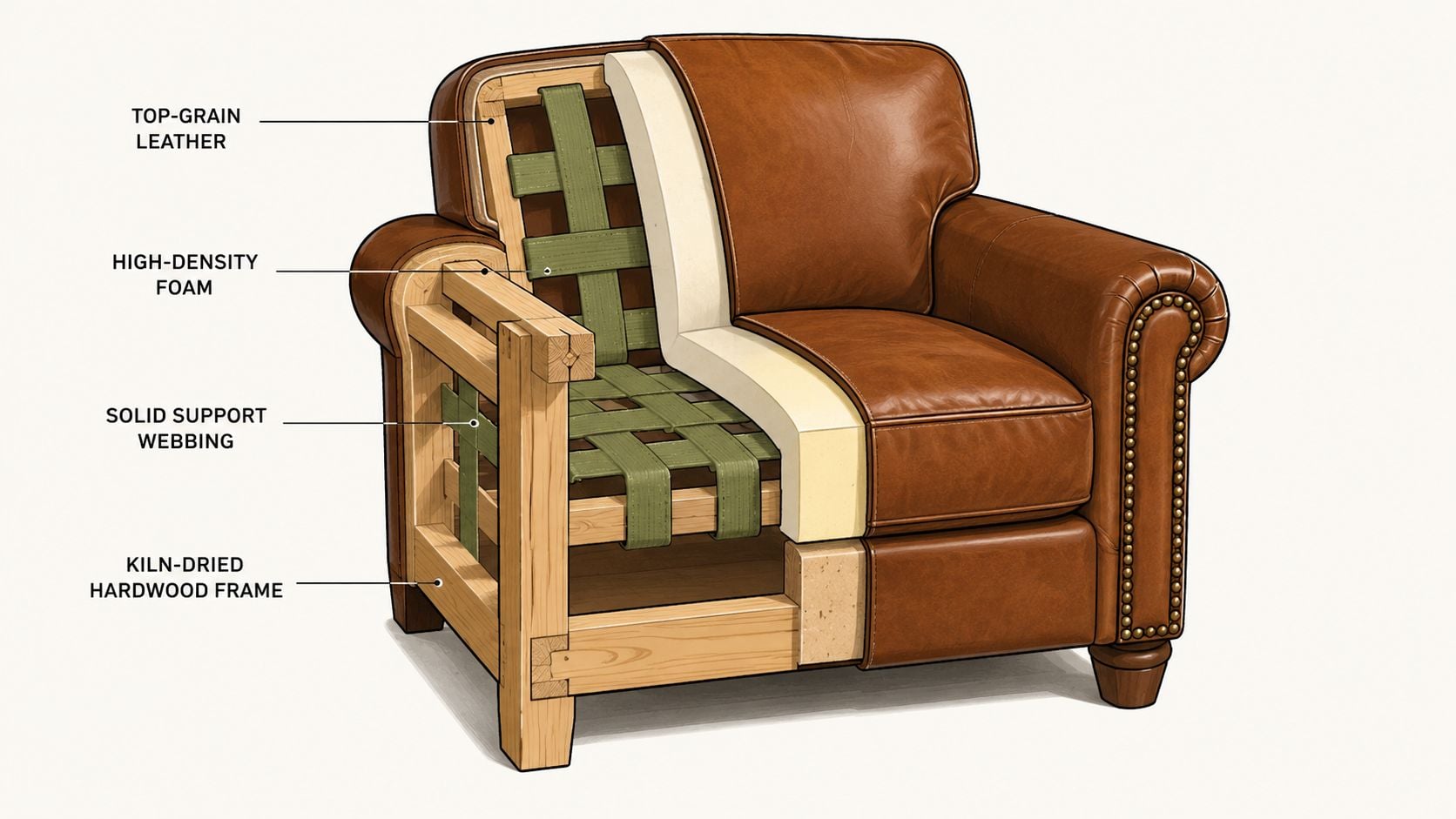
Start under the upholstery
A kiln-dried hardwood frame is a sound starting point because the wood has been prepared for stable furniture construction. The next question is joinery. Mortise-and-tenon joints lock solid wood into solid wood with broad contact, while corner blocks, dowels, and reinforced connections help distribute stress. Dovetail joinery performs a similar structural role in drawers and casework, resisting pull-out where repeated force is concentrated, as explained in this guide to joinery in long-lasting furniture.
Mass-produced alternatives may rely more heavily on staples, adhesive, particleboard, or thin engineered components. Those materials aren't automatically unsuitable, but a seller should explain where each material appears and how the frame's joints are secured.
Ask about suspension and cushion service
Eight-way hand-tied springs remain a respected upholstery method because the interconnected support system can distribute weight evenly when built correctly. Sinuous springs and webbing can also perform well when their gauge, spacing, attachment, and surrounding frame are properly specified. A guide to eight-way hand-tied sofas offers useful context for comparing traditional suspension systems.
Cushions deserve equal attention. High-resilience foam generally offers more shape retention than lower-quality foam, while down or fiber wraps create a softer seat that may need regular reshaping. Separate, reversible cushions are usually easier to rotate, refill, replace, or re-cover than a permanently attached bench cushion.
Use the showroom as a diagnostic tool
A shopper can learn a great deal without opening the furniture.
- Lift one front corner: A substantial frame tends to feel stable rather than loose or twisty.
- Press the arm: It should feel supported, not hollow or excessively soft.
- Sit in the center and near the edge: The seat should remain balanced across both positions.
- Listen during movement: Squeaks, clicks, or shifting sounds deserve a question.
- Inspect stitching: Seams should look even, with no unexplained pulling or loose thread.
- Ask for specifications: Request frame material, joint method, suspension type, cushion contents, leather grade, finish, and service options.
For performance benchmarking, abrasion data can be useful. Martindale testing under ISO 12947 measures cycles before visible wear, with around 15,000 cycles associated with light residential use, 25,000 to 40,000 cycles with heavier residential or contract use, and 50,000 or more cycles with commercial-grade applications, according to this technical upholstery leather guide. Those figures don't replace a sit test, but they provide a more meaningful comparison than labels such as “premium.”
Matching Leather Furniture to the Way You Live
A quiet library and a family room shouldn't receive the same leather recommendation. The right decision begins with the room, then considers the household, then selects the finish and grade.
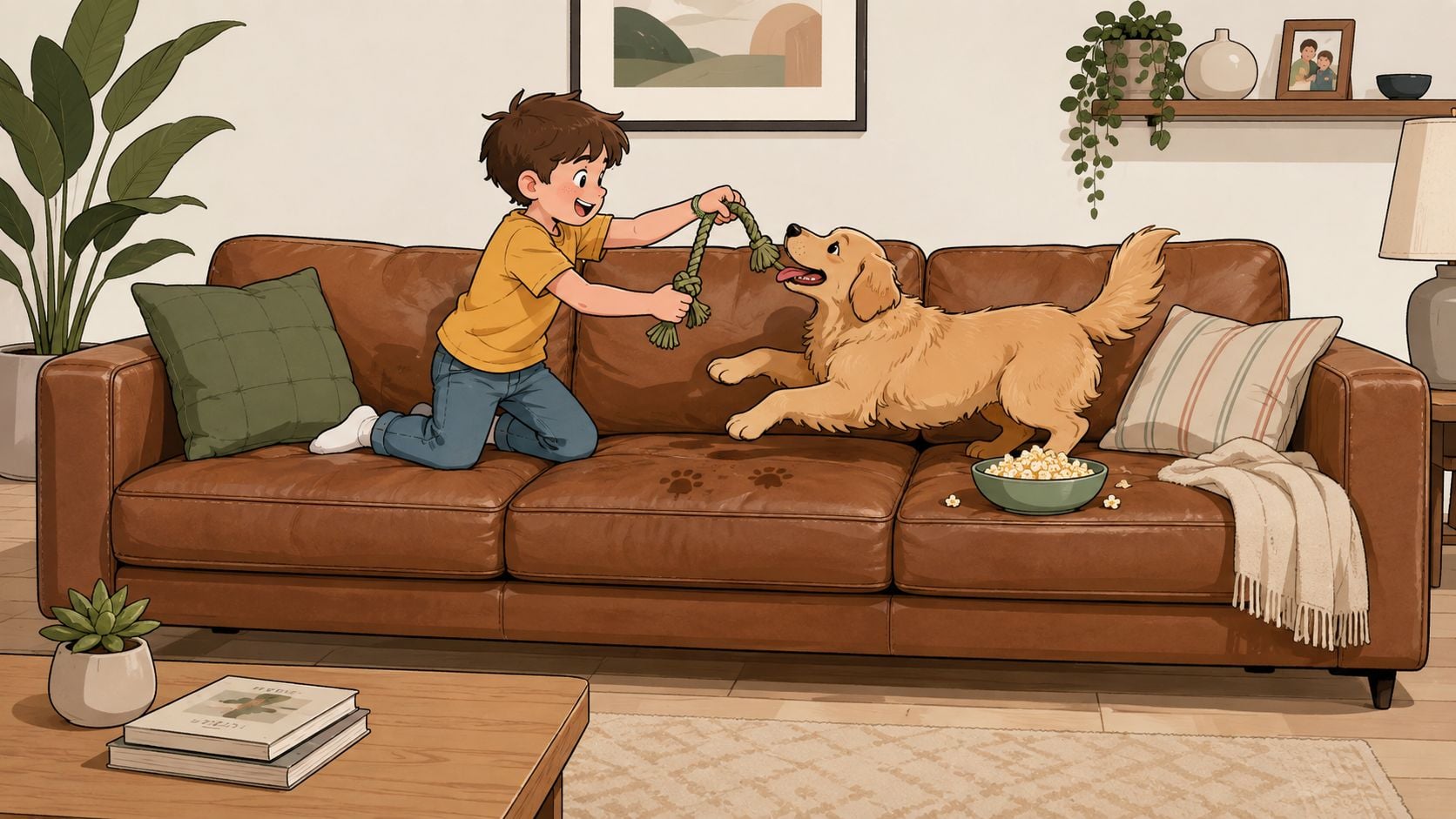
Match the finish to activity
For children, pets, snacks, and constant use, protected or performance leather is the sensible recommendation. A top-grain hide with a practical finish can preserve the tactile quality of natural leather while offering more forgiveness around spills and everyday contact.
Full-grain or aniline leather belongs in rooms where natural aging is part of the design. A formal living room, reading library, or shaded study can showcase grain variation and patina without asking the material to tolerate relentless traffic.
Nubuck and suede require a specific mindset. Their nap feels distinctive, but owners must be comfortable with marks, brushing, and environmental sensitivity. They aren't the right choice for a household that wants every sign of use erased.
Let the floor plan guide the silhouette
Smaller Ann Arbor apartments and older Southeast Michigan homes often benefit from apartment-scaled loveseats, slim-profile recliners, and lighter leather colors. A warm cream, tan, or soft camel tone can visually open a room, while a lower-profile sofa may preserve walking space.
Leather doesn't belong only in the living room. A leather headboard, bench, or occasional chair can add warmth to a bedroom without dominating the space. In a home office, an ergonomic leather chair or compact recliner can make long reading and computer sessions more comfortable.
For larger households, an oversized configuration may be appropriate when the room supports it. Before selecting a deep sectional, shoppers should review doorway access, traffic patterns, seat depth, and the position of tables. This oversized leather sofa guide can help frame that decision.
Respect the sun
South-facing rooms need more protection than shaded dens. Window treatments, sensible placement, and a finish suited to UV exposure can reduce fading and surface stress. Technical guidance identifies drying, abrasion, and UV exposure as factors that reduce leather performance, so conditioning and placement should be treated as part of the original purchase decision, not an afterthought.
A practical fit test looks like this:
- Identify the room's traffic and sunlight.
- List the people, pets, and activities using the piece.
- Decide whether natural patina is desirable or inconvenient.
- Choose the leather finish.
- Confirm dimensions, seat depth, arm height, and access route.
Cost Versus Lifespan and When Custom Is Worth It
Sticker price tells only part of the story. Cost per year gives a more honest view of value, especially when comparing a bonded sofa, a top-grain piece, and an heirloom frame.
The requested examples make the distinction clear. A $1,200 bonded-leather sofa lasting four years works out to $300 per year. A $3,200 top-grain sofa lasting fifteen years works out to roughly $213 per year. A $5,500 Amish-built hardwood-framed sofa lasting beyond two decades works out to less than $275 per year across the first twenty years, before considering repair, re-covering, or continued use beyond that point. These are editorial comparisons, not guarantees, and the actual lifespan depends on construction, household use, maintenance, and serviceability.
| Tier | Approximate Price | Expected Lifespan | Cost Per Year |
|---|---|---|---|
| Bonded leather | $1,200 | 4 years | $300 |
| Top-grain leather | $3,200 | 15 years | About $213 |
| Amish-built hardwood frame | $5,500 | Beyond 20 years | Less than $275 across 20 years |
What premium pricing should buy
A higher price should appear in the specifications, not only in the showroom language. Kiln-dried hardwood, strong joinery, eight-way hand-tied construction, full-grain or top-grain hides, replaceable cushions, and well-engineered motion mechanisms all provide reasons for a higher investment.
For ergonomic seating, Stressless options add a different kind of value. A recliner should support the user's proportions, head, neck, and lower back, rather than offering a footrest. Steel-reinforced mechanisms and adjustable sizing matter more than decorative stitching when a chair will be used every evening.
When made-to-order earns its place
Custom becomes worthwhile when a standard piece forces a compromise. The strongest cases include:
- Unusual room dimensions: A narrow passage, shallow wall, or difficult corner may require exact measurements.
- Specific comfort needs: Seat height, depth, cushion firmness, and reclining support can change the daily experience.
- Coordinated interiors: Matching a leather sofa to an existing wood stain, fabric accent, or dining finish creates a more resolved interior design.
- Bespoke configuration: Sectional modules, arm styles, legs, nailheads, and chaise placement can be selected around the room.
- Long ownership: A made-to-order piece makes more sense when the household expects to keep it rather than move on quickly.
The guide to getting started with a custom order helps shoppers organize measurements, finish preferences, and comfort priorities before placing an order.
Ready-to-deliver furniture remains a responsible choice for a tight timeline, a rental property, or a room where style preferences haven't settled. In-stock is just the beginning, though. A full-service showroom can also offer made-to-order upholstery, Canadel finishes and configurations, and Stressless ergonomic sizing when the available floor model isn't quite right.
Caring for Leather So It Ages Beautifully
Leather care should fit ordinary life. A household doesn't need a complicated ritual, but it does need consistent habits that protect the finish from grit, drying, spills, and sunlight.
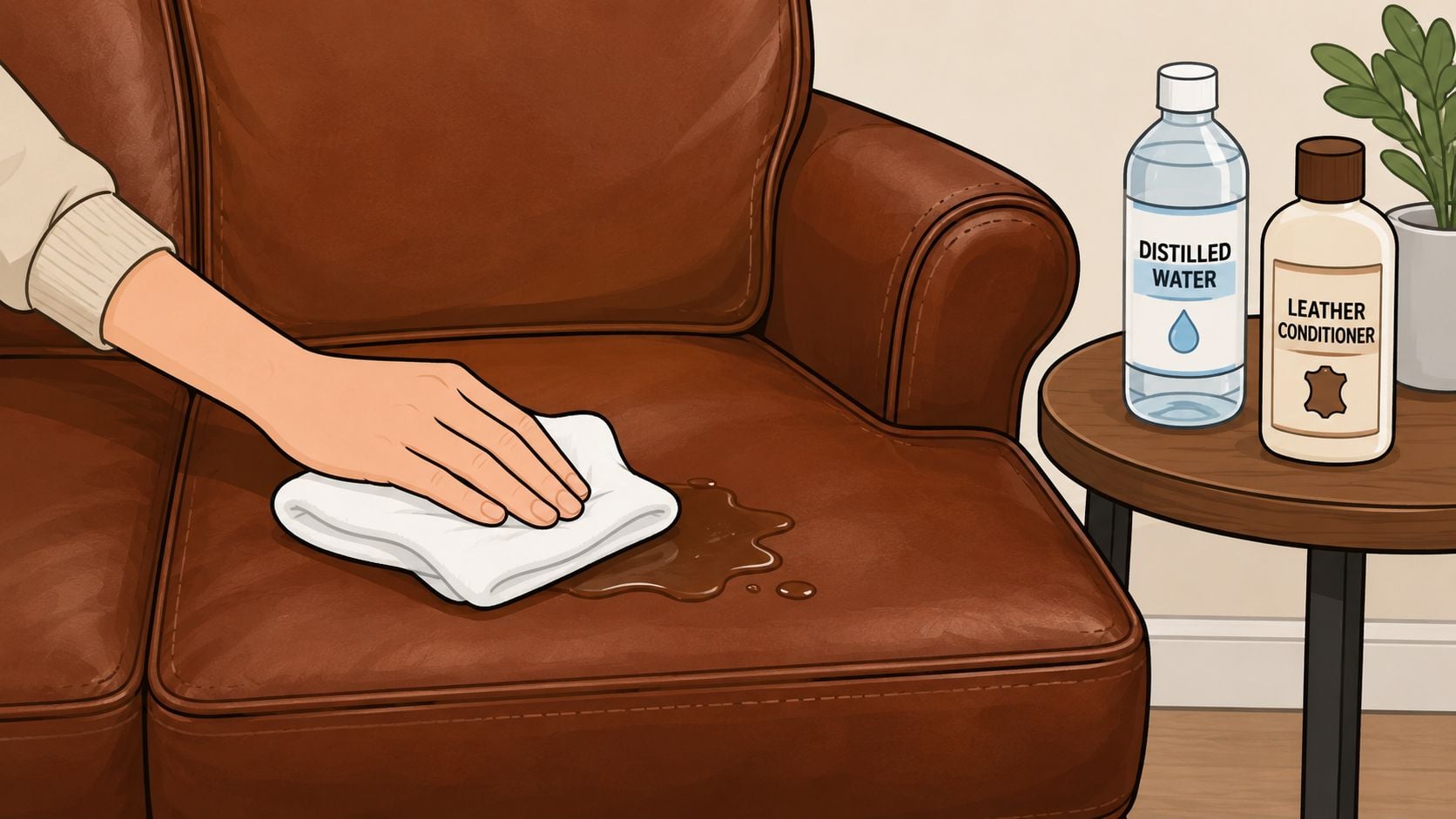
Handle spills without spreading the damage
Blot a fresh spill with a soft cloth. Distilled water may be appropriate for a light surface response, but harsh soap, alcohol, household sprays, and all-purpose cleaners can strip or disturb the finish. The leather protection guide reinforces the need to match cleaning products to the leather type rather than treating every hide identically.
A weekly dusting routine keeps grit from working into seams and contact points. A vacuum with a soft brush attachment can remove crumbs and pet hair without scraping the surface. Favorite pet zones benefit from washable throws, especially where claws repeatedly contact the same cushion.
Use a realistic conditioning schedule
Conditioning is commonly recommended every six to twelve months, although the right interval depends on leather type, household use, indoor dryness, and the product's finish, as summarized in this leather care guide. A pH-balanced conditioner should be selected for the specific leather. Heavy wax treatments can clog the surface and change the hand, so more product isn't automatically better.
Aniline and full-grain leathers may need more attentive observation because their natural surfaces show moisture loss and marks readily. Protected leathers usually tolerate daily use more comfortably, but they still need cleaning and should not be left in direct sun.
Follow the seasons
Forced-air heat can dry indoor air during Michigan winters, while summer humidity changes how leather responds to moisture. Keep furniture away from direct heat sources, avoid placing it against a sunlit window when possible, and rotate loose cushions to distribute wear and fading.
For pet accidents, blot quickly, avoid aggressive rubbing, and contact a leather-care professional if odor or staining penetrates the surface. Scratches may soften into the patina on some natural hides, but deep damage shouldn't be treated as a casual cleaning project.
Why Shopping Local in Ann Arbor Changes the Outcome
Leather is a material that rewards physical evaluation. Two sofas can share the same broad grade description yet differ sharply in softness, surface finish, cushion support, seat angle, and how the hide responds to touch. A screen can't reveal the buttery feel of top-grain leather, the give of a seat edge, or whether a recliner keeps the head and neck properly supported.
A 20-minute sit test can change a shortlist completely. Someone who expects to choose a stationary sofa may discover that an ergonomic recliner better suits daily reading. Another shopper may learn that a deep sectional looks attractive but leaves shorter household members without stable foot support. Those discoveries are easier in a showroom than through a return shipment.
The local advantage is hands-on customization
A full-service dealer can make the order more specific than an online cart. The discussion may include:
- Leather and fabric combinations: Use leather on high-contact areas and a coordinated fabric where it improves the design.
- Sectional configuration: Select chaise direction, modules, arms, and proportions around the floor plan.
- Decorative details: Compare nailhead choices, leg finishes, stitching, and cushion styles.
- Exact dimensions: Address difficult doorways, narrow rooms, and older Ann Arbor home layouts.
- Ergonomic sizing: Stressless seating can be evaluated in Small, Medium, and Large sizing so the chair fits the person, not just the room.
- Dining coordination: Canadel allows made-to-order choices involving finishes, leg styles, table edges, and overall character.
The same customization principle applies beyond leather. Tyner's collection includes hand-crafted Amish solid wood furniture for bedrooms and dining rooms, built with techniques such as dovetailing and mortise-and-tenon joinery. Solid cherry, oak, and maple have a different weight and tactile presence from mass-produced veneer alternatives. A shopper can feel the difference in a drawer, inspect the joint, and compare stain samples before committing.
A good order has a clear sequence
The process should be understandable from the first appointment through delivery.
- Consultation: Discuss room measurements, traffic, body proportions, household use, and style.
- Swatch review: Handle leather samples in natural and showroom light, then compare finishes.
- Configuration: Confirm dimensions, cushions, legs, mechanisms, and coordinated materials.
- Written order: Review the leather grade, finish, construction, price, deposit, and expected production timing.
- Delivery planning: Schedule white-glove delivery, access checks, and in-home placement.
- Inspection: Confirm seams, finish, mechanisms, cushions, and overall condition after delivery.
- Ongoing service: Keep warranty information and care guidance available for future questions.
Value includes what happens later
Special financing can make a high-ticket purchase easier to plan, but promotional financing commonly requires qualifying credit approval, minimum purchase thresholds, monthly payments, and possible deposits or promotional fees, as shown on this furniture financing information page. A Low Price Promise can also help buyers compare competitive value without giving up local guidance. Terms should always be reviewed before an order is finalized.
The long-term benefit of a local relationship extends beyond delivery. Future conversations may involve cushion service, repair, re-covering, accessory matching, or coordinating a new piece with an existing room. That ongoing support matters when a leather sofa is intended to remain useful for many years.
Since 1957, Tyner Furniture has served Southeast Michigan with a broad home-furnishing selection that reaches from living rooms and Home Offices to bedrooms, dining spaces, entertainment areas, and Outdoor Spaces. For shoppers who want to compare leather grades in person, evaluate Stressless comfort, explore Canadel customization, and consider Amish craftsmanship under one roof, the South State St. showroom offers a more informed path than choosing from photographs alone.
Tyner Furniture offers leather sofas, recliners, and made-to-order configurations alongside ergonomic Stressless seating, Canadel dining options, and hand-crafted Amish solid wood pieces. Visit Tyner Furniture in Ann Arbor for a proper sit test, or browse the online Quick Specs before requesting a special order.