Best Finishes for Dining Tables in 2026


A family sits down for dinner, someone drags a plate across the tabletop, a child leaves a damp glass ring, and a warm serving dish lands where a trivet should have been. That's the true test of a dining table finish. Grain and species matter, but the finish decides how the table handles the ordinary friction of family life.
The right choice should match the household before it matches a decorating trend. A hand-crafted cherry table for quiet meals needs a different working surface than a maple table used for homework, holiday hosting, pets, and daily wipe-downs. In Southeast Michigan, where shoppers often want heirloom craftsmanship without giving up practical care, the finish deserves the same attention as the joinery, edge profile, and dimensions.
Why the Finish Matters More Than the Wood
A solid-wood table can tell two very different stories over the years. One household wipes spaghetti sauce away after every meal and accepts a few marks as part of family history. Another expects the surface to remain nearly unchanged through school projects, pets, guests, and repeated cleaning. The wood species might be identical, but the finish largely determines which result appears.
Finish is the table's working skin. It takes the water rings, damp cloths, crayons, serving dishes, pet claws, and daily abrasion before the wood has to absorb them. Contemporary finish guidance places catalyzed varnish and polyurethane among the strongest choices for high-use dining tables because they create a protective film against water, scratches, and general wear, while traditional oils provide moderate protection and require regular re-oiling. A dining-table finish guide also reports furniture-use lifespans of about 7 to 12 years for conversion varnish, 8 to 10 years for oil-based polyurethane, 1 to 3 years for shellac, and 3 to 5 years for natural oils.
The surface changes the everyday experience
Finish affects more than protection. It changes color depth, sheen, hand feel, scratch visibility, and repairability. A thick film can make a tabletop easier to wipe clean, but a poorly selected or poorly applied coating may look overly plastic. A penetrating finish keeps the surface closer to the wood, though it asks the owner to respond sooner to spills and wear.
Sheen matters, too. Gloss reflects light and puts dents, fingerprints, and fine scratches on display. Satin usually reads as calmer and disguises routine wear more effectively. That's why satin remains the sensible choice for many family dining rooms, especially where the table sits under strong windows or overhead lighting.
Practical rule: Choose the finish according to the table's busiest ordinary day, not its most carefully staged showroom moment.
Before selecting stain or sheen, buyers should understand how the underlying hardwood affects the result. Tyner's guide to choosing the right hardwood for longevity and style helps frame that decision. The finish should protect the wood's character, not hide it, and it should support the household's habits rather than force everyone to treat the table like a museum piece.
The Three Finish Families Every Buyer Should Know
Most dining-table finishes fall into three practical families: penetrating oils, waxes, and film-forming coatings. That grouping makes the decision easier because each family protects the table in a distinctly different way.
Penetrating oils move into the wood rather than building a heavy surface layer. Hardwax oils follow a similar natural-feel approach, enriching the grain and leaving a close-to-the-surface touch. They're forgiving when a small area gets marked because the owner can often clean, blend, and renew that spot. The tradeoff is weaker resistance to standing water and a greater need for prompt cleanup.
Wax behaves more like a renewable buffer than armor. It softens highlights, creates a low-sheen hand-rubbed look, and can be refreshed without an elaborate process. Wax also offers the least protection against water, heat, harsh cleaners, and repeated heavy use, so it suits a carefully handled table better than a busy family command center.
Film finishes create a clear protective layer over the wood. This family includes polyurethane, lacquer, water-based coatings, and conversion varnish. These surfaces generally handle spills, damp wiping, and daily meals better than oil or wax. Their weaknesses show up when the film gets visibly scratched, chipped, or peeled, because spot repairs can be harder to blend.
Why labels aren't enough
A label such as “durable” doesn't tell a buyer whether the surface feels natural, resists alcohol-based spills, hides scratches, or can be repaired without refinishing the whole top. For a useful visual comparison of finish language and sheen choices, the Jennifer Gilmer kitchen cabinet finish guide offers helpful context, even though cabinetry and dining tables face different patterns of use.
The practical distinction is simple:
- Oil: Best tactile character and local renewal, with more maintenance.
- Wax: Softest appearance and easiest refresh, with the weakest protection.
- Film finish: Strongest barrier against moisture and abrasion, with more involved repairs.
A shopper comparing a finish for a dining table should first decide whether the household values maximum protection, natural feel, or easy spot repair. Tyner's table-top finish guidance gives buyers a useful starting point before they examine actual samples.
Head-to-Head Comparison of the Most Common Options
A dining table finish should match the household before it matches the wood. Families with children, frequent dinners, and little time for maintenance need a stronger barrier. Buyers who value a natural hand feel and accept regular upkeep can choose a finish that wears more openly.
Oil-based polyurethane remains the dependable all-purpose choice for a busy dining table. It builds a substantial amber-toned film that handles water and daily wear, although scratches become easier to see as the surface ages. Water-based polyurethane keeps pale woods clearer and reduces the amber shift associated with oil-based systems. Its harder cured surface helps resist fine marks from plates and cutlery, but sharp impacts can make that film chip. The technical guidance on oil-based and water-based polyurethane also explains why fully cured oil-based films generally handle some solvents and alcohol-based spills better.
Conversion varnish belongs on tables expected to work hard. It cures into a dense, chemically resistant surface that suits frequent wiping and heavier use. Factory application is its advantage, while specialized repair makes casual household touch-ups less convenient.
Lacquer produces an exceptionally smooth, thin surface and can be renewed by spraying. It may soften around 140°F, so trivets matter. Heat protection and regular care deserve more attention than broad finish labels, as the dining-table care guidance makes clear.
| Finish | Durability | Appearance | Maintenance and Repair |
|---|---|---|---|
| Oil-based polyurethane | High protection for daily use | Warm, amber-toned film | Strong barrier, but scratches and blended repairs can show |
| Water-based polyurethane | High scratch resistance when professionally applied | Clearer, particularly on pale woods | Lower odor and easier color preservation, with harder-impact chipping as a tradeoff |
| Conversion varnish | Very strong moisture and chemical resistance | Dense, refined film | Excellent for demanding use, but repairs usually require professional work |
| Lacquer | Good protection when professionally applied | Smooth, thin, polished surface | Can be renewed professionally, but heat and chips require caution |
| Hardwax oil | Moderate protection with natural wear | Matte, tactile, close to the wood | Local renewal is practical, but spills need prompt attention |
| Wax | Light protection | Soft, hand-rubbed sheen | Easy to refresh, least suitable for wet or heavily used tables |
The direct recommendation
For most households, choose satin oil-based polyurethane. It gives solid daily protection without making a solid wood tabletop feel overly industrial. Choose water-based polyurethane for maple, ash, and other pale woods when color clarity and lower odor matter. Conversion varnish fits demanding use and custom production, while oil or wax suits buyers who want visible patina and accept maintenance.
Tyner Furniture's American-made solid wood dining tables and custom order programs make this decision practical. Ask for finish samples, then judge them against the way your household eats, cleans, hosts, and handles minor damage.
Finish color shapes the final impression too. Tyner's guide to the best wood stain colors helps separate stain selection from topcoat selection. Stain creates much of the color, while the finish controls protection, surface feel, and sheen.
Matching the Finish to the Wood Species
Finish selection should follow the wood's grain, porosity, color, and movement. A coating that looks handsome on walnut may make maple appear cloudy, while a penetrating oil can enrich cherry beautifully but leave open-grained oak looking uneven.
Cherry welcomes warmth. Oil can deepen its color and emphasize the way cherry develops a richer patina over time. Conversion varnish also protects the surface while allowing a controlled, refined appearance. A heavy film may flatten some of the wood's visual depth, so the application quality matters as much as the product family.
Oak has open grain that can absorb penetrating finishes unevenly. A film finish usually produces a cleaner, more uniform result and gives better defense against the rings and spills that quickly expose a lightly protected tabletop. Oak's strong grain already supplies character, so extra gloss rarely adds value.
Maple has a tight grain and a naturally light appearance. Water-based polyurethane is often the sensible pairing because it preserves clarity and resists the yellow cast associated with some oil-based systems. Conversion varnish also works well when the table needs a more substantial professional barrier.
Walnut carries deep chocolate tones that look rich under oil, but its dark surface can make scratches easier to see. A hardwax oil over a catalyzed sealer can balance tactile warmth with added protection, provided the household accepts more attentive care.
| Wood Species | Best Finish | Why It Works | Watch Out For |
|---|---|---|---|
| Cherry | Oil or conversion varnish | Enhances warmth while supporting a developing patina | Heavy film can mute visual depth |
| Oak | Polyurethane or conversion varnish | Evens out open-grain absorption and improves moisture protection | Penetrating oil may look uneven |
| Maple | Water-based polyurethane or conversion varnish | Preserves light color and gives a clean protective surface | Oil alone can appear cloudy |
| Walnut | Hardwax oil with a catalyzed sealer | Keeps rich color and improves repair flexibility | Scratches can stand out against dark grain |
| Birch | Clear film finish | Helps create a consistent surface on a lighter wood | Uneven color can become more obvious under transparent coatings |
| Ash | Water-based film finish | Preserves pale color while sealing pronounced grain | Gloss can emphasize texture and surface marks |
| Pine | Flexible protective film | Helps manage a softer surface in active rooms | Dents can still occur beneath a durable finish |
The finish should also support the table's design language. Guidance on Japanese dining table considerations is useful for shoppers who value restrained profiles, visible grain, and a surface that feels intentional rather than overbuilt. For broader stain coordination, Tyner's wood-stain matching guide helps connect the tabletop to floors, chairs, cabinetry, and surrounding interior design.
Choosing a Finish for Real Households
A finish earns its place on the showroom floor only if it suits the Tuesday-night version of your home: hurried meals, wet sleeves, homework, pet traffic, and a cleaning routine reduced to one damp cloth after everyone leaves the table. Start with household behavior, then use wood science to confirm the choice.
A household with toddlers and a dog should choose conversion varnish or high-build polyurethane. These finishes provide a stronger moisture and abrasion barrier for active rooms. Natural oil feels warmer under the hand, but it requires faster spill response and accepts more visible change over time. For households balancing kids, pets, and daily wear, see our guide to choosing kid-friendly and pet-friendly furniture.
Couples who host often need a different setup. Frequent serving, repeated wiping, and warm dishes favor a professional film finish, preferably satin. Lacquer and catalyzed systems can suit entertaining spaces, but trivets still belong within reach. A durable finish reduces risk. It does not make a tabletop heat-proof.

A useful household filter
- Children and pets: Choose conversion varnish or professional polyurethane. Prioritize resistance to spills, scratches, and constant wiping.
- Frequent entertainers: Choose a satin catalyzed finish or professionally applied lacquer, and keep trivets nearby.
- Homework and craft use: Choose a durable film when stains matter most. Choose hardwax oil only if the household values local renewal and can clean spills promptly.
- Quiet adult household: Choose oil when tactile warmth and graceful patina matter more than maximum barrier protection.
- Design-led dining room: Choose a finish that supports the room's light and materials. Satin suits most interiors. Reserve higher sheen for rooms where fingerprints and scratches will not dominate the view.
Toddlers change the maintenance decision. Wipe crumbs and spills after meals, clean the tabletop more thoroughly during the week, and use a soft cloth rather than abrasive pads. That routine protects the finish without turning table care into a daily project.
Low-VOC and low-odor priorities require careful questions. Water-based coatings can offer lower odor and clearer color, while newer systems aim to improve moisture resistance and reduce yellowing. Products in this category do not perform identically. Ask for professional test data and confirm the system has fully cured. “Water-based” alone does not guarantee a particular result.
Custom Finishes Available Through Tyner Furniture
A made-to-order dining table gives the buyer control over more than width and leg shape. Species, edge profile, stain, sheen, and protective finish can be selected as one coordinated design instead of accepting whatever happens to be available in-stock.
Tyner Furniture has served Southeast Michigan since 1957, and its Ann Arbor showroom connects shoppers with hand-crafted Amish solid wood furniture, made-to-order dining options, and custom programs from Canadel. The Amish pieces emphasize material integrity, with solid North American hardwoods and time-tested joinery such as dovetailing and mortise-and-tenon. A mortise-and-tenon joint fits a projecting tenon into a matching recess, and furniture guidance describes this construction as extremely durable for dining tables, chairs, and bed frames. Independent furniture-joint guidance explains why that construction remains relevant in heirloom furniture.
What customization changes
Canadel allows shoppers to coordinate table dimensions, leg styles, edges, distress levels, and finishes. Depending on the design, the finish direction may range from a natural hand-rubbed appearance to a more protective catalyzed or water-based coating. Matte, satin, and semi-gloss choices change how the grain catches light and how everyday marks appear.
The important advantage is seeing and touching the sample. A finish that looks warm online may feel too slick under the hand, while a low-sheen option may reveal more grain than expected. A sit test at the South State St. showroom lets buyers assess the table's height, edge comfort, surface feel, and relationship to the room before placing a special order.
Selection note: In-stock is just the beginning. Custom finish, fabric, and configuration choices also extend across the home, from the Home Office to Outdoor Spaces, with options that include Canadel dining furniture and ergonomic Stressless seating.
Tyner's Quick Specs make it easier to confirm species, edge, finish, and configuration for special orders. Special Financing, subject to approval, and the Low Price Promise can also make a long-term furniture investment easier to plan without reducing the decision to an upfront price.
Caring for a Dining Table Finish for the Long Run
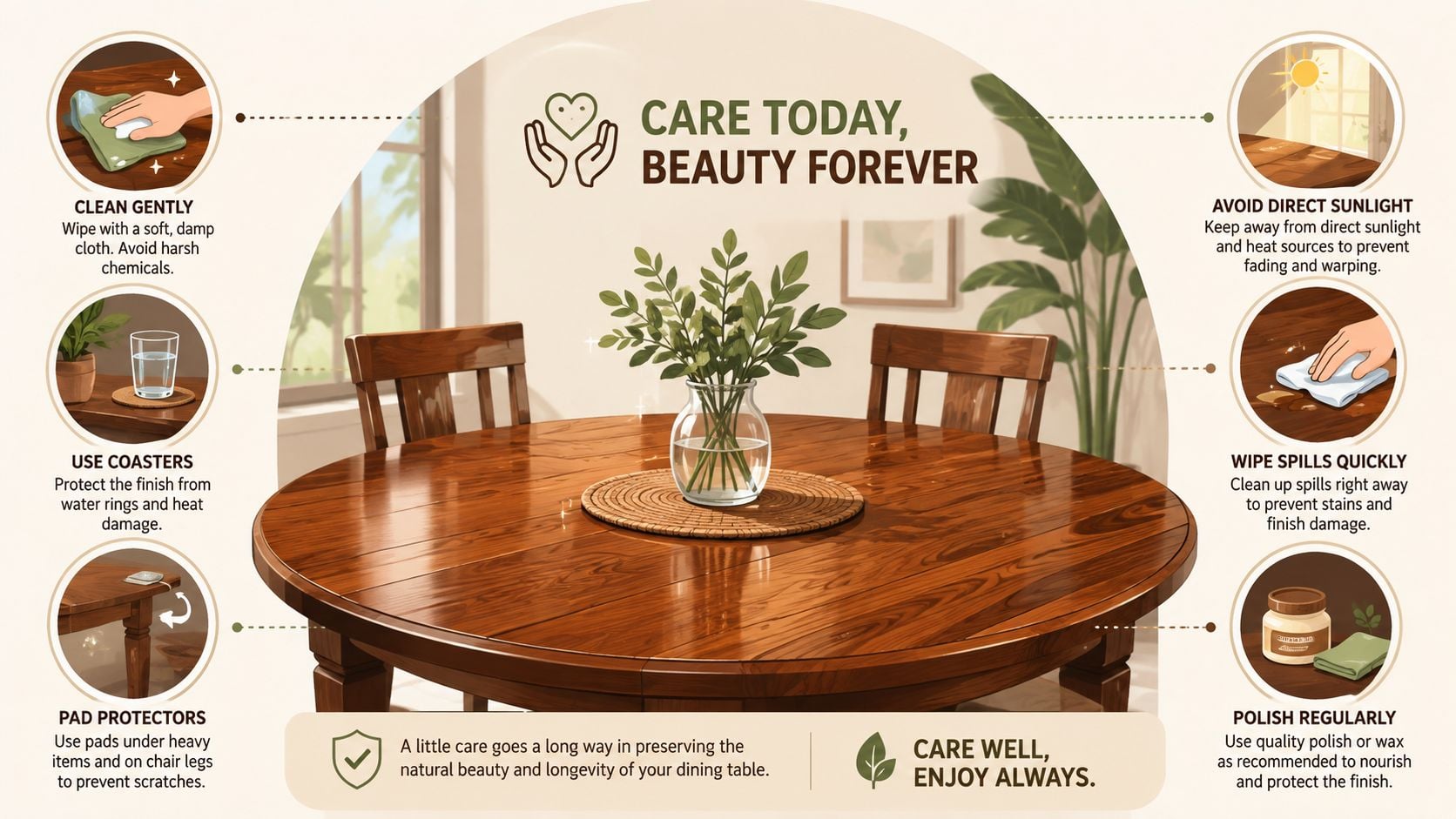
Maintenance should be simple enough to follow on a busy weeknight. The daily rule is consistent across finish families: use coasters and placemats, wipe spills before they sit, and clean with a damp microfiber cloth rather than a harsh spray or abrasive pad.
For an oil or hardwax-oil table, the first year should focus on prompt spill cleanup and learning the surface's natural change. In later years, refresh worn areas with the finish recommended by the maker, and use a compatible scratch marker or maintenance oil for small cosmetic marks. A rubbed-through area can often be lightly sanded and re-oiled locally, but the repair should be tested in an inconspicuous place first.
For a waxed table, renew the protective layer when the surface begins to look dry or loses its soft sheen. Avoid building up unrelated spray polishes, since residue can complicate future maintenance. Wax works best when the household accepts that refreshing the surface is part of owning the table.
For a film-finished table, use mild soap sparingly and avoid alcohol-heavy or abrasive cleaners unless the manufacturer specifically approves them. A small surface scuff may be blended by a professional, but peeling or widespread failure generally points toward a full refinish rather than a quick spot treatment. This is the central repair distinction: penetrating finishes often allow localized renewal, while a failing film can require broader correction.
Southeast Michigan climate matters
Solid wood responds to seasonal humidity. Southeast Michigan homes can experience winter humidity below 30 percent and summer humidity above 70 percent, conditions that create meaningful movement in solid wood. Dining-table care instructions emphasize stable indoor conditions and careful cleaning because movement can stress joints and finishes.
Repair rule: A small rubbed-through patch on an oil-finished top may be a spot-repair opportunity. A peeling lacquer or damaged film surface usually needs professional evaluation and broader refinishing.
Year one is about learning the care routine. Year five is about inspecting edges, high-use zones, and areas near serving places. Year ten is the point to decide whether a refresh preserves the table's value or whether a full refinishing service restores the surface. The table's construction matters here. Well-made joinery and solid material give an heirloom piece a better foundation for long-term care than a thin mass-produced surface.
Bringing It All Together for Your Home
The best finishes for dining tables are chosen by household rhythm. Oil or hardwax oil suits buyers who want a warm, tactile surface and accept prompt cleanup plus periodic renewal. Conversion varnish or catalyzed polyurethane suits families with children, pets, frequent hosting, and little interest in daily maintenance. Wax over oil creates the most hand-rubbed appearance, but it asks the owner to accept the lightest protection and the most regular refresh work.
Cost-per-year matters more than the initial ticket. A professionally finished solid-wood table with strong joinery, repairable materials, and a finish matched to its use can remain an heirloom through changing rooms and changing routines. A finish that forces constant anxiety, on the other hand, can make an excellent table feel like a burden.
The Ann Arbor showroom offers the practical answer. Shoppers can compare cherry, oak, maple, and walnut samples, feel the difference between satin and natural finishes, and complete a sit test before ordering. For a coordinated dining room, interior design details such as lighting and restaurant wall art collections can help finish the room after the tabletop decision is settled.
Visit Tyner Furniture at the South State St. showroom in Ann Arbor for a sit test and a hands-on comparison of dining-table finishes, solid woods, and custom options. The team can also help shoppers review Quick Specs for a made-to-order table with the right species, edge, finish, and configuration for Southeast Michigan living.