Finding Your Perfect Coffee Table Unusual

A living room can be comfortable, tidy, and fully furnished, yet still feel unfinished. That usually happens when every piece does its job, but none of them gives the room a point of view. The sofa works. The rug works. The lamps work. Then the eye lands on the coffee table, and it's the same safe rectangle seen in a hundred other rooms.
That's where an unusual coffee table earns its place. For many Ann Arbor and Southeast Michigan shoppers, the question isn't whether a room needs a table in the center. It's whether that table can bring character without making everyday life harder. A sculptural base may look striking, but can it still hold a tray? A live-edge top may feel warm and organic, but will drinks wobble? A trunk may add storage, but will it crowd the walkway?
Those are practical questions, and they matter. Since 1957, local furniture guidance has worked best when it helps people sort beauty from inconvenience. A coffee table unusual in shape, material, or construction can become the piece that gives the whole room its personality. It just has to earn that attention with function, comfort, and lasting value.
Table of Contents
- From Centerpiece to Conversation Starter
- Exploring Unusual Coffee Table Styles
- How to Choose the Right Unusual Table for Your Space
- The Customization Edge Creating Your Bespoke Piece
- Styling and Living with Your Statement Table
- Invest in Lasting Style with Confidence
From Centerpiece to Conversation Starter
A common living room story goes like this. The family moves in, places the sofa, adds a chair or two, then buys a center table because the room needs one quickly. The first table solves the need for a spot to set a drink or stack a few books, but years later the room still feels generic.
That doesn't mean the answer is buying the wildest shape in the showroom. The hard part is finding a table that feels memorable and still works on an ordinary Tuesday night. Mainstream inspiration often treats unusual coffee tables as statement pieces first, while practical concerns like tray stability, drink safety, hidden storage, and daily family use get far less attention, as noted in this guidance on unconventional coffee table ideas.
Practical rule: An unusual coffee table works best when its unusual feature solves a room problem instead of creating a new one.
That may mean an irregular top that softens a tight traffic path in a smaller seating area. It may mean a trunk-style piece that hides blankets, remotes, or game controllers. It may mean a rounded table in a home with young children where sharp corners would become a daily annoyance.
For Southeast Michigan households, that mix of personality and usefulness matters because many living rooms do more than one job. They host friends on Friday, hold laptops on Monday, and serve as family space every day in between. A good coffee table unusual in form should support all of that, not just photograph well.
Exploring Unusual Coffee Table Styles
Why unusual does not mean temporary
An unusual coffee table should age well in two ways. It should still look interesting after the trend cycle changes, and it should still serve the room well during everyday use. That is the difference between a novelty piece and a lasting furnishing.
Coffee tables have changed over time because the way families gather has changed. The low table became more common as casual living rooms became more central to the home, as explained in this history and overview of coffee tables. That same logic still applies. A distinctive table works best when its shape, material, or construction answers a real need in the room.
A good way to judge an unusual style is to ask one simple question. What is the unusual feature doing for you?
Sometimes the answer is visual. Sometimes it is practical. The strongest pieces do both.
Four directions that feel distinctive and livable
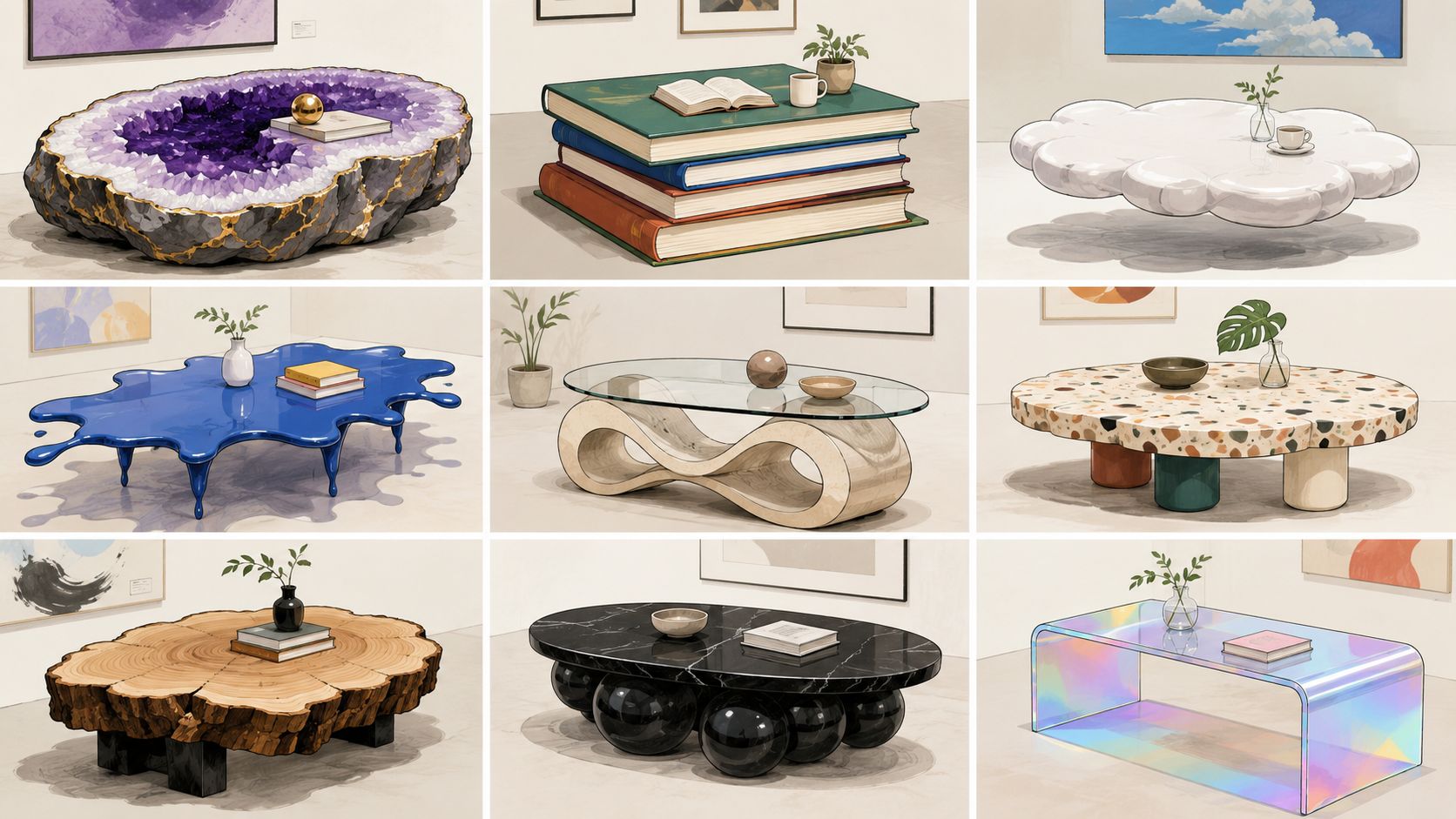
Sculptural tables bring movement into a room. The base may curve, stack, or intersect in a way that catches light much like exposed beams or an arched doorway add character to a house. These tables usually work best when the seating around them is quieter, because too many strong shapes in one area can make the room feel busy instead of settled.
Mixed-material tables create interest through contrast. Wood softens a room. Metal sharpens it. Stone adds weight and permanence. Glass can make a tighter seating area feel more open, but it also shows fingerprints and asks for more regular cleaning. That is why material choice matters just as much as style. The table has to live with your household, not just impress for a few minutes.
Natural wood pieces, especially reclaimed and live-edge designs, appeal to shoppers who want warmth and individuality without giving up substance. Grain variation, knots, and a less uniform edge can make a table feel one of a kind in the same way an old brick wall brings character that new drywall cannot copy. If you want a clearer explanation of how that edge is formed and why it looks different from a standard cut top, this woodworker's resource on live edge is helpful.
Modular and multifunctional tables solve a different problem. They help rooms that need to do several jobs. Nesting tables can spread out when company comes over, then tuck back in to open the traffic path. Trunk styles can store blankets and games. Lift-top designs can support a laptop or casual meal, though the mechanism and balance need to be well made if the piece is going to hold up over time.
Some of the best unusual coffee tables are quiet problem-solvers.
That is especially true in Southeast Michigan homes, where one living room may host movie night, grandkids, and takeout dinner in the same week. A dramatic shape has value, but only if people can still reach the surface comfortably, clean it without frustration, and move around it without bumping knees.
A helpful way to sort unusual styles is to focus on the kind of change they bring to the room:
- Visual change: A sculptural silhouette becomes the focal point.
- Material change: Wood, stone, glass, or metal changes the room's mood and upkeep.
- Functional change: Storage, nesting forms, or lift tops support real daily use.
- Spatial change: An open base or lighter profile can make a crowded seating area feel less heavy.
For shoppers drawn to that lighter architectural look, a metal-base coffee table collection shows how the structure underneath can add character while still leaving a practical surface on top.
How to Choose the Right Unusual Table for Your Space
Start with proportion before style
A shopper falls in love with a sculptural coffee table in the showroom. Then it gets home, blocks the walkway, and sits so high that setting down a cup feels awkward. We have helped Southeast Michigan families avoid that mistake since 1957, and the pattern is consistent. Unusual shape is exciting, but scale decides whether the piece will live well in the room.
A good coffee table usually sits lower than the top of the sofa seat and takes up a substantial, but not overwhelming, share of the sofa's length. Those are practical comfort rules, not design trivia. If people have to reach too far, lift their elbows too high, or work around a sharp corner every time they set something down, the table is asking too much of the room.
An unusual outline can still work beautifully. A pebble shape, a rounded triangle, or a nesting arrangement often softens traffic flow better than a hard rectangle, especially in family rooms where people pass through often.
Before you shop, measure the seating area the same way you would mark out a new appliance in a kitchen. Floor space looks generous until furniture starts claiming it. This furniture measuring guide helps you map the dimensions that matter before you buy.
Quick test: Sit in the main seat, reach forward naturally, and picture where a mug, book, or remote would land. If that spot feels strained, the table is too large, too tall, or shaped for looks more than use.
Match the material to the way your home really works
Material is where many inspiration articles drift away from real life. A dramatic surface may photograph well and still be the wrong fit for a house with grandkids, game nights, or everyday takeout. The right unusual coffee table should feel special and still handle normal use year after year.
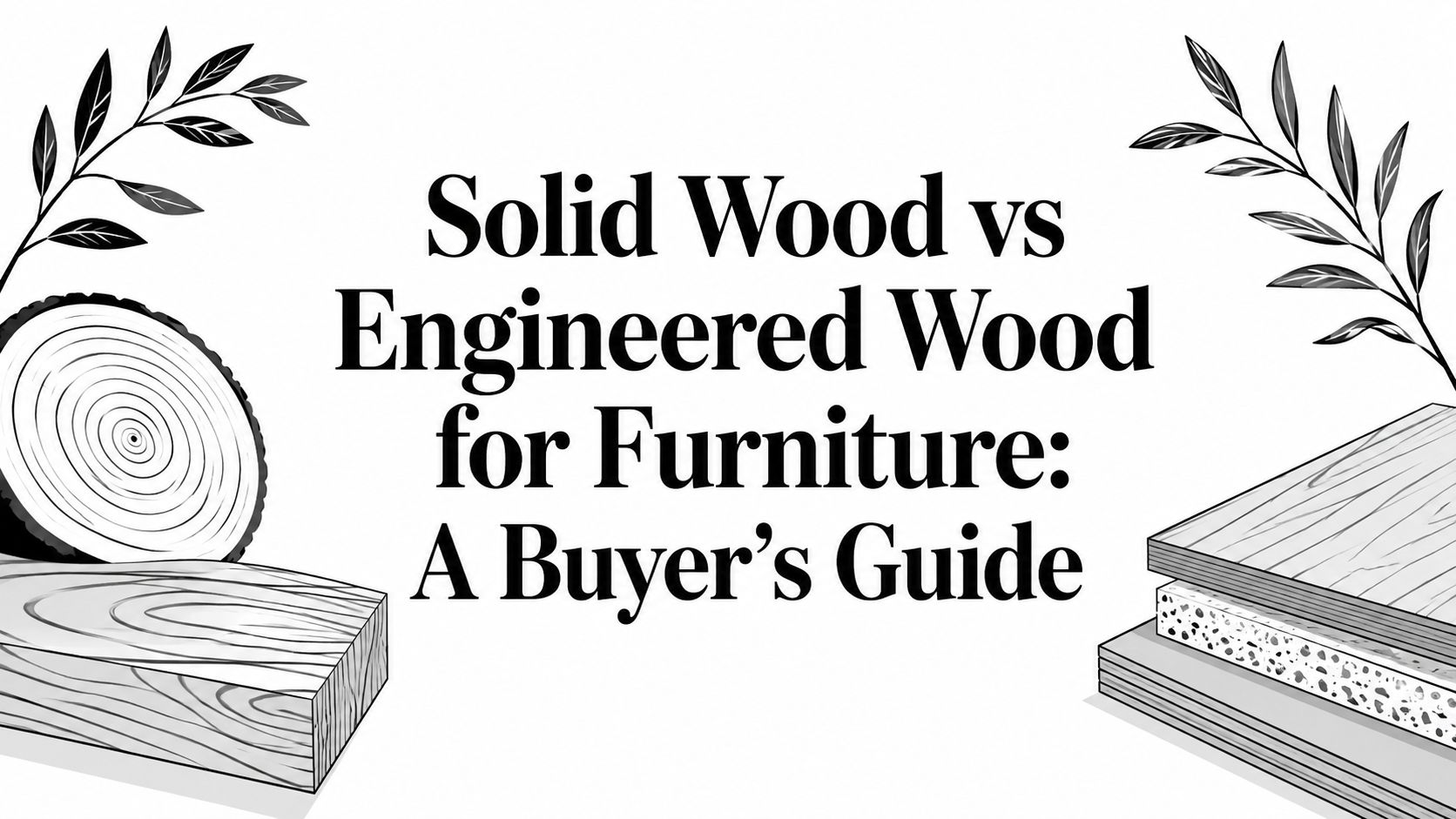
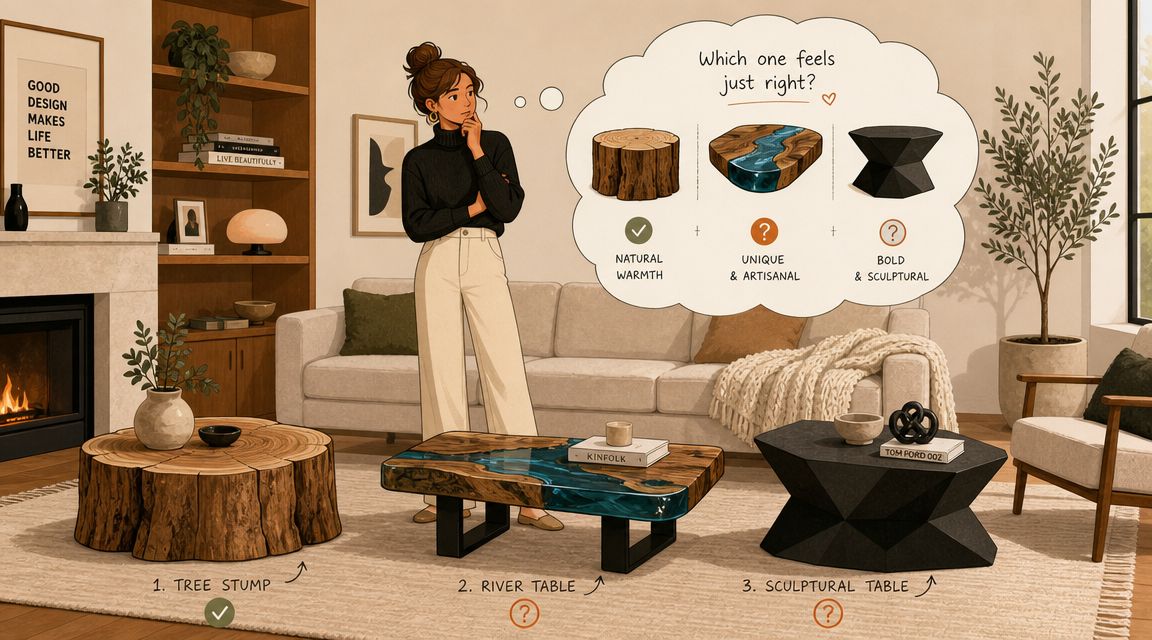
Solid wood remains one of the safest choices for shoppers who want heirloom value. It brings warmth, can be refinished in many cases, and tends to age in a way people appreciate rather than tolerate. Glass keeps a room looking open, but fingerprints, smudges, and edge awareness become part of daily life. Stone and concrete give a strong architectural look, though their weight and hardness deserve careful thought. Resin and mixed-media designs can be striking, but the finish quality matters. A bold concept is only worthwhile if the surface wears well and the joinery feels dependable.
The easiest way to sort materials is to ask one question first. What will happen around this table in an average week?
If the answer includes kids playing on the rug, trays of snacks, feet propped up during a movie, and frequent cleaning, choose a forgiving surface and sturdy construction. If the room is quieter and more formal, you may have room for a more delicate material mix.
Color and finish also shape how the room feels. Dark wood and stone usually read as grounded and substantial. Lighter finishes and open bases feel easier and less formal. If you are weighing the emotional side of the room, these mood-based staging tips can help you connect the table to wall color, upholstery, and lighting.
A quick decision guide
| Room condition | Coffee table direction |
|---|---|
| Tight walkways | Softer curves or a shape with eased corners |
| Need extra storage | Trunk style or a closed-base design |
| Entertain often | Stable top with enough usable surface for trays and drinks |
| Want long-term value | Solid wood or mixed materials with proven construction |
| Room feels heavy already | Open base, slimmer profile, or glass accents |
The right unusual coffee table acts like a statement piece and a working piece of furniture at the same time. That balance is what gives it staying power in a real home.
The Customization Edge Creating Your Bespoke Piece
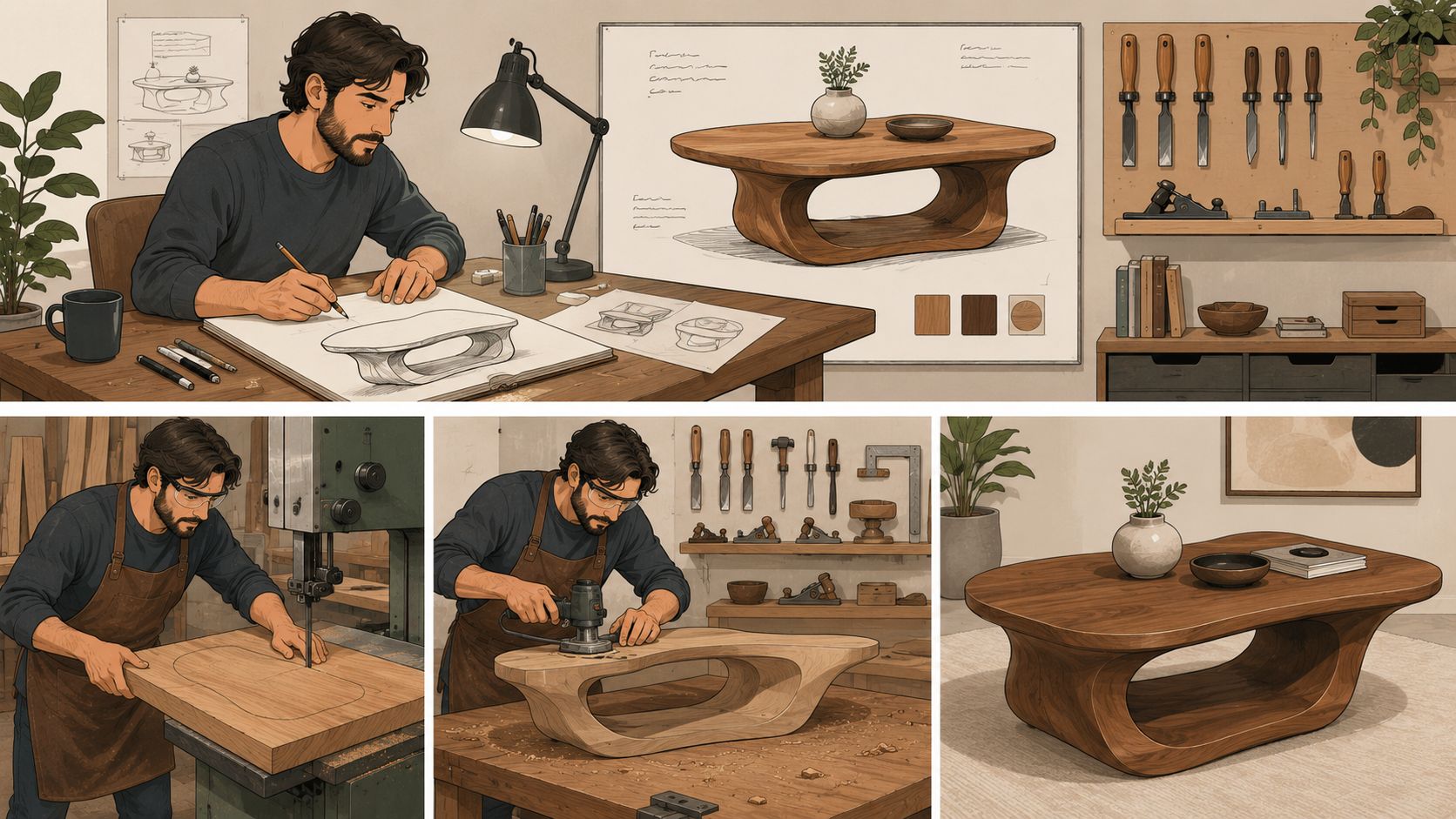
Why custom solves common coffee table problems
Ready-made tables often miss by a little. They're slightly too long for the rug, slightly too tall for the sofa, or the finish fights with the flooring. With a standard rectangle, those compromises are frustrating enough. With an unusual coffee table, they can make the whole piece feel awkward.
Custom work changes that. One custom maker publishes size options from 15 in to 41 in in diameter, which shows how statement tables are often specified in scale bands rather than a single default size, according to this custom coffee table sizing example. That flexibility matters because unusual forms interact with circulation differently than standard tables do.
A bespoke approach also lets the shopper decide which part should be unusual. Sometimes it's the outline. Sometimes it's the base. Sometimes the shape stays simple and the wood, stain, and joinery provide the distinction.
What bespoke selection looks like in practice
For many Southeast Michigan homes, the strongest custom route is still solid wood. The appeal isn't only visual. It's structural. A hand-crafted table in cherry, oak, or maple carries a certain weight in the room. The grain reads differently in morning light than it does in the evening. The surface feels substantial under a hand, not hollow.
A made-to-order process also helps shoppers match a piece to the rest of the home. If the dining room leans traditional and the living room is cleaner-lined, the table can bridge both. If the room needs a softer stain to keep the space open, the finish can move in that direction. That's especially useful in homes where in-stock is only the starting point and customization matters across categories, whether the project involves Canadel dining, Stressless ergonomic seating, or a living room accent table.
One practical option for shoppers exploring that process is custom furniture made simple, which outlines how dimensions, finishes, and made-to-order choices come together.
A thoughtful custom order usually focuses on these decisions:
- Shape first: Round, organic, square, nesting, or trunk-like.
- Wood species next: Oak reads differently from cherry or maple.
- Finish after that: The stain should support the room, not dominate it.
- Base design last: The base has to support the visual weight and the actual weight.
A bespoke coffee table becomes easier to live with because it was built around the room's exact limits instead of asking the room to adapt.
This is also the one place where the local showroom model helps. Tyner Furniture offers custom-order pathways that move beyond floor samples into made-to-order options, which can be useful when a shopper needs a coffee table that is unusual in shape but still calibrated to the room's size and finish palette.
Styling and Living with Your Statement Table
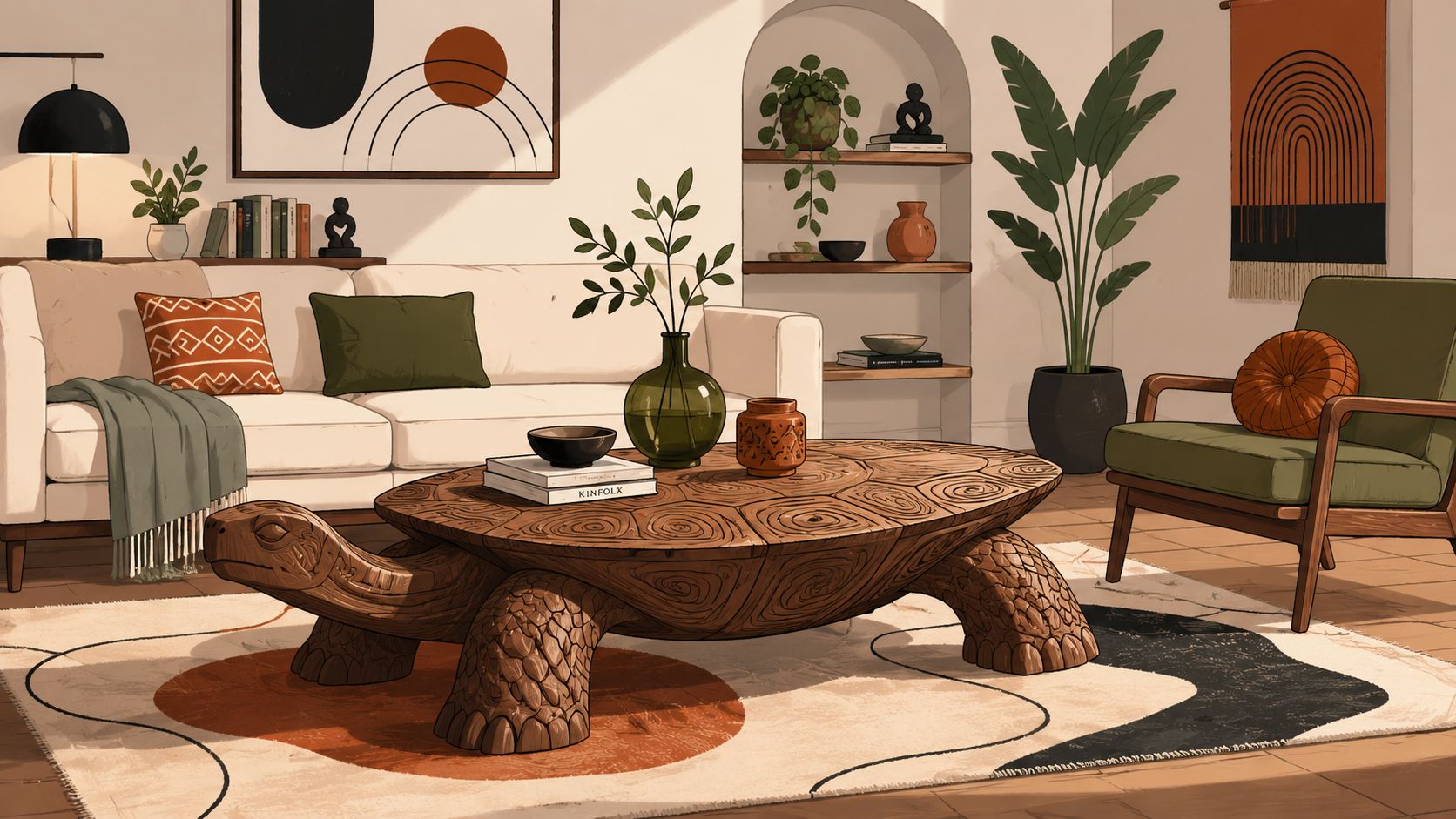
How to style without losing function
A striking table can disappear under clutter just as quickly as a plain one can. Styling should support the shape, not bury it. If the top has a live-edge profile, a carved outline, or an irregular silhouette, the accessories need restraint so the table itself still reads clearly.
One of the easiest solutions is the tray. On a top that isn't perfectly rectangular, a tray creates a stable landing spot for drinks, remotes, or candles. It also gives the eye one organized zone instead of several scattered objects. For readers who want more arrangement ideas, this guide to a styled coffee table offers a practical starting point.
A reliable setup often includes:
- One anchor object: A low bowl, stack of books, or sculptural piece.
- One functional piece: A tray, coaster set, or covered box.
- One natural element: Greenery, a branch, or flowers to soften hard materials.
Leave part of the top empty. A coffee table still needs to work like a table.
For shoppers building a room that feels inviting instead of staged, broader atmosphere matters too. Soft texture, layered lighting, and a few sensory details often do more than extra decor. These coziness ideas for the home can help tie the table into a room where people want to linger.
How to protect the look for the long term
Many shoppers worry that unusual design will age poorly or wear badly. That concern is reasonable. Distinctive shape alone doesn't create value. Construction does. A more durable unusual coffee table is often the one with a memorable silhouette built in proven materials such as solid wood, reflecting the concern for heirloom value noted in this discussion of unique coffee table longevity.
Maintenance doesn't need to be complicated, but it should be intentional:
- For wood: Use coasters, lift rather than drag accessories, and keep the top clear enough to notice spills quickly.
- For stone or concrete: Treat the surface as a decorative workhorse, not an indestructible slab. Trays and coasters still help.
- For glass accents: Clean often, but just as important, keep abrasive objects off the surface.
- For mixed materials: Pay attention to where materials meet. That's where dust and wear usually show first.
In real family rooms, the goal isn't perfection. It's graceful aging. A well-made statement table should gather memory and patina without losing its usefulness.
Invest in Lasting Style with Confidence
A well-chosen unusual coffee table isn't just a decor move. It's part of how a home works every day. When the shape improves movement, the material suits the household, and the construction supports years of use, the piece stops feeling trendy and starts feeling permanent.
That's where value becomes more useful than price alone. A table that lasts, coordinates with future changes, and still feels right years from now usually offers the better cost-per-year. For many households in Ann Arbor and across Southeast Michigan, that's the difference between replacing a piece later and living with one that keeps earning its place.
Solid wood remains a strong benchmark for that kind of investment, especially for shoppers who care about repairability, grain character, and long-term integrity. This guide to choosing hardwood for longevity and style is helpful for narrowing those decisions.
A lasting purchase should also feel manageable. Special Financing and a Low Price Promise can reduce the pressure around choosing a higher-quality piece, especially when that piece is made to order rather than pulled from a warehouse. And for households furnishing more than one area, it helps to remember that the same value-based thinking applies across the whole home, from home office and bedroom to dining room and outdoor spaces.
Shoppers who want to compare shapes in person, test scale beside real seating, or feel the difference between finishes can visit Tyner Furniture at the Ann Arbor showroom on South State St. A sit test often answers questions that photos can't. For special orders, online Quick Specs can help narrow dimensions, materials, and custom options before the visit.