8 Way Hand Tied Sofas: An Investment in Lasting Comfort

A lot of shoppers in Ann Arbor and across Southeast Michigan start in the same place. They sit on a sofa in the store, love the look, bring it home, and then slowly notice the changes. The seat softens in the wrong places. The middle starts to dip. The frame begins to sound tired before the room around it does.
That's when the important question shows up. Was that sofa an expense, or was it an investment?
For households furnishing a long-term home, that question matters more than the sale tag. A sofa gets used every day. It carries movie nights, naps, guests, pets, homework, and quiet mornings with coffee. If it loses support too soon, the buyer doesn't just replace furniture. The buyer pays twice for the same comfort.
Table of Contents
- Is Your Sofa an Investment or an Expense
- The Anatomy of an 8 Way Hand Tied Sofa
- The Craftsmanship Behind Hand-Tied Construction
- How Sofa Suspension Systems Compare
- Your Buyer's Checklist for Heirloom Sofas
- Maintaining Your Investment for a Lifetime
- Experience True Comfort at Our Ann Arbor Showroom
Is Your Sofa an Investment or an Expense
A family replaces a sofa after only a few years and often says the same thing. It looked good at first. It felt soft in the store. But daily use exposed what was underneath.
That hidden layer matters more than many shoppers realize. Eight-way hand-tied sofa suspension is a manual coil-spring system in which each coil is tied in front, back, side, and diagonal directions so the springs move together rather than independently, distributing seat load more evenly across the deck and making it a premium comfort-and-durability benchmark (verified explanation of eight-way hand-tied construction).
The cost-per-year mindset
A smarter buying lens helps in this regard. Instead of asking only, “What does it cost today?” a careful shopper asks, “What will this feel like after years of regular use?”
That's the difference between an expense and an heirloom-minded purchase. A lower upfront price can still cost more if the seat loses shape early, the support fades, and the whole room needs another reset.
Practical rule: The part nobody sees often determines whether the sofa still feels worth owning years later.
For many households, furniture shopping is a high-consideration decision because the piece affects comfort, layout, budget, and daily life all at once. That's why guidance like this look at why furniture purchases are high consideration decisions resonates with so many local buyers.
Why this matters in a forever home
A well-built sofa doesn't have to shout for attention. Its value is subtly evident. The seat stays supportive. The silhouette stays clean. The room keeps its sense of order because the furniture still holds its shape.
In Southeast Michigan, where many buyers are furnishing homes for the long haul rather than for a quick stopgap, that long-view mindset matters. Since 1957, local furniture guidance has often come down to one simple lesson. Buy the best internal construction the household can comfortably support, then choose the fabric, leather, and configuration that fit the room.
That approach isn't flashy. It's practical. And it's often the reason one sofa becomes part of family life while another becomes a regret.
The Anatomy of an 8 Way Hand Tied Sofa
A shopper in Ann Arbor sits on two sofas that look nearly the same from across the room. One feels steady and supportive. The other gives way in the middle and has a little side-to-side wobble. The fabric may catch your eye first, but the true difference is usually lower down, inside the seat.
That hidden structure is what buyers are paying for. If you are judging a sofa by cost per year instead of sticker price alone, the suspension matters because it helps determine how long the piece keeps its comfort, shape, and everyday usefulness.
What the term actually means
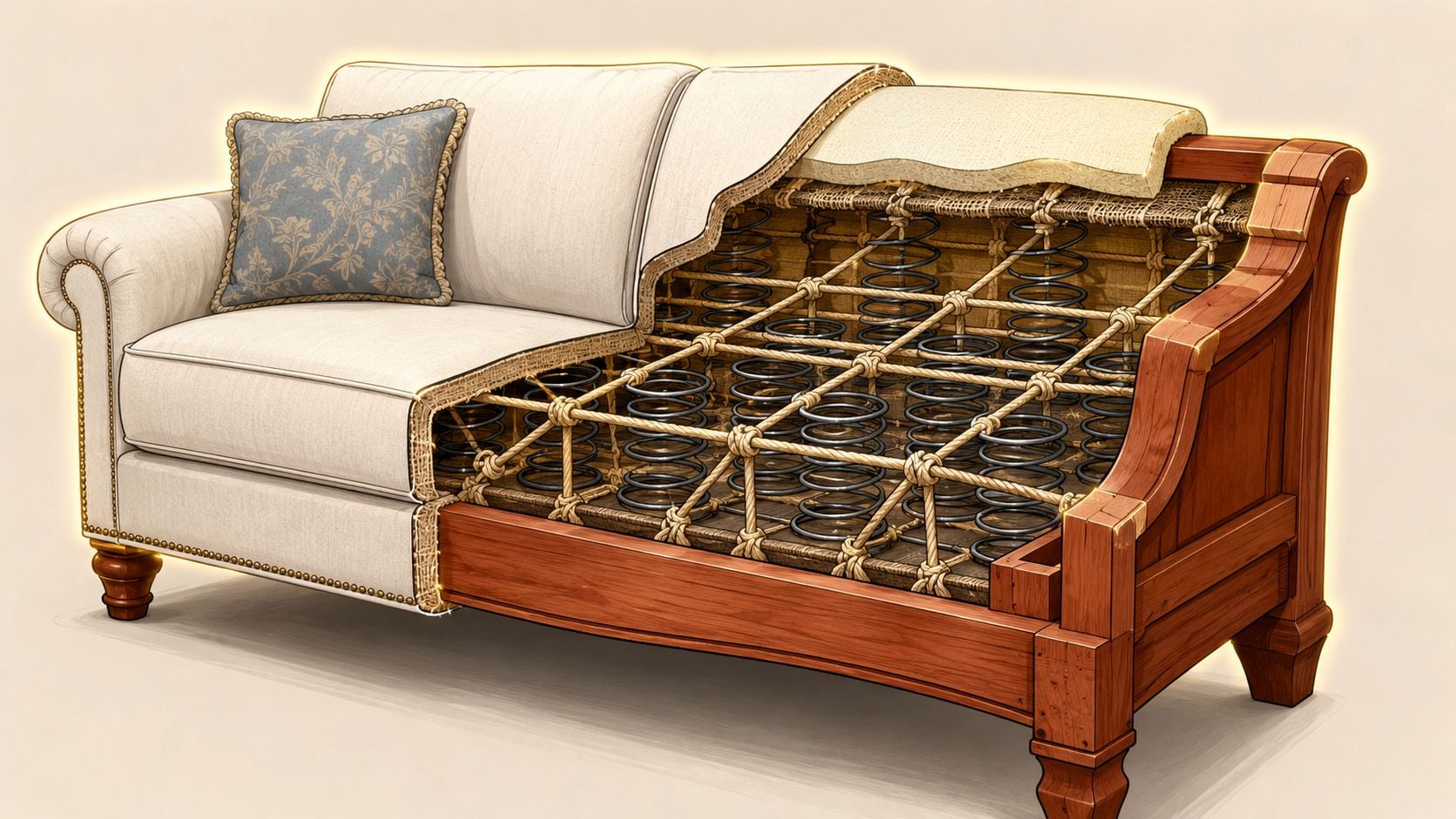
In an 8 way hand tied sofa, the seat deck uses individual coil springs that are tied by hand in eight directions. Front to back, side to side, and on the diagonals. That tie pattern helps the springs work together instead of reacting as separate parts, which is why the seat usually feels more even and controlled over time (construction explanation from House Beautiful).
The easiest way to understand it is to look at the three parts doing the heavy lifting:
- The frame holds the whole suspension system steady and gives the springs a solid anchor point.
- The coil springs provide the lift and resilience under the cushions.
- The twine and tie points connect the springs into a coordinated grid, so pressure in one spot is shared across the seat instead of concentrated in a single area.
A sofa built this way usually contains a rowed layout of large coil springs across the seat deck. The exact count depends on the size and design of the piece, so the better question is not "How many?" but "How well are they placed, secured, and tied?"
Why the seat feels different
A hand-tied seat works like a team carrying weight together. If one person takes the whole load, strain shows up fast. If the group shares it evenly, the work feels steadier and lasts longer.
That is why people often describe these sofas as having a more balanced sit. You are not just sinking into cushion fill. You are being supported by a spring system underneath that pushes back with more consistency across the seat.
That support also affects value over time. A sofa that keeps its shape and comfort longer often costs less per year of ownership, even if the upfront price is higher. For Michigan households furnishing a home for the long haul, that can be the difference between replacing a sofa too soon and living with one that still feels worth owning years later.
One point causes confusion, so it helps to clear it up early. An 8 way hand tied foundation does not guarantee that every sofa will feel the same. Cushion fill, seat depth, arm height, and the cover material still change the final comfort. If you are comparing the inside build with the outside finish, this guide to upholstery materials and performance can help you match long-term support with the right surface feel.
The label matters. The way the whole sofa is built matters more.
The Craftsmanship Behind Hand-Tied Construction
A machine can repeat a pattern. It can't replace judgment in the same way a trained upholsterer can.
That's part of why 8 way hand tied construction still carries weight in the furniture world. Contemporary furniture sources describe it as the most labor-intensive and costly suspension option, which is why it's treated as a hallmark of high-end seating rather than mass-market production and recognized as a benchmark of craftsmanship in premium sofas and chairs (craftsmanship reference).
Why labor matters here
Each spring has to be positioned, secured, and tied so the grid responds correctly. If one area is too loose, the seat can feel uneven. If one area is too tight, the ride changes.
That's why this method belongs in the same broader conversation as other hand-crafted furniture categories. In a dining room, buyers may judge the weight of solid cherry wood, the crisp fit of joinery, or the smoothness of a hand-applied finish. In upholstery, the craft is harder to see, but it's just as important.
A useful local parallel appears in pieces that emphasize bench-made upholstery and traditional construction details, such as the examples shown in this Hickory Craft furniture overview. The lesson is the same. Better furniture usually reveals its value in the parts hidden beneath the surface.
Craftsmanship that shows up years later
The strongest argument for craftsmanship isn't romance. It's performance over time.
A sofa built with care often ages more gracefully because the maker paid attention before the first cushion was ever wrapped. That's what appeals to buyers who think in terms of sustainability and cost-per-year, not just immediate appearance.
This is also where the idea of bespoke comfort comes in. In-stock is only the starting point for many households. Some need a made-to-order size for an awkward room. Some want the buttery feel of top-grain leather. Others need a family-friendly fabric or a sectional configuration that works with the fireplace, windows, and traffic pattern.
Good craftsmanship is easy to miss on day one. It becomes obvious after years of sitting, standing, leaning, and living.
That same mindset often carries across the whole home. A shopper who values a hand-built sofa may also care about Amish hand-crafted solid wood in the bedroom, Canadel options in the dining room, Stressless ergonomic seating in the den, or coordinated pieces from the home office to outdoor spaces. The underlying principle doesn't change. Buy fewer pieces with stronger bones, and the home feels more settled.
How Sofa Suspension Systems Compare
Most shoppers don't compare sofas by opening them up. They compare by feel, by price, and by appearance. That's understandable, but it can hide major differences in what happens below the cushion.
The clearest performance advantage of 8 way hand tied construction is controlled spring coupling. The tied coil grid reduces lateral shift and keeps the spring pack from migrating or coming undone, which improves long-term shape retention and limits localized sagging under repeated use (structural performance explanation).
Sofa Suspension System Comparison
| Suspension Type | Durability | Comfort Profile | Long-Term Value |
|---|---|---|---|
| 8 way hand tied | Premium construction associated with strong shape retention and reduced localized sagging | Balanced, responsive, and supportive across the seat | Often favored by buyers seeking long-term comfort and repair-minded construction |
| Sinuous springs | Solid mid-tier option in many upholstered pieces | Can feel supportive and consistent, though typically less interconnected | Good value in many cases, but not usually positioned as the highest-spec build |
| Drop-in coil units | Depends heavily on the overall build and how the unit is installed | Can offer a springy seat feel, though the response differs from individually tied coils | Can work well in some designs, but buyers should inspect the whole sofa carefully |
| Webbing systems | Often used in lighter-duty applications | Usually offers a different sit, often less buoyant than coil-based systems | Best judged case by case, especially if the sofa is expected to handle heavy daily use |
What the chart means in real life
For a casual room that sees light use, a simpler suspension may be perfectly reasonable. Not every home needs the same build level in every spot.
But for the main living room sofa, the one that handles daily traffic, movie nights, visitors, and weekend lounging, shoppers usually benefit from aiming higher. That's where long-term value shows up. The seat remains more stable. The comfort remains more consistent. The shape tends to hold more gracefully.
A buyer comparing options can use this short checklist:
- Focus on the primary seat if the budget won't stretch to premium construction in every room.
- Test the whole deck instead of only one cushion. Sit in the center, the corner, and near the arm.
- Ask how the suspension is built rather than assuming all premium-looking sofas use the same system.
- Consider repairability as part of value, not as an afterthought.
For shoppers weighing upholstery quality, seat feel, and frame integrity together, this guide on what to look for in a new sofa or chair helps turn a quick showroom impression into a more informed buying decision.
One caution is worth keeping in mind. “Better” doesn't mean “right for everyone” in a vacuum. A sofa with premium suspension still has to fit the household's comfort preference, room scale, and style. The smart comparison asks two questions at once. Is the construction strong, and is the seating experience right for the people who'll use it every day?
Your Buyer's Checklist for Heirloom Sofas
The showroom can overwhelm even careful shoppers. Fabric books stack up. silhouettes blur together. Every seat feels good for the first few seconds.
A simple checklist helps separate genuine build quality from surface appeal.
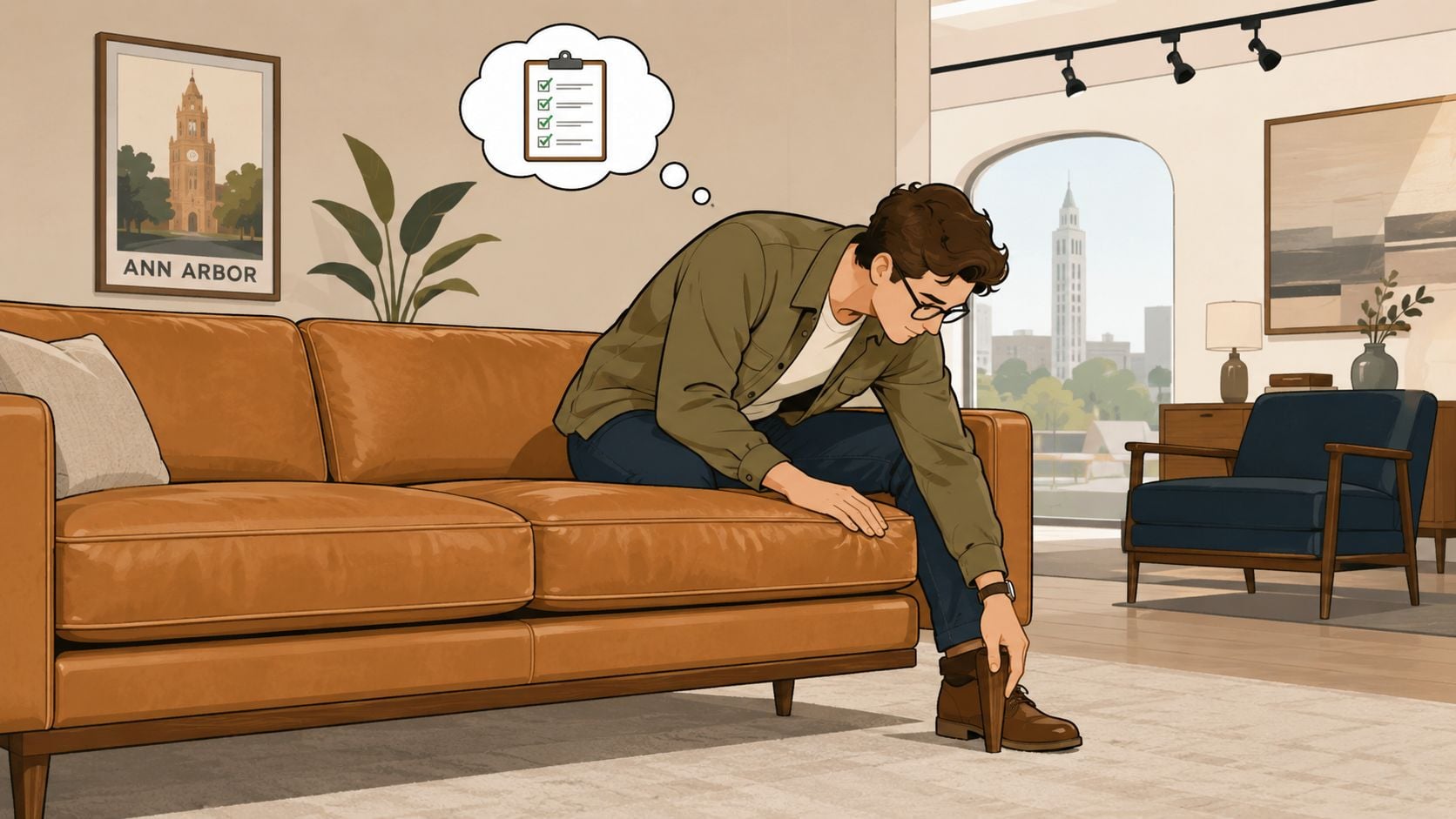
What to test in the showroom
Start with the seat, not the fabric. A beautiful cover can distract from a weak foundation.
- Press down with both hands and notice whether the deck feels stable and responsive rather than hollow or flat.
- Sit in more than one position because some weak seats feel fine in one spot and unsupported in another.
- Listen for noise when shifting weight. A quiet, settled feel usually signals better overall construction.
- Lift a front corner slightly if staff permits. Extra substance in the frame often tells its own story.
A sofa should feel composed under movement. If it twists, rattles, or feels loose on the floor, the buyer has learned something important before purchase.
The cover still matters, of course. Fabric and leather affect both wear and comfort. A smooth woven fabric gives one experience. Top-grain leather gives another. Homes with children, pets, or bright sun exposure may prioritize different performance traits. That's why made-to-order upholstery remains valuable. The shopper isn't limited to what happens to be on the floor that day.
What to ask before ordering
A confident buyer asks direct questions.
Some are practical:
- What kind of suspension is inside the seat?
- Is the frame built for long-term use?
- What customization options are available in size, fabric, leather, or configuration?
Some are about fit:
- Will this depth work for the household's height and sitting habits?
- Does the arm style suit everyday use or mostly formal use?
- Will the cushion choice change the sit over time?
There's also value in understanding handwork beyond furniture itself. Readers interested in how precision and tradition shape long-lasting textile work may enjoy this article on mastering heirloom sewing techniques. It helps explain why careful, repeatable hand processes still matter in products designed to last.
For buyers in Ann Arbor visiting a South State St. showroom, this is also the point where customization can become a real advantage. In-stock may solve the immediate need, but made-to-order programs often solve the room better. That may mean a different sectional layout, a bespoke fabric, a Canadel dining finish that complements the adjacent space, or a Stressless seating option sized for the person who'll use it most.
A smart shopper doesn't just ask, “Does this look good today?” The better question is, “Will this still suit the home after years of daily life?”
Maintaining Your Investment for a Lifetime
A strong sofa still needs good habits. That doesn't mean complicated upkeep. It means steady, sensible care.
This matters even more when the buyer has chosen a piece for long-term value rather than short-term convenience. The better the construction, the more worthwhile maintenance becomes.
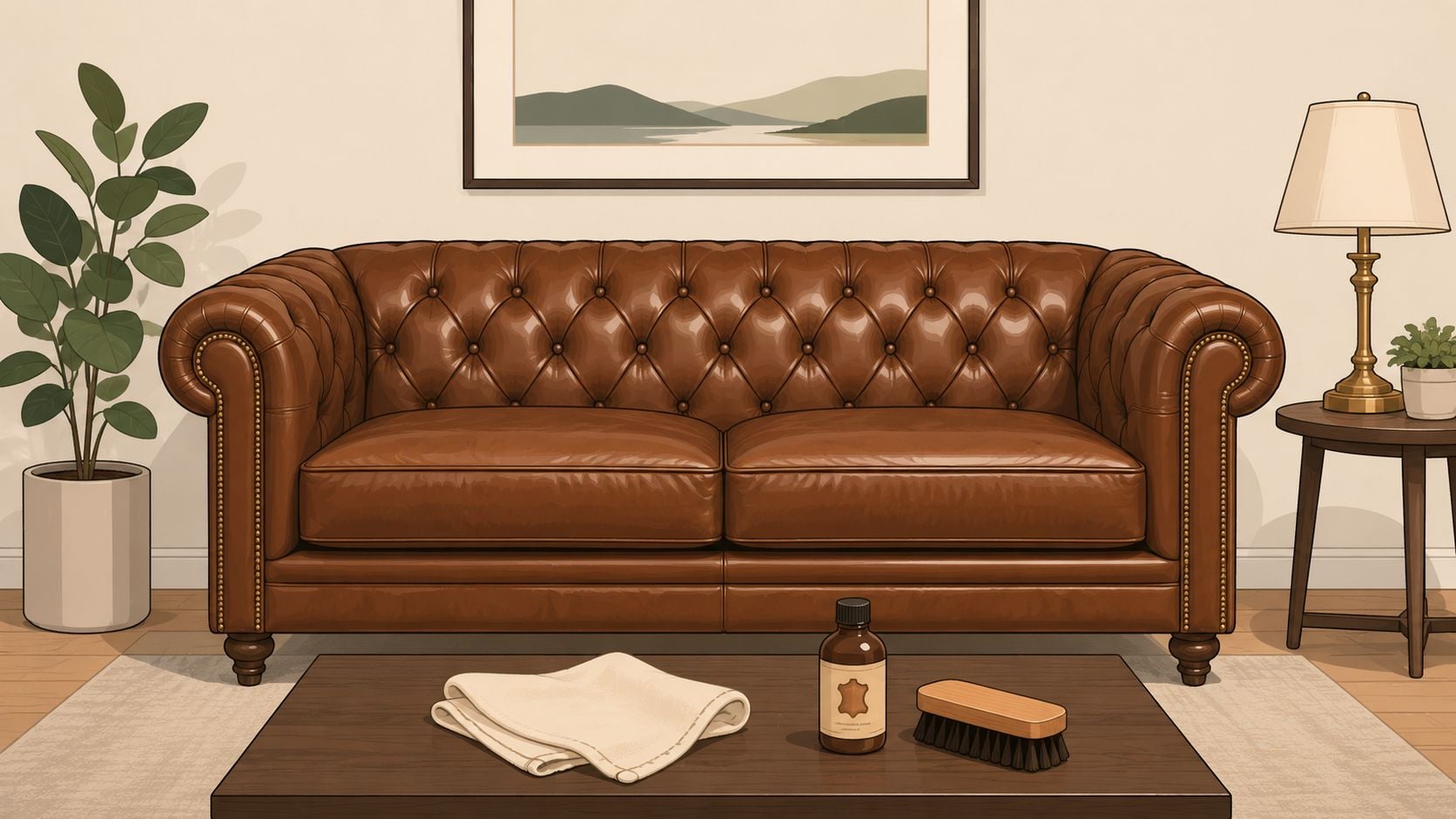
Simple habits that protect the seat
Daily wear usually shows up first in the cushions and cover. Rotating loose cushions, smoothing wrinkles, and keeping the sofa out of harsh direct sunlight can help preserve the look and feel of the piece.
Cleaning should match the upholstery type. Leather, performance fabric, and natural-fiber upholstery each need a different approach. For general care ideas that homeowners can use as a starting point, this roundup of residential upholstery cleaning insights offers helpful guidance.
Seasonal care also helps. A practical household routine might include checking legs, levelers, cushion condition, and the room environment a few times a year. For a broader home-care rhythm, this furniture maintenance checklist is a useful reference.
When repair is worth it
This is one of the biggest differences between heirloom-minded upholstery and throwaway furniture. Shoppers often ask what happens after years of use and how repair works. Sources note that while the tying prevents shifting, real-world service life and part replacement still matter, and unlike disposable systems, hand-tied springs can often be retied or replaced by a professional.
That's an important point for sustainability-minded buyers. A repairable sofa asks for maintenance, not abandonment.
Maintenance doesn't protect only appearance. It protects the value built into the frame, suspension, and upholstery work.
A household that treats a sofa as an investment usually gets more from it. The room stays comfortable. The silhouette stays sharper. And when a repair makes sense, the piece has a path forward instead of a trip out the door.
Experience True Comfort at Our Ann Arbor Showroom
A couple may spend weeks comparing spring systems, cushion fills, and fabric grades online, then learn more in five minutes by sitting on two sofas side by side. That is often the moment the numbers turn into something real. You can feel whether the seat holds you up or lets you sink, whether the back supports a long evening of reading, and whether the frame feels settled instead of loose.
An 8 way hand tied sofa is a long-term purchase, so the final test should happen in person. Photos can show style. A spec sheet can list materials. Neither can show how the suspension and cushions work together under your body weight.
That matters even more if you are trying to judge cost per year, not just sticker price.
A well-made sofa that keeps its shape, support, and comfort for many years often costs less over time than a cheaper piece replaced too soon. That is the kind of decision many Michigan households want help sorting through. At a local showroom, you can compare seat depths, arm heights, cushion feels, leather textures, and room-friendly sizes without guessing.
You can also ask the practical questions that come up in real homes. Will this seat height work after a long workday? Will this depth fit a taller person without swallowing a shorter one? Does the scale suit the room, or will it crowd the traffic path? Those answers are easier to find when you can sit, stand, and move around the piece yourself.
Since 1957, local shoppers have looked for furniture the same way many still do now. They want straight answers, construction that holds up, and guidance from people who understand how furniture lives in a home year after year.
A visit to Tyner Furniture gives Southeast Michigan shoppers that kind of hands-on check. The Ann Arbor showroom on South State St. offers a no-pressure way to compare support, materials, and made-to-order options, and online shoppers can browse Quick Specs for special orders before making the trip.