How to Protect Leather Furniture the Right Way


A leather sofa rarely fails all at once. In a Southeast Michigan living room, it usually starts with winter sun hitting the same cushion every afternoon, a dog hopping up with a little grit on its paws, or a child leaving a juice ring that gets wiped the wrong way. That's why how to protect leather furniture isn't really about one cleaner or one bottle, it's about controlling the habits and conditions that wear leather down before anybody notices.
Good leather rewards steady care. Dust and vacuum weekly, blot spills immediately, and use a leather-safe conditioner about every 6 to 12 months is still the right baseline, and keeping leather away from direct sunlight, heat sources, and very dry indoor air matters just as much (EZ Living Furniture leather care guide). The right routine keeps the buttery feel of top-grain leather intact, preserves the color, and stretches the cost-per-year of a piece that should be an heirloom, not a short-term fix.
Why Your Leather Needs a Plan
A family can do everything right on paper and still wreck a sofa by accident. One bright winter morning, the blinds are open, the room feels warm, the dog claims the corner seat, and the couch sits in the same strip of sun for hours. Leather does not care that nobody meant to cause trouble. It reacts to where you put it, how dry the house feels, and how much daily life lands on it.

Leather is a natural hide, so the room around it matters. Sunlight, heat, and dry indoor air pull color and moisture out of the surface, and the usual care advice still points in the same direction, keep leather out of direct sun and away from heat sources, and give it a reasonable indoor environment when possible (EZ Living Furniture leather care guide). If you want the couch to keep its color and feel, protection starts with the room, not the bottle.
Practical rule: If the sofa sits in direct light, or near a vent, fireplace, or radiator, change the room layout before you reach for conditioner.
That mindset keeps people from overreacting to every scuff and underreacting to the things that wear leather out. Pets, kids, winter dryness, and the direction your windows face all belong in the same plan. If you are comparing options, the American-made leather sofas page is useful because it puts construction and material choices in the same conversation as everyday care. For spill cleanup, the J.G. Carpet Cleaning LLC guide gives a sensible, practical reference point for what to do when leather gets hit with a mess.
The point is plain. Leather stays handsome when the house stops beating it up. That takes a plan, not a rescue mission.
Know Your Leather Before You Protect It
The biggest mistake is treating every leather sofa the same. A protected, pigmented hide can take more household life than a natural aniline piece, and bonded leather asks for a far more cautious mindset because once the surface fails, it doesn't bounce back the way real hides do. The finish decides how hard the furniture can work for a family.
Start With the finish, not the cleaner
Protected leather is the most forgiving choice for a busy home. It usually handles everyday wear better because the surface is finished to resist stains and spills more effectively than more natural-looking options. Aniline leather looks rich and feels luxurious, but it shows marks faster, so a heavy-handed cleaning routine can do more harm than good.
Bonded leather deserves special skepticism. It may look fine at first, but when the surface starts peeling or breaking down, aggressive protection habits won't restore the underlying material. That's why it makes sense to ask what you're sitting on before any product touches it. The top-grain leather vs bonded leather page is worth keeping in the back pocket when comparing options in the showroom.
Ask the right questions before you buy
A good showroom conversation should sound practical, not fancy. Ask what finish the leather has, whether it's top-grain, full-grain, aniline, protected, or bonded, and how the surface should be maintained in a home with pets or children. That matters more than the color swatch.
Strong households need forgiving leather. If the room gets a lot of traffic, choose a finish that tolerates real life instead of chasing the most delicate look.
The leather type also sets the tone for the entire routine. The more natural the finish, the gentler the cleaning and protection plan needs to be. That's the whole game, not the bottle, not the label, but the match between material and household.
In a good interior design plan, material integrity comes first. The better the leather is matched to the home, the less likely the family is to fight the piece later.
Daily and Weekly Habits That Prevent Most Damage
A leather sofa does not usually fail in one dramatic moment. It wears down from dust that gets rubbed in, crumbs that settle along the seams, and cushions that never get flipped or moved, so the same spots take the hit every day. The fix is plain and repetitive, which is exactly why it works.
The five-minute routine that actually holds up
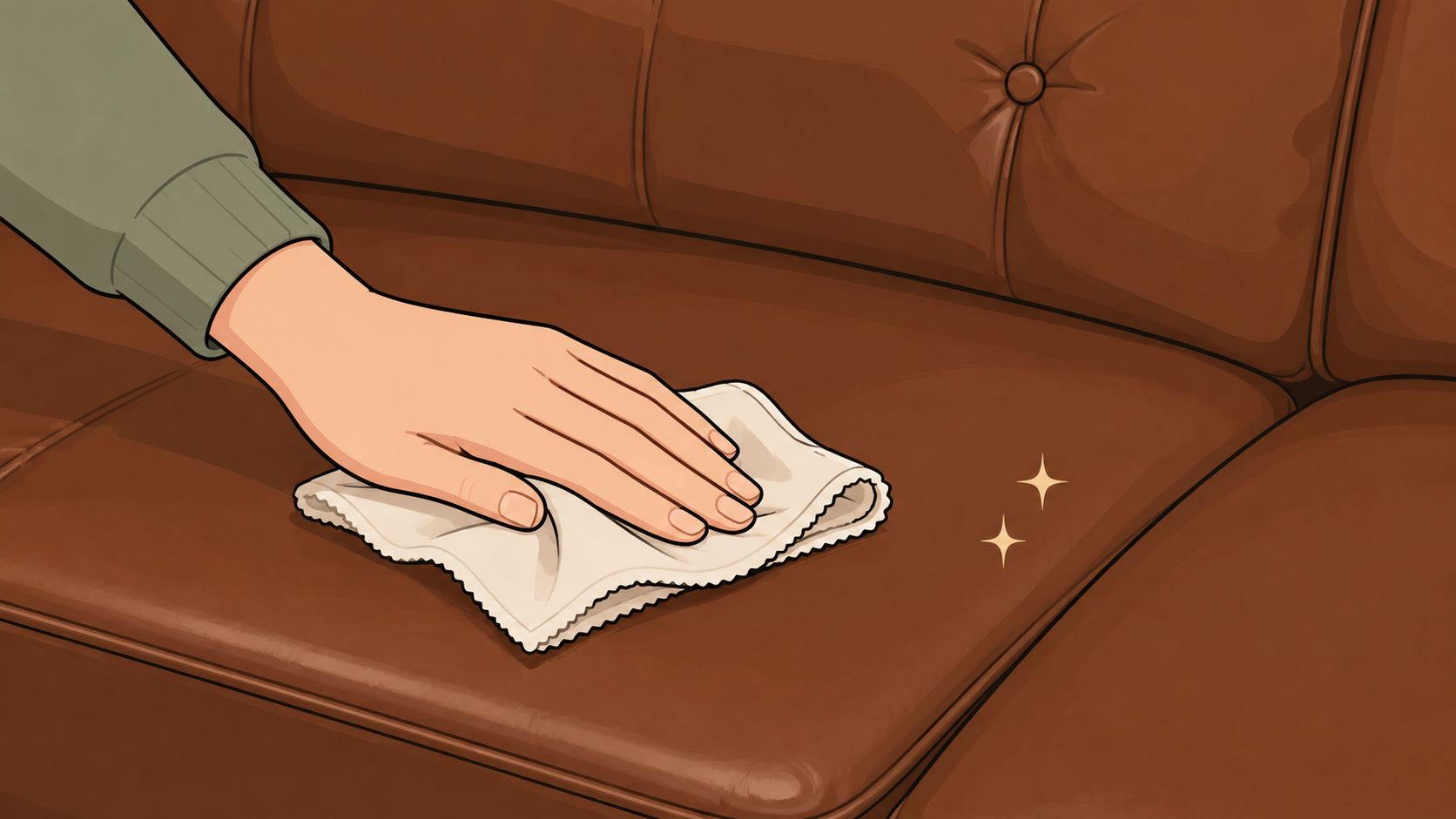
A soft microfiber cloth clears the surface dust. A vacuum with a brush attachment pulls grit out of seams and crevices before it gets ground into the finish. Cushions should be rotated so one seat does not take the same pressure every night. Those habits sound ordinary, but they are what keep leather aging evenly instead of looking tired in one corner and untouched in another.
Use throws where the traffic is roughest. The seat the dog jumps onto, the arm that collects remotes, and the cushion kids treat like a landing pad all deserve a washable barrier. That is not a sign the leather was a bad choice, it is just smart household management.
For owners who want a wider view of how leather fits beside other coverings, the upholstery materials guide gives a clean comparison without turning the decision into guesswork.
Spills need a calm response, not friction
The first move is always the same, blot, don't rub. Rubbing pushes liquid deeper, spreads the mess, and can scuff the finish. A clean, dry cloth should handle the first pass, and water-based spots usually respond better to a lightly dampened cloth with distilled water than to whatever happens to be under the sink.
If a spill sits long enough to dry in, cleanup gets harder. Speed matters more than panic.
Once a mark has already turned into a tear, the job changes from cleaning to repair. The leather sofa rip repair guide is the kind of practical read that helps homeowners tell normal wear from damage that needs attention. The principle stays the same, though. The faster you deal with the problem, the less the couch has to remember it.
Sunlight, Heat, and Michigan Winter Dryness
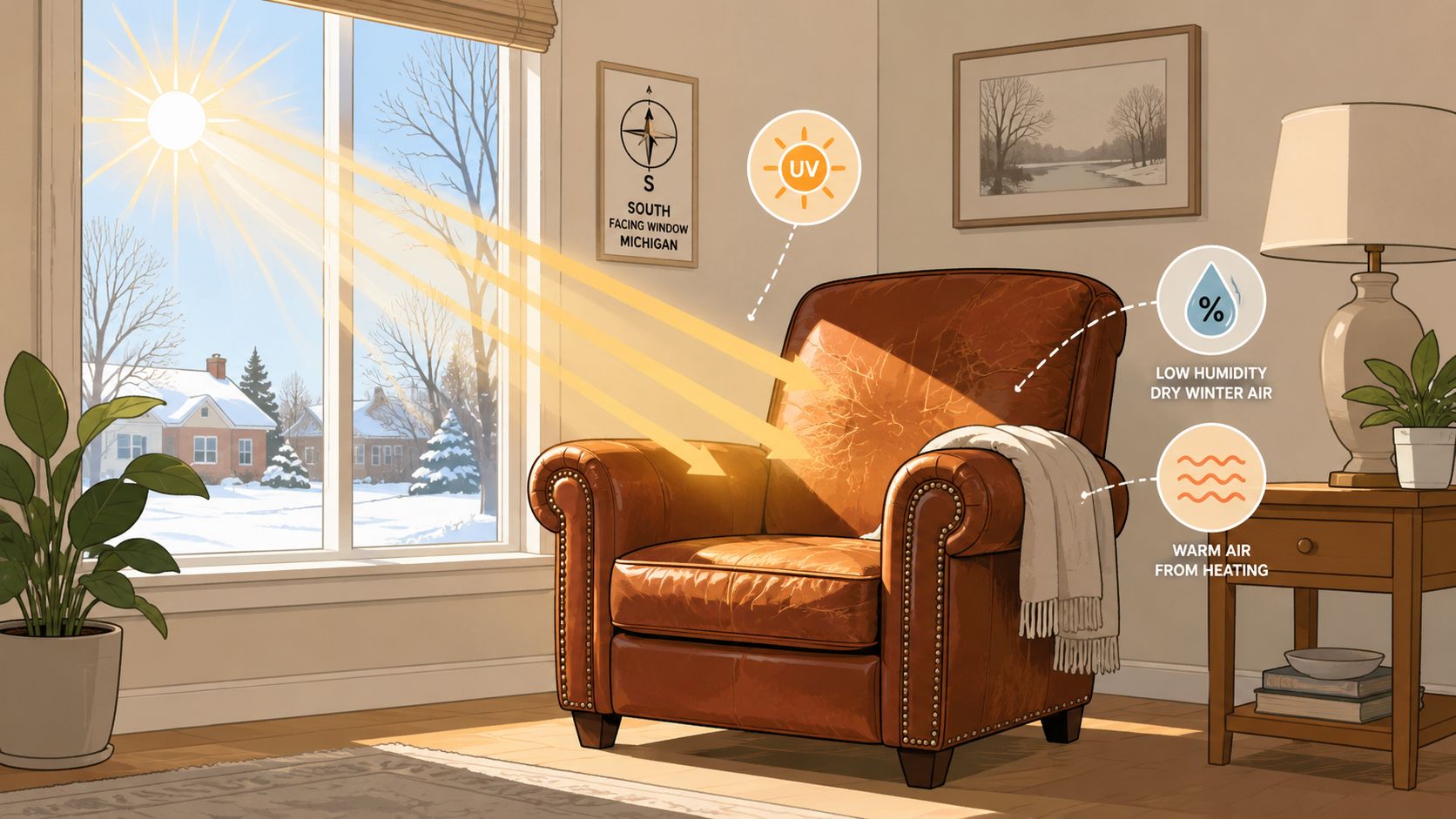
Leather breaks down fastest where the room works against it. In Southeast Michigan, that means bright seasonal sun, furnace heat, and the kind of dry indoor air that shows up as soon as the heat starts running. A sofa under a south-facing window and a chair parked near a vent do not face the same risk, so they should not get the same treatment.
Why placement does the heavy lifting
Sun exposure is one of the main reasons leather fades and dries out over time, so start with the window before you start reaching for products. Curtains, blinds, and UV-blocking film do more real work than any quick-fix treatment on the leather itself. The Miller Waldrop leather protection guide makes the same basic point, shade the furniture first, then worry about the rest.
Heat sources create their own trouble. Radiators, air conditioners, and forced-air vents send concentrated hot or dry air across the surface, and that speeds up fading and cracking. Leather does not need coddling, but it does need distance from direct blast zones, especially in family rooms where the furniture sits in the path of the house system.
Treat the room like a microclimate
Indoor conditions around 60°F to 77°F and 40% to 60% humidity are a practical target for keeping leather flexible and looking even (EZ Living Furniture leather care guide). That is a working range, not a promise, but it gives you a clear benchmark when the furnace starts drying out the house.
Use the room the way it is built. Shift the sofa a few inches if it sits in direct light, swap cushion positions now and then, and move throws so the same arm or seat does not take the full hit all winter. In a Michigan home, that matters because the sun angle changes with the season and the indoor air gets rougher when the heat runs more often.
Best correction: If the room feels dry enough to irritate skin, the leather feels it too.
That is why window film, humidification, and better placement beat reacting after the leather already looks tired. If you want a straightforward way to add a layer of protection once the room setup is right, a professional stain protection service can help reduce how hard everyday messes stick. For damaged cushions or worn seams, Tyner Furniture's best leather couch repair kit is a sensible place to start before the problem spreads.
Stain Treatment That Works
A stain gets worse the longer people argue about it. The right response is plain, calm, and fast. Stop the spill from spreading, then identify whether it is water-based, oil-based, or something messy in between.
Treat the common household messes in order
Food spills usually leave residue on the surface before they sink in. Lift any solid material first, then blot the rest. Beverage spills behave the same way, but coffee and wine punish hesitation, so the cloth needs to be in hand immediately.
Ink is different. Leaking pens often leave a sharper mark that needs a careful test before any cleaner touches the visible area. Pet accidents need fast removal and complete drying, because odor and moisture can linger in seams even after the top layer looks fine. Denim dye transfer from new jeans is frustrating because it often appears as a surface color shift rather than a true wet stain.
The cleanest protocol is still the same:
- Blot immediately: Lift liquid without grinding it in.
- Test first: Try any cleaner or conditioner on an inconspicuous area before using it on the visible surface, because products can react differently across finishes and topcoats.
- Match the response to the stain: Water-based spots call for a different approach than oily residue.
- Stop overworking the area: Friction turns a small problem into a bigger one.
Know what not to use
All-purpose cleaners, magic erasers, olive oil, hair dryers, and random kitchen fixes cause more trouble than they solve. They can alter the finish, leave residue, or dry the hide unevenly. That is especially dangerous on more natural leather types, where the finish is less forgiving.
For families who want an added layer of protection before the couch ever gets splashed, a professional stain protection service can make sense on the upholstery side of the conversation. The point is not to replace good habits, it is to make the surface less vulnerable when real life happens.
Tyner Furniture's best leather couch repair kit is a practical place to start if a mark has already settled in, a seam has opened, or a spot needs more than a quick blot and a prayer.
The honest truth is that some marks will not fully disappear from some leather types. The goal is to stop making them worse, then decide whether the stain needs professional attention or a more realistic acceptance of the wear.
The Conditioning Question Most Guides Get Wrong
Conditioning gets overhyped because people want one product to solve every leather problem. It doesn't work that way. Conditioner helps when the leather is dry and the finish can take it in properly, but too much can clog the surface, change the feel, or leave discoloration on delicate finishes.
Less product, more discipline
The right schedule depends on the room and the leather, not a fixed calendar. In a dry home with strong sun exposure or heavy daily use, the leather may need attention sooner. In a calmer room with protected leather and light use, waiting makes more sense. The goal is to watch the surface, not treat conditioning like a ritual.
Practical rule: If the leather still feels supple and looks even, do not feed it just because the month changed.
Application matters more than the bottle label. Put conditioner on a cloth first, never straight onto the leather. Work in small sections, let it absorb, then buff off the excess only after the surface has had time to take it in. Over-application leads to uneven absorption or discoloration because leather is porous, especially on finishes that do not forgive sloppy care (Miller Waldrop leather protection guide).
What backfires fast
Coconut oil, baby wipes, and improvised household mixes leave residue and alter the surface feel. That is a bad trade on furniture people bought for its smooth finish and natural look. The smarter move is a leather-specific product used sparingly, after a test on a hidden spot and with the care approach matched to the upholstery, which is why a proper leather upholstery care plan matters.
A showroom advisor says it more plainly. Do not chase shine. Do not soak the hide. Do not confuse temporary softness with healthy leather. Conditioning is maintenance, not a rescue move.
When to Call a Pro and Why Quality Leather Pays Off
Some damage needs more than good habits. Deep stains that sit below the finish, fading across a whole panel, sagging cushions, and peeling bonded leather all call for expert hands, not a stronger household cleaner. Know the line early. That keeps the problem from spreading and keeps you from wasting money on fixes that will fail.
Repairability starts at the purchase decision
Quality leather pays off because it responds better to years of real use. Top-grain and full-grain hides can age with character when a home protects them well, while lower-grade surfaces often reach a point where repair cannot bring them back cleanly. The smart question is not just what looks good in the showroom. It is what can still look good after kids, pets, sunlight, and daily traffic have had their turn.
Customization matters for the same reason. In-stock is only the starting point. Leather type, finish, and configuration can be matched to the room, the household, and the way people sit. A quiet downtown condo does not need the same protection profile as a Southeast Michigan family room with three kids and a Labrador.
What Tyner's broader mix adds to the conversation
Tyner Furniture has served the community since 1957, and that local legacy matters because furniture care is easier when the original piece was built for longevity, not just first impressions. The showroom at South State St. also covers more than living room seating, it reaches into the Home Office and Outdoor Spaces, which helps families treat the whole home as one set of connected choices. The same attention to durability shows up in its Amish hand-crafted solid wood pieces, where joinery and material integrity matter just as much as they do in leather upholstery.
That same store can also support Special Financing and a Low Price Promise, which keeps an heirloom-quality purchase within reach without lowering the quality standard. For buyers who want Bespoke, Ergonomic, and Made-to-order options, that mix of value and flexibility is the point. For a closer look at upholstery options and construction, a good starting point is Tyner Furniture upholstery services.
Visit the Ann Arbor showroom on South State St. for a sit test, or browse the online Quick Specs for special orders so the next leather piece fits the room, the household, and the long haul.
A CTA for Tyner Furniture.