Your Custom Fabric Sofa a Complete 2026 Guide


A lot of shoppers start in the same place. They've spent evenings scrolling photos, saving inspiration, and comparing fabrics on a screen, yet they still don't feel ready to commit to a sofa they'll live with every day for years.
That hesitation is healthy. A custom fabric sofa isn't a small decor purchase. It's where family movie nights happen, where guests gather, where a room's whole sense of comfort settles in. The right one feels designed for how a household lives. The wrong one can look good for a month and feel like a compromise for a decade.
For households in Ann Arbor and across Southeast Michigan, the safest path usually isn't guessing from a tiny swatch and a product photo. It's seeing construction up close, testing seat depth in person, and checking whether the piece earns its place as a long-term investment. That's where the local showroom experience matters. Since 1957, Tyner Furniture has built a local legacy around that kind of practical guidance, with selection that reaches far beyond living room seating into everything from the Home Office to Outdoor Spaces.
What Truly Makes a Sofa Custom
A sofa isn't custom just because the fabric changes.
A sofa qualifies as custom when the buyer can specify five core mechanical attributes before fabrication: frame outline, seat depth, cushion firmness, back style, and overall dimensions, with seat depth being the most impactful choice for posture and back firmness shaping whether the sofa feels casual or formal, as outlined on custom upholstered sofas.
The Five Decisions That Matter Most
When a shopper moves from “pick a color” to “build the right seat,” the conversation changes.
- Frame outline determines the silhouette. A straighter profile reads more sophisticated. A softer outline feels more relaxed and traditional.
- Seat depth affects daily comfort more than is commonly anticipated. A deeper seat can feel lounge-like, while a shallower one often supports upright conversation better.
- Cushion firmness changes both comfort and posture. A soft sit invites sinking in. A firmer sit usually feels more structured and easier to rise from.
- Back style influences support and appearance. Tight backs look crisp. Loose backs feel more casual and easier to fluff.
- Overall dimensions decide whether the sofa fits the room gracefully or dominates it.
That's the dividing line between a piece that only looks personalized and one that's bespoke.
Why Seat Depth Usually Decides Success
Most shoppers first focus on fabric. Professionals usually focus on how the body meets the seat.
Seat depth changes whether someone can sit back with feet comfortably planted, whether lumbar support reaches the lower back, and whether the sofa welcomes reading, conversation, or napping. A beautiful frame wrapped in expensive fabric still disappoints if the depth fights the user's posture.
Practical rule: If the seat depth is wrong, almost every other upgrade becomes less important.
That's also why a showroom “sit test” is so valuable. A shopper can learn more in a few minutes of sitting, leaning back, and standing up again than from pages of specifications.
Surface Choices Come After Structural Choices
Fabric, pillows, trim, and leg finish matter. They just shouldn't come first.
A made-to-order sofa should fit the room, the body, and the household routine before anyone debates stripe versus texture. That same mindset applies across the home. In-stock is only the beginning when buyers start exploring customized dining with Canadel, ergonomic seating through Stressless, or Amish hand-crafted solid wood pieces built around joinery and material integrity rather than shortcuts.
For anyone trying to sort through those options without feeling overwhelmed, custom furniture made simple is a useful starting point because it frames the process in practical terms instead of design jargon.
Your Foundation Frame and Cushion Construction
The fabric gets the attention. The frame earns the years.
A sofa can wear an elegant textile and still fail early if the structure underneath lacks integrity. That's why experienced furniture buyers look past the cover and ask what holds the whole piece square, stable, and comfortable after years of regular use.
What Strong Construction Feels Like
Good construction is visible in subtle ways. The sofa feels planted when someone sits down. It doesn't rack or wobble when weight shifts to one arm. The deck stays supportive. The seat returns instead of collapsing into a tired hollow.
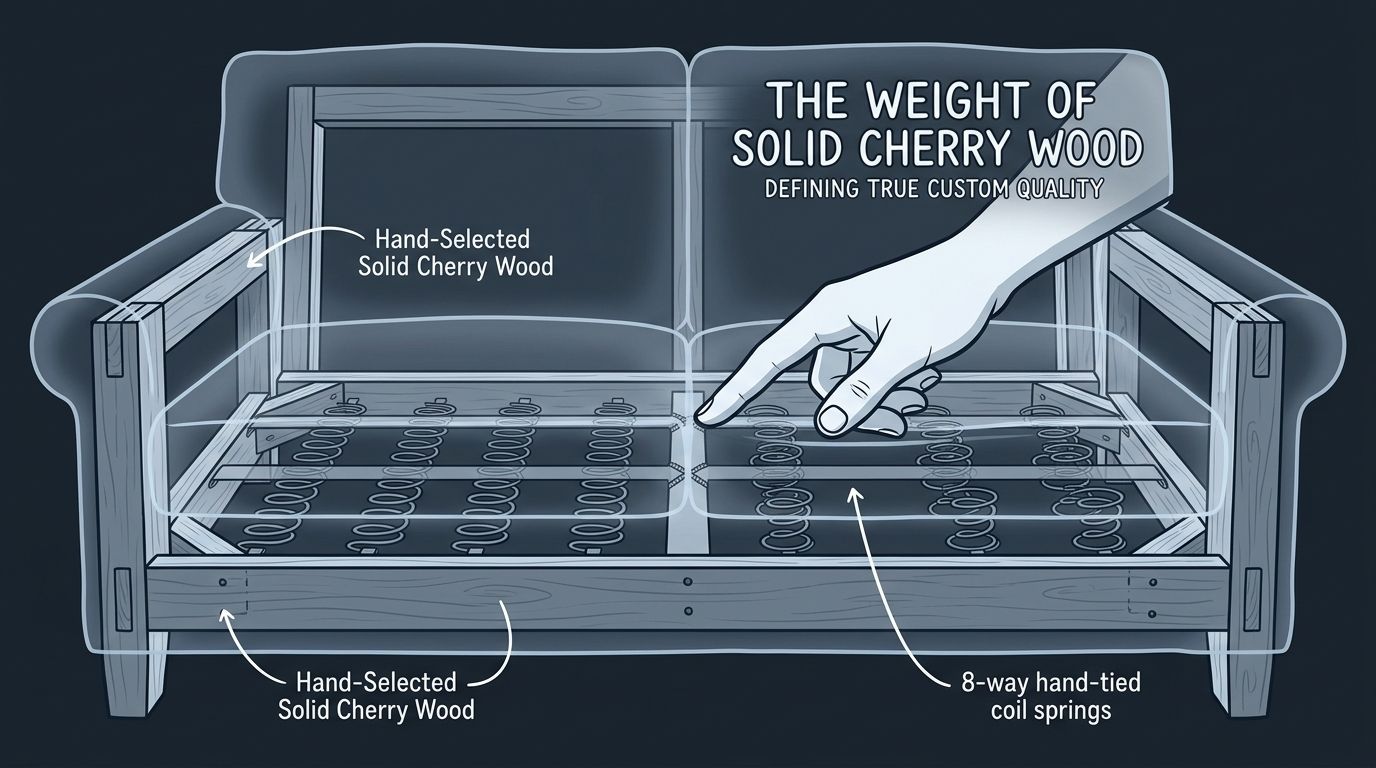
That usually starts with solid wood and disciplined craftsmanship. In categories like dining and bedroom furniture, the contrast is even easier to see. Amish hand-crafted pieces show the weight of solid cherry wood, the clean confidence of proper joinery, and the kind of material integrity that mass-produced alternatives rarely match.
For upholstery, support systems matter just as much. A sofa built with 8-way hand-tied support offers a level of responsiveness many shoppers can feel the moment they sit down. The seat has give, but not looseness. It supports without feeling stiff.
Frame First, Then Cushion Logic
A sofa frame should do two jobs at once. It must hold shape over time, and it must provide a stable base for whatever cushion feel the buyer wants.
Consider these construction trade-offs:
| Construction choice | What works well | What to watch for |
|---|---|---|
| Solid wood frame | Better long-term stability, stronger joints, more heirloom potential | Higher upfront investment |
| Lightweight composite structure | Lower initial cost, easier to move | Greater risk of looseness and reduced service life |
| Structured cushion core | Cleaner lines, easier rising, more formal sit | May feel too firm for lounge use |
| Plusher cushion build | Relaxed comfort, casual feel | More upkeep to keep cushions looking crisp |
The right answer depends on the household. A formal sitting room can tolerate a more structured seat. A family room often needs cushion construction that balances softness with shape retention.
The best cost-per-year value usually comes from buying more structure than seems necessary on day one.
Cushion Comfort Isn't Only About Softness
Many shoppers assume softer means better. It doesn't.
A well-built cushion should support the body evenly and maintain a consistent sit across the full seating area. If one seat feels dramatically different from the next after a short period of ownership, the issue usually isn't taste. It's construction quality.
A practical showroom test helps:
- Sit upright first and check whether the sofa supports conversation posture without forcing the shoulders forward.
- Lean back second and notice whether the back cushions support or swallow the spine.
- Stand up once or twice to see whether the seat helps with movement or traps the sitter in a deep pocket.
- Press the arm and front rail to check for firmness and structural confidence.
Hand-crafted construction demonstrates its value. Better frames and better support systems don't just last longer. They keep the sofa feeling intentional instead of tired.
For buyers furnishing a forever home in Southeast Michigan, that distinction matters. A sofa should age like a trusted piece of the home, not a short-lived trend.
Selecting the Perfect Upholstery Performance and Style
A family picks a fabric in ten minutes, then lives with that decision for ten years. That gap is where mistakes get expensive.
Fabric carries the visual weight of the sofa, but its real job is harder than that. It has to handle body oils, denim abrasion, sunlight, pet claws, snack spills, and the habit everyone in the house has of claiming the same seat night after night. A custom fabric sofa should still look settled and intentional after years of use, not just on delivery day.
Start With Household Reality
The first useful question is simple. What will this sofa deal with every week?
A quiet formal room can support more delicate choices. A busy family room usually needs tighter weaves, better stain resistance, and colors that forgive everyday life. Homes with dogs, young kids, or heavy daily use benefit from fabrics built for abrasion and recovery, because wear never shows up evenly. One arm gets touched constantly. One cushion becomes the default seat. One corner sits in direct sun.
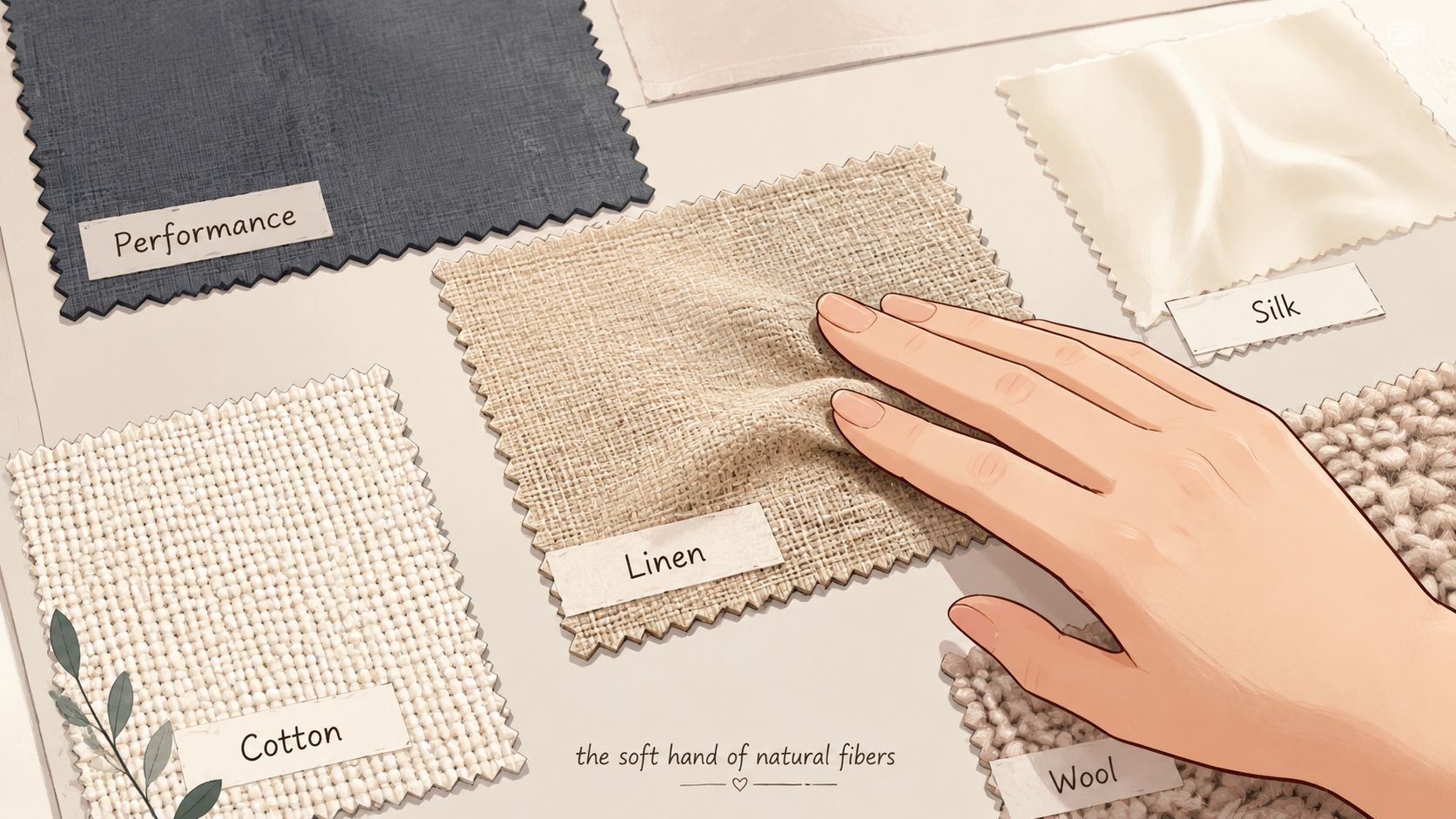
That is why showroom guidance matters. A good designer or sales associate can take the romance out of a swatch and put the fabric back into real life. In person, it becomes much easier to compare hand feel, backing, weave density, and how a color shifts under actual lighting instead of phone-screen lighting.
Performance Versus Personality
Style still matters. It just needs to be matched to the room and the household.
- Linen-blend looks bring softness and a relaxed, casual character, but they usually ask for more tolerance for creasing and variation.
- Textured weaves often disguise daily wear better than flat, smooth surfaces.
- Performance fabrics make practical sense in active homes where easy cleanup and shape retention matter.
- Mixed materials can solve wear issues in a thoughtful way, not just add contrast.
Tyner Furniture's custom upholstery program includes frames that can combine materials on one piece, as shown on the Pullover Button Tufted Back Sofa. That approach works well for households that want the warmth of fabric in the seating area and leather in places where hands, friction, and edge wear tend to show first.
Silhouette plays a role too. A heavily textured fabric can soften a structured frame. A smooth, tight weave gives a sofa a more formal, clean-lined look. Neither is better on its own. The right answer depends on the room, the use pattern, and how much visual movement the buyer wants from a large piece of furniture.
Don't Judge Fabric From a Small Swatch Alone
Small swatches are useful, but they hide scale.
A pattern that feels quiet in the hand can take over once it stretches across three seat cushions and a full back. Even solids change at sofa scale. Some look rich and grounded on a large frame. Others flatten out or reveal every wrinkle, seam, and bit of lint.
The safest approach is to view fabric on full-size seating in a showroom whenever possible. That is one of the strongest arguments for buying custom locally instead of guessing from a mailer sample. Buyers can step back ten feet, compare fabrics under store lighting, place options beside wood finishes, and ask someone experienced, "Will this still look right after three years in a house with real traffic?" That kind of in-person check removes a lot of risk from a major purchase.
Practical Specs Worth Asking For
A buyer does not need a textile textbook, but a few details are worth checking before signing off on an order:
- Abrasion rating, to understand how the fabric handles repeated rubbing
- Recovery, to see how well it bounces back after regular sitting
- Pilling resistance, especially for anyone who wants the surface to stay cleaner-looking over time
- Cleaning code, so maintenance expectations are clear from the start
- Chemical information, for households that prefer low-VOC or PFAS-free options
For a more detailed breakdown of how these trade-offs show up in daily ownership, best fabric for sofa upholstery is a useful guide.
Pet owners should also pay attention to cling, texture, and weave direction before committing. choosing pet hair resistant fabrics covers practical issues that often get overlooked during the style phase.
A Wider Selection Usually Leads to a Better Long-Term Choice
Narrow fabric racks push buyers toward "good enough." Custom programs with real breadth give them room to solve the full problem.
That matters because the right color may come in the wrong texture. The right texture may be too casual for the room. The fabric that feels best in hand may not be the one that ages best in a sunlit family space. With more options in the showroom and guidance from people who see these choices play out in customers' homes, buyers can compare appearance, durability, and maintenance side by side.
That is how a forever sofa gets specified. Not by chasing a trend, but by choosing a fabric that still makes sense after it has been lived on.
Mastering Sizing and Measuring for Your Space
A custom sofa can be perfectly built and still become a delivery-day problem if the measurements stop at room width.
Sizing has two separate jobs. The sofa has to fit the space visually, and it has to fit the house physically on the way in.
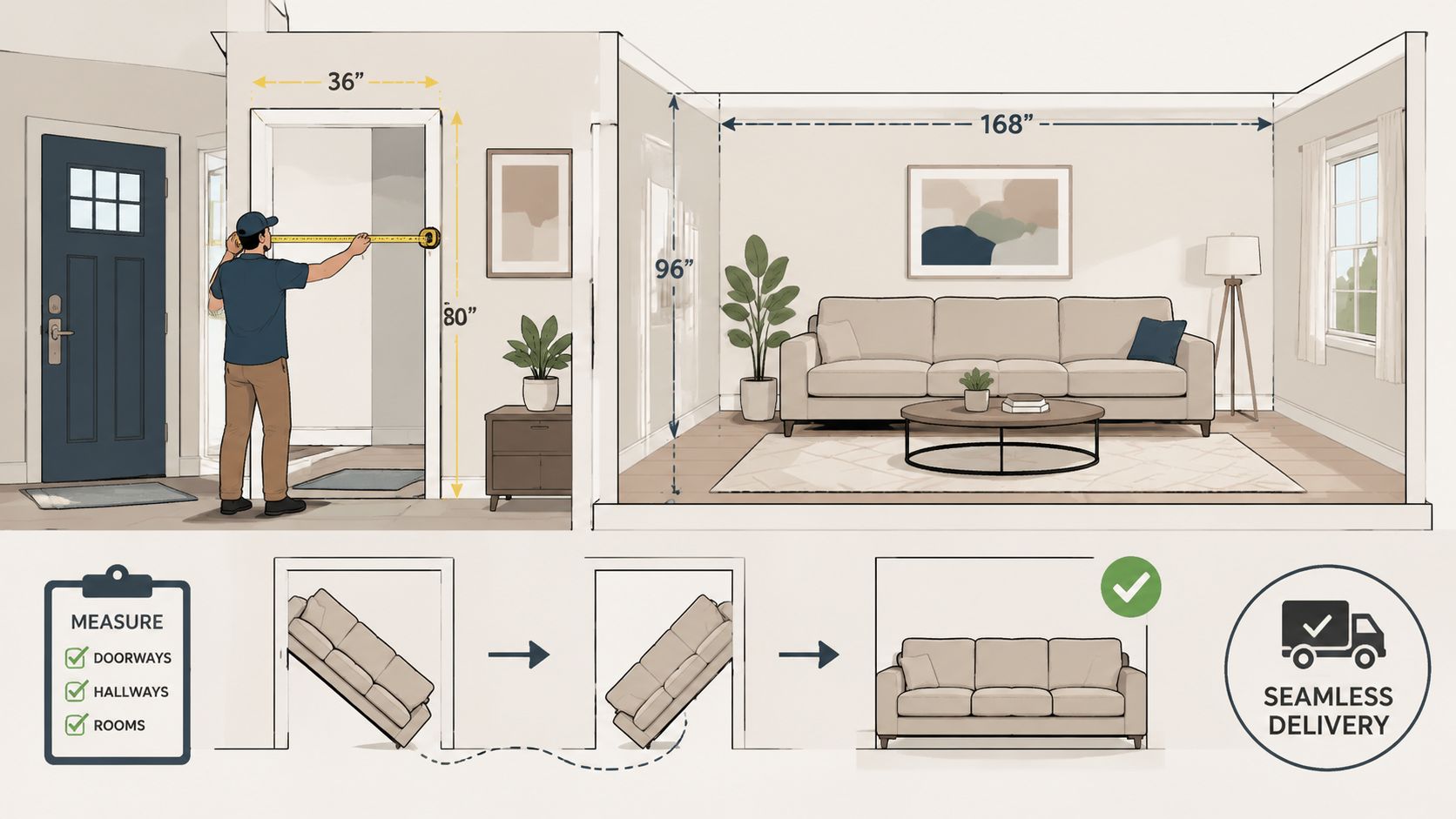
The Delivery Path Checklist
Before placing a made-to-order sofa, measure the full route from outside entry to final room.
- Front entry width and height. Include trim, storm doors, and any hardware that narrows the opening.
- Interior doorways. Hall doors and room entries often cause more trouble than the front door.
- Hallway width. Pay attention to tight turns, radiators, and light fixtures.
- Stair dimensions. Note width, ceiling clearance, and landing depth if the sofa is going upstairs or downstairs.
- Corner turns. Sharp angles can change what will pivot into place.
A simple tape measure and a phone camera usually do the job. Photos help identify obstacles that raw numbers don't capture well.
Scale Inside the Room
A sofa also needs visual breathing room.
A common mistake is choosing a length that technically fits wall-to-wall but leaves the room feeling crowded. Another is selecting a depth that makes traffic patterns awkward. Painter's tape on the floor is one of the easiest ways to test a sofa footprint before ordering.
Use tape to mark:
- Overall width
- Depth from front rail to back
- Nearby walkways
- Distance to coffee table
- Clearance at doors and windows
A tape outline on the floor shows proportion faster than any rendering. If the taped footprint feels too large for a week, the sofa will feel too large for years.
Don't Forget the Human Scale
Room size isn't the only sizing issue. Household habits matter.
A long, low-profile sofa may suit a broad open living room but feel undersized in back support for someone who prefers upright sitting. A compact apartment-friendly frame can look smart in a smaller Ann Arbor bungalow but still feel cramped if the household likes to stretch out in the evenings.
For a practical walkthrough, how to measure furniture is useful because it treats measuring as a process, not a guess. That's the right approach for any custom fabric sofa order. Once the piece is made, the easiest mistakes become the hardest to fix.
The Ordering Process From Showroom to Living Room
The custom order process feels much simpler once buyers understand which decisions affect price, lead time, and final comfort.
Most stress comes from uncertainty. A shopper wonders whether changing the arm will alter timing, whether a different seat depth counts as a minor change, or whether a fabric upgrade is the only thing affecting the total. Clear guidance removes a lot of that friction.
A visual preview helps ground the process.
Not All Customization Is Priced the Same
Data from custom sofa designers shows that basic fabric or pillow swaps range from $600 to $800, while structural customization such as changing seat depth or arm style rises to $1,200 to $1,800, and 72% of first-time custom buyers assume all customization is priced equally, according to this custom sofa pricing discussion.
That misunderstanding is one of the biggest reasons buyers feel blindsided.
A cosmetic adjustment usually changes what goes on the frame. A structural adjustment changes the frame itself, the patterning, or the production sequence. Those are very different requests inside a workroom.
A Practical Order Flow
The healthiest ordering process usually looks like this:
- Comfort first. Confirm seat depth, firmness, and back feel before discussing decorative details.
- Silhouette second. Narrow the frame shape and scale that fit the room.
- Upholstery third. Choose fabric or leather after the function is settled.
- Final review last. Double-check dimensions, finish selections, and delivery path notes.
That sequence protects the buyer from making a pretty decision that weakens the long-term result.
Why the Showroom Experience Reduces Risk
The showroom is where abstract choices become physical.
A buyer can compare a casual back against a more structured one. They can sit in a deeper frame and immediately know whether it supports reading posture or encourages too much slouching. They can hold swatches against wood finishes, especially if they're coordinating a living room with dining, bedroom, or home office pieces.
That broader context matters because many furnished homes aren't built one room at a time anymore. A household may be selecting a sofa now while also planning a Canadel dining set, evaluating Stressless ergonomic seating, or comparing Amish hand-crafted solid wood case goods for another room. Seeing those finishes and materials in one environment often leads to smarter, more cohesive choices.
Made-to-Order Works Best With Guidance
A good consultant doesn't push more options. They narrow them.
The best guidance helps a buyer separate structural priorities from decorative wants, and then fit the purchase into a sensible budget. That's where practical support like Special Financing and a Low Price Promise can lower the barrier to a better-built piece without reducing the focus on craftsmanship and cost-per-year value.
For anyone preparing to start the process, getting started with custom order is a helpful planning resource. It's especially useful for shoppers who know they want a forever sofa but don't yet know which choices are cosmetic and which ones reshape the whole order.
Caring for Your Heirloom Investment
A well-made sofa should age with dignity. Care is what protects that outcome.
Most maintenance isn't dramatic. It's a set of small habits that keep wear even, help the fabric stay presentable, and preserve the comfort that made the sofa worth buying in the first place.
The Habits That Matter Most
Routine care starts with consistency.
- Vacuum gently using an upholstery attachment so dust and grit don't settle into the weave.
- Rotate and fluff cushions when the construction allows it, especially on the household's favorite seat.
- Address spills quickly by blotting rather than rubbing.
- Keep direct sun in mind because prolonged exposure can affect color and texture over time.
These aren't glamorous tasks, but they protect the look and feel of a hand-crafted piece.
Match Care to the Fabric
Not every upholstery fabric wants the same treatment.
A textured woven fabric may hide everyday use better but can hold dust in its surface. A smooth performance fabric may clean more easily but still needs gentle methods. Mixed-material pieces need special attention where fabric meets leather so one side isn't overtreated while the other is ignored.
Professional cleaning also has a place in long-term care, especially for households that use the sofa hard. It's easier to preserve fabric integrity with periodic proper cleaning than to overwork a stain at home.
Rotate use, not just cushions. If one family member always claims the same corner, that spot will tell the story first.
Climate Affects Upholstery More Than People Think
Indoor conditions influence how upholstery and cushioning age. Air that's too dry or too damp can affect comfort, feel, and the general condition of interior materials over time.
A practical reference on maintaining balanced indoor conditions is Can Do Duct Cleaning's humidity guide. It's a useful reminder that sofa care isn't only about stain response. The home environment itself plays a role in how a furniture investment holds up.
Think in Cost Per Year
An heirloom-quality sofa should be cared for like one.
That means treating maintenance as part of ownership, not as an afterthought. A few minutes of regular upkeep can preserve color, shape, and comfort far better than waiting until the sofa looks tired and trying to reverse years of uneven use.
For a household building a forever home, that's the right mindset. Care protects the craftsmanship already built into the piece.
Why a Trusted Local Partner Matters
A custom sofa usually feels easy to buy until the order is final.
A family picks a fabric online, chooses a cushion option that sounds comfortable, and feels confident right up to delivery day. Then the seat depth is wrong for how they sit, the arm height fights with their favorite reading spot, or the color shifts under their own lamp light. A local showroom reduces those misses before the order is written.
That is the value of a trusted local partner. The job is not only to sell a sofa. It is to help a buyer test comfort firsthand, compare materials in person, and catch small details that become daily irritations if no one addresses them early.
Since 1957, Tyner Furniture has served Southeast Michigan with that kind of hands-on guidance. The Ann Arbor showroom on South State St. gives shoppers a place to sit in a frame for more than a minute, study fabric swatches under real light, and ask the practical questions that do not show up well on a product page.
The showroom matters because custom furniture has trade-offs. A crisp bench seat can look cleaner, but some households prefer the forgiveness of separate cushions. A refined fabric may suit a formal room, but a busy home with pets and kids often needs easier maintenance and a more forgiving weave. Those decisions are easier to make with an experienced guide standing beside the piece, not with a tab open on a phone.
Good local guidance also helps prevent expensive ordering mistakes. Staff can spot scale problems, explain how a fabric is likely to wear, and confirm whether a style fits the way the room is used. That is how a major purchase starts to feel less like a gamble and more like a long-term plan.
For pet households, maintenance should be part of the buying conversation, not an afterthought. This pet owners complete home cleaning guide is a useful outside reference because it connects fabric choices to the practical work of living with shedding, odors, and everyday messes.
A forever sofa should be checked with your own eyes, tested with your own back, and ordered with someone who will still be here if questions come up later.
For anyone ready to make a confident long-term choice, Tyner Furniture offers two smart next steps. Visit the Ann Arbor showroom for a true sit test and hands-on fabric review, or browse the online Quick Specs for special orders before narrowing a made-to-order custom fabric sofa.