Top Rated Sectional Sofas: Expert Guide 2026


The search usually starts the same way. A homeowner in Ann Arbor opens a dozen browser tabs, saves a few promising sectionals, compares colors on a phone screen, and then realizes every sofa claims to be comfortable, durable, family-friendly, and worth the investment. After a while, the choices blur together.
That's why the phrase top rated sectional sofas needs a stricter definition than online stars and polished product photos. A sectional earns that label when it holds its shape, supports the body well, fits the room and the delivery path, and still feels right years later. That's not just style. That's craftsmanship, ergonomics, and logistics working together.
In Southeast Michigan, shoppers often want one piece that can anchor a living room through changing routines, growing families, and future moves. The broader market reflects that shift. The global sectional sofa market is valued at $23.4 billion in 2025 and is projected to reach $38.7 billion by 2034, with sectionals capturing 27.3% of total sofa category value in 2025, driven by demand for modular and flexible designs, according to sectional sofa market data.
Starting Your Search for the Perfect Sectional
The hard part isn't finding a sectional. The hard part is sorting through pieces that look similar online but perform very differently once they arrive in a real home.
A shopper might see one sectional with wide arms, another with a chaise, and a third with a sleek low back, then assume the decision comes down to color and room size. It doesn't. The better question is whether the sofa is built for everyday living or just built to photograph well.
What top rated really means
A strong sectional usually checks four boxes:
- Built well underneath: The frame and joinery matter more than the fabric swatch.
- Comfortable for the way the room is used: Lounging, reading, hosting, and movie nights all ask different things from a seat.
- Sized beyond the floor plan: The best footprint on paper still fails if it can't clear the entry path.
- Flexible enough to live with change: Modular and made-to-order options often serve households better than one fixed format.
Many buyers benefit from slowing down and using a method instead of scrolling deeper. A practical starting point is a good pre-purchase checklist such as what to know before buying a sectional, especially when the purchase needs to work for years instead of one season.
A sectional should fit the household first, and the room second. If it supports daily life well, the design choice usually becomes clearer.
Why this purchase feels heavy
A sectional isn't a side table. It's the piece that sets the room's posture.
It shapes traffic flow, determines how guests gather, and affects whether a living room feels inviting or cramped. That's why this purchase can feel overwhelming even for shoppers with a clear design sense. They're not only choosing upholstery. They're choosing how the room will function.
In a community with a long local legacy in home furnishing since 1957, that distinction matters. Good guidance can turn an anxious purchase into a confident one, especially when the goal is long-term value, not a short-lived compromise.
The Anatomy of an Heirloom Quality Sectional
The best-built sectionals don't announce their quality from across the room. Their value is hidden inside the frame, beneath the cushions, and in the way the whole piece resists loosening over time.
Start with the frame
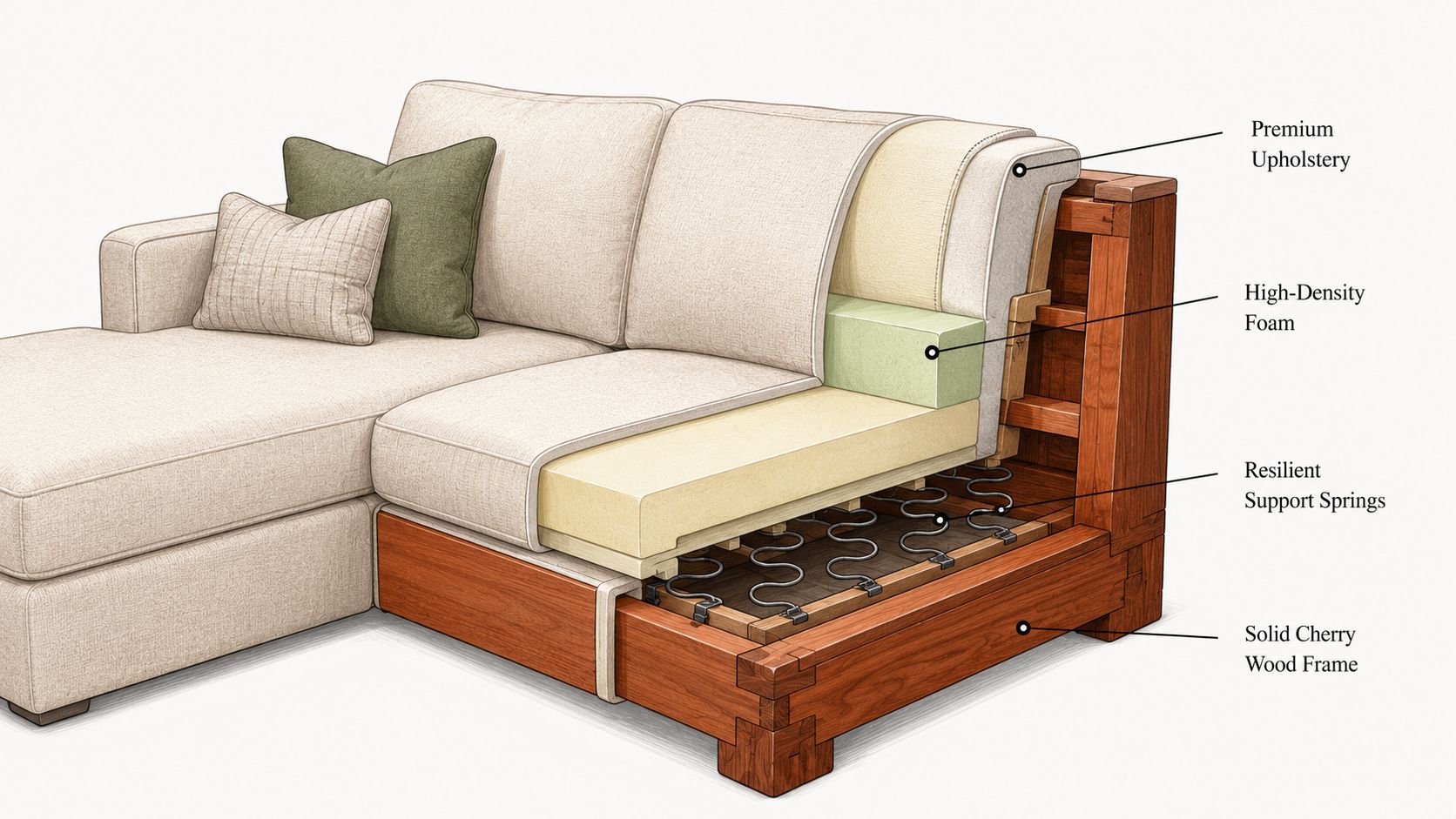
A sectional that lasts usually begins with solid North American hardwoods such as oak, maple, or cherry. That material choice matters because the frame carries every load, twist, and repeated impact from people sitting on the same corners and leaning into the same arms.
Top-rated sectional sofas achieve longevity through frames built entirely from solid North American hardwoods using mortise-and-tenon or dovetail joinery, and that mechanical interlock distributes stress across the frame instead of concentrating it at weak connection points, as explained in this guide to best sectional sofa brands and construction.
Practical rule: If the frame relies on light composite parts and simple screw-point assembly, the sofa often develops that loose, slightly wrung-out feel much sooner.
For shoppers who also care about layered texture in the finished room, upholstery isn't the only tactile element worth considering. A well-chosen throw can soften a low-profile sectional and add warmth without hiding the silhouette. Resources on artisan textured blankets can help tie that final layer into the room thoughtfully.
Then look at suspension and cushions
A strong frame is the skeleton. Suspension and cushions determine how the sectional carries comfort over time.
Here's the simplest way to evaluate the three hidden parts:
| Component | What works | What tends not to work |
|---|---|---|
| Frame | Solid hardwood with time-honored joinery | Lightweight mass-produced framing that loosens |
| Suspension | Even support that keeps seats from collapsing into valleys | Support systems that let seats sag unevenly |
| Cushions | Resilient fills that recover shape and stay supportive | Overly soft fills that flatten quickly |
Why in-stock is only the starting point
A good showroom sample can prove a silhouette. It doesn't always provide the final answer.
That's where bespoke and made-to-order options matter. The best purchases often start with an in-stock model for scale and feel, then move into personalized decisions about length, chaise direction, fabric, leather, and comfort profile. Shoppers looking for that level of finish can see how premium custom upholstery comes together in this guide to high-end sectional sofas.
In other parts of the home, the same principle shows up with solid wood furniture. Hand-crafted Amish bedroom and dining pieces stand apart for the same reason quality sectionals do. Material integrity and joinery create durability that mass production rarely matches. The weight of solid cherry wood or maple doesn't just feel different in a showroom. It behaves differently over decades.
Finding Your Perfect Fit Through Ergonomics
A sectional can be beautifully made and still feel wrong within five minutes. That's usually an ergonomic problem, not a style problem.
The dimensions that change comfort
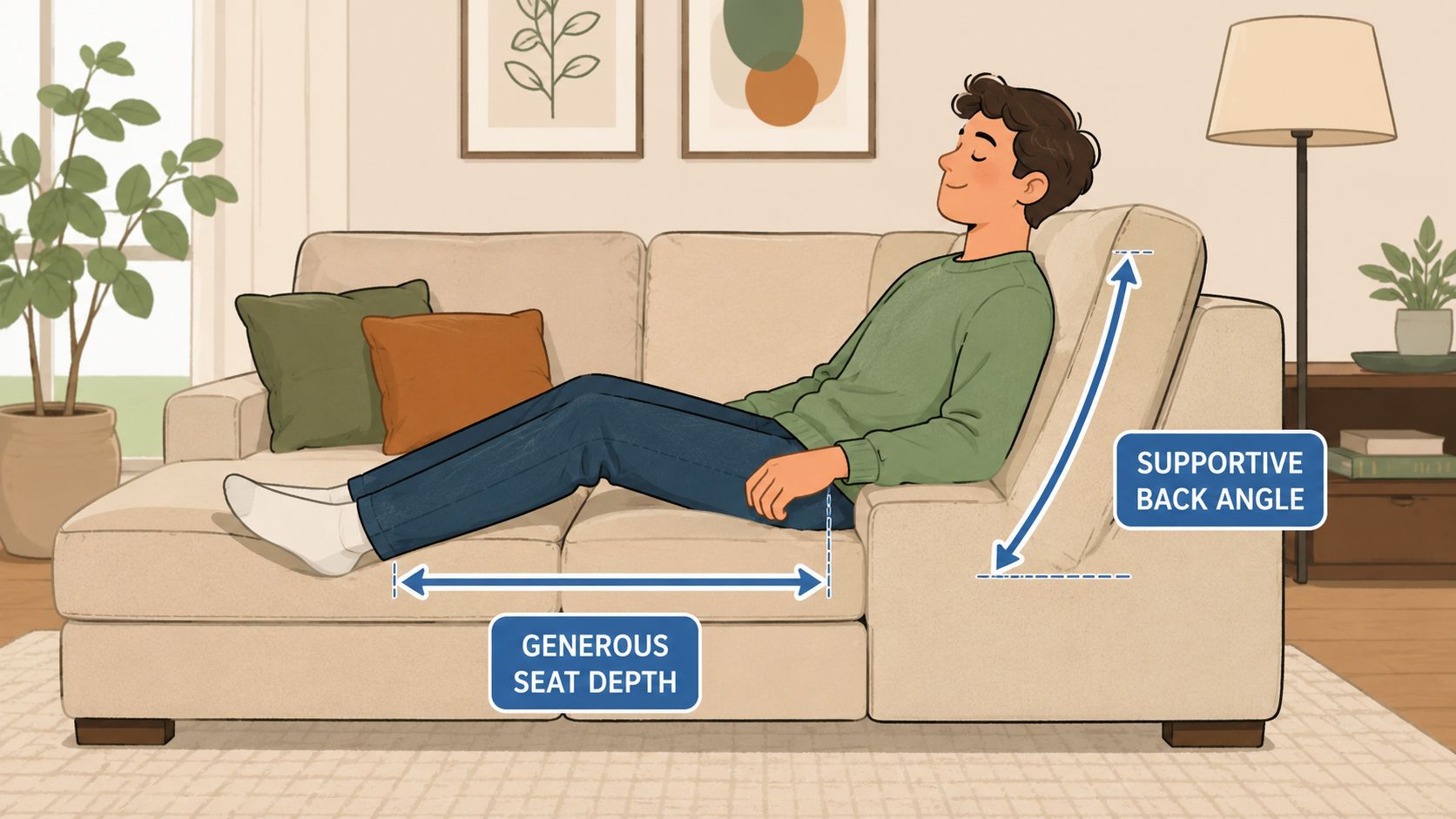
Top-rated models often separate themselves through proportion. The highest-rated sectionals provide ergonomic precision through an extra-deep seating depth ranging from 24.5 to 37 inches with a seat height of 21 inches, a combination that supports a 90° to 145° recline angle for active release of the spine, according to this overview of sectional comfort dimensions and recline ergonomics.
Those numbers explain why some sofas feel restful while others force the body into an awkward perch. A seat that's too shallow can make taller adults feel folded up. A seat that's too deep can leave shorter users without proper leg support unless loose back pillows compensate.
How to judge a sit test
The best sit test isn't complicated. It just needs intention.
- Sit upright first: Check whether the feet rest naturally and the knees feel supported.
- Lean back second: Notice whether the back pitch invites release or pushes the body forward.
- Try the corner seat: That spot reveals whether the sectional is usable or just visually generous.
- Stay longer than a minute: A quick sit tells very little about pressure points.
The right sectional doesn't ask the body to adapt to it. It meets the body where it lives every day.
Shoppers who prioritize ergonomic seating often appreciate brands that offer more than one scale instead of one standard frame for everyone. That's where custom sizing becomes valuable, especially for households with very different heights and comfort preferences. A closer look at ergonomic seating solutions shows why customized fit matters so much in long-term seating.
Why personalization matters
Comfort isn't one-size-fits-all. Some people want a tidy, supportive sit for conversation. Others want an enveloping lounge posture for reading and long evenings at home.
That's why the customization edge matters so much. In-stock is the beginning, not the ceiling. Bespoke comfort choices, including sizing approaches associated with Stressless, can help a sectional feel intentional rather than merely acceptable. In interior design terms, the best ergonomic piece is one that disappears under the user. It stops demanding attention because it feels right.
Choosing Upholstery for Your Lifestyle and Style
Upholstery is where most buyers start, and that's understandable. Fabric and leather create the immediate impression. They set the room's tone, affect maintenance, and change how a sectional feels in every season.
What's changing in 2026
In 2026, top-rated sectionals are defined by a resurgence of corduroy and reimagined velvets with matte finishes, moving away from the cooler grays that dominated previous years. Leading models from brands such as Flexsteel often ship with lifetime warranties, reflecting stronger demand for durability and personality, according to this report on 2026 sofa trends and material direction.
That trend makes sense in real homes around Ann Arbor and Southeast Michigan. Buyers want warmth, touch, and character. They also want materials that can handle ordinary living without feeling overly precious.
A practical upholstery comparison
Not every upholstery choice fits every household. A quick side-by-side view helps.
| Upholstery | Best for | Trade-off |
|---|---|---|
| Top-grain leather | Households wanting patina, easy wipe-down care, and a refined finish | It shows character over time, which some love and others don't |
| Textured fabric | Homes that want softness and visual depth | Texture can hold more of the room's daily evidence |
| Corduroy | Warm, relaxed interiors with personality | The ribbed surface creates a stronger style statement |
| Matte velvet | Rooms that want a rich look without a glossy sheen | It asks for more intentional maintenance than simpler weaves |
The sensory difference matters. The buttery feel of top-grain leather offers one kind of luxury. A woven fabric with a dry, crisp hand offers another. Corduroy adds depth and softness that can make a large sectional feel less formal. Matte velvet catches light gently, which helps a low-profile piece feel sculptural instead of bulky.
Why customization beats settling
The best upholstery choice is often the one a shopper couldn't find on a ready-to-ship page.
That's where made-to-order programs stand out. Hundreds of fabric and leather options allow a buyer to match not just wall color, but lifestyle, sunlight exposure, pets, children, and the overall interior design plan. A practical primer on upholstery materials for furniture buyers can help narrow those decisions before a final order.
A sectional covers a lot of visual ground. When the fabric is wrong, the whole room feels off. When it's right, the room settles immediately.
The same customization mindset carries into dining and case goods. Canadel gives shoppers broad control over finishes, shapes, and details, proving that bespoke design isn't limited to upholstery. Across the home, from the home office to outdoor spaces, that flexibility helps rooms feel collected rather than pieced together.
The Critical Measurement Most Buyers Forget
Many sectional guides tell buyers to measure the wall. That's only half the job, and often not the risky half.
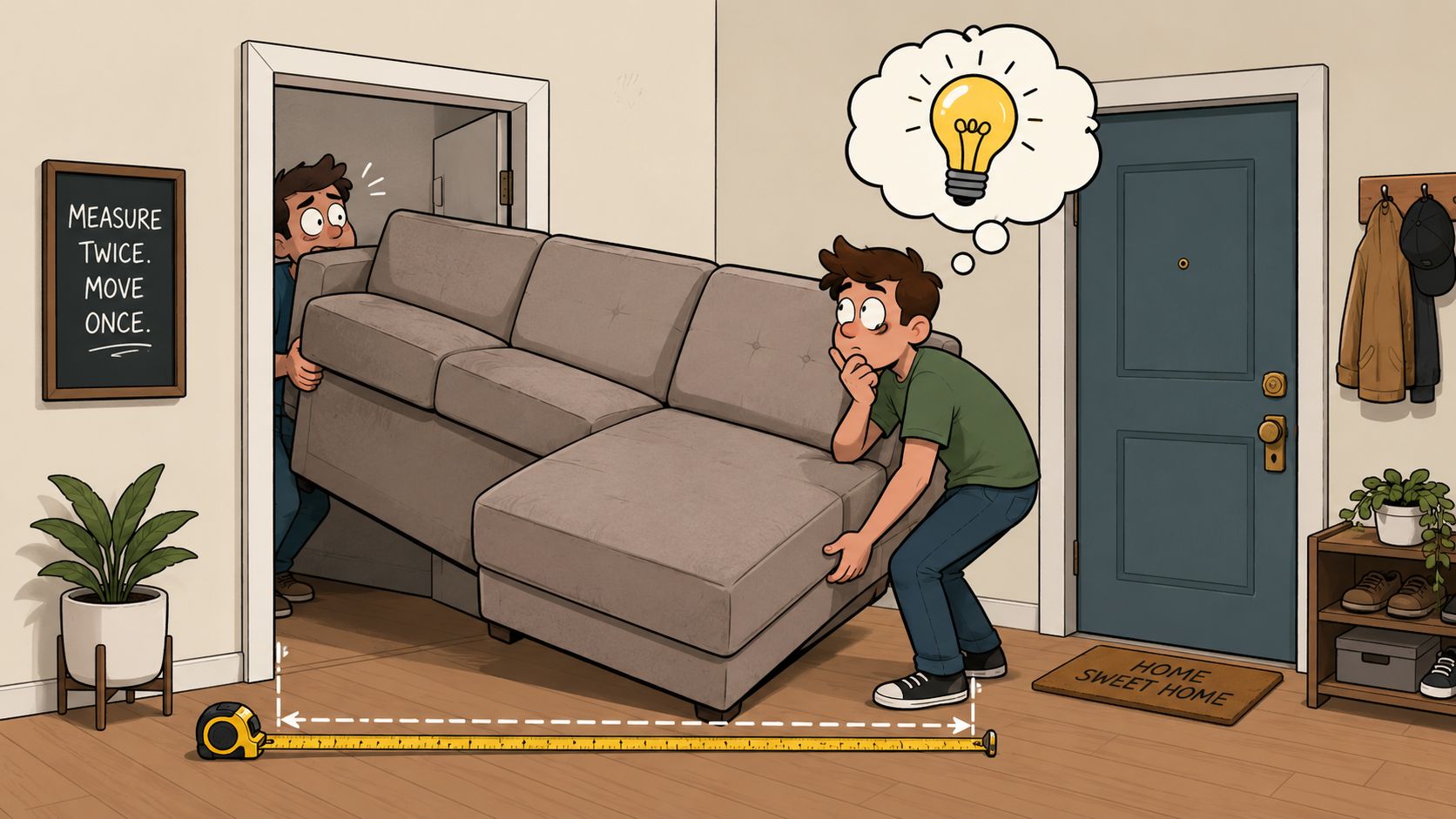
A custom sectional can fit the room perfectly on paper and still fail on delivery day because the doorway, stair turn, hallway corner, or building entry was ignored. Existing content on sectional sofas often misses that nuance, even though that oversight can lead to costly, non-returnable mistakes with bespoke pieces, as noted in this article on sectional shopping tips and doorway clearance.
Measure the path, not just the destination
The safest buyers measure the full route from truck to final placement.
Use this checklist:
Start at the exterior entry
Measure the main doorway, storm door clearance, porch turns, and any narrow approach.Continue through the home
Check hallways, stairwells, ceiling height at turns, railings, and any corners that force the piece to pivot.Measure interior doorways
Living room openings and cased entries are frequent trouble spots.Confirm final placement space
Only after the route works should the room footprint become the last check.
For shoppers replacing an older sectional or planning protection for a current one, guides that help find your ideal sofa cover fit can also sharpen the measuring habit. They train the eye to think in actual dimensions, not rough guesses.
A better way to avoid a bad custom order
A made-to-order sectional usually isn't the kind of purchase someone wants to correct after the fact. That's why practical measurement support matters so much.
- Bring all dimensions together: Keep the room plan and delivery path on the same page.
- Ask about sectional breakdown: Some configurations separate cleanly into manageable components, while others create larger handling challenges.
- Double-check asymmetrical pieces: Chaises, bumper ends, and extra-wide arms can create awkward angles even when overall width seems safe.
- Use a clear measuring guide: A detailed reference like how to measure furniture before delivery can help prevent expensive assumptions.
The room says whether the sectional belongs there. The doorway says whether it can arrive at all.
This is one of the clearest dividing lines between generic online advice and real furniture guidance. Buyers don't just need inspiration. They need a process that protects the investment.
Making an Heirloom Investment Accessible
The price tag gets attention. The better metric is cost per year.
A sectional with durable craftsmanship, stable support, and upholstery chosen for the household can serve a room for a long time. That changes the math. An heirloom-quality piece often costs more upfront and less emotionally over time because it doesn't demand replacement at the first signs of wear, wobble, or regret.
Why value beats sticker shock
Long-term value rests on a few simple questions:
- Will it keep its structure? A sectional that stays square and supportive earns its place.
- Will it still suit the room in a few years? Modular and made-to-order layouts often adapt better than fixed compromises.
- Will the upholstery age well in this household? Lifestyle fit protects the investment as much as craftsmanship does.
Buyers often breathe easier once they stop comparing only opening prices. The right purchase is rarely the lowest number on the day of sale. It's the one that still feels worthwhile after years of use.
Tools that reduce hesitation
Even when the value is clear, a large furniture purchase can feel weighty. That's why practical purchase support matters.
Special Financing can make a high-quality sectional more manageable without forcing a household into lower-grade furniture that won't last. A Low Price Promise helps reduce the fear that buying locally means paying more for the same level of quality. For many families in Ann Arbor and across Southeast Michigan, those tools lower the barrier to choosing craftsmanship.
Custom orders also require patience. Lead times for custom furniture orders are typically 8 to 10 weeks, reflecting choices such as fabric selection, arm style, and configuration adjustments, according to this overview of custom furniture order timing. Delivery is commonly handled through white-glove service, with scheduled coordination and protective wrapping, as described in this look at the custom furniture delivery process.
Patience often pays off. A bespoke sectional that fits the home, the body, and the delivery path is usually a smarter investment than an impulsive in-stock compromise.
An Invitation to Your Ann Arbor Showroom
The best sectional decisions come down to four tests. The frame must feel solid. The seating must support the body well. The upholstery must suit the household. The piece must fit the delivery path, not just the room plan.
That's why online research is useful but incomplete. Screens can show shape, color family, and broad style direction. They can't replicate the feel of a seat cushion pushing back correctly, the quiet stability of a well-built frame, or the difference between a fabric that merely looks good and one that belongs in the room.
What a real sit test reveals
A showroom visit answers questions that photos can't.
- Comfort under real use: A shopper can test upright sitting, lounging, and corner seating.
- Material clarity: Leather, velvet, corduroy, and woven fabrics reveal their true character by touch.
- Scale and proportion: Large silhouettes can feel balanced in person or unexpectedly oversized.
- Craftsmanship cues: Arms, seams, deck construction, and frame steadiness become much easier to judge.
In Ann Arbor, that matters because many homes have varied floor plans, older entryways, and living rooms that need both comfort and design discipline. A sectional must be more than attractive. It has to function inside the specific realities of the home.
Why local guidance still matters
A trusted local expert helps shoppers think beyond the immediate purchase. That means discussing bespoke options, delivery realities, ergonomic fit, and the finish details that support a lasting interior design plan.
A showroom on South State St. also gives buyers access to more than one category of home furnishing. Good furniture planning rarely happens in isolation. The sectional often needs to relate to a rug, a recliner, dining finishes, bedroom wood tones, a home office setup, or even outdoor spaces. That broader perspective helps create rooms that feel intentional.
For shoppers searching for top rated sectional sofas, that's the final insight. Top rated doesn't mean most talked about. It means most soundly chosen.
A visit to Tyner Furniture gives Ann Arbor and Southeast Michigan shoppers the chance to do a real sit test, explore bespoke options beyond in-stock pieces, and review Quick Specs for special orders with a team that has served the community since 1957. From ergonomic seating and Canadel customization to hand-crafted solid wood furniture for the bedroom, dining room, home office, and outdoor spaces, the showroom on South State St. is built for thoughtful decisions, with Special Financing and a Low Price Promise helping make long-term value more accessible.