Custom Upholstered Sofas: Heirloom Pieces for 2026

The usual custom sofa shopper in Ann Arbor isn't starting from zero. They've already sat on pieces that were too deep, too stiff, too short for the wall, or upholstered in a fabric that looked handsome under showroom lights and questionable at home. What stops the search isn't a lack of options. It's the feeling that everything is almost right.
That's where custom upholstered sofas start to make sense. A made-to-order sofa lets the room, the household, and the daily routine drive the decision. For a first major furniture investment, that shift matters. It turns a living room purchase from a style gamble into a long-term plan centered on comfort, durability, and cost-per-year value.
Table of Contents
- Beyond the Showroom Floor Why Go Custom
- Decoding Durability Materials and Craftsmanship
- Your Guide to Bespoke Customization Options
- Measure Twice Order Once Planning for a Perfect Fit
- The Custom Order Process From Design to Delivery
- Protecting Your Investment Care and Maintenance
- Create Your Legacy Piece with Tyner Furniture
Beyond the Showroom Floor Why Go Custom
Most shoppers don't go custom because they want more decisions. They go custom because they're tired of compromise. The standard sofa is often a negotiation between size, sit, fabric, and layout. One model fits the room but not the family. Another feels good but overwhelms the traffic path. A third has the right silhouette and the wrong upholstery.
A custom sofa changes that equation. Instead of asking, “What can be made to work?” the buyer asks, “What belongs in this room for the next several years?” That's a better question, especially for households furnishing a forever home, a first serious apartment, or a family room that gets used every day.
There's a market reason this category keeps gaining attention. The global custom furniture market is projected to reach USD 38.78 billion in 2026, and sofas and couches are expected to account for 34.9% of demand according to custom furniture market projections. That doesn't mean every household needs a bespoke piece. It does show a clear shift toward more intentional, made-to-order buying.
Cost per year beats sticker shock
A quality sofa shouldn't be judged only by the purchase price. It should be judged by how well it lives in the home and how long it keeps doing its job. That is the actual meaning of cost-per-year.
Practical rule: A sofa that fits the room, supports the body properly, and holds its shape tends to feel like a better value long after the receipt is forgotten.
That's especially true in Southeast Michigan, where many buyers are furnishing around real life instead of staged rooms. Movie nights. Guests during football season. Kids climbing over the arms. A dog claiming the corner cushion. Formal entertaining asks one thing from a sofa. Daily family living asks another.
Custom doesn't guarantee wisdom, of course. A poorly planned custom piece can still be the wrong choice. But a well-specified one solves the biggest problems before the order is placed. Width, depth, firmness, fabric performance, and configuration all get decided in relation to how the sofa will be used.
For buyers who want a straightforward starting point, custom furniture made simple is a useful way to think through what made-to-order really means before fabric books ever come out.
Why this matters in Ann Arbor
Ann Arbor homes aren't all built alike. Some have compact living rooms and narrow entries. Some have open-concept great rooms that need a sectional with presence. Some have older architectural details that deserve a sofa with more character than a generic floor model can offer.
That's why going custom isn't about chasing novelty. It's about refusing the settle-for mentality. In a community that has valued craftsmanship and long-term ownership for generations, a well-made sofa is often less about trend and more about building a room that feels finished.
Decoding Durability Materials and Craftsmanship
The fabric gets the attention. The construction earns the years.
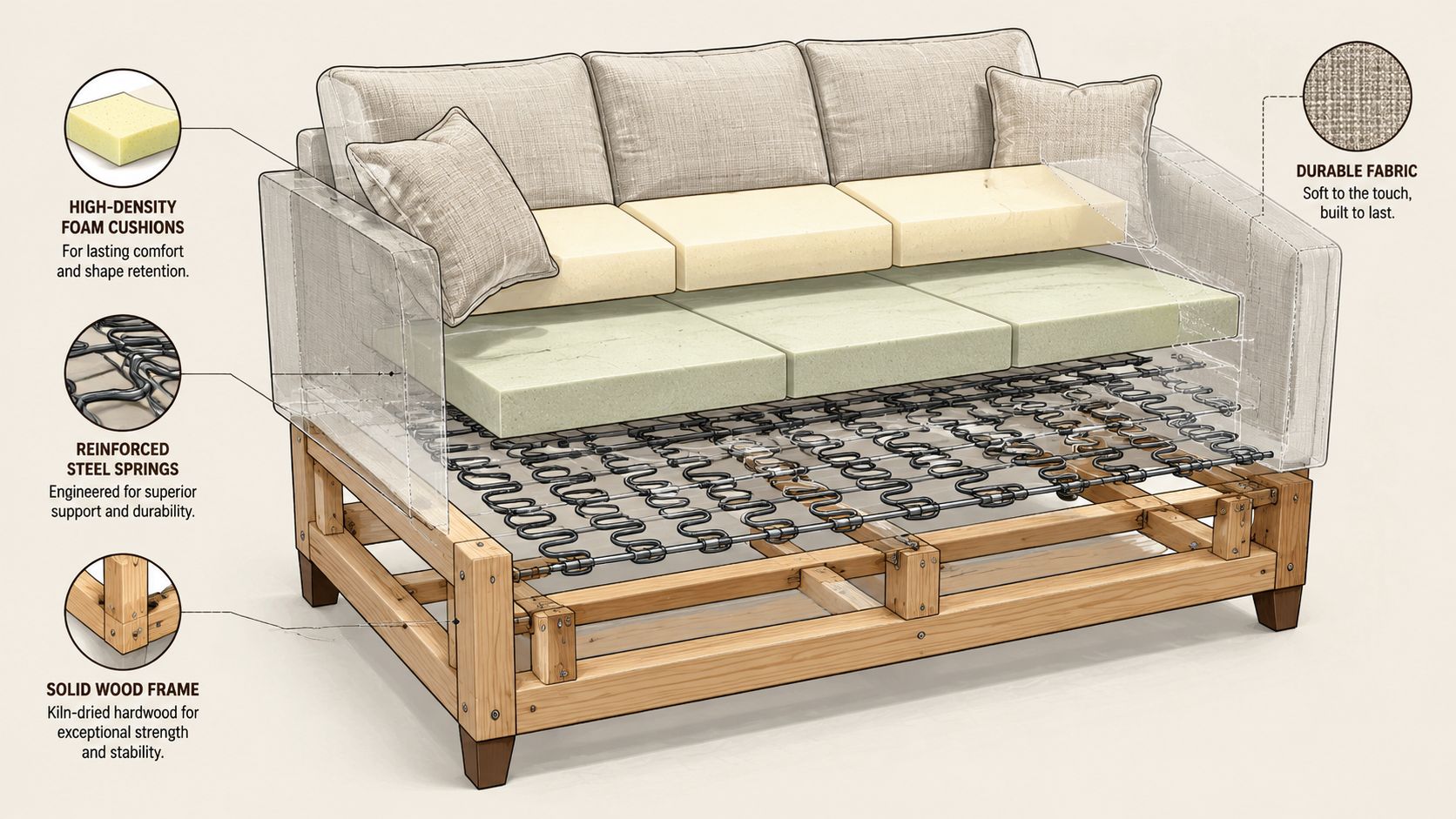
A sofa can look refined on the outside and still disappoint quickly if the frame flexes, the seat support gives way, or the cushions collapse into permanent valleys. Buyers who want heirloom value should spend less time asking whether the blue is too cool or too warm and more time asking what sits underneath the upholstery.
Why the inside matters more than the swatch
Three components shape long-term performance.
- The frame holds the structure. A sturdy wood frame gives the sofa its backbone. When a frame is weak, the entire piece feels tired sooner, even if the upholstery still looks respectable.
- The suspension supports the sit. Good seat support creates that balanced feeling where the body is held up instead of sagging down.
- The cushions determine daily comfort and maintenance. Softness without resilience sounds appealing until the seat loses shape.
A buyer doesn't need to become an upholsterer to shop wisely. But it helps to know that craftsmanship shows up in weight, steadiness, and consistency. A strong sofa feels composed when someone sits on one cushion and the rest of the frame doesn't wobble in protest.
The same quality standard that matters in hand-crafted Amish solid wood dining and bedroom pieces also matters here. Material integrity, joinery, and disciplined construction aren't romantic ideas. They're the reason a piece keeps functioning years later.
A sofa should feel settled and confident. If it shifts, squeaks, or pitches awkwardly during a simple sit test, the problem usually isn't the fabric.
For shoppers who want a deeper primer on upholstery choices, upholstery materials and what to know before ordering is a helpful companion.
How households should choose materials
Durability isn't one universal standard. It depends on the household.
A key concern for buyers is durability, and the most practical guidance is simple: the best custom sofa is the one whose material and construction match the household's use pattern, which can make a mid-tier performance fabric a better long-term choice than a premium-looking but delicate textile, as noted in this discussion of upholstered sofa durability considerations.
That means a formal sitting room can tolerate choices that would struggle in a busy family room. Households with pets, children, or frequent guests often do better with forgiving textures, resilient cushions, and fabrics designed for easier upkeep. A more delicate upholstery may still be appropriate, but only if the room supports that level of care.
A useful outside read on material selection is this overview of best sofa fabrics and frames. It's valuable because it encourages buyers to match construction and upholstery to lived reality, not just to appearance.
What holds up and what usually doesn't
A few patterns show up again and again:
What tends to work
Balanced seat support: The sofa feels supportive without feeling rigid.
Resilient cushion construction: Cushions recover their shape and don't need constant fussing.
Performance-minded upholstery: Practical fabrics often age better in active homes.
What often disappoints
Overly delicate textiles in high-use rooms: They may look elegant early and worn too soon.
Very soft seats without enough structure: They feel inviting at first and fatigued later.
Construction chosen by appearance alone: A handsome silhouette can hide weak fundamentals.
That's the difference between buying décor and buying furniture.
Your Guide to Bespoke Customization Options
The strongest custom orders begin with use, not color. Once that is clear, the enjoyable part begins. Fabric, silhouette, back style, leg finish, trim, cushion feel, and scale all start working together instead of competing.

The dimensions that change comfort
A sofa becomes custom when the buyer can specify the frame outline, seat depth, cushion firmness, back style, and overall dimensions before fabrication. That definition matters because those choices change the sit in a meaningful way. A deeper seat supports relaxed lounging, while a shallower seat and firmer back better support upright conversation, as explained in this guide to designing a custom sofa around frame and comfort.
That single distinction can save a buyer from an expensive mismatch.
A family that piles in for movie nights usually wants more depth, a more relaxed posture, and cushions that welcome longer stretches of sitting. A living room used for conversation, reading, or occasional entertaining often performs better with a tidier sit and more upright support.
Customization that goes beyond color
The most overlooked custom choices are usually these:
- Seat depth: Changes posture more than most shoppers expect.
- Back firmness: Affects whether the sofa feels casual or formal.
- Arm shape: Influences both style and usable seat space.
- Configuration: A sofa, chaise, or sectional should reflect how the room is traveled through.
- Covering: The tactile experience matters. A textured woven fabric gives one feeling. The buttery feel of top-grain leather gives another.
Some custom programs make this process easier by narrowing good decisions instead of creating endless ones. In the Ann Arbor market, that's especially helpful for first-time buyers who want guidance rather than pressure. Tyner Furniture offers made-to-order upholstery options and custom order programs that let shoppers work through specifications in a structured way, including pieces such as the Smith Brothers Build Your Own 5000 Series customizable sofa.
The right custom sofa doesn't just match the room. It matches the hour-by-hour way the room gets used.
Brands with deep customization also shape expectations in other categories. Canadel shows how thousands of finish and design combinations can make dining furniture feel personal rather than standardized. Stressless applies that same thinking to ergonomic fit with size-specific comfort. Those examples matter because they teach buyers to ask better questions across the showroom floor. Not just “What color can this come in?” but “How closely can this be tuned to the way the home works?”
A simple way to decide
For a first custom sofa, this decision sequence keeps things grounded:
| Use pattern | Best direction |
|---|---|
| Family lounging | Deeper seat, forgiving upholstery, relaxed cushions |
| Formal entertaining | Shallower seat, firmer back, cleaner silhouette |
| Mixed everyday use | Moderate depth, supportive seat, versatile fabric |
That approach keeps the bespoke process from drifting into decoration alone. Good customization always circles back to ergonomics, traffic flow, and long-term ownership.
Measure Twice Order Once Planning for a Perfect Fit
A custom sofa can be built beautifully and still fail at the front door.
That's why measurement is not paperwork. It's protection. One of the most overlooked truths in custom upholstery is that the more personalized the piece becomes, the more planning is needed around room space, delivery access, and installation, especially when a move or remodel creates a firm deadline, as noted in this discussion of custom furniture logistics and installation planning.

What to measure before ordering
Start with the room itself. Measure the wall where the sofa will live, then mark the footprint on the floor with painter's tape. This helps buyers see something a paper dimension can't show. How much walking space remains? Does the sofa crowd a fireplace, media console, or side chair? Does the room still breathe?
Then measure the delivery path.
- Doorways: Interior and exterior.
- Hallways: Width matters, but corners matter too.
- Stairwells: Include ceiling height and turning points.
- Elevators or building entries: Important for apartments and condos.
- Obstacles: Railings, low fixtures, and sharp pivots can complicate delivery.
A sofa that fits the room on paper may still be impossible to maneuver if the path wasn't checked. That's a common and avoidable mistake.
A practical room planning checklist
This is the checklist worth keeping on hand:
- Mark the footprint with tape before finalizing size.
- Measure every opening from curb to final room.
- Account for circulation so people can move naturally around the sofa.
- Check surrounding pieces such as coffee tables, lamps, and accent chairs.
- Plan around dates if the order is tied to a closing, lease start, or renovation phase.
Buyers tend to focus on width first. The smarter measurement often involves depth, turning clearance, and whether the room will still function once the sofa arrives.
For anyone who wants a practical measuring reference before a showroom visit, how to measure furniture for delivery and fit is worth reviewing. It helps turn a stressful step into a manageable one.
The Custom Order Process From Design to Delivery
The custom order process feels easier once it's understood as a sequence of decisions instead of one giant commitment. Most buyers don't need dozens of choices at once. They need the right choices in the right order.
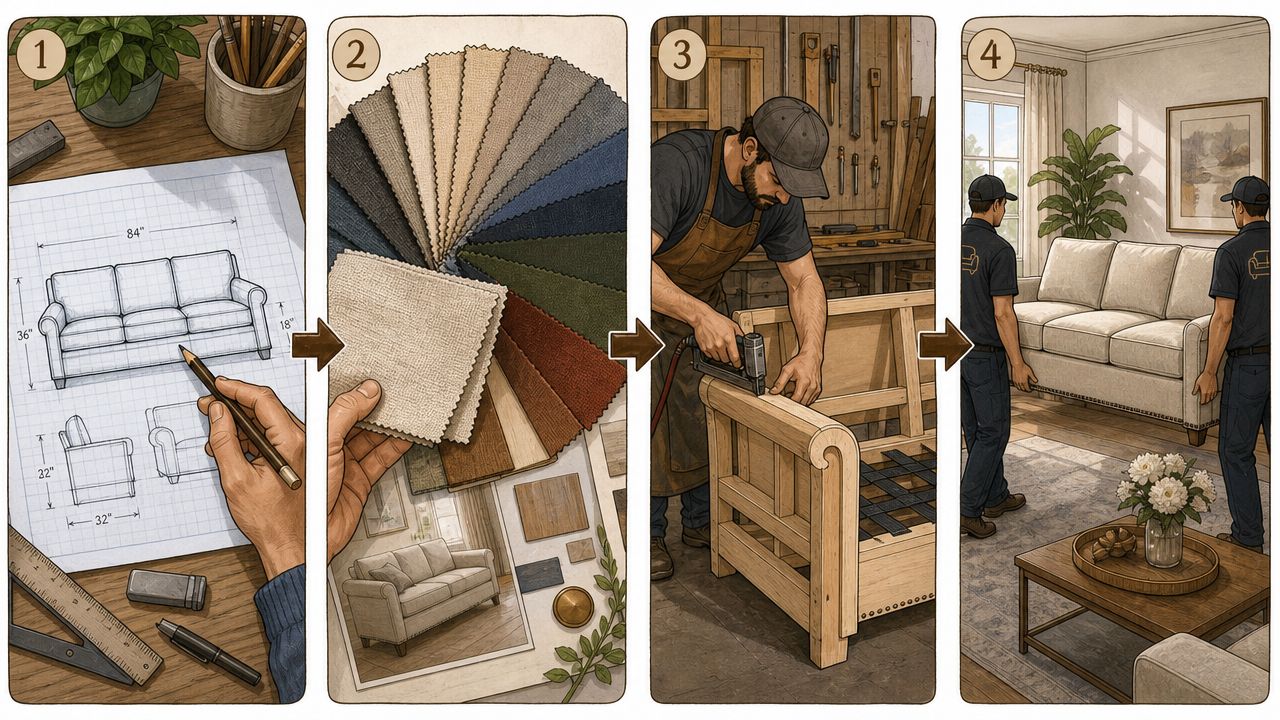
What happens after the sofa is chosen
The process usually moves through four stages.
- Comfort selection: The buyer sits, compares, and identifies the preferred seat depth, back feel, and overall scale.
- Specification: Dimensions, configuration, arm style, cushions, and upholstery are finalized.
- Production: The frame is built, the cover is cut and applied, and the piece moves through finishing.
- Delivery and placement: The sofa is brought into the home, installed, and checked for fit.
That first step matters more than online shoppers often expect. A proper sit test tells the truth faster than a fabric memo or a product rendering. The body knows quickly whether the seat pitch, cushion firmness, and back support work.
For buyers who want a plain-language overview before visiting a showroom, getting started with a custom furniture order is a useful planning resource.
Lead times budgeting and expectations
Lead time is where many custom guides go vague. That's a mistake.
Custom upholstery programs often differ by how they handle manufacturing. Some U.S.-made programs offer more than 250 fabrics and can deliver a finished piece in as little as 4 to 5 weeks, supported by modular construction and efficient supply chains, according to this overview of custom sofa lead times and fabric breadth. Other made-to-order programs may take longer, especially when specifications are more specialized.
That doesn't mean faster is always better. It means buyers should ask clear questions:
- When does production begin
- What can change after approval
- How is delivery scheduled
- What happens if a remodel or move date shifts
A custom sofa also deserves a realistic budget conversation. Fabric grade, size, and specification choices all affect the final number. That's why financing can be part of a sensible plan, not a sign that the purchase is out of reach. For some households, special financing helps align a long-term furniture investment with monthly cash flow. A Low Price Promise also matters because value isn't just about quality. It's about paying a fair market price for that quality.
What helps the process go smoothly
The smoothest orders usually share the same habits:
- Decisions are made from measurements, not guesswork.
- The buyer knows the room's use pattern before choosing depth and firmness.
- Fabric is selected for lifestyle, not only for first impression.
- The timeline is discussed early, especially if a deadline matters.
That kind of clarity turns custom ordering from intimidating to satisfying.
Protecting Your Investment Care and Maintenance
A custom sofa should age with dignity. That rarely happens by accident.
Care doesn't need to be complicated, but it does need to be consistent. The goal is simple. Protect the shape, preserve the upholstery, and catch small issues before they become expensive ones. That's how an investment piece keeps earning its place year after year.
Simple routines that preserve comfort
A steady maintenance rhythm does more than keep the sofa looking tidy. It helps the seat wear more evenly.
- Weekly attention: Vacuum crevices and brush off dust before it settles into the fibers.
- Cushion upkeep: Fluff loose back cushions and rotate reversible seat cushions where construction allows.
- Quick spill response: Blot immediately. Don't scrub aggressively, which can distort texture or spread the stain.
- Sunlight awareness: If one side of the sofa gets strong direct light, rotate accessories and adjust exposure when possible.
Leather and fabric need different handling, but both benefit from restraint. Too much product causes almost as many problems as too little. The right care routine should support the material, not saturate it.
A sofa wears according to habits. The households that keep one looking handsome longest usually do a little maintenance often instead of a major rescue later.
When to clean and when to call a pro
Not every issue should be treated at home. Deep soil, odor buildup, and older set-in stains often require more than spot cleaning. For buyers comparing home care with professional service, this guide to professional carpet and upholstery benefits offers a practical overview of why periodic expert cleaning can help preserve appearance and hygiene.
A few judgment calls tend to work well:
Handle at home
Fresh surface spills
Routine vacuuming
Regular cushion maintenance
Bring in a professional
Stains that reappear
Heavy overall dullness
Odors that linger
Delicate upholstery that could be damaged by trial-and-error cleaning
The long view matters here. Buyers who treat custom upholstered sofas as heirloom pieces usually get more satisfaction from them. Not because they avoid use, but because they maintain them like something worth keeping.
Create Your Legacy Piece with Tyner Furniture
The right custom sofa does three jobs at once. It fits the room physically, supports the people who use it, and holds its value through years of daily life. That's why custom upholstered sofas make sense for so many Southeast Michigan households. They solve practical problems while giving the home more character and permanence.
In Ann Arbor, that kind of buying tends to resonate. Homes here often mix old and new, formal and casual, family use and entertaining. A bespoke sofa can meet those realities better than a generic floor model ever will. It also sits naturally alongside other long-term furnishings, from hand-crafted Amish solid wood dining and bedroom pieces to home office furniture and even outdoor spaces that deserve the same thoughtful planning.
Since 1957, Tyner Furniture has been part of that local legacy. The South State St. showroom gives shoppers a place to compare comfort in person, examine craftsmanship up close, and make decisions with a calmer, more informed approach. That matters when the purchase is meant to last.
A custom sofa should be felt, not just researched. Visit Tyner Furniture in Ann Arbor for a proper sit test, or browse the online Quick Specs for special-order options if the planning starts at home.