Ottomans with Tray Tops: Buying and Styling Guide

A hard coffee table can feel unforgiving in a room meant for putting your feet up, but an upholstered ottoman alone won't hold a laptop or a steady drink. Ottomans with tray tops bridge that gap, adding a rigid surface to soft seating. The important decision isn't whether the combination looks polished. It's whether the tray, upholstery, and frame suit the way the room is used every day.
For an Ann Arbor apartment, that may mean keeping the center of the room open and moving the tray aside when it's time to lounge. In a Southeast Michigan family room, it may mean choosing a firm, well-supported top that can handle regular use. A dependable choice starts with function and construction, then moves to fabric, finish, and style.
What an Ottoman with a Tray Top Is
A tray-top ottoman combines upholstered furniture for resting feet or sitting with a firm surface for drinks, books, or a remote. The tray may lift off, flip over, or attach to a storage lid. Each setup affects how the piece handles weight and movement, so treat the tray and base as one working design, not separate style choices.
In an Ann Arbor living room, the right configuration depends on the space available and how often the ottoman changes roles. A removable tray can clear the surface for lounging; a fixed or flipping top keeps the surface close at hand. The support beneath matters. Upholstery can compress or shift, leaving a tray unstable, so choose a base that holds it level under ordinary use.
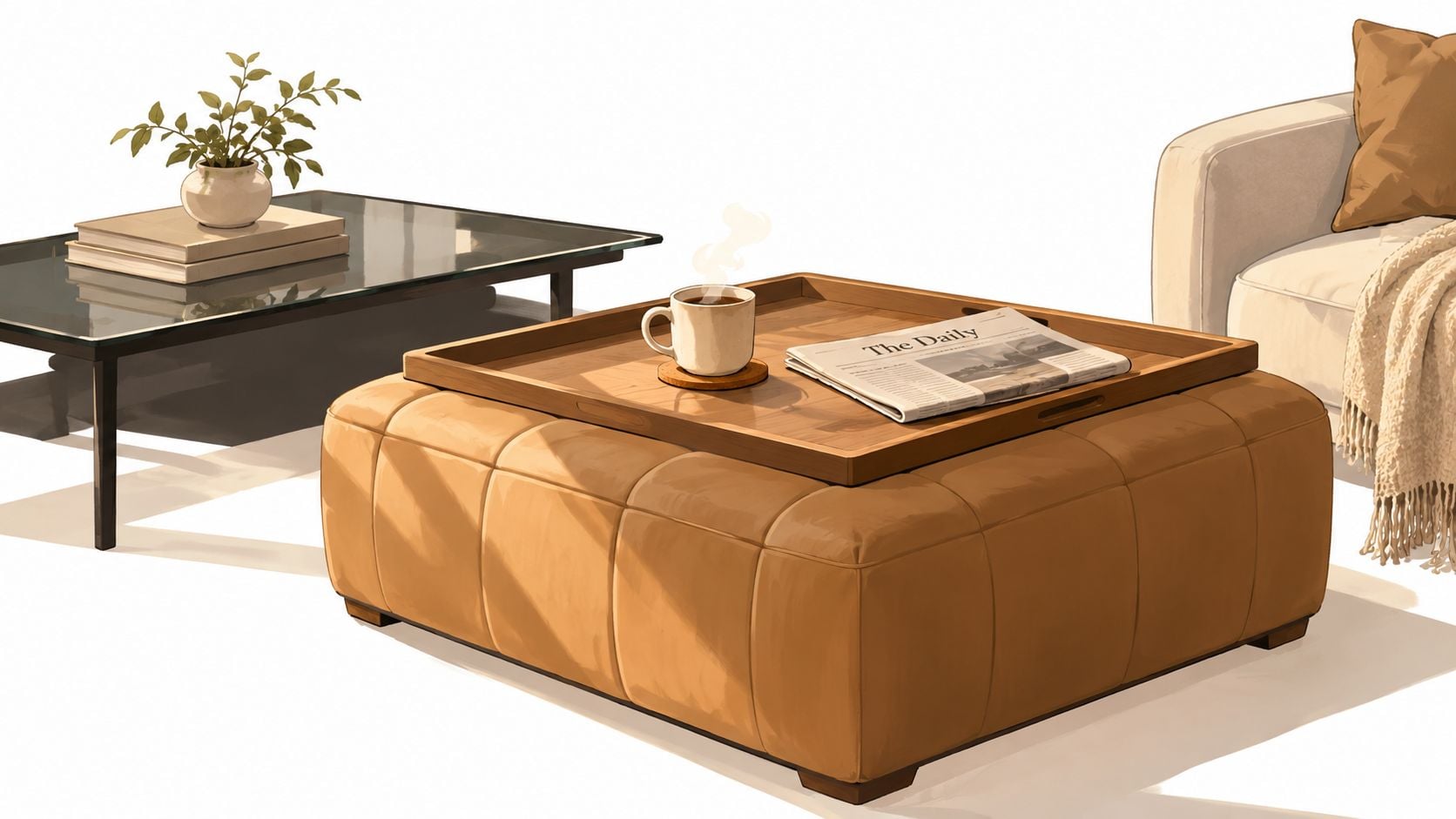
Multifunctionality makes this format useful in rooms that serve several purposes. Market analysis points to flexible use and open-plan living as demand drivers, including ottomans used as movable seating, tray-topped coffee tables, or concealed storage. Living rooms account for approximately 45% of global ottoman market value, while bedrooms represent roughly 20% of demand, where ottomans can serve as benches or storage in the ottoman market analysis.
The name has historical associations, but current tray-top designs are not replicas of palace furniture. For shoppers, the practical point is the piece's construction and fit, not its historical label.
In a compact Ann Arbor apartment, a tray can provide a table surface without permanently taking up the footprint of a conventional coffee table. That saves space only if the tray is easy to move and the ottoman stays comfortable when the tray is removed. In a larger living room, prioritize a configuration that suits the room's regular use rather than choosing a tray solely for appearance. At Tyner Furniture, in-stock is just the beginning: custom-order options can help match the upholstery and configuration to the room.
Three Core Jobs a Tray Top Ottoman Does Best
In an Ann Arbor living room, the right tray-top ottoman earns its floor space by doing a job you rely on. Treat it as a deliberate choice about support, storage, and movement, not a style accent. Decide which use matters most, then check that the design handles the others without making daily routines awkward.
As a coffee-table alternative, it should provide a steady surface for drinks, books, and snacks while keeping a soft place to rest your feet. The tray needs enough usable area and should sit securely under light pressure. In a compact apartment, that combination can replace a separate table and keep the room flexible. In a larger living room, make sure the surface suits how people gather, rather than choosing a tray for appearance alone.
As concealed storage, the ottoman can keep blankets, toys, and living-room accessories out of sight. Market estimates differ, but storage is a substantial part of the ottoman category. The practical takeaway is clear: a storage base paired with a stable tray can reduce clutter without giving up a useful surface. Check that the storage remains easy to access for the items you plan to keep inside.
As a movable serving surface, a removable tray can carry food and drinks from the kitchen to the seating area. Choose handles you can grip comfortably, and avoid a tray so large or heavy that carrying it becomes a chore. For households that regularly host, our bar cart accessories guide can offer ideas for grouping glassware and serving pieces without loading every item onto the ottoman.
Pro tip: Choose the primary job first, then test whether the other functions still feel convenient. If dependable support for daily laptop work is your priority, a fixed coffee table is likely the better fit.
Sometimes a simple storage ottoman without a tray is the smarter purchase. If you are weighing which features justify the space, Tyner's guide to choosing multifunctional furniture for modern homes can help you match the furniture to the room's actual routines.
Tray Styles, Upholstery Materials, and Frame Construction
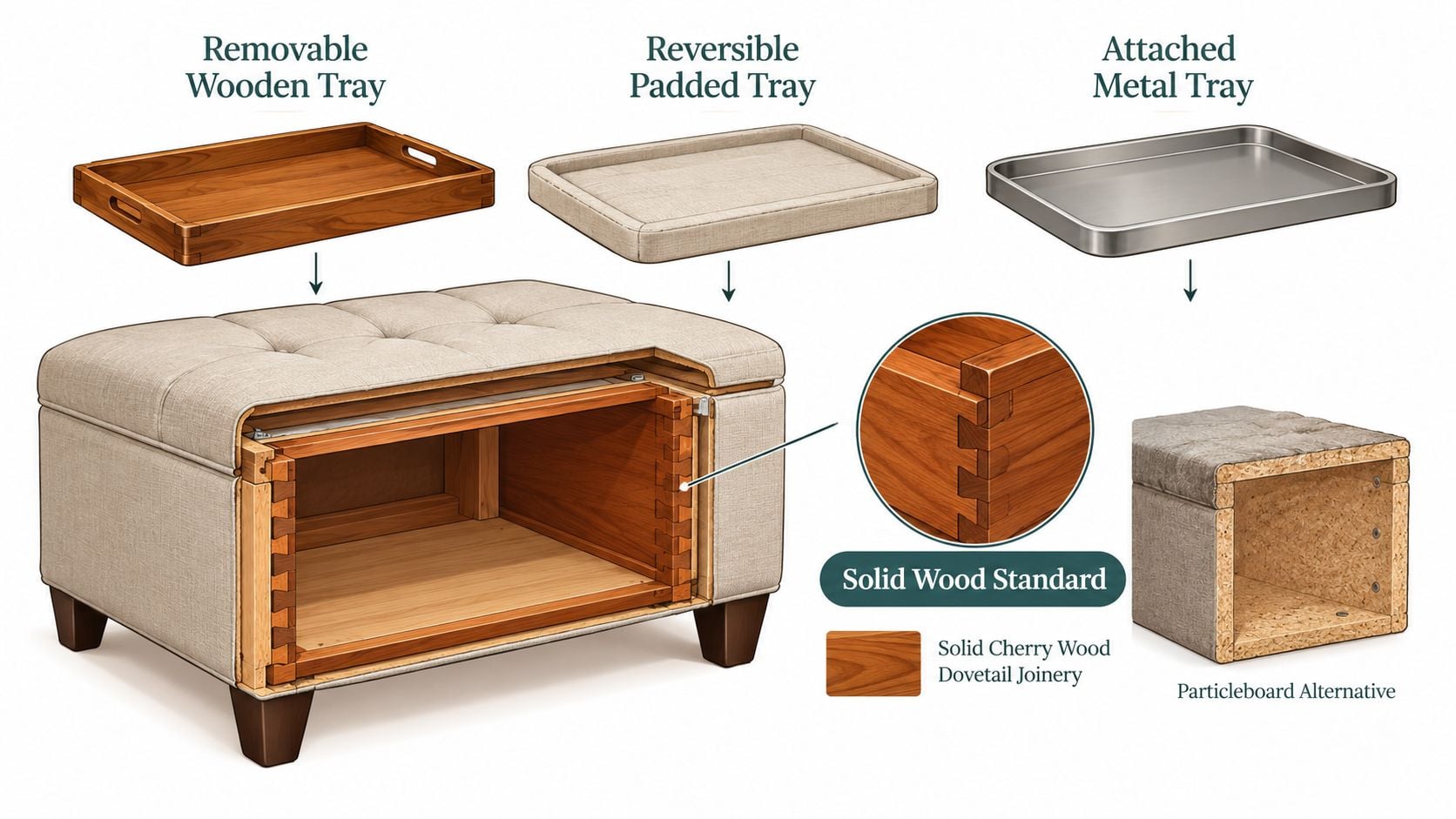
In an Ann Arbor living room, the tray and upholstered base should work as one piece of furniture. Choose the setup based on how often you will use the surface and whether the ottoman needs to shift between serving, storage, and footrest duties. A removable tray offers flexibility, though it can slide if its underside lacks grip or rests on too narrow a surface. A reversible lid creates a firmer platform while preserving storage access. An attached tray stays in place, but limits how easily you can switch the ottoman between uses.
Tray interface: Look for a locating lip, recessed shoulder, or broad bearing rails that keep the tray seated. A shallow decorative rim will not stop rocking if the underside does not sit flat against the cushion. Ask whether the tray is built for everyday use or occasional serving, and whether you can remove the lid without shifting items on top. For a more distinctive look, a decorative tray for equestrian homes can turn a plain storage ottoman into a usable table surface.
Upholstery: Performance fabric suits busy households where pets, children, or meals on the sofa are part of daily life. Top-grain leather offers a smooth, buttery feel, but ask how the specific leather will wear and what care it requires. Tufting and plush cushioning add comfort and texture; deep depressions or a soft, shifting top can make a tray less steady. Use Tyner's guide to compare upholstery materials against your household's routine.
The frame matters even when upholstery hides it. A university furniture-joint study found that a traditional mortise-and-tenon joint, with the tenon cheek and shoulder cut from one piece of stock, withstood more than 26 kN before elastic failure, over twice the slightly more than 12 kN recorded for a common #20 biscuit joint. The strongest tested dovetail configuration exceeded 8 kN, while the weakest exceeded 6 kN in the university joint study. Separate research on box furniture found that dovetail geometry affected strength and deformation. Among the tested ratios, a 75% hole-depth-to-slope-height ratio produced the strongest measured compression and tensile performance in the box-furniture joint study.
Those findings do not certify any individual ottoman. They show why joinery deserves a specific question, not just a glance at the upholstery. Tyner's Amish hand-crafted solid-wood furniture emphasizes material integrity and traditional joinery. For an ottoman, ask how the frame, storage box, and tray supports are built. In a smaller room, a stable, well-supported tray can make the ottoman work harder; in a larger living room, the same construction lets it serve as a dependable everyday surface.
Getting the Size and Height Exactly Right
A tray-top ottoman needs to fit the seating group without blocking the paths people use. Begin by measuring the sofa or sectional, the open floor area, and the routes through the room. Don't choose a large piece just because it fills the center visually. In a smaller Ann Arbor living room, an oversized ottoman can make every trip past the sofa feel cramped.
Use this order when checking fit:
- Measure the usable floor area. Mark the ottoman's planned footprint with tape, then walk around it as household members normally would. If it interrupts the main path, reduce the footprint or choose another shape.
- Compare the top with the seating. The tray should sit within a stable part of the upholstered surface, without unsupported corners or an overhang that makes it easier to bump.
- Test reach from the seats. Sit where people usually sit and check whether they can reach a drink or remote without leaning awkwardly. The right tray size depends on sofa depth and where the ottoman sits, not just the room's overall dimensions.
- Check finished height. Assess the ottoman with the tray in place. A small difference in height can change whether a drink is easy to reach or a laptop posture feels strained.
Pro tip: Bring the sofa's seat height and seat depth to a design consultation. Matching the ottoman to the actual seating is more reliable than choosing from a room photo.
A low ottoman can work for relaxed lounging but may feel inconvenient as a frequent work surface. Likewise, a broad square design may anchor an open family room but dominate an apartment. Round forms can soften a tight traffic path; rectangular shapes can align more naturally with a long sofa. Use Tyner's furniture measuring guide to prepare room dimensions before comparing options.
Correct sizing improves access, but it can't remove the fundamental stability trade-off. A well-fitted tray can still move when the cushion beneath it compresses.
The Honest Trade-Off Between Soft Comfort and Surface Stability
A tray-top ottoman is not automatically a full replacement for a coffee table. The upholstered base can compress under a tray, and the tray can wobble, slide, or tilt when someone leans on the edge. A firm coffee table is generally the safer choice when the room needs a dependable place for uncovered drinks, meals, or a laptop.
Independent layout guidance makes the distinction plainly: coffee tables offer more stability for drinks, laptops, and meals, while ottomans suit lounging and softer edges in this coffee-table and ottoman layout guidance. That doesn't make an ottoman a poor purchase. It means the shopper should be clear about which function gets priority.
| Activity | Tray-Top Ottoman | Coffee Table |
|---|---|---|
| Resting feet | Comfortable when the tray is removed or moved aside | Hard surface may feel less inviting |
| Occasional drinks | Suitable only when the tray sits securely | More dependable hard surface |
| Regular laptop use | Can wobble or shift on soft upholstery | Better for a steady work surface |
| Casual serving | Convenient when a removable tray is easy to carry | Useful as a fixed landing place |
| Extra seating | Possible only if the maker allows it | Not designed for this use |
| Soft edges | Cushioned perimeter | Hard edges require more care |
For tray mode, favor positive seating geometry such as a recessed shoulder, locating lip, or broad bearing rails, rather than relying on friction between wood and fabric. Check for rocking with light diagonal pressure, sliding when weight is near an edge, and lid movement when a person contacts the perimeter. Ask the maker for the tested tray-mode capacity and clarify whether the rating applies to the tray, cushion, or frame.
Avoid placing hot cookware, unstable glassware, or heavy concentrated objects on an untested tray. A wood or rigid surface at the top doesn't remove the need to assess any upholstered sides, padded lid, or other textile-and-foam construction.
Practical rule: If a steady work or dining surface is essential, keep a firm table in the room and let the ottoman handle comfort, occasional seating, and flexible serving.
Custom Upholstery and Made-to-Order Options at Tyner
A good custom order starts with the room's real requirements, not a fabric swatch chosen in isolation. At Tyner's South State St. showroom, shoppers can compare upholstery, tray finish, leg style, dimensions, and configuration as part of a broader design conversation. In-stock is just the beginning: made-to-order choices can help a piece fit the way a household sits, serves, and stores everyday items.
Bring room measurements, a few photos from the sofa's point of view, and notes on what the ottoman will hold. A fabric sample from nearby seating can make color and texture decisions easier. Shoppers with pets or children should describe their cleaning needs; people planning to use a laptop or serve meals should be direct about how firm and stable they expect the tray to feel.
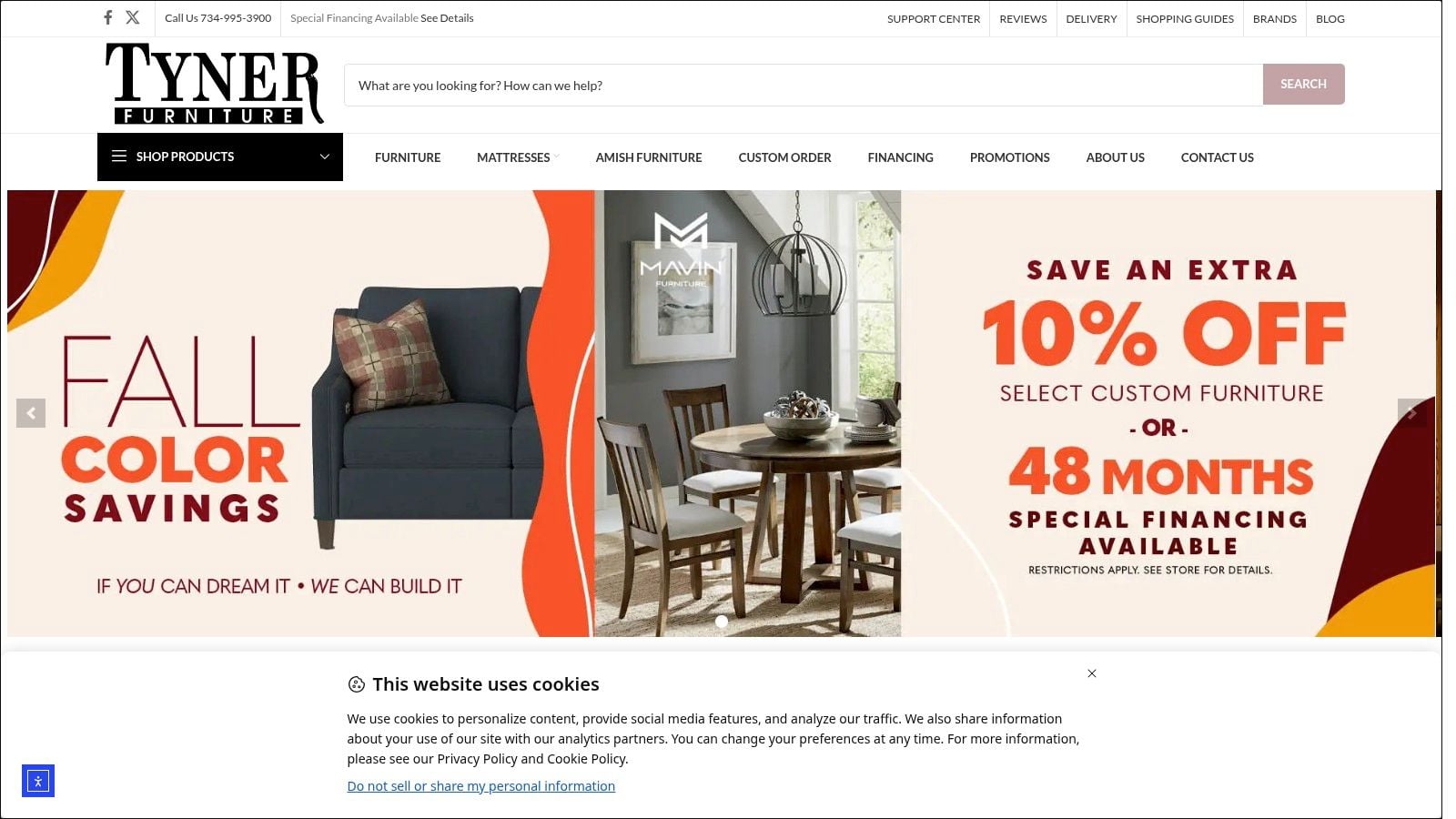
The consultation can also consider how the ottoman relates to nearby seating. Canadel brings bespoke options to dining furniture, while Stressless offers ergonomic seating choices and custom sizing. Those programs don't replace the need to verify an ottoman's tray construction, but they make it easier to coordinate comfort, finishes, and the overall interior design. Shoppers can prepare by reviewing how to get started with a custom order.
For a long-lasting piece, ask what sits beneath the upholstery, how the tray locates on the top, and what the maker covers if the surface shifts under normal use. Customization has value when it solves a real fit or function problem, not because more choices are available. That's the difference between a bespoke detail and an unnecessary upgrade.
Financing, Delivery, and the Cost-Per-Year Mindset
In a compact Ann Arbor living room, an ottoman may replace a coffee table, add storage, and provide extra seating. In a larger room, it may serve mainly as a stable surface beside the sofa. Compare the cost with the jobs the piece will handle over time. Divide the purchase price by the years you expect to use it, then weigh the frame, upholstery, and storage against the cost of buying separate pieces. Ask about construction and care before estimating how long it should last.
Tyner offers Special Financing and a Low Price Promise. Review Tyner's furniture financing options alongside your budget, and read the financing terms carefully. The Consumer Financial Protection Bureau says deferred-interest furniture promotions commonly run for six to 12 months. If a promotional balance remains at the deadline, interest may be charged retroactively from the purchase date, at a rate generally around 25% in the CFPB's explanation of retail credit-card promotions.
Before signing, confirm whether the offer is true no-interest or deferred-interest. Check the payoff deadline, regular annual percentage rate, and monthly payment required to clear the balance. The CFPB cites a 2015 study finding that more than half of consumers assessed deferred interest who carried other balances on the account paid more than their full promotional balance during the promotional period in its discussion of deferred-interest furniture purchases. Use that finding as a prompt to set a realistic payoff plan, not as a prediction about an individual shopper.
For made-to-order pieces, confirm delivery arrangements and the current lead-time estimate before ordering. Custom upholstery and hand-crafted construction can take a different amount of time than a floor model. Get the estimate in writing, then decide whether the wait and total cost make sense for your room and budget.
Planning Your Visit to the Ann Arbor Showroom
A showroom sit test helps answer questions photos can't: whether the ottoman's height feels right beside the sofa, whether the cushion is too soft beneath a tray, and whether the upholstery suits the room's light and use. Since 1957, Tyner has served Southeast Michigan from Ann Arbor, helping local households make choices that balance comfort, durability, and value.
Bring a short set of details:
- Room photos: Include the seating area and the routes people use to move through it.
- Measurements: Note the sofa's seat height and depth, the planned ottoman footprint, and nearby clearances.
- Daily-use notes: List whether the piece will mostly hold drinks, store blankets, serve as extra seating, or support occasional work.
- Material preferences: Bring fabric samples or describe the colors and textures already in the room.
During the visit, test the ottoman in more than one position. Ask how the tray is supported, whether the top is removable or reversible, and what the maker says about tray-mode capacity. Check how the upholstery feels against the hand, from the buttery feel of top-grain leather to the texture of woven fabric.
Tyner's selection reaches beyond living rooms, from the Home Office to Outdoor Spaces, so a consultation can account for how the ottoman fits into the wider home. Online Quick Specs and custom-order options give shoppers another way to prepare before visiting.

Tyner Furniture offers custom upholstery, made-to-order options, and expert guidance for choosing an ottoman that suits the room and the way it's used. Visit Tyner Furniture in Ann Arbor for a sit test, or browse the online Quick Specs before planning a custom order.