Modern Swivel Chairs for Living Room: 2026 Guide

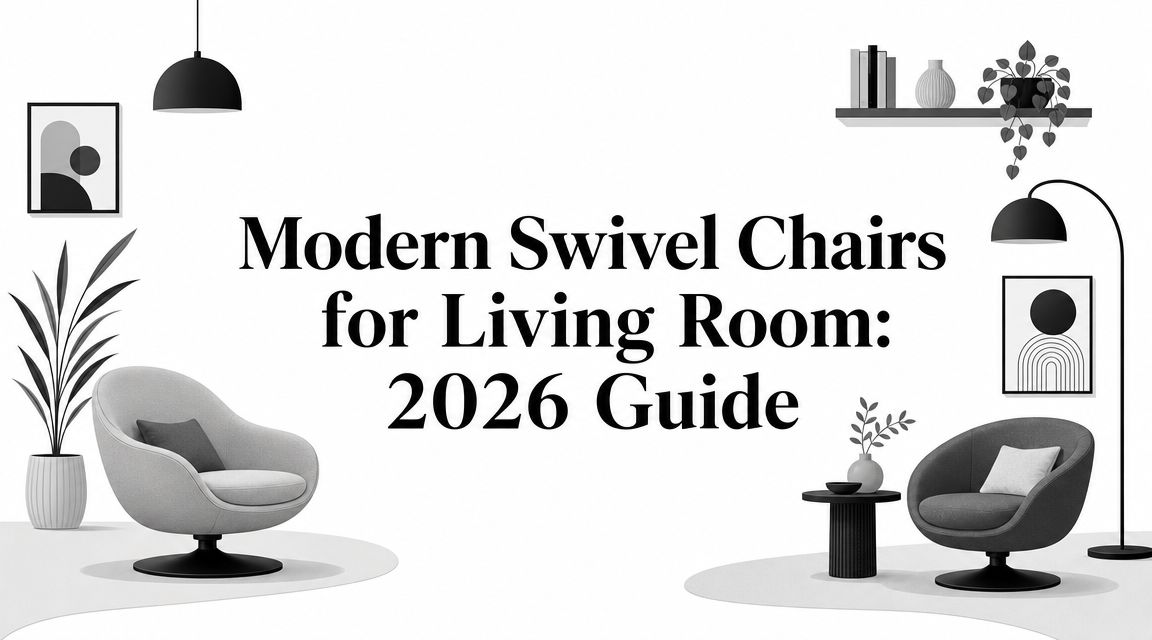
A common Southeast Michigan living room has to do more than one job. It may face a fireplace, open toward the kitchen, catch the best daylight near a picture window, and still need a comfortable angle for evening television. That's where many homeowners and renters get stuck. A standard accent chair looks right in one direction and wrong in the other two.
A modern swivel chair solves that problem without asking the room to be rearranged every time the household uses it differently. One seat can turn toward conversation, pivot toward a view, or rotate toward media, all while staying in place. That kind of flexibility is why many shoppers start looking at modern swivel chairs for living room spaces when a room feels finished on paper but awkward in real life.
For a local store that has served Ann Arbor and Southeast Michigan since 1957, this question comes up often because real homes rarely behave like showroom layouts. A chair has to work with traffic flow, daily habits, comfort needs, and long-term ownership. That's a different conversation than choosing a silhouette from a photo gallery. Homeowners who want a broader foundation for the room often start with living room essentials and layout basics.
Table of Contents
- Welcome to Flexible Living
- The Role of the Modern Swivel Chair
- Finding Your Style Custom Finishes and Materials
- The Perfect Fit Sizing and Ergonomic Comfort
- Beneath the Seat Swivel Bases and Durability
- Styling Swivel Chairs in Your Living Room
- Your Investment in Lasting Flexibility and Comfort
Welcome to Flexible Living
In Ann Arbor, plenty of living rooms look balanced at first glance and still feel inconvenient once people start using them. A sofa may anchor the space well, yet the chair beside it only faces the television. A sectional may make movie night easy, yet conversation with guests near the kitchen feels disconnected. The room isn't failing. It needs a more responsive seat.
That's where the swivel chair earns its place. In a family room, one person can face the sofa while talking, then turn toward the window with morning coffee, then rotate back toward the screen in the evening. In an open-concept plan, a single chair can bridge two zones without adding visual clutter or forcing another large furniture piece into the room.
A familiar room problem
Consider a common setup in Southeast Michigan. The fireplace sits on one wall, a wide opening leads into the kitchen, and the best natural light lands in the corner. A fixed chair placed by the window often becomes a “dead direction” seat. It either ignores the fireplace or turns its back on the conversation area.
A swivel chair changes the job description of that spot. It becomes a reading chair at noon, an entertaining seat when guests arrive, and part of the television arrangement later on. That's practical design, not trend chasing.
A flexible chair often makes a room feel more intentional because it lets the layout respond to people instead of forcing people to adapt to the layout.
Why this matters for long-term living
Furniture shopping can feel overwhelming because most pieces are shown in perfect rooms with generous spacing and simple sightlines. Real homes have corners, walkways, pets, kids, windows, lamps, side tables, and routines. The strongest furniture choices support those realities for years, not just for move-in day.
That's why a swivel chair deserves a closer look as an investment piece. It isn't just another accent. It can help a room age well, especially in homes where one space handles relaxing, hosting, and everyday life.
The Role of the Modern Swivel Chair
A swivel chair becomes “modern” through two things working together. The first is function. The second is visual integration with the rest of the room.
Why the swivel matters
The defining mechanical feature is the 360-degree swivel base, which allows the seat to rotate fully so the user can reorient toward a conversation area, television, or adjacent space without moving the chair itself, as described in this overview of modern living room swivel chairs. That sounds simple, but it changes how one chair performs in a room.
Instead of assigning the chair a single fixed purpose, the swivel allows it to play several roles:
- Conversation seating that can face the sofa when company arrives
- Media seating that can turn toward the television when needed
- Transitional seating that can acknowledge an adjacent dining area, kitchen, or view
- Quiet retreat seating for reading without dragging furniture across the floor
This is one reason swivel chairs stayed relevant in living rooms rather than remaining an office-only feature. A living room rarely asks for one static posture all day.
Why modern styling changed the category
Today's market treats the swivel chair as more than a utility item. Style guidance linked to 2025 swivel chair trend notes describes swivel chairs as stylish and able to blend effortlessly with minimalist home offices and luxurious living rooms, with attention to ergonomic comfort, mobility, and aesthetic variety. That combination explains why they remain associated with contemporary design in 2026, not just convenience.
Modern styling usually shows up in a few recognizable ways:
| Design feature | What it does in the room |
|---|---|
| Clean lines | Keeps the chair from feeling bulky |
| Sculptural shape | Lets the chair act as an accent even when it's not in use |
| Tailored upholstery | Helps it blend with a sofa or stand apart intentionally |
| Low visual footprint | Preserves sightlines in open rooms |
A well-chosen swivel chair often makes a room feel larger because it adds function without adding another oversized seating element. That's especially useful in multi-purpose homes where the living room has to support conversation, relaxation, and media in one shared area.
Practical rule: A swivel chair works best when the room needs a seat that can acknowledge more than one focal point.
Finding Your Style Custom Finishes and Materials
Some shoppers know they want the function of a swivel chair but hesitate because they don't want the room to feel overly casual, too corporate, or disconnected from the rest of their furnishings. That concern is valid. Style makes the difference between a chair that looks dropped in and one that feels bespoke.
Three style directions that work well
A swivel chair can read very differently depending on the silhouette and cover.
The sleek, structured look suits cleaner interiors. Think crisp shaping, a controlled seat, and upholstery that feels refined rather than overstuffed. This style often works well near glass coffee tables, contemporary sectionals, and lighter architectural spaces.
The soft barrel look feels welcoming and easy to place. A rounded back can soften a room filled with straight sofa arms, rectangular rugs, and angular case pieces. It's often the answer when a living room needs comfort without visual heaviness.
The lounge-inspired look leans deeper and more relaxed. It can be ideal for reading corners or rooms where comfort takes priority, though it needs more attention to proportion so it doesn't overpower nearby pieces.
Why customization matters more than shoppers expect
In-stock shopping often falls short. A shopper may like the scale of one chair, the fabric of another, and the leg or base finish of a third. Made-to-order programs solve that problem by letting the room guide the choice instead of the stock photo.
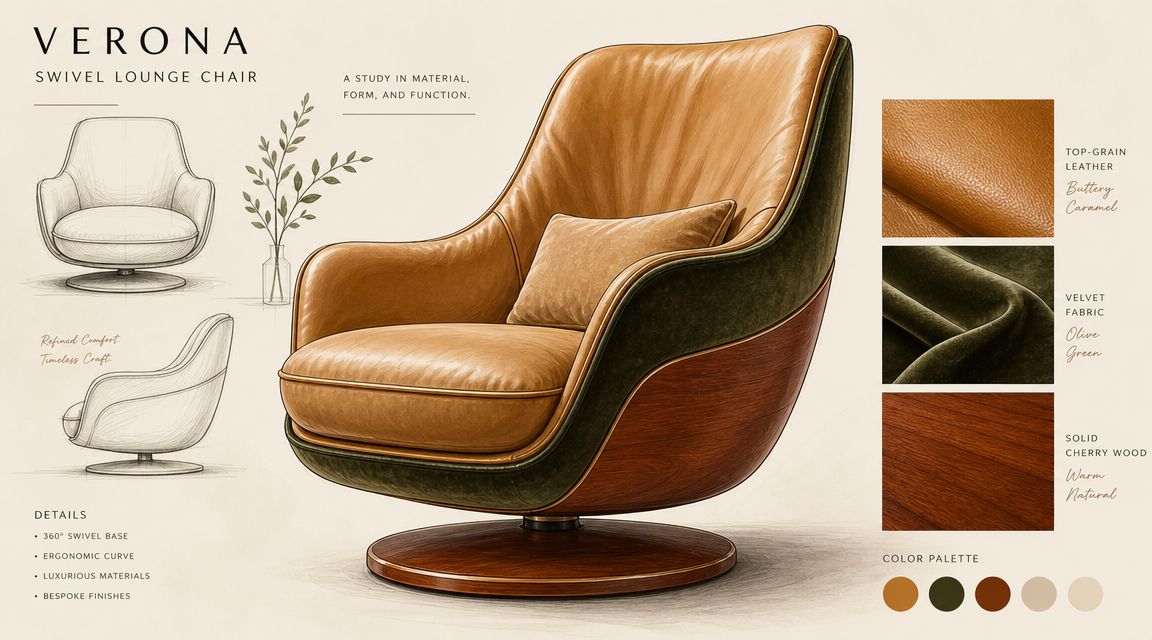
Materials shape both the appearance and long-term ownership experience:
- Performance fabric works well for busy living rooms where spills, pets, or daily use are part of the picture.
- Top-grain leather brings depth, character, and that buttery hand many shoppers notice immediately in a showroom.
- Textured neutrals help a swivel chair blend into a layered room without feeling flat.
- Velvet or high-pile fabrics add richness and can turn a simple form into a stronger accent.
A useful way to narrow options is to compare the chair against the room's hardest-working surfaces. If the sofa is smooth, a textured swivel chair adds contrast. If the room already has strong pattern, a quieter upholstery may keep the space calm.
For shoppers who want more guidance on wear, texture, and maintenance, this upholstery materials guide helps translate showroom samples into everyday living.
Bespoke options beyond the floor sample
Tyner Furniture offers made-to-order upholstery options, including customizable swivel seating, alongside broader customization programs through partners such as Canadel and Stressless. That matters because the same room may call for a warmer fabric, a cooler leather tone, or a different finish than what happens to be on the floor that day.
This kind of personalization also supports better cost-per-year value. A chair that fits the room, the household, and the owner's taste is less likely to be replaced because it felt like a compromise from the beginning.
The showroom model should be treated as a starting point, not the final answer.
The Perfect Fit Sizing and Ergonomic Comfort
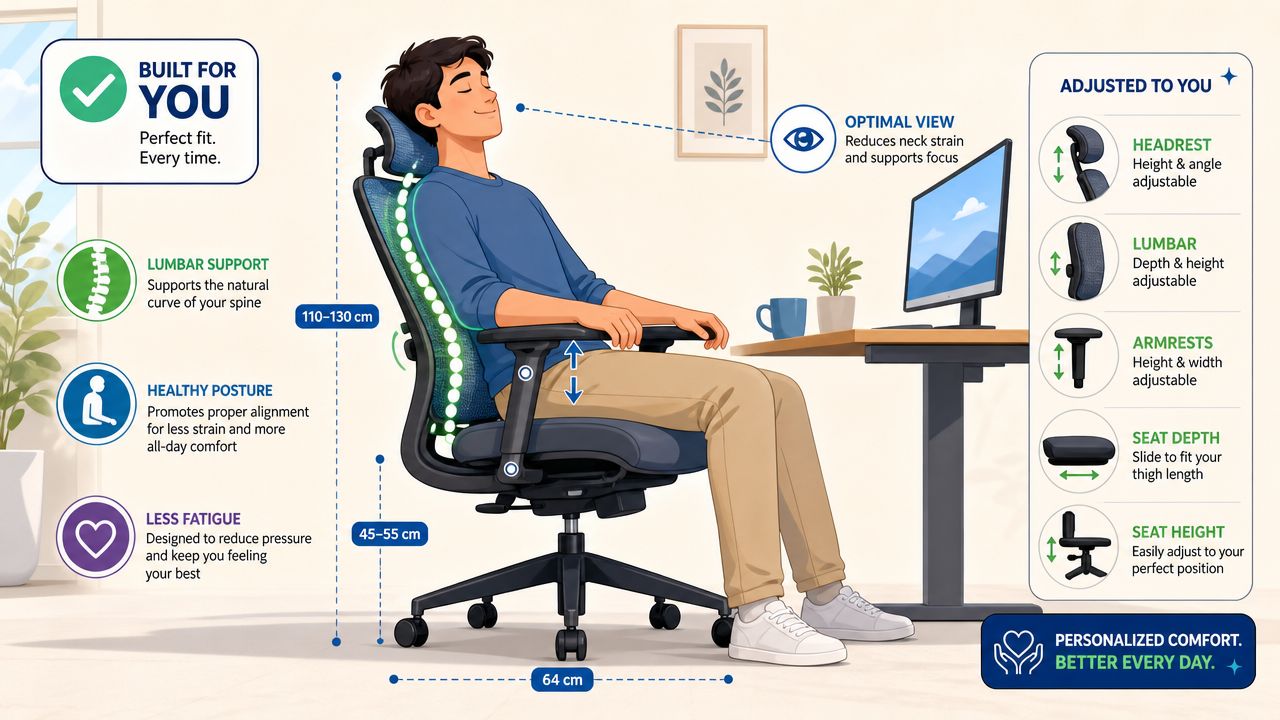
A beautiful chair still fails if the body never settles into it comfortably. This is where many shoppers get tripped up. They focus on the outside dimensions of the chair and forget that the seat itself determines whether the chair feels supportive after ten minutes or tiring after an hour.
How seat depth changes comfort
For living room swivel chairs, seat depths are typically about 20" to 26", according to these swivel chair specifications. That range is useful because it explains why one chair feels upright and easy while another feels more lounge-oriented.
A deeper seat can improve relaxation, but it should match the user's height so the chair still supports the thighs well. If the seat is too deep for the person using it most, the back may not rest comfortably against the cushion without the legs lifting awkwardly or the body sliding forward.
A simple way to think about fit:
- Near the lower end of the range usually feels easier for shorter users and often helps smaller rooms feel less crowded.
- Toward the deeper end often suits lounging better, especially when the chair is meant for long reading sessions or relaxed evenings.
- Back shape and cushion firmness matter just as much as depth, because they affect where the body actually lands.
What to notice during a sit test
A good sit test is less about whether the chair feels soft and more about whether it feels balanced.
Shoppers should pay attention to these cues:
- Feet position. The feet should rest naturally without strain.
- Thigh support. The seat should support the legs without cutting off comfort behind the knees.
- Lower back contact. The body shouldn't have to hover away from the back cushion.
- Arm height. Arms that sit too high can make the shoulders tense. Arms that sit too low may make the chair feel unfinished.
- Turning motion. The swivel should feel smooth and controlled, not loose or resistant.
For ergonomic shoppers, Stressless often enters the conversation because its sizing approach includes Small, Medium, and Large, with attention to personalized support and active-release comfort. In practical terms, that reminds shoppers that fit is not one-size-fits-all, even within a beautiful design category.
For room planning, this furniture measurement guide helps connect body comfort to actual floor space before an order is placed.
A chair can look perfectly proportioned in a showroom and still be wrong for the primary user if seat depth and body fit don't line up.
Beneath the Seat Swivel Bases and Durability
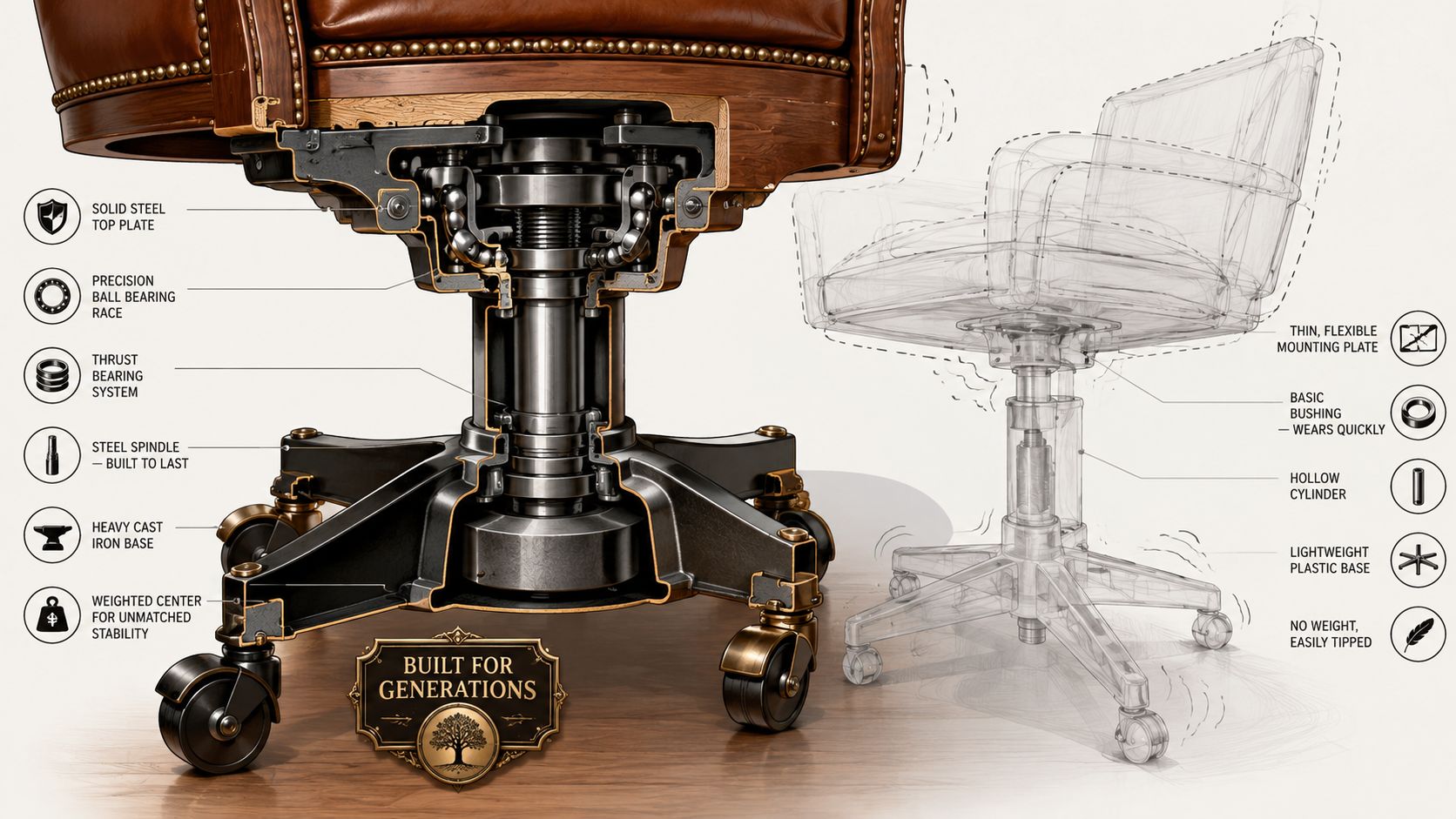
The part shoppers see first is the upholstery. The part they'll live with longest is the mechanism underneath. That hidden structure often determines whether a swivel chair becomes a satisfying investment or a frustrating one.
What the mechanism actually does
A swivel base carries the weight of the seated body while allowing rotation again and again through daily use. That means the quality of the mechanism matters just as much as the fabric, foam, or frame.
Some bases stay visually hidden beneath the chair, which keeps the silhouette clean. Others are intentionally visible and become part of the design. Either approach can work. What matters more is how stable the chair feels when seated, how smoothly it turns, and whether the motion still feels controlled after years of regular use.
Questions worth asking before buying
Long-term ownership calls for a different set of questions than trend-driven shopping. This perspective on living room chairs and durability concerns highlights an important point: the best swivel chair isn't always the most fashionable one. For households focused on longevity, repairability, upholstery durability, and the long-term stability of the swivel mechanism deserve close attention.
A smart evaluation usually includes:
- Base stability. Does the chair feel planted, or does it shift in a distracting way?
- Rotation quality. Is the movement smooth and quiet?
- Repair access. Can service or parts be addressed if needed?
- Upholstery suitability. Will the selected cover stand up to the household's actual use?
- Frame confidence. Does the chair have enough substance to feel dependable over time?
A durable swivel chair should feel reassuring, not delicate. That sense often comes through in the weight, the return motion if the chair has one, and the absence of wobble during use.
For anyone comparing visual details below the upholstery line, this guide to furniture legs and base styles gives a helpful framework for reading what supports a chair structurally and stylistically.
Styling Swivel Chairs in Your Living Room
This is the point where many good furniture choices either come together or create clutter. A swivel chair can improve flow beautifully, but only when it's placed with the room's turning radius, pathways, and focal points in mind.
Layouts that solve real room problems
One of the most undercovered questions in this category is how swivel chairs work in small living rooms and with sectionals. As noted in this discussion of compact swivel chairs and room flow, shoppers need a decision rule for when a swivel chair improves movement and when it becomes a bottleneck.
Three arrangements tend to work well in real homes:
A single bridge chair
Place one swivel chair between the main seating group and an adjacent kitchen or dining area. This works well in open-concept homes because the chair can participate in either zone without being dragged around.
A pair facing a sofa
Two matching swivel chairs across from a sofa can create a balanced conversation area. This often works best when the room has one main anchor, such as a fireplace or large rug, and the chairs need to stay visually light.
A corner chair beside a sectional
This is often the trickiest setup. The chair should complement the sectional rather than compete with the chaise or extend into a key walkway.
For readers thinking about the bigger picture of the room, wall color strongly affects whether a swivel chair feels airy or heavy. Resources like Striped Circle wall color ideas can help align upholstery choices with the room's light level and mood.
A simple decision rule for small rooms and sectionals
If the chair's turning function helps the room connect to more than one focal point, it's earning its footprint. If the chair blocks circulation, crowds the sectional, or can't rotate comfortably in place, it's probably the wrong scale or the wrong location.
A useful room-planning checklist:
- Watch the walkways. Main paths through the room should feel natural, not squeezed by the chair's edge.
- Respect the spin zone. The chair needs enough surrounding space to rotate without bumping nearby tables or upholstery.
- Balance visual weight. A rounded swivel chair can soften a boxier sectional nicely.
- Use one problem-solving chair first. In tight rooms, one well-placed swivel often works better than forcing a matching pair.
- Check nearby surfaces. Side tables and lamps should support the chair without interfering with movement.
In a smaller room, the right swivel chair should make movement feel easier, not more negotiated.
For more inspiration on where accent seating fits into a room plan, these ways to use an accent chair offer helpful examples that translate well to swivel layouts.
Your Investment in Lasting Flexibility and Comfort
A modern swivel chair isn't just another seat. It's a practical answer for households that want one piece to serve conversation, relaxation, and day-to-day movement without asking the room to be rearranged constantly. The strongest choices usually come down to four things: a style that belongs in the room, a material that suits the household, a fit that supports the body well, and a mechanism that still feels dependable years later.
That's where cost-per-year becomes more useful than sticker shock. A chair that fits correctly, wears gracefully, and continues to function smoothly often delivers better value than a fashionable piece that starts to feel compromised after a short time. For many shoppers in Ann Arbor and across Southeast Michigan, that long-view mindset matters more than trend turnover.
Since 1957, local furniture guidance has mattered because shoppers aren't just furnishing one corner. They're building homes over time, often across the living room, dining room, bedroom, home office, and even outdoor spaces. For media-focused rooms, details beyond the seating also matter, and resources like expert Frame Bezel advice can help coordinate the television wall with the rest of the room so the seating plan feels intentional.
Special financing and a Low Price Promise can also make a higher-quality, made-to-order decision easier to approach when the goal is lasting comfort rather than a short-term fix.
For shoppers ready to narrow the field, Tyner Furniture offers a practical next step. Visit the Ann Arbor showroom on South State St. for a sit test and compare scale, comfort, and motion in person, or browse the online Quick Specs to explore made-to-order options in fabrics, leathers, and configurations before making a long-term investment.