Buying Your Upholstered Wingback Chair at Tyner Furniture

You're probably in one of two places right now. Either there's an empty corner in your living room, bedroom, or home office that still feels unfinished, or you've been sitting in a chair that looked good online and never felt quite right once it arrived. That's a common point in the buying process, especially when you're trying to choose one meaningful piece instead of filling a room with placeholders.
An upholstered wingback chair often solves that problem better than people expect. It adds height, shape, and comfort in a way that feels settled. Not trendy. Settled. It can turn a bare corner into a reading spot, give a living room some architectural structure, or make a home office feel more refined and more personal.
For many Ann Arbor and Southeast Michigan shoppers, this is also where the decision gets harder. There are plenty of chairs that photograph well. Far fewer are built to feel supportive after years of daily use. If this is your first significant chair purchase, it helps to think less about what's fashionable this season and more about what you'll still enjoy a decade from now.
That's the mindset we've always encouraged in our local community since 1957. A chair like this should earn its place in your home through comfort, craftsmanship, and long-term value.
Table of Contents
- Why an Upholstered Wingback Chair is a Timeless Investment
- Understanding the Classic Wingback Design and Heritage
- Judging Quality and Craftsmanship Beyond the Surface
- Choosing the Perfect Upholstery Fabric or Leather
- Finding the Right Ergonomic Fit for Your Home
- How to Style Your Wingback Chair
- Your Ann Arbor Guide to a Custom Wingback Chair
Why an Upholstered Wingback Chair is a Timeless Investment
There's a reason people keep coming back to this silhouette. When a room feels flat, a wingback gives it presence. When a space feels cold, upholstery softens it. And when you want one chair to work hard every day, this design has a way of delivering both visual character and real comfort.
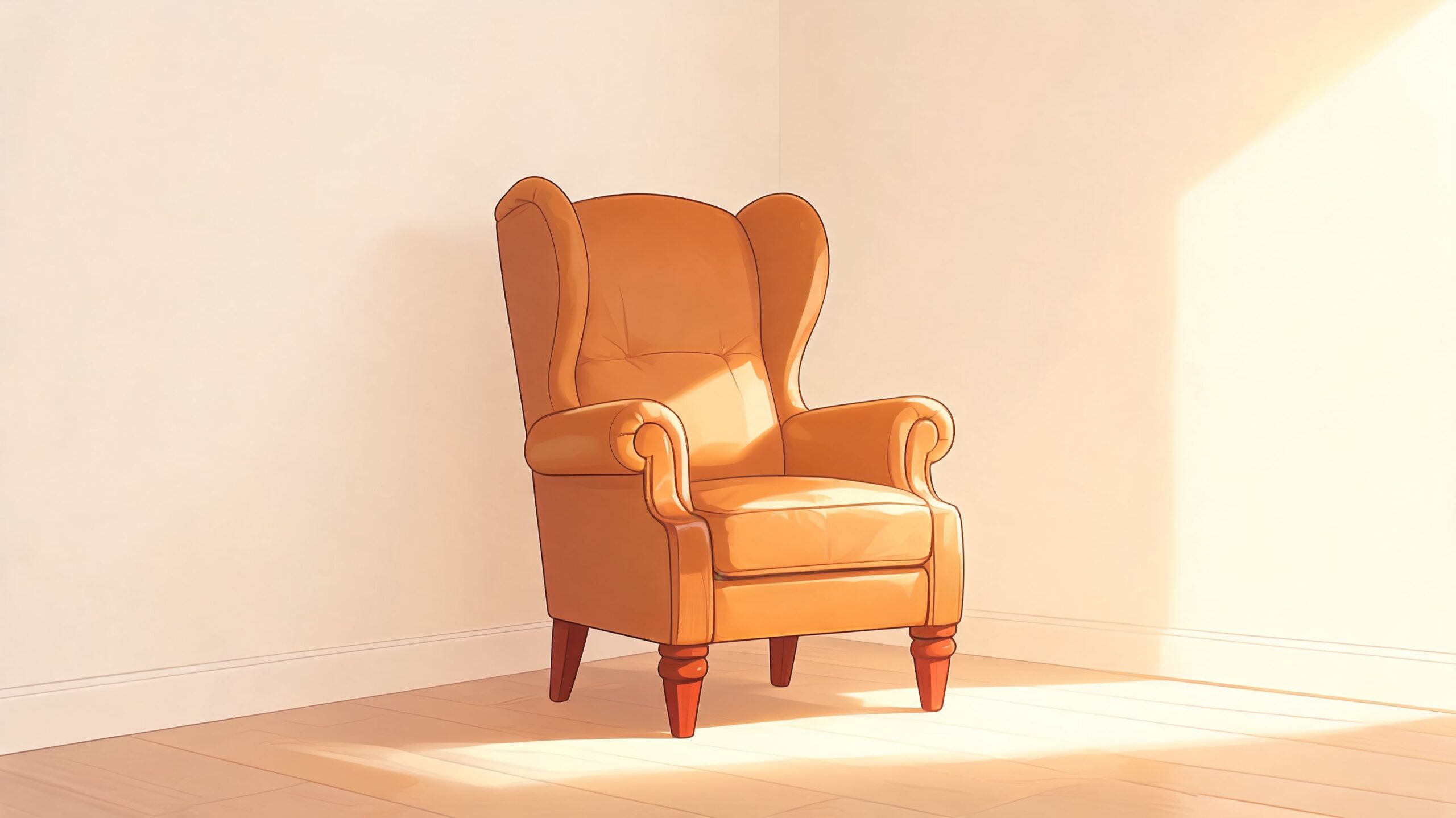
A lot of buyers start with style. They want something elegant, maybe something cozy, maybe a chair that makes the room feel complete. Then they run into a wall of choices. Barrel chairs, club chairs, slipper chairs, swivel chairs. The upholstered wingback chair stands apart because it does more than fill a spot. It anchors a room.
Why it holds value so well
The value of a good chair isn't just the purchase price. It's how long you use it, how often you sit in it, and whether you still appreciate it years later.
- It has visual staying power because the form is rooted in classic furniture design rather than short-lived styling.
- It serves more than one room. A wingback can work in a living room, bedroom, library, nursery, or home office.
- It rewards better materials. Fine fabric, top-grain leather, and hand-crafted frames all show up beautifully on this shape.
Practical rule: If a chair is going to be seen every day, sat in often, and moved with you through different homes, it's worth buying for the long haul.
That long-haul thinking matters. A well-made wingback doesn't feel like a filler purchase. It feels like the chair you read in on snowy evenings, the one guests notice first, or the one your family keeps because it still belongs in the house years from now.
In our South State St. showroom, shoppers often realize they aren't just buying an accent. They're buying a piece that may outlast several paint colors, rug changes, and room rearrangements. That's why this category deserves a slower, more thoughtful decision.
Understanding the Classic Wingback Design and Heritage
The easiest way to understand a wingback chair is to start with function, not decoration. Those signature “wings” weren't added for looks alone. They began as a practical response to the way people lived.
The upholstered wingback chair originated in England during the late 17th century, where it was designed to shield people from drafts and strong fireplace heat in manor houses. Its high back, often 40 to 50 inches tall, and projecting wings, typically 12 to 18 inches wide, trapped warmth effectively, making it a favored fireside “easy chair.” By the 1720s, it had evolved into a fully upholstered form that influenced furniture styles for centuries, as described in this history of the wingback chair.
What makes a chair a wingback
People sometimes confuse wingbacks with other tall accent chairs. A true wingback usually has a few defining traits:
- A tall back that gives the chair its vertical presence
- Side wings that project from the upper back
- An enveloping feel that makes the seat feel sheltered
- A more formal silhouette than many casual lounge chairs
Those features explain why the chair still works so well today. Even in a modern room, the shape feels intentional.
Why the design still makes sense
A lot of furniture survives because it's familiar. A wingback survives because it's useful and beautiful at the same time.
Its high back creates a sense of support. The wings help frame your upper body and give the chair a private, tucked-in feeling. In a large living room, that can make one seat feel intimate. In a smaller room, it can make a corner feel finished instead of forgotten.
The best historic furniture forms tend to last because they solved a real problem first and looked elegant second.
Over time, makers adapted the style. Some versions became lighter and more tailored. Others leaned formal, with carved legs or more dramatic wings. You'll also see cleaner, Scandinavian-influenced interpretations and more traditional English-inspired profiles. That variety is part of the appeal. You get a chair with heritage, but you don't have to decorate your whole house around an antique look.
For a first-time buyer, that's often the turning point. Once you understand that the silhouette comes from a practical design idea, the chair stops feeling fussy. It starts feeling purposeful.
Judging Quality and Craftsmanship Beyond the Surface
A wingback chair can look impressive and still be built poorly. That's the trap. Upholstery hides a lot. Beautiful fabric can cover weak framing, shallow support, and shortcuts that won't show up until the chair starts creaking or sagging.
The smartest buyers learn to judge the parts they can't see.
Start with the frame and support system
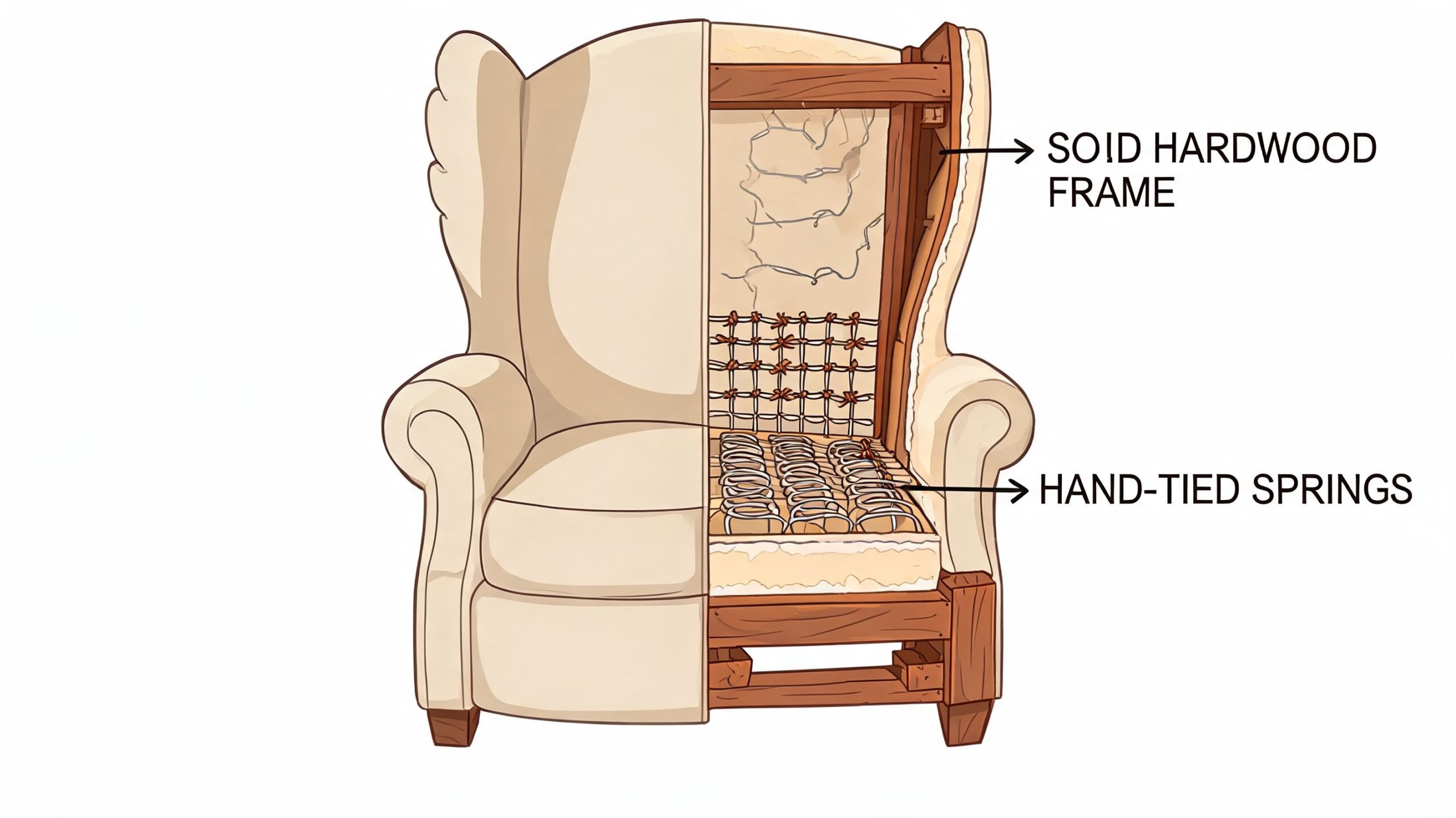
The frame is the skeleton. If it isn't strong, nothing above it will age well.
In a quality upholstered chair, the support system should also be engineered properly. According to this wingback chair upholstery build reference, seat webbing in high-quality upholstered chairs is tensioned at 80 to 85% of its breaking load. Combined with high-density foam of at least 2.5 lb/ft³, that construction is benchmarked to keep long-term seat sag under 1 inch over 10 years of typical use.
That sounds technical, but the takeaway is simple. Good comfort isn't accidental. It's built in.
What craftsmanship feels like in person
You can often sense quality before anyone explains it.
- Lift the chair slightly. A substantial frame has a different feel than a lightly built one.
- Sit back fully. The chair should support you without wobble or twist.
- Press the arms and seat. They should feel resilient, not hollow or flimsy.
- Look at the tailoring. Seams, welting, and pattern alignment tell you how carefully the upholstery was done.
If you'd like a broader checklist for evaluating seating construction, this guide on what to look for in your new sofa or chair is a practical place to start.
Why cost per year matters
A chair that lasts and stays comfortable usually costs more upfront. That's true. But a weaker chair gets expensive in a different way. It loses shape, the seat compresses, and you end up replacing it sooner than you planned.
That's where heirloom thinking helps. In solid-wood Amish hand-crafted furniture, buyers often notice the difference in joinery and material integrity right away. The same principle applies to upholstered seating. What's under the cover matters as much as the cover itself.
When you buy a chair for daily use, you're not just buying fabric and foam. You're buying the frame's ability to hold up year after year.
That's the distinction between a chair that merely arrives looking nice and one that remains part of your home for the long term.
Choosing the Perfect Upholstery Fabric or Leather
The decision gets personal. Two wingback chairs can have the same shape and feel completely different once you change the upholstery. Fabric makes one chair feel relaxed and inviting. Leather can make the same frame feel structured, weighty, and formal.
Fabric and leather each tell a different story
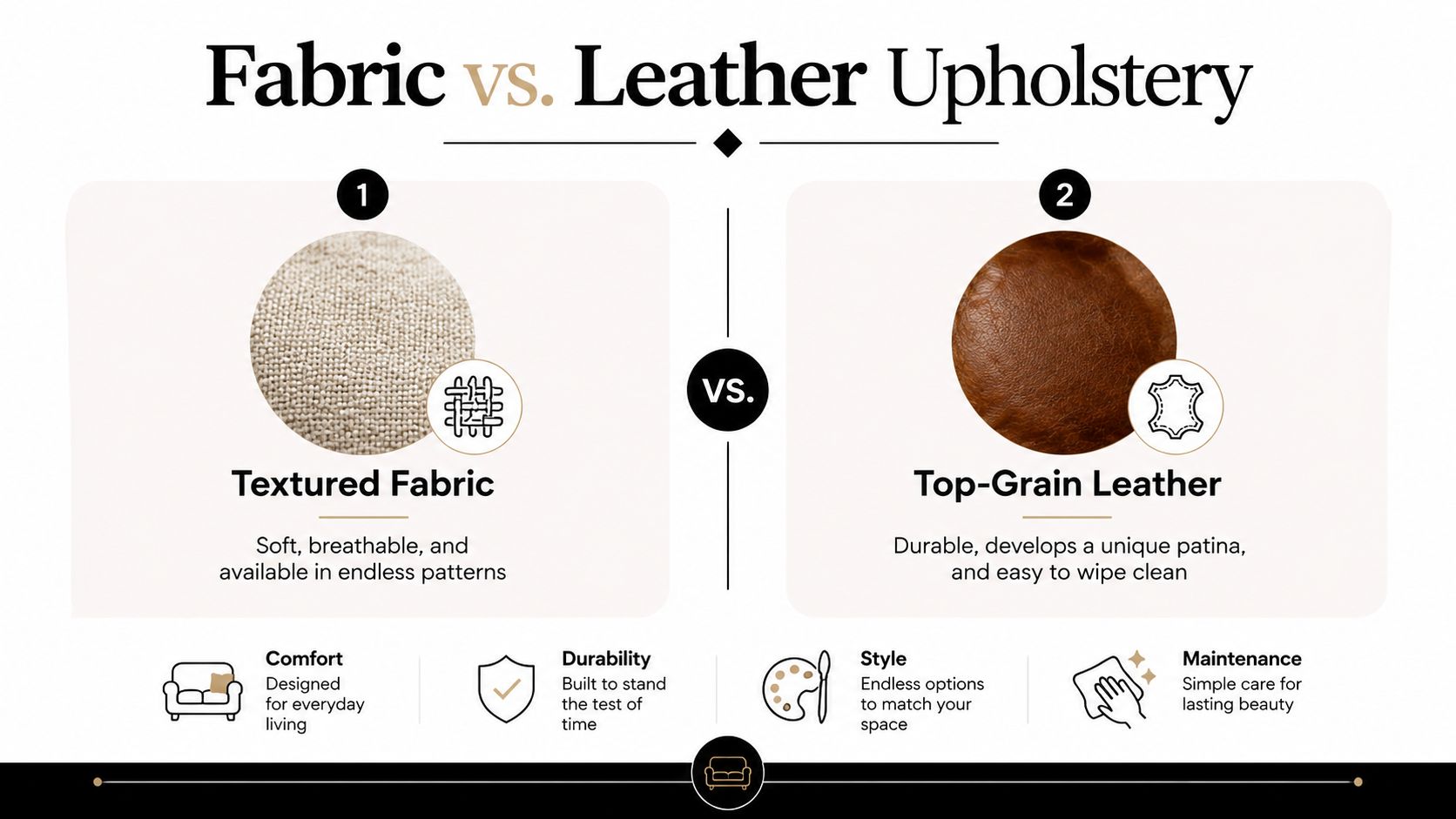
If you love softness and visual variety, fabric gives you the widest range. You can choose a quiet woven texture, a plush velvet, a classic pattern, or a performance fabric that handles everyday life more gracefully. Fabric also changes how a chair reads in the room. It can make a tall wingback feel lighter, friendlier, and easier to blend into existing decor.
Leather works differently. The appeal is tactile and visual. People often respond to the smooth hand, the natural grain, and the way the surface develops character with age. A good leather wingback can feel especially appropriate in a study, library corner, or living room where you want a more refined look.
Historically, upholstery choices shaped the category itself. By 1720, heavy velvets or needlepoint offered up to 30% better thermal retention, and in the Victorian era, leather became a major upholstery choice. Today, about 40% of surviving museum examples from that period are leather, which speaks to its longevity, according to this brief history of the wing chair.
Fabric vs. Leather at a Glance
| Consideration | Fabric Upholstery | Leather Upholstery |
|---|---|---|
| Comfort | Soft, warm, and often more casual in feel | Smooth, supportive, and often more tailored |
| Style | Broad range of colors, textures, and patterns | Rich, classic look with natural variation |
| Maintenance | Varies by weave and finish | Often easier to wipe clean |
| Long-term character | Can stay crisp or relaxed depending on textile | Develops patina with age |
| Best fit | Family rooms, bedrooms, reading corners, layered interiors | Offices, studies, living rooms, classic interiors |
How to match the material to your lifestyle
Some buyers get stuck because they think they need the “right” answer. There usually isn't one. There's the right answer for your house.
- Busy household: Performance-oriented fabric can be the practical choice if you want softness without constant worry.
- Quiet reading corner: Velvet or another rich textile can create that tucked-in, cocooned feel people want from a wingback.
- Home office or library: Top-grain leather often suits these spaces because it feels crisp and grounded.
- Mixed-use living room: A textured woven fabric can balance durability with a softer visual profile.
A chair should fit the rhythm of your home, not ask your home to tiptoe around it.
If the options feel overwhelming, that's normal. A made-to-order program helps because you can compare materials on the exact frame you want. Some shoppers start from the silhouette and then choose the cover. Others begin with the material they love to touch every day. Both paths work.
For a deeper primer on upholstery categories and how they behave, this article on upholstery materials is worth reading.
A well-chosen cover does more than make the chair pretty. It determines how the chair feels when you first sit down, how it wears over time, and whether you still enjoy living with it years later.
Finding the Right Ergonomic Fit for Your Home
A wingback chair can be beautifully built and still be wrong for you. That usually happens in two ways. The chair is the wrong scale for the room, or it doesn't fit the body of the person who'll use it most.
Both problems are common.
A 2025 Houzz survey found that 68% of homeowners struggle with furniture scaling, and accent chairs were named as a top issue. The same source notes that standard wingback chairs average 30 to 35 inches wide and 40 to 45 inches high, which can feel oversized in smaller homes and condos. You can review those measurements in this guide to wingback chair sizing and room fit.
Room fit comes first
In an open-plan Ann Arbor condo or a smaller Southeast Michigan living room, vertical furniture has a strong presence. That can be wonderful when you need a focal point. It can also make the room feel crowded if the proportions are off.
A few things help:
- Check the chair height against windowsills and shelving so it doesn't interrupt sightlines awkwardly.
- Measure walking space around it instead of measuring the chair alone.
- Think about visual weight. A chair with a tall back and broad wings reads larger than its footprint suggests.
Body fit matters just as much
Online purchases frequently fall short of expectations. Seat depth, seat height, and back support all change the experience of the chair.
If the seat is too deep, shorter users often perch forward instead of relaxing. If the seat is too shallow, taller users may feel unsupported through the legs. And if the back height doesn't line up well with your shoulders and head, the chair may look dramatic but never feel restful.
That's one reason ergonomic brands such as Stressless have earned attention. Their sizing approach recognizes that one frame size doesn't suit every body. In a custom environment, that same thinking applies to wingbacks. You can often get a better result by adjusting scale, cushion feel, or overall proportions instead of trying to make a standard size work.
If you're deciding between a chair that looks right and one that feels right, keep shopping until you find both.
Before ordering, it helps to review a measuring guide like this one on how to measure furniture. Better yet, do a real sit test. Sit upright. Sit back. Rest your arms. Stay there for a few minutes. The right chair doesn't just impress at first glance. It settles you in.
How to Style Your Wingback Chair
Once you've chosen the right chair, styling it is the enjoyable part. Wingbacks are surprisingly flexible. They're formal enough to add polish and comfortable enough to feel welcoming.
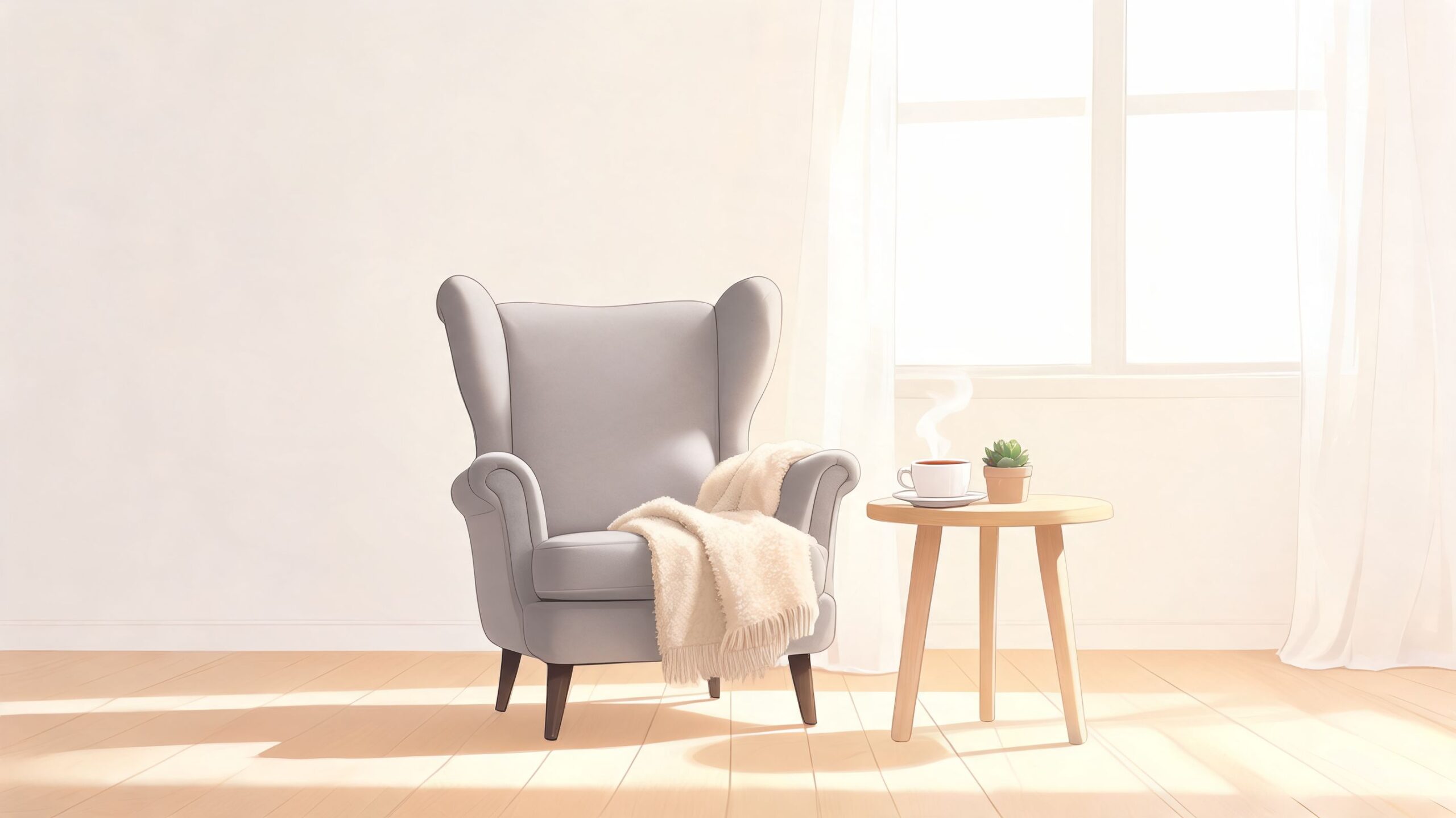
Three placements that work beautifully
The reading corner
Place the chair near a window or lamp with a small table for a book and mug. A soft throw over one arm can relax the silhouette so it feels lived-in instead of staged. This setup works especially well in bedrooms, living rooms, and quiet upstairs landings.
The conversation anchor
Use a pair of wingbacks opposite a sofa, or place one at an angle near the sofa to break up a boxy furniture arrangement. The high backs add structure and help define the seating zone.
The home office statement piece
A single wingback can bring warmth and authority to a workspace. If your desk area feels flat or purely functional, a chair with wings and upholstery gives it personality without turning it into a theme room.
Pro tips that make the chair look intentional
- Add a table with the right scale. Too small and it looks accidental. Too large and it competes with the chair.
- Use lighting to support the seat. A floor lamp or nearby sconce makes the chair feel like a destination.
- Let the upholstery lead. If the chair is bold, keep nearby textiles quieter. If the chair is neutral, add interest with a pillow or rug.
- Give it breathing room. A wingback likes a little space around it so the silhouette can be seen.
If you want more placement ideas, these five ways to use an accent chair offer practical inspiration for different rooms.
A well-styled wingback doesn't need much. It already has shape, height, and personality. Your job is mostly to support it, not overpower it.
Your Ann Arbor Guide to a Custom Wingback Chair
If you've read this far, you're likely not looking for a placeholder chair. You want one that fits your room, feels right when you sit down, and still makes sense years from now. That's exactly where custom ordering becomes useful.
A 2025 Furniture Today analysis found that 55% of buyers seek sustainable, low-VOC furniture, and the same source notes that heirloom-quality Amish solid-wood frames can last over 50 years, compared with a 5 to 10 year lifespan for mass-produced furniture. That long-life difference is one reason many Southeast Michigan shoppers start looking more closely at made-to-order and repairable furniture. The trend is summarized in this guide to the wingback chair and heirloom buying.
What custom ordering changes
With a custom upholstered wingback chair, you're not limited to what happens to be on the floor that day. You can usually make decisions that matter in daily life:
- Cover choice through hundreds of fabrics and top-grain leathers
- Comfort preference through cushion feel and support details
- Finish coordination so the wood tones work with the rest of your home
- Scale and fit that better suit your room and the person using the chair most
For shoppers who like to gather inspiration before they visit a showroom, wall art can also help clarify the look you're after. Something like this velvet chair print for home decor can be a useful visual reference if you're leaning toward a richer, more classic upholstery mood.
A practical local path forward
In Ann Arbor, that process is easiest when you can compare materials in person and sit in the chair. One local option is Tyner Furniture's custom order process, where shoppers can move beyond in-stock selections and explore made-to-order upholstery, along with customization programs from brands such as Stressless and Canadel.
That matters because real homes aren't all the same. Downtown condos, family rooms in Southeast Michigan suburbs, dedicated home offices, and quiet bedrooms all ask different things from a chair. A bespoke approach gives you more control over whether the final piece feels crisp, cozy, formal, ergonomic, or somewhere in between.
It also helps with budgeting. Special Financing can make a major furniture investment more manageable over time, and a Low Price Promise can reduce the anxiety that often comes with buying better-quality furniture. That's especially useful when you're furnishing more than one area of the home, from the Home Office to Outdoor Spaces, and trying to make thoughtful long-term decisions throughout the house.
If you'd like to narrow down your options with real guidance, visit Tyner Furniture in Ann Arbor for a sit test and a closer look at custom upholstery, or browse the online Quick Specs for special-order details before you stop in.