Custom Upholstery Services: Ann Arbor’s Bespoke Furniture

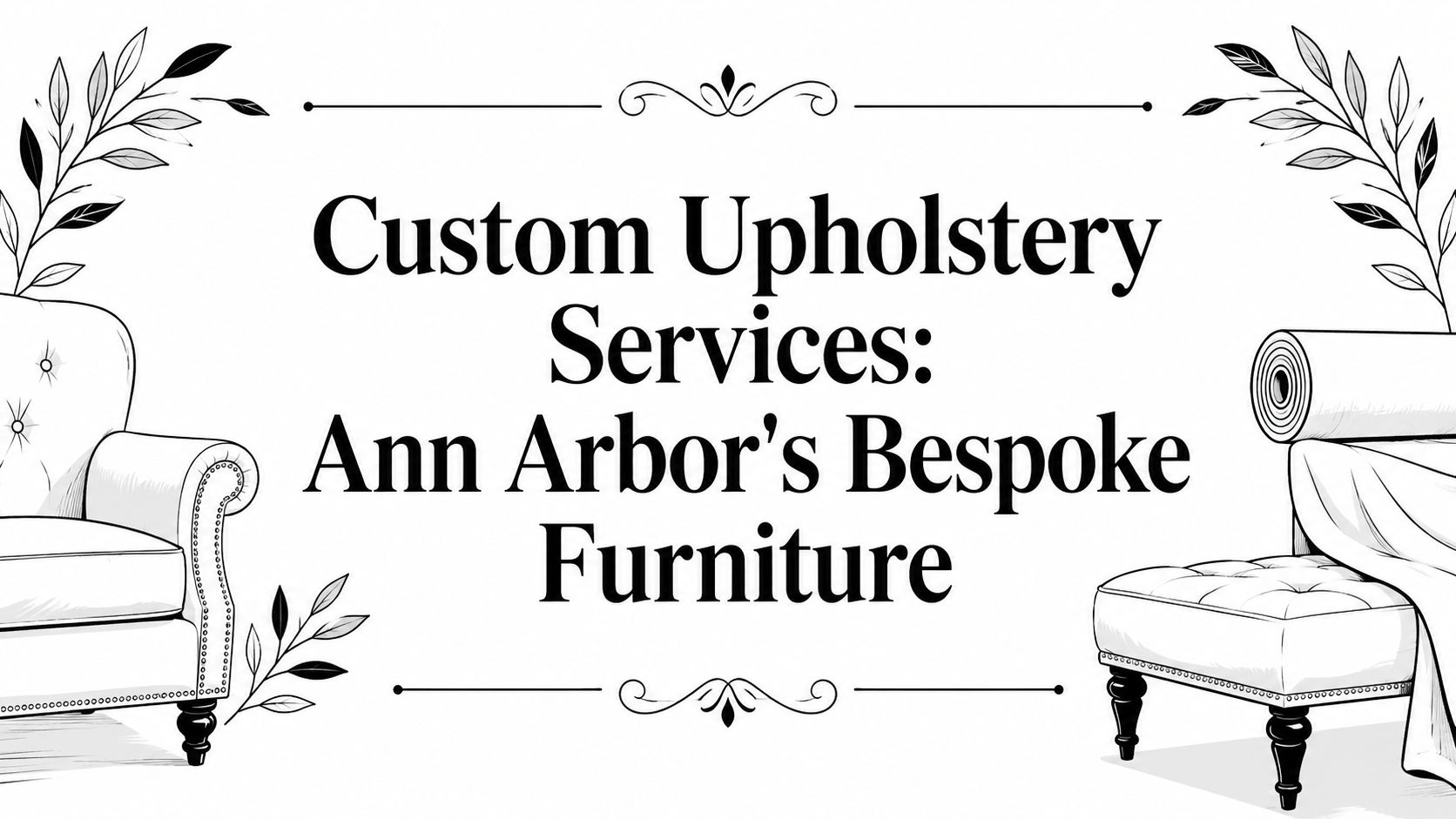
A worn seat cushion usually tells only part of the story. The fabric may be faded, the arms may show years of use, and the pattern may no longer fit the room, but the piece itself still holds something mass-market furniture rarely does. Familiar comfort, proper scale, and the kind of lived-in presence that belongs to a real home.
That's the crossroads many homeowners in Ann Arbor and across Southeast Michigan reach. Replace it and start over, or keep living with a piece that no longer reflects the room. There's a third path that often makes more sense for a forever home. Custom upholstery services can turn a well-loved chair, sofa, or bench into a bespoke investment with renewed comfort, stronger structure, and a finish that feels intentional again.
Custom work also fits a broader shift in how people buy furniture. The global upholstery services market was valued at USD 13.4 billion in 2024 and is projected to reach USD 20.0 billion by 2035, expanding at a 3.7% CAGR from 2025 to 2035, with North America expected to lead demand as more buyers seek customized and sustainable furniture solutions, according to upholstery services market projections.
Table of Contents
- Giving Your Cherished Furniture a Second Life
- What Exactly Are Custom Upholstery Services
- Your Custom Upholstery Journey Step by Step
- Made-to-Order Value vs Mass-Market Price
- The Tyner Advantage in Bespoke Design
- Caring for Your Newly Upholstered Furniture
- Common Questions About Custom Upholstery
Giving Your Cherished Furniture a Second Life
A common situation plays out the same way in many Southeast Michigan homes. A homeowner has an older armchair that still fits the corner by the window better than anything new. The seat feels right, the back supports the body well, and the proportions suit the room. But the upholstery is tired, the padding is uneven, and the piece no longer looks worthy of the space around it.
That's where custom upholstery services become more than repair work. They preserve the furniture people already love while giving it a fresh role in the home. Instead of settling for a cover-up or replacing a solid piece with something less substantial, the better move is often to rebuild it with purpose.
For a local family business serving Ann Arbor since 1957, that question has always been about more than appearance. Furniture carries memory. A dining chair may have belonged to parents. A reading chair may have held years of evening routines. A sofa may still be the center of every holiday gathering. Restoring those pieces with hand-crafted care respects both the object and the life built around it.
A cherished piece doesn't need to look old to prove it has history. It needs the right structure, the right materials, and a design that lets it belong in the next chapter of the home.
Before any project begins, dimensions matter. A room can handle a dramatic silhouette or a tighter profile, but only if the measurements are right. That's why it helps to review how to measure furniture before custom planning so the revived piece fits the space as naturally as it always did.
What Exactly Are Custom Upholstery Services
Custom upholstery services go far beyond pulling new fabric over an old frame. Real custom work is a blend of interior design, furniture construction, and practical problem solving. It can involve changing the look of a piece, improving the comfort, strengthening the structure, and tailoring the final result to the way a household lives.
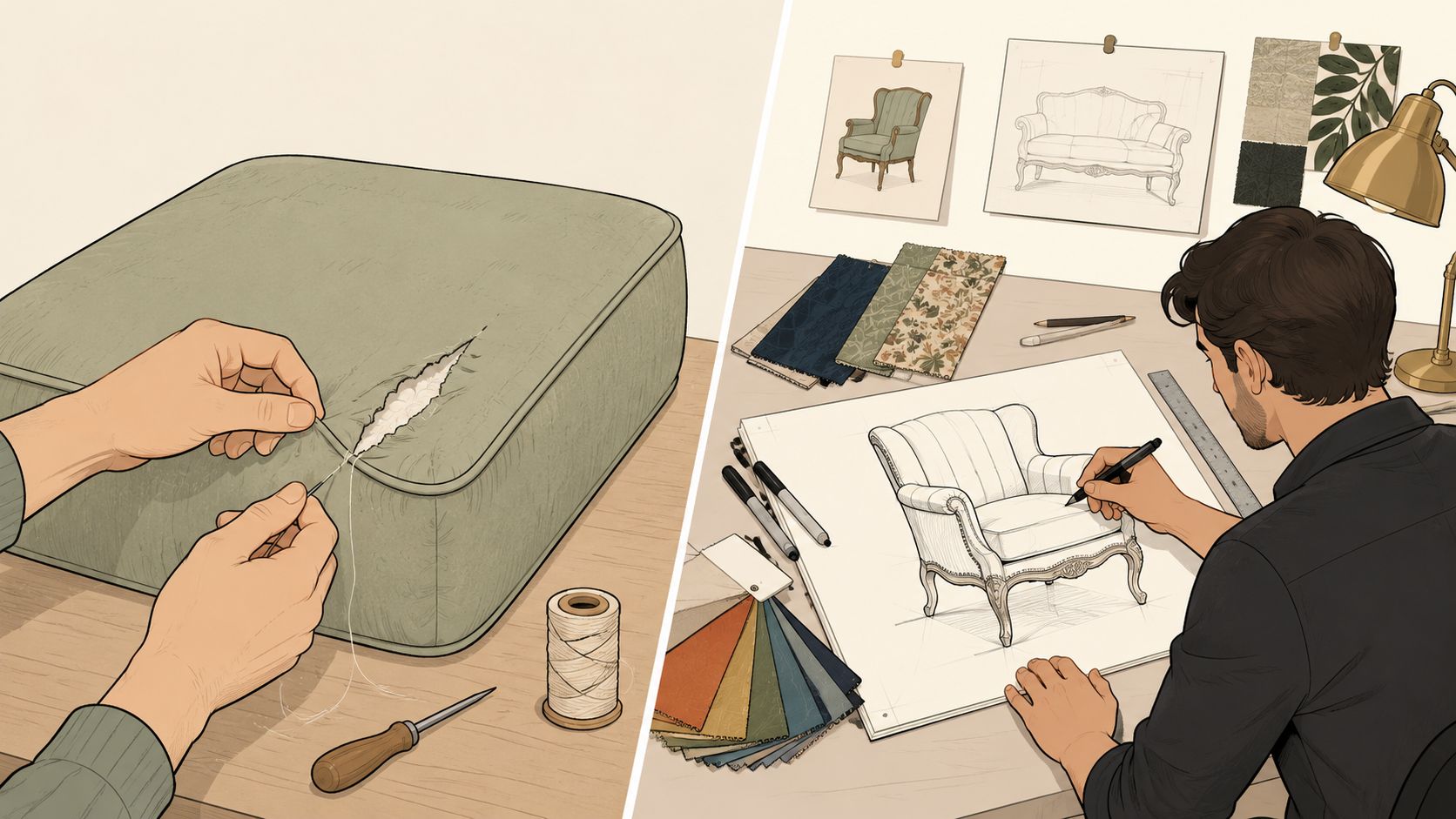
A simple recover replaces the visible textile. A bespoke upholstery project asks bigger questions. Should the seat sit firmer. Should the back feel more ergonomic. Does the silhouette need cleaner lines. Would a performance fabric work better than a delicate weave. Does the room call for quiet texture or a statement pattern.
Nearly 60% of consumers globally prefer personalized furniture options suited to individual preferences, according to upholstered furniture market data. That preference helps explain why more homeowners want made-to-order results instead of settling for whatever happens to be on the floor.
More than fabric selection
Fabric matters, but it's only one layer of the job. Custom upholstery services often include:
- Design alignment with the room's scale, color palette, wood tones, and daily use
- Comfort adjustments to seat feel, back support, arm padding, and cushion shape
- Construction review of joints, springs, webbing, decking, and foam
- Material coordination across trim, legs, welting, leather, or customized details
For homeowners comparing options, it helps to study upholstery material choices and how they perform before falling in love with a color alone.
Why it's different from replacement furniture
Mass-produced seating often asks the buyer to adapt to the piece. Custom work lets the piece adapt to the buyer. That's a meaningful difference in homes where comfort, proportion, and finish all matter.
It's also a more sustainable approach in many cases. Keeping a strong frame in use and rebuilding it well avoids the cycle of replacing furniture because the outside has aged. In practical terms, custom upholstery services are often the right fit when the bones are good, the scale is right, and the homeowner wants something personal rather than generic.
Pro tip
- Check the frame first: If the piece feels solid and sits well, it may be a strong candidate.
- Evaluate comfort carefully: If the cushion has collapsed but the shape still suits the body, the inside may need work more than the outside.
- Think beyond trend: The best bespoke projects create furniture that still feels right after the room evolves.
Your Custom Upholstery Journey Step by Step
The process feels much less overwhelming once it's broken into clear stages. Good custom work is deliberate. Each step affects comfort, durability, and how naturally the finished piece lives in the room.
A look at the showroom environment helps set that expectation.

Start with fit and function
The first conversation should focus on use before style. Is the chair meant for reading, conversation, or occasional seating. Will the sofa serve as a formal anchor or the family's daily landing spot. Those answers shape cushion firmness, back pitch, arm height, and fabric direction.
This is also where room size matters. In Ann Arbor homes, that can mean anything from a compact study to a wide-open great room. The piece needs to support the way people sit, move, and circulate around it.
For shoppers who want to understand the order path from selection to final specifications, getting started with custom order options can clarify what decisions come first.
Choose materials with your hands, not just your eyes
The process becomes tactile. A swatch can look elegant online and feel flat in person. A leather can appear polished in a photo but reveal the buttery feel of top-grain leather only under the hand. A woven fabric can add warmth through texture even when the color is quiet.
A strong selection process usually includes:
- Touch testing for softness, grain, weave, and body
- Light testing to see how color shifts from morning to evening
- Lifestyle matching for pets, children, entertaining, and daily wear
- Finish coordination with nearby wood, metal, rugs, and paint
Practical rule: The right material isn't the one that photographs best. It's the one that still feels right after repeated use.
Rebuild what you can't see
This is the part buyers don't always see, but it's the part that determines whether the investment pays off. In custom upholstery, the structural integrity and long-term comfort of a piece are primarily determined by critical steps such as frame reinforcement and foam replacement, rather than mere fabric application. Expert upholsterers prioritize these hidden mechanical upgrades to extend furniture life by decades, as explained in advanced custom upholstery construction guidance.
That work may involve tightening joints, reinforcing weak areas, replacing fatigued padding, and selecting high-density foam suited to the intended seat feel. A handsome fabric over a weak frame won't age well. A beautifully rebuilt interior changes how the piece performs every day.
Finish, inspect, and place it properly
The final stage is where tailoring shows. Seams should sit cleanly. Pattern placement should feel intentional. Cushions should fill the frame properly. The result should look settled, not strained.
A thoughtful installation also considers the room around it. Placement near direct sun, heat sources, or heavy traffic patterns will affect longevity. The best outcome is a piece that looks at home immediately and still feels dependable years later.
What usually works best
- Bring room details: Paint chips, rug photos, and wood samples make selection easier.
- Prioritize comfort first: A beautiful chair that doesn't sit well won't become an heirloom.
- Ask about the inside: Foam, springs, webbing, and joinery deserve as much attention as fabric.
Made-to-Order Value vs Mass-Market Price
The hardest part of the custom conversation is often the price tag at the beginning, not the value at the end. That's understandable. A newly upholstered piece can look, at first glance, more expensive than buying a replacement off the floor. But furniture shouldn't be judged only by entry cost. It should be judged by how long it performs, how well it's built, and how many years of satisfaction it gives back.
That's where cost-per-year becomes the more honest measure. While custom upholstery can cost 30 to 50% more upfront than showroom equivalents, it offers a 15 to 20 year lifespan compared to 5 to 7 years for mass-produced items, according to analysis on the value gap in custom upholstery. The higher opening number can make more sense once the full service life is considered.
Custom Upholstery vs. Mass-Market Furniture A Lifetime Value Comparison
| Feature | Custom Upholstery (Tyner Furniture) | Mass-Market Replacement |
|---|---|---|
| Upfront spending | Often higher at the start | Often lower at the start |
| Lifespan | 15 to 20 years when properly executed | 5 to 7 years is common |
| Construction focus | Frame, support, foam, and tailored finish all matter | Exterior appearance often drives the sale |
| Fit for the room | Made-to-order decisions allow closer alignment to the space | Buyers choose from preset sizes and looks |
| Comfort tuning | Can be adjusted for seat feel and ergonomic support | Comfort profile is usually fixed |
| Character | Preserves legacy pieces and creates heirloom value | Usually starts over without history |
The material story matters too. In living rooms, shoppers often think first about upholstery, but in bedroom and dining categories the same principle applies to the frame itself. Hand-crafted Amish solid wood furniture, with dovetail or mortise-and-tenon joinery and the weight of solid cherry wood or maple, holds up differently than lighter, mass-produced alternatives built around shortcuts. That same respect for structural integrity should guide upholstered purchases as well.
Buyers often regret paying twice for furniture. They regret paying once for durability far less often.
For households weighing a major purchase, why furniture purchases are high-consideration decisions is worth reading before focusing only on sticker price.
What doesn't work
- Shopping on fabric alone: Surface beauty can hide weak support.
- Ignoring lifespan: A lower initial total can become the more expensive choice over time.
- Treating all upholstery as equal: Recovering, rebuilding, and made-to-order design are not the same service.
The Tyner Advantage in Bespoke Design
Custom upholstery services are only as good as the design guidance and construction standards behind them. In Southeast Michigan, that matters because buyers aren't just looking for a pretty result. They're trying to create homes with staying power.
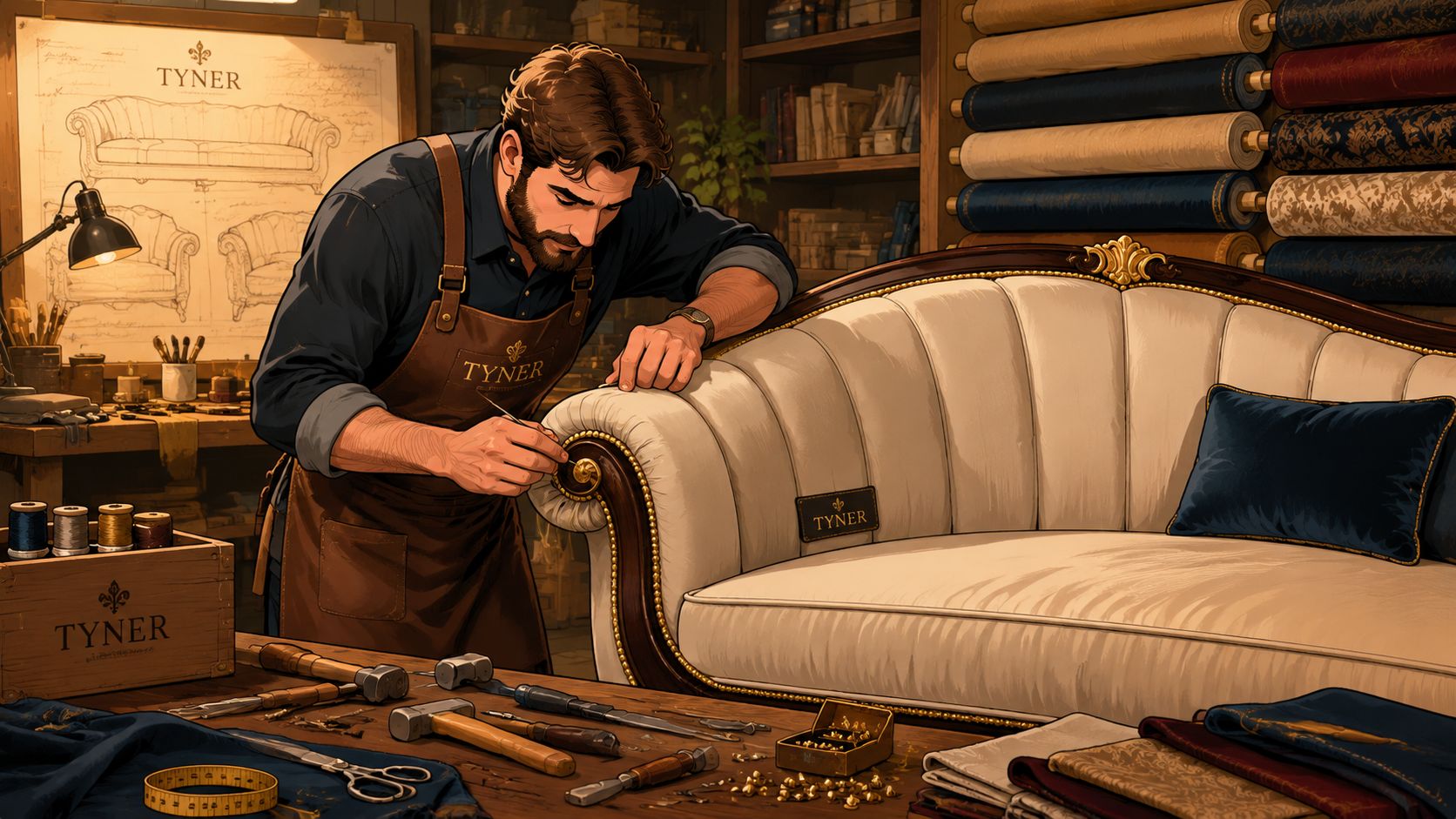
Customization starts after the floor sample
In-stock is just the beginning. A floor model can help confirm proportion or comfort, but bespoke value shows up in the choices beyond it. That includes fabrics, leather, cushion feel, silhouette details, and room-specific finishes. For shoppers exploring understanding custom furniture, it helps to think of upholstery not as a fixed product but as a designed object shaped around real use.
That same philosophy extends across categories. Canadel gives dining buyers made-to-order flexibility in finishes and configurations. Stressless brings personalized ergonomic seating with sizing that helps a recliner fit the body more naturally. Across the home, from the Home Office to Outdoor Spaces, the strongest selections are the ones that solve for both comfort and character.
Craft matters more than surface beauty
Professional custom reupholstery services typically cost between $800 and $3,000 per piece, with labor accounting for 50 to 70% of the total, according to custom reupholstery pricing and labor breakdowns. That labor isn't decorative overhead. It's the skilled work that shapes fit, seam quality, support, and longevity.
The same standards that make Amish hand-crafted bedroom and dining pieces so compelling also matter here. Joinery, frame integrity, hardwood structure, and thoughtful rebuilding all influence whether a piece remains dependable. The eye notices fabric first. The body notices construction over time.
One practical option for shoppers exploring made-to-order and hand-crafted categories in Ann Arbor is Tyner Furniture's approach to customization and quality. The store's South State St. showroom has served the community since 1957, and its offering spans upholstery, dining, bedroom, mattresses, home office pieces, and outdoor living.
Features that add real value
- Bespoke choice: Hundreds of fabrics and top-grain leathers support personal interior design decisions.
- Ergonomic comfort: Stressless sizing helps align recliner comfort with the body, not just the room.
- Solid wood standards: Amish hand-crafted dining and bedroom pieces bring material integrity into the same conversation as upholstery.
- Easier planning: Special Financing and the Low Price Promise can reduce the barrier to investing in higher-quality furniture.
Caring for Your Newly Upholstered Furniture
A well-upholstered piece should feel settled into the home, but it still needs consistent care. Good maintenance protects both appearance and structure. It also preserves the comfort that made the investment worthwhile in the first place.
Fabric and leather don't age the same way, so care should match the material. High-performance fabric usually benefits from regular vacuuming with a soft brush attachment and quick attention to spills with a clean, absorbent cloth. Top-grain leather benefits from gentle dusting, prompt blotting, and a stable environment that doesn't swing between dryness and heat.
Everyday habits that protect the investment
- Rotate cushions: This helps seating wear more evenly and keeps the silhouette balanced.
- Watch the sunlight: Direct afternoon sun can dull color and dry surfaces over time.
- Clean gently: Harsh scrubbing can roughen fibers or damage leather finish.
- Mind the frame: Don't drag upholstered pieces across the floor or lean repeatedly on one arm.
A newly restored sofa or chair often looks so crisp that families want to preserve it by barely using it. That's not the goal. Heirloom furniture should be lived with. The goal is steady care, not avoidance.
Furniture lasts longer when households treat maintenance as routine rather than rescue.
This is also where room planning helps. In homes throughout Ann Arbor and Southeast Michigan, a piece placed a few feet away from strong window exposure or heat output will usually age more gracefully than one placed for appearance alone.
Common Questions About Custom Upholstery
Homeowners usually have the same final questions before moving forward. Most of them come down to timing, value, and confidence in the choices.

How long does a custom upholstery project usually take
Custom upholstery production timelines typically span 6 to 8 weeks from initiation to completion, and professional work is often backed by a one-year guarantee against defects, according to custom upholstery timeline and warranty details. Timing can vary with fabric availability, project complexity, and whether the internal structure needs significant rebuilding.
Is a piece always worth upholstering
No. A weak frame, poor original construction, or a shape that no longer suits the room can make replacement the smarter path. But a structurally promising piece with the right scale and comfort profile is often worth serious consideration.
What should a homeowner bring to the first conversation
Photos of the room help. So do paint colors, rug samples, wood tones, and a clear sense of how the furniture is used. A formal sitting room calls for different choices than a den where people lounge every night.
Can customer-provided materials be used
Sometimes, but it's worth asking how that affects suitability and warranty terms. Not every textile is appropriate for upholstery, and some materials look beautiful in a swatch but perform poorly in daily use.
How can design choices feel less overwhelming
Start with function, then narrow the visual details. Seat comfort, room scale, and durability should come first. Once those decisions are settled, fabric, trim, and finish choices become much easier.
A quick decision checklist
- Keep it if the frame is sound and the proportions still work.
- Rebuild it if comfort has faded but the piece still belongs in the room.
- Replace it if the structure and the style are both fighting the space.
For homeowners ready to make a lasting investment in comfort and design, Tyner Furniture is a practical next stop. Visit the Ann Arbor showroom on South State St. for a proper sit test, compare fabrics and leathers in person, and explore made-to-order possibilities from upholstery to Canadel dining, Stressless seating, bedroom collections, Home Office pieces, and Outdoor Spaces. If an in-person visit isn't convenient yet, browse the online Quick Specs for special orders and start narrowing the details before stepping into the showroom.