High End Sectional Sofas A Buyer’s Guide


You're probably doing what most thoughtful furniture shoppers do. You open ten tabs, save a few sectionals that all look similar, then wonder why one costs so much more than another. At some point, a deeper question shows up. Not “Which one is prettiest?” but “Which one will still feel good and look good years from now?”
That's the right question.
A sectional usually becomes the center of daily life. It holds movie nights, holiday conversations, naps, homework, and the quiet hour at the end of a long day. Buying one can feel overwhelming because so much of the difference between an average sofa and a high-end one is hidden under the fabric.
At a store with roots in Southeast Michigan since 1957, we've seen the same pattern for decades. Shoppers often focus on color first, then size, then price. But the smartest buyers ask something else. What fails first, and can it be fixed? That's where long-term value lives.
Table of Contents
- Your Guide to a Lasting Furniture Investment
- The Anatomy of a High-End Sectional
- Finding the Perfect Fit for Your Space
- The Art of Bespoke Upholstery and Finishes
- Integrating Ergonomics and Modern Features
- Making a Lifetime Investment Accessible
- Your Next Steps to Finding the Perfect Sectional
Your Guide to a Lasting Furniture Investment
A high-end sectional isn't just a larger sofa with a bigger price tag. It's a piece built for repeated use, changing households, and years of wear. Many shoppers ask what high-end offers them in durability, and one of the clearest answers is serviceability. People want to know whether a sectional can be re-covered or re-cushioned later, which is a question many mass-market retailers leave only partly answered, as noted in this discussion of customization and quality in sectional shopping.
That matters because the purchase is rarely impulsive. It's a major household decision, much like choosing a mattress, dining set, or home office furniture. If you want a useful framework for that kind of decision-making, Tyner's guide to high-consideration furniture purchases is worth reading before you commit.
Start with serviceability
Here's where readers often get confused. They assume “luxury” means softer cushions, trendier shapes, or a designer name. Those can be part of the story, but they don't define lasting value.
What separates better high end sectional sofas from short-cycle purchases is usually this:
- Repair potential means parts can be replaced instead of the whole sectional being discarded.
- Modular thinking lets a room change without forcing a full replacement.
- Material honesty gives you a better sense of what you're buying beneath the upholstery.
- Local guidance helps you compare real construction, not just website photos.
Practical rule: If a store can describe how the sectional is built, what wears first, and what can be replaced later, you're probably looking at a more serious piece of furniture.
Delivery planning also deserves attention earlier than generally realized. Large sectionals often require careful maneuvering through narrow entries, stair turns, and tight hallways. Before ordering, it helps to review Gentle Giant's furniture removalist tips so you can think through access, protection, and handling the way professionals do.
What to inspect under the cushions
Style pulls you in. Construction keeps you happy.
When neighbors visit our South State St. showroom in Ann Arbor, many are surprised by how differently two sectionals can feel even when they look nearly identical from across the room. One sits level and supportive. Another already feels tired. The difference is usually hidden in the frame, suspension, and cushions.
That's why a sectional should be judged like a long-term household tool, not a seasonal accessory. In Southeast Michigan homes, where family rooms do real work every day, craftsmanship beats flash every time. And since Tyner serves everything from the living room to the home office and outdoor spaces, the same principle carries across the whole home. Buy once with care, and you'll live with the result for a long time.
The Anatomy of a High-End Sectional
A well-made sectional proves its value after years of daily use, not on delivery day. If you walk into a showroom in Ann Arbor and two sectionals carry very different price tags, the smarter question is often how many comfortable, trouble-free years each one is likely to give you. That is how cost per year starts to make more sense than sticker price alone.
From the frame up
The frame is the skeleton of the sectional. If that skeleton is weak, the fabric and cushions merely hide the problem for a little while.
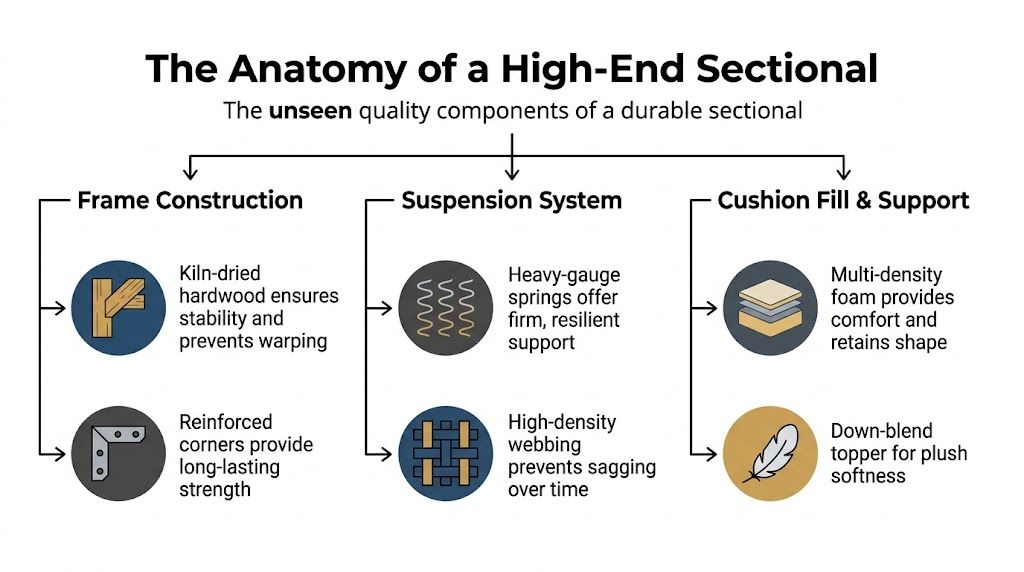
Better sectionals usually start with kiln-dried hardwood or other furniture-grade engineered wood in the right places, joined and reinforced so the piece stays square under repeated weight. The Craftmaster Furniture buying guide explains that frame construction, spring system, and cushion design are the core parts to evaluate when you want furniture that holds its comfort and shape over time.
That matters because sectional seating spreads stress unevenly. Corners, chaise ends, and connection points do more work than many shoppers realize. In a large family room, those areas get tested every single day.
For shoppers comparing local craftsmanship with mass-produced imports, ask specific questions. What is the frame made of. How are the corners blocked. Are the sectional connectors heavy-duty metal. Can the cushions or covers be replaced years from now. A store team that can answer those questions clearly is usually showing you a piece built for real life, not just for a pretty floor display.
A closer look at what to inspect in your next sofa or chair can help you prepare better questions before you visit a showroom.
What to inspect under the cushions
Lift the seat cushions and pay attention to what you cannot see in a product photo.
Look for these signs of lasting construction:
- Kiln-dried hardwood framing that helps the sectional resist twisting and seasonal movement.
- Reinforced corners and connection points that support modular sections without wobble.
- A quality suspension system, such as sinuous wire or hand-tied support, that keeps the deck from sagging unevenly.
- Cushions with replaceable cores or refillable inserts so comfort can be refreshed without replacing the entire sectional.
That last point matters more than many buyers expect.
A high-end sectional is often serviceable in layers. The frame may last for decades, while cushions and upholstery wear on a shorter cycle because they absorb body weight, skin oils, sunlight, and constant friction. That is not a flaw. It is similar to replacing tires on a well-built car. You maintain the parts that wear first and keep the stronger structure in use much longer.
In a showroom such as Tyner's, sit in more than one spot before you decide. Test the corner seat, the middle seat, and the chaise. Put a hand on the arm and gently shift your weight. A strong sectional should feel quiet, level, and settled. It should not rack, sway, or sound loose.
Style still matters, of course. Many homeowners pair construction questions with fabric and room-design ideas, and these expert living room decor tips can help you think about the finished look. But the order matters. First confirm the bones. Then choose the surface details that make the piece yours.
That is where customization adds real value. A sectional built by a maker that offers fabric, cushion, depth, and configuration choices lets you match the piece to your room and habits instead of forcing your family to adapt to a standard model. Over a long ownership period, that fit often does more for satisfaction than chasing the lowest price.
Finding the Perfect Fit for Your Space
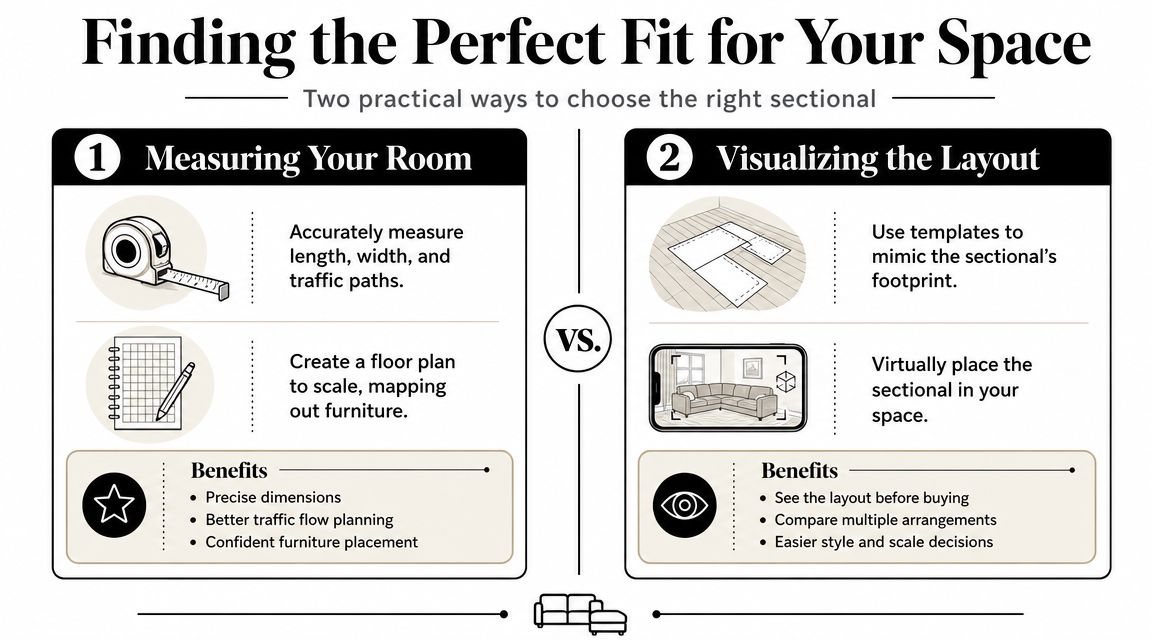
A sectional can look perfect online and still be wrong for your room. The best fit comes from planning the footprint, circulation, and seat depth before you fall in love with a silhouette.
Measure the room before you shop
Start with the room itself, not the sectional listing. Measure wall lengths, windows, vents, traffic paths, and where doors swing. Then measure entry points into the home, including hallways, stair landings, and turns.
A detailed walkthrough in Tyner's measuring guide for furniture is especially useful if you're ordering a made-to-order piece that won't be easy to swap.
For the sectional itself, dimensional benchmarks help. Overall width commonly falls between 90 inches and 168 inches, while overall depth or length typically ranges from 94 inches to 156 inches, according to Wayfair's sectional measuring guide.
Seat depth deserves special attention because it changes how the sectional functions. That same guide classifies depth this way:
- Shallow is under 21 inches
- Standard is 21 to 28 inches
- Deep is 28 to 35 inches
- Extra-deep is 35 inches or more
Choose the layout that matches real life
This part is more personal than technical. The right shape depends on how you use the room.
If your household uses the living room for conversation and everyday sitting, a standard-depth seat usually supports a more upright posture. If the sectional is going in a media room or family room where people stretch out for long periods, deep or extra-deep seating often makes more sense.
Room-planning shortcut: Match seat depth to behavior, not to trend. A dramatic deep seat can look inviting, but it may not feel supportive for every member of the household.
For room shape, think in functions:
- L-shaped sectionals work well in corners and open-plan rooms because they define space without closing it off.
- U-shaped sectionals create a gathering zone, but they need more room to breathe.
- Chaise layouts give you the feel of a sectional with a lighter footprint.
- Modular sectionals are often the most practical answer for awkward rooms, changing floor plans, or homes where you may move.
Curved and angled seating can also help in unusual rooms, but only if the shape improves flow rather than stealing floor area. If you're refining the full room around the sofa, these expert living room decor tips can help you think through balance, layering, and furniture placement after the sectional is chosen.
Readers often ask whether a bigger sectional always gives more usable seating. Not necessarily. In some Ann Arbor homes, especially open-plan spaces with walkways cutting through the room, a lighter modular arrangement seats people better because it preserves movement.
The Art of Bespoke Upholstery and Finishes
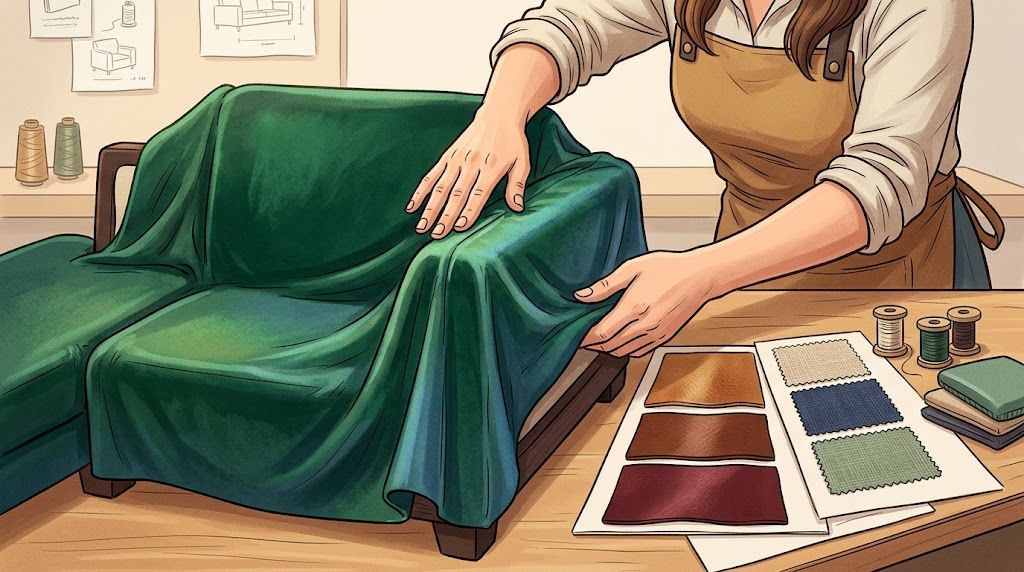
The upholstery is the part you see first, touch first, and maintain for years. It shapes comfort, mood, and how forgiving the sectional feels on an ordinary Tuesday night.
Why custom upholstery changes the outcome
In-stock furniture has a role. It helps people furnish a room quickly and see a finished look on the floor. But with high end sectional sofas, in-stock is often just the starting point.
Customization changes the outcome because it removes the small compromises that become big annoyances later. Maybe you love the frame but not the fabric. Maybe your room needs a warmer tone, a cleaner texture, or a leather that won't feel too slick in winter. A made-to-order approach lets you adjust the piece to your home instead of adjusting your home to the piece.
At Tyner Furniture, that broader custom mindset extends beyond sectionals to brands like Canadel for dining and Stressless for ergonomic seating. The point isn't endless choices for their own sake. The point is fit, function, and long-term satisfaction. If you want a deeper primer, this upholstery materials guide is a helpful place to start.
Leather, fabric, and the feel of daily living
Top-grain leather has a distinct appeal. It offers that buttery hand, a refined look, and a surface that often gains character with use. Performance fabrics bring a different strength. They can feel soft and relaxed while being easier to live with in busy households.
A few practical distinctions matter:
- Leather suits buyers who want a refined finish, visible patina, and easier surface wipe-downs.
- Textured woven fabrics soften the room visually and can feel warmer and more casual.
- Performance fabrics are often a smart match for homes with children, pets, or frequent entertaining.
- Color and texture affect more than style. They change how large the sectional appears and how much everyday wear shows.
The best upholstery isn't the fanciest one. It's the one that still feels right after years of touch, sunlight, and routine living.
Once the sectional arrives, styling matters too. Throws and accent textiles can soften a structured silhouette or add seasonal texture. For a simple example, these effortless faux fur styling tips show how a sofa can look more layered without feeling overdone.
In a showroom, run your hand across the fabric in both directions. Sit in the same spot twice. Rest your arm on the track arm or roll arm. Good upholstery doesn't just photograph well. It invites use.
Integrating Ergonomics and Modern Features
A sectional should support the way your body sits, lounges, and gets up again. Good looks matter, but comfort that works with your posture matters more once the newness wears off.
Comfort that supports the body
Standard seating often asks everyone to adapt to one fixed position. Better ergonomic seating does the opposite. It supports a range of body types and sitting habits through head support, seat angle, back design, and movement.
That's one reason shoppers in Ann Arbor often respond strongly to Stressless seating once they try it in person. The appeal isn't only softness. It's the way ergonomic design can feel more natural through the back and shoulders during longer sitting sessions.
If posture is part of your buying decision, Tyner's guide to improving posture while sitting gives useful context for what to notice during a sit test.
A few things to compare side by side in the showroom:
- Fixed back vs. adjustable headrest for neck support during reading or TV viewing
- Standard stationary seat vs. recline for different levels of leg and lumbar relief
- Shallow support vs. lounge posture depending on who uses the sectional most
- Firm seat platform vs. plush sink-in feel based on ease of entry and daily comfort
Features worth paying for
Modern high-end sectionals often include more than seating. Many now function as multifunctional living-room systems with features such as built-in storage, reclining options, adjustable headrests, wireless phone charging, and USB ports, as described in Urner's overview of sectional sofa features.
That doesn't mean every feature is worth the upgrade for every home.
Choose features that solve real habits:
- Storage consoles make sense if blankets, remotes, or chargers are always drifting around the room.
- Power recline fits households that use the sectional like primary evening seating.
- USB or charging ports help if devices are always nearby and outlet access is awkward.
- Adjustable headrests are especially useful when the same room serves both conversation and screen time.
The strongest versions of these features are paired with sturdy framing and modular replaceability. Fancy add-ons on a weak base don't create value. They just add complexity.
Making a Lifetime Investment Accessible
A family in Ann Arbor buys a sectional for movie nights, visiting relatives, sick days, homework, and ordinary Tuesday evenings. Ten or fifteen years later, that piece has carried far more than its original price tag. That is the better way to judge a high-end sectional. By what it costs over the years you live with it.
Think in cost per year
Cost per year gives you a clearer lens than sticker price alone. A $9,000 sectional that holds its shape, stays comfortable, and still fits your home after 15 years costs about $600 per year. A $3,000 sectional that sags, pills, or needs replacing in 5 years also costs about $600 per year. The difference is what you live with every day. Better support, better tailoring, better materials, and far less disruption.
That is why showroom shopping matters so much for this category. In a place like Tyner's in Ann Arbor, you can ask the questions that reveal long-term value. Was the piece bench-built or mass-produced? Can the configuration be adjusted later if you move? Are cushion cores, covers, or modules replaceable? Local and made-to-order programs often answer those questions better than quick-ship furniture because they are built with service and customization in mind.
A well-made sectional also earns its keep by adapting to life changes. New home. Growing family. Different paint colors. A room that shifts from formal sitting area to true everyday living space. Custom upholstery and thoughtful construction give you more ways to refresh the look without starting over from zero.
If the right sectional fits your home but not this month's cash flow, Special Financing can make the purchase more manageable, subject to credit approval. Paired with a Low Price Promise, it can help households choose the piece they want to keep rather than settling for one they expect to replace.
Protect what you buy
Care matters, but it does not have to be complicated.
- Rotate cushions when appropriate so wear develops more evenly.
- Keep upholstery out of harsh direct sunlight when possible to help preserve appearance.
- Follow the cleaning code for the fabric or leather instead of guessing with household products.
- Address cushion or cover issues early before a small comfort problem becomes a larger one.
A sectional works like a good pair of leather boots or a solid wood dining table. Steady care keeps the materials performing the way they were built to perform.
For many Southeast Michigan households, this approach represents the practical sweet spot. Buy with a long horizon. Check the details in person. Choose craftsmanship that can be maintained, refreshed, and enjoyed for years, so its value shows up in daily comfort and a lower cost per year.
Your Next Steps to Finding the Perfect Sectional
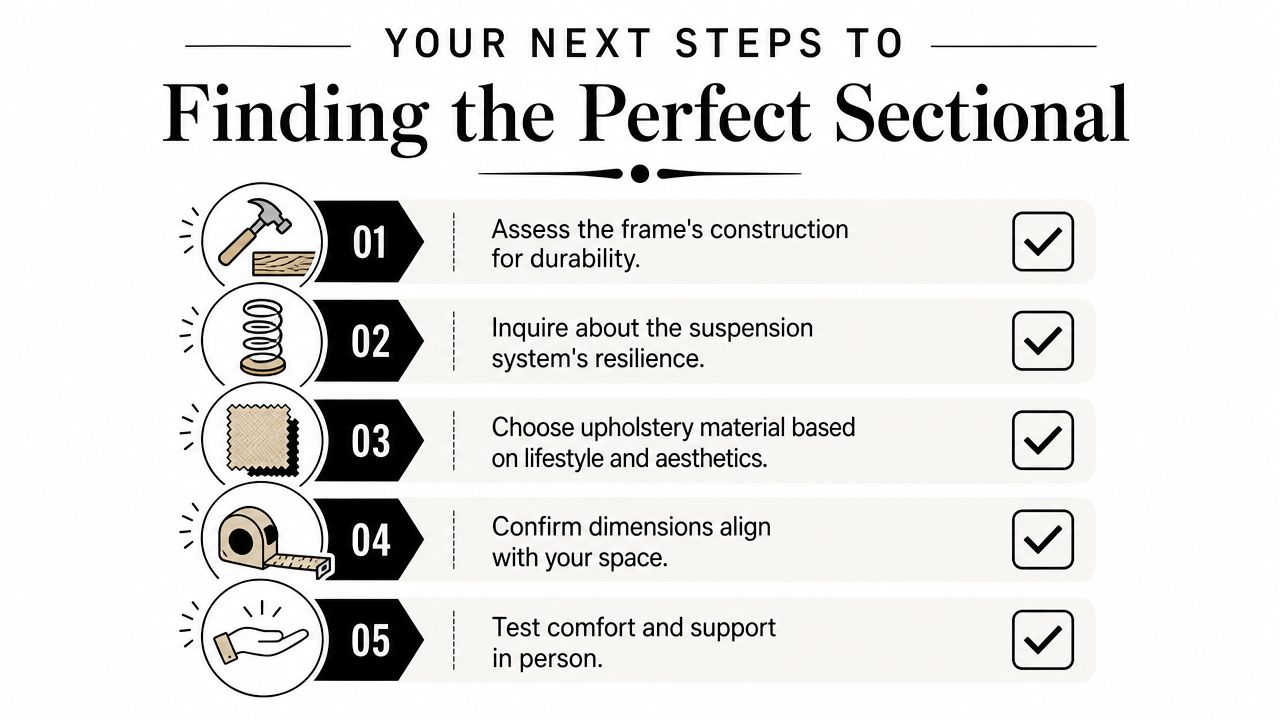
Good sectional shopping gets easier once you know what to ignore. Don't get distracted by styling alone. Start with structure, fit, comfort, and the details you can verify in person.
A simple in-store checklist
Bring this checklist with you when you shop:
-
Check the frame
Ask what the frame is made from and how the corners and connections are reinforced. -
Ask about the suspension
You want to know what supports the cushions and how the sectional resists sagging. -
Match the layout to your room
Confirm dimensions, traffic flow, and whether the sectional supports the way your household lives. -
Choose upholstery for real life
Pick the finish that fits your habits, not just your mood board. -
Do the sit test
Sit upright. Lounge. Try the corner. Try the chaise. Notice how easy it is to get up.
In person, details become obvious. You feel the seat depth. You notice whether the arm height works for relaxing. You can compare the hand of leather against the softness of fabric and decide what belongs in your home.
That's why the final step matters most. Visit a showroom. Spend time with the furniture. Let your body tell you what the spec sheet can't.
If you're ready to narrow the field, visit Tyner Furniture on South State Street in Ann Arbor for a proper sit test, or browse the online Quick Specs for special orders. Since 1957, the showroom has helped Southeast Michigan shoppers compare craftsmanship across the home, from living room seating and Amish hand-crafted dining to home office, bedroom, and outdoor spaces. Bring your room measurements, your questions, and your everyday habits. A good sectional should fit all three.