Amish Furniture Made to Order: Your 2026 Buyer’s Guide


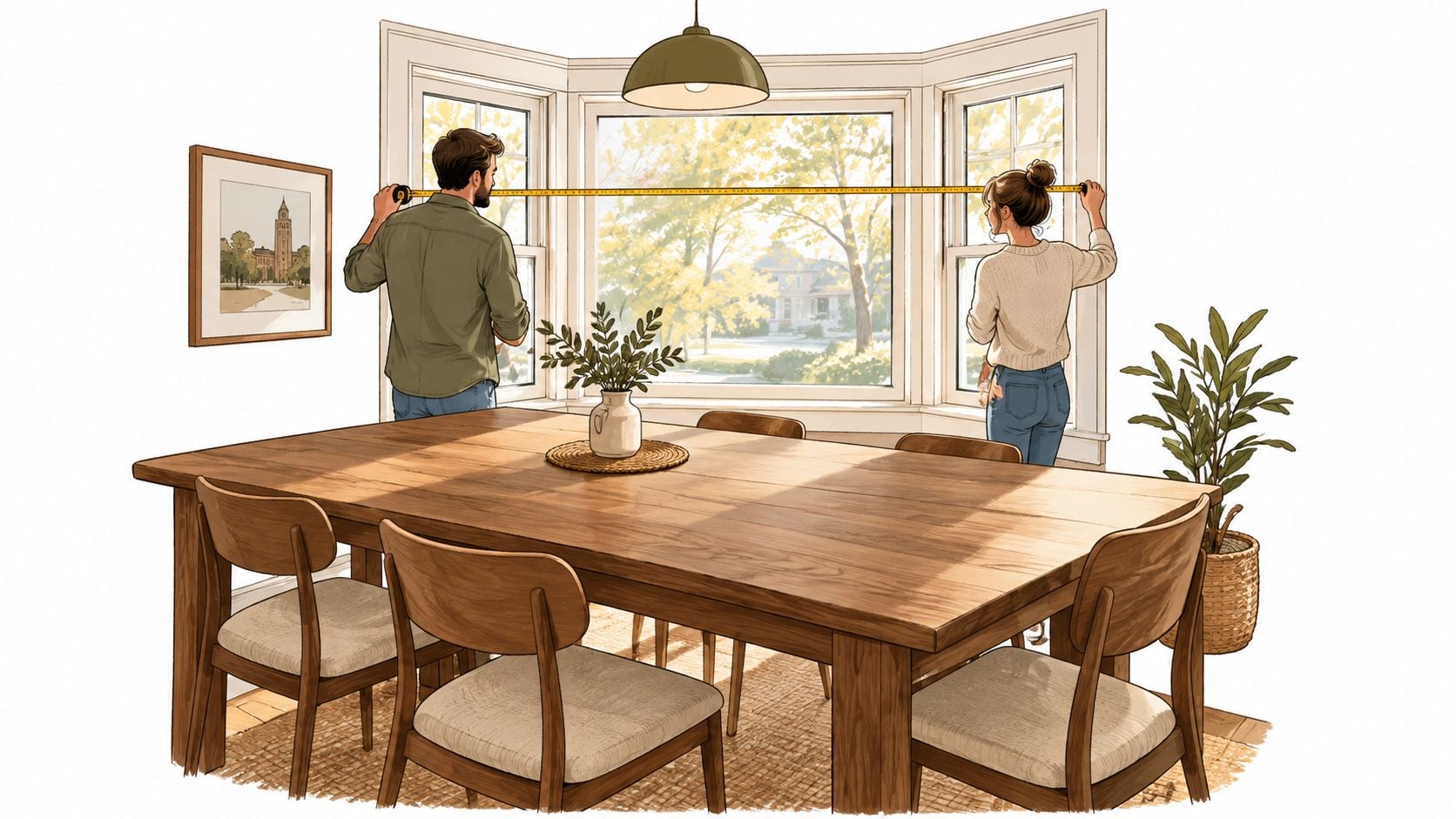
A couple in Ann Arbor can find a dining table they like and still discover that it fails the final test. The top may run into a bay window, the chair count may not work for family dinners, or the stain may fight with the existing floor. That's the point at which Amish furniture made to order stops being a style choice and becomes a practical design decision.
The right piece should feel substantial, fit the room precisely, and remain serviceable long after the renovation dust has settled. For Southeast Michigan homeowners, that means looking beyond appearance and asking about workshop practices, joinery, moisture control, customization, delivery timing, and the total cost over the furniture's useful life.
What Made to Order Really Means in Amish Furniture
The Ann Arbor couple with the awkward bay window doesn't need another standard table. They need a table with a specific length, a manageable depth, enough seating for the household, and a finish that works with the floor. An in-stock model is only the beginning. A genuine made-to-order piece allows the buyer to settle dimensions, wood species, stain, hardware, and sometimes the edge profile before production starts.
That differs from choosing one of a few preset options from a mass-market catalog. The workshop builds the order around the approved specifications instead of pulling a finished item from a container or warehouse. Depending on the maker, customers may also submit a sketch or reference image for a requested design, although every detail should be confirmed in writing before a deposit.
The four decisions that matter
A serious order comes down to four questions:
- Workshop and joinery: Who builds the piece, and which joints carry the load?
- Wood species: Will the buyer choose cherry, oak, maple, walnut, or another available hardwood?
- Finish and details: Which stain, sheen, hardware, edge, and upholstery coordinates belong in the room?
- Timeline: When does production begin, and what must happen before delivery?
Amish furniture's modern identity grew from regional woodcraft traditions across Pennsylvania, Ohio, and Indiana. It attracted wider attention during the 1920s as American folk art received stronger recognition, while related woodworking traditions, including the Jonestown School in Pennsylvania and Indiana furniture making, had already developed over earlier generations. That background helps explain why these pieces are presented as heirloom furniture, not disposable home goods. The history of Amish furniture also shows why family workshops and solid wood remain central to the category.
At the South State St. showroom, a shopper can compare the weight, grain, movement, and construction of a hand-crafted piece with ordinary showroom stock before signing an order. Tyner Furniture has served the community since 1957, and its selection extends from the Home Office to Outdoor Spaces. That local legacy matters when a custom order needs clarification after the deposit.
How Amish Joinery and Construction Differ From Flat Pack Furniture
Before judging whether a piece looks handcrafted, check how the structure transfers weight and resists movement. A solid cherry side chair should feel dense rather than hollow or flimsy. A drawer should travel smoothly and stay square under load. A dining table should resist racking when someone leans against it.
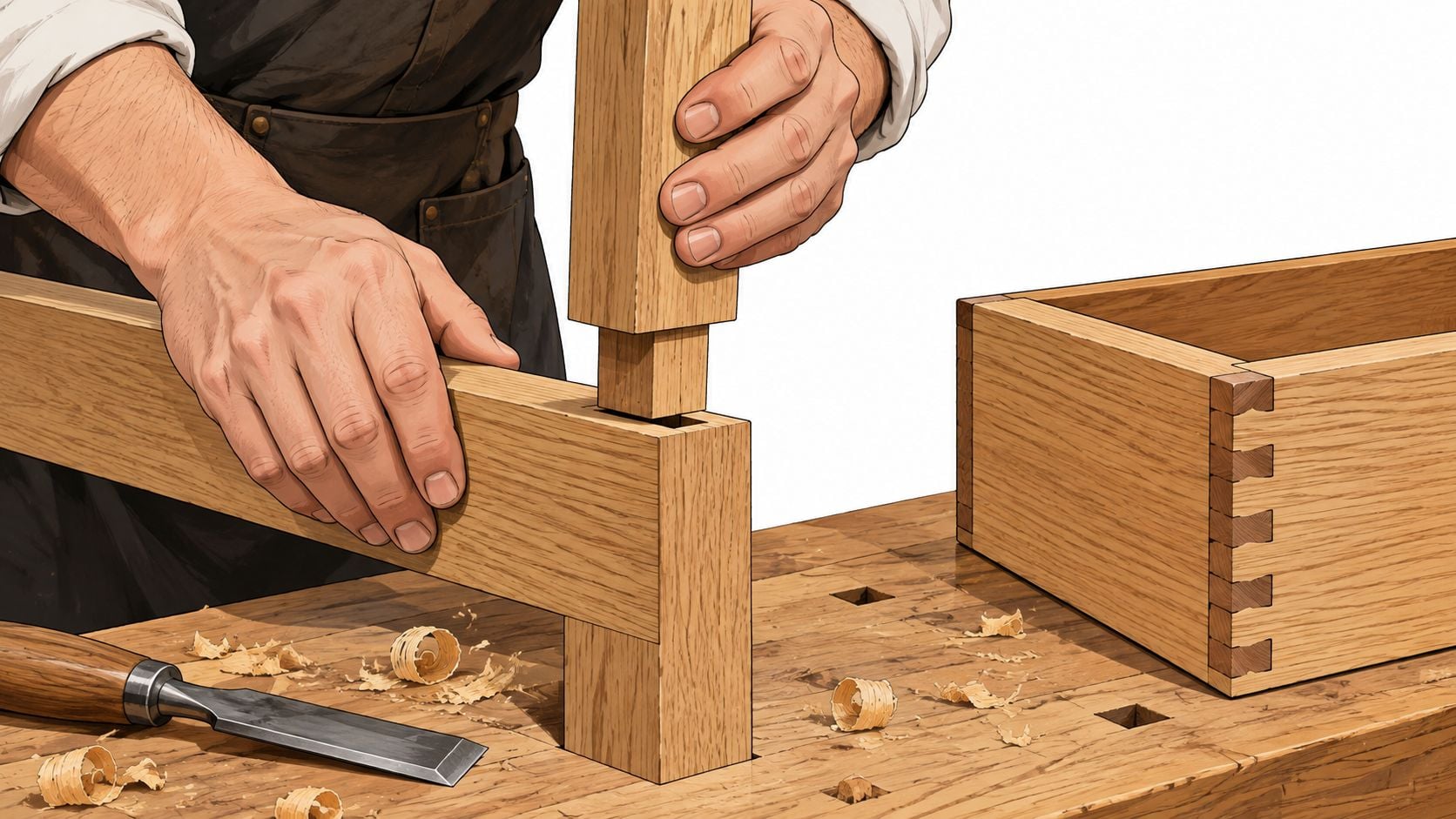
Mortise-and-tenon construction suits table aprons, chair frames, bed rails, and other load-bearing components. The tenon fits into a matching mortise, creating mechanical engagement that resists racking, the sideways distortion that pushes a frame out of square. Dovetail joints solve a different problem. Their tapered shape resists withdrawal, which makes them well suited to drawer boxes exposed to repeated pulling and loaded contents.
What shoppers should touch and inspect
A showroom inspection reveals more than a broad “handcrafted” label:
- Open a drawer fully. Look for dovetail construction, an even fit, and a box that remains square.
- Push gently on a chair or table corner. Excessive side-to-side movement needs an explanation.
- Inspect wide solid panels. Ask whether they float inside the frame instead of being rigidly glued across the grain.
- Ask about grain direction. Components should match their intended loads and allow for seasonal movement.
- Confirm the adhesive and joint details. A well-fitted joint should maintain mechanical engagement as wood changes dimension.
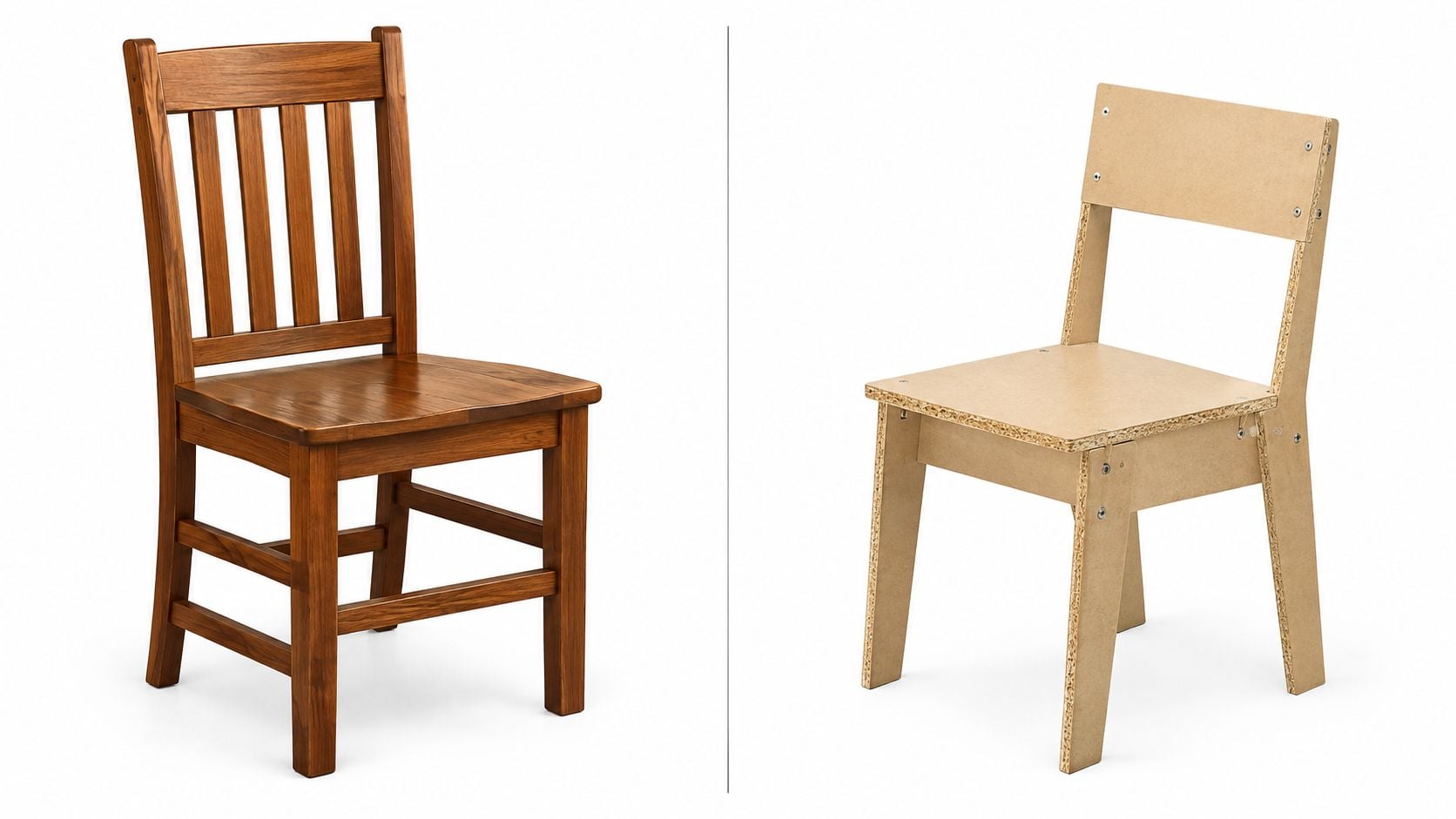
Flat-pack furniture often uses engineered panels, staples, screws, corner blocks, or rigid adhesive connections. These methods support efficient assembly, but they reveal less about the load path and can limit future repair. A piece may wobble after a move. A solid frame can often be re-glued or adjusted by a qualified repair professional.
Practical rule: Before approving a custom order, require the maker to identify each major joint, explain the grain orientation, and describe how the design handles seasonal movement.
Made-to-order construction also lets the workshop size aprons, rails, shelves, and supports around the load you describe. A long dining table may need additional support. A wide shelf may call for thicker stock or an intermediate support to limit deflection. Ask these questions before the deposit, while changes are still straightforward.
The mortise-and-tenon construction guide provides useful language for a showroom visit. You do not need to memorize woodworking terminology. You need enough clarity to confirm that the visible beauty rests on a sound load path.
Why Moisture Control Is the Hidden Spec in Solid Wood Orders
A wide dining table can leave an Ann Arbor showroom looking perfect and develop a gap, cup, or split after its first heating season. The hidden variable is moisture control, which belongs in the order specification alongside the wood species and finish. The USDA Forest Products Laboratory guidance on wood moisture identifies 6% to 8% moisture content as a common kiln-drying range for hardwood furniture and cabinetry intended for conditioned interiors across much of the United States.
Wood continues responding to its room after construction. Rising relative humidity makes it swell, while falling humidity makes it shrink. Movement occurs mainly across the grain, so a broad tabletop needs a construction method that allows controlled movement rather than trapping the panel in place.
Southeast Michigan gives buyers a practical reason to ask specific questions. Heated winter interiors can become dry, and humid summers raise indoor moisture. A tabletop spanning a room may move through those seasons even when its finish remains intact.
Put these details in the order
Ask the maker to explain four parts of the construction:
- Floating panels: Cabinet sides, doors, and tabletops may need space to move inside their frames.
- Elongated fastener holes: These let a top expand and contract across its width while staying secured.
- Tabletop clips: Proper clips hold the top while accommodating cross-grain movement.
- Frame clearance: Small allowances at joints reduce stress on glue lines.
Ask about acclimation as well. Components should be prepared near the expected service moisture level before final assembly, especially when the finished piece will enter a home with different conditions from the workshop.
A finish slows moisture exchange, but it cannot stop wood movement. Rigidly gluing a wide solid panel across its grain can contribute to splitting, cupping, or joint failure. The surface may still look flawless while the structure underneath struggles.
Before paying the deposit, get three answers in writing: the moisture-content target, the method used to attach the top, and whether the panels can float. Those answers distinguish a considered solid-wood specification from a finish-led sales promise, while giving you a useful record if the piece behaves differently after delivery or moves into another room.
Amish Solid Wood Compared to Mass Produced Furniture
A showroom can make almost any table look convincing. Run your hand along the edge, inspect the joinery, and ask what happens after damage. That is the comparison that matters once the deposit is paid.
| Buyer concern | Made-to-order Amish piece | Typical mass-produced alternative |
|---|---|---|
| Material integrity | Solid North American hardwood can show continuous grain and substantial heft | Veneer, particleboard, laminate, or engineered cores may be used |
| Load path | Mortise-and-tenon frames and fitted joints transfer loads through the structure | Staples, screws, blocks, and adhesive-heavy connections may carry the structure |
| Fit | Dimensions can be adapted to a room, opening, or seating need | Standard dimensions restrict the solution |
| Repair | Components and joints can often be evaluated, re-glued, refinished, or replaced | Damaged panels may be difficult to restore economically |
| End of use | A serviceable piece can move to another room or household | A failed engineered panel may have fewer practical repair options |
The difference becomes clear at the edges and joints. A solid maple top has weight, continuous grain, and an edge that can be shaped and refinished. A veneered panel over a manufactured core may look similar from across the room, yet its sound, edge treatment, and repair options differ. A nightstand with accessible joints may be re-glued or refinished. A damaged composite panel often offers no comparable repair route.
Material choice still requires judgment. Solid wood is not automatically the right purchase for every room, and a custom order should earn its place through useful dimensions, durable construction, and a design you will keep. For a closer look at domestically built pieces, see Tyner's guide to American-made solid wood furniture.
The regional production base is real. USDA Forest Service research reported that Amish heads of household working in Holmes County, Ohio's secondary wood sector rose from 3% in 1973 to 14% in 1997. Combined primary and secondary wood manufacturing with general manufacturing reached 34% in 1997, compared with 16% in 1973. The study estimated about 2,991 people employed in Ohio's Amish furniture cluster, excluding several related categories. The USDA Forest Service study documents a substantial family-centered manufacturing base, not merely a local hobby.
For plain-language background on solid wood, veneer, and manufactured cores, read Ocodile's guide to solid wood. Then judge the order against your household: moves, children, repairs, and changing rooms all test the value of the construction.
Section 7 works through the cost per year math in detail.
Customization Options From Wood Species to Stain and Timeline
A custom order succeeds when you specify it like a room project, not a vague request for something “warmer.” Choose the wood, finish, edge, hardware, upholstery, and dimensions as one coordinated decision. That approach also exposes the factory clock before a deposit locks in your schedule.
Cherry gives a room a smooth, warm presence and can deepen visually with age. Oak shows a pronounced grain that fits traditional, farmhouse, and transitional interiors. Maple has a cleaner, more even appearance. Walnut brings darker contrast and greater visual weight. Availability and exact color vary by workshop, so trust a physical sample more than a screen image. Resurrect Wood Refinishing on cabinet woods offers useful background on how species affect appearance and performance.
Finish choices deserve equal attention. Discuss the stain tone, matte or satin sheen, distressed treatment, and hand-rubbed effect before production begins. A distressed finish can support a relaxed farmhouse room, while a restrained satin finish suits a polished transitional interior. Review custom wood finishes information while assembling your finish request.
A showroom specification worth bringing
Bring a written specification to the showroom:
- Species: Cherry, oak, maple, walnut, or another approved option
- Stain: Exact sample or documented stain name
- Sheen: Matte, satin, or another available finish level
- Edge profile: Square, eased, beveled, or a custom profile
- Hardware: Knobs, pulls, hinges, and metal finish
- Room coordination: Fabric, top-grain leather, rug, flooring, and adjacent case goods
- Dimensions: Overall size, clearance, seating count, and access limitations
Fabric, top-grain leather, and adjacent case goods should support the wood and finish rather than compete with them. Upholstery orders can coordinate materials across sofas, sectionals, recliners, and dining spaces. Comfort also needs a clear specification, including seating size and the feel you expect.
The factory clock and the planning clock
Separate the maker's production window from your household deadline. Workshop timelines for customized furniture commonly run roughly 6 to 10 weeks, while custom dimensions often take 10 to 18 weeks. Confirm the specific range with the maker before paying the deposit. Fully bespoke work can take longer, and customer-supplied fabric or leather may add time while materials arrive and undergo inspection.
The promised completion date does not cover every step at your home. Ann Arbor buyers planning a move or renovation should allow time for finish approval, material backorders, freight, white-glove delivery, weather, and installation access. Ask who confirms each milestone and what happens if a material arrives late.
A well-specified order reduces surprises. Special financing may help you place the order without dropping the customization that makes the piece fit your room and daily use.
The Honest Sustainability Math of a Custom Order
A new custom piece is not automatically the most sustainable choice, and the honest math starts with what the household already owns. A durable table can stay useful for years, but durability alone does not settle its environmental impact. Material quantity, finish composition, adhesives, textiles, and foam all contribute to the total.
A peer-reviewed study of wood furniture found that reuse generally produced the lowest environmental impact, while repair and refurbishment also reduced impacts compared with manufacturing and replacing a new item. The study on wood furniture life cycles supports a harder question than “Is this heirloom quality?” Ask whether a new order is the best available option for this household.
Three reasonable paths
Commission new. Choose this route when the existing piece cannot fit the room, carry the required load, or provide the needed function. A made-to-order table can account for the bay window, doorway, chair count, and design scheme from the beginning, reducing compromises that may otherwise lead to another purchase.
Repair what already exists. A family table with sound structure may need refinishing, a new joint, replacement hardware, or upholstery. If it already serves the room, keeping it in use avoids the impacts associated with producing a new item.
Buy used. A quality used piece that fits the space extends the life of existing materials without commissioning another new product. This option also suits temporary needs or a room plan that is still changing.
Before placing a deposit on a new order, ask:
- Wood origin: What species is used, and where is it sourced?
- Finish composition: What finish system is applied, and what care does it require?
- Replaceable parts: Can drawer fronts, seats, cushions, or hardware be replaced?
- Repair access: Can a future technician reach the joints and components?
- Disassembly: Can sections be separated for repair, transport, or reuse?
The most sustainable custom order may be the one designed to be repaired, not the one marketed as permanent.
Research on cascading use also indicates that extending furniture through additional service-life cycles can lower impacts compared with producing a replacement. The research on extended furniture use reinforces the practical value of repairability, reuse, and continued function.
Buyers exploring sustainable wood furniture options should resist buying new solely because customization is available. Restoring furniture already owned can be the stronger environmental and financial decision.
Pricing, Cost Per Year, and Financing Without Surprises
Judge a made-to-order Amish piece by its total cost of ownership, not its upfront price alone. The useful calculation includes how long the furniture may serve, whether repairs are practical, and whether the design can move to another room or household as needs change.
A solid wood dining set used for 25 to 30 years has a different annual cost from a mass-market set replaced every 5 to 7 years. These figures are planning examples, not promises. Construction, daily use, maintenance, repair access, and the original specification determine the outcome.
The cost-per-year inputs
- Useful life: Estimate how long the household expects the piece to remain functional.
- Repair access: Confirm whether joints, hardware, upholstery, and finish can be serviced.
- Finish durability: Ask how the selected finish will handle the room's actual use.
- Future value: Consider inheritance, resale, room changes, and possible repurposing.
A piece that can be re-glued, refinished, or re-upholstered may continue providing value after a less serviceable item has left the home. Pay attention to the weight and species of the wood, along with drawer construction and access to worn components. Those details affect ownership more than a decorative label.
The factory clock also affects cost. Once a deposit starts production, the buyer is paying for a specific piece, a reserved build slot, and materials selected for that order. A cheaper item that needs earlier replacement can carry a higher long-term cost.
Financing deserves the same scrutiny. Promotional financing can be structured as deferred interest, where charges accumulate during the promotional period and become payable if the balance is not paid in full by the deadline. Verify the APR, payoff deadline, minimum payment, and late-payment terms before signing.
Tyner's special financing and furniture financing information can help buyers evaluate a custom order within a household budget. The Low Price Promise addresses competitive value, but it does not replace reading the financing contract. A manageable monthly payment works only when the total obligation is clear.
Practical Questions to Ask Before You Place the Order
Most custom-order problems begin with an assumption that was never written down. The buyer should leave the showroom with clear answers about timing, changes, delivery, and cancellation.
Questions that deserve direct answers
- When does the clock start? Usually after signed approval and the required deposit, not when the shopper first visits the showroom.
- Can the order change after approval? Minor details may be possible before production, but dimensions, species, finish, and upholstery can become fixed once materials or fabrication are committed.
- What if a finish or fabric is unavailable? The buyer should know whether the order pauses, whether an approved substitute is offered, and whether the price or timeline changes.
- Can delivery be split across rooms or floors? This depends on the delivery plan and should be confirmed before production, especially for a multi-room project.
- What happens if the buyer cancels? Refundability depends on the written agreement, the production stage, and whether custom materials have already been ordered.
For buyers managing a renovation, a broader list of questions to ask a contractor can also sharpen conversations about access, sequencing, and responsibility. Custom furniture deserves the same project-management attention as cabinetry or flooring.
White-glove delivery into an Ann Arbor or Southeast Michigan home requires honest information about tight stair turns, elevators, narrow hallways, old-house doorways, and parking access. A table that fits the dining room can still fail at the front entry. Measure the route, share photographs when useful, and ask whether installation includes room placement and packaging removal.
Tyner's 1957 founding, South State St. showroom, sit-test experience, Low Price Promise, and online Quick Specs give shoppers several ways to evaluate a special order before committing. The showroom covers the Home Office, dining and bedroom furniture, living spaces, and Outdoor Spaces, so a room plan doesn't need to be built around one isolated purchase.
Tyner Furniture offers made-to-order Amish solid wood pieces alongside customizable Canadel dining and ergonomic Stressless seating, with guidance on species, finishes, dimensions, and delivery planning. Visit Tyner Furniture in Ann Arbor for a hands-on sit test and material comparison, or browse the online Quick Specs before discussing a special order.