Best Solid Wood Furniture Brands: A Buyer’s Guide

You’re probably here because you’ve opened five browser tabs, visited a store or two, and still feel like you’re getting half-answers. One table says “solid wood look.” Another says “all-wood construction.” A third looks beautiful online, but the details get fuzzy once you start asking what’s under the finish, how the drawers are built, or whether the top is wood all the way through.
That confusion is common. Furniture shopping used to be simpler because the language was simpler. Today, many shoppers in Ann Arbor and across Southeast Michigan are trying to sort out veneer, engineered cores, hardwood species, custom options, and whether a higher upfront price means better long-term value.
That’s the right question to ask. The best solid wood furniture brands aren’t just selling a style. They’re selling years of use, repairability, and the kind of construction that still feels steady after real family life has happened around it. If you shift from sticker price to cost per year, the whole conversation changes.
A dining table that serves you well for decades isn’t in the same category as one that looks fine for a short stretch, then loosens, chips, or gets replaced. The same goes for bedroom furniture, home office pieces, and even the furniture you rely on every day in a busy family room. Since 1957, local shoppers have leaned on that difference when they want furniture that feels substantial in the hand, looks right in the room, and earns its keep over time.
Table of Contents
- The Overwhelming Search for Real Wood Furniture
- Decoding Quality What Solid Wood Truly Means
- The Five Archetypes of Solid Wood Furniture Brands
- A Practical Framework for Evaluating Any Brand
- The Customization Edge How to Get Furniture That Is Truly Yours
- Your Southeast Michigan Choice Why Tyner Furniture Is Your Local Expert
- Take the Next Step on Your Journey to Heirloom Quality
The Overwhelming Search for Real Wood Furniture
A shopper walks into a large store looking for a dining set. The tag says “wood,” the display looks good from ten feet away, and the sales card highlights the finish color and dimensions. Then the questions start. Is the top solid? Are the drawer boxes hardwood or composite? Are the chair joints screwed, glued, or built with real joinery?
That’s where many people get stuck.
The furniture industry uses a lot of language that sounds reassuring without telling you much. “Wood-look” is not the same as wood. “Engineered wood” may have a role in some categories, but it doesn’t offer the same feel, repair potential, or long-term life as a solid hardwood dining table or dresser. Veneer can be done well in some applications, but it should never be confused with a piece built from solid wood throughout.
What makes this harder is that surface appearance can fool almost anyone. A smooth stain and a nice silhouette can hide shortcuts under the top, inside the case, or at the joints. That’s why shoppers often feel uncertain even when they’re standing right in front of the furniture.
Practical rule: Don’t start by asking which piece is least expensive. Start by asking which piece is built to stay in your home the longest.
That one change clears up a lot. When you look through a cost-per-year lens, the search becomes less about chasing a sale tag and more about identifying substance. A piece with weight, stable joinery, and repairable materials often gives you a very different ownership experience from one that photographs well.
For many households, that matters most in the rooms that work hard every day:
- Dining rooms: Tables, chairs, and buffets take repeated use, spills, movement, and seasonal gatherings.
- Bedrooms: Dressers and nightstands need drawer boxes and slides that keep working smoothly.
- Home offices: Desks and bookcases carry weight and need structural integrity, not just a nice finish.
- Outdoor spaces: Material quality matters even more when furniture deals with changing conditions.
That’s also why the best solid wood furniture brands tend to stand out in person. You can feel the difference in the weight of a solid cherry top, the steadiness of a chair that doesn’t wobble, and the way a well-built drawer closes with confidence instead of rattle.
Decoding Quality What Solid Wood Truly Means
The phrase solid wood gets tossed around so often that it can lose meaning. In plain language, solid wood furniture is built from actual lumber rather than thin decorative wood layers over lower-cost core materials. That doesn’t mean every inch of every piece must be identical in construction, but in bedroom and dining furniture, the core question is simple. Are you buying real substance, or are you buying a surface?
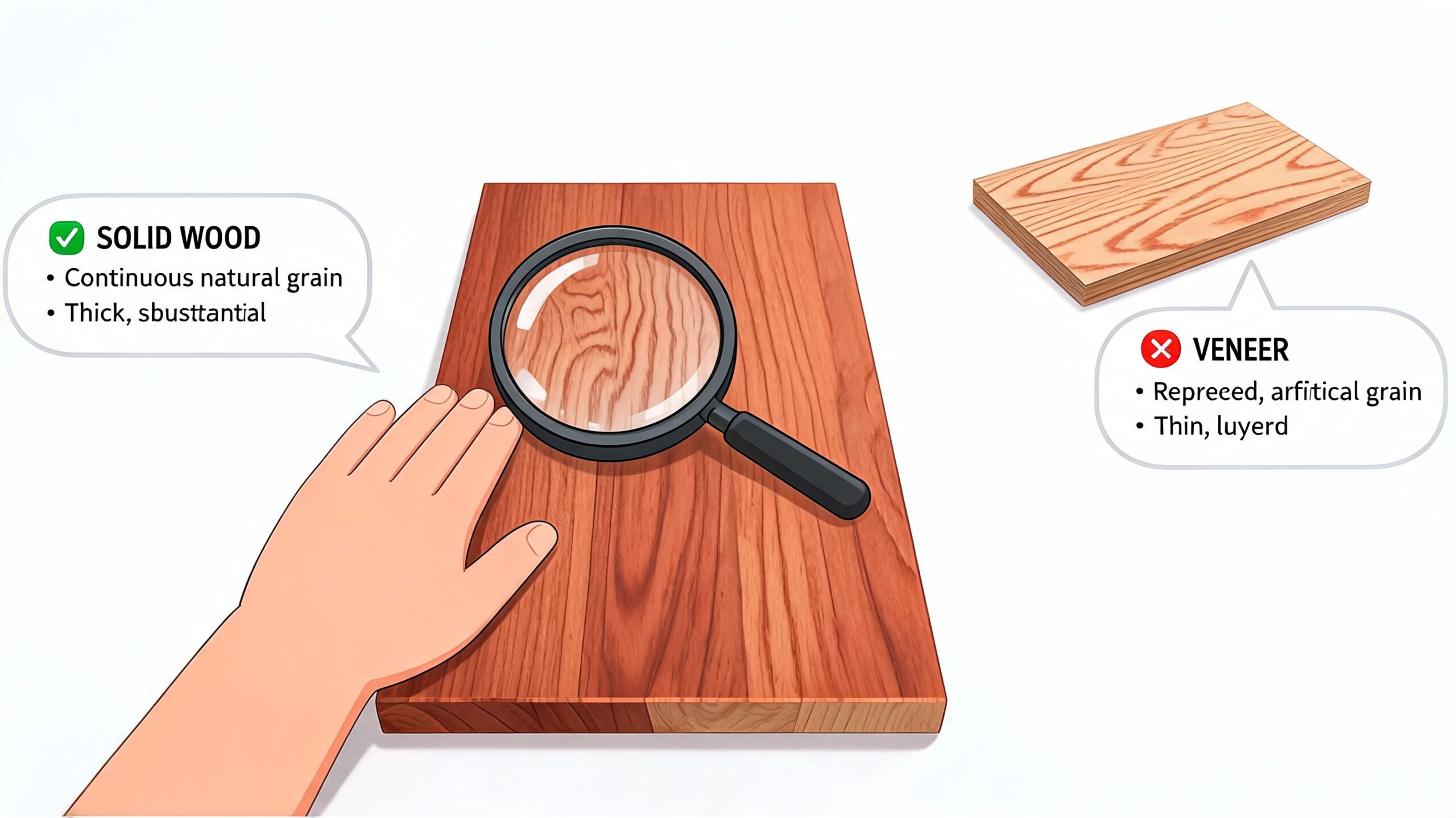
Heritage American manufacturers have shown why this matters. Solid wood furniture built with premium hardwoods and proven construction methods can last 20 to 50 years with proper care, and Stickley has been family-owned for 125 years since 1900 while emphasizing 100% solid wood construction without veneers or particleboard and multi-step hand-finishing processes, according to Groen’s guide to solid wood furniture brands.
Material tells the first half of the story
Start with the species and the preparation. In better wood furniture, you’ll often see kiln-dried hardwoods such as cherry, oak, walnut, or maple. Kiln-drying matters because wood moves with humidity, and proper drying helps reduce the chance of major warping issues after the piece reaches your home.
If you’re comparing woods, think in terms of use, character, and feel:
- Cherry: Smooth grain and a warm, refined look. It often feels elegant without trying too hard.
- Oak: Strong visual grain and a sturdy presence. It suits dining and bedroom pieces that need a grounded look.
- Maple: Cleaner grain and a crisp appearance. It works well in transitional and modern interiors.
- Walnut: Richer tone and a more dramatic personality, often chosen when buyers want the wood itself to be the focal point.
For a deeper look at species and long-term performance, Tyner’s guide to choosing the right hardwood for longevity and style is a useful companion while you compare options.
Joinery is where strength lives
A lot of shoppers focus on finish color first. Fair enough. But a furniture maker earns your money at the joints.
Dovetail drawers are a classic example. The interlocking shape acts like a mechanical handshake. Even before glue does its job, the joint has structure. Mortise-and-tenon joinery works the same way in frames. One piece fits into another in a way that resists wobble and stress over time.
Open a drawer. Flip a chair gently if the showroom allows it. Look underneath the table. Good furniture leaves clues.
When brands talk about craftsmanship, this is what they should be talking about. Not slogans. Construction. If a piece relies mostly on staples, thin panels, or hardware doing all the work, it usually tells on itself sooner or later.
If you’re also considering sustainable outdoor wood, Chairs and Tables' furniture blog offers a helpful look at how wood choice and durability intersect in exterior settings.
Finish is protection, not decoration alone
A good finish does more than make wood shiny. It protects against moisture, handling, and daily wear. Better brands often use multi-step finishes because depth and resilience usually come from layering, sanding, and careful handwork, not a rushed surface coat.
Run your hand across the top and then along the edge. A quality finish should feel consistent. Not gummy. Not rough. Not thin around corners where wear shows up first.
That’s the practical meaning of solid wood quality. Material, joinery, and finish working together.
The Five Archetypes of Solid Wood Furniture Brands
Most shoppers don’t need a giant alphabetized list of names. They need a map. Once you sort brands by how they build, customize, and support their furniture, the market gets much easier to understand.
Quick comparison table
| Archetype | What it usually offers | Best fit for | Watch for |
|---|---|---|---|
| Mass-market brands | Broad style selection, easier availability, mixed construction methods | Shoppers prioritizing quick decisions and trend-driven looks | Vague material descriptions and limited repairability |
| Direct-to-consumer brands | Streamlined shopping, modern presentation, fewer showroom visits | Buyers comfortable evaluating specs online | Harder to judge weight, finish, and stability before purchase |
| Amish and specialty craftsman brands | Hand-crafted solid wood, bespoke sizing, wood and stain choices | People furnishing a forever home or replacing a key piece once | Longer lead times because pieces are made to order |
| Heritage luxury makers | Recognizable legacy, refined finishes, established design language | Buyers who want tradition, reputation, and premium detailing | Premium pricing requires close comparison of construction details |
| Ergonomic and bespoke partners | Personalization around comfort, dimensions, and room fit | Shoppers balancing design with body support and function | Need for careful measuring and option selection |
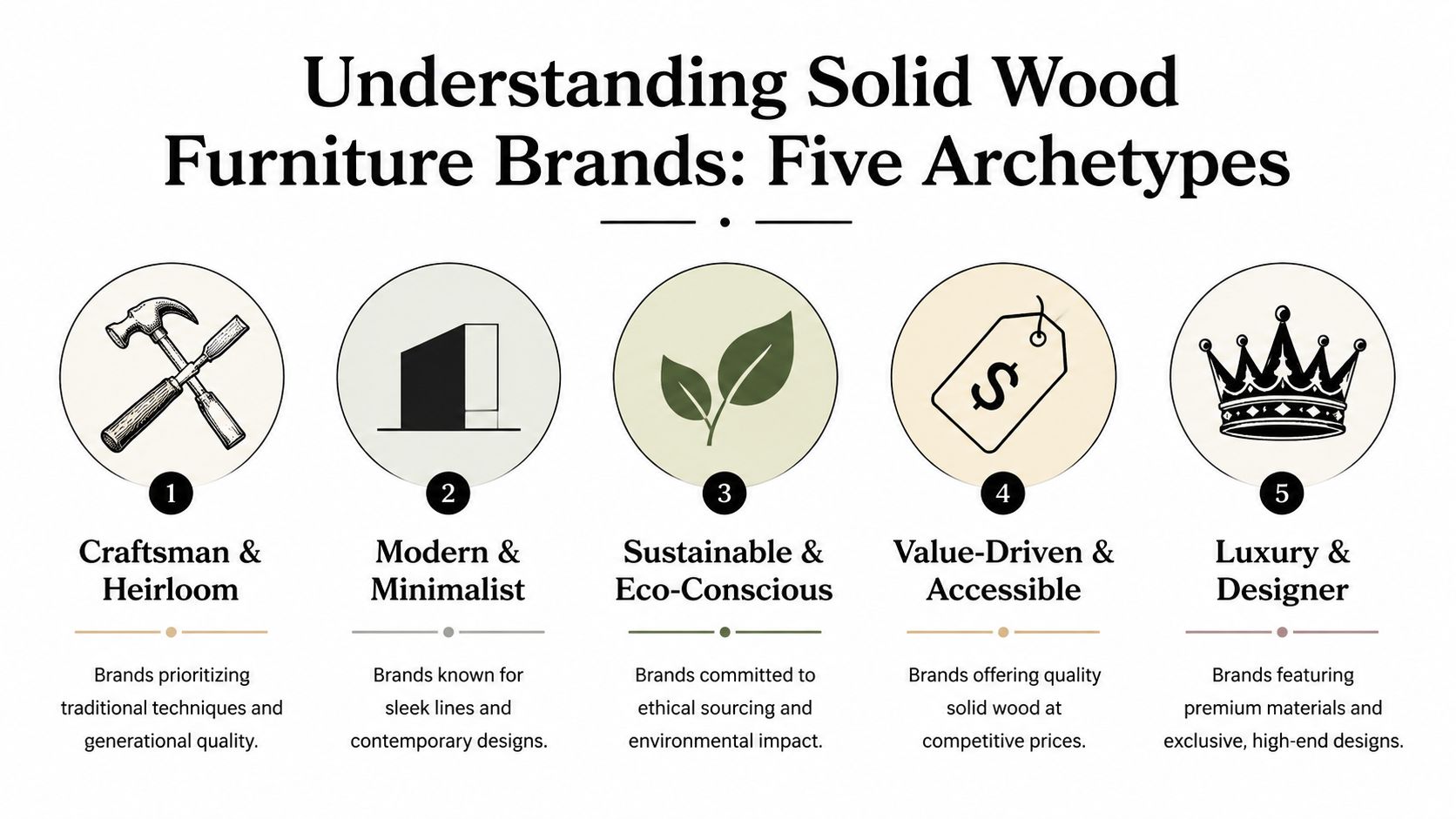
How the five archetypes differ
Mass-market brands can work for shoppers who need broad style access and want to furnish several rooms quickly. The tradeoff is that construction often varies from piece to piece. One collection may have solid elements. Another may lean heavily on lower-cost components while using attractive photography and broad styling to close the sale.
Direct-to-consumer brands appeal to buyers who are comfortable shopping by spec sheet. These brands often simplify the buying process and present furniture cleanly online. The challenge is that wood tone, finish depth, and overall heft can be hard to judge through a screen.
Amish and specialty craftsman brands sit in a different lane. Here, the emphasis is on hand-built furniture, custom dimensions, hardwood selection, and time-tested joinery. According to Tip Top Furniture’s overview of solid wood furniture brands, MAVIN offers over 20 wood species, stains, and hardware combinations for customization, while Bernhardt operates eight manufacturing facilities employing over 1,500 people in Lenoir, North Carolina and uses advanced joinery and premium materials. That range shows how wide this category can be, from smaller bespoke makers to large-scale premium manufacturers.
Luxury heritage makers often attract buyers who care about lineage, finish quality, and enduring design language. Stickley is a classic example in the broader conversation. These brands often build loyalty because people know what the name stands for before they see the piece.
Then there’s the ergonomic and bespoke category. In this category, furniture becomes more personal than many shoppers expect. Some buyers don’t just need a table that matches the room. They need dining furniture scaled to the space, or seating sized to the body. That’s where made-to-order programs matter.
One useful place to browse this category of American craftsmanship is Tyner’s collection of American-made solid wood furniture, which shows how custom wood furniture can differ from mass-produced case goods.
The best solid wood furniture brands aren’t all trying to do the same job. A shopper does better when they choose the right archetype first, then compare names within that group.
A Practical Framework for Evaluating Any Brand
Good furniture buying gets easier when you stop asking, “Do I like this piece?” and start asking, “How was this piece built, and what will ownership feel like over time?”

A scorecard you can use in any showroom
Here’s a straightforward scorecard I’d use with any shopper comparing the best solid wood furniture brands.
- Material integrity: Ask what the visible surfaces and structural components are made from. “Solid wood” should mean more than a solid wood trim piece on an otherwise lower-grade body.
- Construction and joinery: Check drawers, legs, corners, and back panels. Dovetail and mortise-and-tenon joinery usually signal a different level of care than quick-assembly methods.
- Finish quality: Look for consistency across top, edge, and lower-wear areas. Thin finishes often reveal themselves around corners and touch points.
- Sourcing and sustainability: Some shoppers care about domestic hardwoods, FSC-certified woods, or low-emission standards. Those details can help narrow the field.
- Warranty and support: Furniture ownership doesn’t end at delivery. Clear service support matters, especially on made-to-order pieces.
If you’re evaluating storage pieces, Tyner’s article on what to look for when buying chests, dressers, and cabinets is a practical checklist to keep nearby while you shop.
How to think about cost per year
This is the lens most shoppers skip, and it’s the one that changes the decision.
The industry talks a lot about durability, but many sources don’t show homeowners how to compare ownership over time. Furniture Fair’s discussion of real wood brands points out the gap directly. Shoppers need better ways to think about cost per year of heirloom pieces versus replacing budget furniture every 5 to 7 years, along with the resale and lifecycle differences between American-made solid wood and mass-produced alternatives.
You don’t need a complicated formula. Use this:
Cost per year = purchase price ÷ realistic years of use
That’s not perfect because it doesn’t include resale value, refinishing potential, or the inconvenience of replacing furniture. But it’s a clear starting point.
Here’s where readers often get confused. They assume the lower upfront price is the better value. Sometimes it is. But if one piece lasts and another becomes a repeat purchase, the cheaper option may only look cheaper at the register.
Ask the salesperson one direct question: “How long do customers realistically expect this type of piece to stay in service?” If the answer gets slippery, pay attention.
A practical example doesn’t need made-up numbers to be useful. Compare one lower-cost bookcase expected to be replaced on a shorter cycle with one hand-crafted solid wood bookcase intended for long service, repair, and possible refinishing. Even before you calculate exact dollars, you can see how ownership changes. One item is an expense cycle. The other is a home asset.
The Customization Edge How to Get Furniture That Is Truly Yours
Stock furniture solves one problem. It fills a room. Custom furniture solves a different problem. It fits your life.
That difference matters more than people expect. A dining table may be beautiful and still feel wrong if the scale fights the room. A recliner may look elegant and still miss the mark if the seat depth, back height, or support points don’t match your body. Good customization isn’t decoration for decoration’s sake. It’s a way to avoid compromise.
Why made-to-order changes the decision
When shoppers hear “custom,” they sometimes think the process will be complicated or reserved for interior designers. In practice, it often means making a handful of smart decisions before the piece is built.
Those choices can include:
- Wood species: Cherry, oak, maple, or walnut can shift both appearance and daily wear character.
- Finish tone: The same dining set can read lighter, warmer, more formal, or more relaxed depending on stain choice.
- Dimensions: A few inches in table size, cabinet depth, or bookcase width can make a room function better.
- Configuration: Seating, storage, and layout choices can support the way your household lives.
That’s especially valuable when you’re furnishing a forever home. The goal isn’t to buy what’s available fastest. It’s to buy the piece you won’t second-guess every time you walk into the room.
Where Canadel and Stressless fit in
Canadel is a strong example of bespoke dining. Buyers can shape the look of the room through table form, leg style, finish direction, and chair pairing. It’s one of the clearest reminders that “in-stock” is only the starting point.
Stressless approaches customization from the body outward. The point isn’t only style. It’s ergonomic fit. A chair that matches your frame can feel completely different from one that merely looks good from across the room. That’s why sizing matters in recliners and motion seating.
If you want a better sense of how the process works before visiting a store, this guide to getting started with custom order furniture lays out the decisions shoppers typically make.
Customization also changes the emotional side of the purchase. When the finish matches your floors, the scale suits your room, and the proportions feel right, the piece stops feeling generic. It starts feeling settled.
Your Southeast Michigan Choice Why Tyner Furniture Is Your Local Expert
For Southeast Michigan shoppers, the local question matters as much as the product question. It’s one thing to read specs online. It’s another to stand in front of a solid wood dresser, pull the drawer, feel the glide, and compare oak to cherry under real showroom lighting on South State St.
Since 1957, Tyner Furniture has served Ann Arbor and the surrounding area with a mix that spans heirloom Amish hand-crafted wood furniture, bespoke dining, ergonomic seating, and categories across the home from the home office to outdoor spaces. That breadth matters because most households aren’t furnishing one isolated corner. They’re trying to create a consistent home.

What a local showroom adds
A good showroom gives you information your screen can’t.
You can test the weight of a solid cherry nightstand. You can compare grain patterns side by side. You can run your hand over a finish and tell whether it feels deep and protective or thin and hurried. You can also do the all-important sit test, especially if you’re considering ergonomic seating or dining chairs that need to support real meals, not just staged photos.
That local guidance helps when shoppers are sorting through competing priorities:
- Need for customization: Wood species, stain, hardware, fabric, leather, or sizing
- Need for confidence: A place to ask how a piece is built and what ownership is like
- Need for value planning: Special Financing and a Low Price Promise can make a higher-quality choice more manageable
What shoppers can compare in one visit
Ann Arbor shoppers often come in thinking they’re choosing between “traditional” and “modern.” The comparison is broader than that.
They may be comparing Amish hand-crafted bedroom furniture against mass-produced case goods. They may be testing whether a Canadel dining configuration fits a breakfast nook better than an in-stock set. They may be deciding whether a Stressless chair feels noticeably different once they sit in the right size. They may also be coordinating a larger project that includes living room, dining room, home office, and even outdoor spaces.
A showroom should help you narrow choices, not create more confusion. If a retailer can’t explain materials, joinery, finish, and customization in plain language, keep shopping.
That’s where local legacy counts. A business that has worked with generations of Southeast Michigan families tends to understand that furniture isn’t just décor. It’s daily use, comfort, and long-range value.
Take the Next Step on Your Journey to Heirloom Quality
The best solid wood furniture brands earn their reputation the old-fashioned way. They use better materials, stronger construction, and finishing methods that hold up to real life. For shoppers, the smarter question isn’t only “What does this cost today?” It’s “What will this cost me per year over the life of the piece?”
That’s how you separate a short-term purchase from a long-term investment.
If you’re still comparing options, keep your checklist simple. Look at the wood species. Inspect the joinery. Touch the finish. Ask what can be customized. Then ask yourself whether the piece feels like something you’ll want in your home for years, not just for now.
There are two good ways to move forward.
If you’re a tactile shopper, visit the Ann Arbor showroom and do a real sit test. Open drawers. Compare wood tones. Feel the buttery feel of top-grain leather and the weight of solid cherry wood for yourself. Those details are hard to judge online, and they often make the decision clearer.
If you’re still in planning mode, browse the online Quick Specs and special-order options so you can narrow your preferences before you visit. That approach works especially well when you’re considering made-to-order dining, hand-crafted Amish pieces, or personalized ergonomic seating.
If you’d like help comparing wood species, custom options, or room-fit choices, visit Tyner Furniture in Ann Arbor for a sit test, or browse the online Quick Specs to explore special-order possibilities at your own pace.