American Made Solid Wood Furniture: A Buyer’s Guide

You’re probably here because a piece of furniture has already let you down.
Maybe it’s the dining chair that rocks a little more every holiday. Maybe it’s the dresser drawer that sticks in August and sags in January. Maybe the bookshelf looked fine online, but once it arrived, the top started to bow and the finish never quite felt right. Furniture shopping gets confusing fast because so many pieces look similar in a photo, yet behave very differently after a few years of daily life.
That’s why american made solid wood furniture still matters. It isn’t just about nostalgia or tradition. It’s about buying a table that stays steady, a bed that feels planted, and a bedroom set that still looks right after years of use. For families in Ann Arbor and across Southeast Michigan, that kind of purchase usually isn’t impulse buying. It’s a careful decision, and it should be.
Since 1957, local shoppers have walked into furniture stores hoping someone would explain the difference in plain language. Not showroom talk. Real talk. The kind that helps you tell whether you’re buying a piece for the next move, or a piece that may still be in your home when your kids are grown. If you want a practical framework for judging quality, cost-per-year, and customization, this guide will help.
Table of Contents
- The Search for Furniture That Lasts
- What Defines American Made Solid Wood Furniture
- The Enduring Benefits of Heirloom Quality
- Exploring Hardwoods and Hand-Crafted Joinery
- The Power of Bespoke Design and Customization
- Your Guide to Buying and Financing Solid Wood Furniture
- Begin Your Legacy with Tyner Furniture in Ann Arbor
The Search for Furniture That Lasts
Many do not begin by searching for "heirloom quality." They start with a problem.
A table starts wobbling. A veneer edge peels where everyone’s hands reach. A nightstand survives one move, then comes out of the truck with a split corner and a drawer that never tracks right again. The frustration isn’t only that the furniture wore out. It’s that you paid real money for something that was supposed to serve your home, and instead it became another item to replace.
That’s often the moment shoppers begin looking at american made solid wood furniture differently. They stop asking, “How does it look today?” and start asking, “How will it age?” Those are better questions. They lead you toward weight, joinery, repairability, and whether the surface is a finish over real hardwood or a thin decorative layer over a manufactured core.
A good furniture purchase should grow more comfortable with familiarity, not more irritating with every passing season.
In a local showroom, you can feel this difference immediately. The weight of solid cherry wood in a dresser drawer tells you something before a salesperson says a word. The steady stance of a dining chair tells you more than a staged room photo ever could. So does the way a tabletop reflects light across grain that has depth, variation, and character instead of a printed pattern.
If you’re trying to shop with more confidence, a practical starting point is this guide to shopping for furniture smartly. It helps narrow the field before you fall in love with the wrong piece.
For many households in Ann Arbor, this search isn’t just about filling a room. It’s about building a home that feels settled. That can include dining furniture, bedroom pieces, a home office, ergonomic seating, and even outdoor spaces. The common thread is simple. You want pieces that earn their place.
What Defines American Made Solid Wood Furniture
The phrase sounds straightforward, but shoppers often get tripped up by two separate questions. What counts as solid wood? And what does American made mean when you’re standing in a showroom or reading product details online?
Solid wood versus look-alikes
Solid wood means the main structural parts are made from lumber rather than a thin wood skin applied over MDF, particleboard, or another manufactured panel. That distinction matters most in bedroom and dining furniture because those pieces take regular stress. Drawers open and close. Chairs shift and rack. Beds carry weight night after night.
Here’s the visual difference many shoppers need to see:
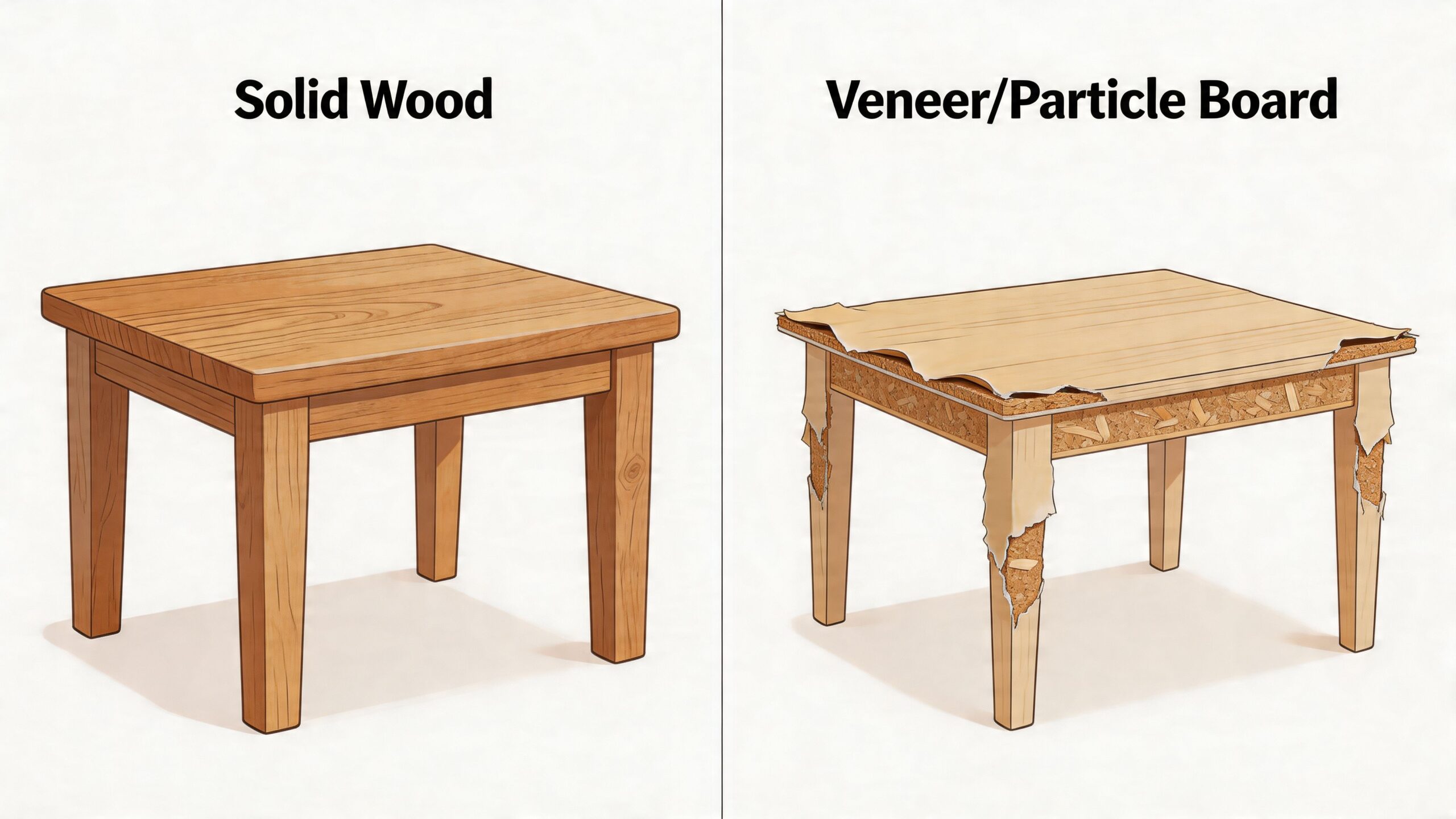
A simple way to think about it:
- Solid wood has depth. It can often be repaired, touched up, and refinished.
- Veneer can be useful in some applications, but it is a surface layer, not the full substance of the board.
- MDF and particleboard can look tidy when new, yet they don’t respond to wear, moisture, and repeated movement the same way real hardwood does.
That’s why so many experienced shoppers focus on beds, dining tables, and storage pieces first. If you want an outside example of how dedicated makers present these products, browsing collections of solid wood beds can help you compare construction language and design details across the category.
What American made means in practice
American made should point to more than branding. It should indicate domestic manufacturing, domestic labor, and a clearer chain between raw material, workshop, and finished piece. In a category crowded with imported furniture, that traceability matters.
The U.S. furniture manufacturing industry directly employs 269,177 workers, and wooden furniture commands a 39.26% market share within the broader U.S. furniture market, reflecting strong demand for durable wood construction, according to IndustrySelect’s furniture manufacturing statistics.
Those figures help explain why this category still has staying power. Buyers continue to choose wood because it feels substantial, wears in a familiar way, and connects craftsmanship to everyday use. In practical terms, American-made also often means access to custom options, more consistent quality control, and product knowledge that goes beyond a label.
If you want to compare styles and construction details in a more specific category, looking at Amish tables and chairs is a helpful next step. Dining furniture tends to reveal quality quickly because every joint, edge, and finish gets put to work.
Practical rule: If a product description avoids clear wording about wood species, construction, or where the piece is built, slow down and ask more questions.
The Enduring Benefits of Heirloom Quality
A solid wood piece often costs more up front. That part is obvious. What’s less obvious is how often the lower-priced alternative ends up costing more over the years because it needs replacement sooner, looks tired earlier, or can’t be repaired when a problem shows up.
Why price and value are not the same
Cost-per-year becomes useful. It moves the conversation away from sticker shock and toward ownership.
The numbers are worth paying attention to. Solid hardwood pieces may carry a 2 to 3 times higher upfront price, but they typically last 20 to 50+ years compared with 5 to 10 years for fast furniture, yielding a 40 to 60% lower lifetime cost. Amish-made pieces can also retain 70 to 90% of their resale value after a decade, while veneer-based furniture may retain less than 20%, according to Biltrite Furniture’s comparison of solid wood value.
That helps explain why seasoned shoppers don’t judge a dining set the way they judge a throw pillow. A table is used daily. A dresser becomes part of the rhythm of the home. A bed anchors the room for years. When the piece is well made, that higher entry price often feels more sensible with time, not less.
Consider two households furnishing a forever home in Southeast Michigan. One replaces a lower-grade dining set several times over the years as joints loosen and surfaces wear. The other buys a solid oak or cherry set, lives with it, refinishes it if needed, and keeps it in the family. The second household isn’t just buying wood. They’re buying fewer disruptions.
A sustainability benefit you can actually feel at home
Heirloom quality also changes the environmental conversation. The most sustainable piece of furniture is often the one you don’t need to replace.
U.S. solid wood furniture can emit 50 to 70% less CO2 than Asian imports because of shorter supply chains. Domestic FSC-managed forests replenish at twice the harvest rate, and kiln-dried U.S. hardwoods such as oak and cherry release minimal VOCs compared with glued particleboard, as noted in The Good Trade’s review of American-made furniture.
That may sound abstract until you live with the piece. You notice it in the feel of a solid top under your hand, the absence of flimsy flex, and the calm confidence of furniture that wasn’t built to be temporary.
A few benefits tend to matter most in real homes:
- Longevity you can plan around means fewer replacement cycles during moves, remodels, or family changes.
- Repairability gives scratches and wear a future. Many solid wood surfaces can be refreshed rather than discarded.
- Emotional value grows with use. Holiday meals, homework sessions, and everyday routines leave a story in the grain.
Some furniture is just purchased. Other furniture is lived with.
Exploring Hardwoods and Hand-Crafted Joinery
Good furniture rarely hides its quality for long. You can see it in the grain, feel it in the weight, and test it in the way the piece resists sway when you put a hand on it.
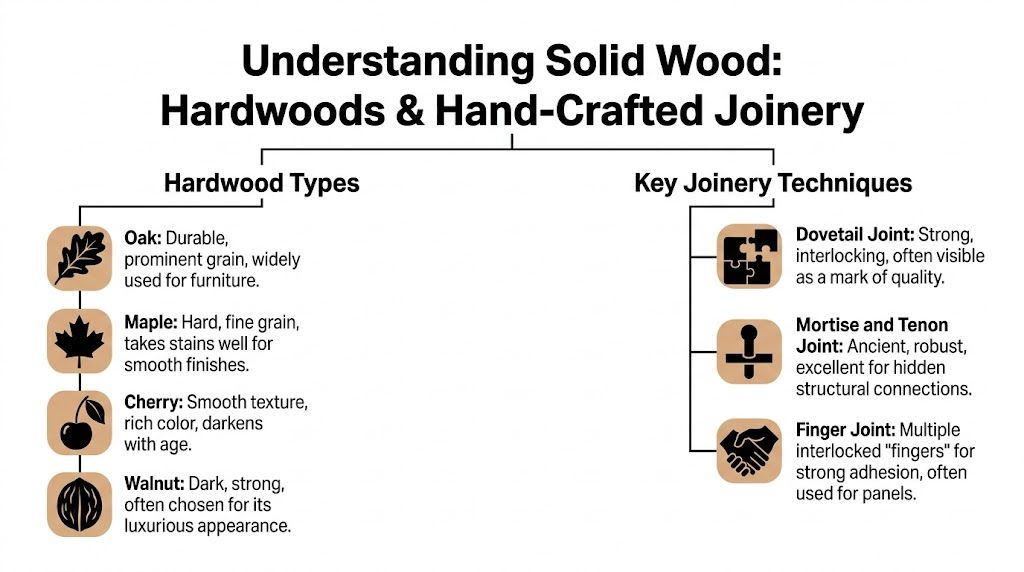
How different hardwoods behave
Not all hardwoods look or age the same, and that’s part of their appeal.
Oak usually shows a more pronounced grain. It has a grounded, architectural look that works beautifully in dining rooms and mission-inspired interiors. If you like visible texture and a sense of strength, oak often speaks first.
Cherry feels smoother and more refined to the eye. It starts warm and deep, then develops richer character over time. In person, cherry has a gentle glow that photos often flatten.
Maple offers a finer, quieter grain. It can feel cleaner and more contemporary, especially in lighter finishes, but it also takes stain well when you want a more traditional appearance. For many bedroom sets and home office pieces, maple gives you flexibility.
Walnut is usually chosen for depth and drama. Its darker tone can make a sideboard, desk, or bed feel refined and luxurious without being flashy.
If you’d like a closer look at how species choice affects style and wear, this article on choosing the right hardwood for longevity and style is a useful companion.
The joints that tell you a piece was built to stay square
Joinery is where craftsmanship stops being decorative and starts being structural.
Amish-crafted furniture often uses mortise-and-tenon and dovetail joints, and these methods can be 5 to 10 times more effective at resisting racking forces than nailed joints. Traditional assemblies can endure over 50 years of daily use without failure, while particleboard can delaminate under humidity swings, according to Countryside Amish Furniture’s solid wood construction guide.
For shoppers, the practical signs are simple:
- Dovetail drawers show interlocking joinery, especially at the corners.
- Mortise-and-tenon construction often appears in chairs and tables where legs meet aprons or frames.
- Tongue-and-groove panels help parts fit together with stability and clean alignment.
Open the drawer. Turn the chair slightly. Put a hand on the corner of the table and feel whether the piece settles or shifts. Quality construction announces itself through steadiness.
A quick reference helps:
| Feature | What you’re looking for | Why it matters |
|---|---|---|
| Drawer corners | Dovetail joinery | Better strength under repeated use |
| Chair and table frames | Mortise-and-tenon connections | Better resistance to wobble |
| Side and back panels | Clean wood movement and tight fit | Better long-term stability |
These details aren’t fussy trivia. They’re the reason one piece feels calm and dependable while another starts complaining within a few seasons.
The Power of Bespoke Design and Customization
One of the biggest misconceptions in furniture shopping is that what you see on the floor is the full story. It usually isn’t. In-stock is often just the sample that helps you judge comfort, color, shape, and proportion.
Why in-stock is only the starting point
Bespoke and made-to-order programs matter because homes aren’t all built alike, and neither are families. A condo dining area in Ann Arbor needs different scale than a farmhouse kitchen outside town. A bedroom with low natural light may need a finish that brightens the room. A tall homeowner may need different ergonomic support than someone petite.
That’s where customization earns its keep. You can often adjust:
- Wood species for a different grain pattern or tone
- Finish color to work with existing floors and trim
- Dimensions and configuration so the piece fits the room, not just the catalog
- Upholstery choices including fabric and top-grain leather
- Comfort sizing in certain seating programs
The value isn’t novelty. The value is fit.

Customization that solves real room problems
This is especially important in dining, bedroom, and upholstery categories. Canadel, for example, is widely known for made-to-order dining programs that let shoppers tailor table shapes, leg styles, finishes, and chair pairings. Stressless approaches customization from another angle by focusing on ergonomic fit and seating size, which matters if you’ve ever sat in a recliner that looked good but never felt quite right.
At the same time, Amish-built solid wood furniture gives you a different kind of control. You may be able to choose cherry instead of oak, a hand-rubbed stain instead of a darker formal finish, or a storage bed version instead of a standard frame. In practical terms, that means your bedroom doesn’t have to look like a copy of someone else’s.
One local option for this process is getting started with custom order, which outlines how shoppers move from showroom sample to made-to-order piece. Tyner Furniture also works with custom programs across categories, including Amish hand-crafted wood, Canadel dining, and Stressless seating, so shoppers can adjust materials, finishes, or fit instead of settling for a close-enough version.
Furniture feels more valuable when it solves a room cleanly. The right width, the right finish, and the right seat depth can matter as much as the style itself.
Sensory experience matters, too. A wood sample in your hand tells you more than a digital swatch. So does the buttery feel of top-grain leather, or the way a stained maple surface catches afternoon light compared with cherry. Customization works best when it turns abstract preferences into physical decisions you can see and touch.
Your Guide to Buying and Financing Solid Wood Furniture
A careful purchase gets easier when you know what to inspect. You don’t need to be a woodworker. You just need a short list of things to touch, open, and ask about.

What to inspect in the showroom
Start with your hands, not the price tag.
Open the drawers
Look at the corners. If you see dovetail joinery, that’s a strong sign. Pull the drawer fully and notice whether it feels balanced and smooth.Test for movement
Put a hand on the corner of a table or the top rail of a chair. A well-built piece should feel settled. Minor showroom floor unevenness is one thing. Structural looseness is another.Study the finish in changing light
Move a step to the side. Look for depth, consistency, and how the finish interacts with the grain rather than masking it.Ask what is solid and what is not
This isn’t an awkward question. It’s a necessary one. Ask about tops, drawer fronts, sides, frames, and bed rails.Check dimensions before you fall in love
That matters more than people think. A practical planning tool is this complete furniture dimensions guide, which helps you sanity-check scale before placing an order.
A short question list can help too:
- What wood species is this piece made from?
- What joinery is used in the drawers or frame?
- Can the finish or size be changed?
- How will this piece age with normal use?
- Is this a floor sample, stock item, or made-to-order model?
How to think about financing without losing sight of value
Furniture is a major household purchase, and it’s reasonable to want flexibility. The important part is not letting monthly payment language distract you from construction quality. Financing should support a good decision, not justify a weak one.
The value case for solid wood is strong. Even with a 2 to 3 times higher upfront price, solid hardwood can produce a 40 to 60% lower lifetime cost because of how long it lasts. Resale can also be materially stronger for Amish-made furniture than for veneer-based alternatives, as noted earlier in the article’s sourced comparison.
If the right piece fits your home but needs budget planning, special financing options can make that easier to manage. Special financing and a Low Price Promise are most helpful when you’ve already chosen a piece with genuine long-term value.
Buying advice: Don’t ask only, “Can I afford this today?” Also ask, “Will I still respect this purchase ten years from now?”
That question tends to sharpen judgment quickly.
Begin Your Legacy with Tyner Furniture in Ann Arbor
A good furniture decision brings together several things at once. Materials that feel honest. Construction that stays dependable. Design that fits your home instead of forcing compromise. And enough flexibility to make a lasting purchase realistic.
That’s why american made solid wood furniture continues to hold its place. Even as parts of the industry have shrunk, the specialized wooden furniture market still stands at $3.5 billion, and the non-upholstered wood category is projected to see revenue growth in 2026, according to IBISWorld’s household furniture manufacturing outlook. Shoppers keep coming back to quality because quality solves real household problems.
In Southeast Michigan, that decision often becomes local and personal. You want to sit in the chair, run your hand across the tabletop, open the drawers, and compare finishes in person. You want someone to answer questions clearly. Not to rush you. Not to dress up basic construction with fancy words.
Since 1957, that local legacy has mattered in Ann Arbor. A showroom on South State St. can do something a product page can’t. It can show you the weight of solid cherry wood, the steadiness of a properly joined chair, the comfort difference in ergonomic seating, and the range of options available across the home, from the home office to outdoor spaces. It can also help you sort through made-to-order decisions so your home feels intentional, not pieced together.
If you’ve been stuck between “buy once” and “replace later,” trust your instinct. The right furniture should make daily life easier, calmer, and more settled. That’s what lasting craftsmanship does.
Visit Tyner Furniture to browse Quick Specs for special orders, or stop by the Ann Arbor showroom on South State St. for a proper sit test, a hands-on look at solid wood construction, and guidance that helps you choose with confidence.