Custom Upholstery Cushions: Your Complete Buyer’s Guide


You're sitting on the same sofa, and the seat has gone soft in the middle, the fabric looks tired, and the cushion no longer feels like it belongs in the room. That's the moment shopping for a replacement starts when you should be looking at custom upholstery cushions instead. A good cushion isn't a throwaway soft part, it's the working surface you live on every day, and the right spec turns an old frame into an heirloom-minded piece again.
What Makes a Cushion Worth Customizing
A cushion earns customization when the frame still makes sense, but the comfort layer has failed. That's the difference between replacing a whole piece and fixing the part that takes the wear. In practical terms, buyers are deciding five things, fill, fabric, fit, construction, and lead time, and each one changes how the cushion looks and how long it stays supportive.
The first mistake is treating every cushion as if it's the same. It isn't. Daily-use seating needs a different spec than a window seat, and a family room sofa needs a different answer than a decorative bench. For a homeowner in Ann Arbor, that's where the cost-per-year logic starts to matter, because the cushion is the part that wears out first while the frame often still has life left.
Practical rule: If the frame is sound and the comfort has collapsed, custom is usually the smarter spend.
That's also why in-stock is just the beginning. A showroom floor can show a style, but a made-to-order cushion lets the buyer adjust what's underneath it, what covers it, and how it lands in the room. For shoppers comparing options in Southeast Michigan, that's the value, a cushion that fits the furniture instead of forcing the furniture to accept a generic insert.
A local resource on why furniture purchases deserve careful thought is Tyner's overview of high-consideration buying decisions, and cushions sit in that same category. They're small parts with outsized impact. One sloppy choice shows up every time someone sits down.
Choosing the Right Fill for Daily Use
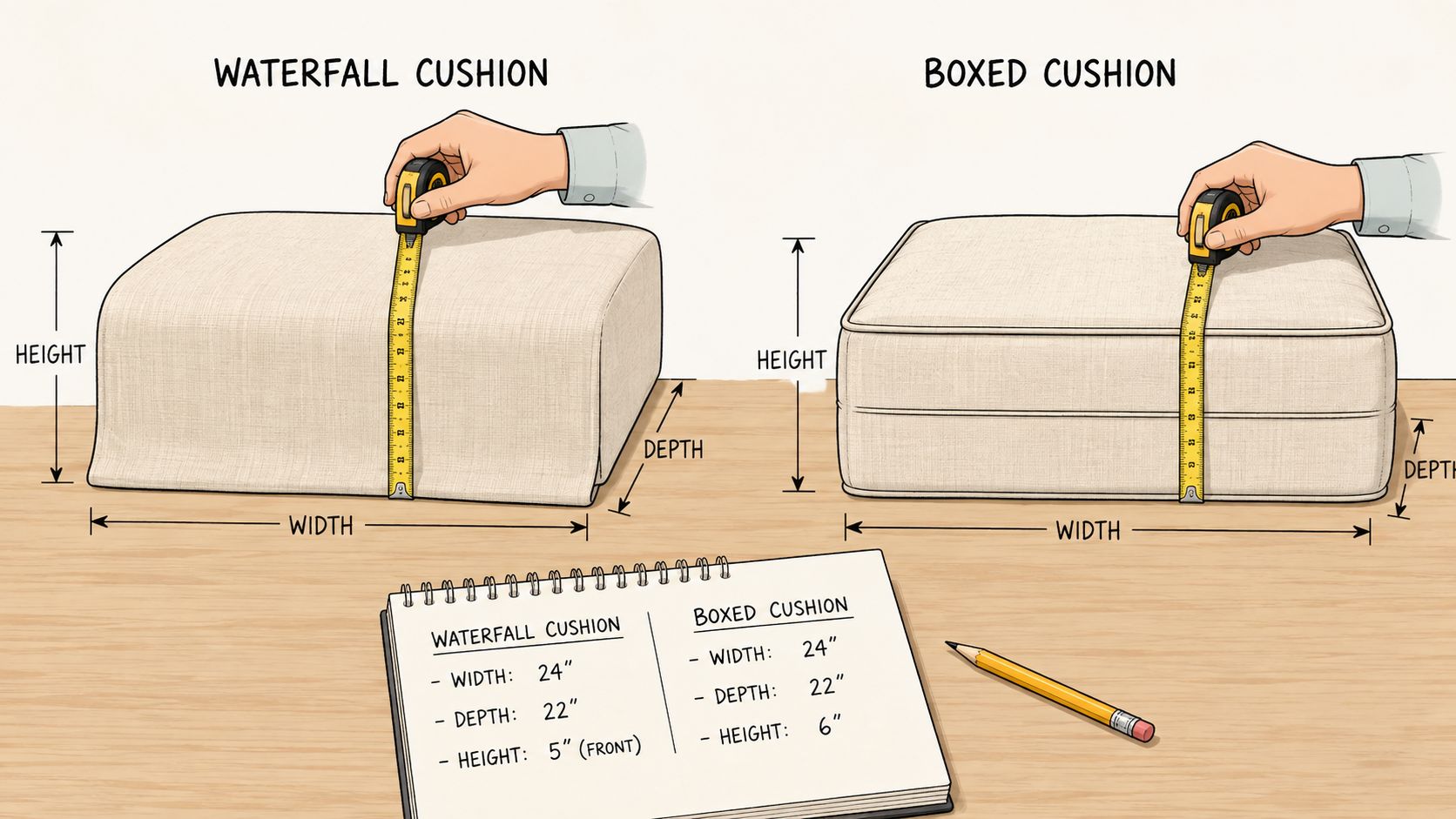
Start with the fill, because that decides how the cushion sits, how fast it breaks down, and how long the room keeps looking right. For everyday seating, foam density is the number that matters, and a practical spec usually begins around 1.8 lb/ft³ (29 kg/m³). For heavier use, or for a cushion that needs to stay presentable longer, buyers often move into denser foam and commercial-grade builds, because higher density resists compression better over time (a guide to custom sofa cushions).
Seats and backs need different answers. A seat takes body weight every time someone drops into it, so it needs firmer recovery and better shape retention. A back cushion does not carry the same load, so it can be softer without turning mushy. If you use the same fill everywhere, the seat usually sags first and the whole piece starts to feel tired.
For the homeowner who wants the right feel without guessing, the choice usually comes down to four builds:
- High-resilience foam: Use this for family-room sofas, sectionals, and any seat that gets constant use.
- Foam with a down wrap: Use this when you want a softer edge and a more upholstered look, but still want a proper foam core underneath.
- Full-down fill: Use this for relaxed seating where fluffing is part of the routine and a custom fit is not the priority.
- Outdoor-rated reticulated foam: Use this for exterior seating or damp spaces, where airflow and drainage matter more than a plush indoor feel.
The wrap around the core matters more than people expect. Materials like bulk batting for longarmers affect how the cushion reads at the edge, how soft it feels at first touch, and how clean the shape looks after regular use. A good insert with the wrong wrap can still feel flat or sloppy. I tell homeowners to treat the foam and the wrap as one decision, not two separate ones.
For a balanced sit, keep the rule simple. Put denser foam in seats, softer support in backs, and do not force one fill to cover every part of the furniture. A sectional cushion should hold its outline and recover well after use. A bench seat should stay structured and fitted. An occasional chair can tolerate a softer build, but it still needs enough support to avoid looking blown out too soon.
A useful way to compare fill choices is to pair them with the room's real use. Tyner's pillow selection overview helps buyers think about support and softness in a practical way, and the same logic applies to cushions. Daily-use seating should be specified like a long-term investment, not a disposable insert. That is how you get a cushion that still looks intentional after the novelty wears off.
Measuring for a Perfect Fit Every Time
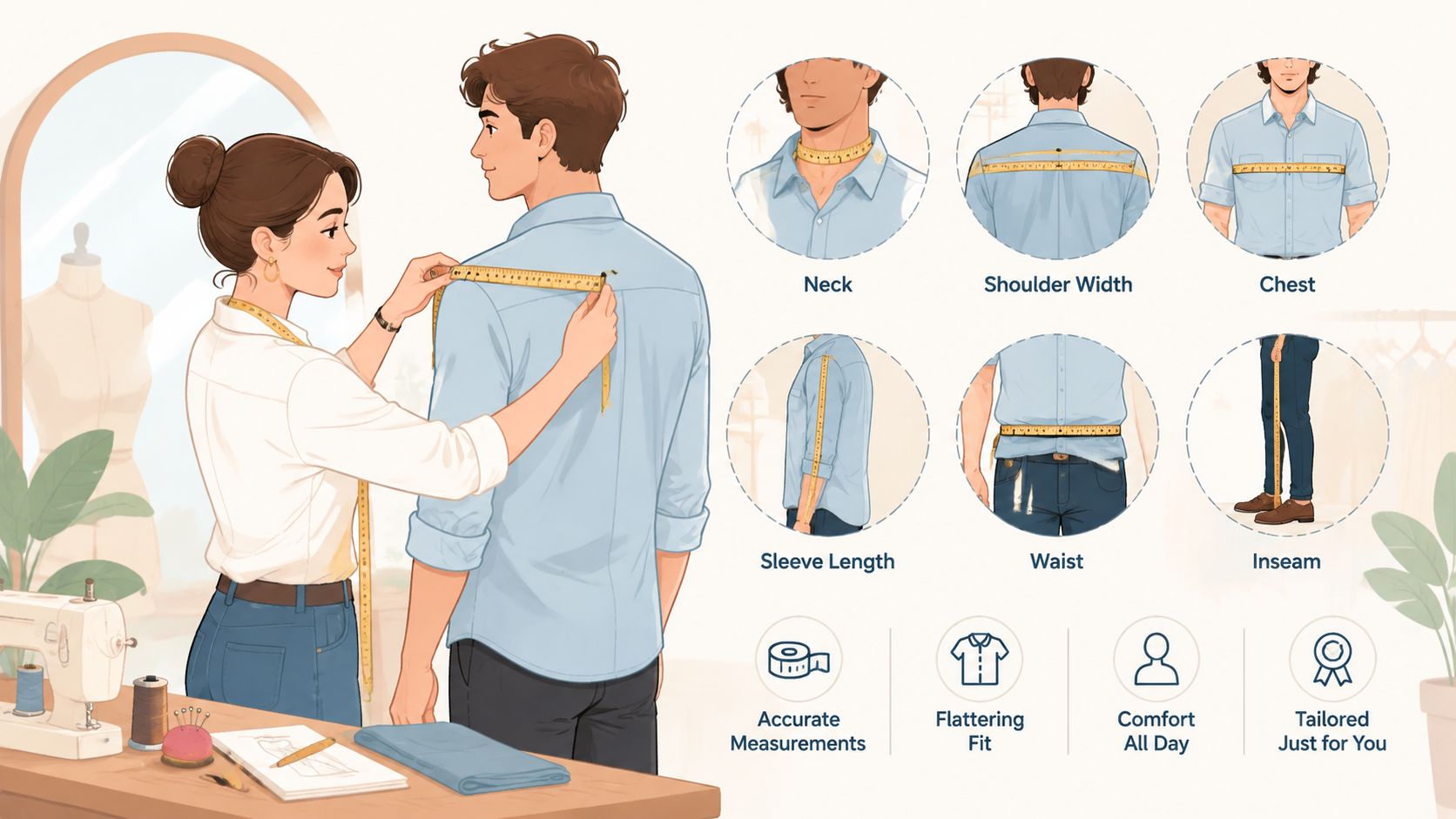
Fit problems usually come from tiny measurement mistakes, not dramatic ones. A cushion that is off by even a little can wrinkle, gap, or bow at the seam, and once that happens the whole piece looks wrong. Measure the finished opening, not the old flattened cushion that has already lost its shape.
Construction style changes the rule. For Waterfall construction, measure thickness at the center. For Boxed construction, measure thickness, depth, and length seam to seam. That difference matters because the same numbers do not mean the same thing in both builds, and the wrong reference point leads to the wrong order.
Fit rule: Small dimensional changes show up fast, especially where the cushion meets a tight frame or a straight front edge.
A few sizing details catch homeowners off guard. Welting can add up to 1/2 inch to overall dimensions, and cushion loft on each side can be up to 1 inch greater than the stated thickness to create a filled appearance. Another sizing guide says to oversize foam or filler by 1% or at least 1/2 inch in width and length, which is especially useful in bench seats and window seats.
A clean order starts with a simple field checklist:
- Measure the finished space: Record width, depth, and thickness after the old cushion is removed.
- Note the construction type: Waterfall and boxed builds do not use the same reference point.
- Account for trims: Welting and seams change the visible size.
- Check the frame clearance: Tight openings need slight oversize, but not so much that the cushion binds.
- Bring the furniture dimensions: A shop can verify whether the spec fits the actual structure.
For a detailed walkthrough on taking those measurements, Tyner Furniture's furniture measuring guide is a solid starting point. The right tape-measure habits save more money than the right fabric ever will.
Fabric and Leather Options That Hold Up

Fabric choice should follow the room, not a trend board. For households with kids or pets, performance textiles make the most sense because they're built for real wear, spills, and frequent cleaning. For a bright sunroom, a tougher woven option or a fabric with better fade resistance belongs there. For a formal living room, a richer textile or top-grain leather can carry the visual weight without looking overworked.
Top-grain leather deserves straight talk. The feel is buttery, the surface warms up with use, and the patina can make a room look better over time rather than merely older. It also tells the truth about use, because marks and natural variation are part of the appeal. That's a strength in a formal setting, and a liability in a house where every cushion gets constant traffic.
Household fit usually falls into a few clear lanes:
- Kids and pets: Performance fabric, tightly woven upholstery, and finishes that handle cleanup without panic.
- Sun-faded rooms: UV-aware performance textiles or fabrics chosen with light exposure in mind.
- Formal living rooms: Velvet, leather, or refined woven textures that carry a more polished look.
- Casual family spaces: Textiles that balance hand-feel, durability, and easy maintenance.
For a broader overview of material behavior, Tyner's upholstery material guide gives shoppers useful vocabulary before they sit down with swatches. That matters at a showroom because buyers should be able to say whether they want cleanability, softness, or visual depth.
The online photos never fully capture how a fabric feels in person. A woven textile can read flat on a screen and feel substantial in hand. Leather can look formal online and feel surprisingly relaxed once it's on a cushion you use. That's why the best fabric selection still happens with sample pieces in hand, natural light nearby, and a clear sense of how the room is lived in.
Construction Details That Extend Cushion Life
The hidden difference between a cushion that looks good for years and one that sags early is construction. Stitching keeps the shape honest, cording defines the edge, and the inner wrap decides whether the cushion looks finished or flimsy. People notice the fabric first, but the build underneath is what determines whether the cushion still behaves after repeated compression.
A good inner cover matters more than most shoppers realize. Muslin or a downproof inner layer keeps the fill contained and helps the cushion retain a cleaner profile. Reinforced seams reduce the chance of failure where the cushion gets the most stress, and that's the whole point if the piece is meant for everyday use rather than occasional display.
The smartest construction decisions are usually the least flashy:
- Reinforced stitching: Helps the seams survive repeated use and changing body weight.
- Cording or welting: Sharpens the outline and gives the cushion a more finished look.
- Quality inner containment: Keeps fill from shifting, bunching, or migrating to one side.
- Appropriate edge treatment: Prevents the cushion from looking collapsed after a few seasons.
A cushion should still look intentional three years in, not merely less broken than before.
That's why construction and foam density need to be read together. Higher-density fill resists fatigue longer, and stronger seams let the cushion keep that structure without opening up under pressure. A soft-looking cushion can still be engineered well, but a cushion that's merely soft and lightly built usually fails early.
For everyday seating, the clear recommendation is blunt. Insist on strong seams, a proper internal wrap, and edge treatment that matches the room's use. Decorative cushions can be lighter. The family-room sofa should not be.
The Tyner Furniture Custom-Order Process
The custom-order process should feel orderly, not mysterious. At the South State St. showroom in Ann Arbor, the sequence starts with a conversation about how the furniture gets used, who sits there, and what feels wrong now. That first pass shapes the specification, because a made-to-order cushion should solve a real comfort problem, not just match a room.
Swatch selection comes next. Buyers can feel the difference between fabrics, compare color in natural light, and decide whether the room needs a crisp made-to-measure look or something softer under the hand. This is also where made-to-order programs for Canadel and Stressless fit the broader picture, because Tyner treats customization as a fit-and-finish decision, not an add-on.
The shop then documents the order on a written spec sheet. That step protects the buyer from vague memory and protects the build from guesswork. For Southeast Michigan customers, white-glove delivery closes the loop once the cushions are ready, and the handoff matters because a properly made cushion still needs to land in the space it was measured for.
Tyner also keeps the buying process practical with Special Financing and a Low Price Promise, which lowers the friction around a larger custom purchase. Those tools matter most when the buyer is replacing multiple cushions or matching a larger seating plan across the home.
A few details belong in the order conversation every time:
- Seat feel: Firm, balanced, or relaxed.
- Back support: Upright or softer lounge feel.
- Arm padding: Thin profile or fuller comfort.
- Cushion shape: Standard or custom-fit for an irregular frame.
For anyone starting the process, Tyner's custom-order guide lays out the path from first visit to finished piece. Since 1957, that local legacy has been built around making the spec match the room instead of making the room adapt to the spec.
Cost, Lead Time, and the Value Equation
Custom upholstery cushions make sense when you judge them by cost per year, not by the first invoice. A store-bought cushion can start looking tired in a short span, while a custom cushion built with higher-density foam and better construction stays usable much longer, so the two products do not belong in the same value category. That means fewer replacements, fewer extra shopping trips, and less time living with a seat that has gone soft and sloppy.
The material difference drives that result. Custom residential cushions usually rely on denser foam and better build quality, while mass-market cushions often use lighter foam that breaks down sooner. Professional construction also holds up under repeated use for far more cycles before fatigue shows up, which is why a custom cushion feels like a long-term purchase instead of a quick fix. Furniture Today cited reporting
| Factor | Store-Bought Cushion | Custom Upholstery Cushion |
|---|---|---|
| Service life | Often shows noticeable wear sooner | Commonly stays satisfactory much longer |
| Foam density | Lighter foam that breaks down faster | Denser foam built for daily use |
| Compression resistance | Lower resistance to repeated use | Higher resistance to repeated use |
| Fit and finish | Generic sizing and limited customization | Made-to-order sizing and customized construction |
| Long-term value | More frequent replacement | Better cost per year and steadier comfort |
Fabric and leather also change the quote, and complexity changes it too. Straight rectangular cushions are easier to build than curved or built-in pieces, and leather usually costs more than a basic textile because the material itself brings more visual and tactile weight. Lead time follows the same pattern. Custom shapes, specialty materials, and careful fit all require more coordination, so the buyer should expect the process to move at the pace of good work.
A sensible buyer does not chase the lowest line item. The right cushion is the one that still feels correct after real use, still fits the frame cleanly, and still justifies the spend long after a cheap replacement would already be failing. For cleaning care once the cushions are in the home, the Canes Cleaners upholstery guide is worth using because care has to match the material, not guesswork.
Caring for Cushions So They Last Decades
Cushions last longer when they're rotated and fluffed on purpose. That's the first habit, and it's free. Cleaning should follow the cover material, because performance fabrics and top-grain leather need different care routines, and a heavy hand can do more damage than the spill did.
For a practical cleaning reference, Canes Cleaners' upholstery guide is useful because it reinforces the basic truth that upholstery cleaning should match the fiber and finish, not the mood of the day. A washable cover or slipcover makes sense on high-use seating, especially where kids or pets turn maintenance into part of the routine.
Watch for early foam fatigue before the cushion collapses. If the seat stays compressed too long after use, if the edges flatten before the center does, or if the fabric starts to wrinkle where it once held clean lines, the cushion is telling the truth. That's the time to act, not after the frame starts getting blamed for a comfort problem the fill created.
For Ann Arbor and Southeast Michigan homeowners, the easy next move is a sit test in the showroom or a look at the online quick-specs catalog for special orders. The best custom order starts with honest use, clear measurements, and a cushion that's built to stay useful long after a replacement would have been due.
Tyner Furniture helps homeowners choose made-to-order seating, custom cushion fills, and upholstery that fits real rooms in Ann Arbor and across Southeast Michigan. Since 1957, the team has worked from the South State St. showroom to guide sit tests, special orders, and practical spec choices for long-term comfort. Visit Tyner Furniture to browse options, compare quick specs for special orders, or stop in for a sit test before the next cushion goes flat.