Burled Walnut Furniture: What Burl Is and Why It Matters

A walnut cabinet looks beautiful on a screen, but its description raises more questions than it answers. The surface has dark little eyes and swirling amber patterns, yet the listing says veneer. Is that genuine wood, a construction compromise, or just a printed picture?
Furniture shopping can feel overwhelming when appearance, materials, and price don't seem to line up. Burled walnut furniture becomes easier to evaluate once shoppers separate the decorative surface from the structure beneath it. The useful question isn't only whether the wood is rare. It's whether the whole piece offers the craftsmanship, repairability, and everyday usefulness that justify its cost over time.
What Burl Walnut Is and How Its Figure Forms
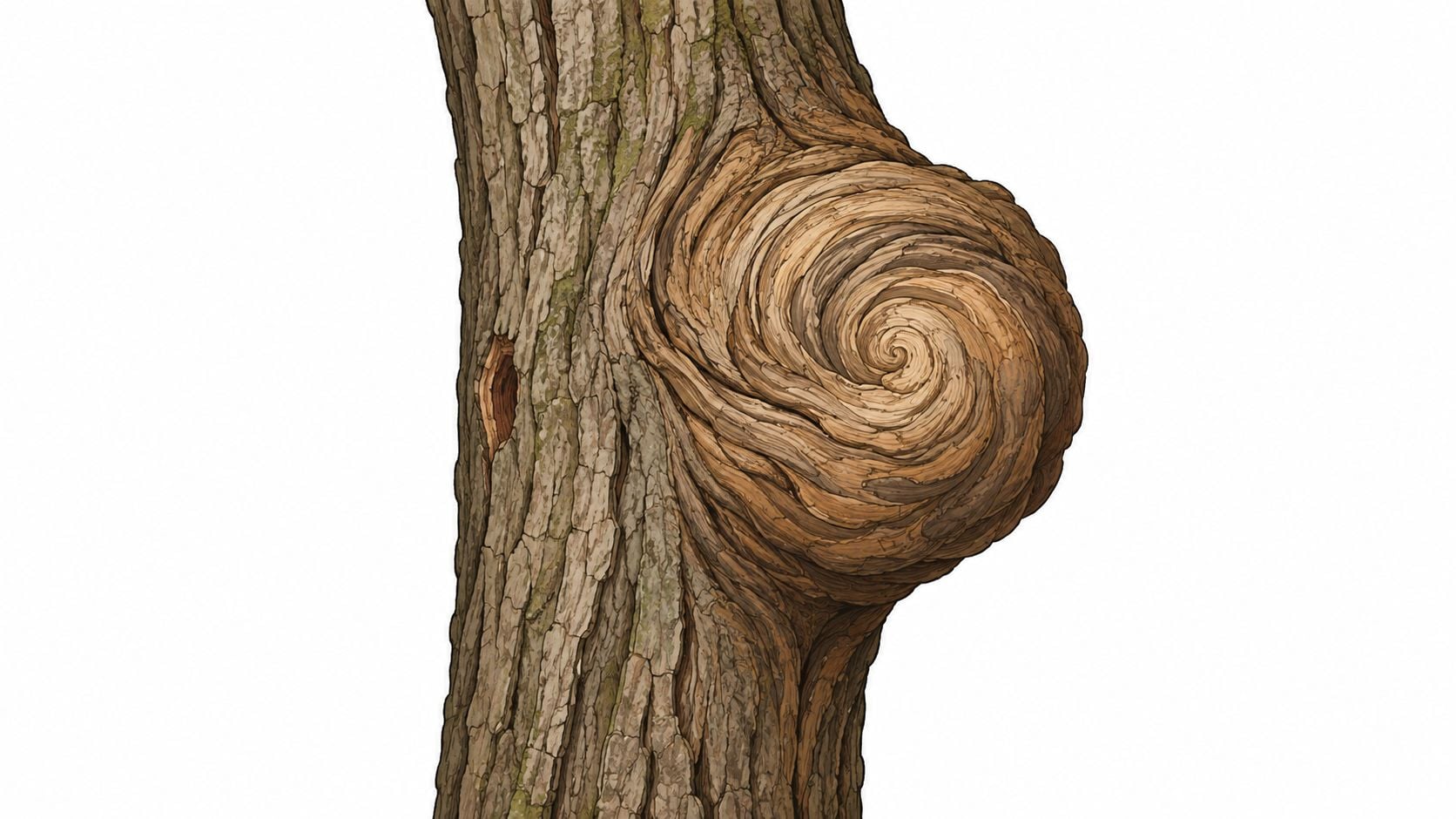
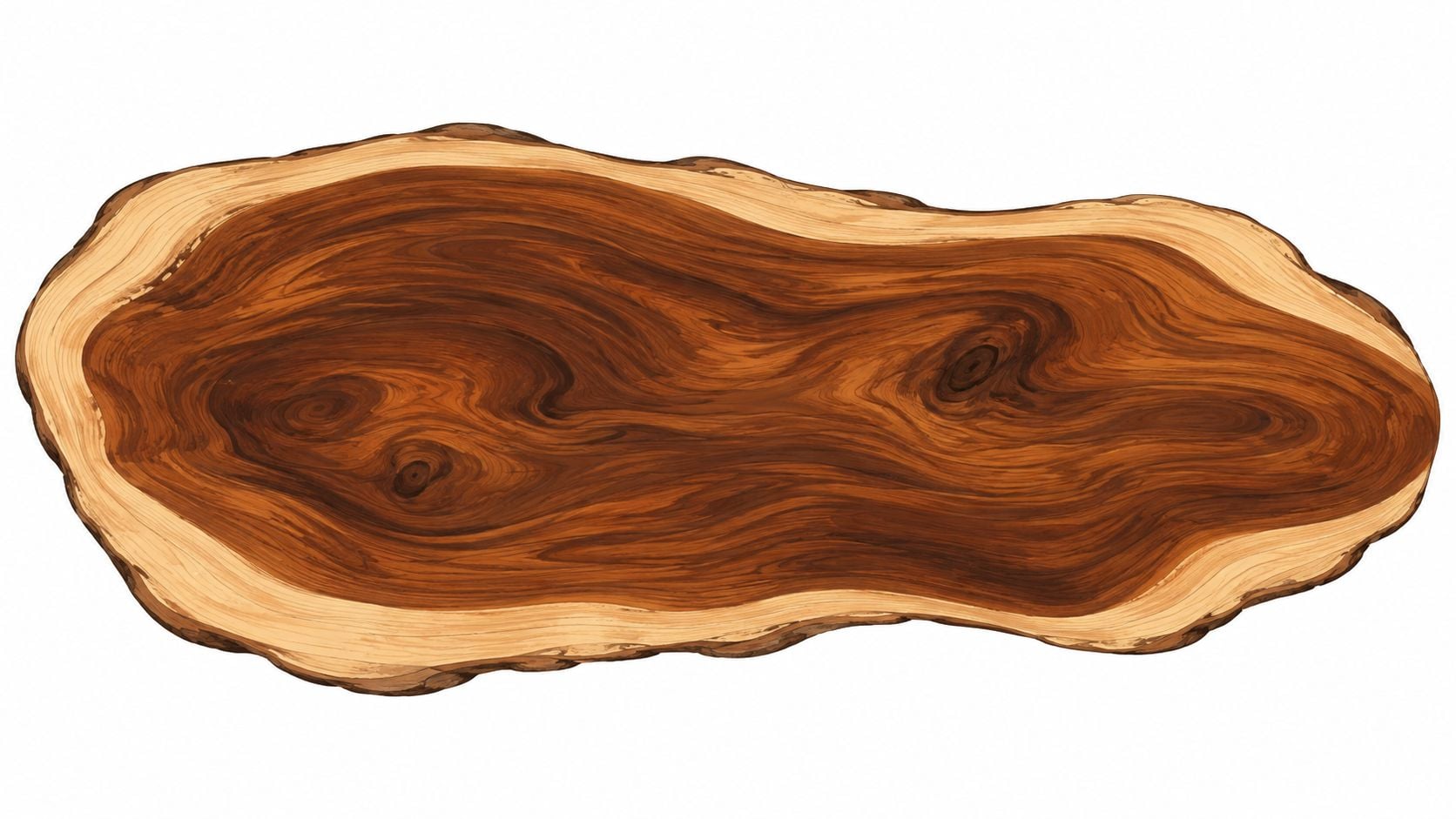
Straight walnut grain resembles a river flowing downstream. Burl grain resembles a whirlpool, with fibers turning and folding in different directions. Burl, also called burr, is a dense, highly figured growth that can develop after injury, infection, or other stress to a tree.
A useful comparison is a scar that becomes a fingerprint. The tree's disrupted growth creates the unusual pattern rather than a uniform stretch of ordinary wood. Those crowded changes in direction produce the eyes, curls, and tangled figure that cabinetmakers select for decorative surfaces.
A Decorative Material With a Long History
Burr walnut appeared on desks, bureaus, clock cases, card tables, and cabinets beginning in the 17th century. Its use is especially well documented through the 19th century, and substantial amounts went into American Victorian walnut furniture made approximately from the 1870s to 1900, much of it from old-growth American black walnut, as recorded in the U.S. Forest Service's history of black walnut.
That history helps explain its heirloom associations. Cabinetmakers weren't choosing burl for consistency or easy processing. They were selecting a scarce decorative material and investing skilled labor in arranging and finishing it.
A restrained cabinet could become a centerpiece through its surface alone. In a room, the equivalent is a coat cut with care, its extraordinary lining, except the craftsmanship remains visible every day.
Why Veneer Belongs in This Story
Burl growths are limited in occurrence and size. A broad furniture panel may therefore require carefully matched sections rather than a single uninterrupted slice.
Its changing grain direction also makes burl difficult to treat like ordinary lumber. Cabinetmakers generally sliced it into thin veneer, using the remarkable surface where it could make the strongest visual impression.
Practical rule: The word veneer describes a construction method, not a quality grade. The important questions concern the veneer, its backing, and the workmanship connecting them.
A comparison of North American hardwoods helps distinguish the wood species from its figure. Walnut identifies the wood; burl identifies an unusual growth pattern within it. With that distinction clear, shoppers can recognize why a particularly fine burl surface may command more than straight-grained walnut without assuming that every burl-labeled piece deserves a premium.
The Look and Feel of Burl Walnut Grain
Under showroom lights, burled walnut can resemble a patch of terrain viewed from above. Tight eyes gather beside broad, cathedral-like swirls, and rippled bands break up calmer areas. Chocolate and amber tones may meet paler edges, creating depth that a small product photo can flatten.
The surface has a story as well as a pattern. Burl begins as an irregular growth, a kind of scar in the tree; its twists and eyes turn that disruption into a fingerprint no two panels share. A satin finish feels smooth and slightly cool beneath the palm, while keeping the grain rich without a wet, mirror-bright shine.
Seeing Depth Rather Than Just Pattern
Chatoyance is the shifting sheen that appears as the viewing angle changes. It works like a silk ribbon turning beneath a lamp: the ribbon stays still, but different areas catch the light.
To see that effect, stand near a showroom window and move slowly around a stationary table, or ask a staff member to tilt a small finish sample. Leave substantial furniture in place; moving yourself gives a clear view without risking a lift.
- Look from a distance: Check that the overall pattern suits the room, not just a close-up.
- Inspect under changing light: Window and overhead lighting can bring out different parts of the figure.
- Touch with permission: Your hand may notice a rough edge or uneven transition that a photograph hides.
A substantial dining top may feel reassuring, but weight alone doesn't show how well it is made. Ask staff to handle any lifting, then examine the underside and ask what contributes to the weight.
Why the Look Feels Familiar
The figure has returned to fashion more than once. French Art Deco designers used burl in the 1920s and 1930s; American mid-century makers later used it selectively, and it had another popularity cycle in the 1970s. The Times reported a 205% increase in searches for burl wood during the first quarter of 2025, compared with the same period in 2024. It also reported that more than 85% of burl-furniture listings were for pieces from the 20th and 21st centuries, according to The Times' report on burl furniture's design history and renewed demand.
Use these milestones as context, then judge the piece on its own merits. Consider how its figure looks in your lighting, whether its surface suits your household's routines, and how long you expect to keep it. A distinctive pattern can hold attention for years, so weigh its appeal against the construction and care the piece will need over time.
How to Tell Real Burl Walnut From Imitations
At a showroom, a burl-front cabinet may look richly figured from across the room. Up close, the useful questions are what the surface is made of, what supports it, and how the piece can be repaired. A burl is a growth scar whose swirling grain becomes a kind of fingerprint. That figure is often applied as veneer, so “real burl” describes the wood's surface, not necessarily the entire cabinet.
Burl walnut construction types compared
| Type | What It Is | Visual Tell | Durability and Repair |
|---|---|---|---|
| Burl walnut veneer on engineered core | Thin sliced burl bonded to plywood or another stable panel | Irregular swirls, sometimes arranged in matched leaf pairs | Stable when well built; a specialist may repair damage with veneer patching |
| Solid walnut | Walnut boards throughout, without burl figure | Straight or gently wavy grain following each board | Moves with humidity; performance depends on suitable joinery; refinishing may be possible |
| Solid burl slab | A thick burl block used as a whole panel | Continuous figure without veneer seams; uncommon and costly | Greater cracking and warping risk; specialist assessment is advisable |
| Printed imitation | A printed image applied to laminate or particleboard | Repeated patterns and flat-looking edge transitions | Damage through the printed surface generally calls for replacement rather than wood repair |
| Reconstituted burl-look sheet | A manufactured burl-style sheet, including products formed with wood fibers and resin | Often more uniform; the product's composition matters more than its label | Performance and repair options vary; written specifications help clarify both |
Reading the Surface Without Jumping to Conclusions
Book-matched leaves are a sign of careful composition. Like two facing pages, adjacent veneer leaves can be placed together to form a mirrored pattern. That symmetry alone does not indicate a printed imitation.
A photograph can hide edge details, and an irregular pattern by itself does not establish authenticity. Ask the seller to identify the surface material and describe the backing in writing. The market analysis discussing walnut furniture and material transparency discusses interest in material origin and manufacturing. For a buyer, the practical step is to request clear documentation rather than assume that a natural-looking surface is automatically sustainable.
Questions Worth Asking Before Purchase
- Pattern: Is the surface natural burl veneer, a manufactured wood sheet, or a printed image?
- Substrate: What material supports the decorative layer?
- Component map: Which parts are solid wood, and which are veneered?
- Edges and end grain: How are exposed transitions finished?
- Finish record: What coating was applied, and what maintenance does its maker recommend?
- Repair options: What repair method is suitable if an edge lifts or the surface is damaged?
The distinction between solid wood and engineered wood helps clarify what each construction offers. Solid boards expand and contract as humidity changes, while veneered engineered panels can provide greater dimensional stability. Either type still depends on sound workmanship.
Tyner's Amish hand-crafted pieces use solid North American hardwoods, including cherry, oak, and maple. They offer a useful comparison for shoppers weighing material and construction, though solid hardwood and burl veneer serve different purposes.
To compare long-term value, consider the frame, drawers, backing, finish, and repair options together. A solid-hardwood bedroom dresser and a well-made burl-front cabinet may both be worthwhile investments. Their value depends on how they are built and maintained, not merely on whether a seller calls them "solid."
A seller who can explain each layer offers more useful reassurance than a label that only says “real wood.”
Where Burl Walnut Fits in Your Home
A dining table can make burl the room's focal point, while a bedside cabinet lets you enjoy the pattern in a smaller dose. Like a framed picture, burl reads best where its figure has room and light to be seen. Tabletops, doors, drawer fronts, and broad panels are natural places for it.
Where burl walnut works best
| Piece | Why Burl Suits It | Practical Note |
|---|---|---|
| Dining table | The top displays the figure during gatherings | Ask about protective finishing, pads, and available edge and leg options |
| Coffee table | Its low position keeps the surface visible from seating | Coasters help limit heat and ring marks |
| Console or credenza | Long panels can show a continuous or matched figure | Compare the finish on the back and sides |
| Sideboard or buffet | Door and drawer fronts give the pattern defined areas | Check that doors and drawers open and close smoothly |
| Home office desk | The work surface brings the figure into daily view | Ask how the edge is finished and whether the surface suits writing and device use |
| Bedside cabinets | Smaller pieces offer a modest way to bring burl into a room | Check alignment and drawer movement |
| Dresser or chest | Fronts and tops provide broad display areas | Look at the frame and drawer construction beneath the decorative surface |
Check the Structure, Not Just the Surface
A striking top is like a beautiful book cover: it tells you little about what supports it. Burl may be the visible fingerprint of a tree's scarred growth, but the piece's lasting value also depends on its frame, joinery, and drawers. Inspect the furniture as a whole rather than judging it by the most eye-catching panel.
- Open a drawer: Look at how its corners are joined and whether the drawer moves evenly.
- Inspect the case: Check beneath and behind decorative surfaces for sound, consistent construction.
- Check room fit: Measure the piece and allow for walkways and door clearance. This guide to choosing furniture for your home's layout can help you plan placement.
Tyner's selection spans the Home Office to Outdoor Spaces, so you can plan around a single statement piece or coordinate furnishings across rooms. To judge the investment, consider how long you expect to use the furniture and what construction details support that lifespan. A higher initial cost may make sense when the piece fits your home and is built for years of service.
Caring for Burl Walnut and Fixing Common Damage
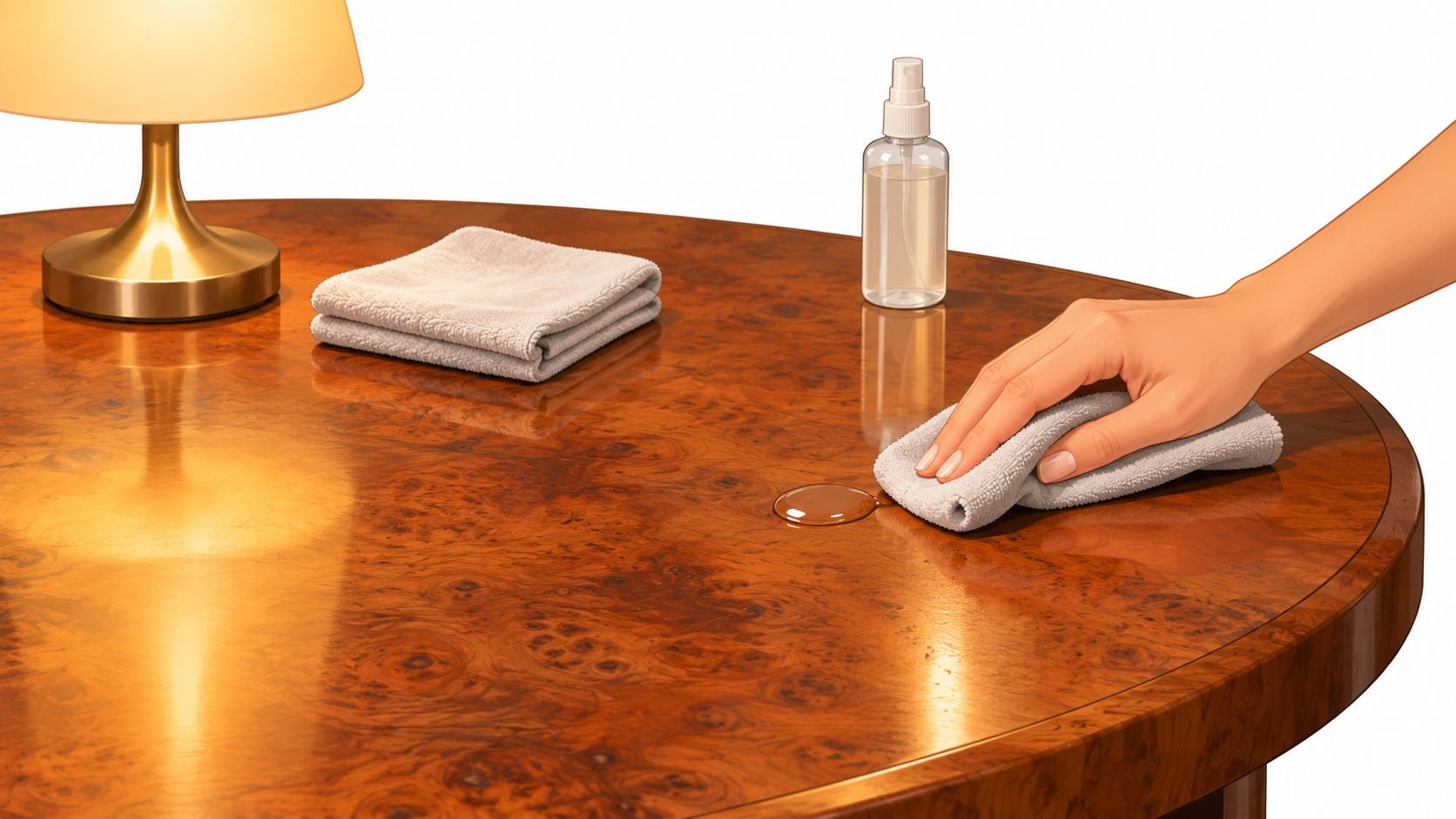
A polished burl tabletop can look like a work surface, but its figured face needs the gentler care of a decorative panel. Treat the finish like a protective coat: dust without rubbing grit across it, and blot spills before moisture has time to settle.
The care guidance for burled walnut wood recommends soft-cloth dusting, minimal moisture, protection from sunlight and heat, and avoiding ammonia-based cleaners. Follow the furniture maker's instructions for the specific finish.
- Dust weekly: Use a soft, dry cloth and lift away debris rather than grinding it into the finish.
- Remove spills promptly: Wipe with a barely damp cloth if needed, then dry the surface immediately.
- Choose mild cleaning: Avoid ammonia-based or harsh products, and follow the documented finish instructions.
- Use protective barriers: Set coasters and placemats beneath drinks and dishes, and felt pads beneath decor.
- Choose a stable location: Keep the piece out of direct sunlight and away from radiators and heat registers.
- Keep indoor conditions steady: Ask the maker for guidance on humidity and temperature for that piece.
Why Conservative Care Matters
Burl figure forms where grain changes direction around tightly clustered eyes and knots. Like a scar that becomes a fingerprint, those irregularities give each surface its distinctive pattern. They also make the decorative layer more sensitive to uneven moisture and poorly balanced construction, so care and repair should account for how the panel is built.
A top that looks thick may have only a thin figured layer over a stable base. Sanding a scratch can cut through that layer and erase the pattern, much like sanding a printed design off a sheet. For this reason, consult a qualified restorer before attempting abrasive repairs. A glossy coating adds visual depth but does not reinforce a failing glue line.
Burl walnut problems, causes and actions
| Problem | Likely Cause | What to Do |
|---|---|---|
| Light surface scratch | Contact with keys, decor, or abrasive dust | Clean gently; have a restorer assess deeper marks |
| Cloudy or hazy finish | Moisture, cleaning products, or dulled wax | Stop using the suspect product; request a topcoat assessment |
| White ring or heat mark | Hot dishes or moisture beneath a glass | Contact a restorer; avoid sanding the spot |
| Sun fading | Prolonged direct sunlight | Reconsider placement, rotate decor, and discuss window film; color matching needs professional judgment |
| Veneer blister or lifting | Humidity changes or poor adhesion | Prevent further moisture exposure and contact a restorer promptly |
| Loose edge | Seasonal movement or a worn glue line | Arrange professional regluing without forcing the edge |
| Cracked panel or structural failure | Stress, impact, or long-term movement | Stop using the affected component and seek professional repair |
Knowing When to Stop
These symptoms are clues, not diagnoses. A cloudy patch may affect the coating rather than the wood, while a small lifted edge can point to a larger adhesion problem.
Care boundary: Routine cleaning is suitable for owners. Sanding, stripping, veneer repair, and work on loose or cracked panels should go to a qualified furniture restorer or conservator.
Use this guide to protect wood furniture from scratches and stains as a prevention reference. Before treatment, photograph the affected area and look for the original finish specifications. For antiques or pieces with an uncertain repair history, professional assessment can help preserve options that abrasive treatment may remove.
What Burl Walnut Costs and Why It Holds Its Value
A burl can begin as a tree's scar, then become a fingerprint in the finished furniture. Its distinctive figure may catch a buyer's eye, but price works more like a house inspection than a beauty contest: construction, furniture type, period, finish, and condition all matter. Auction sales offer one limited reference point.
Recent secondary-market sales of antique burled walnut pieces
| Antique Piece | Sale Month | Sale Price |
|---|---|---|
| French Napoleon III period mirrored armoire | July 2024 | $397, recorded auction sale |
| French Louis Philippe period commode | September 2024 | $976, recorded auction sale |
| French Louis Philippe marble-top commode | November 2024 | $1,037, recorded auction sale |
| Italian marble-top bedside cabinets, pair | October 2024 | $244, recorded auction sale |
| Italian Art Deco sculptural side table | October 2024 | $159, recorded auction sale |
These figures are secondary-market sales of antiques, not retail quotations for new furniture. Period authenticity, burl figure, marble components, and condition may all affect an individual piece's appeal. The sale prices alone do not show how much each feature contributed.
A decorative wood does not guarantee resale value. An heirloom can be a sound purchase through years of use and enjoyment, even if it does not later sell for a profit.
Calculating Cost-per-Year
Divide the purchase price by the years you expect to use the piece. For example, a hypothetical dining table priced at $3,000 and used for 25 years has a purchase cost of approximately $120 per year. This is illustrative arithmetic, not a retail quote or a promise about the table's lifespan.
The comparison becomes more practical when it includes delivery, maintenance, repairs, and financing. Resale is uncertain, so avoid relying on a future sale to make today's purchase seem affordable.
A lower purchase price can still offer good value. The key is to check whether the construction and the piece's intended use suit your household, rather than choosing on price alone.
Pro-Tip: Compare the annual cost with the total cost of replacing a lower-priced alternative over the same period. Use reasonable assumptions, not a guaranteed lifespan for either piece.
Checking Financing Before Signing
A promotion can look like a clear payment schedule while hiding an important difference in how interest works. The Consumer Financial Protection Bureau's explanation of deferred-interest promotions notes that promotional periods commonly run six to twelve months. If the balance is not paid by the deadline, deferred interest can be charged retroactively from the purchase date. Deferred interest is not automatically the same as a true zero-interest loan.
Before signing, check:
- Promotion terms: Whether interest is deferred or waived.
- Payment obligations: The minimum payments and the amount needed to repay on time.
- Deadline and rate: The payoff date and applicable annual percentage rate.
Tyner offers Special Financing, subject to credit approval, alongside a Low Price Promise. For a new burl piece, request a written quote for the specific configuration, then estimate its annual cost using your household's intended use.
Styling, Finishes and Custom Options at Tyner
A dark walnut top against a pale wall gives the grain room to stand out, much like a framed artwork against a quiet background. Keep nearby patterns simple, then bring warmth through textures such as linen or leather. This approach lets the burl remain the focal point without making the room feel crowded.
Selecting the Sheen
A satin finish softens reflections and gives the surface a quieter look. A higher-gloss clear finish brings out the burl's depth and chatoyance, though fingerprints and signs of wear may show more clearly. The right choice depends on both the room and how the furniture will be used.
Compare finish samples beside your flooring, upholstery, and existing wood. View them near a window and under room lamps, since lighting can change how a finish appears. Also ask what cleaning and repair the finish requires. The custom wood finishes guide can help you prepare those comparisons.
Moving Beyond the Showroom Floor
In-stock pieces offer a starting point, while a special order may let you choose materials, dimensions, or configuration to better suit the room. Keep the request focused: identify the burl top or panel you want, ask what is available, and confirm how veneer will be matched across adjoining surfaces.
Tyner's options include custom upholstery, the dining program, and an ergonomic recliner line. For burl, ask whether the specific figure can be sourced for the selected piece. Online Quick Specs can help frame a special-order inquiry, but a general “walnut finish” description does not confirm that a particular burl pattern is available. Natural figure varies, so confirm availability before building the room around a specific look.
A finish sample can answer one question, but the construction details answer another. Ask which surfaces use solid wood and which use veneer, and how the figured veneer will be arranged. That distinction helps set expectations about the visible pattern and the furniture's overall build.
Asking About Sustainable Choices
Using veneer can make efficient use of scarce figured timber, but veneer alone does not establish that a piece is sustainable. Ask about material origins, and consider whether the furniture can be maintained and repaired over time.
The practical test is whether the piece suits both the room and the care it will receive. Custom options are most useful when they improve that fit, rather than adding choices for their own sake.
Visit the Ann Arbor Showroom for a Sit Test
A chair can look comfortable across a showroom, yet feel different once you sit down. Tyner Furniture has served Ann Arbor and Southeast Michigan since 1957, bringing more than 65 years of local experience to furniture selection. The South State St. showroom lets shoppers test how materials and furniture fit real rooms.
Making the Visit Useful
Bring room measurements and photographs that show the space and its lighting. For a cabinet, check that nearby walls and furniture leave enough room for the doors to open fully. For a dining table, sit in a chair and see whether the table height feels comfortable for eating.
Ask staff to explain which parts are solid wood and which are veneered, and request written details for any special order. Try both a dining chair and a recliner, paying attention to support and how easily you can get in and out. These are practical checks, not just questions of appearance.
Financing and price terms should leave room for a considered decision. Ask for a written summary of the selected materials, care requirements, configuration, and payment terms so you can review the details at home.
For burled walnut furniture, Tyner Furniture offers material guidance, hand-crafted hardwood alternatives, and custom options. A showroom visit on South State Street lets you inspect finishes and test seating in person. Online Quick Specs can help start a conversation about burl panels, veneer matching, and room-specific configurations.