High Back Dining Chairs: How to Choose the Right Fit

The dining table still works, but the chairs don't. Perhaps their backs feel hard halfway through dinner, their cushions have softened, or their low profiles look out of place beside a substantial wood table. High back dining chairs seem like a sensible upgrade, until the choices multiply: open slats, upholstered wings, wood species, arm heights, and dimensions that don't explain how the chair feels.
A good choice starts beneath the tall back. Seat fit, usable support, table clearance, and frame construction determine whether a chair earns its place through everyday meals and longer gatherings. Style matters, but a handsome silhouette can't compensate for dangling feet or a frame that moves at its joints.
Measurements and Comfort That Make a High Back Work
A spec sheet describes the seat nobody sits on: uncompressed and unoccupied. Judge seat height and back height separately. A dramatic back says little about whether a diner can reach the table comfortably, rest both feet on the floor, or stand without pushing off the table edge. Those checks belong ahead of fabric and finish selection.
Conventional dining furniture lands within narrow bands. Seats typically run 17 to 19 inches from the floor and tabletops about 28 to 30 inches, which leaves roughly 9 to 13 inches between the occupied seat and the underside of the top. Many dining seats also tilt backward about 5 degrees, an angle intended to support a more natural seated posture. Treat these as starting dimensions, not substitutes for measuring the actual furniture.
Back height needs its own reference point. The University of Washington's ergonomics furniture guidance supports a minimum backrest height of approximately 13.9 inches above the compressed seat, with 17.7 inches (45 cm) a stronger target for broader back support. Measuring from the compressed seat matters because cushion give reduces usable back height. This office-derived guidance is a comparison tool, not a dining-chair certification.
Dining Chair Measurements That Matter
The ranges below bring those dimensional checks together. The backrest measurements describe usable support above the compressed seat rather than overall chair height.
| Measurement | Typical range | Why it matters |
|---|---|---|
| Seat height from floor | 17–19 in | Pairs with a 28–30 in dining table |
| Dining table height | 28–30 in | Sets the seat-to-tabletop gap |
| Seat-to-tabletop clearance | 9–13 in | Leaves room for thighs and comfortable arm positioning |
| Backrest above compressed seat, minimum | 13.9 in | Floor-based height overstates usable support |
| Backrest above compressed seat, stronger target | 17.7 in (45 cm) | Supports more of the back |
| Seat tilt | About 5 degrees backward | Follows a more natural seated posture |
A thick apron beneath the tabletop can make an otherwise compatible chair uncomfortable. Measure from the floor to the apron's lowest edge, then check the occupied seat against that opening. A chair also needs to pass between the table legs, not merely underneath the top.
Armrests add their own trade-off. They give a useful pushing surface when standing, but an arm that strikes the apron keeps the diner farther from the table. The guide to dining table heights separates tabletop height from the clearances that govern fit.
Practical rule: Measure the chair with someone sitting in it. An unoccupied cushion doesn't reveal the working seat height.
Test the Person, Not Just the Product Label
Research on age-friendly seating identifies seat height as the most important factor in sit-to-stand transfers, while armrests can assist entry and exit. A higher seat may ease standing, but excessive height leaves a shorter person's feet unsupported. A tall, elegant back can still fit badly.
A useful showroom test follows the way a chair will be used at home:
- Sit at a dining table: Keep feet flat and knees near hip level. Check for pressure behind the knees and underneath the thighs.
- Compare body and seat height: Measure from the back of the knee to the floor and compare that with the occupied seat.
- Repeat the transfer: Stand and sit several times, noticing whether the body needs momentum or a strong pull on the table.
- Settle against the back: Check for comfortable lower-back contact without a hard ridge or shoulders pushed forward.
- Reach naturally: Bring the hands toward a place setting without sliding away from the backrest.
Cushion firmness deserves its own check. A plush surface can feel welcoming at first yet settle low enough to change knee position and table reach. Meliusly's resource on choosing cushion supports for chairs offers context for assessing cushion support, though an added support shouldn't disguise a damaged frame.
For mixed-height households, a made-to-order program gives a route to discussing seat height chair by chair, within the specifications each model offers. Matching finishes can preserve a coordinated appearance even when every seat doesn't share identical dimensions.
Finally, treat the tall back as weight the lower frame has to carry. Each time a sitter leans back, the backrest's height acts on the rear joints like a lever, so a chair that feels firm in the showroom can loosen early if its undercarriage is light. Grip the top rail and push sideways; any movement low in the frame will grow under daily meals. Fit and frame together set the actual price: a chair that seats every diner well and stays tight divides its cost across years of use, while one that fits badly gets replaced early, whatever it cost.
Matching High-Back Styles to Your Room and Table
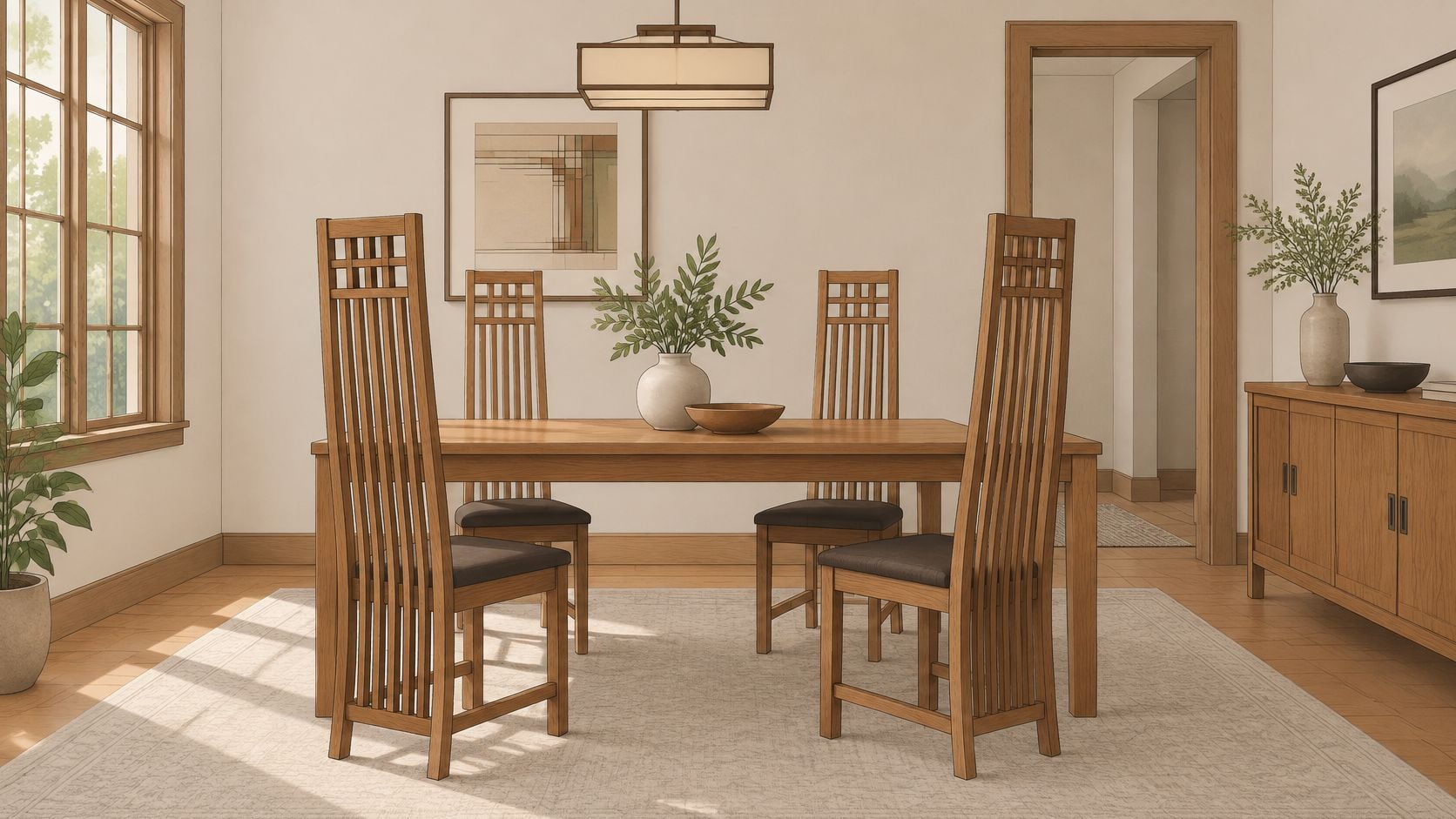
Once a chair fits the measured table, its back should suit the room's scale rather than compete with it. Height and visual bulk aren't the same thing: open slats preserve sightlines, while a solid upholstered panel creates a more enclosed dining area.
Open-backed designs have a long architectural lineage, including Frank Lloyd Wright's 1895 American-oak dining chair, documented in the Journal of Design History. The useful lesson for a present-day room is straightforward: a tall outline can still feel light when space remains visible between its components.
Open Wood or Upholstered Enclosure
Slat backs work well where dining furniture sits near windows, passageways, or an adjoining living area. Narrow vertical members give the table definition without presenting a continuous wall of material. Their drawback is contact: a straight slat pattern that looks crisp may not follow the sitter's back comfortably.
Upholstered high backs introduce softness through fabric, padding, and shape. Channel stitching can emphasize vertical lines, while a winged profile gives each place setting a more enclosed feel. They suit formal dining rooms and living-dining combinations, but they bring more visual weight and additional surfaces to maintain.
The tactile difference matters. The smooth edge of finished oak feels quite different from a textured woven fabric or the buttery feel of top-grain leather. Neither is automatically more comfortable, because the frame shape and support underneath remain decisive.
Spindle and Windsor-style backs suit traditional and farmhouse settings, particularly when the surrounding furniture has curved profiles. Ladder backs offer a more rustic, hand-crafted note. The dining-chair styles guide provides useful vocabulary for comparing those silhouettes without treating a style label as a comfort rating.
Match the Whole Composition
A broad, tall chair can crowd a small round table even when everyone technically fits. Around a wider rectangular table, that same chair may look properly proportioned. View the arrangement from the doorway and the adjoining seating area, not just from directly beside the table.
Wood tones need coordination rather than an exact imitation. A warm table finish usually benefits from a chair finish with compatible undertones, while deliberate contrast needs repetition elsewhere in the room. Canadel's choices of leg styles, table edges, and finishes allow a bespoke combination rather than a forced match to stock.
Wall treatments influence the balance, too. Jessie's Home's contemporary wall decor and canvas prints can serve as a reference when considering how artwork relates to tall chair backs. Busy upholstery, closely spaced slats, and intricate wall art can leave a dining area feeling crowded even when its floor plan is generous.
Pro-Tip
- Test the pairing: Place the chair beside the intended table before ordering.
- Compare undertones: Evaluate wood samples against the tabletop in natural light.
- Protect sightlines: Favor open backs where furniture already fills the room.
The final interior design decision is whether the chairs should make a statement or support a coordinated set. A sculptural end chair may deserve attention; everyday side chairs may work better with quieter lines. Both approaches succeed when the contrast looks intentional.
Solid Wood Joinery Versus Veneer and Upholstered Frames
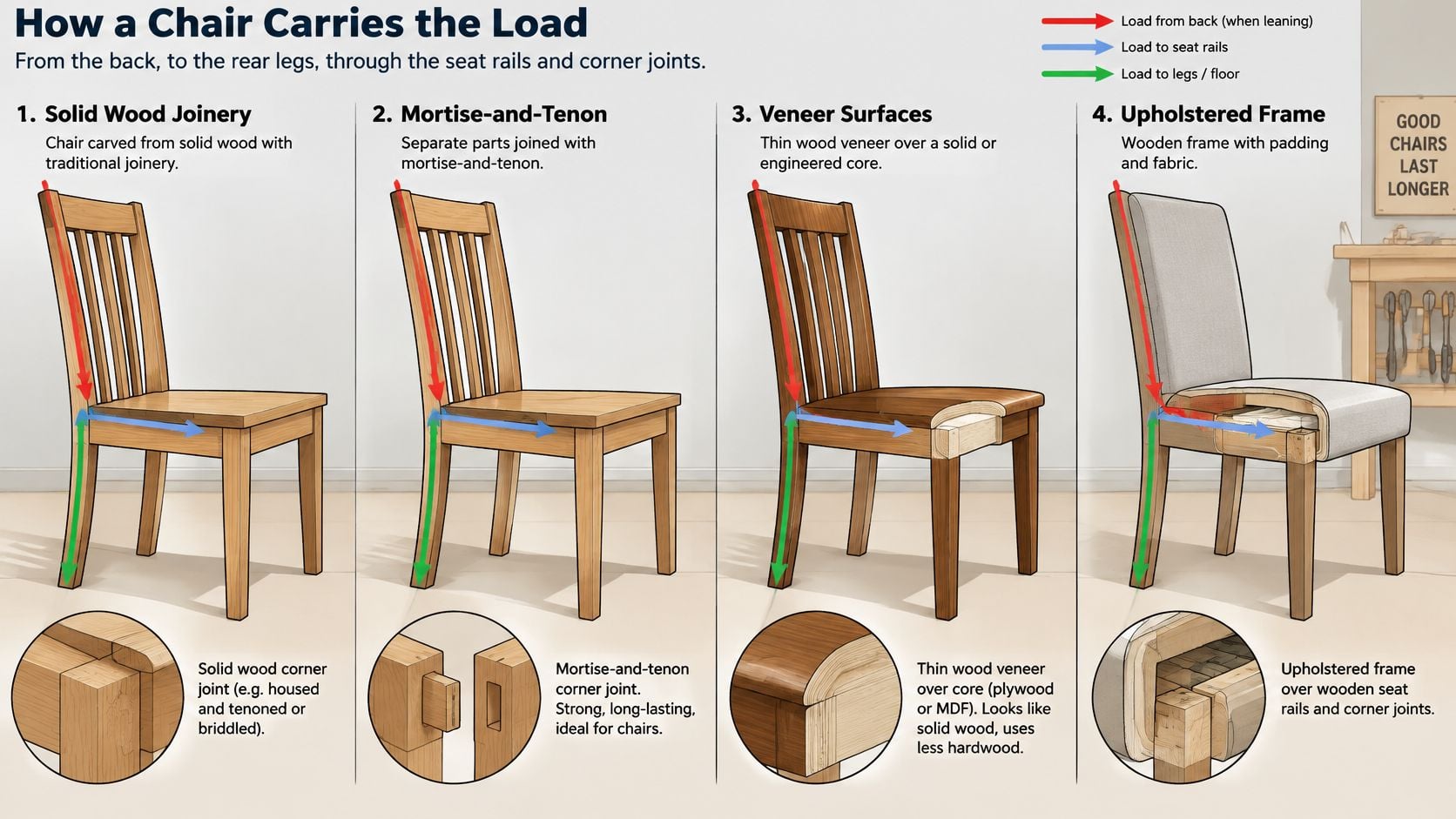
A tall back acts as a lever. When someone leans against it, the load travels into the rear legs, seat rails, and corner joints, so the visible back is only as reliable as the structure underneath.
Material integrity and joint design belong in the same conversation. A substantial-looking chair can conceal weak connections, while an upholstered chair can contain a carefully engineered hardwood frame. The following comparison describes common construction patterns, not a guarantee attached to a material label.
Solid Wood, Veneer and Upholstered High Backs Compared
| Feature | Solid hardwood, Amish-built | Veneer or composite | Upholstered high back |
|---|---|---|---|
| Joinery | Mortise-and-tenon; dovetails where appropriate | Glued panels and surface fasteners in some constructions | Frame joints hidden under fabric |
| Load path | Rear legs and seat rails carry the back | Structural core and frame connections carry the load | Foam and webbing transfer loads into the frame |
| Repair options | Re-glue, repair tenons, refinish | Surface veneer can chip or lift; core repairs may be limited | Re-covering; check replacement parts first |
| Finish customization | Wood species and stain chosen at order | Often restricted to factory finishes | Fabric and leather choices |
A mortise-and-tenon joint places a projecting wood tenon inside a matching recess. A dovetail uses interlocking wedge-shaped sections to resist separation, particularly in drawers and related components, as explained by the Studio Matrx materials and manufacture guide. Dovetails elsewhere in a dining collection don't establish how its chair backs are joined.
Tyner's Amish hand-crafted pieces use solid North American hardwoods such as cherry, oak, and maple, with traditional joinery and made-to-order finishes. The weight of solid cherry and the continuity of its grain offer tangible clues, but neither replaces an examination of the underside. Mass-produced alternatives deserve the same scrutiny: identify the structural material, connection method, and repair access.
Ask What Repeated Use Will Do
ANSI/BIFMA seating references presented by IISE describe back durability testing involving 120,000 cycles, illustrating why repeated-load performance tells more than an isolated weight claim. That reference doesn't mean an individual dining chair has passed such testing. The maker should identify what, if anything, was tested.
A practical inspection should stay controlled:
- Sit fully back: Apply moderate alternating pressure to the upper back without tipping the chair.
- Watch the connections: Look for movement between the back, seat, and rear legs.
- Listen carefully: Creaking or visible separation warrants a closer examination.
- Inspect beneath upholstery: Ask about frame materials, webbing attachments, and access for repairs.
Soft foam can bottom out and leave the frame carrying pressure more abruptly. The upholstery materials guide helps separate cover selection from the support beneath it.
For a sustainable purchase, ask for evidence behind sourcing claims. The imm cologne discussion of durable design and transparent supply chains highlights durability and credible certifications such as FSC or PEFC. Certification supports a sourcing claim; it doesn't replace inspection of craftsmanship or establish repairability.
Caring for a High-Back Chair So It Lasts
Solid hardwood responds to seasonal humidity changes. A reasonably steady indoor environment, with chairs away from heat registers and prolonged direct sun, helps limit stress on the wood and finish. Felt pads also reduce dragging resistance, so moving a chair doesn't place unnecessary sideways force on its legs.
Maintenance should follow the chair's construction rather than a universal cleaning routine. A sound frame and a clean cover need different kinds of attention.
A Practical Care Routine
- Check connections: Gently rock the chair while keeping its feet on the floor. Investigate new creaks, looseness, or gaps before continued use enlarges the damage.
- Treat joint problems correctly: Tighten accessible hardware when appropriate, but have loose glued joints assessed rather than driving in an improvised screw.
- Remove spills promptly: Blot liquids, then use a soft cloth and a finish-compatible cleaner. Avoid soaking seams and joints.
- Protect upholstered surfaces: Vacuum seams and cushions regularly, rotate removable cushions where the design permits, and follow the fabric's cleaning code.
- Condition leather selectively: Use a product approved for that leather finish, not a general household polish.
A worn finish can often be renewed. A loose structural joint needs attention before the chair returns to everyday service.
Solid wood generally offers more scope for sanding and refinishing than a thin veneer, which can be sanded through. On dining tables, placemats and coasters protect surfaces from hot dishes and wet glasses; chair finishes need protection from damp clothing and unsuitable cleaning products.
The wood-furniture protection guide offers further care guidance. Keep receipts, finish details, fabric identification, and repair contacts together so future service doesn't begin with guesswork.
What a High-Back Chair Costs Over Its Lifetime
Cost Per Year for a Long-Lived Dining Chair
Divide the purchase price by the years of service and you have cost per year, before maintenance or resale. Factlen's furniture-longevity discussion describes traditionally joined furniture lasting 15 to 20 years or longer, alongside shorter replacement cycles, and supplies the purchase prices used in these examples.
| Chair scenario | Purchase price | Years of service | Cost per year |
|---|---|---|---|
| Well-built solid wood chair | $1,000 | 20 | $50 |
| Well-built chair, shorter service example | $1,000 | 15 | About $66.67 |
| Lower-priced chair replaced every four years | $250 | 4 | $62.50 |
| Lower-priced chair replaced at three to five years | $250 | 3–5 | About $50–$83.33 |
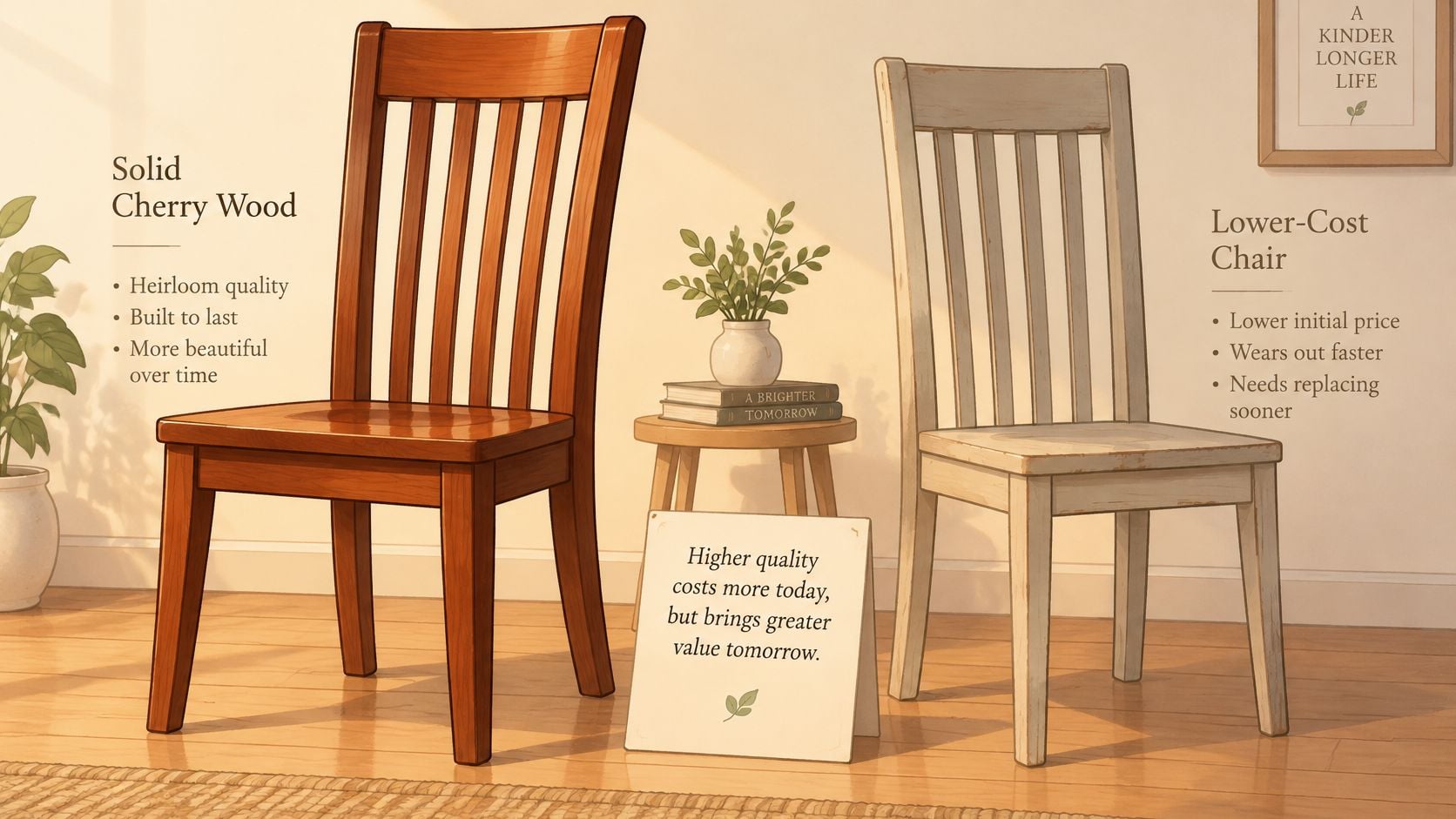
These are illustrative ownership calculations, not forecasts for a particular chair. A higher price only becomes a better investment when the chair stays comfortable, structurally sound, and worth repairing. That last point carries extra weight with a high back: a taller backrest levers more force into the rear legs and joints every time someone leans, so a frame that can be tightened or reglued keeps earning its place at the table. If one feature deserves the extra money, I'd pick joinery that can be repaired.
The shorter-service example guards against an overly simple conclusion. Paying more does not automatically lower annual cost, especially in a household that changes styles often or chooses upholstery that proves impractical. Heirloom value depends on continued use, not on a description printed on a sales tag.
Make the Budget Match the Commitment
Special Financing, subject to credit approval, can spread payments across a household budget. It does not change the need to compare total cost, repayment terms, and the cash available for other needs. Tyner Furniture's Low Price Promise carries its own terms, which are worth reviewing before purchase.
A promotional no-interest offer may involve deferred interest rather than a permanently interest-free loan. The Consumer Financial Protection Bureau's Regulation Z advertising rules require qualifying deferred-interest advertising to state "if paid in full" and identify the promotional period. Check the payoff deadline, required payments, and the consequences of a remaining balance instead of relying on the advertised monthly amount.
Pay for Fit, Not Unnecessary Replacement
In-stock is just the beginning. Made-to-order furniture can coordinate dimensions, materials, and finishes with an existing room. Keeping a suitable table and ordering chairs that fit its underside clearance, seat height, and the posture of the people using it often makes more sense than replacing an entire set that fails on fit.
Canadel offers choices across leg styles, table edges, and finishes. Elsewhere in the home, Stressless recliners offer custom sizing, while upholstery selections include premium fabrics and top-grain leather. Those programs serve different furniture needs, so confirm the available configurations for the specific piece.
The guide to high-end dining chairs offers another starting point for weighing construction against price. The cost-per-year verdict is conditional but clear: paying for lasting fit, repairable construction, and usable customization tends to outvalue repeatedly replacing a chair that never quite worked.
Book a Sit Test at the Ann Arbor Showroom
An online shortlist is useful; a seated comparison settles questions that photographs can't. The pressure of a back rail, the ease of moving an armchair, and the feel of a seat edge become clear only when someone uses the chair. Lean back with your full weight and the taller back acts as a load on the lower frame: a well-joined chair holds steady, while a weaker one shows the wobble no product photo reveals.
In a 2024 survey of approximately 1,800 consumers planning to buy furniture, 77% preferred purchasing in-store, according to Home News Now's report on CIN research. For comfort-focused purchases, that preference has a practical advantage: several options can be tested under comparable conditions.
Bring the Room Into the Appointment
A visit to the South State Street showroom in Ann Arbor is more productive with a few details prepared:
- Table information: Bring tabletop and underside measurements, plus a photograph showing the legs and apron.
- Room context: Include pictures from the doorway and adjacent living spaces.
- Material references: Carry a wood sample or fabric swatch when an existing finish needs coordination.
- Personal priorities: Identify whether easier standing, softer contact, simpler cleaning, or a lighter movable chair matters most.
The final assessment should cover clearance and seat height, compressed-seat back support, build quality, and personal fit. Sit at a real table, slide forward until the seat edge meets the back of your knees, and check whether the apron still leaves comfortable legroom. Comparing open slats with upholstered backs under those conditions makes priorities easier to weigh without relying on a style label.
Tyner Furniture offers dining seating, Amish hand-crafted solid wood pieces, and made-to-order options for households seeking lasting comfort. Visit the Ann Arbor showroom on South State Street for a sit test with table measurements in hand, or browse online Quick Specs to prepare a focused special-order shortlist. Special financing and price details then support a decision the chair has already earned.