Queen Mattress and Bed Frame Sets

Scrolling through bed options late at night can leave any shopper with more tabs open than answers. One listing says plush, another says supportive, a third promises storage, and a fourth looks beautiful until the room measurements come out. For many households in Ann Arbor and across Southeast Michigan, the search for queen mattress and bed frame sets starts that way. It often feels less like decorating and more like sorting through noise.
A bed isn't just another purchase. It's the place where a room settles into its purpose, and where daily comfort either works quietly in the background or becomes a frustration every evening. Since 1957, local furniture shoppers have leaned on careful, practical guidance because the right bedroom choice should bring ease for years, not just look good for a weekend.
Table of Contents
- Your Guide to Choosing a Bedroom Set That Lasts
- Matching Your Mattress to Your Sleep Style
- Choosing a Bed Frame for Form and Function
- The Solid Wood Difference of Amish Craftsmanship
- Ensuring a Perfect Fit in Your Space
- Planning Your Purchase and Seamless Delivery
- Why a Visit to Our Ann Arbor Showroom Matters
Your Guide to Choosing a Bedroom Set That Lasts
A common scene in the showroom starts with a homeowner holding a phone full of screenshots and asking a simple question. Which one of these is worth buying? That question usually isn't about fashion. It's about whether the bed will fit the room, support sleep well, and still feel like a smart decision years later.

The queen size stays at the center of that conversation because it solves a real-life balancing act. The queen has become the most popular mattress size, especially for couples and taller sleepers, and its 60-by-80-inch surface provides 4,800 square inches of sleeping area, over 20% more than a full bed, which helps explain why it fits so many households so well, according to Sleepopolis on queen bed frames.
Why queen often becomes the practical answer
For a guest room, a primary bedroom, or a first home that needs flexible planning, a queen usually lands in the middle ground that shoppers want:
- Enough space for two sleepers without overwhelming a medium bedroom
- A familiar standard size that makes sheet shopping simpler
- A wide range of frame styles from understated platforms to more traditional statement beds
- A better long-term fit for households that want comfort without stepping up to a much larger footprint
A bedroom set should serve the room that exists, not the fantasy floor plan from an online listing.
That's why the smartest buying process starts with livability, not impulse. A mattress and frame set has to work with the sleeper, the room, and the home's overall rhythm. It also helps to compare the bed against the rest of the room instead of judging it in isolation. A solid guide to selecting the perfect bedroom furniture can help frame that bigger decision.
What lasting value looks like
A good bedroom set earns its place over time. It supports healthy rest, anchors the room visually, and doesn't ask for replacement the moment tastes shift. In a market full of short-lived trends, craftsmanship, scale, and material quality still matter most.
That perspective has shaped furniture buying in Southeast Michigan for generations. Not every shopper needs ornate styling or a fully bespoke room, but nearly everyone benefits from choosing with patience.
Matching Your Mattress to Your Sleep Style
The mattress does the daily work. The frame may shape the room, but the mattress shapes the sleeper's experience night after night. When shoppers get stuck, it's often because they're trying to decode marketing terms instead of focusing on feel, support, and how the body rests.

How each mattress type tends to feel
An easy way to compare mattresses is to think in plain sensory terms.
Innerspring tends to feel familiar. It has a lift and responsiveness many sleepers grew up with. People who don't like sinking into a bed often prefer this style because movement feels easier and the surface feels more buoyant.
Memory foam acts more like a custom cradle. It conforms around shoulders, hips, and curves, which many sleepers appreciate when pressure points become bothersome. Some people love that hugged feeling. Others decide it's more contour than they want.
Latex usually feels responsive rather than slow-moving. It cushions, but it doesn't cling to the body the way memory foam can. For shoppers who want support with a cleaner, springier feel, latex often deserves a close look.
Hybrid mattresses combine foam comfort layers with coil support underneath. These can be a good middle path for households that want contouring and pushback in the same bed.
Practical rule: A mattress should keep the body supported in a neutral posture without making movement feel like work.
How sleep position changes the choice
Sleep position narrows the field quickly.
- Side sleepers usually need enough give at the shoulder and hip so those areas don't take the brunt of body weight.
- Back sleepers often do well on a surface that supports the lower back without sagging.
- Stomach sleepers generally need to be careful about going too soft, since excessive sink can throw alignment off.
Firmness is where confusion often peaks. A mattress can be high quality and still be wrong for a sleeper if the feel doesn't match body shape and sleep posture. Readers who want a plain-language outside resource can review this guide to medium-firm mattresses for side sleepers, which explains firmness in a useful, body-focused way.
Two questions that simplify the decision
Shoppers can cut through a lot of indecision by asking:
- Does the mattress relieve pressure where the body feels it most?
- Does it make changing position easy or difficult?
That second question matters more than many people expect. A bed can feel comfortable for a minute in the showroom and still become tiring across a full night if movement feels restricted.
For households comparing feel categories in more detail, this breakdown on how to choose mattress firmness helps connect body type, sleep style, and comfort preferences.
Choosing a Bed Frame for Form and Function
A queen frame does more than support a mattress. It sets the visual tone of the room, influences how open or crowded the space feels, and can solve very practical problems such as storage, height, or everyday convenience. That's why shoppers looking at queen mattress and bed frame sets should weigh function before focusing on finish or headboard shape alone.
What each frame style solves
A platform bed suits people who want clean lines and a lower-profile look. It often appeals to shoppers aiming for a quieter bedroom aesthetic. In smaller spaces, that visual simplicity can make the room feel calmer.
A storage bed earns attention in homes where closet space is limited. Drawers built into the frame can hold extra bedding, off-season layers, or items that would otherwise crowd a dresser. In many Ann Arbor homes and apartments, that practical gain matters every day.
An adjustable base speaks to comfort and ergonomics first. It's often considered by shoppers who read in bed, watch television before sleeping, or want more personalized positioning. The frame becomes part of the sleep system, not just the structure underneath it.
A sleigh bed or other statement frame brings more visual weight. It works best when the room has enough breathing room to support it. This kind of bed can make a primary bedroom feel grounded and complete, especially when paired with case pieces that share the same craftsmanship and finish language.
The right frame answers a household need. It shouldn't create one.
Queen Bed Frame Style Comparison
| Frame Style | Primary Benefit | Best For | Box Spring Needed? |
|---|---|---|---|
| Platform | Clean, streamlined support | Minimalist rooms and lower bed profiles | Usually no |
| Storage Bed | Built-in organization | Bedrooms short on storage | Depends on design |
| Adjustable Base | Personalized ergonomic positioning | Readers, loungers, and comfort-focused sleepers | No |
| Sleigh Bed | Strong traditional presence | Larger rooms and classic interiors | Often yes |
Some shoppers already know they want a specific look. Others need the frame to solve a storage issue or support a mattress type properly. Either way, support requirements matter. A mattress placed on the wrong base can affect comfort, durability, and bed height. This guide on why a box spring may still be needed is useful when sorting through frame compatibility.
Small details that change daily life
The most satisfying frame choices often come down to ordinary routines:
- Getting in and out easily at the chosen height
- Opening drawers without crowding walkways
- Matching the room's architecture rather than fighting it
- Supporting the mattress correctly so comfort lasts
That's why in-stock options are only a starting point. Some households need a warmer wood tone, a different headboard scale, or a frame that coordinates with existing case goods. In those moments, made-to-order flexibility matters. Canadel is often associated with dining customization and Stressless with ergonomic seating, but the larger lesson applies here too. Personalization usually leads to longer satisfaction because the furniture fits the home instead of forcing the home to adapt.
The Solid Wood Difference of Amish Craftsmanship
Mass-produced furniture often looks acceptable on a screen. The difference becomes obvious when a shopper touches the piece, opens the drawer, or lifts a rail. Solid wood has presence. It carries weight, texture, and a steadiness that thinner materials can't imitate for long.
Why material integrity matters
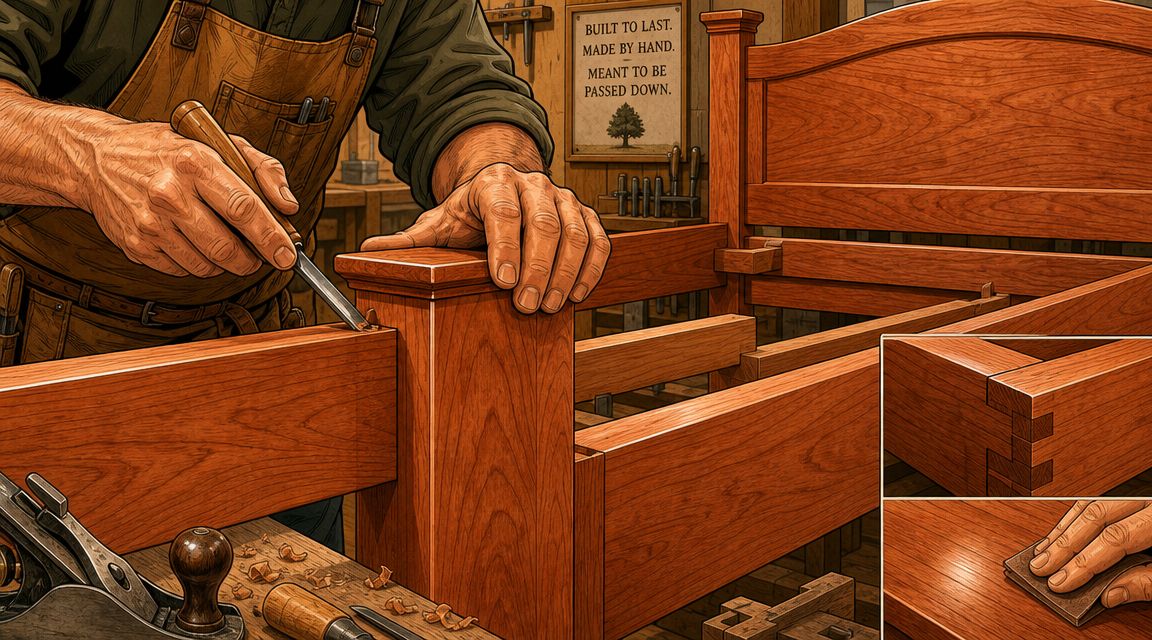
A hand-crafted solid wood bed frame tends to show its value in the least glamorous places. The joinery is tighter. The rails feel more substantial. Drawer boxes don't rattle with that hollow, hurried sound shoppers know too well. The grain has depth because it is wood, not a printed suggestion of wood.
For bedroom furniture, that matters because beds absorb years of use. People sit on the edge while getting dressed. They lean against headboards while reading. They move, shift, and live with these pieces daily. A bed built from solid hardwood with durable joinery is better suited to that real use than a piece designed mainly to hit a shipping target.
Key signs of stronger construction include:
- Solid wood components rather than thin surface layers over engineered cores
- Dovetail drawer joinery that locks together with mechanical strength
- Mortise-and-tenon construction in key structural points of the frame
- A finish that complements the grain instead of hiding it
In Southeast Michigan, many shoppers gravitate toward Amish hand-crafted furniture for exactly this reason. It feels less disposable and more like a long-term household investment. Readers who want a focused look at that category can browse Amish furniture in Michigan.
Customization makes a set worth keeping
Durability alone doesn't make a piece heirloom-worthy. A bed also needs to belong in the room aesthetically for many years. That's where bespoke options matter.
A made-to-order solid wood frame lets a shopper choose the species, finish, and often the design details that tie the bed to the rest of the home. The lighter character of maple feels very different from the richer depth of cherry or the familiar grain of oak. Those choices change the mood of the bedroom in a lasting way.
Good furniture should age into the home, not look outdated the moment a trend changes.
A local showroom can be helpful without turning the experience into a sales pitch. One option available in Ann Arbor is Tyner Furniture, where shoppers can see hand-crafted bedroom pieces alongside offerings for the home office, dining room, and outdoor spaces. The larger point is broader than any single store. Customization often protects long-term value because it reduces the urge to replace furniture that was never quite right in the first place.
What shoppers usually notice first
They notice the drawer glide. Then the weight of the wood. Then the finish, especially when light moves across the grain. A well-made bed doesn't need flashy language. It usually explains itself the moment someone uses it.
Ensuring a Perfect Fit in Your Space
A beautiful bed can still be the wrong purchase if it overwhelms the room or can't make the turn up the stairs. Measuring is the least glamorous part of bedroom shopping, but it prevents some of the most expensive mistakes.
Measure the room first
A standard queen mattress is 60 inches wide by 80 inches long, and the frame usually adds 2 to 5 inches in each direction. For comfortable circulation, a queen set is best suited to a bedroom of at least 10 by 11 feet, allowing for about 36 inches of walking space around the bed, according to Purple's guide to queen bed frame dimensions.
That guidance matters because shoppers often measure only the mattress and forget the frame's real footprint. A headboard with deeper side rails or a footboard can encroach on walkway space.
A practical measuring routine looks like this:
- Measure wall to wall in the bedroom.
- Mark the bed footprint on the floor with painter's tape.
- Check clearance around dressers and nightstands so drawers can still open comfortably.
- Think about movement patterns, especially to closets, windows, and bathroom doors.
A room can technically hold a queen bed and still feel cramped every single day.
Measure the path to the bedroom
Delivery day problems usually happen before the furniture reaches the room itself. Hallways, stair landings, door frames, and ceiling angles all matter.
Shoppers should measure:
- Bedroom doorway width
- Hallway pinch points
- Stairwell turns
- Elevator dimensions if relevant
For households furnishing unusual spaces such as guest rooms, cabins, or short-term rentals, bunk configurations can be worth reviewing too. This article on bunk beds for vacation rentals offers useful context on balancing sleep capacity with floor space.
A more detailed measuring checklist is available in this guide on how to measure furniture. Taking those steps before ordering saves time, protects walls and door frames, and makes the final layout feel intentional instead of improvised.
Planning Your Purchase and Seamless Delivery
A bedroom set is easier to judge wisely when the purchase is viewed over years instead of at the cash register alone. The lower tag isn't always the lower cost if the piece wears out early, loosens under regular use, or needs replacing long before the room does.
Think in cost per year, not just price
That's why experienced furniture shoppers often think in cost per year. A bed frame that remains sturdy, attractive, and functional through many seasons can deliver better value than a less durable option that demands another round of shopping far sooner. This is especially true in a primary bedroom, where the furniture works every day and comfort problems become impossible to ignore.
A sound planning approach usually includes:
- Choosing the strongest construction the budget can reasonably support
- Balancing immediate spend with expected longevity
- Leaving room for the right mattress, since support and comfort work together
- Considering made-to-order upgrades if they'll improve satisfaction for the long haul
Special Financing can help some households make that long-view purchase without forcing a compromise on craftsmanship. A Low Price Promise also helps reduce the fear that quality automatically means overpaying. Those tools don't replace good judgment, but they can make a durable choice more accessible.
Delivery is part of the investment
The buying decision doesn't end when the order is written. Large bedroom furniture needs careful handling, proper placement, and correct setup. White-glove service matters because it reduces the risk of damage and takes the strain out of a significant purchase. For readers unfamiliar with the term, this overview to learn about white glove delivery explains why setup service changes the experience.
That final step deserves more attention than it usually gets. A bed assembled properly sits right, supports the mattress correctly, and lets the room start functioning immediately. For a purchase meant to last, a smooth delivery isn't a luxury add-on. It's part of doing the job correctly.
Why a Visit to Our Ann Arbor Showroom Matters
Online research is useful, but it can only take a shopper so far. A screen can show dimensions and finishes. It can't reveal whether the mattress feels supportive after several minutes, whether the headboard height looks balanced in person, or whether a wood finish has warmth or just a glossy photograph.
That's why an in-person visit still matters on South State Street in Ann Arbor. Shoppers can test mattress comfort directly, compare frame heights side by side, and feel the difference between solid wood and lighter construction. They can open drawers, inspect joinery, and decide whether a piece has the steadiness expected from furniture meant to stay in the family.
Since 1957, that kind of slow, practical guidance has helped Southeast Michigan households furnish more than bedrooms. It has helped them shape home offices, dining rooms, living spaces, and outdoor areas with the same attention to long-term livability. The most reassuring part of shopping in person is simple. Questions get answered in real time, and uncertainty tends to drop the moment a shopper can touch, test, and compare.
For shoppers ready to narrow the field, Tyner Furniture offers a practical next step. Visit the Ann Arbor showroom for a sit test and a closer look at queen mattress and bed frame sets, or browse the online Quick Specs for special orders, custom finishes, and hand-crafted options that fit a bedroom designed to last.