High End Office Furniture

A lot of people in Ann Arbor arrive at the same point the same way. The spare bedroom became a work zone. The dining room table turned into a desk. A chair that felt acceptable for an hour started to feel punishing by late afternoon. Then the question shows up: is it worth paying more for high end office furniture?
For many Southeast Michigan households, that question feels bigger than furniture. It's about daily comfort, long work sessions, a room that looks finished instead of improvised, and whether buying once can make more sense than replacing pieces every few years. Shopping gets confusing fast because some products look polished online but feel flimsy in person, while others carry a higher price because they offer better materials, hand-crafted construction, or ergonomic support that changes how the body feels after a day of work.
That's where local context matters. A business that has served Ann Arbor since 1957 has seen furniture trends come and go, but the basics haven't changed. Good furniture still depends on craftsmanship, durability, and a clear understanding of long-term value.
An Investment in Your Home and Well-Being
The hardest part of buying office furniture is often changing the way the purchase gets judged.
Many shoppers look first at the sticker price. That's understandable. A desk, chair, or bookcase can feel expensive when viewed as a single transaction. But a better lens is cost-per-year. A well-built piece with a longer lifespan often earns its value over time, which is why solid wood and heirloom-quality furniture can be a smarter investment than lower-grade pieces that wear out quickly, as explained in this discussion of cost-per-year and long-term furniture value.
Why the short-term view causes problems
A wobbly desk rarely stays just a desk problem. It can make a room feel unsettled. Drawers start sticking. Surfaces scratch easily. The chair cushion compresses. Hardware loosens. What looked like savings at checkout can turn into repeat spending, repeat delivery, and repeat frustration.
That's why high end office furniture belongs in the same category as other long-term home decisions. It isn't just decor. It affects posture, workflow, storage, and how a room functions every day.
Practical rule: If a piece will be used almost daily, the better question isn't “What does it cost today?” It's “How well will it serve the next several years?”
What investment means in real life
In practical terms, investment means choosing furniture that does three things well:
- Holds up physically through durable construction, better hardware, and materials that age well
- Supports well-being with ergonomic design and better fit for the body
- Stays relevant visually so the room still feels intentional as tastes change
That's especially important in home offices, where the furniture has to work hard without making the space feel corporate or cold. A hand-crafted desk, a supportive chair, and storage that feels integrated into the room can make the office feel like part of the home rather than a temporary setup.
Furniture also tends to be a high-consideration purchase because shoppers are weighing function, comfort, room size, finish, and long-term use all at once. That's one reason furniture purchases are high consideration decisions, not impulse buys.
For Southeast Michigan buyers, that perspective brings some calm to the process. The goal isn't to spend the most. The goal is to choose fewer, better things, and let durability, craftsmanship, and daily comfort carry the value.
What Truly Defines High End Office Furniture
High end office furniture isn't defined by appearance alone. A glossy finish or dramatic silhouette can look impressive in a photo and still fall short in daily use. What matters is the combination of materials, ergonomics, craftsmanship, and ownership experience.
Materials that feel different because they are different
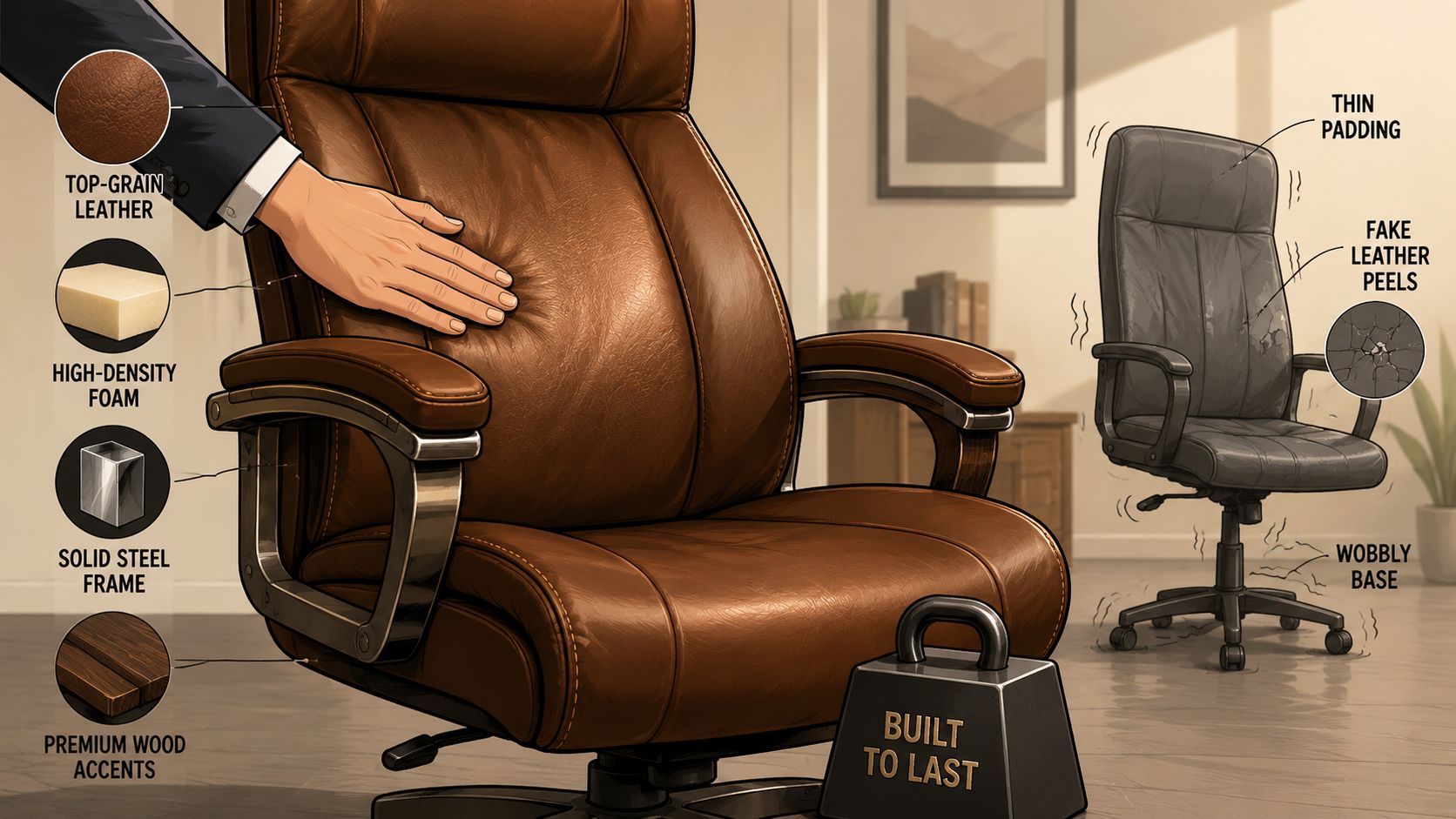
Readers often get stuck here because many products are described with similar language online. Wood is called “wood.” Leather is called “leather.” Cushions are described as “supportive.” But in person, the differences are obvious.
The weight of solid cherry wood tells a different story than a lighter, hollow-feeling panel. The buttery feel of top-grain leather ages very differently from a surface that peels or cracks. Drawers in a better-built desk move with a smoother, more settled feel. The piece feels anchored, not just assembled.
A high-end piece usually signals quality through quiet details:
- Solid materials instead of thin surfaces over composite cores
- Refined touch points such as smoother drawer movement, sturdier armrests, and more substantial hardware
- Better aging so the piece develops character rather than showing wear alone
Ergonomics belongs in the definition
For office furniture, “high end” should include how the furniture treats the body, not just how it looks in the room.
The global home office market is projected to grow from $25.3B in 2024 to $45.3B in 2034 at a 6.0% CAGR, yet 68% of remote workers report chronic back pain from inadequate seating, which is why premium ergonomic furniture belongs in any serious conversation about total cost of ownership, according to home office market data and seating-related back pain findings.
That changes the definition in an important way. A chair isn't “high end” only because it has a tall back or polished trim. It earns that label when the design helps someone work longer with less strain, better posture, and fewer end-of-day aches.
Good office furniture should solve a daily problem, not just decorate it.
A quick way to tell style from substance
A useful comparison is this:
| Feature | Style-first piece | High-end piece |
|---|---|---|
| Surface appeal | Looks impressive online | Looks and feels substantial in person |
| Comfort | Fixed position or minimal adjustment | Ergonomic support with meaningful fit |
| Construction | Built for quick assembly | Built for longevity and repeated use |
| Ownership value | Lower upfront cost | Better long-term value through durability |
That's why high end office furniture often feels easier to live with over time. It isn't one premium detail. It's a whole system of better choices working together.
Key Markers of Heirloom Quality Craftsmanship
A shopper doesn't need to be a furniture maker to recognize heirloom quality. A few physical clues reveal a lot.
The first clue is honesty of material. Solid hardwood behaves differently from thin veneers and lightweight panels. It has more presence, more depth in the grain, and a more settled feel under the hand. In a home office, that difference shows up every day in desktops, drawer fronts, chair frames, and bookcases.
Joinery matters more than most shoppers realize
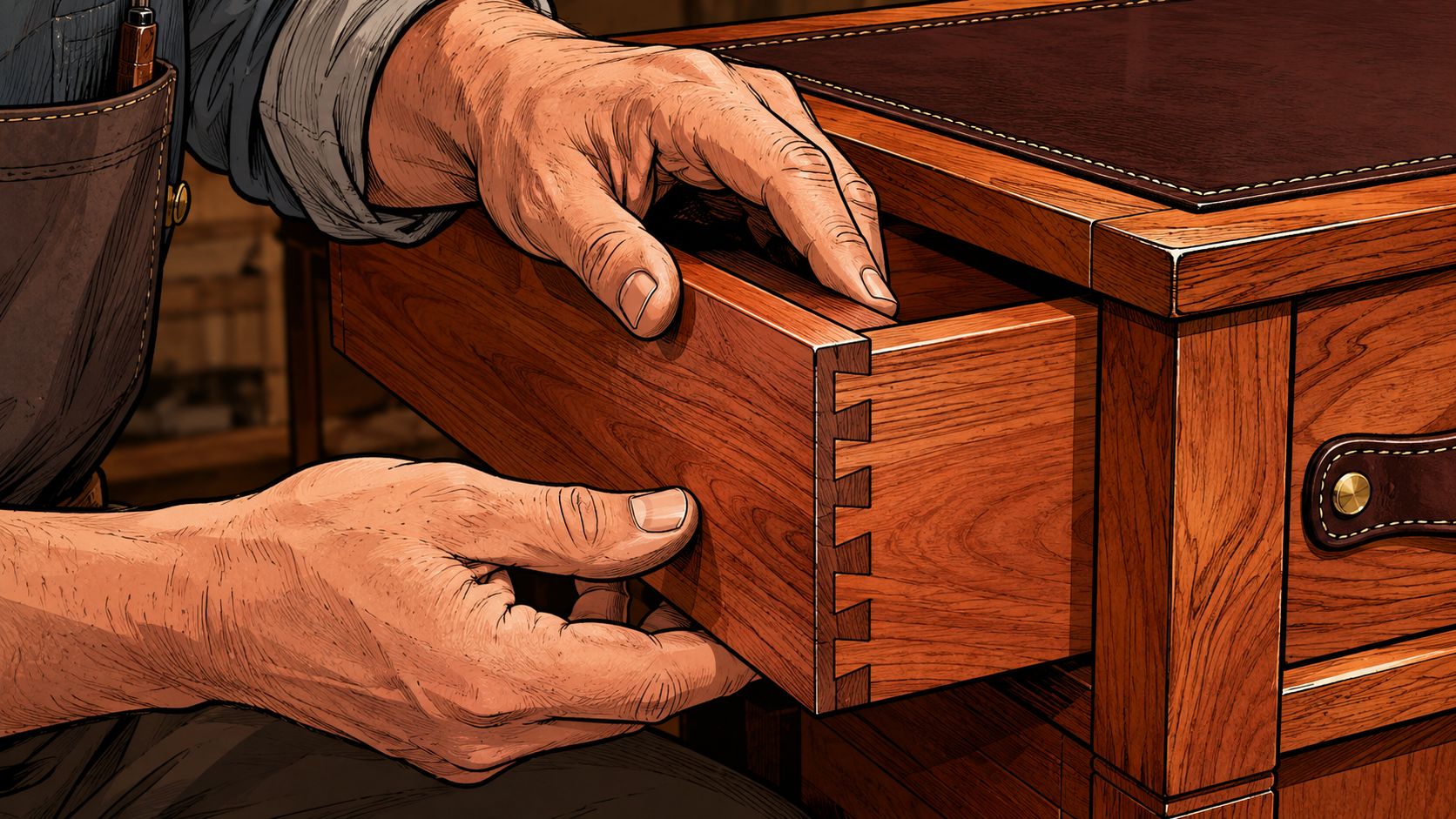
Mass-produced furniture often hides its weak points in the places shoppers don't immediately see. That's why joinery deserves attention.
Two traditional methods are worth knowing:
- Dovetail joints lock drawer sides together with interlocking wood shapes. They resist pulling apart under repeated use.
- Mortise-and-tenon joints fit one piece of wood into another in a way that creates strength at the frame.
Those techniques have stayed around for a reason. They help furniture stay square, sturdy, and repairable. By contrast, pieces that rely heavily on basic fasteners and glue tend to loosen more quickly under daily stress.
A simple inspection checklist
When evaluating a desk, filing cabinet, or bookcase, these are practical signs of hand-crafted quality:
- Check the drawer construction. Better drawers feel firm, aligned, and smooth instead of loose or rattling.
- Look at the grain continuity. Solid wood often shows more natural variation and depth than printed or highly uniform surfaces.
- Test the weight. Heavier isn't always better, but substantial weight often indicates denser materials and stronger construction.
- Inspect the back panels. Thin, stapled backs usually signal a lower construction standard than sturdier, integrated backs.
- Notice edge treatment. Well-finished edges feel deliberate and smooth, not sharp or paper-thin.
Local buying note: In a showroom, the hand often notices quality before the brain names it. A drawer that closes cleanly and a desk that doesn't shift under pressure tell an immediate story.
Why solid wood still sets the standard
For bedroom and dining furniture especially, solid wood remains the benchmark for lasting value. The same thinking carries into the home office. A hand-crafted desk made from cherry, oak, or maple offers durability, refinishing potential, and a sense of permanence that lower-grade materials rarely match.
That's one reason many Southeast Michigan buyers gravitate toward custom Amish furniture built with time-honored craftsmanship. The appeal isn't only visual. It's structural. These pieces are made-to-order, built with material integrity, and designed to become part of the home for years.
A second benefit is customization. In-stock is only the starting point. Wood species, stain, hardware, and configuration can shape how formal, relaxed, modern, or traditional the finished office feels. That flexibility matters when a workspace has to blend with the rest of the house rather than stand apart from it.
The heirloom test
A piece reaches heirloom territory when the answer to these questions is yes:
- Will it hold up to daily use?
- Can it age with grace instead of looking worn out?
- Is it built well enough that someone would want to keep it, not just replace it?
That's the standard that separates furniture that fills space from furniture that builds a home.
The Critical Role of Ergonomics for Health and Productivity
A beautiful chair that leaves the lower back aching by midafternoon isn't high end. It's just expensive.
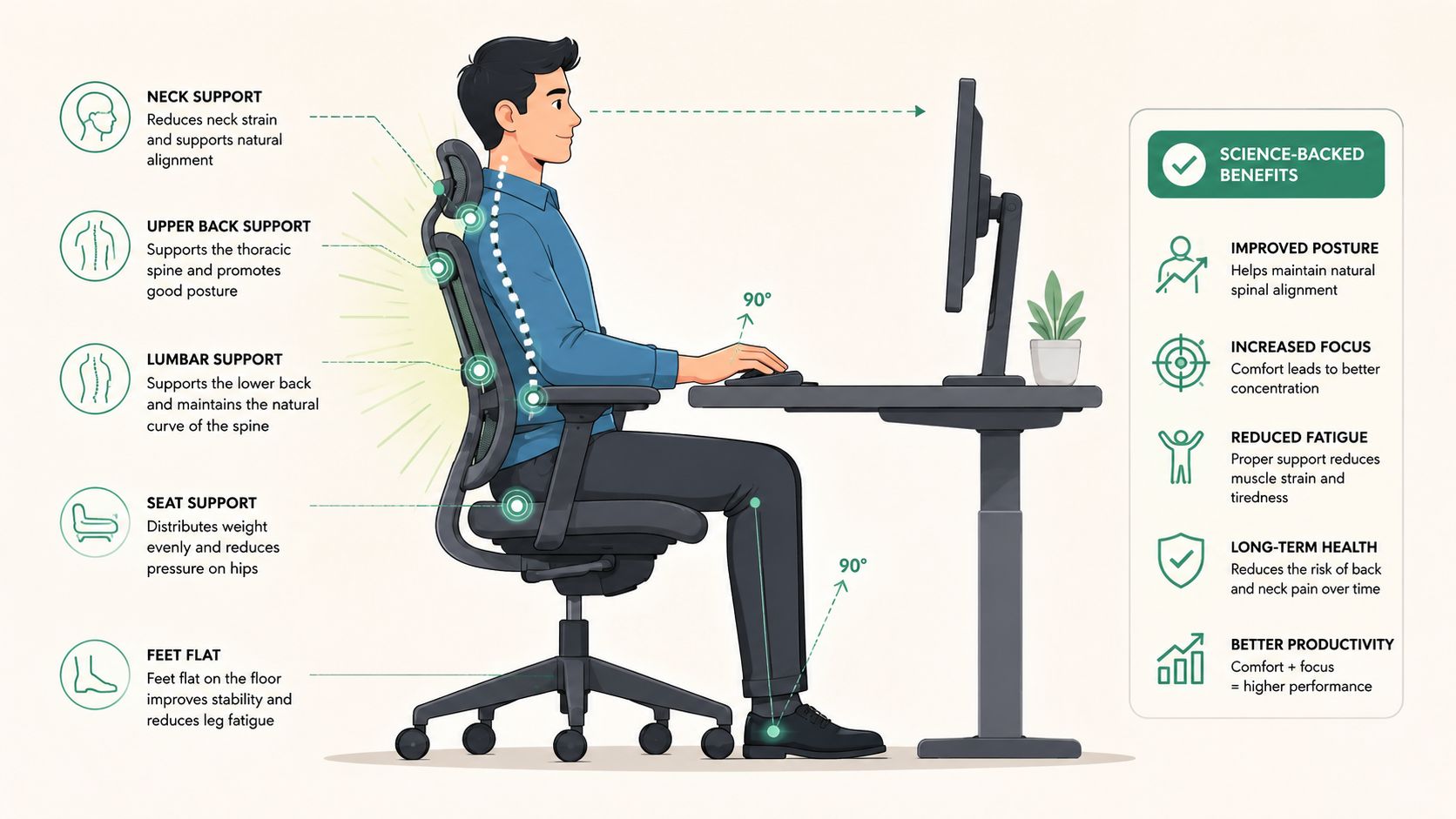
Ergonomics is the part of office furniture that many people understand only after they've lived with the wrong setup. Good ergonomic design supports the body's natural alignment so the person isn't constantly adjusting, leaning, or tensing to stay comfortable.
What ANSI BIFMA compliance tells a buyer
One of the clearest markers of quality is whether a product is ANSI/BIFMA compliant. Products labeled that way have passed rigorous independent testing for safety and durability, reducing long-term failure rates by up to 40% compared to non-compliant alternatives. Proper ergonomic alignment can also support productivity gains of 15 to 20%, according to ANSI/BIFMA compliance and ergonomic performance guidance.
That matters because “ergonomic” gets used loosely in marketing. Compliance gives the term more substance. It signals that the product was tested against recognized standards rather than described with comfort language alone.
Features that deserve close attention
A high-end ergonomic chair should do more than move up and down. Buyers should look for features that adjust to the person, not the other way around.
- Seat height adjustability helps feet rest properly and reduces strain at the knees.
- Lumbar support should fit the curve of the lower back rather than pressing in the wrong place.
- Arm adjustments matter because shoulder tension often begins with poor arm positioning.
- Tilt control and swivel help the chair move with the body during long work sessions.
- A waterfall seat front and stable caster base support comfort and safer movement.
The same principle applies to desks. Height-adjustable surfaces allow posture changes throughout the day, while thoughtful storage keeps the work zone organized without forcing awkward reaching or twisting.
A chair should fit like a shoe. If the support lands in the wrong place, the quality of the material won't fix the problem.
Why a sit test still matters
Even after reading specifications, comfort remains personal. Torso length, shoulder width, leg position, and work habits vary from person to person. That's why a showroom sit test is so useful. In a few minutes, a shopper can tell whether a seat pan feels supportive, whether lumbar support lands correctly, and whether the chair encourages a neutral posture.
That's especially helpful for homeowners finishing bonus rooms, spare bedrooms, or basement workspaces. Readers planning a lower-level workspace may also find Trademaster Construction basement offices useful for layout ideas before selecting furniture.
For shoppers exploring more supportive seating options, ergonomic seating solutions can help narrow down which features and fit points matter most.
Where premium comfort earns its reputation
This is also where premium design details stop being cosmetic. Better cushioning, breathable upholstery, and more refined support systems can reduce physical distraction during long workdays. Some buyers also prefer personalized comfort through seating available in multiple sizes, including options such as Small, Medium, and Large, because ergonomic fit isn't one-size-fits-all.
A room can look polished with almost any chair. Only a well-engineered one helps the body feel better after a full day of work.
The Power of Personalization and Custom Orders
A common starting point is to look at what's on the floor or what's shown online. That's normal. But in high end office furniture, in-stock is often just the beginning.
The biggest mental shift is realizing that a shopper doesn't always have to settle for “close enough.” A made-to-order piece can match the room more precisely, fit the body more accurately, and solve storage or sizing issues that standard inventory can't.
What can actually be customized
Customization sounds abstract until it gets broken into specific choices. In many programs, buyers can tailor a piece through combinations of:
- Finish and wood tone so the office works with existing floors or trim
- Fabric or leather selection for durability, feel, and color balance
- Dimensions or configuration when a room has awkward corners or limited depth
- Leg style, edge detail, or hardware to shift the overall look from formal to relaxed
That range matters in a home office because the room often has more jobs than one. It may serve as a guest room, reading room, study space, or part-time meeting area. Bespoke choices help the office feel integrated with the home's interior design instead of borrowed from a commercial setting.
Two common examples buyers appreciate
One path is solid wood furniture with made-to-order options. Programs such as Canadel show how much control a buyer can have over species, stain, and design details. Another path is personalized seating. Stressless is a useful example because the sizing options help shoppers think beyond color and toward physical fit.
That's the customization edge in plain terms. It isn't decorating for decoration's sake. It's making sure the desk fits the wall, the finish fits the room, and the chair fits the person.
Some of the best custom decisions are invisible at first glance. The right desk depth, seat size, or stain undertone makes a room feel “right” without drawing attention to itself.
Why custom orders take time
Made-to-order furniture asks for patience because the piece is being built for a specific set of decisions. Custom furniture orders typically require a lead time of 8–10 weeks from finalization, as described in this overview of custom furniture lead times and the ordering process.
That timeline can surprise first-time buyers, but it helps to frame it correctly. Waiting is part of the process when the piece is being built around chosen materials, selected finishes, and specific requirements. In many cases, that slower path is also the more sustainable one because the furniture is made with intention rather than mass-produced for quick turnover.
For shoppers who want a clearer roadmap, getting started with custom order options can make the first steps feel simpler.
A useful way to decide when customization is worth it
Customization tends to be worth the effort when any of these are true:
- The room has unusual dimensions.
- The office needs to coordinate with surrounding living spaces.
- The buyer is particular about wood species, fabric feel, or leather character.
- Comfort fit matters enough that standard sizing feels limiting.
For many Southeast Michigan homes, at least one of those is true. That's why custom ordering has become such an important part of thoughtful office design.
Making Your Selection and Bringing It Home to Michigan
Choosing high end office furniture gets easier when the process is broken into a few grounded decisions.
The broader market supports that shift toward quality. The luxury furniture market was valued at USD 31.06 billion in 2024 and is projected to reach USD 39.79 billion by 2030, growing at a 4.2% CAGR from 2025 to 2030, driven by demand for quality and customization, according to luxury furniture market projections and office furniture context. For buyers, that trend shows up in a simple way: more households now treat ergonomic and well-built furniture as part of wellness and productivity, not just decor.
A practical shopping roadmap for Southeast Michigan
The strongest buying process usually looks like this:
- Start with the room. Measure carefully, including wall length, window placement, and door swing.
- Define the work pattern. A person taking video calls all day needs different support than someone using the office for occasional paperwork.
- Prioritize the body-contact pieces. Chair comfort and desk height often matter more than decorative extras.
- Review material goals. If durability and long-term value lead the list, solid wood and higher-grade upholstery deserve extra attention.
- Decide where customization matters. Sometimes that means wood finish. Sometimes it means configuration. Sometimes it means seat size.
Why the showroom visit still has value
Online research is useful, but some choices are easier in person. The feel of leather, the tone of wood under natural light, the travel of a drawer, and the support of a chair all become clearer on the showroom floor. That matters for Southeast Michigan buyers who want confidence before committing to a larger purchase.
The South State St. showroom experience also helps translate abstract terms into something tangible. “Hand-crafted” becomes visible in joinery and finish depth. “Ergonomic” becomes noticeable in how a chair supports the back during a sit test. “Heirloom” starts to make sense when a desk feels grounded and substantial instead of temporary.
Making a premium purchase feel manageable
Price is often the last source of hesitation. That's where supportive buying policies can lower the barrier without lowering the standard. Special Financing can spread the investment over manageable payments, and a Low Price Promise helps shoppers pursue quality with more confidence.
That matters because a well-made office doesn't only serve the home office. Many buyers furnishing one room are also thinking about connected spaces across the house, from bedroom suites to dining areas to outdoor spaces. For readers interested in wood furniture options available in the region, Amish furniture in Michigan is a useful starting point.
A smart final check is simple:
- Does the chair fit the body?
- Does the desk fit the room?
- Do the materials fit the household's long-term plans?
- Does the purchase path fit the budget comfortably?
When those answers line up, the decision usually feels less intimidating and much more lasting.
For shoppers ready to move from research to real-world comfort, Tyner Furniture offers a helpful next step. Visit the Ann Arbor showroom on South State St. for a proper sit test, feel the weight of solid wood and the buttery touch of top-grain leather in person, and explore everything from the Home Office to Outdoor Spaces. For those still comparing finishes, fabrics, and made-to-order options like Canadel and Stressless, browsing the online Quick Specs is an easy way to begin. Since 1957, that local legacy has helped Southeast Michigan households make confident, value-focused choices with craftsmanship, bespoke options, Special Financing, and a Low Price Promise that make long-term comfort feel within reach.