Solid Wood Coffee Tables: Heirloom Quality & Value

A lot of living rooms reach the same point. The sofa is in place. The lamp works. The rug helps. The art is finally on the wall. Yet the room still feels like it's waiting for one piece to pull everything together.
That piece is often the coffee table.
For many homeowners and renters around Ann Arbor and Southeast Michigan, that decision feels bigger than expected. A coffee table sits at the center of daily life. It holds books, mugs, game-night snacks, and tired feet after a long day. It also has to look right with everything else in the room. That's why solid wood coffee tables deserve more thought than an impulse buy.
Furniture shopping can feel crowded with labels, lookalikes, and almost-right options. Since 1957, families across Southeast Michigan have leaned on careful guidance when choosing pieces meant to last. A well-made coffee table isn't just a surface. It's an heirloom-minded investment that can anchor a room for decades, especially in a forever home where long-term satisfaction matters more than a quick fix.
Your Living Room's Enduring Centerpiece
A coffee table often gets treated like the final checkbox. In practice, it does much more. It creates a visual center, sets the tone for the seating area, and makes the room feel finished instead of assembled.
A solid wood piece changes the feel of a room in a way lighter, less substantial materials often can't. There's a grounded quality to the weight of real hardwood. It gives the space a sense of permanence. In older Southeast Michigan homes, that can bring warmth to traditional interiors. In newer condos, it can add texture and calm to cleaner, modern lines.
More than a place to set a mug
The best coffee tables work hard without calling attention to themselves. They host everyday routines and family habits.
- Morning use: a place for coffee, the news, or a laptop.
- Evening use: a spot for board games, takeout, or a stack of favorite books.
- Design use: a bridge between seating, lighting, rugs, and accent pieces.
That's why styling matters, but structure matters even more. A beautiful arrangement of trays and books won't compensate for a table that feels flimsy or out of scale. For readers thinking about how function and styling work together, this coffee table styling guide from Tyner Furniture offers a practical next step.
A living room rarely feels complete until the center feels intentional.
Why this decision deserves patience
Coffee tables take more abuse than many buyers expect. Drinks sweat. Keys land hard. Children lean. Pets jump. Guests gather around them without a second thought. When a table survives all that and still looks better with age, it becomes part of the home's story.
That's the difference between buying for the season and buying for the long haul. A strong coffee table can serve as the room's quiet anchor while the rest of the décor evolves around it. That's one reason family-owned stores with a local legacy still talk about craftsmanship first, whether someone is shopping for a living room, Home Office, bedroom, dining room, or even Outdoor Spaces.
Why a Truly Solid Wood Coffee Table Matters
A lot of confusion starts with one phrase: “real wood.” It sounds reassuring, but it doesn't always mean what shoppers think it means.
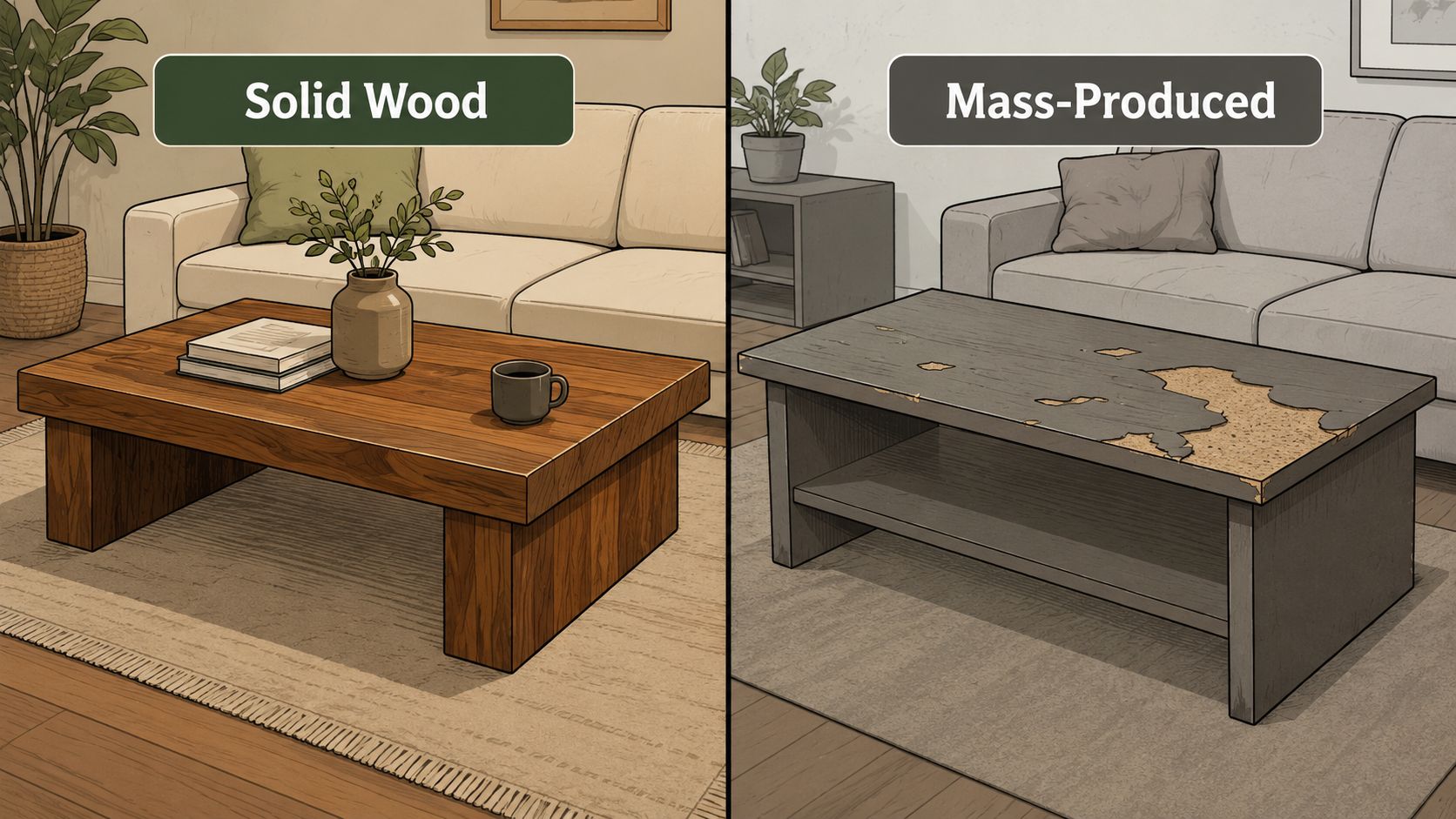
Solid wood furniture is defined as pieces made entirely from natural wood without any engineered components like veneers or composites, which matters when comparing Amish hand-crafted furniture with mass-produced alternatives that may include particle board, as outlined in this explanation of what solid wood furniture means.
What solid wood actually looks and feels like
A solid wood coffee table usually tells on itself in good ways. The grain has continuity. The piece feels substantial when moved. Edges and corners don't reveal thin skins over a manufactured core.
By contrast, many lower-grade tables depend on surface appearance. They may look acceptable from across the room, but over time chips, peeling edges, loose joints, and swollen panels begin to show. That's especially frustrating in a room used every day.
A helpful benchmark appears in collections focused on American-made solid wood furniture, where material integrity is part of the piece rather than a decorative layer.
Why joinery matters as much as material
Material is only half the story. Construction decides whether a table stays square and steady through years of real use.
Amish hand-crafted furniture is valued for methods such as mortise-and-tenon and dovetail joinery. Those techniques lock parts together with intention. They don't rely on shortcuts, thin panels, or a hidden web of adhesives to do all the structural work. For a coffee table, that matters because the base handles weight, movement, and daily pressure from every direction.
Practical rule: If a table impresses only from the top view, it probably wasn't built for generations.
A simple way to think about the difference
A solid wood coffee table is closer to a hardwood floor than a printed laminate shelf. The character runs through the material itself. Small marks can become part of the patina, and the surface can often be refreshed over time. With a thin veneer over composite material, damage tends to expose what's underneath, and repair options become much more limited.
That distinction is why solid wood remains such an important category. The wood coffee table segment is projected to generate over $8.5 billion in global revenues by 2034, representing about 42.9% of the projected global coffee table market, according to Dataintelo's coffee table market report. For buyers, that projection points to a durable preference for natural material, longevity, and craftsmanship.
Choosing Your Heirloom Wood Species and Finish
Once the material decision is settled, the next question is usually more personal. Which wood feels right for the home?
That's where many first-time buyers get stuck. Oak, maple, cherry, and hickory can all be excellent choices, but they don't behave or look exactly the same. Grain pattern, color movement, and surface hardness all affect daily satisfaction.
Hardness and daily wear
The durability of solid wood coffee tables is tied to the wood's Janka hardness rating. Hickory rates 1,820, hard maple 1,450, and white oak 1,360, and those denser hardwoods resist denting and structural deformation under daily impact, as explained in this wood species and durability guide.
That doesn't mean every household needs the hardest species available. It means shoppers should match the wood to the way the room gets used. A home with energetic kids, frequent guests, or heavy decorative objects may prioritize dent resistance. A quieter room may place more emphasis on grain and color character.
Solid Hardwood Comparison for Coffee Tables
| Wood Species | Janka Hardness (Higher is harder) | Grain Pattern | Best For |
|---|---|---|---|
| Hickory | 1,820 | Bold, active, varied | Busy households that want strong dent resistance |
| Hard Maple | 1,450 | Fine, smooth, more uniform | Cleaner interiors and buyers who prefer a refined look |
| White Oak | 1,360 | Open grain, visible texture | Homes that want warmth, texture, and classic versatility |
| Cherry | Not listed in the verified data | Smooth, elegant, gently expressive | Buyers drawn to rich character and an heirloom feel |
For readers who enjoy studying species more closely before visiting a showroom, The Knotty Lumber Co. wood guide gives useful visual context on how different hardwoods present.
What buyers notice in person
Online photos flatten wood. Real wood doesn't stay flat.
Cherry often carries a smooth, graceful appearance that feels dressier. Oak tends to show more texture and visible grain movement. Maple usually looks cleaner and calmer. Hickory brings stronger variation and a more rugged personality. In a showroom setting, those differences become obvious the moment a shopper sees light moving across the surface and runs a hand across the finish.
Shoppers browsing North American hardwood furniture options often discover that wood choice affects mood as much as durability.
Finish changes everything
Stain and finish can shift a table dramatically. The same hand-crafted design can feel formal in a darker finish, relaxed in a medium tone, or more contemporary in a lighter one. That's where made-to-order furniture becomes so valuable. Buyers don't have to settle for the right table in the wrong color.
Customization also extends beyond wood tables. In-stock is only the beginning for many homes. Canadel offers broad dining customization, and Stressless gives shoppers ergonomic sizing and comfort options in seating. That same mindset helps coffee table buyers think beyond what happens to be on the floor that day.
Finding the Perfect Size and Style for Your Room
Saturday afternoon in Ann Arbor, the family is settled on the sofa, mugs on the table, feet up for a movie. If the coffee table is too tall, every reach feels awkward. If it is too long, people turn sideways to pass through the room. Size sounds like a small detail until you live with the wrong one every day.
That is why proportion comes first. Style has more impact after the table fits the room and the way your household moves through it.
The measurements that create comfort
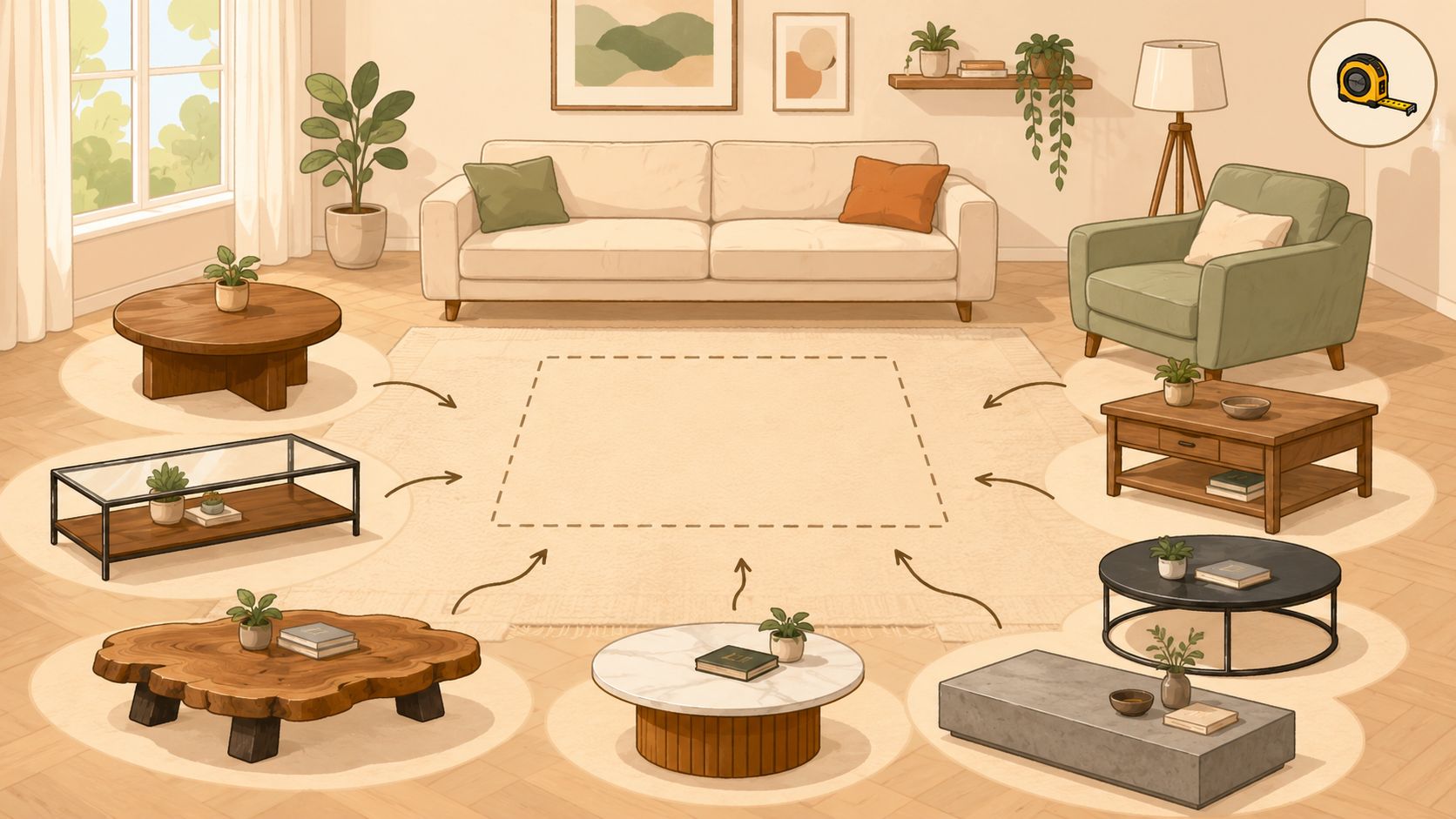
A coffee table usually feels best when its height lands close to the sofa seat, often around 16 to 18 inches, and its length is about two-thirds of the sofa length, according to this coffee table sizing reference. Those numbers are useful because they answer the question buyers ask in the showroom all the time: “Why does one table feel right and another feel off, even when both are beautiful?”
The answer is balance. A table that sits near seat height is easy to use for a drink, a book, or a board game. A table around two-thirds the length of the sofa looks connected to the seating instead of floating by itself like an afterthought.
A simple way to picture it is this. The sofa is the anchor, and the coffee table is the helper. It should support the seating area, not compete with it.
Three room-fit checks
Before you settle on a shape or leg style, pause on these three checks:
- Height relationship: You should be able to reach the surface comfortably from the sofa.
- Visual width: The table should feel tied to the seating group, not oversized or undersized.
- Walking space: Leave enough room for people to move around it comfortably. In busy layouts, about 30 inches of clearance is a helpful target.
That last point matters more than many first-time buyers expect. In Southeast Michigan homes, family rooms often do double duty as conversation space, TV room, homework spot, and walkway. A table can be perfectly handsome and still become a daily annoyance if it pinches traffic flow.
This is one place where cost per year helps clarify the decision. A well-sized solid wood table that serves the room for decades usually costs less per year than a cheaper piece you replace because it never really fit.
Matching style to the home
Once the proportions feel right, style gets easier to choose.
Some homes in and around Ann Arbor look best with Mission or Shaker lines because those designs show honest joinery, straight profiles, and a steady, settled presence. In rooms with a sectional or tighter walkways, a round or oval top often makes movement easier and softens the harder edges in the seating plan. A rectangular table usually works well in front of a full-length sofa, especially when the room needs a clear center.
A few style cues can help narrow the field:
- Mission influence: grounded, architectural, and substantial
- Shaker influence: quiet, clean, and flexible with many interiors
- Round or oval forms: easier traffic flow and a softer visual feel
- Rectangular forms: strong fit for classic sofa layouts and larger seating groups
If you are unsure whether to adjust size, shape, or small design details, Tyner's guide to getting started with a custom furniture order can help you sort through the practical choices before you commit.
The best coffee table rarely calls attention to itself. It makes the room work, year after year, which is exactly what an enduring centerpiece should do.
The Art of a Made-to-Order Coffee Table
A lot of shoppers know the feeling of finding a table that's almost right. The shape works, but the stain is off. The scale fits, but the leg style doesn't. The top looks right, but a drawer would make the piece much more useful.
That's where made-to-order furniture stops feeling like a luxury and starts feeling practical.
In-stock is the starting point
Showroom pieces help buyers understand shape, finish, and scale. They aren't the limit of what's possible. For many hand-crafted Amish pieces, customization includes wood species, stain selection, and details such as leg styles or edge profiles.
Custom Amish furniture offers extensive options that include solid North American hardwood species like oak, cherry, maple, and walnut, dozens of stain possibilities, and specific design elements like leg styles and table edges, as described in this guide to solid wood furniture customization.
That matters because homes aren't standardized. A condo near downtown Ann Arbor, a family room in Southeast Michigan, and a traditional house with existing cherry casegoods may all need very different answers.
Why patience pays off
Hand-crafted Amish furniture built to order typically takes 8 to 16 weeks, reflecting the time needed for workmanship, wood selection, and finishing, according to this overview of Amish furniture production timelines. That wait can sound long until the alternative is considered. Settling for an almost-right piece often leads to replacement, regret, or a room that never feels fully resolved.
Buyers who want to understand the process before stepping into a showroom can review how custom furniture orders get started.
A practical example of personalization
A made-to-order coffee table can solve several common problems at once:
- Color mismatch: A stain can work with existing dining furniture or built-ins.
- Scale issue: A design can suit the room instead of forcing the room to adapt.
- Style tension: A small change to the base or edge can align the piece with the rest of the interior.
Tyner Furniture offers this kind of custom-order pathway as one local option for shoppers who want hand-crafted furniture fitted to real homes rather than warehouse averages. That same customization mindset carries into Canadel dining and Stressless seating, where finish, configuration, and ergonomic fit matter just as much as appearance.
Understanding the Investment and Lifetime Value
Price gets most of the attention. Value deserves more.
A solid wood coffee table often costs more upfront because better hardwoods, stronger joinery, and hand-crafted construction require more labor and better material. The more useful question isn't “What does it cost today?” It's “What does it cost per year of ownership?”
The cost-per-year lens
One of the clearest comparisons available puts it this way. A $1,500 Amish table lasting 50+ years costs about $30 per year, while a $300 veneer table lasting 5 to 7 years costs about $50 per year, making solid wood 40% cheaper over time, according to this cost-per-use breakdown for coffee table selection.
That shifts the conversation. A lower ticket price can still produce a higher ownership cost if the piece needs to be replaced repeatedly.
Worth remembering: The least expensive table at checkout isn't always the least expensive table to own.
Why this matters for a forever home
Many buyers in Southeast Michigan aren't furnishing for one lease cycle. They're trying to build rooms that feel settled, comfortable, and worth maintaining. In that setting, heirloom quality isn't decorative language. It's a budgeting principle.
A solid wood table can also hold emotional value that isn't easy to price. It becomes familiar. It gathers history. It develops a patina from real life rather than looking worn out by it.
Making a better piece more attainable
Even when the long-term math makes sense, the upfront investment can still feel heavy. That's why practical buying tools matter.
- Special Financing: helpful for spreading a major purchase into manageable payments, subject to credit approval.
- Low Price Promise: useful for buyers who want reassurance that value and quality can live in the same purchase.
- Quick Specs access: important for special-order shoppers comparing details before committing.
That approach fits the way many family-owned stores serve their communities. Since 1957, local guidance has often meant helping shoppers buy once with more confidence, not pushing them toward the fastest possible decision.
Caring For Your Hand-Crafted Furniture
Solid wood is durable, but it isn't indifferent. Good care protects the finish, preserves the surface, and helps the table age gracefully.
The encouraging part is that maintenance doesn't have to be complicated. Small, consistent habits do most of the work.
The placement mistakes that cause trouble
Heat and sun create more long-term problems than many buyers expect. To prevent irreversible warping and finish discoloration, solid wood coffee tables should sit at least 12 to 18 inches away from direct heat sources like vents or fireplaces and out of direct sunlight, as explained in this care guide for solid wood coffee tables.
That advice is especially useful in Michigan homes where furniture may sit near forced-air vents, radiators, or bright seasonal window light. Wood responds to its environment. A beautiful finish can only do so much if placement keeps working against it.
A simple care routine
The daily routine can stay straightforward:
- Use coasters: They help prevent moisture rings from cups and glasses.
- Wipe spills promptly: Faster cleanup gives liquids less time to affect the finish.
- Dust with a soft cloth: Gentle, regular care is better than aggressive scrubbing.
- Keep cleaning mild: Harsh products can work against the protective finish.
For deeper prevention, readers can review this guide to protecting wood furniture from scratches and stains.
When the table has to move
Moves are another common moment of damage. Coffee tables often get scraped at corners, dragged across hard floors, or wrapped poorly in transit. For anyone preparing for a remodel, room swap, or relocation, essential advice for damage-free moves offers practical handling ideas that help preserve a hand-crafted piece.
Good furniture care isn't fussy. It's a quiet habit of respect for materials that were built to stay.
Care supports longevity
A well-cared-for solid wood coffee table can remain beautiful through style changes, new upholstery, and years of family use. It can outlast rugs, lamps, and even multiple sofas. That's part of the appeal. The table becomes a stable point while the home evolves around it.
Experience the Craftsmanship in Ann Arbor
Reading about furniture helps. Touching it settles the question.
A solid wood coffee table is one of those pieces that reveals itself in person. The grain has depth. The finish reflects light differently across the surface. The table carries a steadiness that photos can only suggest. In a showroom, shoppers can feel the weight of solid cherry wood, notice the texture of oak, and see how a stain shifts from warm to rich depending on the room light.
What an in-person visit clarifies
The South State St. showroom gives buyers a chance to answer the practical questions that online browsing leaves open.
- Scale: Does the table feel right with actual seating nearby?
- Color: Does the finish lean too red, too dark, or just right?
- Character: Does the wood feel calm, rustic, formal, or versatile?
- Craftsmanship: Do the lines, edges, and proportions feel hand-crafted and lasting?
That tactile experience matters just as much in other parts of the home. A customer comparing dining options may want Canadel's bespoke finish choices in person. Someone shopping for ergonomic seating may need a true sit test in a Stressless chair to understand fit. The same principle applies across the store, from the living room to the Home Office to Outdoor Spaces.
Why local legacy still matters
A store that has served Southeast Michigan since 1957 carries a different kind of responsibility. It doesn't just sell a product. It helps neighbors make decisions they'll live with for years. That's especially important when a purchase is meant to become part of a family's long-term routine.
A coffee table may seem modest compared with a sofa or dining set, but it often becomes the daily centerpiece of the room. Choosing solid wood means choosing durability, craftsmanship, and a material that can grow more beautiful with age. Choosing carefully means the room won't need to be solved again in a few years.
For buyers in Ann Arbor and the surrounding area, that combination of material integrity, bespoke options, and long-term value is what turns a simple table into an enduring centerpiece.
Those who are ready to compare wood species, test proportions beside real seating, and see how made-to-order options can fit a specific room can visit Tyner Furniture on South State St. in Ann Arbor for a sit test and an in-person look at craftsmanship. For shoppers who prefer to begin from home, browsing the online Quick Specs for special orders is a smart first step toward a table built for long-term comfort and value.