White Glove Delivery Service Guide for Southeast Michigan


A homeowner in Ann Arbor orders a hand-crafted solid cherry dining table for a forever home. The finish is rich, the grain has that deep, warm glow only real hardwood carries, and the piece is built to last for decades. Excitement comes first. Then the practical questions show up right behind it.
How does a heavy heirloom table get through a narrow front entry without scraped walls? Who carries it upstairs in an older home? Who assembles it correctly, removes the packaging, and makes sure the room looks finished instead of looking like a shipping dock?
That's exactly why white glove delivery service has become such a major part of furniture buying. The U.S. market is estimated at USD 15.43 billion in 2024 and projected to reach USD 16.36 billion in 2025, reflecting that over 25% of furniture deliveries require setup services according to Mordor Intelligence's market report on U.S. white glove delivery. For shoppers trying to understand the broader business side of premium service, this overview of how to attract high-value clients adds useful context on why careful service matters so much.
For homeowners comparing options, the most helpful starting point is often a store's own delivery information. It gives a clearer picture of what happens after the sale, especially when the furniture is custom, made-to-order, or too valuable to treat like a porch drop-off.
Introduction to White Glove Delivery Service
White glove delivery service exists for the moments when standard delivery stops being enough. A box on the porch might work for a lamp. It doesn't work nearly as well for a bespoke dining table, an ergonomic recliner, or a solid wood bedroom set with serious weight and carefully finished surfaces.
The confusion starts with the name. Some shoppers hear “white glove” and assume it's just polished marketing language for expensive shipping. It isn't. In practice, it's a higher-service delivery model designed for large, fragile, heavy, or high-value items that need skilled handling inside the home.
White glove delivery makes the product usable before the crew leaves. That's the real difference.
That matters in Southeast Michigan homes, where older layouts can add complexity fast. Tight stair turns, deep baseboards, older flooring, and smaller entry halls all change what safe delivery looks like. A crew that understands placement, assembly, and cleanup can prevent a small delivery headache from turning into a costly repair, return, or redelivery.
For households furnishing more than one room, this matters even more. Many are coordinating living room seating, bedroom pieces, home office furniture, and even outdoor spaces at the same time. Good delivery planning helps the whole project feel manageable instead of overwhelming.
Understanding White Glove Delivery Service
White glove delivery service has a specific operational meaning. It isn't “inside delivery,” and it isn't the same as a driver carrying a carton over the threshold.
According to Courier Authority's explanation of white glove courier services, white glove delivery is defined by four defining technical attributes: dedicated padded vehicles, two-person crews for items over 50 lbs, real-time condition tracking, and inside-the-room unpacking, assembly, and debris removal.
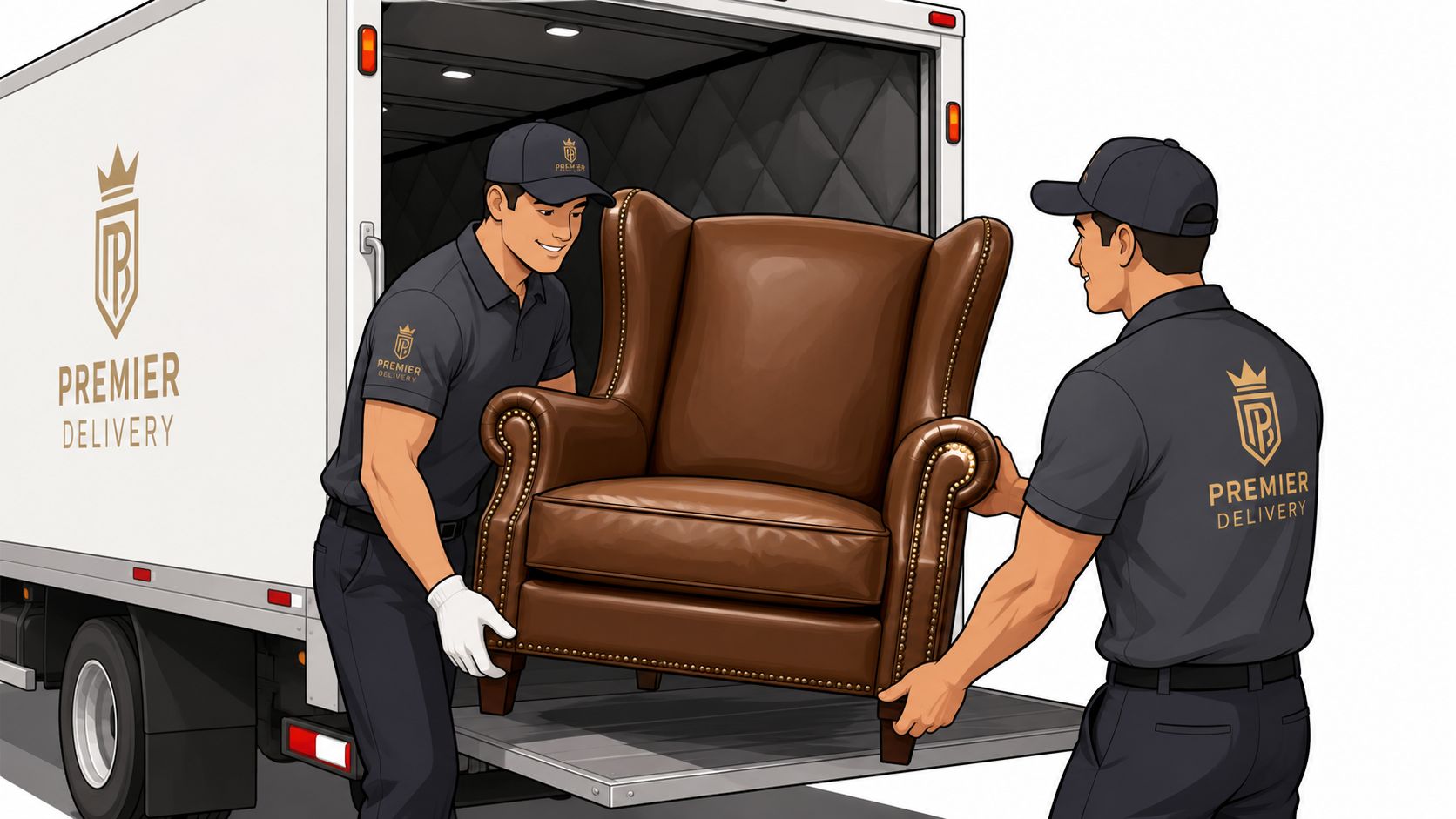
The four parts that separate it from basic delivery
Dedicated vehicle use means the item isn't treated like generic mixed freight. The truck is set up for careful handling, often with padding and a layout suited to bulky furniture.
Two-person handling crews matter because large pieces don't just require strength. They require coordination. One person can't safely pivot a long sofa through a stair landing while protecting both the upholstery and the wall.
Real-time condition tracking reduces confusion. When a team documents the condition before final placement, there's a clearer record of how the item arrived.
In-room unpacking and setup is the point many shoppers care about most. The crew brings the item to the room of choice, assembles it if needed, and removes the mountain of cardboard, foam, and wrap.
Why this service matters for premium furniture
A made-to-order piece isn't only expensive. It's often difficult to replace quickly. A custom fabric, a hand-applied finish, or an ergonomic fit chosen for a specific person can't always be swapped from warehouse inventory.
That's why white glove service tends to fit heirloom and interior design purchases so well. It protects the investment at the moment when the piece is most vulnerable, during the last stretch from truck to room.
For households planning a broader relocation, guides like plan your hassle-free move can also help people think through access, scheduling, and room readiness before delivery day arrives.
Practical rule: If the item is heavy, awkward, custom, fragile, or difficult to repackage, white glove delivery usually makes more sense than a lower service tier.
Typical Scope of Services and Benefits
The phrase “white glove” began with its actual meaning. Historically, the term came from delivery personnel wearing white gloves to protect homes and goods, and it evolved into a full-service model that includes inside delivery, unpacking, assembly, and cleanup, as described in Market Intelo's white glove delivery overview.
That origin still fits the modern expectation. The service is about care, but also about completion. The home should feel settled when the crew leaves.
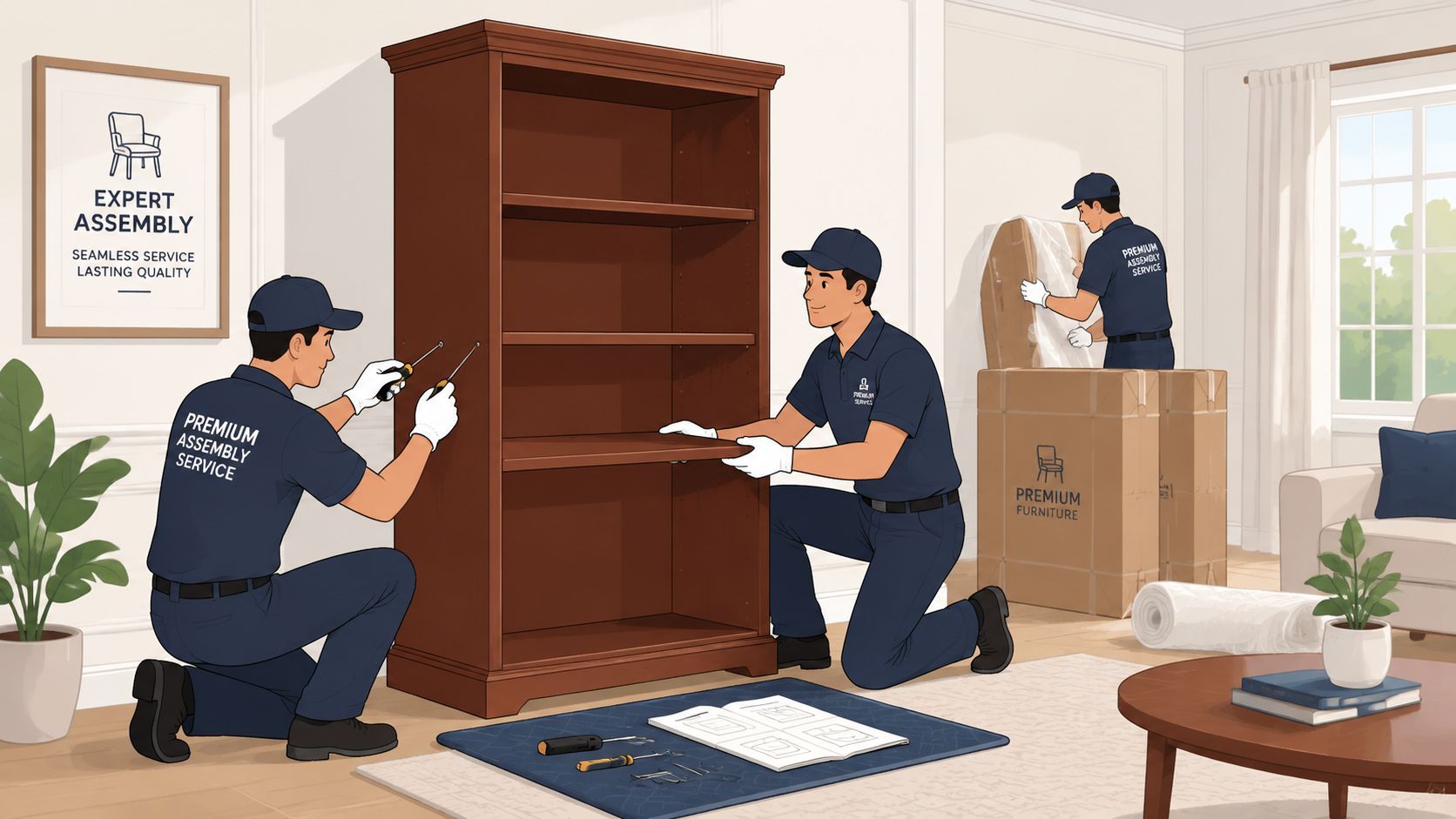
What the service usually includes
- Room-of-choice placement keeps homeowners from wrestling a large piece across hardwood, tile, or carpet after the truck is gone.
- Unpacking by the crew helps avoid accidental cuts, tears, or finish damage that can happen when someone opens a tightly packed piece with household tools.
- Assembly to specification matters for bed frames, dining tables, entertainment pieces, and ergonomic seating with moving parts.
- Debris removal and cleanup turns a delivery into a finished installation rather than a half-day cardboard project.
- Optional haul-away in some cases can simplify a room refresh when an older piece needs to leave before the new one can settle in.
The value behind each service step
For solid wood furniture, placement isn't just convenience. It's protection. A hand-crafted Amish bedroom or dining piece built from solid North American hardwoods like cherry, oak, or maple carries real weight, and its joinery matters. Dovetailing and mortise-and-tenon construction are built for durability, but that doesn't mean a piece should be dragged, tilted carelessly, or knocked into trim.
For upholstered seating, correct setup protects comfort as well as appearance. A bespoke sofa only feels right when the scale fits the room and the cushions, frame, and fabric arrive in the condition expected. Custom upholstered sofas become custom when the buyer specifies all five core fabrication elements, frame outline, seat depth, cushion firmness, back style, and overall dimensions, before production, as explained in Tyner's custom upholstered sofa guide. Delivery should preserve that thoughtful fit.
A white glove crew doesn't just move furniture. The crew protects the decisions that made the furniture worth buying in the first place.
The same logic applies to dining and office pieces. A custom program like Canadel allows thousands of combinations in leg styles, edge profiles, finishes, and distress levels, as noted in Tyner's high-end office furniture page. When a shopper has worked that carefully to match scale, finish, and comfort, a casual drop-off can undo the point of ordering custom at all.
Cost Drivers and Pricing Ranges
White glove delivery service costs more than basic freight because it includes more labor, more time, and more responsibility. That doesn't make it a poor value. For premium furniture, the better question is often cost-per-year. A durable piece with careful delivery and correct assembly tends to perform like an investment. A lower service level can look cheaper upfront and become more expensive once scratches, assembly errors, or failed placement create problems.
Industry benchmark data from Gonini's white glove delivery guide indicates that 98% of white-glove deliveries include premium installation and setup, with costs typically ranging between $100 and $250 per shipment, plus possible extra fees for complex assembly.
Pricing ranges for delivery services
| Service Type | Price Range | Included Services |
|---|---|---|
| Standard freight | Qualitatively lower than white glove | Basic transport, limited handoff, no in-room setup |
| Threshold delivery | Qualitatively between standard freight and white glove | Delivery to the entry area or threshold, little to no assembly |
| White glove delivery service | $100 to $250 per shipment | Premium installation and setup, in-room placement, unpacking, assembly, cleanup |
| Complex assembly add-on | Additional fee may apply | More involved setup for pieces with added assembly difficulty |
What pushes the price up
Some deliveries are straightforward. Others require more planning and labor. These factors often shape the final quote:
- Distance traveled affects routing, scheduling, and the amount of time the crew spends on the job.
- Item size and weight change the handling plan. A large solid wood dresser isn't priced like a lightweight accent chair.
- Assembly complexity matters when the piece includes multiple components, hardware, or careful alignment.
- Access conditions can increase labor, especially when the route includes tight turns, multiple floors, or limited building access.
- Add-on services such as old-item removal or extra setup work can add cost.
How to think about value, not just fees
A quality recliner or dining set may stay in service for years. That's where cost-per-year becomes a useful lens. The upfront delivery fee is only one part of ownership. Correct setup, floor protection, and debris removal save time and help preserve the furniture's finish, structure, and usability.
For households balancing an investment purchase, special financing options can make a higher-quality piece and a better delivery experience more approachable without forcing a rushed decision.
A shopper should also remember that “in-stock” is often just the beginning. Many better furniture purchases involve customization, including fabrics, finishes, configurations, and ergonomic sizing. That's especially true with bespoke dining through Canadel and comfort-focused seating through Stressless. Delivery needs to match that level of planning.
Comparing White Glove and Curbside Delivery
The easiest way to understand white glove delivery service is to compare it with curbside delivery. One leaves the item at the edge of the handoff. The other carries the responsibility all the way into the home.
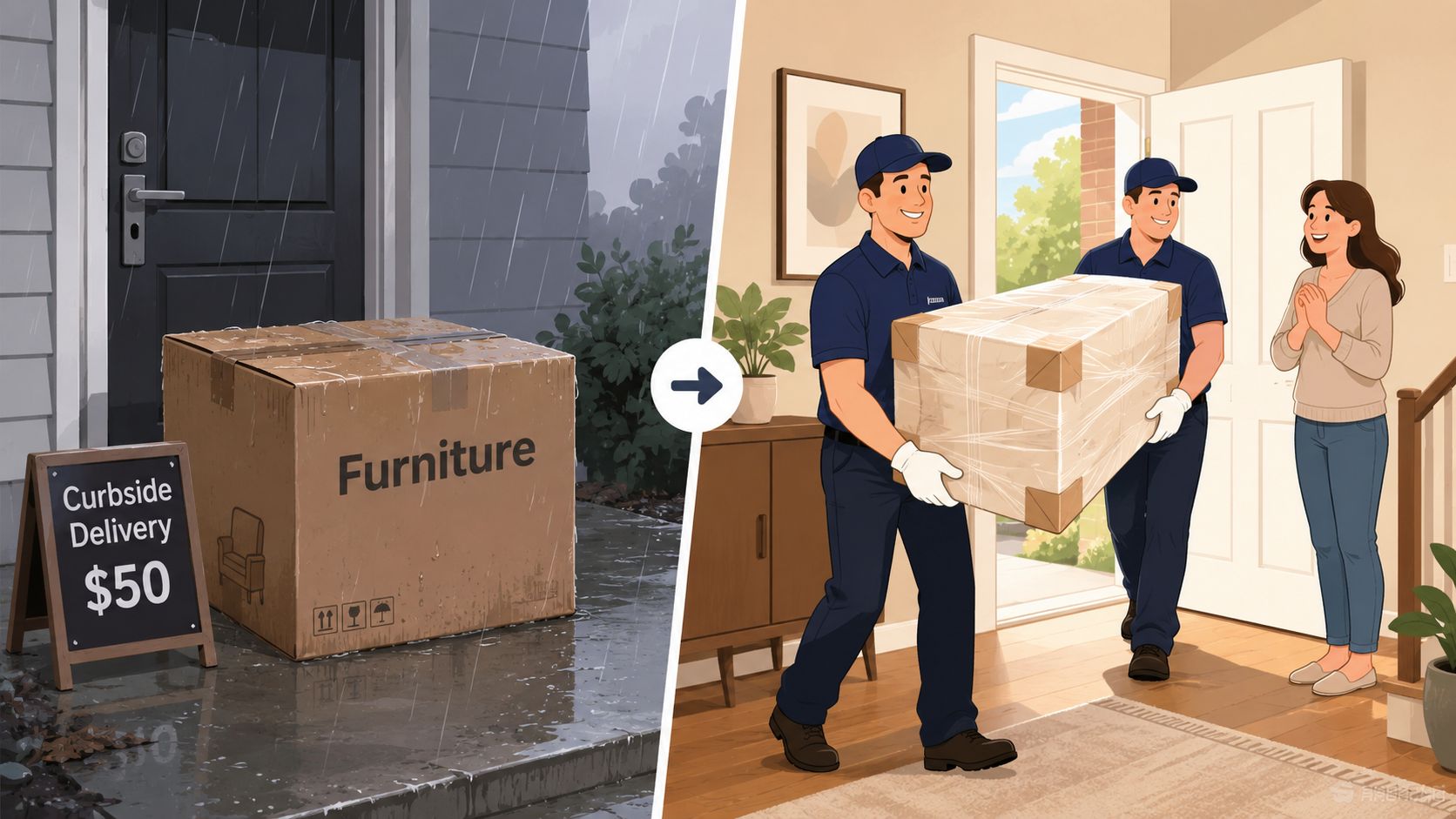
Side-by-side comparison
| Delivery Type | What the customer handles | Best fit |
|---|---|---|
| Curbside delivery | Carrying inside, unpacking, assembly, debris removal, placement | Small or manageable items, simple situations |
| White glove delivery service | Very little after approval and inspection | Large, custom, heavy, fragile, or hard-to-maneuver furniture |
Where shoppers often underestimate the difference
Curbside looks simple on paper. The item arrives, and the transaction seems complete. But the hard part may not have started yet. The homeowner still needs to move the piece inside, protect floors, open packaging without damage, assemble parts correctly, and dispose of the materials.
White glove shifts the burden. The crew handles the physical and technical parts that many people underestimate. That matters more in bad weather, in older houses, and in multi-story homes.
Risk changes with the furniture type. A hand-crafted solid wood piece with detailed joinery or a top-grain leather recliner with ergonomic features isn't the same as a simple boxed item. The weight of solid cherry wood, the pressure on joints during turns, and the buttery feel of premium leather all call for careful handling.
For readers trying to understand the lower-service side more clearly, this guide on optimizing your curbside experience gives helpful context on what curbside generally does and doesn't include.
A practical decision filter
- Choose curbside when the item is light, simple, and easy to move.
- Choose white glove when the item is valuable, oversized, custom, or awkward to assemble.
- Lean toward white glove when the home has stairs, narrow halls, delicate flooring, or limited help available.
For anyone comparing broader purchase decisions, this article on how to shop for furniture smartly pairs well with delivery planning because it helps match the product, the room, and the service level.
Preparing Your Home and What to Expect on Delivery Day
A smooth white glove delivery starts before the truck arrives. Most problems happen because the path, room, or placement plan wasn't fully thought through. A little prep can make the appointment feel calm instead of rushed.
Before delivery day
Start with the route.
Walk from the entry door to the final room and look at the home the way a delivery crew would. Check hallways, corners, rugs, light fixtures, stair rails, and furniture that might pinch the path. In older Ann Arbor homes, the issue often isn't the front door. It's the turn after the front door.
Then measure. Door width matters, but so do interior turns and stair landings. A sofa can fit through an opening and still fail at the pivot point halfway upstairs.
A practical home checklist
- Clear the path completely so the crew doesn't need to step around baskets, shoes, side tables, or floor lamps.
- Measure doorways and turns with special attention to stair landings and low ceiling angles.
- Choose the final placement spot before the crew arrives so the item doesn't need to be shifted repeatedly.
- Protect nearby surfaces if the route runs close to artwork, mirrors, or fragile décor.
- Plan around pets and children so the crew can focus on carrying and positioning safely.
Local note: In older homes, the problem spot is often the stair turn, not the exterior doorway.
What happens during the appointment
White glove appointments are typically scheduled in a narrower window than standard freight. The team arrives with the item, confirms placement, and moves it inside using a coordinated approach.
The sensory part of the experience is often what homeowners remember. There's the soft thud of a sofa settling into position, the careful lift of a dining tabletop onto its base, the rustle of protective wrap coming off, and then the room suddenly feels finished. Instead of cartons and foam, there's usable furniture.
A typical sequence often looks like this:
- Arrival and walk-through so the crew can confirm the route and room.
- Protective handling indoors while the item moves through the home.
- Placement in the chosen location with adjustments for balance and alignment.
- Unpacking and assembly according to the product's setup needs.
- Cleanup and final review before the customer signs off.
What to ask before signing
Inspection matters. White glove service reduces risk, but it doesn't create damage immunity. The customer should look at visible surfaces, edges, legs, and moving parts before the team leaves.
Helpful questions include:
- Is the piece sitting level where it was placed?
- Are all visible surfaces in expected condition?
- Has all packaging been removed from underneath or behind the furniture?
- Do any adjustable components operate as expected?
This is also the right time to take photos. They create a clean baseline for records if a concern appears later.
Small prep steps that protect the room
Furniture delivery isn't only about the new piece. It's also about the house around it. Floors deserve special attention, especially where heavy legs or bases will rest long term. For homeowners thinking ahead about surface protection after placement, this guide on how to protect floors from furniture is worth reviewing before delivery day.
A final point often gets missed. Custom furniture tends to arrive with more emotional weight than stock pieces because the buyer has chosen the finish, scale, comfort level, or configuration with care. That's why a calm, prepared delivery day matters so much. It lets the furniture enter the home the way it was meant to.
Local Considerations for Ann Arbor and Southeast Michigan
Ann Arbor has plenty of beautiful older homes. It also has split-level entries, narrow stair geometry, mature neighborhoods with tighter access, and apartment buildings with rules that can complicate delivery. A national guide rarely captures those local frictions well.
A delivery to a newer suburban main-floor family room is one thing. A delivery to an upper-level unit near downtown, or to an older house with compact hallways and steep stairs, is another.
According to Secursus on white glove delivery costs, urban multi-unit deliveries in dense metros frequently exceed $600 to $800 due to stair and elevator surcharges, which can add 20% to 40% to base white glove rates. Ann Arbor isn't New York or San Francisco, but the lesson still applies. Access challenges can change the final cost quickly.
Common local friction points
- Older home layouts with sharp turns and tighter stair runs
- Apartment access rules such as reserved elevator windows or limited delivery hours
- Weather timing when snow, rain, or slush complicate entry protection
- Parking limitations near busier areas or multi-unit buildings
Pro tips for Southeast Michigan deliveries
Reserve elevators early, measure stair landings twice, and move existing furniture before the appointment window begins.
Scheduling also matters. Midday access can be easier than peak move-in or high-traffic times in some buildings. Homeowners working through room planning, layout, and local design fit can also browse home interior ideas and services to think beyond the delivery itself and into how the piece will live in the space.
Local legacy retains its importance. A showroom team familiar with Ann Arbor and Southeast Michigan conditions can often spot access issues long before the truck arrives.
Conclusion and Next Steps
White glove delivery service isn't just a delivery upgrade. It's protection for the investment that comes after the shopping is done. It helps preserve hand-crafted construction, custom finishes, ergonomic fit, and the everyday usability of furniture meant to stay in the home for years.
That's especially important when the purchase is made-to-order, bespoke, or built from solid hardwood with heirloom intent. Good delivery supports durability. It also improves cost-per-year because the piece starts its life in the home the right way, with careful placement, proper assembly, and less risk of avoidable damage.
For Southeast Michigan shoppers, the best choice often comes down to realism. If the item is heavy, valuable, awkward, or highly customized, white glove service usually earns its place.
Tyner Furniture has served Southeast Michigan since 1957, and that local legacy shows in how the showroom supports shoppers from the first sit test to final delivery planning. For anyone furnishing a forever home, upgrading a home office, refreshing a dining room, or coordinating even outdoor spaces, Tyner Furniture is a strong place to start. Visit the Ann Arbor South State St. showroom for a sit test, feel the weight of solid wood and the comfort of ergonomic seating in person, or browse the online Quick Specs for special orders with Special Financing and a Low Price Promise.