Custom Upholstery Sofa: Design Yours in SE Michigan

A lot of sofa shopping starts the same way. Someone stands in the middle of the living room with a tape measure, a few fabric screenshots, and a growing suspicion that every option is either the wrong size, the wrong comfort level, or the wrong long-term value.
That uncertainty is normal. A sofa has to do more than look good for a weekend. It has to fit the room, support the people who use it every day, hold up to real life, and still feel right years from now. That's why a custom upholstery sofa makes sense for so many homes in Ann Arbor and across Southeast Michigan. It turns a stressful compromise into a more thoughtful, made-to-order decision.
The investment mindset matters here. A sofa isn't just another purchase. In a well-planned room, it becomes part of the home's daily rhythm, right alongside the dining room, the home office, and even the transition to outdoor spaces when guests move in and out through the seasons. Since 1957, families have leaned on local guidance because furniture shopping can feel overwhelming, especially when they'd rather buy one enduring piece than replace one they settled for.
Table of Contents
- Your Guide to Finding the Perfect Sofa Since 1957
- Laying the Groundwork Measuring and Mapping Your Space
- The Foundation of Comfort Choosing Frame and Seat Construction
- Defining Your Style A Guide to Fabrics and Leathers
- Understanding Heirloom Quality What Amish Craftsmanship Means
- Navigating the Investment Pricing Financing and Timelines
- From Showroom to Living Room Consultation Delivery and Care
Your Guide to Finding the Perfect Sofa Since 1957
Furniture shopping gets harder when the piece needs to do everything. It has to anchor the room, carry the style of the home, and feel comfortable at the end of a long day. It also has to survive guests, pets, movie nights, naps, and the occasional rearranging spree.
That's where a trusted local guide matters. Since 1957, families in Southeast Michigan have looked for more than a showroom floor full of options. They've looked for honest help sorting through scale, comfort, fabric, craftsmanship, and long-term value. A supportive process lowers the pressure and makes a major purchase feel manageable.
A custom sofa works best when it's treated less like a trend item and more like part of the architecture of daily life.
There's also a long history behind bespoke upholstery. Before mechanization, a single traditionally upholstered sofa could require 300 to 600 hours of skilled hand labor, which helps explain why bespoke upholstery began as a luxury craft before broadening into wider household use by the Victorian era, as noted in this historical overview of sofa development. That history still shows up today in the way hand-crafted upholstery is valued. It isn't mass sameness. It's deliberate construction.
A more confident way to shop
A good custom process starts by narrowing the essential questions:
- How will the sofa be used: upright conversation, everyday lounging, or a mix of both.
- What does the room need: a standard sofa, chaise, or sectional configuration.
- Which details matter most: ergonomic support, cleanability, clean lines, or sink-in softness.
- What belongs in the long view: durability, reupholstery potential, and heirloom character.
A local legacy store also sees the bigger picture of the home. The same household choosing a bespoke sofa may also be coordinating dining, bedroom, home office, or outdoor spaces. That broader design perspective helps the sofa feel connected to the rest of the interior design instead of chosen in isolation.
Laying the Groundwork Measuring and Mapping Your Space
A beautiful sofa that doesn't fit the room, or worse, won't fit through the front door, isn't a value at any price. Ann Arbor homes can be especially tricky. Some have compact entries, tight stair turns, older trim details, or living rooms that look generous until the traffic flow is mapped out.
Start with the room, not the sofa
The first measurement isn't the sofa width. It's the usable room.
A strong planning routine usually includes:
- Wall length: Measure the full wall, then subtract for vents, radiators, side tables, and walking space.
- Room depth: Check how far the sofa can project without pinching circulation.
- Rug relationship: Decide whether the front legs will sit on the rug or the sofa will float beyond it.
- Sight lines: Keep windows, fireplaces, and conversation paths in mind.
For anyone who wants a detailed measuring walkthrough, this furniture measuring guide is a helpful starting point.
Practical rule: The right custom upholstery sofa should fit the way the room is actually used, not the way it looks in an empty floor plan.
Measure the path to the room
Often, orders go awry concerning access. The room may be large enough, but the route into it may not be.
Use a checklist before finalizing any made-to-order piece:
- Entry doors: Measure height, width, and any trim that narrows clearance.
- Hallways: Note both width and turning points.
- Staircases: Check tread depth, railing pinch points, and low ceiling angles.
- Elevators or condo entries: Confirm interior dimensions and door openings.
- Sharp interior turns: These matter as much as straight width.
Historic homes in Southeast Michigan often need extra attention here. A custom-made sofa with the right overall dimensions may still need a different arm profile, a tighter back, or a sectional built in pieces to fit through the path cleanly.
Map the layout before choosing the shape
Configuration is part of customization too. “In-stock” is often just the beginning. Many households start with a floor model style and then adjust length, chaise direction, cushion feel, or sectional shape to suit the room.
A quick planning table helps:
| Room condition | Usually works well | Watch out for |
|---|---|---|
| Narrow living room | Standard sofa with slimmer arms | Overly deep seats |
| Open-plan family room | Sectional with defined corner | Blocking walkways |
| Bay window or asymmetry | Made-to-order length adjustment | Off-center placement |
| Multi-use room | Sofa plus ottomans or swivel seating | One oversized piece dominating everything |
This same customization mindset carries through other categories too. Canadel allows customized dining combinations, and Stressless focuses on ergonomic sizing and fit. That's useful because a home feels more cohesive when furniture is chosen as a system, not as random individual pieces.
The Foundation of Comfort Choosing Frame and Seat Construction
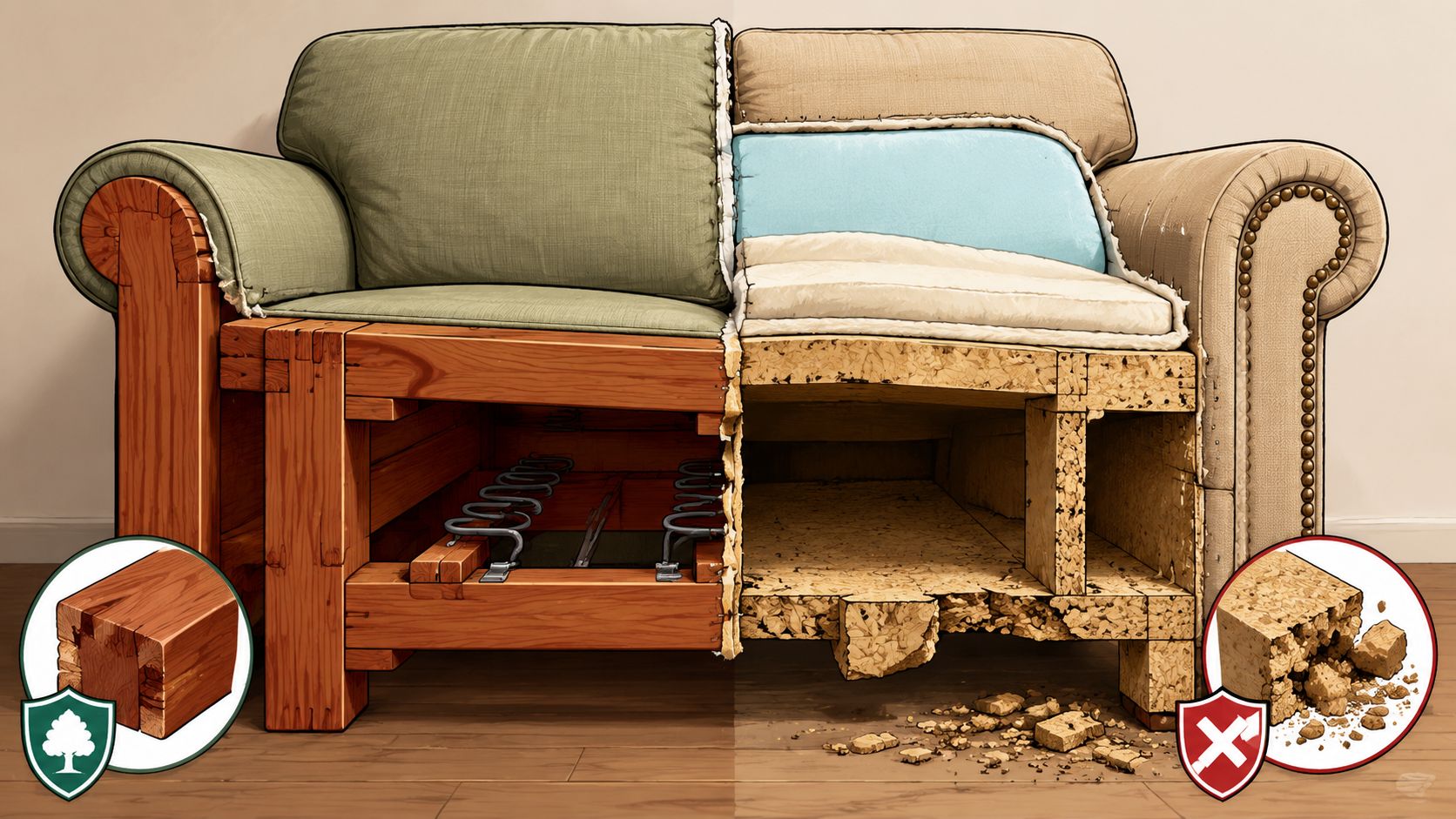
People often judge a sofa by the fabric first. The fabric matters, but the fundamental quality starts underneath. The frame, suspension, and cushions determine whether a sofa still feels supportive years down the road or starts showing fatigue far too soon.
What the frame tells you
A quality sofa should feel grounded when someone sits down. It shouldn't rack, wobble, or telegraph weakness through the arms and back. That's why solid frame construction matters so much.
Mass-produced seating often saves cost where buyers can't see it. Hand-crafted upholstery usually puts more attention into the frame itself, the corner reinforcement, and the joinery that keeps the piece square over time.
A buyer doesn't need to become a furniture engineer, but these signs are worth looking for:
- Solid wood integrity: Stronger than flimsy interiors that can break down under daily use.
- Reinforced corners: Better resistance to twisting and looseness.
- Substantial weight: Not a guarantee by itself, but often a clue that there's real material inside.
- Clean alignment: Arms, deck, and back should feel consistent and balanced.
For anyone comparing support systems, this overview of 8-way hand-tied sofas explains why suspension choices affect long-term comfort.
How suspension and cushions change the sit
Suspension controls the give beneath the cushion. Coil spring developments changed upholstered comfort significantly, and later spring systems helped make seating more durable and consistent, according to this upholstery history reference. In practical terms, that means the support system isn't just a technical detail. It shapes how the sofa feels every day.
Two broad experiences tend to matter most:
- More customized support: Better for upright sitting, easier standing, and cleaner cushion lines.
- More relaxed comfort: Better for lounging, reading, and long family evenings, though it may ask for more maintenance.
Custom construction also gives buyers control over the cushion itself. As noted in this custom furniture upholstery guide, custom makers often let customers specify firmness and cushion composition, including higher-density foam and blends with feathers and down, so the sofa better suits frequent use and long-term comfort.
Comfort should match the household
A single comfort profile doesn't work for everyone. A sofa for a formal sitting room usually shouldn't be built the same way as one in an active family room.
Useful comfort matching looks like this:
- For everyday family use: supportive seat cushions that recover shape well
- For taller users: enough depth and back support to avoid a perched feel
- For older adults: easier sit-to-stand support and more ergonomic seat height
- For lounge-first households: a softer crown with balanced support underneath
When construction is right, the comfort doesn't just feel nice on day one. It keeps performing.
Defining Your Style A Guide to Fabrics and Leathers
Fabric is where the sofa becomes personal. It's the part people see, touch, and live with most directly. It also carries much of the wear, so style and practicality have to work together.
Choose for lifestyle first

A smart fabric decision starts with the household, not the swatch book. Kids, pets, entertaining habits, sunlight, and snack frequency all matter.
For high-traffic areas, this upholstery fabric overview notes that more durable, easy-to-clean fabrics such as nylon, acrylic, or polyester synthetics are better suited to frequent use than natural fibers like cotton, which are less resistant to stains and wear.
That doesn't mean natural fibers are off the table. It means they should be chosen with intention.
A practical way to narrow options:
- Busy family room: performance-minded woven fabric with texture that disguises minor wear
- Quiet sitting room: softer hand, more refined pattern, or lighter color story
- Pet household: tighter weave with less snag risk
- Sun-filled room: color and texture that won't look tired when light shifts through the day
This is also where the customization edge becomes obvious. In-stock can be the starting silhouette, but made-to-order upholstery opens up a much wider design language. Some programs offer hundreds of fabric and leather choices for a single model, which gives buyers more room to coordinate with paint, rugs, artwork, and surrounding case goods.
For a deeper material primer, this guide to upholstery materials and performance considerations is worth reviewing.
Leather, texture, and visual balance
Top-grain leather brings a different kind of presence. It has that buttery feel people notice immediately, but the appeal isn't only tactile. Leather changes the visual weight of a room. It can make a custom upholstered sofa feel crisp, architectural, and subtly luxurious.
The right cover should look better because of how the room is used, not in spite of it.
Texture matters just as much as color. A flat, smooth textile reads differently than a nubby weave or a soft, brushed hand. Pattern scale matters too. Small rooms usually handle quieter movement better, while open spaces can support more texture and stronger visual rhythm.
Stressless comes into this conversation naturally for shoppers who prioritize ergonomic seating and premium upholstery choices. The same principle applies whether someone is selecting a reclining silhouette or a stationary sofa. Good customization aligns touch, support, and scale.
Understanding Heirloom Quality What Amish Craftsmanship Means
“Heirloom” gets used loosely in furniture. In a well-built home, it should mean something specific. It should mean the piece was made with enough care, enough material integrity, and enough structural honesty to stay useful for a very long time.
Why hand-crafted still matters
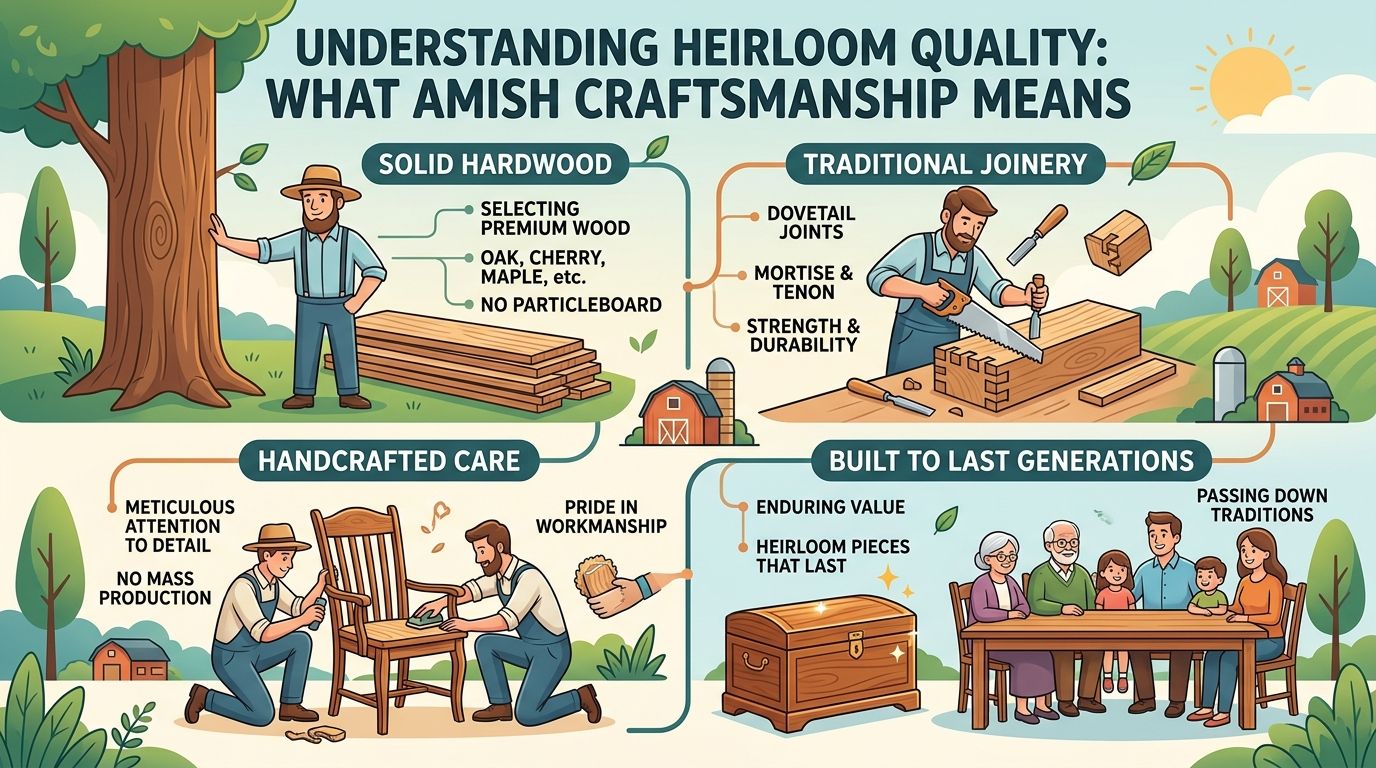
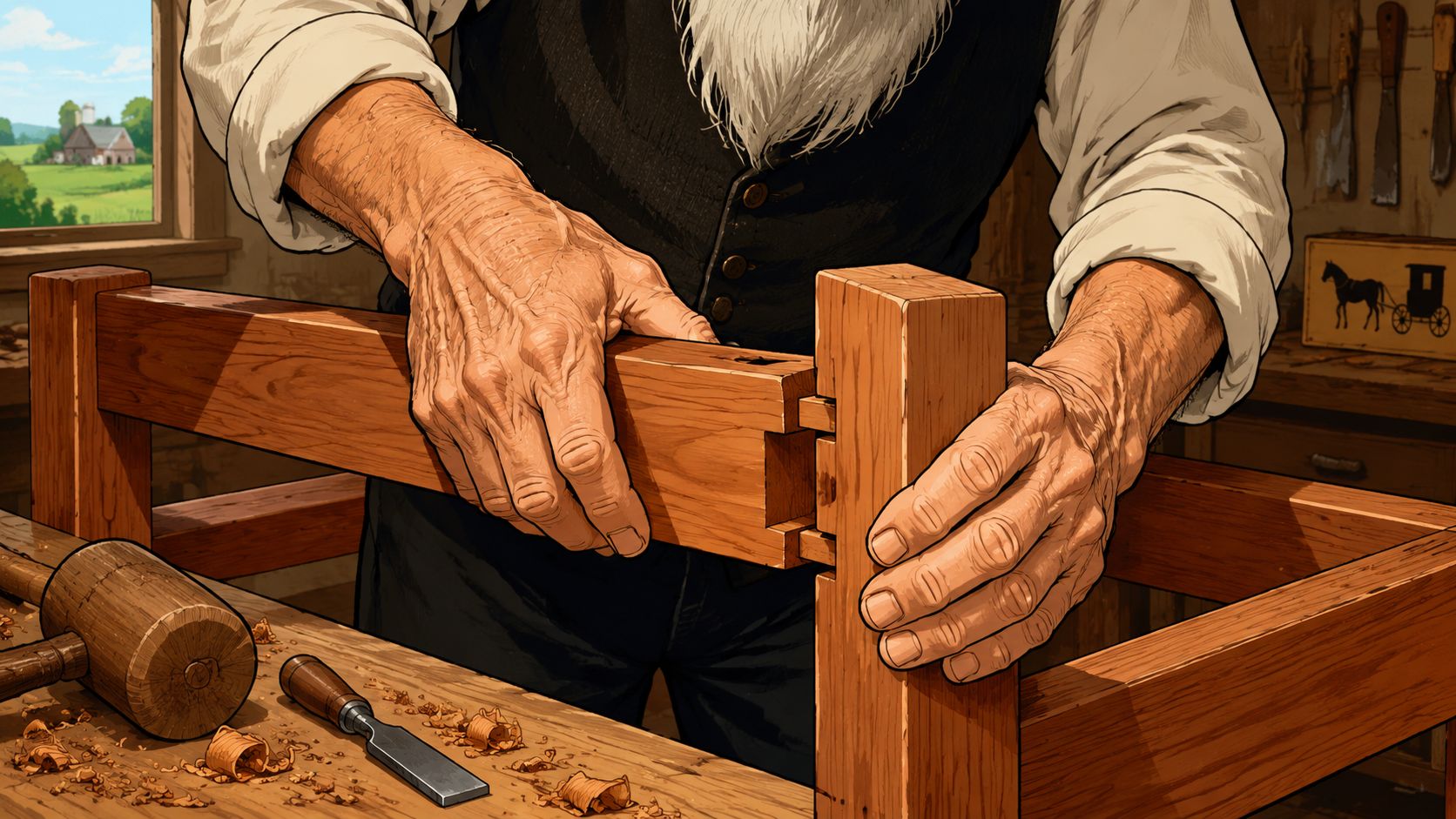
Amish hand-crafted furniture has that reputation because the construction philosophy is different. The goal isn't to make a piece look complete on the sales floor. The goal is to make it endure daily use, moves, seasonal changes, and years of family life.
That standard shows up most clearly in solid wood furniture. In dining rooms and bedrooms especially, the difference between real joinery and shortcut assembly becomes obvious over time. Mortise-and-tenon and dovetail construction hold because the maker respects the material and the stress points.
A helpful place to see how this approach translates across categories is this collection of custom Amish furniture options.
How this thinking carries through the home
The weight of solid cherry wood feels different in the hand than a lighter, less substantial substitute. The grain has depth. The edges feel intentional. The finish looks like it belongs to the wood rather than sitting on top of it.
That same sensibility strengthens a custom upholstery purchase. Even when the sofa itself is upholstered, buyers who appreciate Amish hand-crafted dining or bedroom furniture usually recognize the same values in bespoke seating:
- Material honesty: what's inside matters as much as what's visible
- Joinery discipline: pieces stay stable because they're built with structure in mind
- Sustainable ownership: longer use supports less frequent replacement
- Functional legacy: furniture becomes part of family life, not just room staging
For Southeast Michigan homeowners furnishing a forever home, this mindset often leads to more cohesive rooms. The sofa isn't chosen as a disposable style statement. It's chosen to live well beside solid wood companions that are built with similar seriousness.
Navigating the Investment Pricing Financing and Timelines
The most useful question isn't “What does the sofa cost today?” It's “What value does the sofa deliver over the years it serves the home?”
Think in cost per year
That shift changes the whole conversation. A bespoke sofa with stronger materials, better support, and a longer useful life often makes more sense than a lower-quality option that loses comfort and appearance much sooner.
This is an uncommon way to shop. A 2023 report by FIRA notes that only about 38% of consumers consider lifespan when selecting upholstery, even though durable frames and premium materials can reduce replacement frequency by 2 to 3 times. That gap is exactly why the cost-per-year mindset is so helpful.
A sofa can be expensive up front and still be the better value if it keeps its comfort, structure, and appearance much longer.
A simple way to evaluate the purchase:
- Initial outlay matters, but it isn't the whole story
- Durability affects replacement frequency
- Reupholstery potential adds value
- Daily comfort has real worth even when it doesn't show on a receipt
When the budgeting conversation needs flexibility, some buyers use Special Financing to spread the investment into manageable payments. A Low Price Promise also helps reduce hesitation for shoppers who want high-end construction without feeling like they're overreaching.
What made-to-order really means
Custom furniture takes planning. That's not a drawback. It's part of what allows buyers to choose the dimensions, seat feel, fabric, leather, and finishing details that suit the home.
Tyner Furniture offers made-to-order upholstery programs that let buyers move beyond floor samples into custom fabrics, configurations, and personalized comfort choices. That matters for people who don't want to settle for “close enough.”
A made-to-order timeline usually includes:
- Design consultation: room needs, comfort preferences, and style direction
- Specification choices: dimensions, arms, cushions, upholstery, and layout
- Order placement: final review before production begins
- Delivery scheduling: coordination once the piece is completed
The right expectation is simple. A custom upholstery sofa asks for patience up front so it can deliver longer satisfaction later.
From Showroom to Living Room Consultation Delivery and Care
The final stage should feel reassuring, not complicated. A good consultation helps a buyer confirm comfort in person, refine any open questions, and move forward with confidence.
What to expect during the sit test
The sit test is where many decisions become easier. Photos can suggest scale. Swatches can suggest color. Only sitting can reveal whether a sofa supports the body the right way.
One practical benchmark from professional custom upholstery is worth noting here. High-end domestic sofas often target a 2 to 3 cm tolerance between the seat frame height and the finished seat cushion top, and ergonomic testing cited in this custom sofa design reference links larger deviations to a 15 to 20% increase in reported discomfort. That's a technical way of saying small construction differences can change the feel a lot.
At the South State St. showroom in Ann Arbor, a thoughtful visit usually works best when shoppers:
- Sit upright first: check leg support and back angle
- Lean into the corner: see how the arms and back feel in relaxed use
- Test entry and exit: especially important for ergonomic comfort
- Compare cushion feels: supportive versus plush isn't a minor detail
For those beginning the process, this guide to getting started with a custom order helps organize the first steps.
Care that protects the investment
Southeast Michigan seasons matter more than many buyers realize. Research shows that sustained indoor relative humidity above 60% can promote mold on fabric surfaces, while very low humidity below 30% can dry out certain leather and cellulosic fibers, increasing cracking risk. That makes climate awareness part of sofa care, not just housekeeping.
A long-lasting care routine usually includes:
- Steady indoor conditions: avoid prolonged humidity extremes
- Routine vacuuming: especially in seams, under cushions, and along the deck
- Prompt spill response: blot first, don't grind moisture deeper into fibers
- Cushion rotation: helps seating wear more evenly
- Professional cleaning when needed: especially after heavy seasonal use or visible buildup
Households that want outside guidance can also review this practical resource with expert advice on cleaning furniture from J.G. Carpet Cleaning LLC. It's a useful reminder that preventive care is usually easier than restorative care.
A well-chosen sofa should feel at home from day one, but it should also be cared for like the investment it is. That's how a made-to-order piece keeps its comfort, structure, and visual appeal for the long haul.
A custom upholstery sofa should be easy to understand once the right guidance is in place. For homeowners across Ann Arbor and Southeast Michigan, Tyner Furniture offers a place to do the most important step in person: the sit test. Shoppers who prefer to start from home can also browse the online Quick Specs for special orders before visiting the South State St. showroom.