Best Mattress for Neck Pain: Expert Guide 2026


A lot of people start this search the same way. They wake up, roll the shoulders, turn the head to one side, and feel that stubborn pull at the base of the neck before their feet even hit the floor. By the end of the week, that soreness can make a normal workday, a commute across Ann Arbor, or even an evening on the sofa feel longer than it should.
The best mattress for neck pain rarely comes down to one label on a showroom tag. It comes down to a complete sleep system that keeps the spine in a neutral line, cushions pressure points without letting the body sag, and works with the right pillow instead of fighting against it. That's why mattress shopping often feels confusing. Firmness, foams, coils, hybrid builds, loft, contouring, responsiveness. It's a lot to sort through when all someone really wants is to wake up without pain.
For households across Southeast Michigan, that choice also deserves to be treated as a long-term health decision, not a hurried purchase. A mattress affects sleep quality every night, and a well-made sleep setup pays back over years in comfort, durability, and dependable support. Since 1957, trusted local guidance has mattered because the goal isn't merely buying a bed. It's building a better morning.
For a broader look at habits that support restorative sleep, keys to waking up refreshed in the morning is a helpful companion read.
Table of Contents
- Waking Up to a Better Morning
- The Foundation of a Pain-Free Neck
- The Critical Link Between Your Mattress and Pillow
- Choosing Your Ideal Mattress by Sleep Style
- How to Test a Mattress in Our Ann Arbor Showroom
- Extending Ergonomic Support Beyond the Bedroom
- An Investment in Decades of Restful Sleep
Waking Up to a Better Morning
Neck pain at wake-up often gets blamed on “sleeping wrong,” but that phrase obscures the underlying problem. Most of the time, the body spent hours trying to rest on a surface that didn't support it properly. The ache isn't random. It's feedback.
People dealing with this often describe the same pattern. The neck feels stiff first thing in the morning, eases a bit after moving around, then flares again after sitting at a desk or driving. That cycle usually points back to alignment during sleep, especially when the mattress and pillow aren't working together.
A painful morning usually starts the night before.
For many shoppers, the hardest part isn't knowing they need a change. It's knowing where to start without overspending on features that don't address the core issue. Mattress marketing tends to focus on feel in the first five minutes, while the body cares about support over the full night.
A useful way to think about it is this:
- Morning pain is a clue: If discomfort is strongest when waking, the sleep surface deserves a close look.
- Soft isn't always soothing: Plush comfort can feel inviting at first, but too much sink can throw the neck out of line.
- Firm isn't automatically better: A surface that's too hard can push up against the shoulders and create tension.
- The goal is balance: Good support holds the body level while comfort layers reduce pressure around sensitive joints.
In a long-established local business culture, the most valuable advice has always been calm, practical, and honest. Shoppers in Ann Arbor and across Southeast Michigan don't need jargon. They need guidance that respects the fact that a mattress is a health investment, a craftsmanship decision, and a major part of the home.
That perspective matters beyond the bedroom too. The same households comparing mattresses are often also thinking about a home office, a reading chair, a dining set, or even outdoor spaces that support the way they live every day. A trusted showroom should help connect those dots, because long-term comfort rarely comes from a single purchase in isolation.
The Foundation of a Pain-Free Neck

A neck-friendly mattress starts lower than the neck. It starts with the spine.
Why neutral alignment matters
When the body lies down, the mattress should allow the spine to rest in a neutral shape. That means the head, shoulders, and hips stay in a reasonably even relationship instead of collapsing into a curve. If the torso sinks too far, the neck compensates. If the surface pushes too hard against the shoulders, the neck compensates again.
That's why mattress support and pressure relief have to work together. One without the other usually creates another problem. A mattress that only feels soft can let the body hammock. A mattress that only feels rigid can force pressure into the shoulders and upper back.
A systematic review in Pain Medicine concluded that medium-firm mattresses are recommended for patients with chronic pain because they promote comfort, sleep quality, and proper spinal alignment, reducing the risk of developing pain.
For readers managing ongoing symptoms beyond what a sleep setup alone can solve, professional care can be part of the picture. Resources on Aspen Falls chiropractic neck pain treatment can help explain when persistent discomfort deserves additional evaluation.
What support should feel like
Support doesn't feel like stiffness. It feels steady.
A properly supportive mattress lets heavier parts of the body settle in enough to stay level while still holding the spine in line. The shoulders should have room to compress the comfort layer. The lower back shouldn't feel stranded in a gap. The head shouldn't tip up or down because the rest of the body is out of position.
Practical rule: If the mattress feels great on the shoulders but leaves the midsection sagging, it isn't supporting the neck. It's only masking the problem.
Shoppers comparing constructions should pay attention to more than buzzwords. Foam, latex, and hybrid builds can all work well if the comfort layers and support core are in balance. Material choice changes feel, responsiveness, and temperature profile, but alignment remains the standard that matters most.
For a clearer breakdown of common constructions, mattress types and their pros and cons is a helpful resource.
This is also where craftsmanship matters. Durable construction holds its feel longer. That's important in an investment purchase, because a mattress that loses support too quickly stops being ergonomic even if it felt excellent on day one.
The Critical Link Between Your Mattress and Pillow
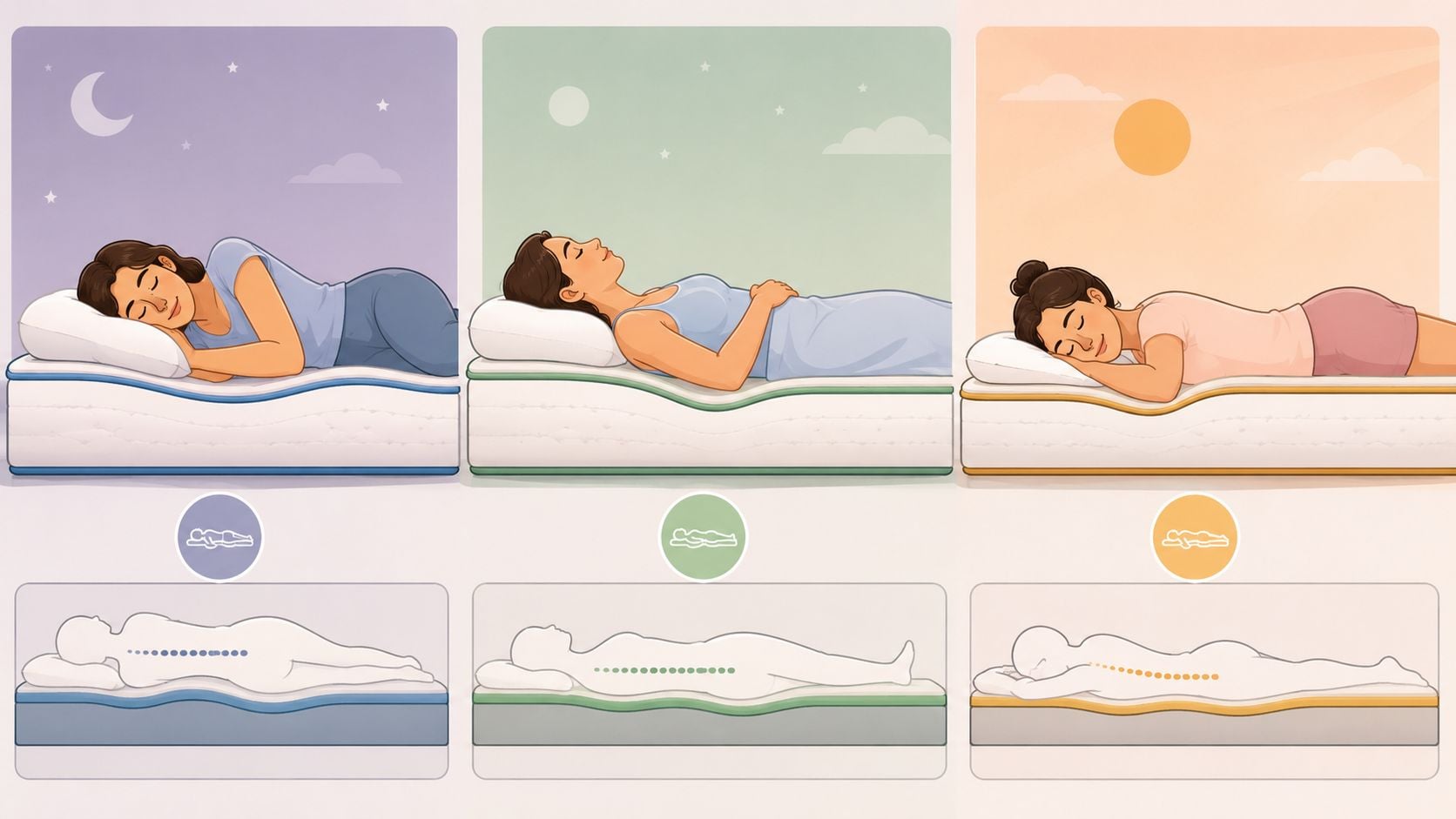
The most common mistake in the search for the best mattress for neck pain is treating the mattress and pillow as separate decisions. They're not. They function as one ergonomic system.
One sleep system, not two separate products
The mattress supports the body from the shoulders down. The pillow finishes the job by supporting the cervical curve. If one piece is right and the other is wrong, the whole setup can fail.
The key issue is angle. Even a supportive mattress can't protect the neck if the pillow lifts the head too high or lets it drop too low. Over hours, that forces the neck into a strained position instead of a resting one.
The National Council on Aging guide notes that even the perfect medium-firm mattress cannot correct neck pain if the pillow forces the head into hyperextension or flexion. Studies show pillow loft must match shoulder width and sleeping position to prevent spinal deviation, a critical nuance most guides miss.
For readers trying to build habits that support lasting relief from neck pain, posture during sleep and pillow fit deserve just as much attention as the mattress itself.
How pillow loft changes neck position
A side sleeper usually needs more loft than a back sleeper because the pillow must fill the space between the mattress and the side of the head. A back sleeper usually benefits from a shape that supports the natural curve of the neck without pushing the head forward. A stomach sleeper usually needs the flattest setup of all, if a pillow is used at all.
Here's where shoppers often get tripped up. A pillow that felt perfect on an old mattress may stop working on a new one. If the new mattress allows the shoulder to sink further, the gap under the head changes. That means the correct loft can change too.
- For side sleepers: The pillow should keep the nose centered with the sternum, not tilted toward the mattress or ceiling.
- For back sleepers: The pillow should support the neck's curve while keeping the chin from dropping toward the chest.
- For combination sleepers: A resilient fill that rebounds quickly can make position changes easier.
The pillow isn't an accessory. It's structural support for the top of the spine.
That's why experienced showroom guidance should always include pillow fitting, not just mattress fitting. A complete solution feels more coherent because it is more coherent. For more detail on matching shape and loft to the body, this guide to choosing the perfect pillow is worth reviewing.
Choosing Your Ideal Mattress by Sleep Style
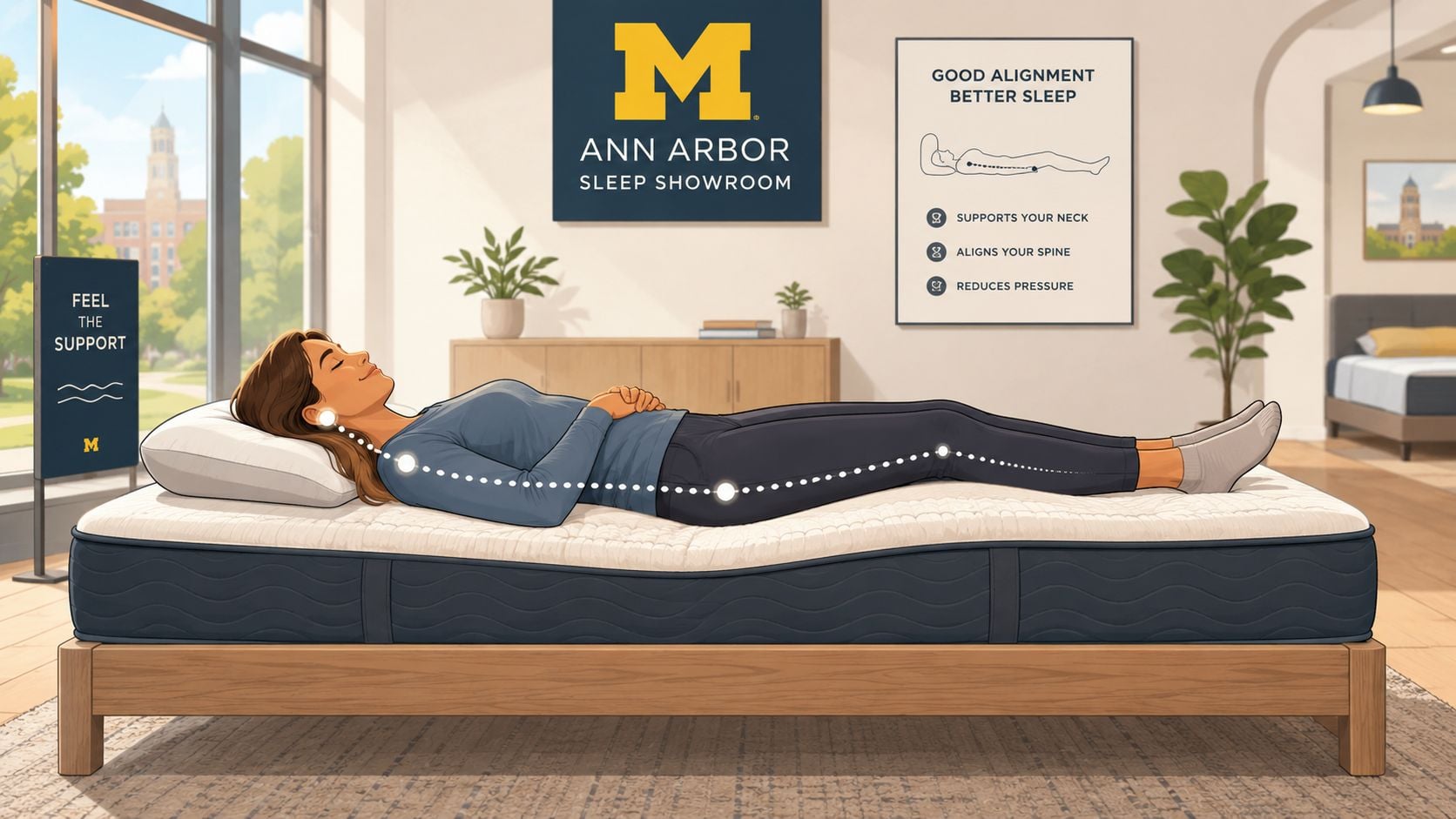
No mattress works the same for every body. Sleeping position changes where pressure builds, how far the shoulders need to sink, and how much pushback the torso needs to stay aligned.
Side sleepers
Side sleeping puts concentrated pressure on the shoulder and hip. That makes contouring comfort especially important.
According to Leesa's 2026 guidance on mattresses for neck and shoulder pain, for side sleepers, a hybrid or memory foam mattress with a plush comfort layer at least 3 inches thick and a firmness of 5-6.5/10 is ideal, as it allows the shoulder to sink just enough to cradle the joint without compromising spinal support.
Memory foam often appeals to side sleepers because of its close contouring. It has that slow, body-hugging feel that can reduce sharp pressure at the shoulder. Some sleepers love that cradled sensation. Others find it less mobile when turning.
Hybrid builds often strike a strong balance. They can provide a cushioned upper layer with more bounce underneath, which helps reduce the “stuck” sensation and makes repositioning easier during the night.
Back sleepers
Back sleepers usually do best on a surface that supports the natural curve of the spine without letting the pelvis dip too low. The best feel is often steady rather than plush.
Latex and well-built hybrids can work especially well here. Latex tends to feel more buoyant than memory foam. Instead of a deep hug, it offers a responsive lift. Many sleepers describe it as easier to move on and more springy under the body.
Stomach sleepers and combination sleepers
Stomach sleeping is harder on the neck because the head usually turns to one side for long periods. For people who shift between positions, responsiveness becomes more important. A mattress that makes movement easier can reduce static strain.
Combination sleepers often do well with a balanced hybrid or responsive foam design. The goal is enough cushioning for side sleeping, plus enough support and mobility for back or partial stomach positions.
Mattress Material Comparison for Neck Pain
| Material | Pressure Relief | Spinal Support | Best for Sleep Style |
|---|---|---|---|
| Memory foam | Strong contouring around shoulders and upper back | Good when paired with the right firmness and support core | Side sleepers, some combination sleepers |
| Latex | Gentle contouring with a buoyant feel | Strong, even support with easier movement | Back sleepers, combination sleepers |
| Hybrid | Balanced cushioning with responsive pushback | Strong support with pressure relief from comfort layers | Side sleepers, back sleepers, combination sleepers |
A quick test can help clarify feel preferences:
- Choose memory foam if the body needs deeper cradling at the shoulders and prefers a quieter, more enveloping surface.
- Choose latex if easier movement, resilient comfort, and a lifted feel matter more.
- Choose a hybrid if the goal is a middle ground between contouring comfort and springy support.
Shoppers sorting through these trade-offs can use guidance on choosing the right mattress for a sleeping style to narrow the field before visiting a store.
Bespoke thinking becomes particularly useful. In-stock options are only the beginning. The best sleep setup often comes from matching construction, feel, pillow height, and body type rather than chasing one popular label.
How to Test a Mattress in Our Ann Arbor Showroom

Online research can narrow the choices. It can't replace lying down.
A meaningful showroom test takes time and intention. A quick edge sit or hand press won't reveal whether a mattress supports the neck through a full sleep cycle. In Ann Arbor, shoppers who want the best mattress for neck pain should treat the showroom visit like a fitting, not a browse.
What to do during a real showroom test
The most helpful approach is simple:
- Wear comfortable clothing. Bulky coats and stiff jeans change how a mattress feels.
- Lie in the primary sleep position. Stay there long enough for the muscles to settle instead of bracing.
- Use the right pillow. If possible, bring the current pillow for comparison or test with one that matches the intended setup.
- Notice the shoulders and jaw. If they tighten after a few minutes, the body may be compensating.
- Roll and reposition. A supportive mattress should make movement possible without strain.
A 2026 review roundup from Sleepopolis noted that mattresses like the Saatva Rx and Helix Midnight Luxe consistently score highest for pain relief due to specific combinations of support and pressure-relieving materials, reinforcing the need to test for these qualities in person.
Don't judge a mattress by the first thirty seconds. Judge it by what the body does after it stops posing.
What to notice before making a decision
A proper showroom test should answer a few physical questions:
- Is the neck relaxed? The head shouldn't feel forced upward or left hanging.
- Do the shoulders settle naturally? Pressure at the upper shoulder often predicts morning stiffness.
- Does the lower body stay supported? If the hips sink too far, the neck often pays for it later.
- Can position changes happen easily? A mattress should support rest, not trap the sleeper.
This is also where local showroom experience matters. On South State St. in Ann Arbor, an in-person sit test lets shoppers compare feel, resilience, and ergonomic response in a way that online photos can't. The difference between materials becomes obvious when someone feels the slow contour of foam, the spring-back of latex, or the balanced support of a quality hybrid.
A good showroom also reminds shoppers that comfort extends beyond the mattress. Many households reviewing sleep products are also planning a home office refresh, replacing a recliner, or rethinking dining seating. The same ergonomic logic should carry throughout the home.
Extending Ergonomic Support Beyond the Bedroom
Neck pain doesn't begin and end in bed. Sleep can either help the body recover from daily strain or add to it, but daytime habits still matter. A person who spends hours slumped at a desk, twisted on a sofa, or perched on a dining chair with no support may undo a lot of what a good mattress provides.
Why daily seating affects nighttime recovery
This is why an ergonomic mindset works better than a single-product mindset. The body responds to repeated positions. If the shoulders round forward all day, the neck often arrives at bedtime already irritated.
Supportive seating can help reduce that buildup. In a well-designed recliner, for example, the spine rests more evenly and the head and neck don't have to work as hard. That's one reason ergonomic seating remains so valuable in living rooms, reading corners, and home office spaces.
For households furnishing with longevity in mind, this is also where craftsmanship matters. The buttery feel of top-grain leather in a well-made recliner, the stable support of a properly engineered seat, and the precise fit of custom sizing create a different experience than a short-lived substitute. Stressless seating is a strong example of ergonomic precision through personalized sizing and support.
A whole-home comfort mindset
The same philosophy carries into made-to-order interiors. Canadel dining allows bespoke choices in finishes and configurations, while Amish hand-crafted pieces bring the weight of solid cherry wood, oak, or maple and the integrity of joinery that outlasts mass-produced alternatives. Dovetailing and mortise-and-tenon construction aren't decorative details. They're part of durability, heirloom value, and everyday stability.
Stomach sleeping also fits into this broader discussion because it tends to increase neck stress. Texas Health Resources explains that stomach sleeping is not recommended because it fails to allow a neutral spine and increases neck stress. For those who cannot change this habit, specific modifications like a very flat pillow and a supportive mattress are essential to minimize strain.
For readers working on daytime habits as well as nighttime support, how to improve posture while sitting offers practical guidance.
An ergonomic home isn't limited to one room. It can include the bedroom, the home office, the living room, the dining area, and even outdoor spaces where people spend long summer evenings in Southeast Michigan.
An Investment in Decades of Restful Sleep
A high-quality mattress belongs in the same category as the most important long-term purchases in the home. It affects health, energy, recovery, and daily comfort with a frequency that few other pieces can match. That's why the smartest way to evaluate one isn't sticker shock. It's cost-per-year.
Why cost-per-year matters
A mattress that supports the body well and holds that support over time often delivers better value than a lower-quality option that needs replacing sooner or stops feeling ergonomic long before it wears out. Durability, material integrity, and craftsmanship matter because performance over the years matters.
That same thinking applies across the home. Made-to-order upholstery, custom dining, and solid wood bedroom furniture all reward buyers who think in years instead of seasons. Canadel customization, Stressless ergonomic sizing, and Amish hand-crafted case goods reflect that broader value mindset. In-stock is useful, but it's rarely the full story when comfort and interior design need to fit the household precisely.
The value of buying for the long haul
Since 1957, Tyner Furniture has built a local legacy around helping Southeast Michigan shoppers choose lasting quality with confidence. That includes sleep solutions, but it also extends across the home office, living room, dining room, bedroom, and outdoor spaces. The emphasis has stayed consistent. Buy well, buy for durability, and choose pieces with the structure and finish quality to serve the home for years.
For many households, that kind of investment feels more approachable when the buying process is easier. Special Financing can help spread out a major purchase, and a Low Price Promise adds confidence that value and quality can live together. That matters when someone is choosing not just a mattress, but a healthier routine and a better morning.
The best mattress for neck pain is the one that supports the spine, matches the pillow, fits the sleeper's position, and keeps doing its job over time. That's not a temporary fix. It's a foundation for better rest.
Visit Tyner Furniture to do a proper sit test in the Ann Arbor showroom on South State St., or browse the online Quick Specs to explore made-to-order options. Since 1957, Tyner has helped Southeast Michigan shoppers invest in bespoke comfort, ergonomic support, heirloom craftsmanship, and lasting value for every room of the home.