Tyner Furniture: Outdoor Furniture Teak Sale 2026

A lot of shoppers arrive at the same moment. They see an outdoor furniture teak sale online, notice a dramatic markdown, and wonder whether they've found a smart value or a costly shortcut dressed up as one. That hesitation is healthy. With teak, the sticker price only tells a small part of the story.
For Southeast Michigan homes, the better question isn't “How low is the price today?” It's “What will this piece cost per year of use, comfort, and maintenance?” That shift changes everything. A patio dining set that feels solid, ages gracefully, and stays structurally sound through years of weather exposure can be the better buy, even when the opening price is higher.
That long-view mindset has guided local furniture decisions since 1957. Families furnishing everything from home offices to outdoor spaces often need the same kind of help: clear information, practical trade-offs, and honest guidance on what lasts. Teak deserves that kind of careful look because, when it's well made, it isn't just seasonal furniture. It becomes part of the home.
Table of Contents
- Navigating the Outdoor Furniture Teak Sale Landscape
- Understanding Teak Quality Beyond the Price Tag
- How to Spot a Genuine Teak Furniture Value
- The Lifetime Beauty and Care of Heirloom Teak
- Shopping Smart for Teak in Ann Arbor
- Begin Your Legacy with the Perfect Outdoor Space
Navigating the Outdoor Furniture Teak Sale Landscape
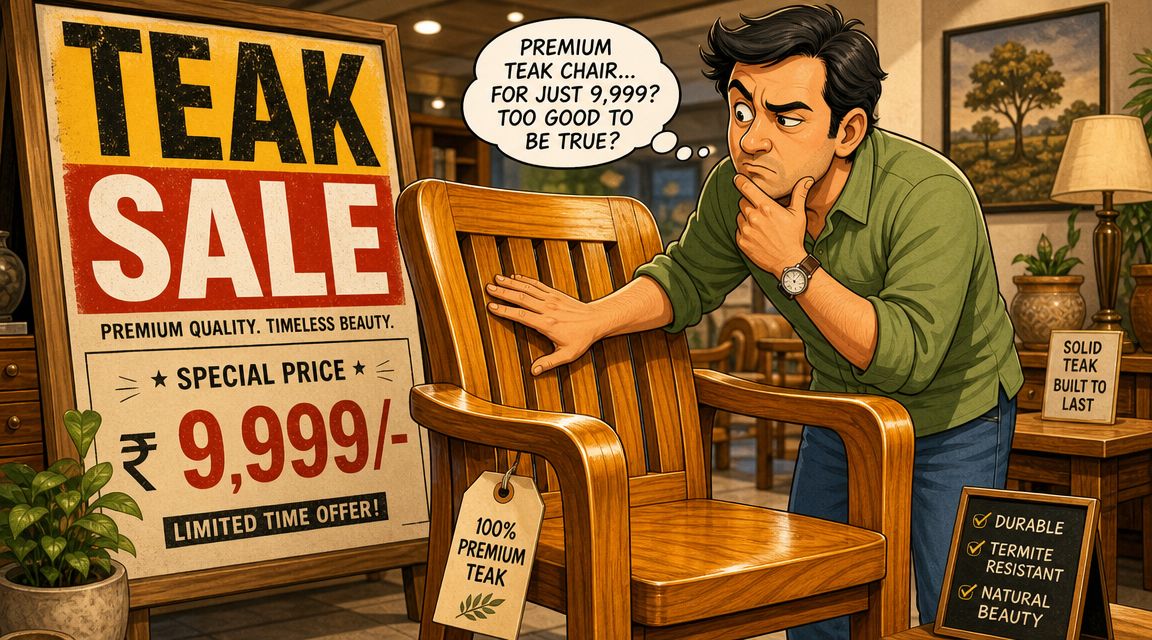
A sale sign can make any teak set look like a once-a-season opportunity. The problem is that teak furniture often looks convincing long before it proves itself. A clean product photo can't show whether the boards are solid, whether the joints are built to hold, or whether the hardware will leave rust stains after a season outdoors.
Why sale pricing can mislead
The most useful way to read an outdoor furniture teak sale is to separate price from value. Price is the number on the tag. Value is the combination of wood quality, construction, comfort, and how many years the piece keeps doing its job.
A lower opening price can still be expensive if the arms loosen, the frame twists, or replacement parts become a recurring project. A higher quality piece can look less dramatic on paper and still be the wiser purchase because it spreads its cost over many more years of use.
Practical rule: If the listing highlights the markdown more than the material, construction, and care details, it deserves closer scrutiny.
The larger trend behind outdoor living
This category isn't a passing fad. The global outdoor furniture market was valued at USD 56.00 billion in 2025 and is projected to reach USD 92.08 billion by 2034 according to Fortune Business Insights on the outdoor furniture market. Buyers are putting real thought and money into durable outdoor spaces, and that's one reason premium materials keep drawing attention.
That broader demand helps explain why teak stays relevant. Homeowners want pieces that look refined, handle weather well, and still feel appropriate years later when the patio layout changes or the family grows.
For shoppers weighing showroom pieces against end-of-season finds, these year-round end-of-season furniture ideas can help frame the question properly. The right buy isn't solely the piece with the loudest markdown. It's the one that still feels like a good decision after many summers in Ann Arbor and across Southeast Michigan.
Understanding Teak Quality Beyond the Price Tag
A sale price can make two teak dining sets look comparable on a screen. In practice, they may deliver very different cost-per-year once they spend a few Southeast Michigan seasons outside. One set stays tight, stable, and attractive. The other dries unevenly, loosens at the joints, and starts asking for attention long before it should.
That difference usually starts with the wood itself.
Grade A starts at the heartwood
The teak used in better outdoor furniture typically comes from Grade A heartwood, the mature inner portion of the tree. That section carries the highest natural oil content and a more consistent grain, which is why it holds up better outdoors and tends to age more gracefully.
You can usually see and feel the difference. Better teak has a more even surface, steadier color, and a denser, more substantial feel when you put a hand on the arm of a chair or the edge of a table.
Grade B and Grade C teak still appear in outdoor furniture, especially in aggressive sale listings. They can lower the upfront price, but they often bring more variation in color, less natural oil, and a shorter service life in exposed conditions. For shoppers who care about long-term value, that trade-off matters more than the markdown.
Teak Grades at a Glance
| Grade | Source | Appearance | Oil Content | Expected Lifespan |
|---|---|---|---|---|
| Grade A | Heartwood from the mature inner part of the tree | Uniform grain, fewer knots, richer color | Highest | Longest, often associated with heirloom-quality performance |
| Grade B | Intermediate wood between heartwood and outer layers | More color variation, less consistent grain | Moderate | Moderate, depends heavily on construction and care |
| Grade C | Outer wood, often closer to sapwood | Lighter color, more visual inconsistency | Lowest | Shortest, especially in demanding outdoor conditions |
Why drying and grading matter in Michigan
Around Ann Arbor and across Southeast Michigan, outdoor furniture deals with real seasonal swings. Humid summer afternoons, cool nights, spring rain, and freeze-thaw cycles all put stress on wood. That is why species alone is never the full story. Proper drying, careful grading, and consistent material selection do a lot of the heavy lifting.
In the showroom, I tell shoppers to ask three direct questions. Is it solid teak throughout? What grade of teak is it? Was the wood properly dried before it was built into furniture? Those answers reveal far more than a sale banner ever will.
For a broader explanation of how wood choice affects durability over time, our guide to choosing the right hardwood for longevity and style helps connect the material to real household use.
Cost-per-year is the right lens here. A lower-grade teak set that needs replacement sooner is often the expensive option in the long run. A better-built Grade A piece may ask for more upfront, but if it keeps its structure and appearance for many more seasons, the yearly cost of ownership often ends up lower.
Buyers who understand grade are much harder to fool. They can separate teak that is built for decades of use from teak that only photographs well on day one.
How to Spot a Genuine Teak Furniture Value
The teak market has a trust gap. Many sale listings don't tell shoppers enough about what they're buying. Details on grade, joinery, and hardware are often thin, even though those are the details that decide whether the furniture becomes a long-term asset or an annual frustration. That concern is reflected in Country Casual Teak's discussion of verifying teak quality and construction.
What to inspect before buying
A strong teak frame should do more than look tidy. It should feel stable when weight shifts, stay square at the corners, and show evidence that the maker planned for outdoor use.
A careful inspection should include these points:
Joinery that does real work
Look for well-executed joints rather than frames that rely too heavily on exposed screws alone. Good joinery helps the piece resist wobble as seasons pass.Hardware chosen for weather exposure
Outdoor pieces need durable fasteners. If hardware quality looks like an afterthought, the whole piece may age poorly even if the wood is respectable.Solid teak instead of mixed-material shortcuts
Ask whether the visible teak surface matches the structural components. A piece should be honest all the way through.Consistent grain and clean finishing
Uneven boards, rough transitions, or blotchy coloration can signal mixed grades or rushed production.
For shoppers comparing listings online, this guide to reading furniture product descriptions with confidence helps translate vague marketing language into useful buying questions.
A simple cost-per-year test
A sale becomes easier to judge when the math gets simpler. Cost-per-year doesn't require complicated formulas. It just asks whether the furniture will deliver enough durable use to justify its purchase and care.
Here's a practical approach:
Start with expected service life
Don't guess based on appearance alone. Use material grade and construction details.Add maintenance reality
Consider cleaning, part replacement, tightening, and potential refinishing.Factor in comfort and daily use
A beautiful chair that nobody enjoys sitting in isn't a strong value.Consider replacement risk
If one weak point can send the whole piece to the curb, the sale price loses meaning.
The smartest buyer in a teak sale isn't the one who pays the least. It's the one who notices what won't need replacing.
This same logic shows up across the home. Whether the piece is for the patio, home office, or dining room, long-term value usually comes from craftsmanship, not short-lived savings. That's also why shoppers often look beyond “in-stock” only and ask about made-to-order choices in other categories, such as bespoke Canadel dining configurations or ergonomic Stressless sizing, where fit and build quality matter over the long haul.
The Lifetime Beauty and Care of Heirloom Teak
One reason teak remains so beloved is that it doesn't just survive outdoors. It matures. A well-made piece starts with a warm, golden cast and a smooth, almost waxy feel from its natural oils. Over time, that surface softens in color and settles into the silver-gray patina many buyers specifically hope to achieve.
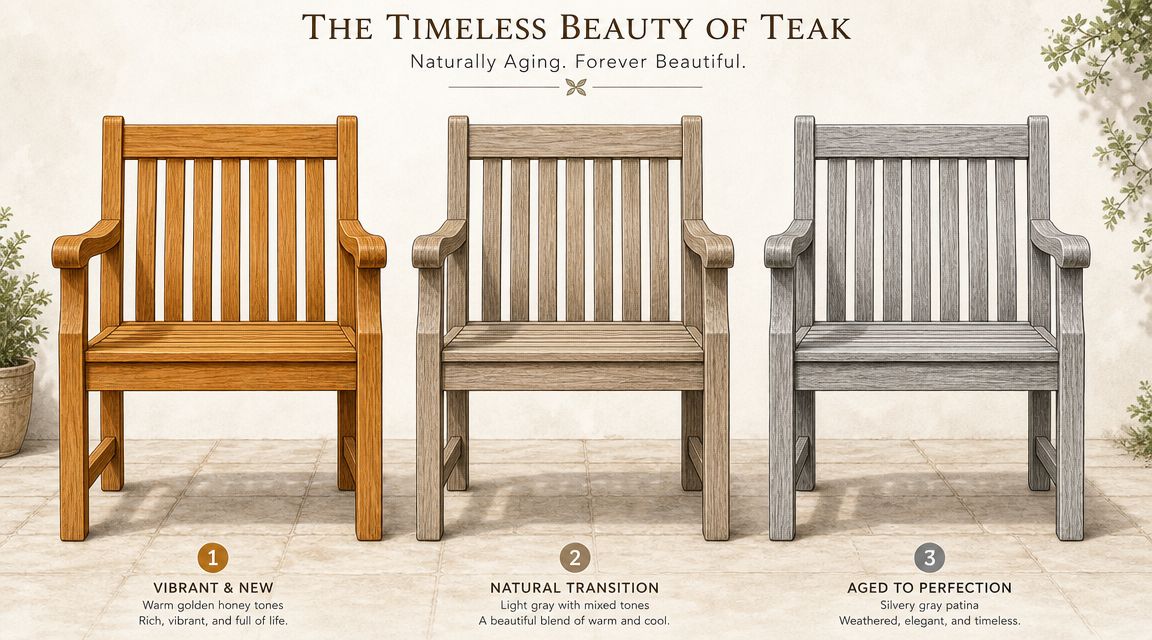
How teak changes with age
That color shift often worries first-time buyers, but it isn't a sign that the wood is failing. It's part of teak's natural weathering process. The table that looked honey-gold in its first season can become quieter and more architectural later, especially against brick patios, bluestone, and green landscaping common around Southeast Michigan homes.
Some households prefer to preserve the original color. Others love the settled, coastal look of aged teak. Both approaches are valid, but each requires a little intention.
Silvering is cosmetic. Structural problems come from poor construction, weak joinery, or failing hardware, not from the patina itself.
That distinction matters because the true lifecycle cost of teak furniture isn't only about the wood. Hardware corrosion and joinery quality can turn an apparent value into a maintenance headache, as noted in Westminster Teak's discussion of clearance and refurbished outdoor furniture.
Care habits that protect value
Good teak care is straightforward when the piece is well built. A few practical habits usually make the biggest difference:
Clean gently
Use mild soap, water, and a soft brush when dirt or pollen builds up.Watch the hardware
Check fasteners and moving points periodically, especially after wet weather cycles.Choose a color path
Either allow the wood to age naturally or maintain the warmer tone with a teak-specific care routine.Avoid trapping moisture
Breathable covers are better than anything that holds dampness against the surface.
For buyers who want a practical cleaning overview, Better Boat's teak care tips offer a useful outside reference. The key is consistency, not over-treatment. Heavy-handed maintenance can create as many problems as neglect.
A well-made teak bench or dining set often becomes part of the rhythm of a home. Coffee outside in spring. Long dinners in July. A quiet seat on a crisp fall afternoon. That's where cost-per-year becomes tangible. The piece keeps showing up, and it keeps earning its place.
Shopping Smart for Teak in Ann Arbor
A family in Ann Arbor can spend weeks comparing teak sets online and still learn more in ten minutes at a showroom. Photos help with style. A sit test answers the questions that affect cost-per-year: comfort after a full meal, how solid the frame feels when someone shifts weight, and whether the piece looks built for ten summers or just one sale season.

What an in-person sit test reveals
Teak is one of those materials that asks to be handled, not just viewed on a screen. A chair can photograph beautifully and still sit too upright for a long conversation. A dining table can look heavy online but feel light in the wrong way once you put a hand on it. In Southeast Michigan, where patios and decks get a short but busy season, those details matter. People use outdoor rooms hard when the weather turns.
A good showroom visit should help buyers judge a few things quickly:
Seat comfort
Does the chair support a relaxed dinner, or does it push everyone indoors after twenty minutes?Frame stability
Does the piece stay steady when a child climbs in, or when an adult shifts to stand up?Wood feel and finish
Does the surface feel smooth and dense, or dry and underfinished?Real scale
Does the set fit your body, your patio, and the way your household actually gathers?
I tell shoppers to bring their patio measurements, a few photos, and an honest sense of how they live. If a set will host graduation parties, weeknight dinners, and quiet coffee on cool fall mornings, buy for that use. Sale tags come and go. Cost-per-year gets decided by how often a piece earns its spot.
Making a long-term purchase easier
Budget still matters, and smart buyers should treat it like part of the quality conversation. Financing and price protection can make room for better materials and better construction without forcing a rushed choice. Tyner Furniture offers outdoor living furniture options along with Special Financing and a Low Price Promise, which helps households compare pieces with a longer view.
For buyers planning more than furniture, Task Masters Inc. offers useful ideas on how patios function as everyday living space. That broader planning matters in a showroom too. A teak bench may be the right answer for one porch, while a full dining set makes more sense for a deep backyard patio in Saline, Dexter, or Ann Arbor.
The best showroom visit replaces guesswork with touch, posture, and proportion. For Southeast Michigan households, local access makes that easier. Questions get answered face to face, and the decision usually gets better because of it.
Begin Your Legacy with the Perfect Outdoor Space
A real value in an outdoor furniture teak sale isn't the lowest tag in the room. It's the piece that keeps delivering comfort, stability, and beauty long after the sale season ends. Buyers who focus on grade, joinery, hardware, and cost-per-year usually make calmer, more satisfying decisions.
The smartest sale is the one that lasts
Teak rewards patience. It asks shoppers to look past the headline number and pay attention to what the furniture is made of, how it's assembled, and how it will live on a patio through many Michigan seasons. That's a different mindset from chasing the quickest bargain, but it's the one that tends to age best.
For homeowners shaping a broader outdoor retreat, Task Masters Inc.’s outdoor living trends guide can spark ideas about how furniture, layout, and daily use come together. Inspiration is helpful, but execution is where value gets decided.
The strongest next step is simple. Sit in the chairs. Run a hand across the wood. Check how the frame feels when weight shifts. Ask what grade of teak is being used and what kind of hardware holds it together. For patio planning ideas before a showroom visit, this patio design guide is a practical place to start.
A well-chosen teak piece can become part of a home's story in the same way a hand-crafted dining table or a favorite reading chair does. It doesn't just fill space. It supports gatherings, routines, and quiet moments over time. That's why the best sale isn't about urgency. It's about choosing something with the bones to stay.
For shoppers ready to compare teak quality in person, Tyner Furniture offers a practical next step. Visit the South State Street showroom in Ann Arbor for a sit test, feel the difference in construction and finish firsthand, and browse Quick Specs for special orders if a made-to-order fit is the better match for the space.