Amish Furniture in Michigan: 2026 Buyer’s Guide

You’re probably here because you’ve already been through the cycle once. A nightstand loosens at the joints. A veneer top bubbles near a window. A dining chair starts with a faint wobble, then becomes the chair nobody wants to sit in. By the time you replace a few pieces, the “lower price” wasn’t lower at all.
That’s usually the point when shoppers in Ann Arbor and across Southeast Michigan start looking at amish furniture in michigan with different eyes. The question stops being, “What matches the room right now?” and becomes, “What will still feel right ten or twenty years from now?” That’s a much better question.
Since 1957, local furniture shoppers have had to sort through the same trade-offs. What looks good online isn’t always built well. What feels affordable on the tag can cost more over time. What helps is knowing how to buy. Not just what Amish furniture is, but how to inspect it, how to compare woods and finishes, and how to work with a local dealer when you want something made to order.
Table of Contents
- Beyond Fast Furniture Your Search for Lasting Quality
- What Truly Defines Amish Furniture
- How to Spot Superior Craftsmanship in Person
- Choosing the Right Wood and Finish for Your Home
- Where to Buy Amish Furniture in Southeast Michigan
- Caring for Your Hand-Crafted Investment
- Frequently Asked Questions
Beyond Fast Furniture Your Search for Lasting Quality
A lot of furniture frustration comes from construction you can’t see at first glance. The photo looks sharp. The dimensions fit. Then real life starts. Drawers drag. Shelves sag. Corners chip. The piece still takes up space, but it no longer adds confidence to the room.
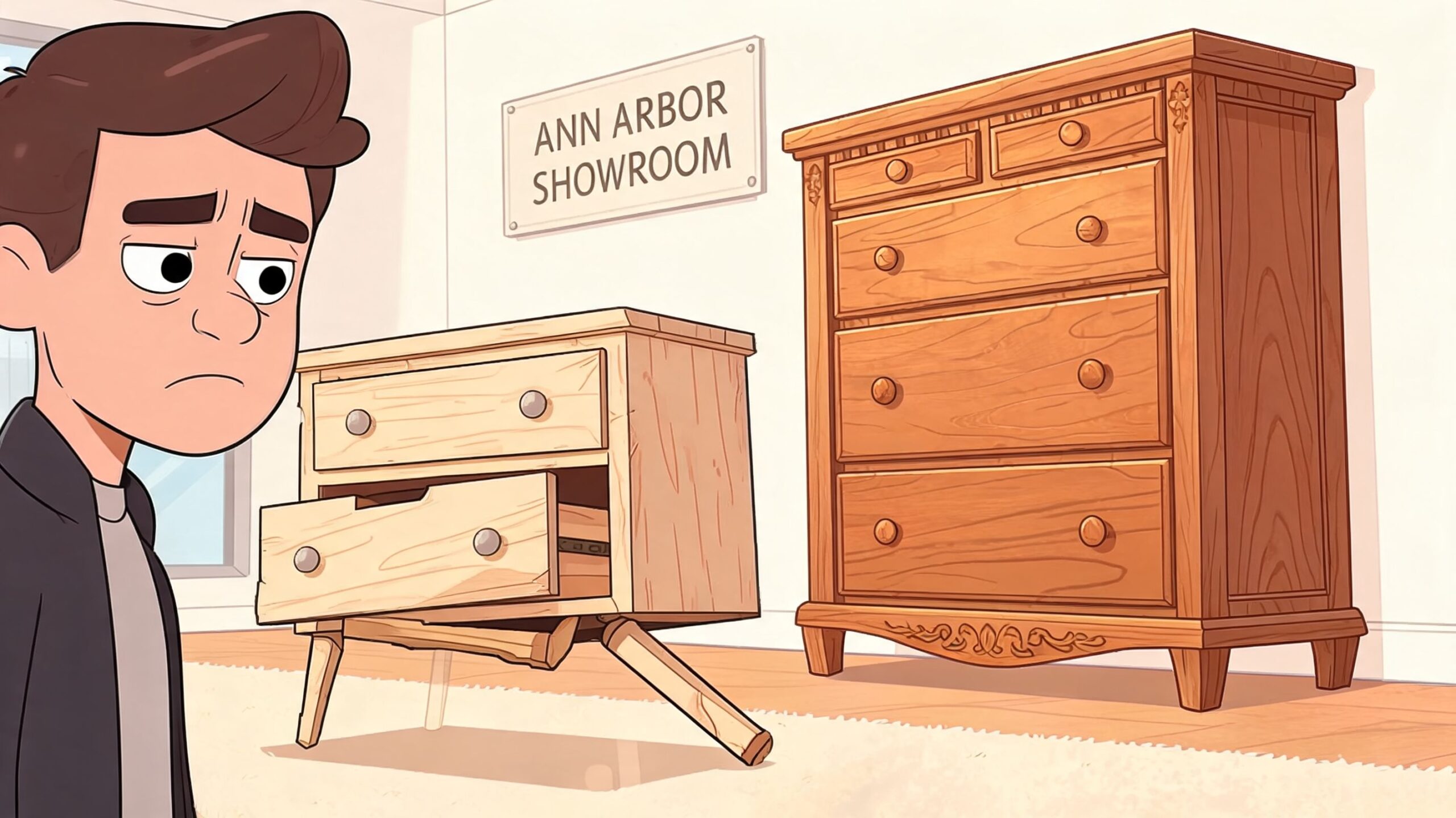
That’s why shoppers who care about long-term value keep circling back to solid wood construction. When you handle a well-built dresser or dining table, you notice the difference right away. There’s weight in the wood, a steadiness in the frame, and a finish that feels worked by hand rather than sprayed for speed. If you want a closer look at that construction mindset, American-made solid wood furniture is a useful reference point.
What shoppers are usually trying to solve
Customers aren’t shopping for a concept. They’re trying to solve a room problem.
- A dining set that won’t loosen up after regular family use
- A bedroom group with real drawer strength instead of thin bottoms and weak runners
- A bookcase or entertainment piece that feels substantial, not hollow
- Furniture that still belongs in the home later, even after paint colors, flooring, or layouts change
The appeal of amish furniture in michigan is that it answers those problems with build quality first. Style matters, but structure matters more.
Practical rule: Buy the piece you won’t have to apologize for in three years.
In Southeast Michigan, that matters even more because homes often collect furniture over time rather than all at once. One strong dining table can anchor years of holidays. One properly built dresser can move from a primary bedroom to a guest room and still feel right. That’s the value lens worth using. Not just initial cost, but cost per year of confident use.
What Truly Defines Amish Furniture
People often use “Amish furniture” as if it means a rustic look or a Mission table. That’s too narrow. An accurate definition is about how the furniture is built, what it’s built from, and the discipline behind the craft.
Michigan’s Amish furniture tradition draws from a legacy tied to 17th century Swiss settlements in Pennsylvania and gained broader attention in the 1920s folk art discovery. Today, Michigan has over 18,000 Amish residents, supporting a strong furniture-making network that uses premium hardwoods such as northern red oak, cherry, and maple, built without particle board for long-term durability, as outlined in this overview of where Amish furniture is made.
It starts with material integrity
The clearest dividing line is simple. Amish furniture is typically built from solid North American hardwoods, not printed surfaces over engineered core material.
That changes everything about how a piece ages.
A solid wood table can develop character. A veneer table often shows damage as damage. A solid dresser drawer can be repaired, refinished, and kept in service. A disposable substitute is usually headed for replacement once the surface or structure fails.
Here’s what defines the category in practical terms:
- Solid wood throughout. Common species include oak, cherry, maple, hickory, and walnut.
- Traditional joinery. Construction methods matter as much as wood selection.
- Made-to-order flexibility. Many pieces can be adjusted in size, wood species, stain, and details.
- American-sourced craftsmanship. The appeal isn’t just appearance. It’s traceable workmanship.
For dining buyers, Amish table and chairs examples make this especially easy to understand because a table has nowhere to hide. You can see the grain, feel the edge, inspect the base, and judge whether the chair frame feels planted or light.
It is not one single look
A common mistake is assuming Amish means formal or old-fashioned. It can. But it can also mean clean Shaker lines, warm transitional styling, or a simplified contemporary profile that works beautifully in newer Ann Arbor homes.
Good Amish furniture isn’t locked into one era. The craft is traditional. The design can be classic, transitional, or modern.
That’s an important buying distinction. You’re not purchasing a theme. You’re purchasing a build standard.
This is also where custom work earns its keep. In-stock furniture helps you compare feel and proportion, but it’s often just the starting point. The stronger approach is to choose the construction first, then shape the final look through wood, finish, hardware, and dimensions. The same mindset shows up in other parts of the home too, whether someone is selecting a Canadel dining configuration, dialing in ergonomic sizing with Stressless, or choosing storage for a home office, bedroom, or even outdoor spaces. The thread running through all of it is fit. Furniture works better when it fits the room and the way you live.
How to Spot Superior Craftsmanship in Person
The fastest way to shop smarter is to stop judging furniture only from the front. Open it. Lift it. Run your hand under the edge. Pull the drawer all the way out. Sit in the chair and shift your weight.
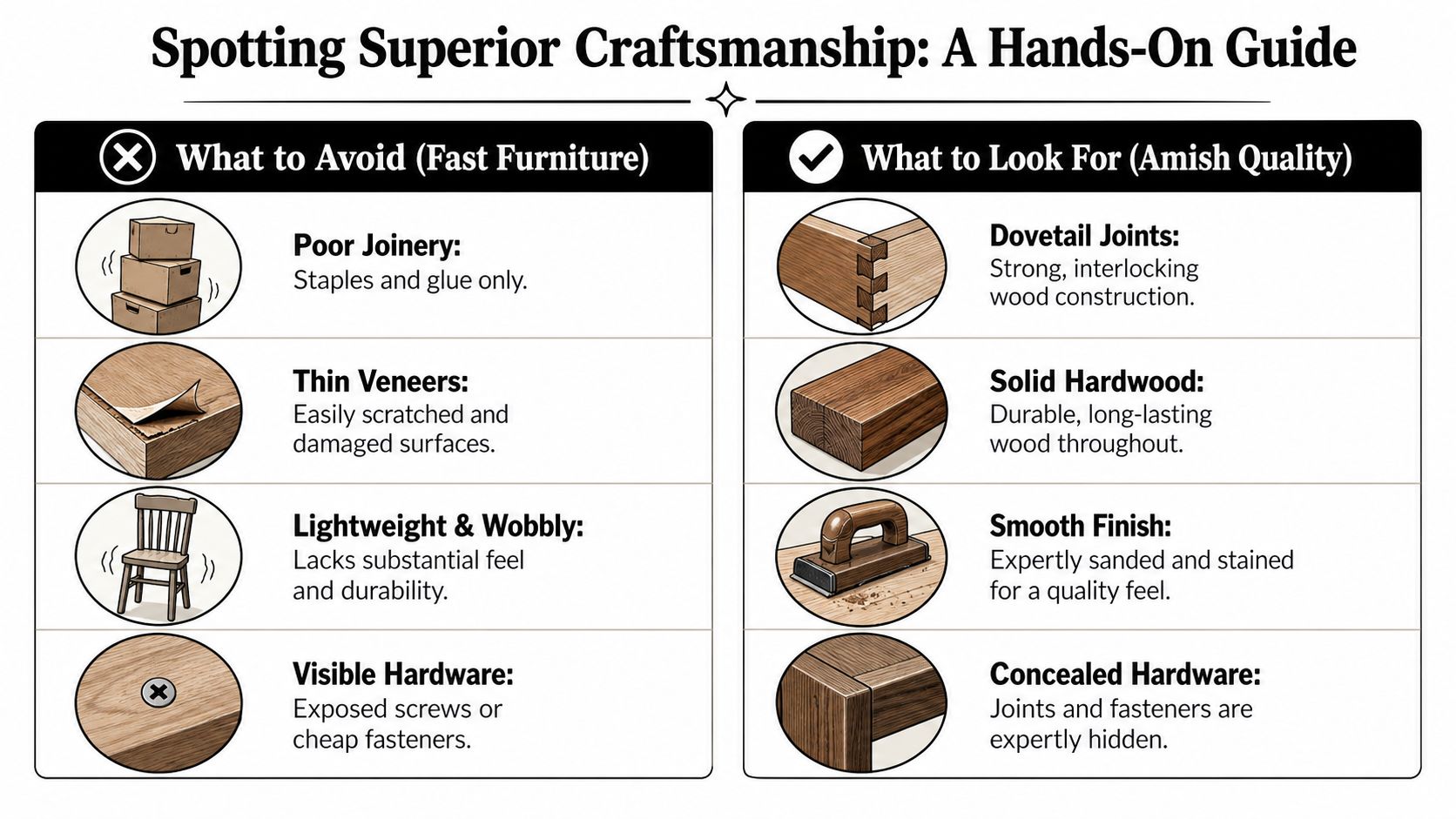
Amish furniture’s longevity comes from joinery such as mortise-and-tenon and English dovetails. Those interlocking joints resist shear forces far better than nailed or glued particleboard, and dovetailed drawers can withstand over 100,000 open-close cycles without failure, according to this Amish construction overview from Gardner White’s furniture expert guide.
Open the drawers and use your hands
Drawers tell the truth quickly. If a drawer feels thin, rattly, or vague on the pull, the piece probably wasn’t built with long service in mind. A strong drawer should feel guided and deliberate. The box should look cleanly joined, not stapled together and hidden.
Check these details in person:
- Drawer corners. Look for dovetail joinery rather than simple butt joints.
- Drawer bottoms. They should feel supported, not flimsy.
- Interior sanding. The inside matters. Rough interiors often signal rushed production.
- Door swing and closure. Cabinet doors should hang square and close cleanly.
The finish deserves touch, not just a glance. A hand-sanded surface feels even across edges and flat areas. Your fingertips shouldn’t catch on abrupt stain buildup, rough grain, or sharp corners. On a dining chair, grip the top rail and side posts. Good craftsmanship feels composed in the hand.
Check the structure not just the finish
A rich stain can make weak furniture look respectable for a while. Structure is harder to fake.
Use this quick comparison:
| Area to inspect | What works | What doesn’t |
|---|---|---|
| Drawer joinery | Dovetails, tight fit | Staples, glue-only corners |
| Chair frame | Stable stance, no sway | Movement at the joints |
| Table top | Substantial solid wood feel | Thin top with visual-only thickness |
| Underside | Clean build, thoughtful support | Messy hardware and exposed shortcuts |
When a piece is built well, the underside usually looks disciplined too.
Weight matters, but not by itself. Some heavy furniture is overbuilt in the wrong places. What you want is balanced solidity. The leg-to-apron connection on a dining table should feel planted. A bed rail connection should inspire confidence before the mattress ever goes on it. A bookcase shelf should feel like it belongs to the case, not like an insert waiting to bow.
Pro tips for a showroom visit
A good showroom visit is hands-on. Don’t be shy about inspecting.
- Bring room measurements. Width, depth, ceiling concerns, and any tight stair or hallway turns.
- Carry finish references. Flooring samples, cabinet photos, or a dining chair fabric swatch help more than memory.
- Test motion points repeatedly. Open drawers several times. Sit in the chair twice. Lean on the table edge.
- Ask what is customizable. Dimensions, wood species, stain, hardware, and chair seat choices often change the final result.
If you’re comparing several makers in one day, write down your observations immediately. After the third bedroom group, shoppers often remember color and forget construction. The opposite should be true.
Choosing the Right Wood and Finish for Your Home
The wood you choose affects more than color. It affects mood, grain pattern, hardness, and how the piece will look in morning light versus evening lamplight. That’s why this part of the process deserves more time than it typically receives.
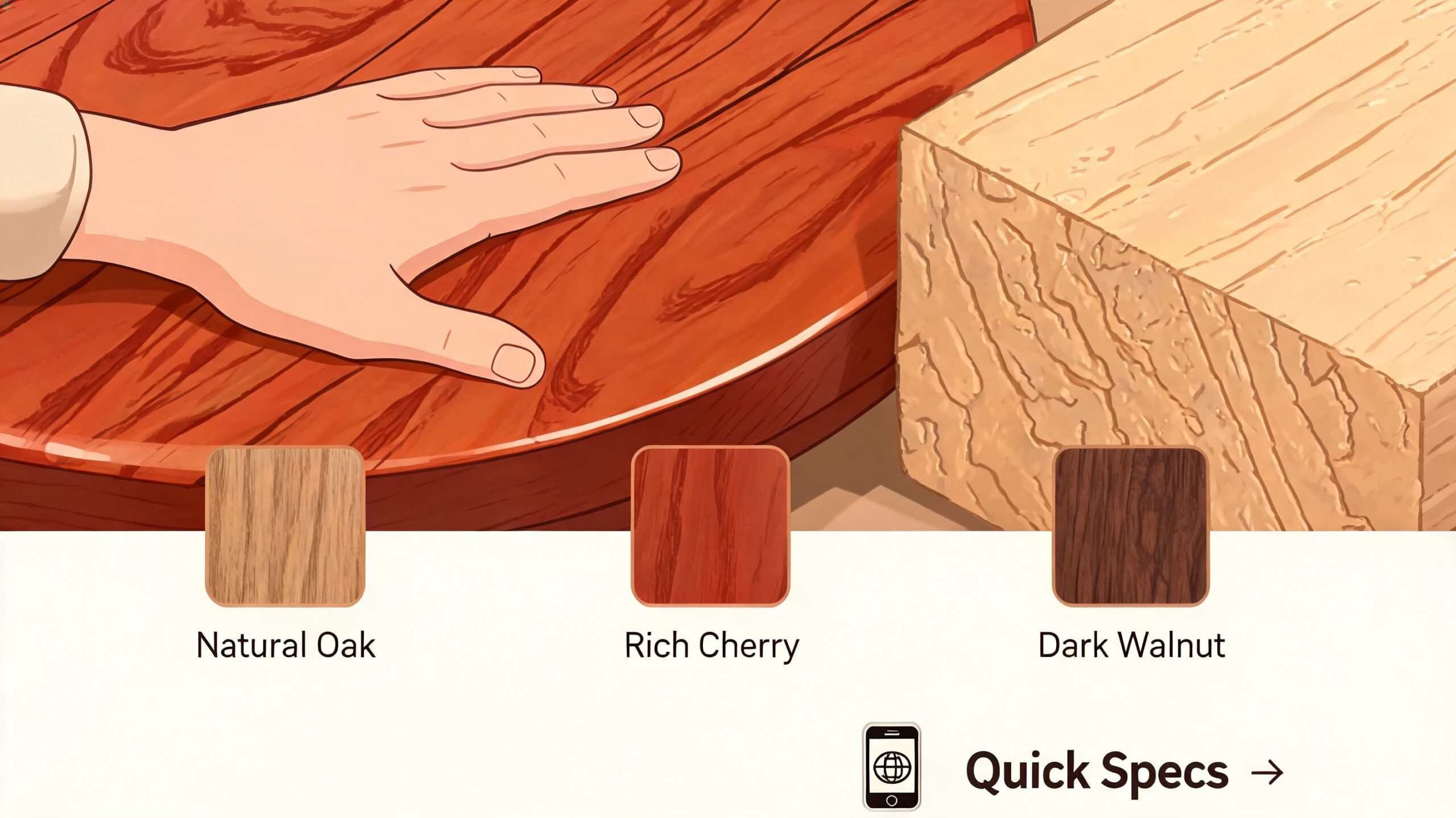
Amish craftsmen kiln-dry hardwoods to 6-8% moisture content, which suits Michigan’s climate and helps prevent warping. These pieces are often finished with catalyzed conversion varnish that can withstand over 500 Taber abrasion cycles, compared with 100-200 cycles for typical MDF or veneer, as summarized in this background on Amish furniture finishing and construction.
How common hardwoods behave
No wood is “right” for every room. The goal is fit.
- Red oak brings visible grain and a familiar warmth. It suits dining rooms, casual traditional interiors, and homes that want texture in the wood.
- Quarter-sawn white oak has a more distinctive figure and a steadier, architectural feel. It’s a strong choice for Mission and Craftsman rooms.
- Cherry starts with a refined look and tends to feel richer over time. It works especially well when you want a bedroom or office piece to read as elegant rather than rustic.
- Maple and brown maple often appeal to buyers who want a smoother, quieter grain pattern. They can lean formal or contemporary depending on the finish.
- Hickory has more visual energy. In the right setting, that variation gives a piece character. In a very minimal room, it can feel busier than expected.
- Walnut usually brings depth and drama. It’s often chosen when the piece is meant to anchor the room.
For a closer comparison of species and how they wear, choosing the right hardwood for longevity and style is worth reviewing before you place a custom order.
Finish choices matter as much as wood choice
A stain chip never tells the whole story. You need to view finish on the actual species, and ideally on a broad sample rather than a tiny block. Grain, open pores, and undertones all change the final effect.
This is also where practical trade-offs show up:
- Dark finishes can look formal and grounded, but they’ll show dust more readily.
- Very light natural finishes keep a room airy, though they may make bold grain more noticeable.
- Medium tones are often easiest to live with across changing paint colors and textiles.
If you’re comparing sheen levels or trying to understand how a topcoat changes maintenance and appearance, this guide to oil or water based polyurethane offers helpful context from the flooring side that also sharpens furniture questions.
Shop-floor advice: Don’t choose stain in isolation. Set it beside your flooring, nearby upholstery, and the light the room actually gets.
Made-to-order furniture becomes valuable. In-stock helps you judge comfort, scale, and workmanship. The custom side lets you tune the finish so the weight of solid cherry wood, the clean lines of oak, or the smoother face of maple works with the rest of the home instead of fighting it.
Where to Buy Amish Furniture in Southeast Michigan
Michigan is one of the country’s major hubs for Amish furniture. The state has the sixth-largest Amish population in the U.S., with over 18,000 residents and dozens of stores and makers serving markets including Ann Arbor, which makes authentic handcrafted furniture accessible to local homeowners, according to this overview of Amish furniture in Michigan.
That breadth is a strength, but it can also make shopping harder. A large market gives you options. It also gives you a lot of driving, inconsistent displays, and plenty of stores where you still can’t tell what’s customizable.
Why local shopping changes the experience
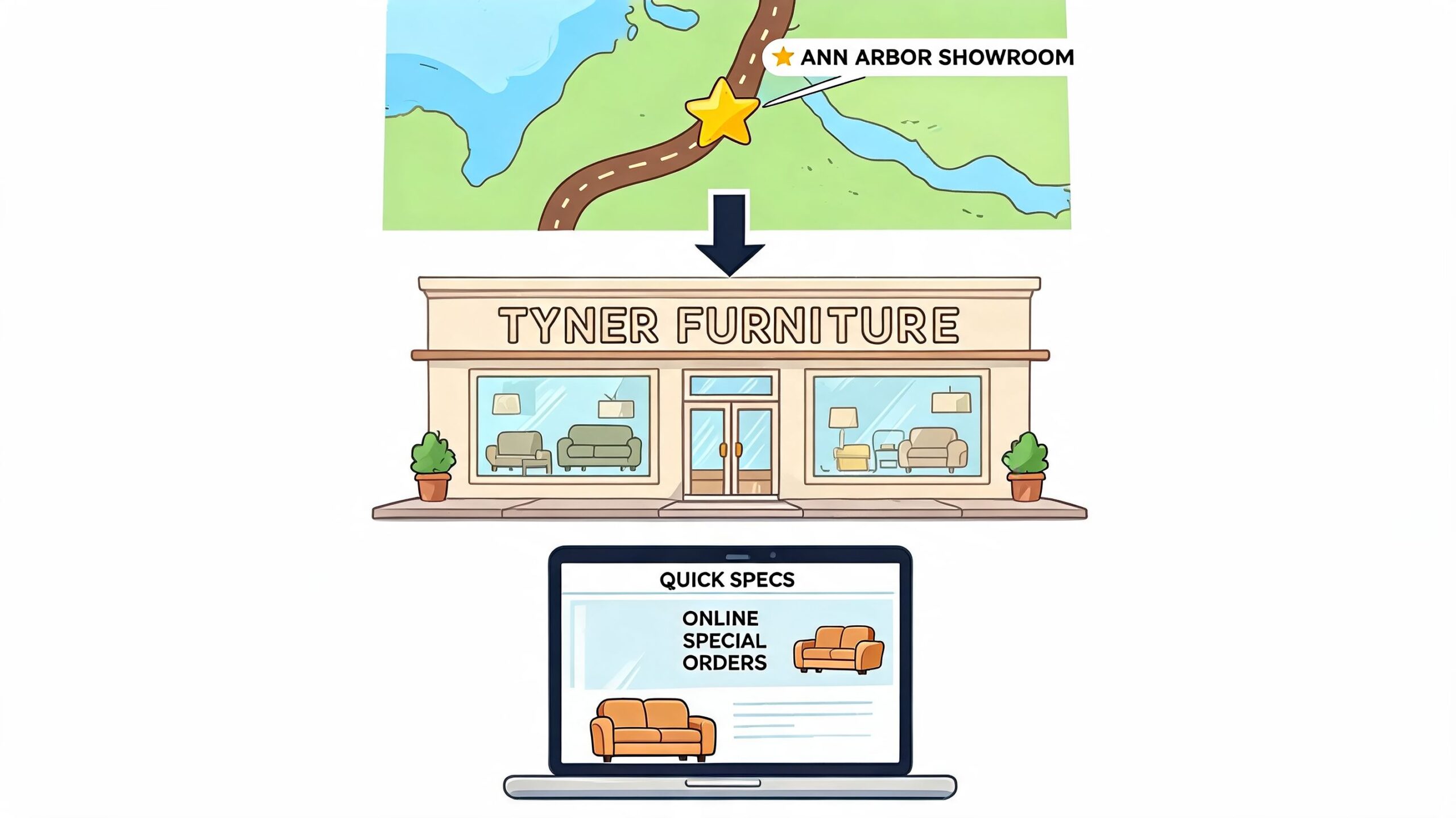
For most Southeast Michigan buyers, the practical route is to shop close to home where you can compare construction, discuss custom options, and revisit samples before committing. That matters because Amish furniture is often a specification purchase as much as a style purchase.
A local showroom helps you answer questions like:
- Does this table size fit the room with chairs occupied?
- Does this finish work with my floor, or only under showroom lighting?
- Should I order side chairs, arm chairs, or a bench?
- Will this bedroom scale feel calm in the room, or oversized?
One local option is Hickory Craft furniture in Ann Arbor, which sits within a broader shopping environment where buyers can compare wood furniture alongside upholstery, ergonomic seating, home office pieces, mattresses, entertainment furniture, and outdoor options. That wider context is useful when you’re trying to coordinate a whole home rather than buy one isolated item.
What to bring to the showroom
A better buying trip starts before you leave home.
- Photos of the room from multiple angles help with proportion and style decisions.
- Exact measurements prevent costly guesswork.
- Inspiration images narrow the design direction faster than verbal descriptions.
- Questions about financing and pricing policies matter too. Special Financing and a Low Price Promise can make a made-to-order purchase easier to plan without compromising on quality.
For seating, don’t skip the sit test. For wood furniture, don’t skip the drawer test. For custom orders, don’t skip the sample review. Good buying decisions usually come from doing all three.
Caring for Your Hand-Crafted Investment
Once the furniture is in your home, care is straightforward. Solid wood doesn’t ask for fussy treatment, but it does reward consistency.
Daily care that actually works
Start with placement. Keep pieces away from prolonged direct sun when possible, and give them some breathing room near heat sources. Wood is durable, but a stable environment helps finishes look better longer.
For everyday cleaning:
- Dust with a soft cloth rather than anything abrasive
- Wipe spills promptly instead of letting moisture sit
- Use pads and felt protectors under lamps, decor, and chair legs
- Lift rather than drag when repositioning smaller pieces
Minor marks happen. That doesn’t mean the piece is fragile. It means it’s being lived with. The right care approach is usually gentle and specific, not aggressive. For a practical overview of prevention and touch-up habits, protecting wood furniture from scratches and stains is a useful companion.
Wood furniture is easier to keep than most people think. The key is steady habits, not complicated products.
Delivery day matters too. Make sure pathways are clear, rugs are settled, and the final location is decided before heavy pieces are placed. Solid wood furniture has presence. That’s part of the pleasure, and part of the reason it should be set carefully the first time.
Frequently Asked Questions
Is Amish furniture only available in traditional styles
No. Traditional styles remain popular, but Amish furniture also appears in Shaker, Craftsman, transitional, rustic, and cleaner contemporary forms. The construction method is the constant. The visual language can shift quite a bit depending on wood, edge profile, base design, hardware, and finish.
Why does Amish furniture cost more than a big box piece
Because you’re paying for better material and better construction. Solid hardwood, careful joinery, and made-to-order workmanship cost more up front than mass-produced substitutes. The more useful comparison is cost per year. A piece that stays structurally sound and visually relevant for a long stretch often delivers stronger value than one that needs replacement after ordinary use.
How long does a custom order take
Timing depends on the maker, the level of customization, and current production schedules. A custom order usually asks for more patience than taking home an in-stock item. In return, you get a better fit for your room, your finish preferences, and your long-term needs. The smart move is to shop before the piece becomes urgent, especially for dining rooms, bedrooms, and home office projects.
Can I furnish more than a dining room this way
Absolutely. Shoppers often start with a table and chairs because the value difference is easy to see there. Then they add bedroom storage, entertainment furniture, office pieces, occasional tables, or entry furniture once they’ve lived with the quality. Amish construction also pairs well with other made-to-order programs in the home, whether you’re selecting custom dining details, custom upholstery, or ergonomic seating sized to the body.
What should I focus on first if I feel overwhelmed
Start with three decisions:
- The room and function. Dining, bedroom, office, living, or storage.
- The build standard. Solid wood, dependable joinery, and finish quality.
- The look you can live with. Wood species, color, and scale.
Everything else gets easier once those three are clear. Don’t try to solve every room at once if one piece can anchor the home well first.
If you’re ready to compare amish furniture in michigan in person, visit Tyner Furniture in Ann Arbor for a sit test, a hands-on look at solid wood construction, and guidance on made-to-order options. If you’re still narrowing choices, browse the online Quick Specs and come in with measurements, room photos, and finish questions so the visit is productive from the start.