Bespoke Home Furnishings: Heirloom Quality in Ann Arbor

A lot of households in Ann Arbor reach the same point. The sofa is almost the right depth, the dining table almost fits the room, the recliner feels fine for ten minutes but not for a full evening, and the finish on the bedroom set almost works with the floor. After enough weekends of searching, “almost” starts to feel expensive.
That's where many people get stuck. Furniture shopping can feel overwhelming because the choices look endless, but the details that matter most are often hidden until the piece is already at home. A room can look polished online and still miss the way a family lives, gathers, works, rests, and stores everyday things.
Bespoke home furnishings offer a different path. Instead of forcing a home to adjust to whatever happens to be on the floor, the furniture is shaped around the room, the people using it, and the life happening there. For readers still sorting through layouts, a helpful starting point is planning your ideal living room, especially when the challenge is balancing scale, comfort, and interior design choices.
Table of Contents
- The Search for Furniture That Truly Fits Your Life
- What Truly Defines Bespoke Home Furnishings
- The Enduring Value of Hand Crafted Amish Quality
- Your Vision Made Real The Custom Order Process
- Finding Your Perfect Fit A Guide to Choosing a Maker
- Making Your Investment Accessible with Smart Financing
- Caring for Your Heirloom and Taking the Next Step
The Search for Furniture That Truly Fits Your Life
A common Southeast Michigan story starts with a tape measure on the kitchen counter and a list of compromises. A couple needs a sectional that won't crowd the walkway. A family wants a dining table that handles weeknight homework and holiday meals. A remote worker needs a home office chair that supports long days without looking clinical in the corner of the living room.
The problem usually isn't a lack of options. It's that many options are built for the average room and the average shopper, while real homes in Ann Arbor rarely work that way. Older homes may have tighter footprints. Newer spaces may be open but awkward. Rugs, windows, radiators, trim, and traffic patterns all change what “fits” means.
Practical rule: The right piece doesn't just fit the wall. It fits the way people move, sit, reach, host, and relax in that room.
That's why bespoke often makes more sense than people expect. It isn't only about luxury. It's about removing the nagging issues that come from settling for a piece that's close enough.
A sofa with the right seat depth can change how a household uses the room every evening. A made-to-order dining set can turn an underused corner into the place where people linger. A properly scaled recliner can support comfort without taking over the room visually.
For a local business that's been part of the community since 1957, this kind of guidance matters because the goal isn't to fill a room quickly. It's to help households create spaces that feel coherent from the home office to outdoor spaces, with less regret and better daily use.
What Truly Defines Bespoke Home Furnishings
The word bespoke gets used loosely, and that's where shoppers often get confused. Some pieces are customized. Some are made-to-order. Some are bespoke. Those aren't all the same thing.
Bespoke starts with life, not options
A useful comparison is clothing. An off-the-rack suit comes in standard sizes. A made-to-order suit may let the customer choose fabric and a few details. A bespoke suit is built around the person wearing it. Furniture works the same way.
Bespoke home furnishings begin with the room and the people using it. The questions come first. How does the household sit? Who needs lumbar support? Does the table need to expand for guests? Is the bedroom piece meant to anchor the room or become a focal point? That conversation shapes the design before finishes and fabrics are even discussed.
By contrast, a simple customization program may start with an existing frame and ask the shopper to pick a color or leg style. That can still be useful. In many homes, it's exactly the right level of flexibility. But it isn't the same as a process built around personal habits, dimensions, and use patterns.
That distinction matters more now because demand is growing. The global bespoke furniture market was valued at USD 16.11 billion in 2024 and is projected to reach USD 24.32 billion by 2030, expanding at a 7.16% CAGR, according to Research and Markets' bespoke furniture market analysis. That same market outlook ties the growth to a shift away from mass-produced fast furniture and toward personalized, handcrafted pieces.
Why more households are paying attention
Many shoppers aren't chasing a trend. They're looking for a better match between furniture and everyday life. That may mean a dining table with the right proportions for a breakfast nook, or an upholstered bed that softens a room without overwhelming it.
Natural materials also matter to many households, whether that means solid wood, natural fibers, or an interest in alternatives such as cruelty-free comfort for your home when layering texture into a room.
For readers comparing materials and construction, American-made solid wood furniture is one clear example of how bespoke thinking moves beyond surface style. The material itself changes the weight, feel, repairability, and long-term value of the piece.
Quick way to tell the difference
- Customized: A standard design with a few selectable options.
- Made-to-order: Built after purchase, often with chosen finishes or dimensions.
- Bespoke: Developed around the client's room, habits, measurements, and goals.
In a community that values both function and character, bespoke isn't an abstract design term. It's a practical way to buy less often and live better with what stays.
The Enduring Value of Hand Crafted Amish Quality
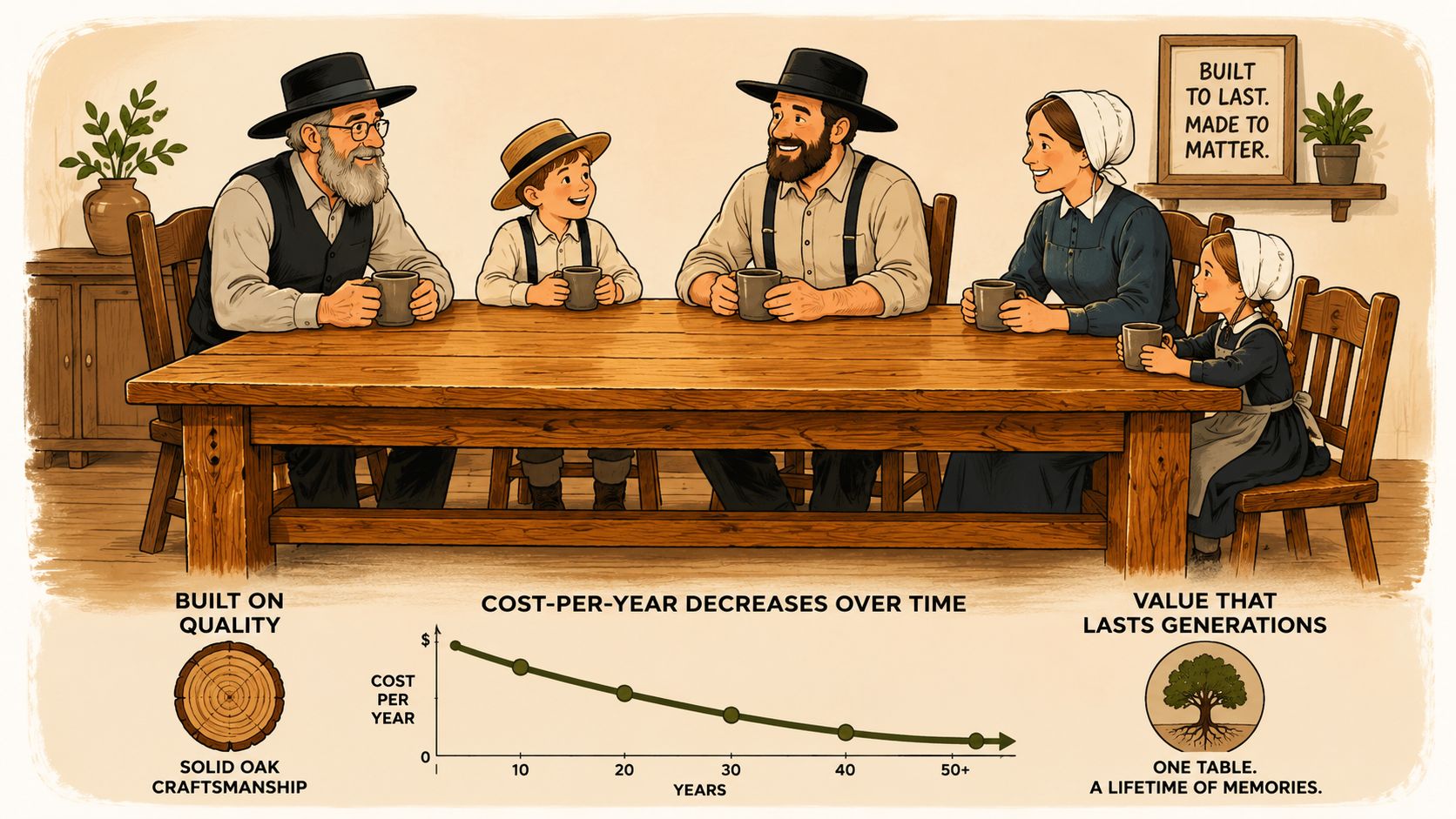
The strongest argument for heirloom furniture usually isn't style. It's math. A piece that serves a household well for many years often carries a better cost-per-year than a piece that needs replacement after a relatively short stretch.
Why cost-per-year matters more than sticker shock
This is where handcrafted Amish furniture stands apart. The value isn't only in how it looks on delivery day. The value shows up years later when drawers still glide properly, joints still feel tight, and the piece still belongs in the room.
According to Studio Matrx's explanation of bespoke furniture craftsmanship, bespoke furniture exhibits superior structural longevity because it uses traditional joinery techniques such as mortise-and-tenon and dovetailing, rather than stapled or screwed softwood assemblies. The same source notes that solid North American hardwoods resist warping, while veneer-core units often fail within 5–10 years.
That's a concrete difference a buyer can feel. A well-built solid wood table has presence. It has the reassuring weight of solid cherry wood under the hand and a steadiness that doesn't wobble with normal use. Drawers built with dovetailing feel composed rather than flimsy. Bed frames built with proper joinery don't send small signals of weakness every time someone shifts position.
Furniture becomes an investment when it keeps doing its job beautifully long after the excitement of buying it has worn off.
What solid wood feels like in real life
For bedroom and dining pieces especially, the solid wood standard matters. Hand-crafted Amish pieces built from cherry, oak, or maple carry both visual warmth and structural integrity. They also age with more grace. Minor wear often becomes part of the character instead of a sign the piece is nearing the end.
A shopper comparing options can look for a few tangible markers:
- Joinery: Mortise-and-tenon and dovetail construction signal craftsmanship built for repeated use.
- Material integrity: Solid North American hardwood behaves differently from veneer-core construction.
- Repair potential: A solid wood heirloom piece can often be refreshed or maintained over time.
- Design continuity: Custom stains and wood species help a piece live comfortably with existing floors, trim, and architecture.
Households exploring natural statement materials in decor sometimes enjoy seeing how wood furniture pairs with one-of-a-kind accents such as an Indonesian petrified wood plate, where the appeal comes from permanence, texture, and material history.
For readers interested in pieces built around this standard, custom Amish furniture shows how hand-crafted, made-to-order construction can support a dining room, bedroom, or storage piece that feels less like a placeholder and more like a future heirloom.
Your Vision Made Real The Custom Order Process
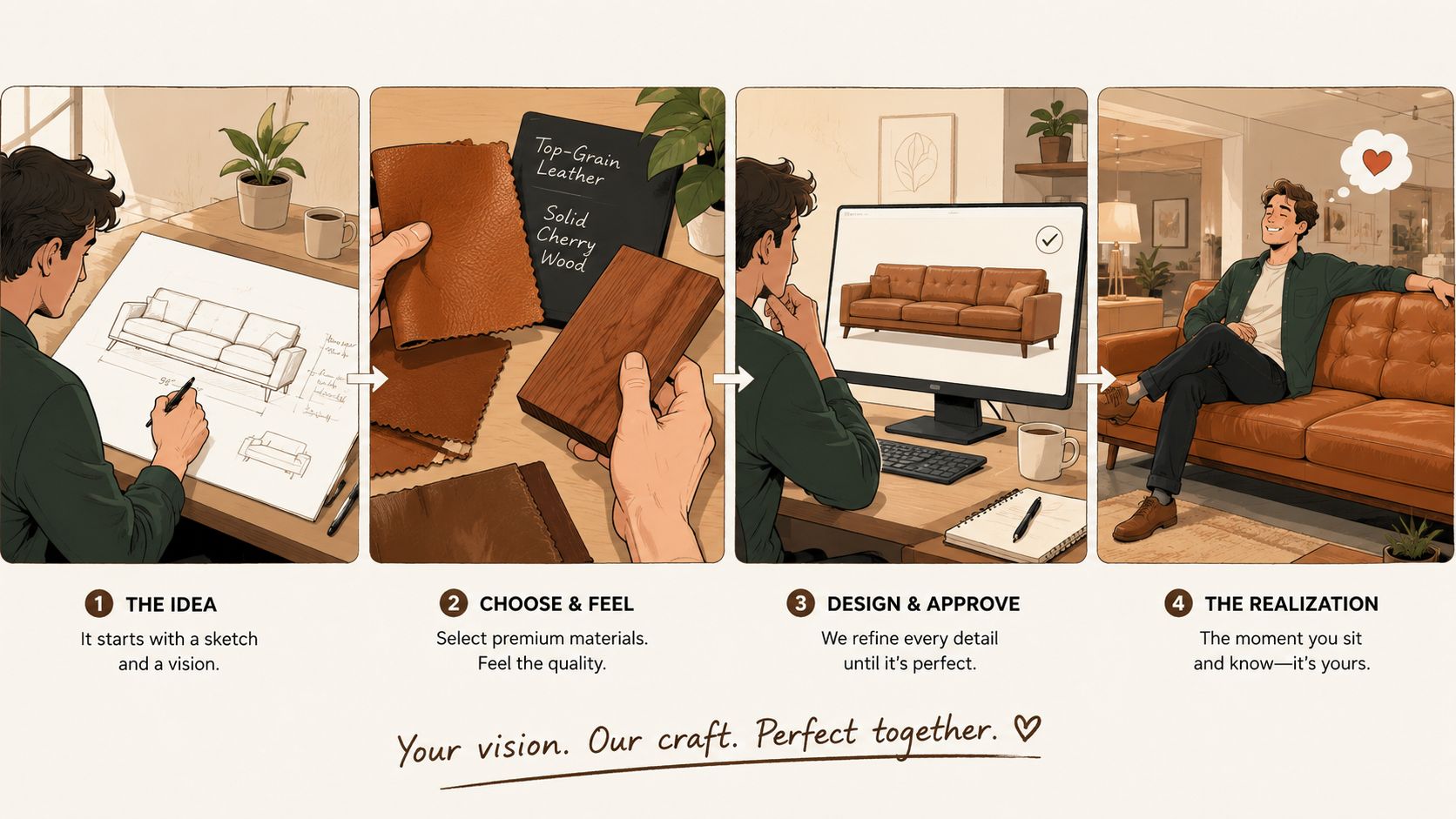
Custom ordering sounds complicated until the process is broken into real decisions. Then it becomes much easier to picture. Instead of one huge choice, it's a series of smaller ones that shape comfort, scale, function, and finish.
Starting with what can change
Many shoppers assume “in-stock” means fixed. It often doesn't. Tyner's overview of custom upholstery options explains that in-stock furniture is often just the starting point for customization, including changes to length, chaise direction, cushion feel, or sectional shape, with some upholstery programs offering hundreds of fabric and leather choices.
That matters because most rooms need adjustment in one of three areas:
- Scale: A sofa may need a different length so walkways stay open.
- Configuration: A sectional may need the chaise on the other side.
- Comfort: Cushion feel may need to be firmer or softer depending on use.
The tactile side matters too. Fabric changes how a room feels emotionally. Leather changes how it wears and how it catches light. The buttery feel of top-grain leather gives a room one kind of character. A textured woven fabric gives another. Neither is automatically right. The right choice depends on who uses the piece, how often, and what kind of maintenance feels realistic.
Where Canadel and Stressless fit in
Dining furniture introduces a different set of decisions. Canadel is useful here because it allows a household to shape a table around both the room and the routine. Leg styles, edges, finishes, and overall configuration all affect whether a dining set feels formal, relaxed, compact, or generous.
Stressless enters the conversation from the ergonomic side. For comfort-focused shoppers, a recliner isn't just a silhouette. Size matters. Support matters. How the chair meets the back, neck, and legs matters. A properly fitted ergonomic chair can make a reading corner or media room feel far more usable over time.
One local option for navigating these choices is custom furniture made simple, which outlines how a shopper can move from a showroom starting point to a made-to-order result through guided selections rather than guesswork.
Pro-Tip: Bring room measurements, a few photos, and one sample that anchors the palette, such as flooring, paint, or a rug. Those three things usually answer more questions than a saved inspiration image alone.
What happens before the order is placed
Solid wood pieces add another layer. Shoppers often choose among hardwood species, stain depth, hardware style, and dimensions. A bedroom chest in oak may feel grounded and traditional. The same silhouette in cherry may read richer and warmer. Maple can feel cleaner and more restrained.
The process becomes much less intimidating when the household separates decisions by category:
| Decision area | What changes |
|---|---|
| Upholstery | Fabric, leather, cushion feel, configuration |
| Dining | Shape, edge, leg style, finish, distress level |
| Ergonomic seating | Chair size, support feel, posture fit |
| Solid wood | Species, stain, storage layout, hardware |
For a local showroom serving Ann Arbor and Southeast Michigan since 1957, the most helpful role isn't pushing people toward one look. It's helping them understand which details affect daily life and which are mostly decorative. That's how bespoke home furnishings become accessible. Not by making the process smaller, but by making it clearer.
Finding Your Perfect Fit A Guide to Choosing a Maker
A shopper doesn't need to be a furniture expert to spot a thoughtful maker or showroom. A few practical checks reveal a lot.
What to look for before saying yes
Start with the physical experience. A showroom matters because furniture is a body-scale purchase. People need to sit, lean back, stand up, open drawers, feel cushion density, and touch finishes under real lighting. That's especially true for seating and bedroom furniture, where comfort and proportion are easy to misread on a screen.
A long local legacy matters too. A business that has served Southeast Michigan since 1957 has had time to earn trust, solve problems, and support repeat households through multiple life stages. That doesn't guarantee every piece is right, but it does signal accountability. A maker or retailer with roots in the community has to live with the quality of the advice it gives.
A strong partner should also be able to help across the whole home, from the home office to outdoor spaces, instead of treating each room as an isolated purchase. Good interior design decisions usually connect from room to room.
Questions that reveal the real process
The simplest way to separate genuine bespoke work from marketing language is to ask direct questions. Uncustomary's discussion of bespoke interiors recommends three especially useful ones: How long does the briefing phase take? How many consultations occur before design work is presented? How are commissioned pieces sourced and managed?
Those questions work because they force specificity. A real process should sound concrete, not vague.
Helpful signs during the conversation
- The discussion starts with use: The maker asks how the room functions before talking about finishes.
- Measurements come up early: Scale, doorways, and traffic flow are treated as design issues, not afterthoughts.
- Material choices get explained: The shopper hears why a wood, fabric, or leather choice changes performance.
- Expectations are defined: Timelines, deposits, and final approvals are discussed plainly.
A trustworthy furniture partner doesn't rush past the boring details. The boring details are usually what make the final piece work.
For Ann Arbor households, the best choice often comes down to this. Find a place where the sit test, the material conversation, and the planning discussion all happen with equal care.
Making Your Investment Accessible with Smart Financing
Heirloom-quality furniture is a meaningful purchase. Most households know that immediately, and many pause there. That pause makes sense. A dining set, recliner, or bedroom suite built for long service isn't an impulse buy.
A custom order is still a plan, not a leap
What helps is treating the purchase like a plan rather than a splurge. The review process is part of that discipline. Woodstock Furniture Outlet's guide to custom ordering notes that custom furniture orders require an upfront deposit before the order is placed with the manufacturer, and that all selections are reviewed with knowledgeable salespeople or in-house designers so there are no surprises before finalizing the order.
That structure benefits the shopper. It creates a pause for confirmation before the piece moves into production. In practical terms, it means dimensions, materials, configurations, and finish choices get one more careful look.
For households balancing vision and budget, special financing options can make a substantial difference. Financing doesn't change what a piece is, but it can change how manageable the purchase feels month to month.
Why financing can support long-term value
Used thoughtfully, financing supports the same logic as cost-per-year. A household may prefer the chair, table, or bedroom piece that will serve longer and perform better, but still want the payment structure to align with the rest of life. That's reasonable planning.
The same goes for a Low Price Promise. It lowers friction because shoppers don't want to choose between local guidance and competitive value. They want both.
What financing can help a household do
- Choose the better-fit piece now: Instead of settling for a placeholder that may need replacing.
- Keep the room coherent: Purchase the right configuration rather than a compromise dictated only by immediate cash flow.
- Spread out a major purchase: Match a long-use item with a longer payment horizon.
Bespoke home furnishings become more accessible than they first appear. The question shifts from “Can this room be furnished today?” to “What will serve this room well for years?”
Caring for Your Heirloom and Taking the Next Step
A well-made piece lasts longer when the care routine is simple and consistent. It doesn't need to be complicated. Most heirloom furniture benefits more from steady habits than occasional intensive treatment.
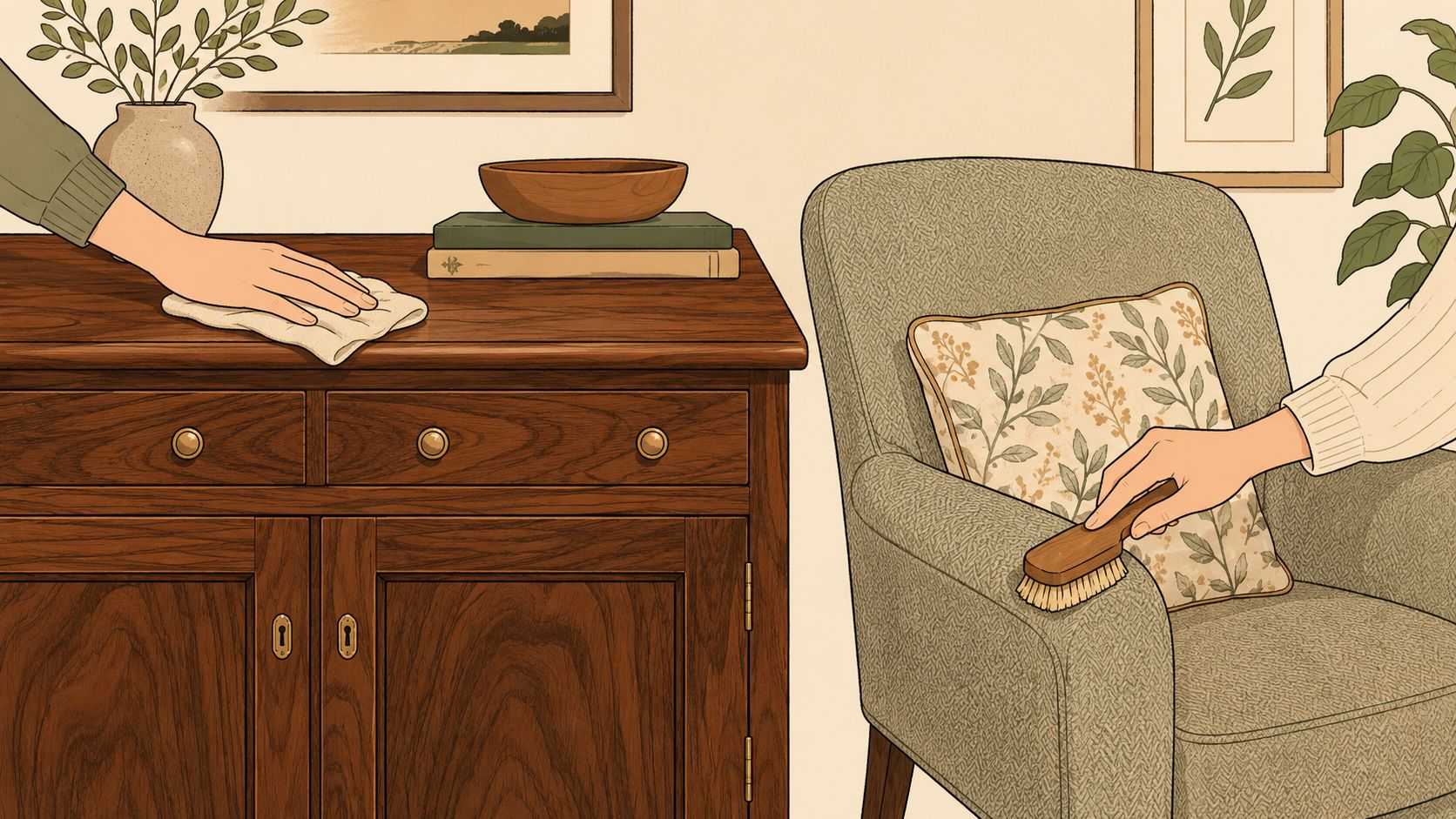
Simple care habits for wood and upholstery
Solid wood responds well to ordinary attention. Dust with a soft cloth. Wipe spills promptly. Avoid leaving moisture in place. Give the piece some breathing room from direct heat or harsh sun when possible. Those small habits help preserve both finish and stability over time.
For readers who want more detailed guidance, protecting wood furniture from scratches and stains covers the practical side of preserving everyday beauty in busy homes.
Upholstery care is similarly approachable. Vacuum gently with an appropriate brush attachment. Rotate cushions if the design allows it. Address spills according to the fabric or leather guidance provided at purchase. In family rooms, the goal isn't to keep furniture untouched. The goal is to help it age well.
A home that works now and years from now
The nicest thing about bespoke home furnishings is that they often become more satisfying after the purchase, not less. The table fits the room the way it should. The recliner supports the body the way it should. The storage piece keeps working through changing seasons of life.
That's why the showroom still matters. A room can be measured online, and finishes can be reviewed online, but comfort has to be felt. The sit test answers questions a screen can't. It reveals seat depth, arm height, back support, cushion feel, and scale in a few minutes.
For households in Ann Arbor and across Southeast Michigan, the next step can be simple:
- Visit the South State St. showroom: Sit, touch, compare, and bring room photos.
- Browse Quick Specs online: Review special-order details before narrowing choices.
- Think across the whole home: Living room, dining room, bedroom, home office, and outdoor spaces work better when they relate to one another.
A piece doesn't need to shout to become an heirloom. It just needs to fit real life well enough, and long enough, to earn its place.
For readers ready to continue, Tyner Furniture offers two practical next steps. Visit the Ann Arbor showroom on South State St. for a sit test and hands-on look at materials, or browse the online Quick Specs for special orders to explore made-to-order options before the next showroom visit.