Expert Tips: How to Choose Mattress Firmness


You're probably doing what most mattress shoppers do at first. Reading reviews, comparing firmness numbers, and realizing that one brand's “medium-firm” sounds a lot like another brand's “plush support.” By the time you've opened a fifth browser tab, the whole process can feel less like shopping and more like guesswork.
That confusion is understandable. A mattress is one of the few pieces in your home that affects you every single day, and the wrong choice doesn't just look out of place. It can leave your shoulders sore, your lower back irritated, or your sleep broken up night after night. People in Ann Arbor and across Southeast Michigan often come in thinking they need “something firm,” when what they need is a mattress that fits their body, sleep position, and sense of comfort.
Since 1957, families have been making these decisions with a long-term mindset. That matters, because a mattress isn't just a purchase. It's an investment in how you feel tomorrow morning and for years after that. If you want a deeper overview before narrowing in on firmness, Tyner's ultimate guide for choosing a mattress is a helpful companion to this topic.
Table of Contents
- Finding Your Perfect Match in a World of Mattresses
- Decoding Your Personal Sleep Profile
- Firmness vs Support The Most Misunderstood Distinction
- Matching Firmness to Your Preferred Mattress Type
- The In-Showroom Protocol A Test You Cant Fail
- Advanced Topics and Your Next Steps to Better Sleep
Finding Your Perfect Match in a World of Mattresses
A lot of online advice starts with a firmness scale, and that part is useful. It gives you a shared language. But the scale only helps if you know how to translate a number on a screen into what your body feels at night.
The broad starting point is clear. Eighty percent of sleepers prefer mattresses in the 5 to 7 firmness range on the standard 1 to 10 scale, and a 2024 PMC study found that medium-firm mattresses delivered the highest sleep efficiency and fewest awakenings compared with softer or firmer options, according to NapLab's firmness guide. That's why medium to medium-firm models show up so often in showrooms and online recommendations.
Still, “most people” isn't the same as “you.” A side sleeper with sharp shoulder pressure may need more cushioning than that starting point suggests. A stomach sleeper whose hips dip too far into the surface may need something firmer, even if a medium-firm bed feels pleasant for the first few minutes.
The number matters less than the fit
Firmness is best treated as a starting range, not a final answer. In practical terms:
- Soft to medium-soft usually feels more cushioning and closer to the body.
- Medium to medium-firm often balances contouring with pushback.
- Firm usually feels flatter, more lifted, and less conforming.
Practical rule: If a mattress feels great for thirty seconds but your spine doesn't stay level for a full night, comfort won't last.
That's where in-person testing changes the conversation. A seasoned shopper doesn't just ask, “Is this a 6 or a 7?” The better question is, “Does this keep my shoulders, hips, and lower back in a comfortable line?”
Think in cost per year, not just sticker price
A mattress that supports you well and holds its feel is usually the better value over time. The same principle applies throughout the home. Whether someone is shopping for a bed, a dining set, a home office piece, or outdoor spaces, the smartest purchase is rarely the one that looks acceptable for a season. It's the one built for daily use.
That long-view mindset is why craftsmanship matters around the mattress too. A sleep setup performs better when the foundation under it is stable, the frame is well-built, and the room itself feels settled. In a bedroom, the weight of solid cherry wood or maple under an Amish hand-crafted bed frame isn't just visual. It contributes to the sense of permanence people want in a forever home.
Decoding Your Personal Sleep Profile
The fastest way to narrow your search is to stop asking what mattress is “best” and start identifying what your body asks for every night. Two factors do most of the work here. Sleep position tells you where pressure builds. Body weight tells you how much you'll engage the mattress.
A simple self-check can save a lot of trial and error. If your shoulder gets sore when you sleep on your side, you probably need more pressure relief. If your lower back feels compressed when you sleep on your stomach, you probably need more lift under the hips. If you move all night, you need a surface that can adapt without fighting you.
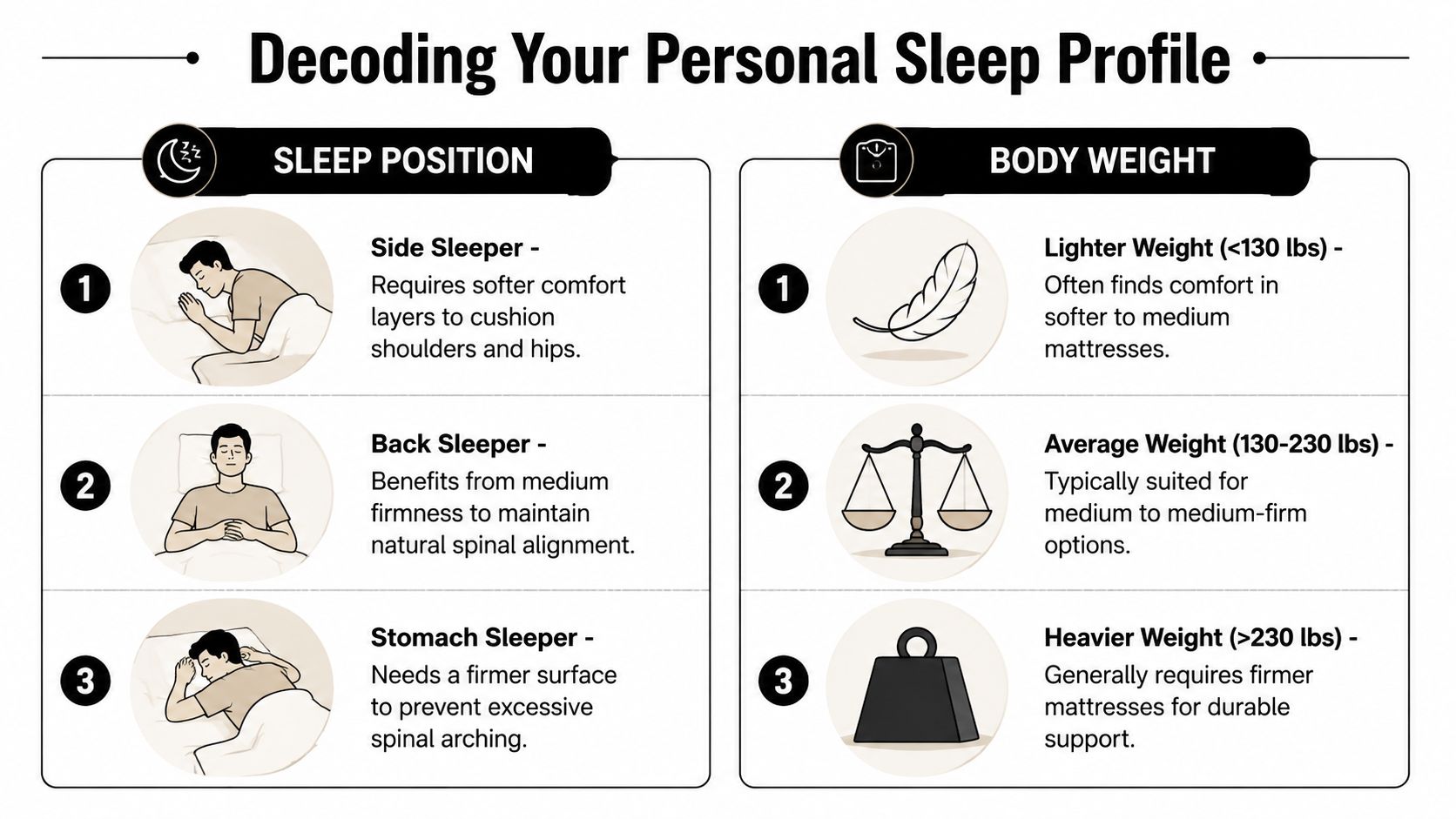
For a more position-focused walkthrough, Tyner's guide on how to choose the right mattress for your sleeping style is worth reading before you head into a showroom.
Start with the position you spend the most time in
The National Council on Aging notes that properly matching firmness to weight and sleep position can increase first-purchase satisfaction from 45% to 75%, and side sleepers on a suitably plush mattress experience 35% less pressure buildup at the hips and shoulders, as explained in this NCOA mattress firmness resource.
That lines up with what experienced sales teams see on the floor every week.
- Side sleepers usually do best with more give at the surface so shoulders and hips can settle in without creating sharp pressure points.
- Back sleepers usually need a more balanced feel, enough contouring to fill the lumbar area and enough support to keep the pelvis from dropping.
- Stomach sleepers usually need a firmer, flatter surface so the midsection doesn't sink too far.
- Combination sleepers often prefer a middle-ground feel that allows easy movement and doesn't trap the body in one spot.
If you wake up in one position but fall asleep in another, choose for the position you spend the most time in, not the one you notice first.
Then factor in body weight
Weight changes firmness perception more than many shoppers expect. A lighter sleeper may barely compress a mattress that an average or heavier sleeper sinks into. That's why one review can call a bed “too firm” while another calls the same model “too soft.”
Here's a practical guide you can bring into the store.
| Body Weight | Side Sleeper (Needs Pressure Relief) | Back Sleeper (Needs Spinal Support) | Stomach Sleeper (Needs to Prevent Hip Sinkage) | Combination Sleeper |
|---|---|---|---|---|
| Lighter sleepers | Soft to medium, typically around 3 to 5 | Medium, typically around 5 to 6 | Medium-firm, typically around 6 to 7 | Medium, with easy movement |
| Average-weight sleepers | Medium to medium-firm, typically around 5 to 6 | Medium-firm, typically around 5 to 7 | Firm, typically around 7 | Medium to medium-firm |
| Heavier sleepers | Medium-firm if pressure relief is still adequate | Firm, typically around 7 to 9 | Firm to extra firm, typically around 7 to 9 | Medium-firm to firm |
This table doesn't replace testing, but it gives you a disciplined starting point.
A better way to read your own comfort
Try this at home before shopping:
- Notice where you wake up sore. Shoulder soreness points toward pressure relief. Lower back strain points toward support and alignment.
- Track your main sleep position for several nights. Don't guess from habit. Pay attention to where you spend the longest stretch.
- Be honest about body weight and build. Broad shoulders, wider hips, and overall weight all affect how the bed feels.
- If you share a bed, identify both profiles separately. Couples often need a compromise, but a smart compromise starts with clear individual needs.
Firmness vs Support The Most Misunderstood Distinction
Many mattress problems start with one mistaken assumption. People use firmness and support as if they mean the same thing. They don't.
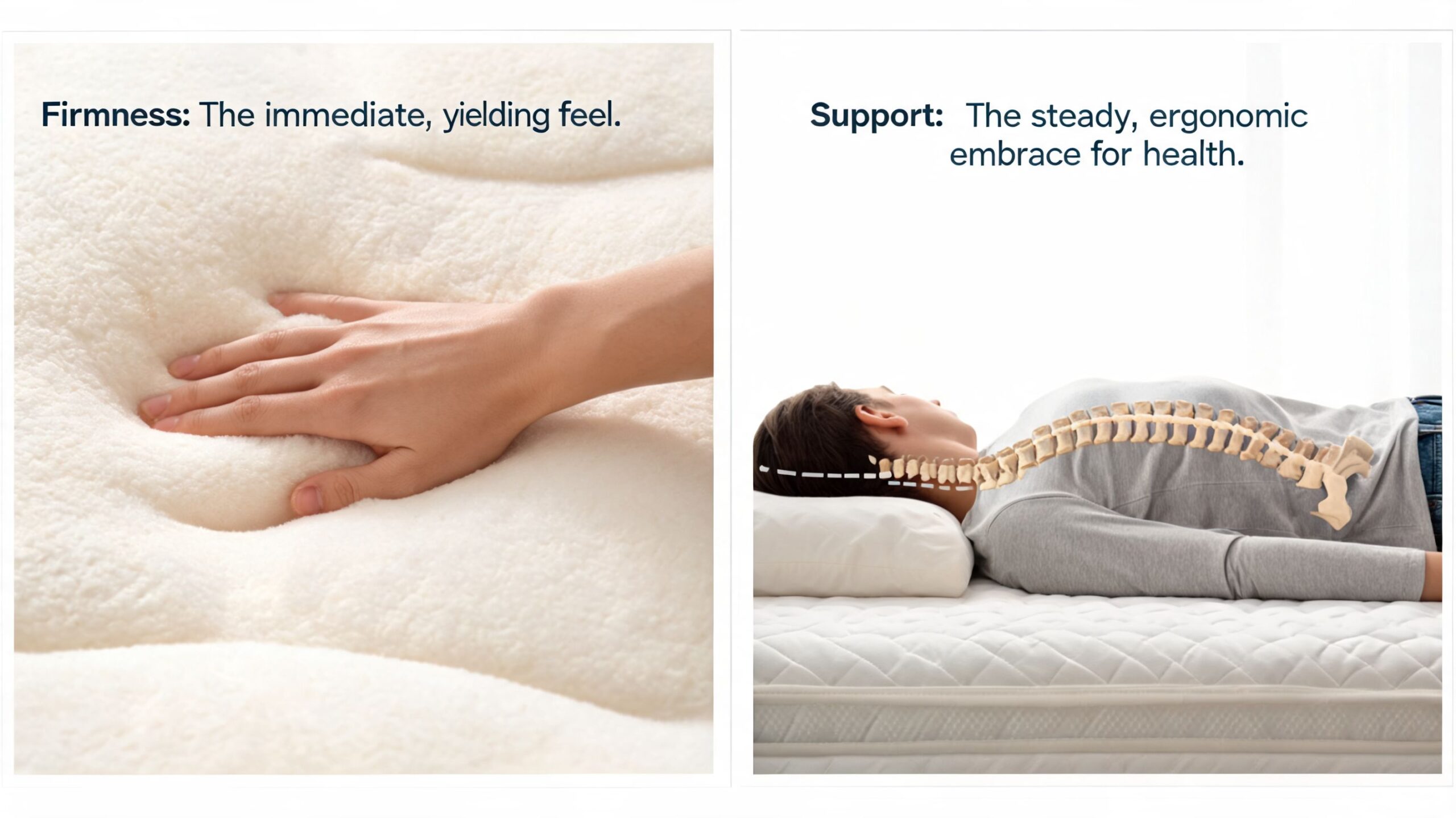
Firmness is the first sensation. It's the plushness, the pushback, the “ah, this feels soft” or “this feels sturdy” moment when you lie down. Support is deeper than that. It's what keeps your spine from bowing, twisting, or sagging while the comfort layers are doing their job on top.
What firmness actually means
A mattress can feel soft at the surface and still hold the body in good alignment. That's common in well-built hybrids and some premium foam designs. The top layers cushion pressure points, while the core resists collapse.
On the other hand, a mattress can feel very firm at first touch and still be wrong for you. If it pushes too hard at the shoulders or doesn't let the pelvis settle into a neutral line, you can wake up stiff even though the bed seemed “supportive.”
One reason this matters is that your sleep position affects alignment concerns beyond comfort alone. For readers who want a broader health perspective, the SouthShore Fine Linens blog post offers useful context on how position choices can influence the way the body feels over time.
Where real support comes from
Support comes from construction. Coil systems, dense support cores, and stable base layers do the heavy lifting. For effective support, material quality, engineering, and even the bed frame beneath the mattress start to matter.
Objective lab testing can measure support. RTINGS explains that load-deflection testing and normalized stiffness measurements correlate 85% to 90% with user-reported comfort after 100 nights, and they also note that a mattress can lose 10% to 20% of its initial firmness in the first month, which is one reason showroom feel and long-term feel aren't always identical, according to the RTINGS firmness guide.
A mattress doesn't have to feel hard to hold you up well. It has to hold the right parts of you up in the right way.
That's also why the base under your mattress deserves more attention than it usually gets. A hand-crafted solid wood bed frame with sound joinery creates a more dependable platform than a flimsy frame that shifts, loosens, or flexes over time. In a bedroom, that's not a small detail. It affects durability, noise, and how consistently the mattress performs.
For shoppers dealing with recurring back discomfort, Tyner's article on helping back pain with the right mattress gives a useful framework for evaluating alignment instead of just surface feel.
Matching Firmness to Your Preferred Mattress Type
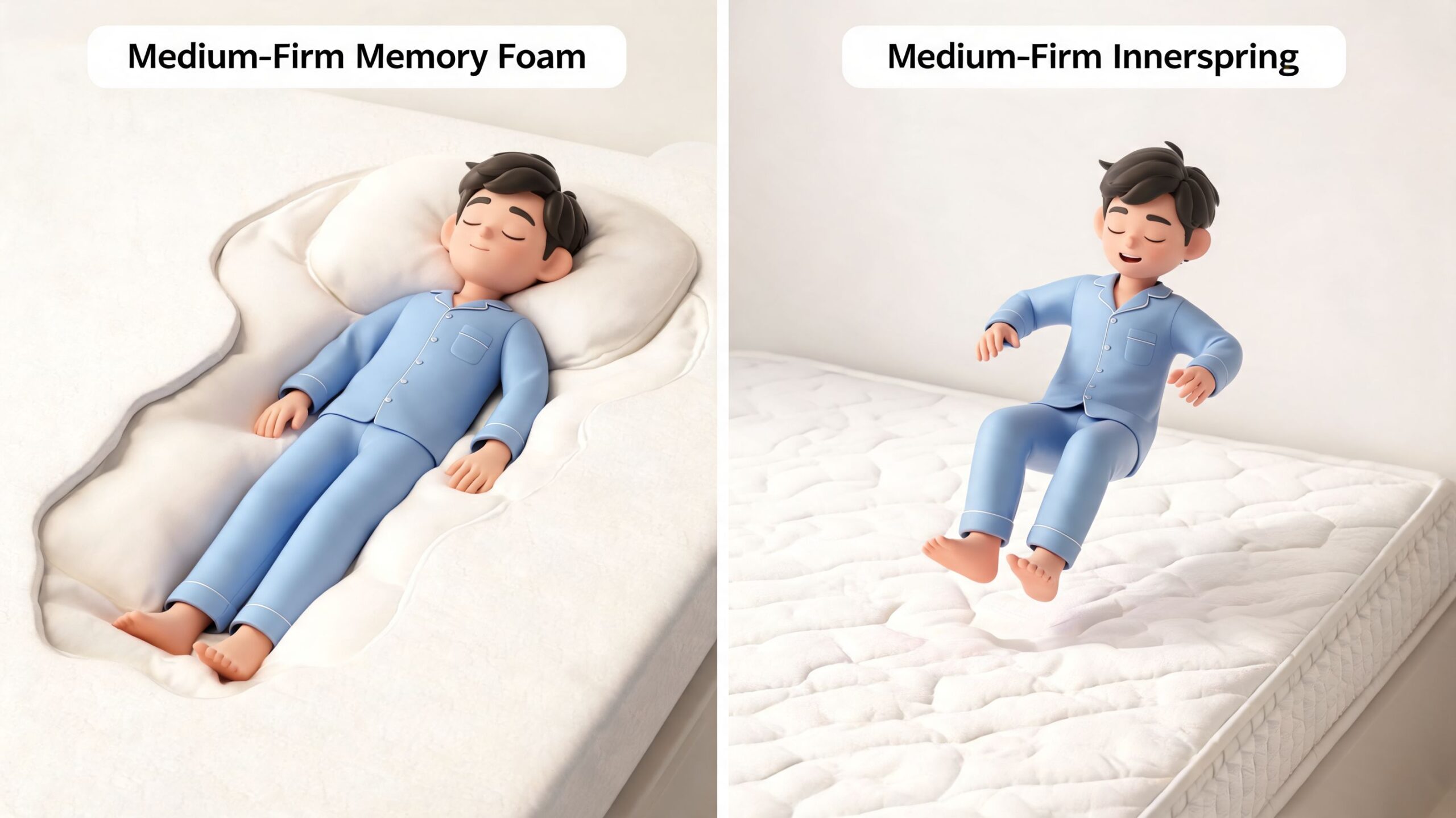
The same firmness label can feel completely different from one mattress type to another. A medium-firm memory foam bed and a medium-firm innerspring don't feel like cousins. They feel like different personalities.
That's why shoppers benefit from building a little sensory vocabulary before they step into the showroom. You don't just want the “right number.” You want the right response when your body meets the bed.
How materials change the feel
Here's how the main categories usually behave in real life.
- Memory foam tends to feel slow, close, and body-hugging. It often suits sleepers who want pressure relief and a more cradled sensation.
- Latex usually feels buoyant and responsive. You get contouring, but with more lift and less of that “stuck in the bed” feeling.
- Innerspring models often feel more traditional, with a noticeable on-top-of-the-bed character and easier airflow.
- Hybrid mattresses blend a coil support unit with foam or latex comfort layers. They often appeal to shoppers who want cushioning without giving up structure.
If you'd like an outside primer before comparing models in person, Cloudfit has a helpful article to understand hybrid vs innerspring options.
What to notice when you lie down
Don't focus only on softness. Notice the type of softness.
A foam mattress may let you sink in gradually. That can feel wonderful for pressure relief, but some sleepers dislike the slower response when changing positions. Latex tends to push back faster. It can feel more lively and easier to move across. Innersprings often feel flatter at the top, while hybrids can give you a layered experience, gentle cushioning first, stronger support underneath.
Here's a quick comparison shoppers often find useful:
| Mattress Type | Typical Feel | Often Works Well For | Potential Trade-off |
|---|---|---|---|
| Memory Foam | Contouring, slow response | Pressure relief, less motion transfer | Can feel too enveloping for some |
| Latex | Buoyant, springy, breathable feel | Sleepers who want contouring with lift | Less “hug” than foam |
| Innerspring | Responsive, lifted, classic feel | Shoppers who prefer sleeping on top of the bed | Less surface contouring |
| Hybrid | Balanced mix of cushion and support | Many sleepers who want both comfort and structure | Feel varies a lot by build |
The better question isn't “Do I want medium-firm?” It's “Do I want medium-firm to feel buoyant, contouring, or lifted?”
If you want a broader look at construction styles, Tyner's overview of mattress types and their pros and cons can help you narrow the field before your visit.
The In-Showroom Protocol A Test You Cant Fail
Online research gets you close. The lie-down test finishes the job.
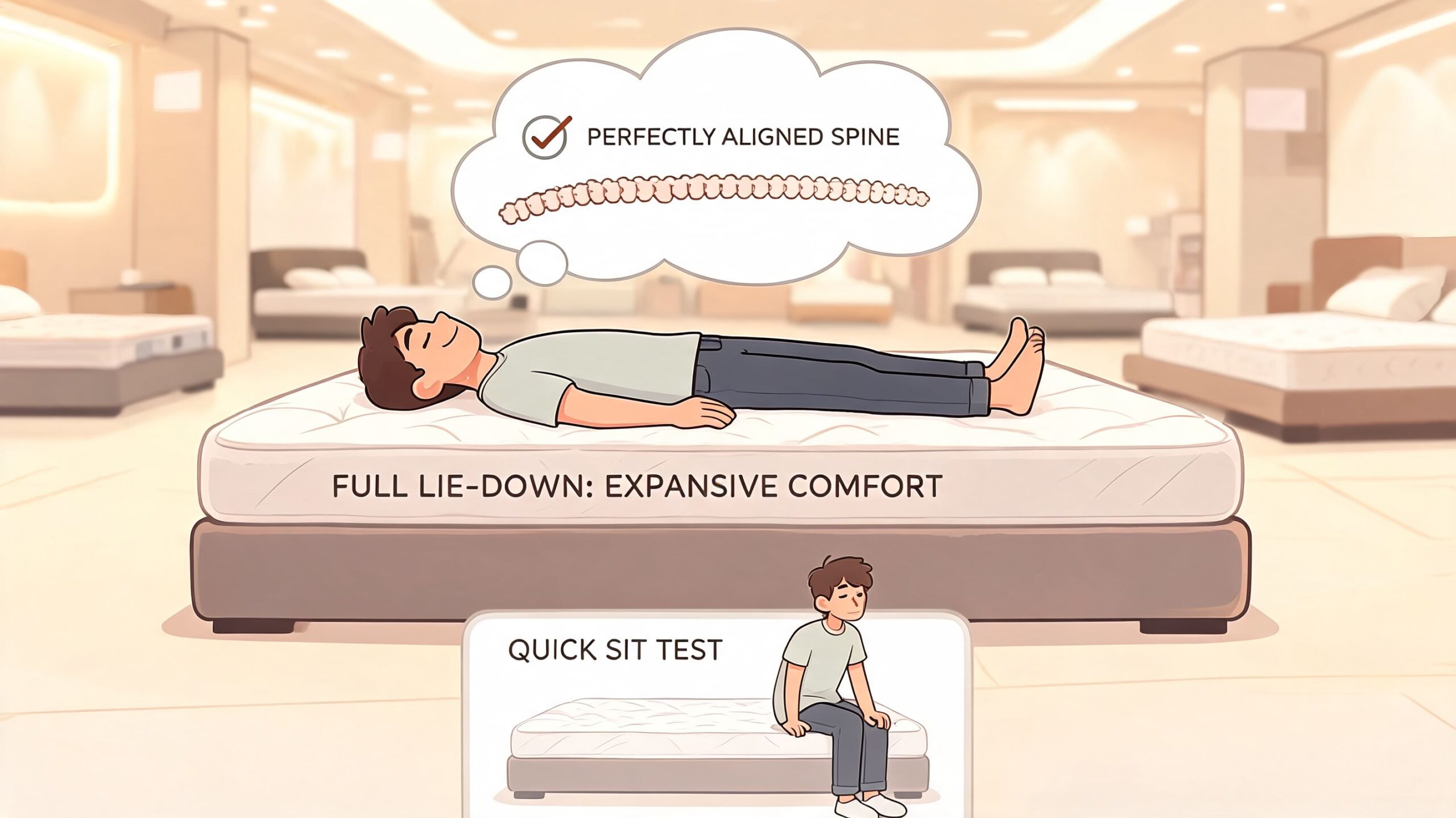
It's common to test a mattress too quickly. They press the top with a hand, sit on the edge, nod once, and move on. That tells you almost nothing about how the mattress will feel after several hours in your usual position. A proper showroom test is slower, more deliberate, and much more useful.
How to test a mattress properly
Use this checklist when you shop in Ann Arbor.
- Wear normal, comfortable clothing. Bulky coats and stiff jeans get in the way of feeling the surface accurately.
- Lie down in your real sleep position. Don't test on your back if you're a side sleeper at home.
- Stay there at least 15 minutes on any mattress you're seriously considering. Rushing is one of the easiest ways to misread firmness.
- Pay attention to pressure points. Shoulders, hips, and lower back usually tell the truth first.
- Notice how easy it is to change positions. A mattress can feel comfortable but still be awkward to move on.
- If you share a bed, test together. Motion, spacing, and compromise matter just as much as solo comfort.
Questions worth asking on the floor
A productive showroom visit includes good questions, not just quick impressions.
- Ask how the mattress is built. Comfort layers and support cores matter more than a label.
- Ask how the feel changes after break-in. Early softness or firmness rarely stays identical.
- Ask what type of foundation the model needs. The base can change performance.
- Ask whether a similar feel exists in another material. Sometimes the right firmness is available with a better texture for your preferences.
Don't shop for the mattress that feels most dramatic in the first minute. Shop for the one your body relaxes into without strain.
This is also the moment to evaluate the full bed, not just the sleep surface. In the showroom, shoppers can compare sleep systems alongside hand-crafted bedroom pieces and see how a stable frame changes the experience. That same stop can also cover other rooms, from the home office to outdoor spaces, which is often helpful for households furnishing more than one area at once.
If you want a pre-visit refresher, Tyner's article with tips for buying a new mattress pairs well with a showroom appointment on South State Street.
Advanced Topics and Your Next Steps to Better Sleep
Some mattress decisions get more complicated because real life is more complicated. Couples rarely match perfectly. Back pain changes priorities. And once people start paying attention to their sleep, they often realize the mattress is only one part of a bigger comfort system.
When two sleepers need different things
If one partner likes a softer surface and the other wants more pushback, a single middle-ground mattress may solve the disagreement on paper and satisfy neither person in practice. In those cases, split comfort options or adjustable arrangements are often the most sensible path.
The same goes for shoppers with chronic aches. A mattress can help, but so can the rest of the setup. An ergonomic adjustable base may improve comfort for reading, recovery, and position changes. Outside the bedroom, many people also benefit from supportive seating during the day. That's where bespoke ergonomic options such as Stressless recliners can complement a sleep-focused room, while made-to-order Canadel pieces and Amish hand-crafted bedroom furniture bring the same long-view approach to the rest of the home.
Using better data to make a better choice
Wearables are also changing how some shoppers approach mattress selection. Emerging trends show that pairing mattress shopping with AI sleep tracker data can help refine the choice, and a 2025 NIH trial found that back sleepers who used wearable data to adjust their mattress selection experienced 18% less lumbar pain than those using generic recommendations, as summarized in Sleepopolis's mattress firmness guide.
That doesn't mean you need a device to choose well. It means the old guess-and-hope method is no longer the only option. If your tracker shows restless periods, position changes, or patterns tied to discomfort, bring that information with you. It can lead to a more informed in-person test.
For readers who want broader habits that support better rest, this guide on achieving restorative sleep offers helpful ideas beyond the mattress itself.
A well-chosen mattress should fit the body you have, the way you sleep, and the home you're building for the long haul. That's what gives the purchase value. Not just the first night, but the cost per year, the consistency, and the calm of knowing you chose with care.
If you're ready to turn research into a real-world sit test, visit Tyner Furniture in Ann Arbor and spend time on the mattresses that match your sleep profile. You can also browse the online Quick Specs for special orders, compare materials and bedroom options, and ask about made-to-order choices, Special Financing, and the Low Price Promise before you make a long-term investment.