Right Chaise Sectional: Your Complete Shopper’s Guide


A shopper often reaches the same point before buying a sectional. The room looks straightforward on paper, the TV wall seems obvious, and the sofa style feels settled, then one question stops everything. Which side should the chaise go on?
That hesitation makes sense. A right chaise sectional sounds simple until floor plans, doorways, and daily foot traffic enter the picture. In many Ann Arbor and Southeast Michigan homes, the better choice isn't the one that looks most balanced in a product photo. It's the one that lets people move easily through the room, keeps sightlines open, and still feels inviting years from now.
A thoughtful sectional purchase should work like a long-term investment. It should support the way a household lives today, adapt to changing routines, and hold its comfort and structure over time. Since 1957, shoppers have turned to local guidance for exactly that reason. Furniture shopping can feel like a lot. Good planning makes it manageable.
Table of Contents
- Defining Right Chaise Before You Shop
- Planning Your Space with the Tape Trick
- Choosing a Side for Perfect Room Flow
- The Art of a Bespoke Heirloom Sectional
- Finalizing Your Order with Confidence
- Your Local Legacy Begins at Tyner Furniture
Defining Right Chaise Before You Shop
The most common mistake happens before measuring tape ever comes out. Many shoppers identify chaise orientation from the seated position. The furniture industry doesn't.
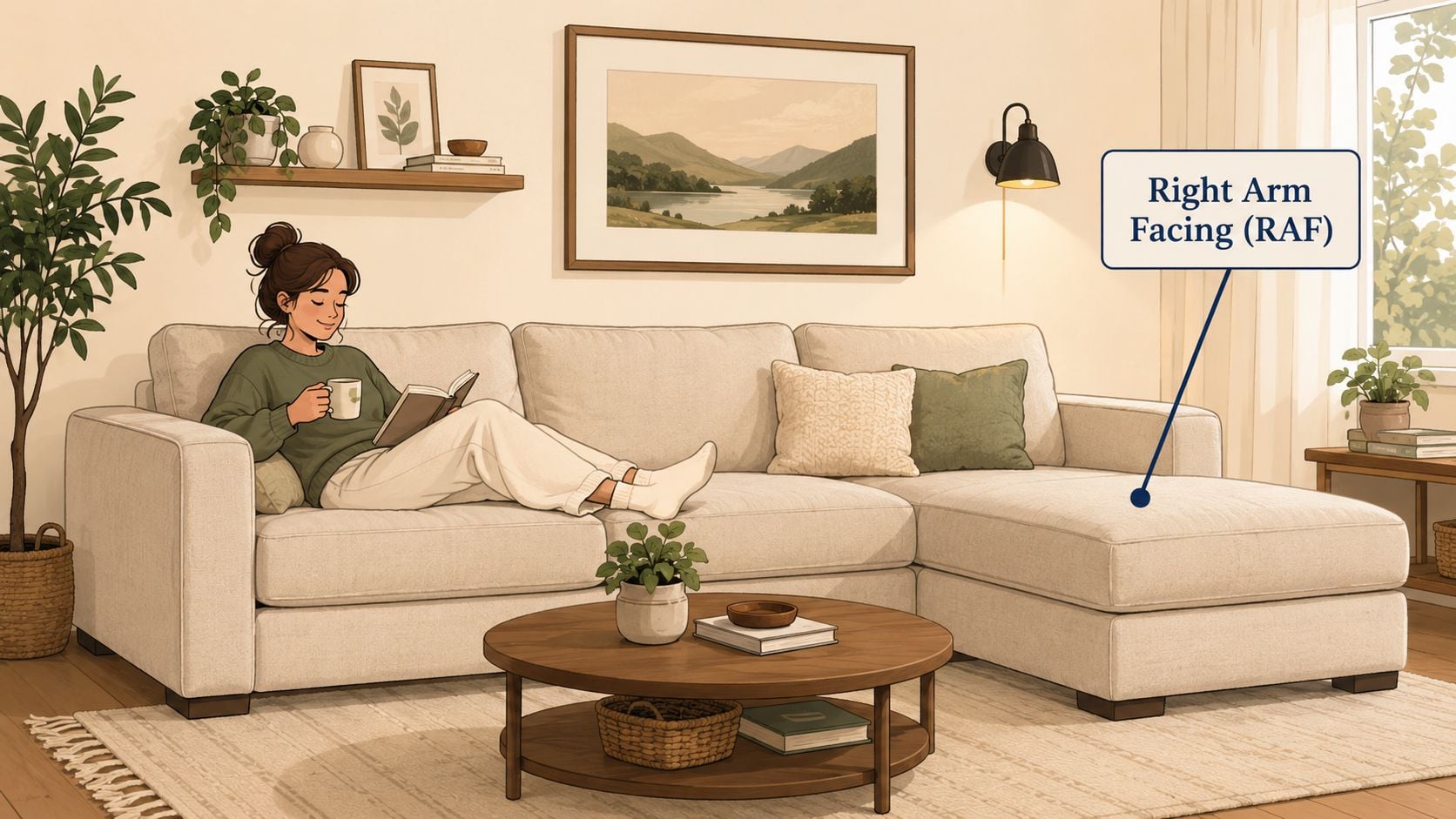
A right chaise sectional, often called Right Arm Facing (RAF), is named from the viewpoint of someone standing in front of the sofa and facing it. If the chaise extends on that viewer's right-hand side, it's a right chaise sectional. That single definition clears up a surprising amount of confusion.
The point of view that matters
Many first-time buyers often find this confusing. A person sitting on the sectional may feel that the chaise is on the opposite side from what the product listing says. That doesn't mean the listing is wrong. It means the naming convention follows the observer's perspective.
Practical rule: Stand where a guest would stand when entering the room. Face the sectional. Name the chaise from that view.
That may sound like a minor technical detail, but it affects the whole order. Sectionals 101 buying guidance can help shoppers sort through the terminology before they choose a configuration.
Why this confusion causes expensive mistakes
Orientation errors aren't rare. Statistical data indicates that over 60% of sectional placement errors stem from guessing dimensions and orientation rather than measuring, with right-facing versus left-facing confusion being a major cause, according to layout guidance on sectional orientation.
A simple digital mock-up can help before anyone commits to fabric, leather, or delivery dates. Many shoppers find Room Sketch 3D for sectional planning useful for testing whether the chaise belongs on the right side or the left in a room that looks obvious at first glance.
A quick plain-language example
If the chaise needs to stretch toward a window wall on the right side of the room, and the shopper is facing the sofa from the center of the room, that's a right chaise sectional. If that same chaise extends to the viewer's left, it isn't.
That simple check saves time, protects against ordering the wrong configuration, and keeps the purchase focused on what matters most. Comfortable living, durable construction, and a layout that feels natural every day.
Planning Your Space with the Tape Trick
Measurements on a product page can feel abstract. Painter's tape on the floor feels real. That's why the tape trick works so well for sectional planning.
How to do the tape trick
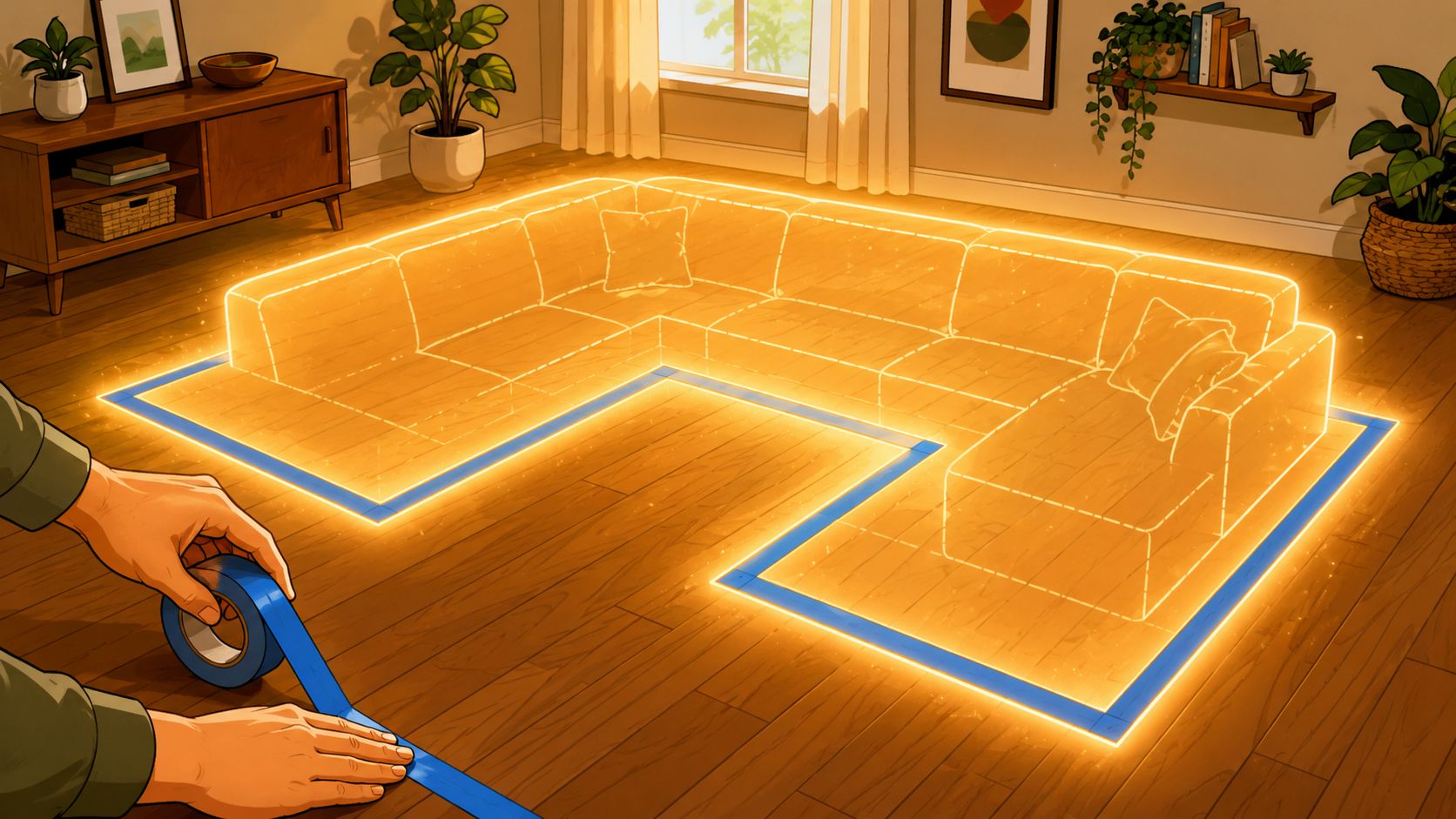
A right chaise sectional should be mapped at full scale before purchase. The process is simple.
- Measure the full footprint. Record the width, depth, chaise length, and any projecting arms.
- Mark the outline on the floor. Use painter's tape to trace the sectional exactly where it may sit.
- Include obstacles. Add floor vents, outlets, door swings, radiators, and side tables if they affect movement.
- Live with it briefly. Leave the tape down long enough for the household to walk through the room naturally.
For households between moves, renovations, or room reshuffles, a practical guide to furniture storage can also help protect existing pieces while a new layout is being tested.
The clearance that keeps the room comfortable
For L-shaped sectionals, which typically seat 3 to 5 people, optimal room layout planning requires leaving 30 to 36 inches of clearance for walkways to maintain an open traffic path, based on sectional sizing and room-fit guidance.
That walkway clearance matters more than many people expect. It's what lets someone carry laundry through the room, reach a lamp, or cross from the hallway to the kitchen without brushing the chaise every time.
Leave the tape in place for a day or two if possible. A room can look fine when it's empty and feel cramped once normal life resumes.
A careful furniture measuring guide for room fit helps shoppers account for those daily-use details before ordering.
What to check during the test
A taped floor outline gives answers that a spec sheet can't.
- Entry path: Can someone enter the room without walking into the chaise corner?
- Viewing angle: Does the main seating area still face the television or fireplace comfortably?
- Reach and access: Can drawers, doors, and nearby cabinetry open fully?
- Conversation zone: Do people have room to gather without standing in a walkway?
Pro Tip
A right chaise sectional shouldn't just fit the room. It should fit the routine. If the taped outline interrupts the path people already take without thinking, the layout needs another look.
That's the value of the exercise. It turns a big purchase into something tangible, practical, and far less stressful.
Choosing a Side for Perfect Room Flow
Many shoppers choose sectional orientation by looking at the focal point first. That's understandable, but it often leads to a room that looks right and moves poorly. A better approach is traffic-first planning.
Traffic-first beats sight-first
A room isn't a photograph. People cross it, turn corners, carry bags, greet guests, and settle in. Data shows that choosing the wrong chaise side can block 30 to 36 inches of necessary walkway space, disrupting natural movement patterns, and designers should prioritize traffic-first orientation over sight-first aesthetics, according to guidance on sectional flow and room ergonomics.
That idea matters in Southeast Michigan homes because layouts vary so much. A historic bungalow may have narrower passages and more defined rooms. A newer open-plan home may need the sectional to shape the living area without creating a bottleneck.
Two room examples that make the difference clear
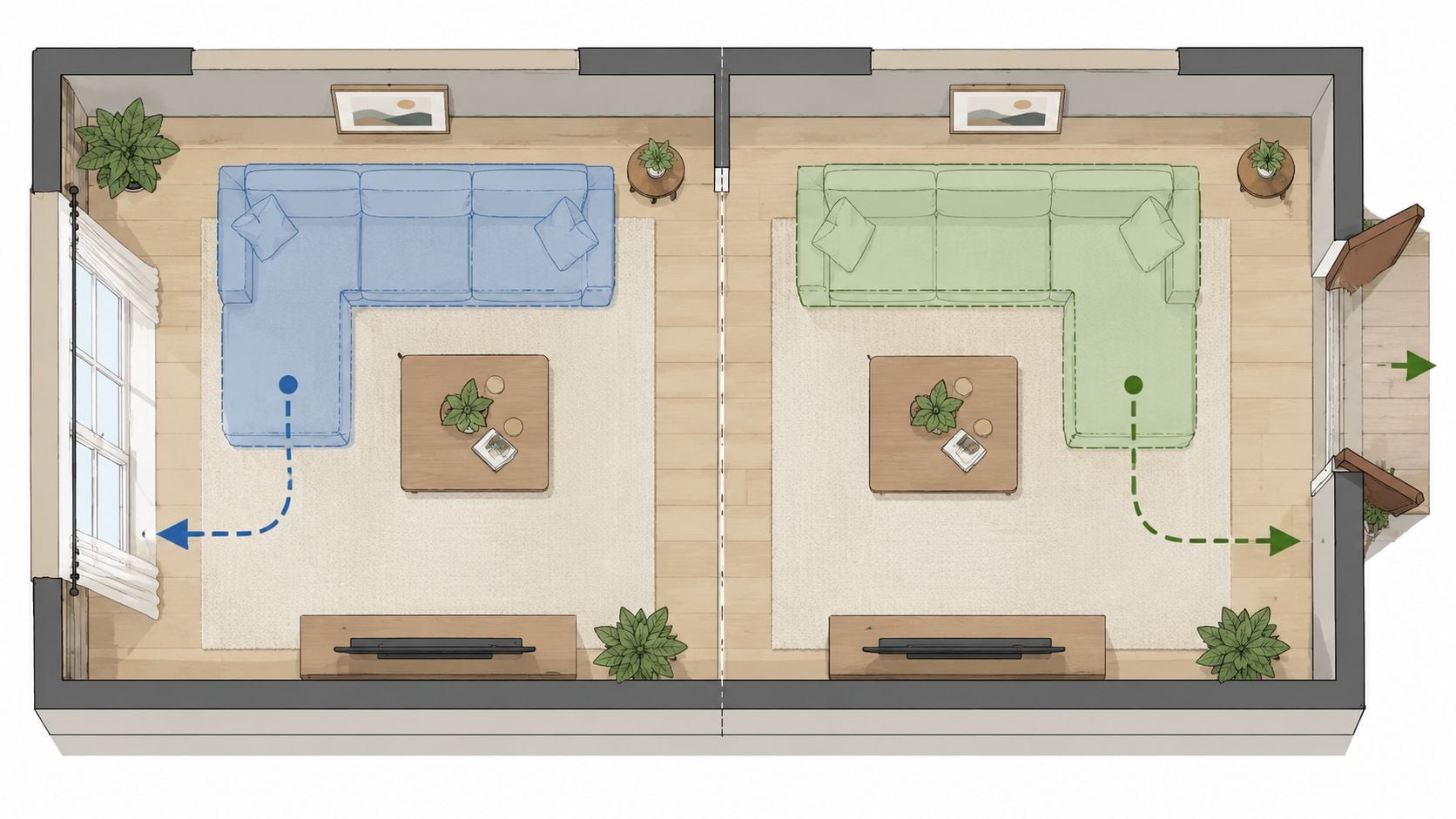
Consider a living room where the main entrance is on the left side. A right chaise sectional may look balanced against the far wall, but if the chaise projects into the natural path from entry to seating, guests will keep walking around the corner of the chaise. The room starts to feel awkward, even if the sofa itself is beautiful.
Now consider a room where the walkway runs along the opposite side. In that case, a right chaise sectional can anchor the seating zone and preserve the open path. The same sectional orientation that fails in one home can work gracefully in another.
A planning tool like sofa and television placement guidance can help shoppers test whether the chaise supports both viewing comfort and circulation.
A simple decision filter
When the room offers two possible orientations, this short comparison helps:
| Room question | Better choice |
|---|---|
| Does the left-side entry need to stay open? | Avoid placing the chaise into that path |
| Does the chaise create a visual barrier from the doorway? | Consider the opposite orientation |
| Does the sectional define an open living zone without pinching circulation? | That orientation is likely stronger |
| Does lounging comfort still face the focal point naturally? | Keep that option in contention |
The right chaise sectional is only “right” when the room can breathe around it.
What shoppers often miss
The sofa's open side should welcome people into the seating area. If the chaise acts like a wall, the room gets less usable. Ergonomic thinking and interior design converge. The household doesn't need a sectional that fills space. It needs one that supports the way people move through the home.
That's why side selection should never be based on symmetry alone. It should be based on lived-in comfort.
The Art of a Bespoke Heirloom Sectional
A sectional becomes more valuable when it's built for the room, the household, and the years ahead. That's where bespoke choices matter. Fabric, leather, cushion feel, arm style, seat depth, and configuration all shape the long-term experience, not just the look on delivery day.

Customization adds value beyond the floor sample
In-stock furniture can be a starting point, not the finish line. A made-to-order sectional lets a shopper choose the tactile details that change daily comfort, from the textured warmth of performance fabric to the buttery feel of top-grain leather.
That same customization mindset appears across the home. Canadel offers bespoke dining combinations in finishes and formats, while Stressless focuses on ergonomic sizing and comfort fit. A sectional shopper may not be furnishing a dining room or recliner nook today, but the same principle applies. Better furniture works better when scale, material, and use are matched intentionally.
One practical way to think about furniture as an investment is through long-term livability and home appeal. Homeowners considering broader upgrades may appreciate this guide to maximizing home equity, especially when comfort and design quality are part of a larger plan for a forever home.
The hidden construction issue many shoppers miss
Comfort doesn't depend on cushions alone. It also depends on how the pieces meet. A key but overlooked issue with lower-quality sectionals is the gap problem between the chaise and main seats, which can exceed 2 inches and compromise comfort. In contrast, premium sectionals now include reinforced joinery like mortise-and-tenon to eliminate gaps, as discussed in consumer discussion of sectional gaps and joinery.
That gap matters in everyday use. It can interrupt lounging comfort, catch blankets, and make the sectional feel less stable than it should.
A shopper should always sit at the junction where the chaise meets the main seat. If that connection feels weak in the showroom, it won't improve at home.
Why craftsmanship affects cost per year
A sectional is easier to justify when the household thinks in cost per year, not just sticker price. A well-built piece that holds shape, stays comfortable, and fits a room for many seasons usually delivers stronger value than one that needs replacing far sooner.
That's also why construction language matters. Amish hand-crafted solid wood furniture is built with time-honored joinery such as dovetailing and mortise-and-tenon, using solid North American hardwoods like cherry, oak, and maple rather than veneers. While that standard shows up most clearly in bedroom and dining furniture, it teaches the same lesson for upholstery. Material integrity and craftsmanship determine whether a piece feels temporary or heirloom.
What to look for in a made-to-order sectional
- Connection strength: The chaise junction should feel secure and aligned.
- Material feel: Leather and fabric should suit the household's daily routine, not just the showroom light.
- Configuration flexibility: Some households benefit from modular or chaise-switchable layouts.
- Finish coordination: Custom choices should complement nearby wood tones, flooring, and lighting.
For shoppers exploring upholstery options in a factual, room-by-room way, custom upholstered sofa and sectional options provide a useful place to compare materials and silhouettes.
Used this way, customization isn't indulgence. It's a practical path to a sectional that feels settled, durable, and worthy of staying in the family room for the long haul.
Finalizing Your Order with Confidence
The final step often feels bigger than the layout step. Once fabric, orientation, and configuration are settled, the purchase becomes real. Clear expectations help.
What the ordering process usually looks like
Custom furniture doesn't arrive overnight, and that's part of the value story. Custom furniture orders generally take 8 to 10 weeks from placement to delivery and are typically fulfilled using white-glove delivery services that include assembly, setup, and packaging removal, as outlined in custom order and delivery information.
That timeline gives room for made-to-order work rather than settle-for choices. It also means the shopper can prepare the space, confirm access paths, and make sure the room is ready when the sectional arrives.
Helpful questions to settle before signing off
- Configuration check: Confirm that the right chaise designation matches the observer-facing view.
- Material review: Revisit fabric or leather swatches in daylight if possible.
- Entry planning: Measure doorways, stair turns, and elevator access if relevant.
- Delivery readiness: Clear nearby furniture so white-glove teams can place the sectional cleanly.
Some households also benefit from payment flexibility on larger purchases. Special Financing and a Low Price Promise can lower the barrier to entry for a high-quality investment without reducing attention to craftsmanship and fit.
A practical custom order starting guide can help organize those last decisions so the ordering process feels straightforward instead of overwhelming.
What confidence should feel like
By the time the order is placed, there shouldn't be guesswork left. The room should be measured, the traffic pattern should be tested, and the materials should feel intentional. That's how a major furniture purchase moves from nerve-racking to reassuring.
Your Local Legacy Begins at Tyner Furniture
A right chaise sectional becomes the right choice only after a few things line up. The orientation has to be defined correctly. The room has to be planned around real movement, not just appearance. The construction has to support comfort for the long term. And the final selections should reflect the home's character, whether that home sits near downtown Ann Arbor, in a quiet Southeast Michigan neighborhood, or in a newly finished open-plan space.
That careful approach is what turns a sectional from a simple seating purchase into part of a home's local legacy. Since 1957, the Ann Arbor community has relied on trusted guidance for furnishing not only living rooms, but also the Home Office and Outdoor Spaces, along with dining rooms, bedrooms, and comfort-focused seating throughout the house.
There's also a larger design story at work. A household may start with a sectional and later coordinate a bespoke dining set through Canadel, add ergonomic seating from Stressless, or furnish another room with hand-crafted Amish solid wood pieces chosen for heirloom durability. The common thread is thoughtful, sustainable value.
For those who want the background of the company itself, Tyner Furniture's story and community roots offer context on that long-standing South State St. showroom presence in Ann Arbor.
The best next step is still wonderfully simple. Sit down. Walk around it. Feel the seat support, the fabric texture, and the way the room opens around the chaise. A product page can help narrow the field. A real sit test finishes the job.
A visit to Tyner Furniture gives shoppers two practical paths forward. They can stop by the Ann Arbor showroom on South State St. for a sit test and design conversation, or they can browse online Quick Specs for special orders and made-to-order options before visiting.