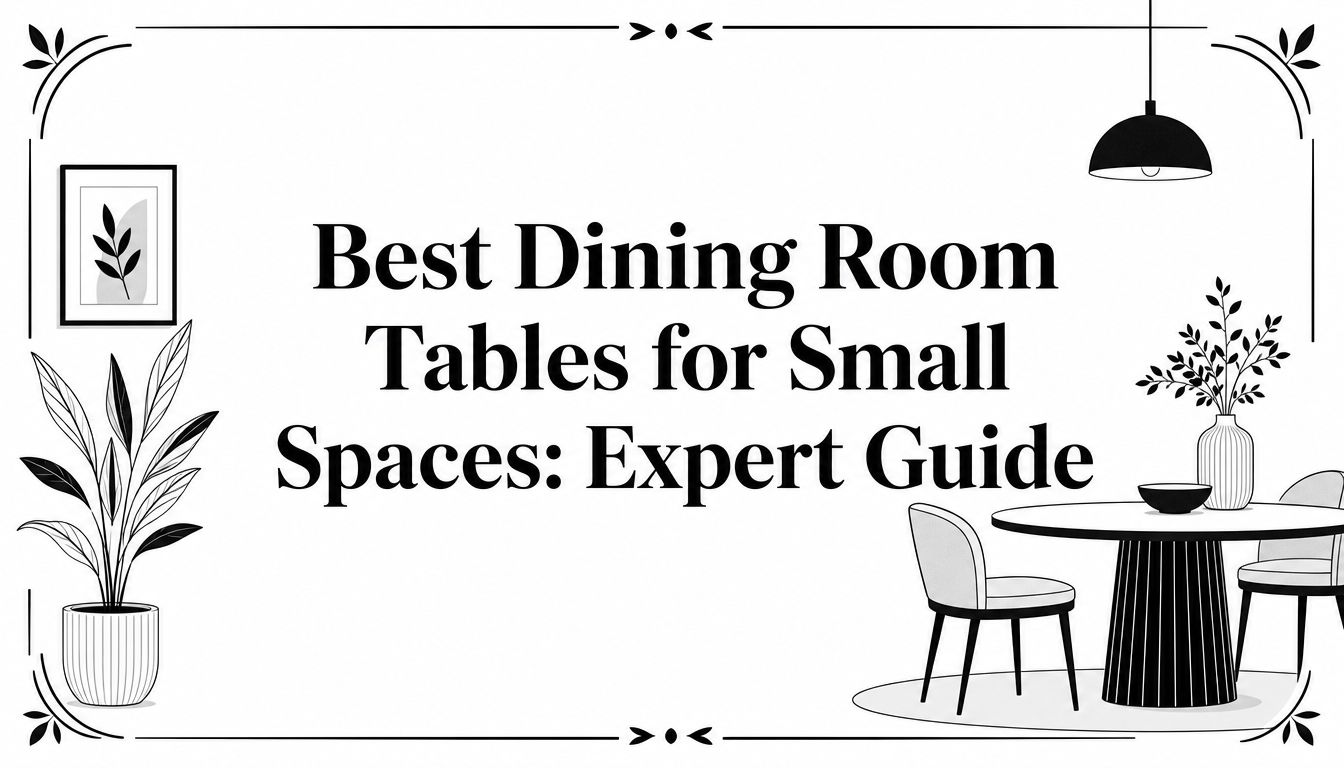
Best Dining Room Tables for Small Spaces: Expert Guide

A small dining area usually becomes stressful at the exact wrong moment. Guests are coming. Someone pulls out a chair. The walkway disappears, knees bump table legs, and a piece that looked perfectly reasonable online suddenly feels oversized in real life.
That's why the best dining room tables for small spaces aren't just the smallest ones. The right table has to fit the room, support daily habits, and hold up for years. In Ann Arbor and across Southeast Michigan, that decision often gets more complicated because many homes have charm, age, narrow passages, and rooms that weren't planned around modern furniture dimensions.
A thoughtful table should feel like an heirloom investment, not a stopgap. Shoppers who focus on durability, craftsmanship, and cost-per-year usually make the calmest decisions. A well-made table earns its place every day, whether it sits in a compact breakfast nook, a dining corner in an older bungalow, or a mixed-use apartment near campus.
Finding Harmony in Your Home
Furniture shopping can feel crowded before a single piece even arrives. There's the room size, the household routine, the style of the home, and the question most buyers ask too late: will this table make the room feel better?
A small dining area doesn't need a compromise piece. It needs a right-sized table with the visual balance, durability, and everyday comfort to support real life. That's especially true in Southeast Michigan homes, where formal dining rooms are often modest, eat-in kitchens do double duty, and every walkway matters.
Since 1957, the local furniture conversation has always been bigger than trend cycles. Long-standing community businesses survive because they help neighbors make careful decisions, not rushed ones. The strongest dining rooms usually come from that same mindset. They're built around craftsmanship, longevity, and fit.
Start with the room's purpose
Some households need a quiet breakfast spot for two. Others need a compact surface that handles weeknight meals, homework, and the occasional holiday overflow. The best choice depends less on showroom styling and more on how the room behaves during an ordinary day.
A useful starting checklist looks like this:
- Daily use first: Choose for the meals and routines that happen most often.
- Movement matters: A table shouldn't interrupt the path between kitchen, living area, and doorway.
- Scale over drama: In a small room, a modestly sized table with a lighter profile often looks more intentional than a bulky centerpiece.
- Longevity counts: A hand-crafted table with sound joinery often delivers far better value over time than a short-lived substitute.
Practical rule: In a compact home, the best table is the one that supports calm movement and comfortable seating every day, not the one that promises the most on paper.
Think beyond the dining corner
Small-space dining choices also connect to the rest of the home. A tighter kitchen, for example, often benefits from the same planning logic used in efficient cooking layouts. Readers looking at the whole picture may find useful inspiration in Cooler Kitchen ideas for small kitchens, especially when the dining area sits just off the kitchen zone.
For homeowners who want to shape the room before shopping, a strong design starting point is this dining room planning guide. It helps ground the decision in layout, proportion, and how the room is used.
There's also a broader value lens worth keeping in mind. In-stock pieces can solve an immediate need, but they're only the beginning. The strongest long-term rooms often combine smart planning with bespoke options, hand-crafted materials, and made-to-order flexibility that allow the final piece to fit both the home and the household.
A well-furnished home should feel cohesive from the dining room to the Home Office and even Outdoor Spaces. That kind of consistency doesn't come from buying more. It comes from choosing better.
The First Step Measuring for Success
The most expensive mistake in a small dining room usually starts with a tape measure that stopped too early. Buyers measure the open floor area, then forget about pulled-out chairs, wall trim, radiators, and the path people use.
Industry guidance is clear on the basic rule. Architectural and interior design standards for small dining spaces mandate a minimum clearance of 36 inches (91 cm) between the table edge and walls or adjacent furniture. The “Table + 6 Feet” rule reinforces this by requiring a three-foot buffer on each side, creating a total functional footprint, as outlined in Giorgi Bros' dining table guidance for small spaces.
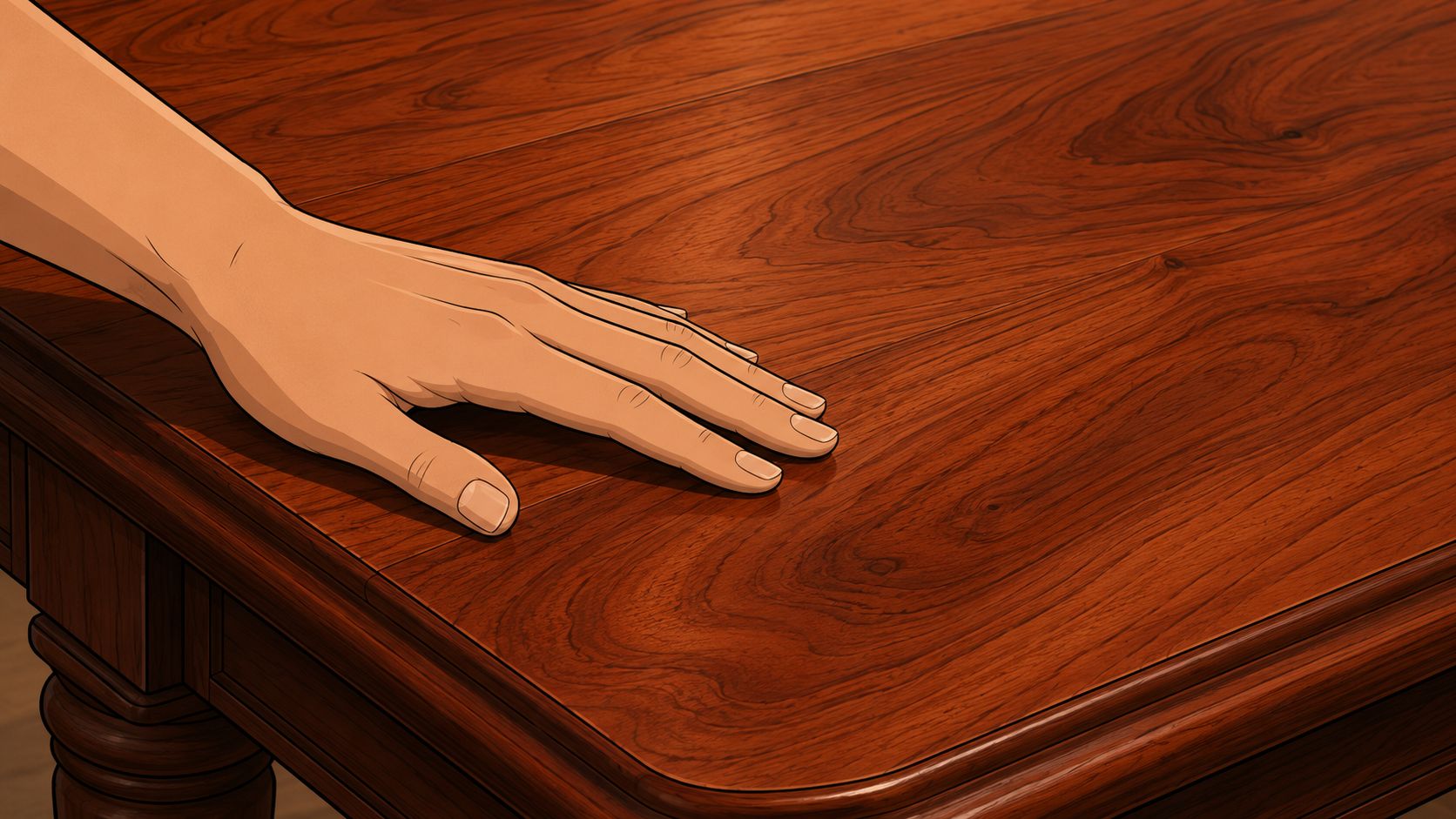
Measure the room people actually use
A dining zone may sit inside a larger room, but only part of that floor is available. Door swings, nearby cabinetry, and traffic lanes all reduce usable space.
A practical measuring sequence:
- Mark the usable footprint: Measure only the section where a table can realistically live.
- Account for chair movement: Include the space needed when someone sits down or stands up.
- Check fixed obstacles: Note vents, heat registers, baseboards, and furniture that can't move.
- Map the walkway: Leave the path people already use intact.
Buyers who want a clear process for dimensions, room flow, and access points can use this furniture measuring guide as a practical reference.
The overlooked measurement that matters in older homes
In Ann Arbor, Ypsilanti, and nearby neighborhoods, many homes have beautiful proportions and awkward access. The dining room may be small, but the bigger issue is often the staircase, the apartment turn, the narrow hall, or the front entry.
That's where many online buying guides fall short. They focus on in-room footprint and ignore delivery logistics, which are often the deciding factor in older Southeast Michigan housing stock.
Measure the room. Then measure every doorway, stairwell, elevator opening, and tight turn between the truck and the dining area.
A table can be perfect on the floor plan and still fail at the front door.
What to record before ordering
Use a short access checklist before committing:
- Door openings: Measure width and height where the table or base must pass.
- Hallway turns: Tight corners can stop a long top even when the room itself is large enough.
- Stair geometry: Older staircases often create the hardest clearance point.
- Disassembly options: Tables with removable legs or split bases usually travel better through difficult interiors.
Practical design in small spaces means more than aesthetics. The best dining room tables for small spaces must fit the room, yes. But in many local homes, they also need a construction style that can physically get there.
Choosing Your Table Shape and Function
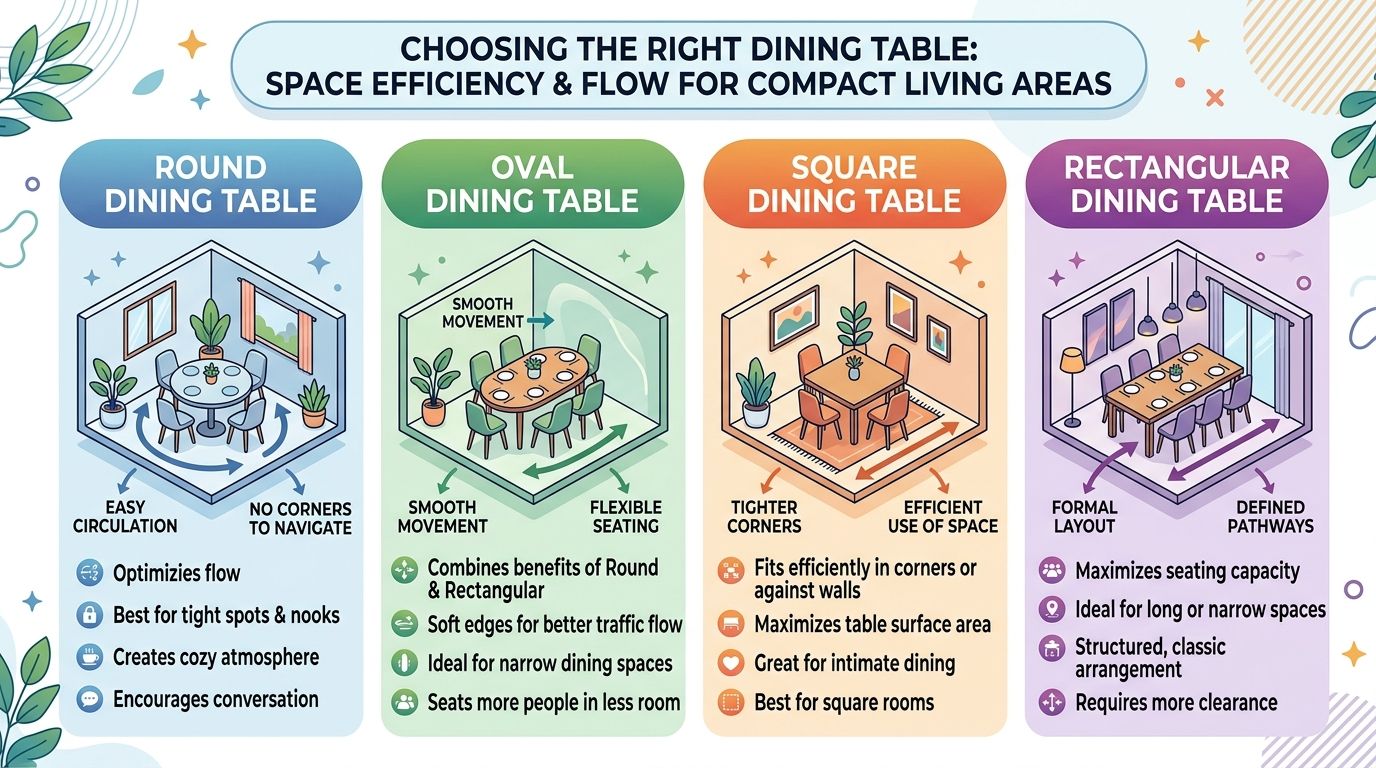
Once the measurements are done, shape becomes the next real decision. In a small dining area, table shape influences movement as much as appearance. Corners, base style, and how chairs tuck in all change whether the room feels composed or crowded.
Round and oval dining tables are statistically the most efficient shape for small spaces. To avoid a cramped feeling, each person requires 22 to 24 inches of linear space along the table's edge, a metric that round tables satisfy more fluidly by allowing chairs to be placed more freely, according to Petalwood Interiors' guide to table shape in small spaces.
A quick shape comparison
| Shape | Best use in a small space | Main advantage | Common drawback |
|---|---|---|---|
| Round | Central placement, breakfast nooks, compact open rooms | Softer traffic flow | Harder to place tightly against a wall |
| Oval | Narrower rooms that still need gentle edges | Combines length with smoother circulation | Can still feel long in a tight room |
| Square | Square dining corners, smaller households | Balanced footprint | Can feel rigid when seating changes |
| Rectangular | Wall-side placement, long narrow rooms | Efficient in linear layouts | Corners interrupt flow |
Households comparing shapes in more detail may find this guide to dining table shapes and seating arrangements useful when balancing room layout against seating needs.
Why bases matter as much as tops
A tabletop gets most of the attention, but the base determines how comfortable the table feels once chairs come out. In a compact space, a pedestal base often performs better than four corner legs because it frees up knee room and allows more flexible chair placement.
That doesn't mean rectangular tables are a poor choice. They can be excellent in narrow rooms or against a wall. But they need careful proportion and a base that doesn't fight the chairs.
Consider these trade-offs:
- Pedestal bases: Better legroom, easier chair movement, often more ergonomic in tighter quarters.
- Four-leg tables: Familiar look, but corner legs can interfere with chairs.
- Extension tables: Useful when guests visit, but the fully open size must still work in the room.
- Drop-leaf designs: Helpful in highly flexible spaces, especially where the dining area doubles as another function.
A small dining room benefits from shapes that protect movement first. Seating capacity matters, but traffic flow usually decides whether the table feels comfortable.
What usually works best
For many compact dining areas, round and oval tables win because they soften circulation and avoid dead corners. For a long, tight room, a restrained rectangular shape often works better. Square tables can succeed in neat, symmetrical layouts, but they're less forgiving when the room has active traffic on more than one side.
The strongest result usually comes from matching shape to behavior, not forcing a favorite silhouette into a layout that doesn't support it.
Materials That Define Durability and Style
A small-space dining table works hard. It handles meals, mail, laptops, projects, and the steady friction of everyday life. That's why material choice isn't just a style decision. It determines whether the table develops character or just wears out.
For buyers who care about cost-per-year, solid wood remains the benchmark. The weight of solid cherry wood, the grain of maple, and the steadiness of a well-built oak top create a kind of assurance that mass-produced substitutes rarely match. The surface can age gracefully. The structure can be repaired. The piece can stay in the family.

Why solid wood still sets the standard
A hand-crafted table built with strong joinery behaves differently over time than a piece built to meet a short trend cycle. The difference shows up in the feel of the top, the stability of the base, and how confidently the piece handles years of use.
That's why Amish hand-crafted furniture continues to matter in dining rooms. It reflects material integrity, disciplined joinery, and a slower standard of making. A good table doesn't need to be flashy. It needs to be structurally honest.
For readers weighing wood species and long-term performance, this hardwood furniture guide offers useful context on durability, appearance, and lifespan.
Material changes how a small room feels
Different surfaces also shift the mood of the room itself.
- Solid wood: Adds warmth, permanence, and an heirloom feel.
- Glass tops: Can make a room feel visually lighter, though they show smudges more readily.
- Mixed-material tables: Often create a modern look, but balance matters in traditional homes.
- Thick heavy bases: Can overwhelm a compact area even if the tabletop dimensions seem right.
In a smaller room, visual weight matters nearly as much as actual size. A table can be modestly scaled and still feel bulky if the apron is thick, the base is oversized, or the finish is too visually dense for the space around it.
Buyers often regret replacing disposable furniture. They rarely regret choosing craftsmanship once and living with it for years.
Look for these signs of lasting quality
A durable dining table usually shows its quality in quiet ways:
- Joinery that feels firm: No wobble, no looseness, no strain at the legs.
- A finish with depth: Not just surface color, but a finish that complements the grain.
- Wood that feels substantial: Real weight often signals real material.
- Repairability: A piece with lasting value can be maintained, refinished, and passed along.
That's the difference between furniture as a short-term solution and furniture as a sustainable investment. In a smaller home, every piece has to earn its footprint. Materials should earn it too.
The Customization Edge Bespoke Dining
Small rooms expose the limits of standard sizing. A stock table may be close, but “close” often means the shape is right and the finish is wrong, or the width works and the base doesn't, or the room can hold it but the delivery path can't.
That's where bespoke dining changes the conversation. Made-to-order furniture allows a household to stop forcing the room to accept a generic piece and instead shape the table around real constraints, both aesthetic and practical.

Why customization solves small-space problems better
This matters most when the room is unusual. A made-to-order table can address dimensions, edge profile, finish tone, and base style without asking the buyer to settle.
That's also why in-stock is just the beginning. Programs that allow customization of finishes, fabrics, and configurations give shoppers more control over the final result. In dining, Canadel is especially helpful because it opens up choices around dimensions, silhouette, leg style, and finish. In comfort seating nearby, Stressless reflects the same philosophy with ergonomic sizing and personalized fit.
For readers interested in customized solid wood options, this custom dining table resource shows how made-to-order planning can produce a more exact result.
Delivery logistics should shape the final design
One of the smartest ideas in small-space shopping is also one of the least discussed. A contrarian perspective suggests that the “best” table for a small space is not the one with the smallest footprint, but the one with the most modular or disassemblable design to ensure it can physically enter the room, a nuance missing in 90% of current buying guides, as noted in Wirecutter's dining and kitchen table review.
That insight matters in older Southeast Michigan homes, where access can defeat a solid-top table before it ever reaches the dining room.
A more practical shortlist often includes:
- Removable legs: Easier through narrow entries and turns.
- Split pedestal or sectional bases: More manageable for older stairwells.
- Extension formats with transport-friendly construction: Better for upper-floor apartments and historic homes.
- Custom finish options: Helpful when the table must coordinate with existing millwork or floors.
Bespoke doesn't mean complicated
Customization works best when it solves a real problem. In a compact dining room, that usually means combining several decisions at once:
- a shape that protects traffic flow,
- a base that improves legroom,
- a finish that suits the home,
- and a structure that can be delivered.
That process can feel far less overwhelming than hunting endlessly for the one standard table that almost fits. It also supports better long-term value. A made-to-order heirloom piece often stays relevant longer because it was selected for the room's exact needs, not borrowed from a generic template.
Completing Your Perfect Dining Space
A dining table never works alone. Chairs, benches, lighting, and the space underfoot all determine whether the nook feels welcoming or cramped. In a smaller room, these supporting decisions need just as much discipline as the table itself.
Seating is often the easiest place to reclaim breathing room. Slim-profile chairs with clean lines tend to tuck in more neatly than bulky upholstered forms. A bench can also work well in the right layout because it keeps the sightline open when pushed in and can make a narrow setup feel less crowded.
Choose seating that respects the table
The most successful pairings usually share the same visual logic. If the table has a lighter profile, the chairs should too. If the table carries rich solid wood presence, the seating should support it without turning the room into a cluster of heavy shapes.
Useful pairing ideas include:
- Armless chairs: Easier to tuck in, simpler around tighter clearances.
- Benches: Helpful on one side of a rectangular table where space is limited.
- Leggy silhouettes: Better for keeping a compact dining area visually open.
- Comfort-focused upholstery in moderation: Enough softness for lingering, without swallowing the room.
A dining area also needs a good floor relationship. Rugs can anchor the set beautifully, but proportion matters. Readers comparing texture, protection, and wood-floor compatibility may find Farmhouse World's rug guide useful when finishing the space.
Light, layout, and long-term value
Lighting should frame the dining area, not crowd it. A well-scaled pendant or nearby lamp can make even a compact corner feel intentional. Warm finishes, natural grain, and thoughtful spacing all help a small dining room feel settled rather than squeezed.
The purchase itself should feel manageable too. High-quality furniture is an investment, but accessibility matters. Options like Special Financing can help households choose enduring craftsmanship without forcing a rushed compromise, and a Low Price Promise adds confidence that value isn't being sacrificed in the process.
The right dining space doesn't need more furniture. It needs the right pieces, in the right scale, chosen for how the home is actually lived in.
A carefully chosen table can also become the anchor for a larger, cohesive interior design plan. That matters in homes where one thoughtful purchase leads to another, from the dining room to the bedroom, the home office, and even outdoor entertaining areas. The common thread is always the same: buy fewer pieces, buy better pieces, and let craftsmanship carry the room for years.
A visit to Tyner Furniture gives shoppers the chance to do what online photos can't offer: a real sit test, a close look at hand-crafted solid wood, and a conversation with a team that has served Ann Arbor and Southeast Michigan since 1957. Stop by the South State St. showroom to experience heirloom dining tables, bespoke Canadel options, and personalized comfort solutions including Stressless. For those planning a special order, browsing the online Quick Specs is a smart way to start narrowing finishes, configurations, and made-to-order details before visiting.