Modern Leaf Table: Mechanisms, Quality, & Custom Options

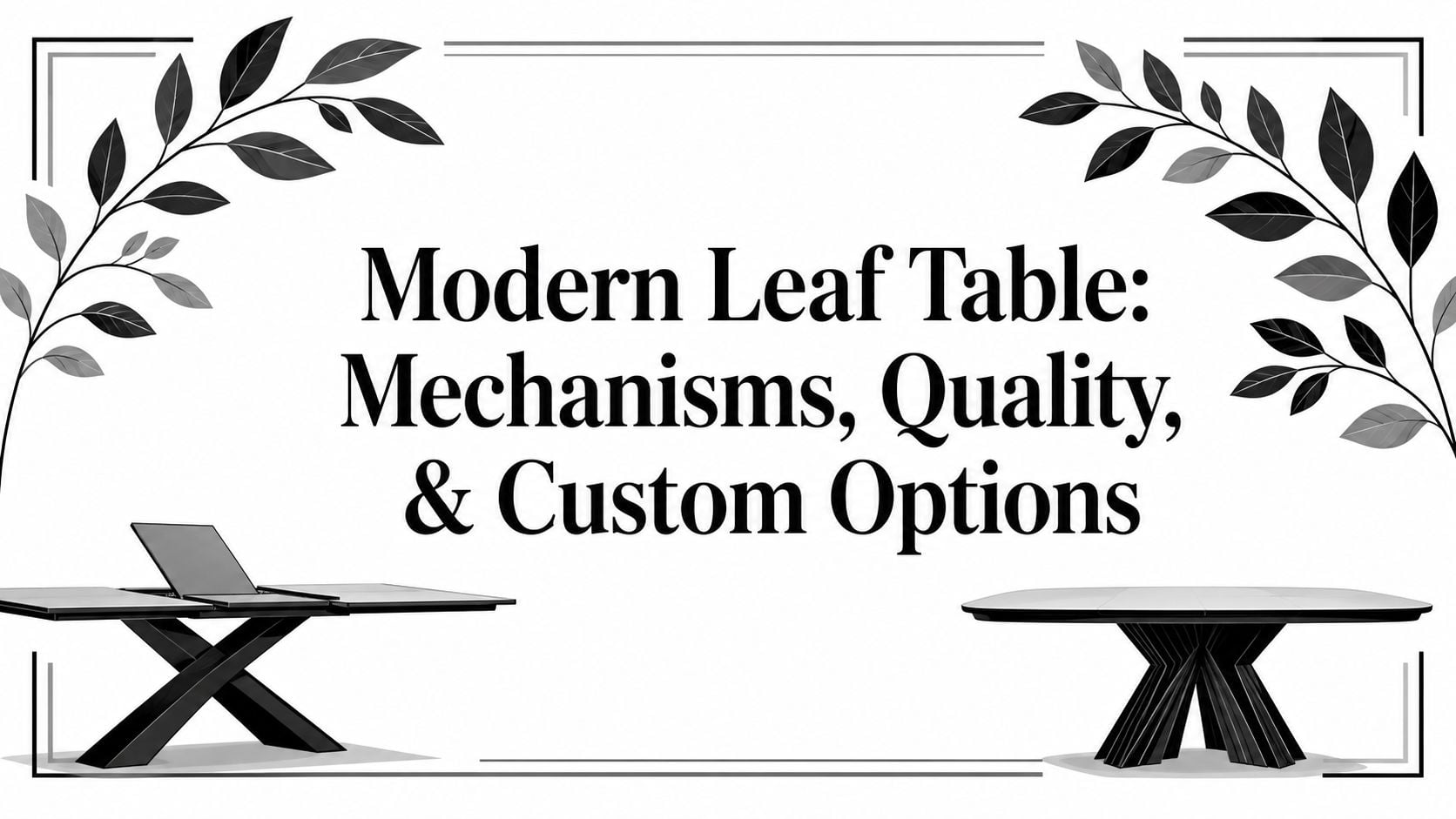
A familiar Ann Arbor problem shows up around the dining table. On most nights, a household needs a compact surface for dinner, homework, or a laptop. Then birthdays, holidays, and drop-in guests arrive, and that same room suddenly needs to work much harder.
That tension is why the modern leaf table still matters. It gives a home one table that can live small and serve big. For Southeast Michigan households in older bungalows, newer condos, and open-plan homes, that flexibility isn't a luxury. It's practical design.
Furniture shopping can still feel crowded with jargon. Hidden leaves, butterfly leaves, self-storing leaves, pedestal bases, extension slides. The details can blur together, especially when many retailers talk about appearance first and mechanism second. A table may look clean in a photo and still become frustrating after years of opening, closing, and daily use.
A trusted local furniture store has a different job. Since 1957, the guidance at Tyner has centered on long-term value, not quick turnover. That means helping neighbors think beyond the first impression and toward craftsmanship, serviceability, and cost per year of use. It also means recognizing that dining furniture isn't an isolated purchase. Homes across Southeast Michigan often need coordination from the dining room to the Home Office and even Outdoor Spaces.
For households also trying to make a tighter kitchen work better day to day, practical reading on compact kitchen solutions can help frame how furniture and layout support each other. Dining shape matters too, especially when a room has to serve more than one purpose, which is why this guide to maximizing dining space with table shapes and seating arrangements is often a useful companion.
Table of Contents
- An Introduction to Flexible Dining
- What Is a Modern Leaf Table
- Understanding Common Leaf Mechanisms
- The Importance of Materials and Craftsmanship
- How to Choose the Right Table for Your Home
- Styling Care and Making It Your Own
An Introduction to Flexible Dining
A dining table has to do more than hold plates. In many homes around Ann Arbor and Southeast Michigan, it also supports school projects, remote work, game nights, and the extra dishes that appear when family gathers. A fixed-size table can feel too large on an ordinary Tuesday and too small on a holiday weekend.
That mismatch is exactly where a modern leaf table earns its place. It adapts. With the leaves closed, the room feels open and easy to move through. With the leaves extended, the same table becomes ready for company without asking the home to dedicate extra space all year.
Why flexibility matters in real homes
Many households don't have a formal dining room that sits untouched until guests arrive. The dining area may share space with a kitchen, living room, or hallway. In those homes, furniture has to respect daily traffic patterns, chair movement, and the simple need to breathe in a room.
Practical rule: A good dining table should solve two problems at once. It should fit ordinary life comfortably and still rise to the occasion when the guest list grows.
That is why a leaf table isn't just about seating more people. It's about making a room feel usable in both modes.
What shoppers often miss
Shoppers often focus on the closed size, the wood finish, or the shape of the base. Those are all important. But a table's long-term success depends just as much on how smoothly the leaf opens, how stable it feels when extended, and whether the mechanism is built to keep working without constant fuss.
A helpful way to think about it is this:
- Everyday mode: The table should feel right for quiet meals and normal circulation.
- Extended mode: The table should still feel solid, balanced, and comfortable.
- Ownership mode: The mechanism should be understandable, durable, and maintainable.
That last point gets skipped far too often. An heirloom-quality table doesn't just look beautiful in the showroom. It should still open properly years later, when family routines and guest lists change.
What Is a Modern Leaf Table
A modern leaf table is a dining table with a fixed center section and one or more expandable sections that increase the tabletop when needed. In plain terms, it gives a household a smaller daily footprint and a larger serving surface when guests arrive.
A design with staying power
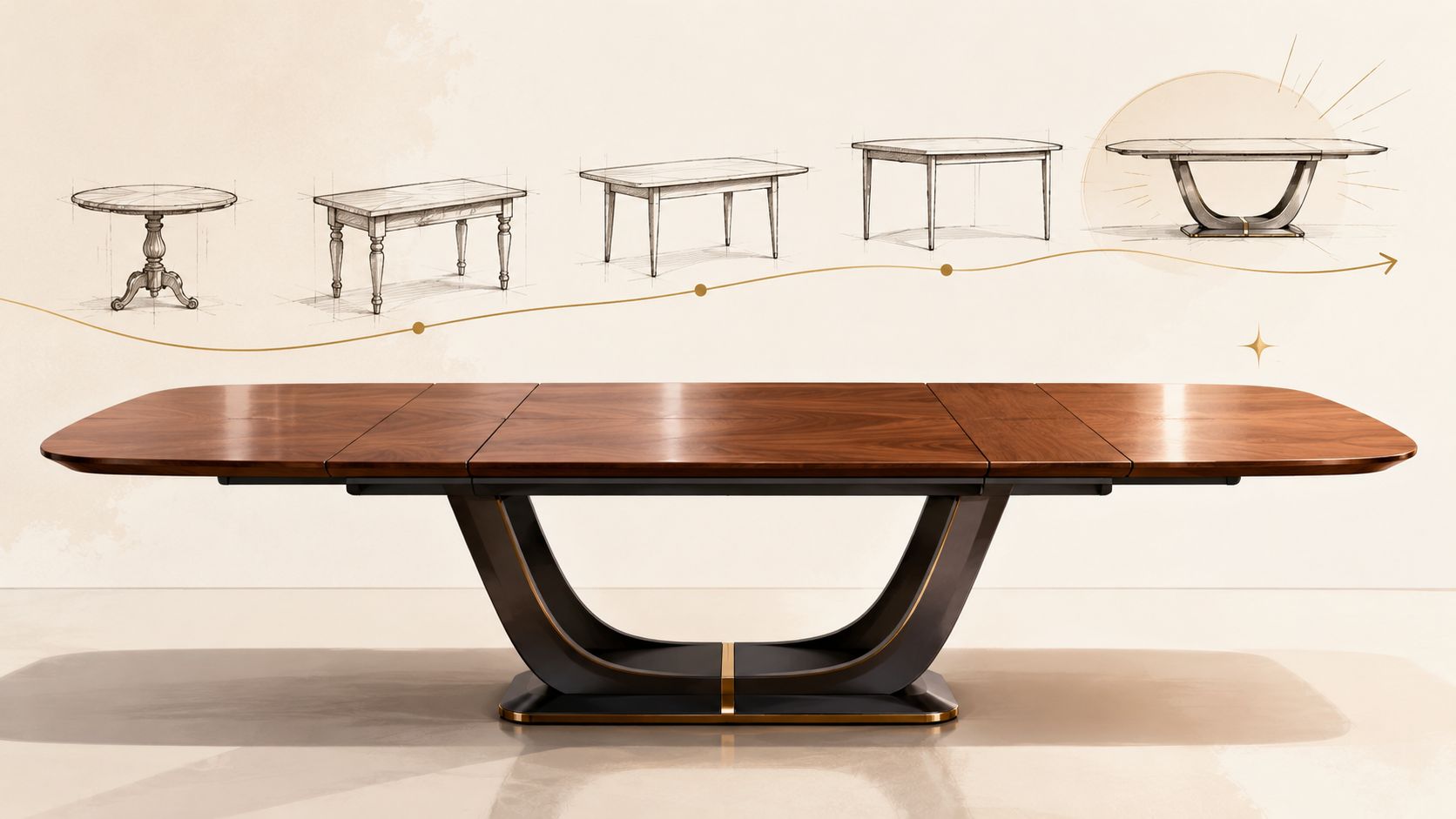
This idea isn't a passing furniture trend. The modern leaf table traces back to the 1500s in Europe, when drop-leaf and draw-leaf designs were developed to make furniture more adaptable before dedicated dining rooms became common in the 1800s. That gives the concept a history of roughly 500 years, making it one of the longest-running forms of space-efficient furniture design, as noted in this furniture history overview on early drop-leaf table design.
That history matters because it explains why the form still feels relevant. Early homes often needed one room to do several jobs. Many homes today ask for the same kind of flexibility, even if the style is cleaner and more contemporary.
The core idea in simple terms
The mechanism can take different forms, but the concept stays consistent.
| Table part | What it does |
|---|---|
| Fixed center | Provides the base working surface for everyday use |
| Leaf section | Adds usable top space when opened or inserted |
| Support structure | Keeps the table aligned and stable in both positions |
A good modern leaf table doesn't feel like a compromise. It feels intentional in both forms.
Some furniture designs survive because they're fashionable. Leaf tables survive because households keep needing the same solution.
Why it fits modern living
Open-plan layouts and smaller rooms have made flexible furniture more important, not less. A table that can shift from compact to expanded suits homes where the dining area also shares visual space with the kitchen or living room. It can work as a daily breakfast table, a project table, or a gathering place when relatives visit.
That versatility is one reason these tables continue to appear in contemporary assortments. The form still answers a real need. It lets one piece of furniture carry two roles without demanding a permanently oversized footprint.
Understanding Common Leaf Mechanisms
The mechanism is the heart of the table. Engineering, not marketing language, dictates its success. A table can have a striking silhouette and still disappoint if the leaves bind, sag, or drift out of alignment after repeated use.
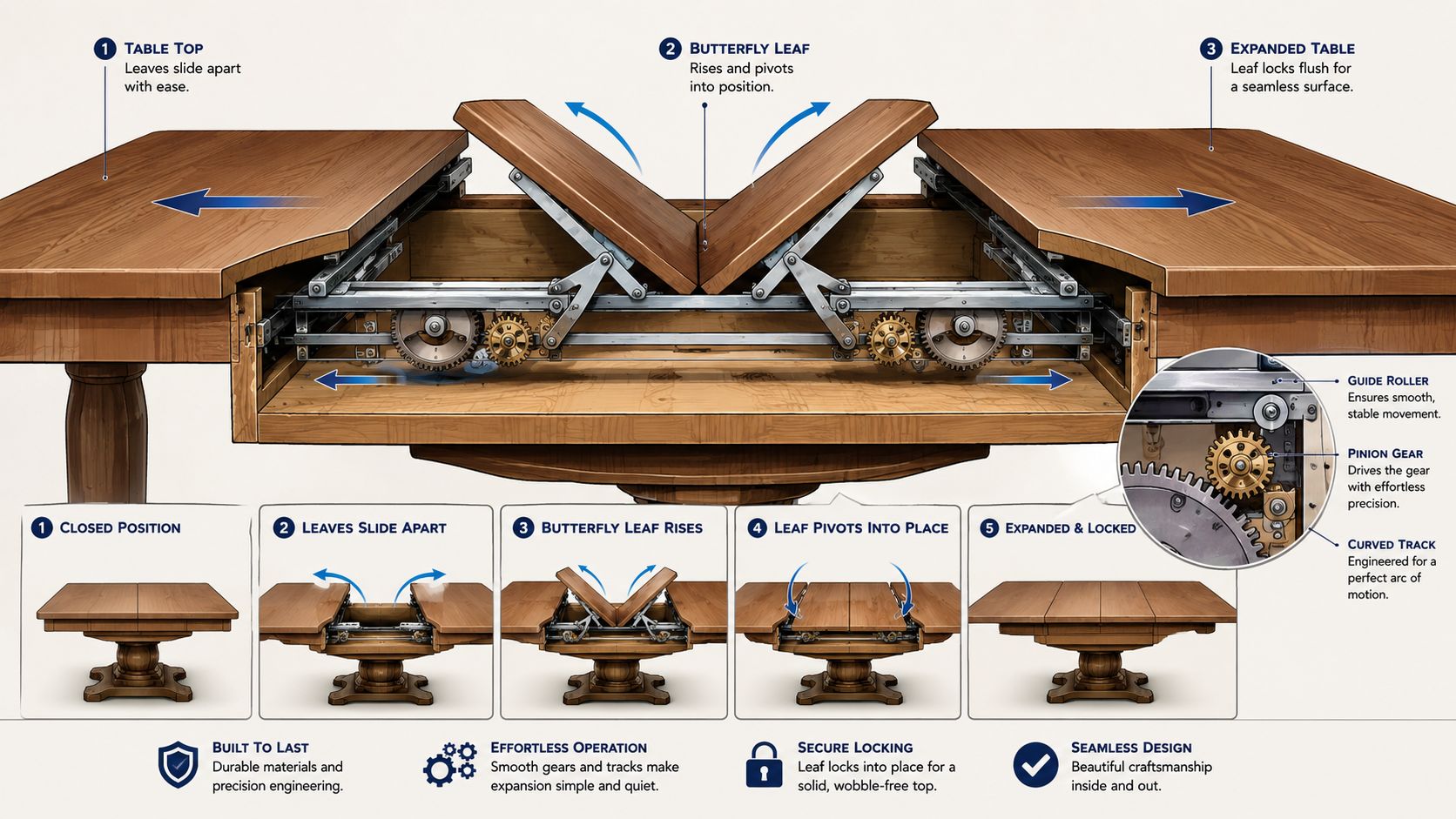
A measured drawing source on traditional table construction notes that performance depends on precision engineering, including a leaf slide installed perfectly perpendicular to the table edge and tight tolerances that prevent sticking and misalignment over time. That underlying principle appears clearly in this technical reference on drop-leaf table measured drawings and slide alignment.
Three common mechanisms
Each style solves the same problem differently.
Butterfly leaf
A butterfly leaf usually stores inside the table. When the top opens, the hidden section lifts and unfolds from the center, almost like opening a book. It offers a clean look and keeps the extra section close at hand.
Its advantage is convenience. Its trade-off is complexity. More moving parts often mean more dependence on exact hardware alignment.
Drop-leaf
A drop-leaf table uses hinged outer sections that fold down when not needed. This is one of the oldest and most direct approaches. The action is easy to understand because the user can see exactly what the leaf and support are doing.
That simplicity is often a strength for serviceability. Fewer hidden parts usually make wear easier to spot and easier to address.
Self-storing and hidden-leaf systems
These systems keep the leaf within the table body or beneath the top. They can look sleek and uncluttered, which explains their appeal in modern interiors. But the clean exterior can hide a more demanding mechanism inside.
For readers comparing formats, this guide to dining tables with hidden leaves gives useful context on how concealed systems are designed.
The real long-term question
Most retailers stop at convenience. A more useful question is whether the mechanism will still feel smooth and stable after years of opening and closing. Hidden leaves often win on visual minimalism. Simpler designs often win on straightforward serviceability.
A beautiful extension system isn't automatically a durable one. The buyer should ask how the table opens, what supports the weight, and what happens if the mechanism ever loosens.
What to inspect before buying
A strong table usually shows good thinking in places buyers don't immediately see.
- Slide alignment: The top should separate smoothly without racking or twisting.
- Joint fit: The meeting line between sections should look clean, not uneven.
- Support logic: The leaf needs a support system that makes sense for the full open position.
- Access for service: Hidden hardware should still be reachable if adjustment becomes necessary.
Another engineering issue deserves attention. Guidance on extension capacity notes that many tables can comfortably handle 1 to 2 leaves, while trying to add more than the table was designed for can make it feel unstable because expansion capacity and leg stability are limiting factors. That practical warning appears in this overview of leaf-table extension types and stability considerations.
For buyers who value longevity over novelty, that's often the key distinction. A time-tested mechanism may not look as dramatic, but it can offer better day-to-day reliability.
The Importance of Materials and Craftsmanship
A leaf mechanism can only perform as well as the table surrounding it. Weak substrate, thin veneers, and poorly fitted joinery can make even a clever extension system feel temporary. By contrast, the weight of solid cherry wood, the dense grain of maple, or the steady presence of oak creates a very different kind of ownership experience.
Why solid wood changes the experience
A well-made solid wood table tends to feel grounded before anyone extends it. The top has substance. The base has authority. The surface doesn't just imitate character through a printed pattern. It carries natural variation in grain and tone that deepens the longer it lives in a home.
That matters even more in an extension table, because moving parts need a stable, well-crafted framework around them. Hand-crafted Amish pieces stand apart here through material integrity and time-honored joinery such as dovetailing and mortise-and-tenon construction.
What craftsmanship looks like in practice
The easiest way to tell whether a table is built for decades is to look beyond finish color and focus on construction.
- Joinery: Tight joinery helps the base resist wobble as the table opens and closes.
- Surface preparation: A hand-sanded top feels smooth under the hand, not plasticky.
- Wood selection: Better boards create more consistent appearance and structural confidence.
- Finish quality: The finish should protect the wood without burying its texture.
For homeowners exploring color and surface character throughout the home, this piece on versatile home finishes offers a helpful design perspective on how finish choices shape a room.
Worth remembering: In a dining table, appearance and structure shouldn't be separated. The finish, the joinery, and the wood species all influence how the table ages.
The customization advantage
Customization is where a good table becomes the right table. Through made-to-order programs, shoppers can often choose wood species, finish, size, shape, and base style so the piece suits the room instead of forcing the room to adapt to the piece. Canadel is one of the best-known paths for this kind of bespoke dining customization, especially for households that want to coordinate finish and form carefully.
For shoppers who want to compare solid wood options in more detail, this collection of custom solid wood dining tables is a practical place to start. Tyner Furniture also offers made-to-order possibilities beyond dining, including upholstery customization and ergonomic sizing through Stressless.
That broader view matters. A dining table doesn't live alone. It sits within an interior design plan that may also include sideboards, lighting, home office pieces, and seating choices that need to work together over time.
How to Choose the Right Table for Your Home
A table can be beautifully made and still be the wrong fit for the room. The most common mistake isn't choosing poor quality. It's measuring only the tabletop and forgetting the human space around it.
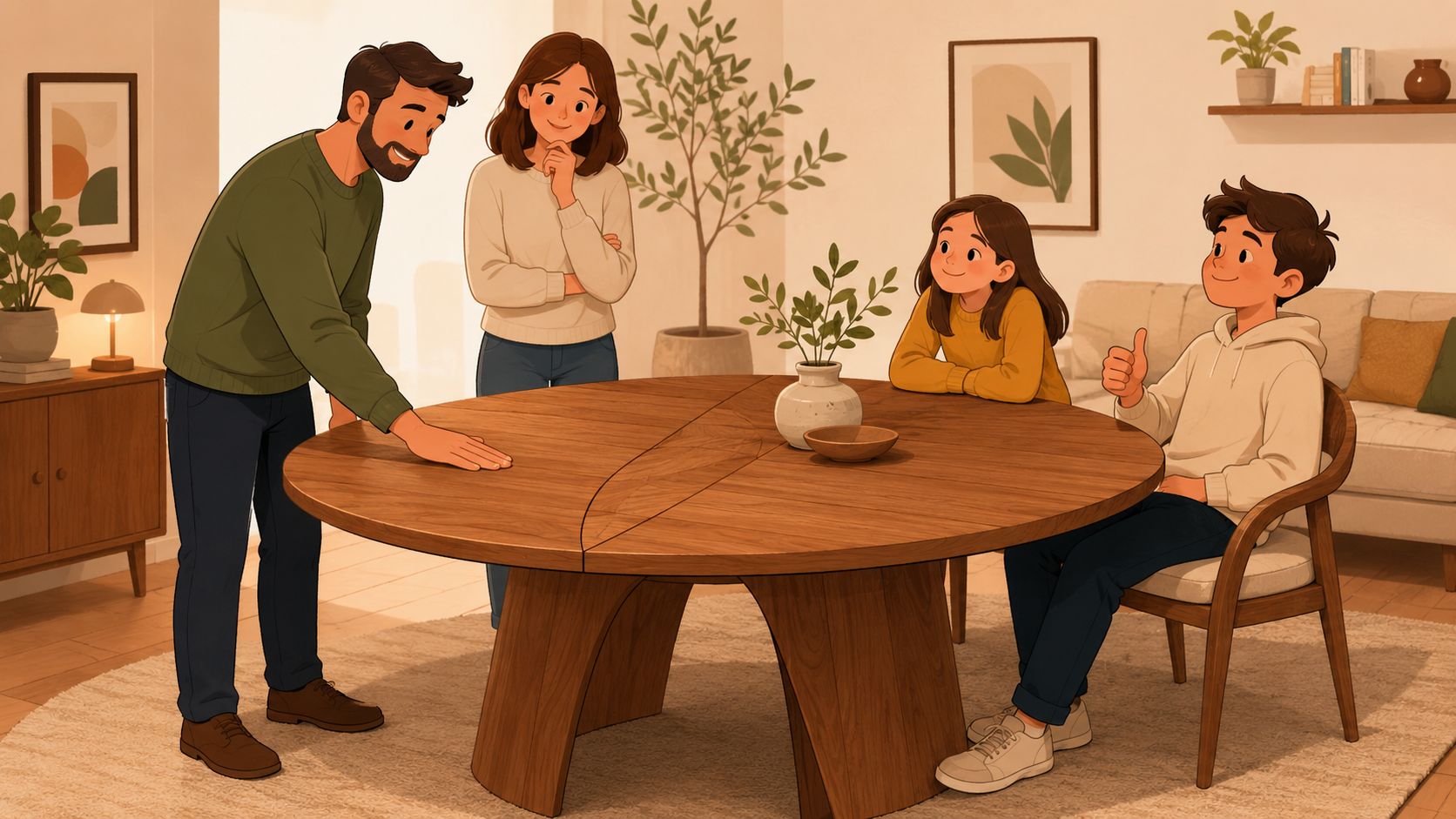
A useful housing insight is that a leaf table's real footprint includes not just the top, but also the space needed for chairs and traffic flow. A table can feel less space-saving if its extended form blocks circulation, especially in smaller homes and open-plan layouts, as discussed in this article on drop-leaf tables and modern dining needs.
Measure the room in two modes
A modern leaf table should be measured closed and open. Both dimensions matter equally.
Closed mode questions
- Daily use: Does the table leave the room feeling comfortable on a normal day?
- Pathways: Can people move naturally around it without turning sideways?
- Chair tuck-in: Do chairs slide in neatly when not in use?
Open mode questions
- Seating comfort: Can chairs be used without crowding elbows and knees?
- Traffic flow: Can someone still pass behind a seated diner?
- Visual balance: Does the larger configuration still look proportionate in the room?
A painter's-tape outline on the floor is often one of the smartest planning tools. It helps a household feel the difference between a table that merely fits on paper and one that works in daily life.
Understand expansion geometry
Extension tables are designed with a certain open position in mind. The number and size of leaves aren't random. The apron, slide system, and base all need to support the fully extended form.
That means buyers should resist the idea of pushing a table beyond its intended configuration. A table built for a certain extension pattern will usually perform better and feel steadier than one that has been forced beyond its design logic.
When a table feels unstable while extended, the issue often isn't the leaf itself. It's that the whole structure wasn't proportioned for that amount of span.
A simple buying checklist
For many shoppers, these questions narrow the field quickly:
| Priority | What to look for |
|---|---|
| Small-space use | Compact closed footprint and clear chair movement |
| Frequent entertaining | Stable open position and easy extension process |
| Long-term ownership | Serviceable hardware and solid construction |
| Design flexibility | Finish and size options that fit the room |
This step-by-step guide to picking the perfect dining table can help shoppers organize those decisions before visiting a showroom.
In the South State St. showroom in Ann Arbor, this kind of planning often becomes much easier once shoppers can walk around tables in person, test chair spacing, and compare how different base styles affect legroom.
Styling Care and Making It Your Own
A well-chosen modern leaf table should feel settled in the room, not merely placed there. Style plays a role, but so does restraint. The finish, edge profile, and base shape need to support the home's overall character, whether that leans contemporary, transitional, rustic, or somewhere between.
Matching the table to the room
A lighter wood can brighten a dining area that shares space with the kitchen. A deeper finish can anchor a room with softer upholstery and warm lighting. Homes inspired by cleaner vintage lines may benefit from reading POPvault's mid-century insights to better understand proportion, wood tone, and silhouette before making a final finish decision.
Made-to-order programs help here because they let the buyer move past whatever happens to be in stock. Canadel customization is especially useful for households that want to tailor finish, shape, and configuration. That flexibility turns a table into a more bespoke part of the home, rather than a close-enough compromise.
Simple care that protects the investment
A leaf table doesn't need complicated treatment, but it does reward consistent care.
- Keep the mechanism clean: Dust and grit can interfere with smooth opening.
- Open it carefully: Extend the table evenly so hardware stays aligned.
- Protect the top: Use pads or mats during heavier serving occasions.
- Watch seasonal changes: Solid wood responds to indoor conditions, so stable room climate helps preserve fit and finish.
The result is better cost per year. An heirloom table that serves a family well for many years often proves more valuable than a lower-quality piece that needs replacing far sooner.
Why the showroom still matters
Online photos can suggest scale and style. They can't replicate the feel of a hand-crafted top, the quiet glide of a well-built leaf, or the way a chair tucks beneath the apron. A sit test still tells the truth fastest.
That hands-on comparison also helps with decisions beyond dining. Since 1957, the South State St. showroom has served Southeast Michigan with guidance across the full home, from dining and bedroom furniture to the Home Office, ergonomic recliners, and Outdoor Spaces. Special Financing and the Low Price Promise can also make a long-term purchase feel more manageable without lowering standards.
For readers planning the full room, this guide to dining room accessories that go beyond the table can help tie the space together.
For anyone considering a modern leaf table, Tyner Furniture is a practical next stop. Browse the online Quick Specs for special orders, or visit the Ann Arbor showroom on South State St. for a sit test, compare leaf mechanisms in person, and feel the difference that solid wood, thoughtful craftsmanship, and made-to-order options can make over the long life of a dining table.