Amish Furniture Quality: Buyer’s Guide for Ann Arbor

You're standing in a showroom aisle, one hand on a dining table edge, and the first thing that stands out isn't the price tag. It's the weight, the grain, and the way the surface feels solid instead of hollow. That's the moment most shoppers start understanding amish furniture quality, because the difference shows up in the body before it shows up on paper.
At Tyner Furniture in Ann Arbor, that conversation matters because families are usually shopping for more than a roomful of matching pieces. They're trying to choose something that can handle everyday use, still look right years later, and fit the home they already live in. Since 1957, Tyner has served Southeast Michigan with a local legacy built around longevity, craftsmanship, and guidance that makes the process feel less overwhelming.
What Amish Furniture Quality Actually Means
The easiest way to judge amish furniture quality is to stop thinking of it as a single trait. A piece can look plain and still be excellent, or look polished and still fail where it matters. Quality comes from the full package, solid hardwood, sound joinery, careful finishing, and construction that's made to hold up in a real home.
Start with what the piece is built from
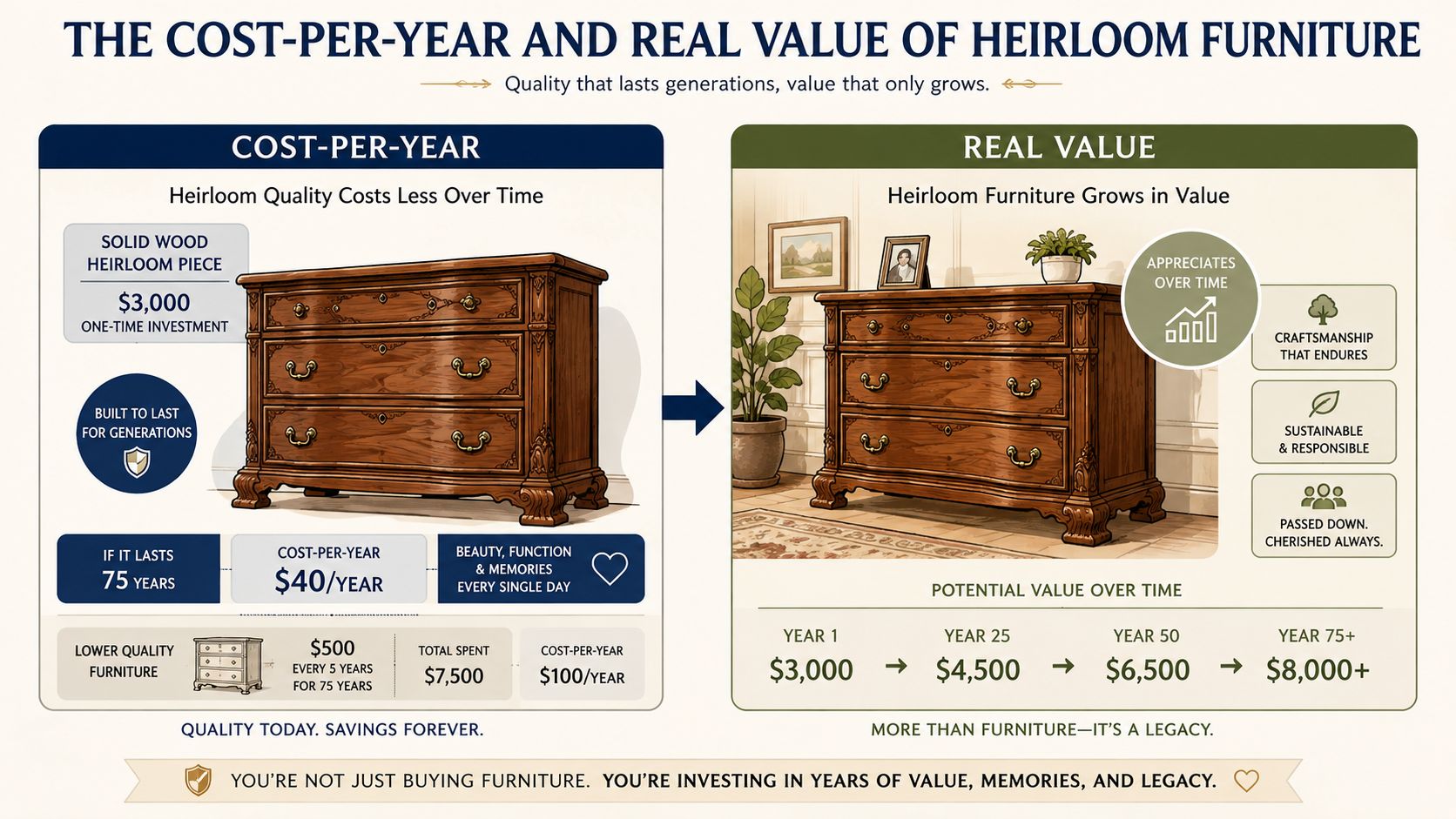
Authentic Amish furniture is typically built from solid North American hardwoods, not particleboard, MDF, or veneer. That matters because a table or dresser made from real hardwood can be refinished and repaired over time, while composite construction usually gives you far fewer options when wear starts to show. A useful way to think about it is cost-per-year, not sticker price.
Tyner's hand-crafted Amish collection fits that logic well, because the goal is a piece that stays useful long after trendier furniture has been replaced. A good companion read on that long-life mindset is Jennifer Gilmer on lasting kitchens, which reinforces the same design principle, build for the long haul, not for a short showroom moment. For shoppers comparing solid wood categories, Tyner's American made solid wood furniture page is also a practical place to start.
Why the larger picture matters
U.S. Forest Service research on the Ohio Amish furniture cluster estimated about 43.5 million board feet of hardwood lumber per year, roughly 11% of Ohio's total hardwood lumber production and 19% of the state's hardwood grade lumber used in appearance-based applications. The same research estimated about 2,991 workers in the cluster, which helps show why this is a serious manufacturing segment, not a hobby-level craft scene. It also found reputation for quality scored 6.0 on one survey scale and 6.4 on another, which is a useful reminder that buyers are responding to a real industrial standard, not just a story. US Forest Service research
Practical rule: If the piece feels light for its size, looks overly uniform in a way wood rarely does, or hides most of its structure behind panels, keep asking questions.
The reason this matters in Ann Arbor is simple. Local buyers aren't just shopping for a look, they're shopping for a piece that fits Southeast Michigan homes, everyday family use, and the expectation that furniture should age gracefully instead of being replaced quickly.
The Four Technical Pillars of Amish Craftsmanship
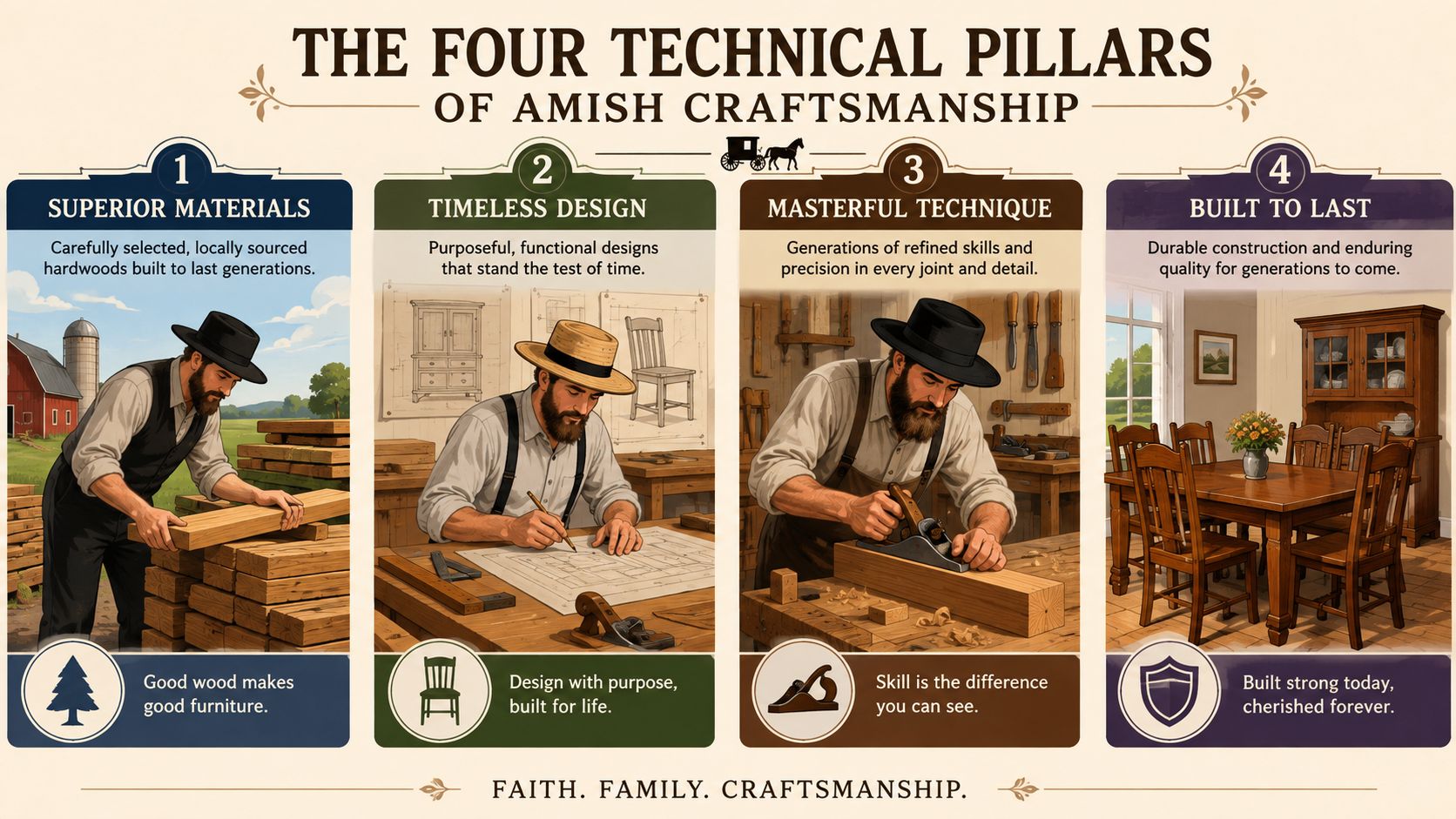
A buyer can learn a lot by slowing down and checking four things. The wood, the joints, the finish, and the overall build all tell a different part of the story. When those four line up, the piece usually feels honest in the hand.
Wood species and how they age
In genuine Amish work, cherry, oak, and maple are common choices because each one brings a different balance of look and durability. Cherry usually develops a warmer tone over time, oak shows a strong grain that reads clearly in the room, and maple gives a cleaner, brighter visual. The species matters less as a status label and more as a signal that the maker has matched the material to the job.
Joinery is the real strength test
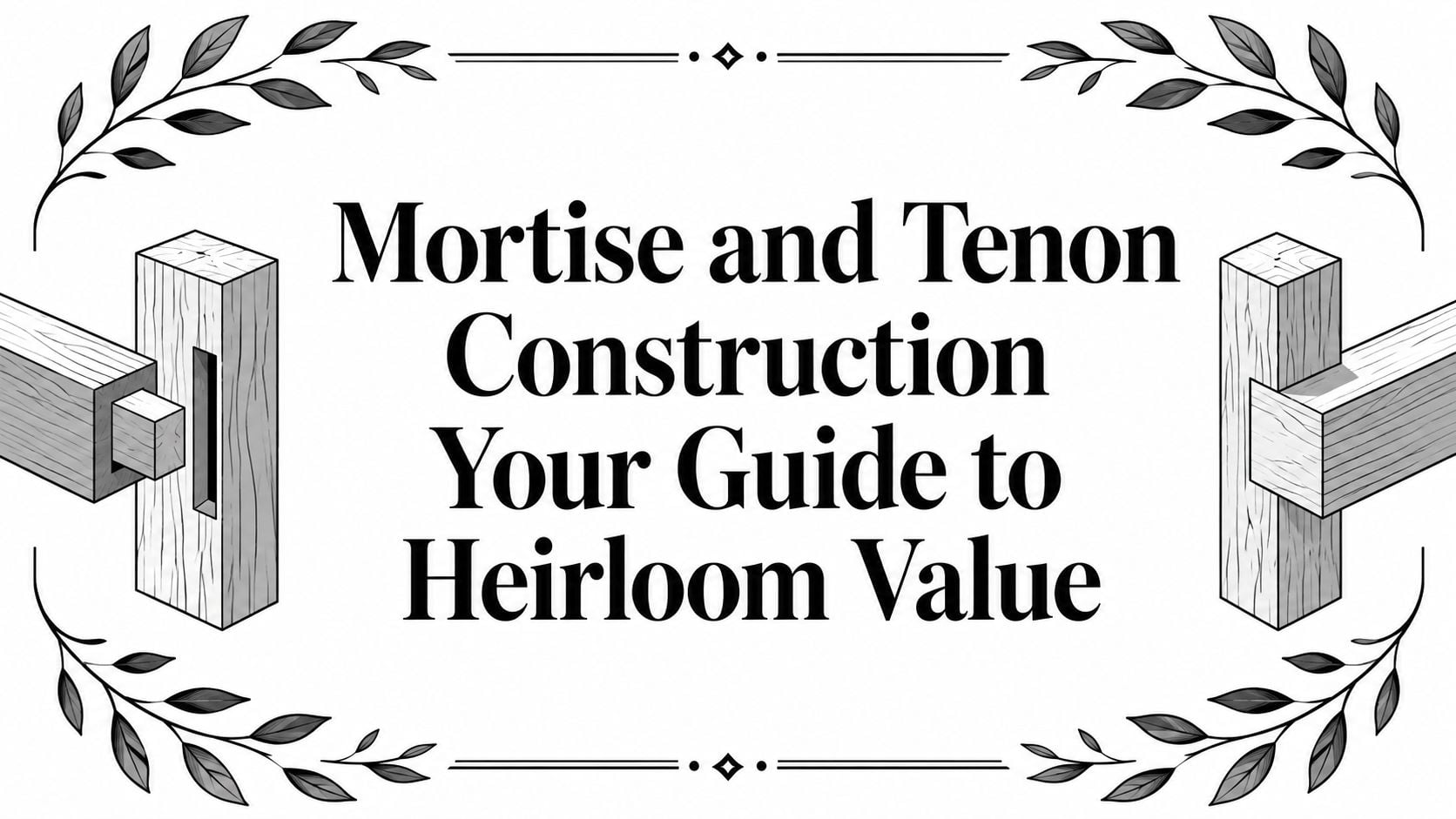
Industry guidance points buyers to mortise-and-tenon, dovetail, tongue-and-groove, and wooden peg construction as signs of structural integrity. Those methods let the wood members interlock and carry load without depending on quick-assembly fasteners. Tyner's mortise and tenon construction guide is a useful reference if a shopper wants to understand why those joints hold up better in daily use.
The joint is often where quality either proves itself or falls apart.
Finish and surface protection
A good finish should protect the wood without smothering it. On a showroom floor, that usually reads as a smooth surface with depth, not a plastic-looking shell. A careful finish also helps the grain stay visible, which is part of the appeal of real hardwood.
Overall construction and feel
A sturdy piece should feel balanced, not flimsy. Look for substantial weight, tight seams, and drawers that move cleanly. The little signs often tell the truth faster than a sales brochure does.
Specs to notice at a glance
- Species: Cherry, oak, or maple, with visible grain character
- Joinery: Dovetails, mortise-and-tenon, tongue-and-groove, or wooden pegs
- Surface: Smooth finish with visible wood depth
- Build: Solid, balanced weight and tight-fitting panels
How Amish Construction Differs From Mass-Produced Furniture
The biggest difference is not just solid wood versus veneer. It's how the piece handles stress over time. Continuous wood fibers and interlocking joints spread weight more effectively than stapled, screwed, or thinly glued assemblies, especially when a table gets moved, a drawer gets opened all day, or chairs carry the same family pressure for years.
| Attribute | Authentic Amish | Mass-Produced Furniture |
|---|---|---|
| Core material | Solid hardwood throughout | Often includes particle board, MDF, or veneer layers |
| Joinery | Mechanical joints that lock pieces together | More reliance on screws, staples, or glue |
| Drawer construction | Dovetailed boxes and solid-wood bottoms | Thinner parts and simpler assembly methods |
| Load handling | Built to carry weight and repeated use | More likely to loosen with movement and use |
| Repair potential | Easier to refinish or restore | Repair options are usually more limited |
A drawer box is a good place to see the difference quickly. Dovetailed corners look like interlocking wedges, and a solid-wood bottom feels more substantial than a thin backer panel. When a drawer slides straight and resists wobble, that usually says the maker cared about structure, not just appearance.
Mass-produced furniture can look fine on day one, but its hidden layers usually reveal themselves later. The underside often tells the truth first, because shortcuts tend to show up where buyers don't usually look. That's why the fastest inspection step is often turning the piece over or checking the back panel before focusing on finish color.
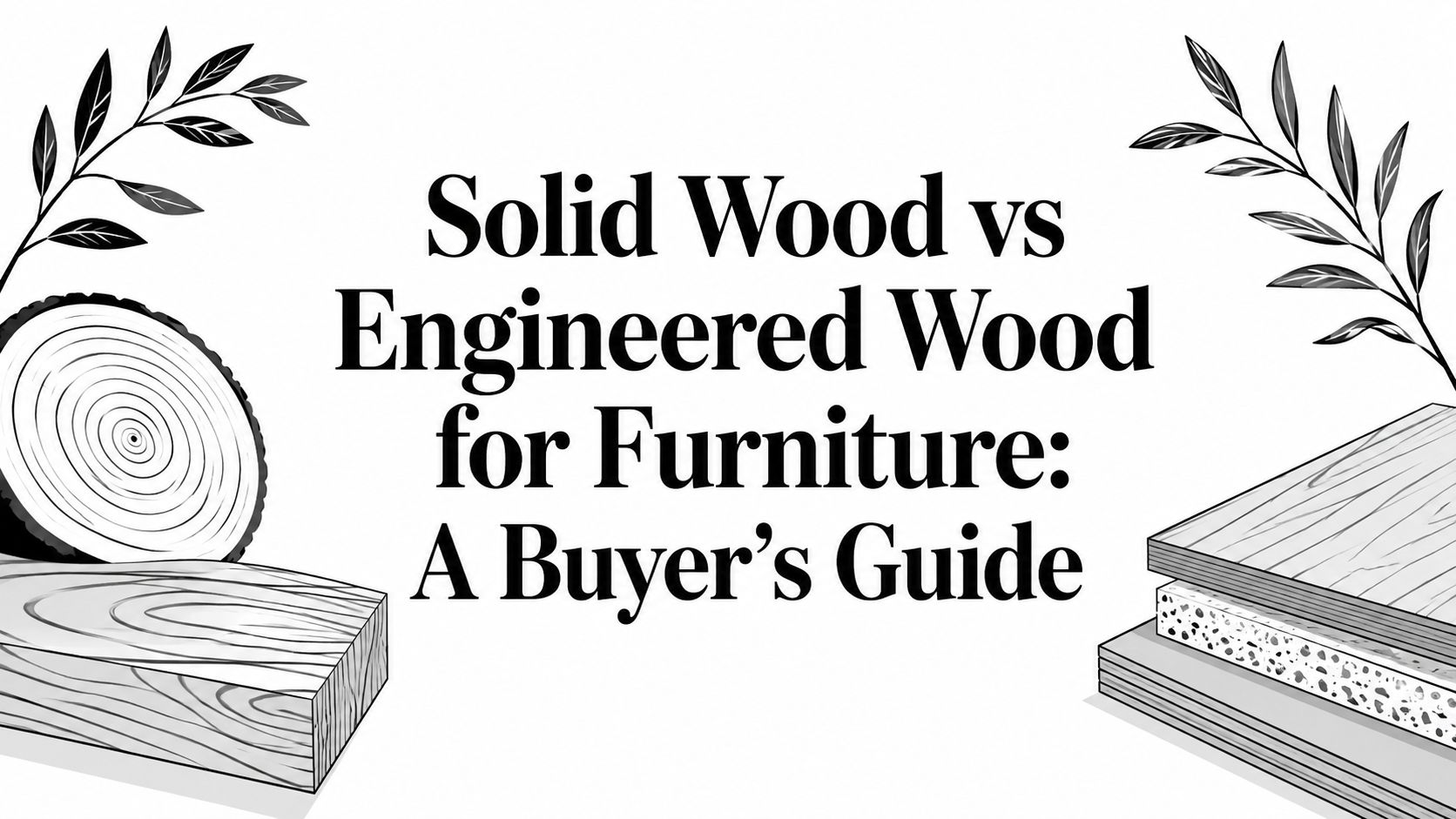
Tyner's solid wood vs engineered wood page can help shoppers sort those material differences in plain language. The practical takeaway is simple, a heavier, repairable piece often gives better cost-per-year value than a lighter piece that has to be replaced sooner.
A Five-Minute Showroom Inspection You Can Do Today
A good showroom test doesn't need special tools. It only needs a few minutes, a calm pace, and a willingness to touch the piece instead of admiring it from across the floor. The South State St. showroom in Ann Arbor is a good place to do that because the point is to handle the furniture the way a home will use it.
1. Lift one corner or edge
Feel the weight before you look at the label. Solid hardwood usually carries more substance than a composite-core piece of similar size. If the item feels surprisingly light, ask what's inside it.
Pro-tip: Weight alone doesn't prove quality, but a piece that feels hollow for its size deserves a closer look.
2. Run a hand along the grain
A real hardwood surface should feel like wood, not like a printed skin. The grain pattern should stay believable as it moves across a face, leg, or top. If the surface looks too uniform, ask whether it's solid wood all the way through.
3. Open every drawer
Look for clean corners, tight joints, and smooth movement. Dovetail corners usually signal stronger drawer construction, while a weak box often feels loose at the corners or light in the hand. Pay attention to how the drawer closes too, because fit matters as much as appearance.
Pro-tip: A drawer that sticks in the showroom usually won't improve at home.
4. Check the underside and back panel
Flip your attention to the places that usually get less polish. Back panels, underside edges, and hidden corners can reveal whether the maker used honest materials or a lighter shortcut. Unfinished surfaces aren't automatically bad, but they should still look intentional and structurally sound.
5. Inspect the finish in angled light
Move your view a little and watch how the light reflects. A strong finish should look even and deep, not patchy or cloudy. That's especially useful on dining tops, bed rails, and case pieces that will get touched often.
If the piece passes those checks, the final test is human use. Sit in it, lean on it, pull the drawer again, and see whether it feels right for the family that will live with it.
Cost-Per-Year and the Real Value of Heirloom Furniture
The easiest mistake is judging the purchase by the number on the tag alone. A better question is what the piece costs for each year it stays useful, and how much trouble it avoids over time. That framing is why heirloom furniture often makes sense for households that want fewer replacements and more stability.
A solid hardwood piece can be refinished, re-glued, or re-upholstered instead of discarded. That repairability changes the value equation because the furniture stays in circulation longer and usually keeps its usefulness through real life changes. The earlier section on lifespan numbers from the Amish furniture quality discussion gives that long-view context without needing to guess at the future.
Value rule: If a piece can be repaired instead of replaced, the real purchase decision gets easier over the years, not harder.
There's also a sustainability angle that matters in Southeast Michigan homes. One well-built piece creates less churn over a lifetime than replacing lower-grade furniture multiple times. That lines up with the broader home-furnishings shift away from disposable buying patterns and toward durable, repairable choices.
For shoppers who want a more flexible entry point, Tyner's special financing and Low Price Promise can reduce the friction of choosing better construction now instead of postponing the decision. The point isn't to force a premium route, it's to make competitive value easier to plan for when the furniture is meant to last. For a practical look at what many people stop using after a move, premium home features to skip is a helpful reminder that lasting value usually beats novelty.
Customization as the Real Edge of Made-to-Order Amish
In-stock is only the beginning. A strong Amish piece becomes even more useful when it's matched to the room, the floorplan, and the way the household lives. That's where made-to-order work changes the experience from shopping to designing.
Start with the home, not the floor sample
A buyer might like a dining table shape on the floor but need different dimensions, a different finish, or hardware that better matches existing pieces. Tyner's getting started with custom order page reflects that process well, because the question is how the piece should fit, not whether the floor model happens to be close enough.
The Canadel partnership expands that logic further with options for leg style, table edge, finish, and distress level. That kind of flexibility matters when a room already has a direction and the new piece needs to belong in it, not compete with it. A nearby design reference for pairing wall elements with furniture style is find gallery-quality wall decor, especially for homeowners who want the room to feel coordinated instead of pieced together.
Fit is a form of quality
Customization also supports longevity. A table that fits the room better gets moved less often, a chair that matches the body well gets used more comfortably, and a finish that suits the rest of the home ages more gracefully. That's the meaning of bespoke value, not just more choices, but better fit.
Ergonomic pieces deserve the same attention
Tyner's Stressless partnership adds another layer of personalization through Small, Medium, and Large recliner sizing. That kind of ergonomic matching can make a huge difference in comfort because a well-fit seat supports the body more naturally than a one-size-fits-all chair. For shoppers mixing Amish wood pieces with upholstered seating, the best room plans often let each piece do its own job well.
Tyner also covers everything from the Home Office to Outdoor Spaces, so customization isn't limited to one room or one style. The broader the selection, the easier it is to keep the home visually connected while still getting the exact fit each space needs.
Your Buyer Checklist and the Next Step on South State St
A first-time buyer can keep the process simple. The right Amish piece usually reveals itself through a short checklist, a few good questions, and one honest sit test in the showroom.
- Confirm the materials: Ask whether the piece is solid hardwood and which species was used, then compare that answer to the grain and weight you feel in Section 2.
- Inspect the joinery: Open drawers, check corners, and look for dovetails or other mechanical joints, as covered in Sections 2 and 3.
- Check hidden surfaces: Look at the back and underside before you decide, since those areas often show the actual build quality.
- Ask about custom options: Finish, dimensions, hardware, and configuration should all be part of the conversation, especially if the room has odd measurements.
- Review buying terms: Ask about special financing, delivery, and value protections so the purchase fits the household plan.
- Test comfort in person: Sit, lean, open, and close the piece the way the family will use it.
Tyner's Amish furniture Ann Arbor page is a useful local starting point for anyone narrowing the search in Southeast Michigan. The next practical move is to visit the South State St. showroom for a real sit test, or browse the online Quick Specs for special-order pieces that can be built to exact needs.
Tyner Furniture brings together hand-crafted Amish solid wood pieces, made-to-order options, ergonomic seating, and local guidance that helps buyers choose with confidence. For anyone comparing amish furniture quality through the lens of durability, repairability, and cost-per-year value, the Ann Arbor showroom is a smart place to start. Visit Tyner Furniture to browse the collection, check Quick Specs, and plan a hands-on visit on South State St.