Dining Room Tables with Bench: Sizing & Styling Guide

A lot of households reach the same point at the same time. The dining room still matters, but the way people use it has changed. One night it hosts takeout and homework. The next, it holds a birthday dinner, a board game, or a quick breakfast before everyone heads across Ann Arbor and the rest of Southeast Michigan.
That shift is why dining room tables with bench have become such a thoughtful choice. They can feel relaxed without looking unfinished, and practical without giving up beauty. For shoppers trying to create a room that works hard every day and still feels special on holidays, the bench-and-table pairing often lands in exactly the right place.
Furniture shopping can also feel like a lot to sort through. There are measurements, materials, comfort questions, style decisions, and the larger question of whether a piece will still make sense years from now. In a community business with roots going back to 1957, the conversation has always been about helping families choose well, live with their furniture happily, and think in terms of cost-per-year, not just the tag on the floor.
The Welcoming Shift to Bench Seating
A dining bench changes the mood of a room almost immediately. Chairs tend to create individual places. A bench encourages people to gather, slide over, make room, and stay a little more casually connected.

That difference matters in modern homes. In many Southeast Michigan households, dinner isn't always a formal event with everyone arriving at once. One person is finishing a call, a child is still gathering papers from a backpack, and somebody else is setting down grocery bags. A bench handles that rhythm beautifully because it supports an informal dining style without making the room feel less considered.
Why the look feels so current
Part of the appeal is visual. A bench has a lighter profile than a row of chairs, especially when it tucks beneath the table between meals. The room reads cleaner. Sightlines open up. In smaller dining areas, that can make the whole space feel calmer.
There's also a familiar warmth to it. A solid wood table with a bench often feels rooted, generous, and lived in. It can suit farmhouse interiors, refined transitional rooms, pared-down contemporary spaces, and plenty of homes that mix old and new.
A good dining room doesn't just seat people. It supports the way the household actually gathers.
For readers exploring what atmosphere fits their home best, these dining room style ideas can help connect bench seating to a broader interior design direction.
Where shoppers often hesitate
Most hesitation comes from one honest question. Will a bench feel polished enough?
In many rooms, the answer is yes, especially when the table has strong proportions and the materials carry real presence. The weight of solid cherry wood, the grain of maple under a hand, or the soft texture of an upholstered seat can give a dining area a collected, bespoke feeling rather than a casual shortcut.
That's one reason benches have stayed relevant. They don't just solve a space problem. They create a more welcoming kind of room, one that suits daily life without losing the sense that important moments happen there too.
Benefits of a Dining Table with a Bench
A family of four sits down on Tuesday night. By Saturday, two grandparents join them. During the holidays, a cousin squeezes in at the end. That is where a bench proves its value. It gives a dining room a little more give, much like a well-made extension table gives a room room to grow.
The practical benefit is flexibility. Chairs assign one seat to one person. A bench works differently. It lets a household adjust for everyday meals, extra guests, and the changing rhythm of real life without making the room feel crowded.
It makes busy rooms easier to use
In homes where the dining area is close to the kitchen, a hallway, or a back door, clearance matters. A bench can slide under the table between meals, which often keeps walkways more open and the room easier to move through.
That difference shows up in daily habits. Kids can sit down quickly. Grocery bags pass through with less weaving around chair backs. In tighter floor plans, a bench often helps the room function with less friction.
It gives you more flexibility at the table
A bench is often the easiest way to handle the in-between moments. One child becomes two children. Two adults become three guests for pizza night. Because there are no chair arms or fixed seat boundaries, the seating can adapt more naturally.
That is especially helpful for households trying to balance comfort with capacity. If you are comparing layouts for a family-sized setup, these dining room sets for 6 can help you see how bench seating changes the overall balance of the table.
It supports a more communal kind of dining
Benches change posture and social flow in subtle ways. People tend to sit a little closer. Conversation often feels less formal. The room can shift from “assigned seats” to “gather here,” which many families prefer for everyday use.
There is a trade-off, and it is worth understanding before you buy. A bench usually offers less individual back support than a chair, so comfort depends heavily on the bench depth, seat height, and how long your household typically lingers at the table. For weeknight dinners and flexible family seating, that trade can make excellent sense. For long, slow holiday meals, many homeowners prefer a mixed setup with chairs at the ends and a bench on one side.
It can be a better long-term investment than it first appears
A well-built bench does more than save space. It earns its keep over time. It can move from dining room to entryway, from kitchen wall to the foot of a bed, which gives it a longer useful life than many single-purpose chairs.
That matters if you are buying solid wood furniture meant to stay in the family for years, not just fill a room for now. At our Ann Arbor showroom, this is often the moment shoppers start seeing a bench differently. It is not just a style choice. It is a practical piece that can age with the home, especially when the craftsmanship is strong and the proportions are right.
Why many homeowners choose a bench
- More adaptable seating for children, guests, and changing household needs
- A cleaner footprint when the bench tucks under the table
- Better use of tighter spaces where chair backs crowd walkways
- A warmer, more shared feel for everyday meals
- More long-term versatility because the bench can work in other rooms later
Helpful rule: A bench is a strong choice for households that want flexibility, efficient use of space, and furniture that can keep serving the home in more than one way.
The best dining rooms are not built around a photo. They are built around use. A dining table with a bench can do that beautifully, especially when the piece is comfortable, well-made, and chosen with the long view in mind.
Sizing Your Table and Bench for a Perfect Fit
Saturday dinner is running late, two guests slide onto the bench, and someone bumps the table leg trying to sit down. That moment usually has less to do with style than with sizing. A dining set can look balanced in a photo and still feel awkward in real life if the proportions are off.
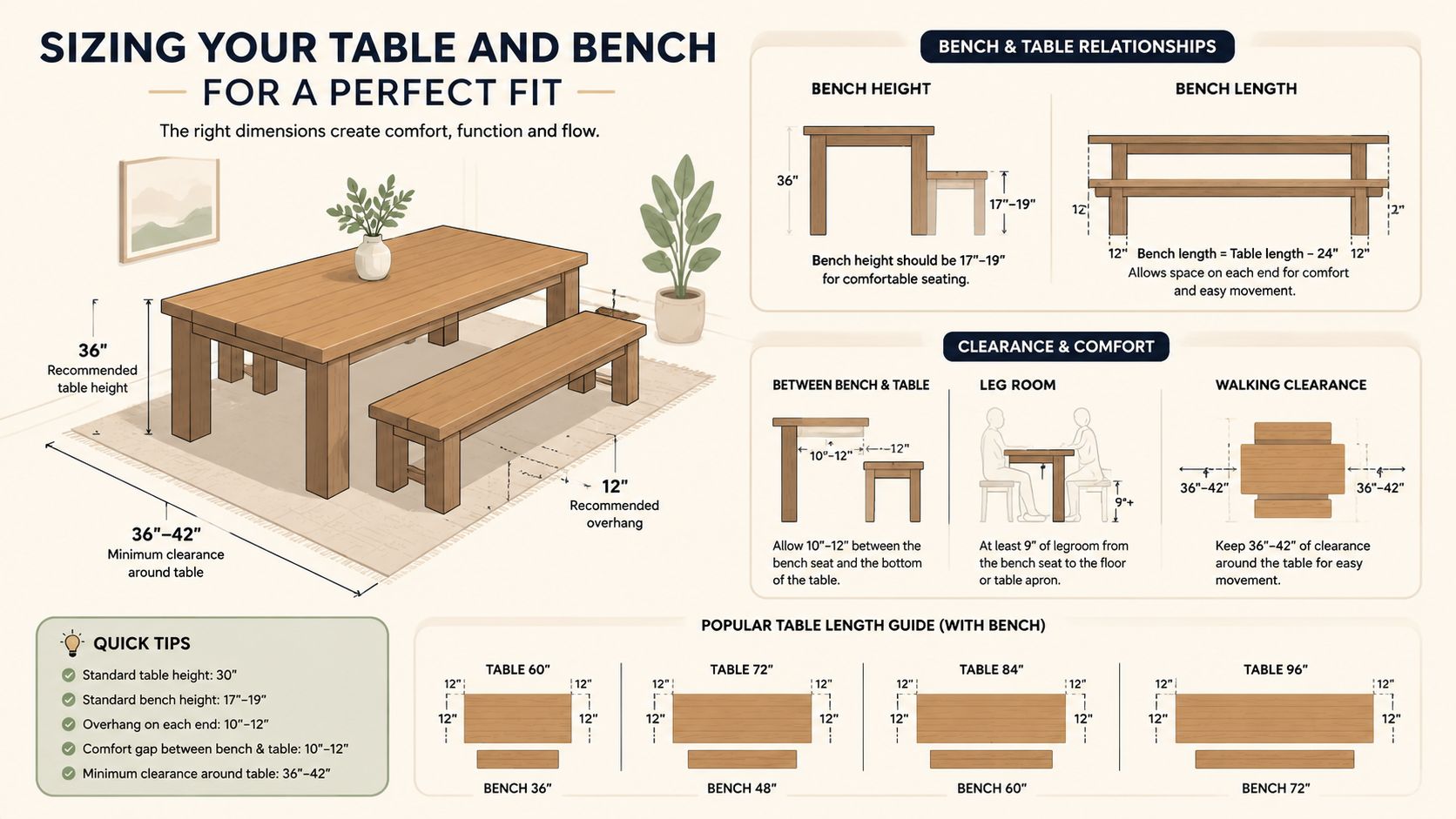
The goal is simple. You want enough room to sit comfortably, enough clearance to move with ease, and proportions that still look right years from now. That balance is part design and part ergonomics, and the ergonomic side gets skipped far too often.
Start with the table legs, not the tabletop
Many shoppers measure the full length of the tabletop first. In the showroom, we usually start lower. The space between the table legs matters more because that is the space the bench has to fit within.
A good bench should sit comfortably within that opening so it can tuck in cleanly without banging into the base. As a rule of thumb, a bench should read slightly smaller than the table, much like a rug should sit inside a room with a visible border around it. That small margin is what makes the set feel intentional instead of crowded.
If you are measuring at home before you visit, keep this furniture measuring guide for dining rooms and tight entry points open while you work.
Comfort starts with the height relationship
Height is where a beautiful set either earns its keep or becomes tiring to use. The bench seat needs to pair naturally with the tabletop so diners have enough space for their legs and can rest their arms without hunching their shoulders.
Seat depth matters too. A bench that is too shallow can feel perched. One that is too deep can force shorter diners to sit forward without back support, which gets old quickly during a long meal. That is one reason heirloom furniture deserves a slower buying process. Good woodwork lasts for decades, so the comfort trade-offs should be just as carefully considered as the finish or shape.
For homes that want a softer sit, a bench with padding or a supportive back can change the experience quite a bit. This upholstered dining bench guide offers a helpful look at how upholstery and back support affect comfort.
Use this measuring checklist before you buy
Bench fit
- Measure the distance between the table legs, not only the tabletop length.
- Choose a bench that leaves visible breathing room on each side so it tucks in neatly.
- Make sure the bench height allows comfortable legroom between the seat and the underside of the table.
- Check seat depth so diners can sit fully without feeling pushed too far forward.
Room clearance
- Leave enough space around the table for someone to pull the bench out and sit down without scraping past a wall.
- On sides where people regularly walk behind seated diners, allow extra clearance so the room does not feel pinched.
- Test the path from the kitchen, hallway, or patio door. A dining room has to work during real traffic, not just while empty.
One last note from our Ann Arbor showroom. A bench that fits on paper can still feel different in person because wood thickness, pedestal bases, stretchers, and upholstery all change how the body meets the table. That is why trying the set matters. The right size does more than prevent daily irritation. It helps your dining room age well, look balanced, and serve your family comfortably for years.
Exploring Different Bench Styles and Features
Once the size is right, style becomes the next real decision. Not all benches live the same way, even when they look similar in a photo.
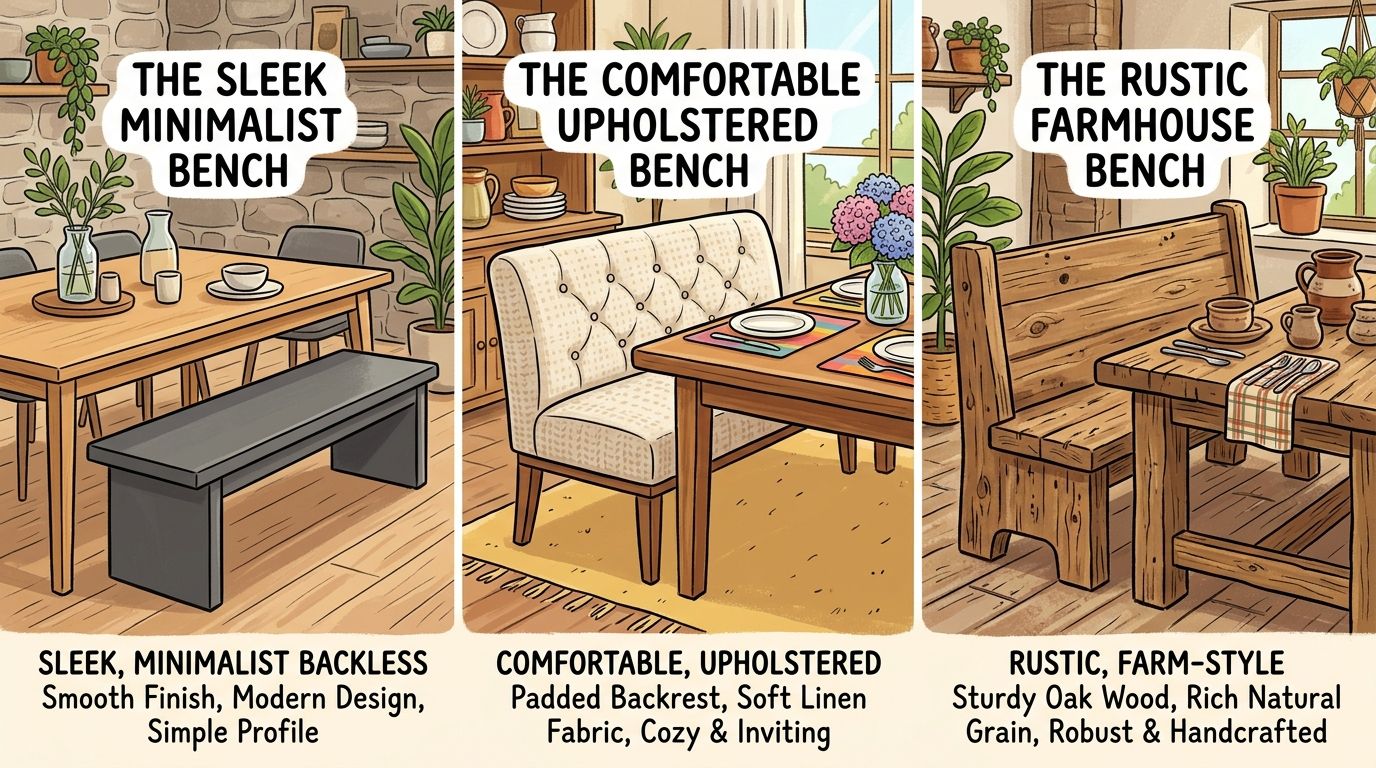
Backless benches
A backless bench is the cleanest and most architectural option. It tucks away easily, keeps sightlines open, and works beautifully in smaller rooms or homes that favor a simpler interior design language.
This style is often the best visual partner for a substantial wood table. The contrast feels grounded and uncluttered.
Its trade-off is comfort over time. Standard guides often focus on looks, but they rarely quantify how the lack of back support can increase postural fatigue after 45+ minutes of sitting, as discussed in this comfort-focused bench article.
Upholstered benches
An upholstered bench softens the entire room. Fabric adds warmth, absorbs sound a bit better than bare wood, and often makes longer meals feel more inviting. It's a strong choice for households that use the dining area for lingering dinners, game nights, or conversation after dessert.
For readers comparing silhouettes and comfort details, this upholstered dining bench guide gives a useful overview of back styles and padding considerations. Those exploring fabric-covered options can also browse upholstered dining benches to see how different profiles change the feel of a room.
What upholstered benches do well
- Soften a hard-surfaced room
- Add comfort for longer sitting
- Introduce color or texture
- Create a more custom, bespoke look
Storage benches and hybrid styles
Some benches include storage beneath the seat. These can be useful in multipurpose spaces, especially where table linens, placemats, or seasonal items need a home. In family dining areas, that hidden storage can reduce visual clutter quickly.
The caution here is proportion. Storage benches can become bulkier, and bulkier benches can change how much room people need to sit down comfortably. That doesn't make them wrong. It means the shape has to match the room.
The best bench style isn't the one that photographs best. It's the one that fits the length of the meal, the age of the household, and the way the room gets used on an ordinary Tuesday.
A bench with no back can be perfect for quick meals. A cushioned bench may be better for slower evenings. A storage bench can help a hard-working room stay organized. The key is choosing for real life, not just the first impression.
The Value of Solid Wood and Amish Craftsmanship
Bench seating often starts as a layout decision. Over time, it becomes a quality decision. A bench gets slid, bumped, leaned on, and used hard. That's why material integrity matters so much.

Why solid wood changes the experience
There's a clear difference between furniture that merely looks like wood and furniture that is wood. Solid hardwood has visual depth, but it also has presence. The weight of solid cherry wood, the quiet density of maple, the character in oak grain, and the richness of walnut all register immediately when someone sits down or runs a hand along the edge.
Authentic Amish furniture is made from 100% solid North American hardwoods such as oak, cherry, maple, and walnut, with zero use of particleboard or veneers, according to this solid wood furniture reference. That distinction matters because dining furniture has to absorb daily use without feeling tired after a few seasons.
By contrast, mass-produced alternatives can look acceptable at first glance but often don't age with the same grace. Edges chip differently. Surfaces wear differently. The structure doesn't always keep the same confidence over time.
What hand-crafted joinery means
The phrase hand-crafted can sound decorative until shoppers see what it refers to. In Amish furniture, one core method is mortise and tenon joinery, where the tenon is about one-third of the board's thickness and fits into a rectangular mortise without screws, nails, or metal fasteners, relying on glue for reinforcement, as explained in this mortise and tenon overview.
That kind of joinery supports longevity because the structure is built to hold, not assembled to ship.
Signs of heirloom-minded construction
- Solid wood throughout rather than veneer over composite core
- Joinery with structural intent rather than heavy dependence on metal hardware
- Substantial feel in the legs, aprons, and seat
- Finish depth that lets the grain remain visible and tactile
A dining set should still make sense after trends move on. That's where craftsmanship starts to matter more than novelty.
For readers exploring wood species, table forms, and seating combinations, these Amish table and chair options show how hand-crafted dining furniture can be customized without sacrificing structural integrity.
Why patience can be part of value
Quality also takes time. Custom Amish dining tables typically have a lead time of 8 to 16 weeks because they're made by hand using time-honored joinery techniques, according to this custom Amish furniture overview.
That wait is worth understanding in the right frame. For many households, this isn't a quick replacement purchase. It's an investment in a piece intended to stay through moves, milestone dinners, school years, and changing paint colors.
That's where cost-per-year becomes more useful than initial price alone. A made-to-order, heirloom-quality bench and table set may ask more patience upfront, but durability changes the long view. The result can become part of the home's local legacy, not just another item passing through it.
Customizing and Styling Your Dining Set
A bench doesn't have to mean every seat matches. Some of the most inviting dining rooms mix a bench on one side with chairs at the ends or opposite side. The room feels more layered, and the seating works harder.
Mixing benches and chairs well
The easiest way to keep the mix intentional is to repeat something. That could be wood tone, upholstery color, leg shape, or finish character. A bench in solid wood with chairs that echo the table stain often feels cohesive even when the silhouettes differ.
This approach also helps households balance ergonomics and appearance. A bench can handle the flexible side of the table, while supportive chairs can anchor seats used for longer sitting.
Styling combinations that usually work
- Wood bench with upholstered host chairs for warmth and balance
- Backless bench with side chairs for a cleaner, lighter profile
- Upholstered bench with wood chairs for softness without losing structure
- One bench and one banquette wall in breakfast areas optimized for their space
Custom details matter more than people expect
Made-to-order programs become especially useful. In-stock is only the beginning. Many shoppers need a specific finish, a slightly different configuration, or fabric that works with existing flooring, cabinets, or trim.
Bespoke dining programs such as Canadel give households room to personalize leg styles, finishes, edges, and overall character. Comfort-driven seating programs such as Stressless show the same principle from another angle. Good furniture should fit the people using it, not just the room around it.
Watch the hidden geometry
One of the most overlooked issues with dining room tables with bench is table base shape. Popular advice often skips the geometry problem, but pedestal bases, flared legs, and metal supports can reduce usable tuck-in space by 2–4 inches, which can make a bench jam or scrape even when the outside dimensions seem fine, according to this bench and table geometry guide.
That's a common source of frustration in custom orders. On paper, the measurements appear correct. In real life, the bench catches the legs or won't center cleanly underneath.
Pro-Tip
Before finalizing a bench, measure the inside space where it actually needs to tuck, not just the overall table length.
That's also why working from photos alone can be risky. The right finish and fabric matter, but so do the details hidden beneath the table edge. When those are considered early, the final set feels intentional, ergonomic, and much easier to live with.
Your Ann Arbor Showroom Visit Checklist
A showroom visit goes best when shoppers arrive with a little information and a clear sense of how the room needs to function. That takes the pressure down and makes decisions easier.
What to bring
- Room measurements including wall lengths and nearby walkways
- Photos of the dining area from more than one angle
- A few inspiration images that show preferred style, wood tone, or upholstery mood
- Notes about daily use such as whether the table hosts homework, holidays, or longer dinners
What to test in person
A bench should never be chosen by looks alone. The sit test matters. Seat height, seat depth, ease of entry, and how supported the body feels after a few minutes all tell a more useful story than a product photo ever can.
Shoppers should also pay attention to tactile qualities. The hand of a fabric. The smoothness of a finish. The weight of a solid wood table edge. In leather seating elsewhere in the showroom, even the buttery feel of top-grain leather can help clarify what long-term value feels like when materials are chosen well.
What to ask before ordering
This is the moment to ask about customization, especially if the household wants a more bespoke solution. Finish options, fabric selections, wood species, table configurations, and made-to-order possibilities can shift a good choice into the right one.
It's also worth asking about practical purchase support. Special Financing can make a long-term investment more manageable, and a Low Price Promise adds reassurance when the goal is to buy quality with confidence. For many households furnishing more than one room, that matters. The same destination may support projects across the Home Office, bedroom, living areas, and even Outdoor Spaces, which helps create a more coordinated home over time.
A dining set is rarely just a one-season purchase. In Ann Arbor and across Southeast Michigan, the better choice is usually the one that fits the room, fits the household, and still feels right years from now.
A visit to Tyner Furniture on South State St. gives shoppers the chance to do that all-important sit test, compare bench styles in person, and feel the difference in heirloom materials and hand-crafted construction. Since 1957, this local legacy business has helped Southeast Michigan families furnish everything from dining rooms to the Home Office and Outdoor Spaces with lasting value in mind. For those exploring made-to-order options, it's worth browsing the online Quick Specs for special orders before visiting, especially for bespoke Canadel dining, comfort-focused Stressless seating, and Amish solid wood pieces built for durability, customization, and strong cost-per-year value.