High End Dining Room Sets: An Ann Arbor Buyer’s Guide

A lot of shoppers in Ann Arbor and across Southeast Michigan are in the same spot right now. They've outgrown the starter dining set, they're hosting more often, or they're finally furnishing the home they plan to stay in. The question isn't just which table looks nice online. The real question is which dining set will still feel right years from now, after holidays, homework sessions, long conversations, and daily use.
That's where high end dining room sets can feel confusing. Some pieces look luxurious but are built like short-term furniture. Others cost more up front yet make far more sense when durability, repairability, and everyday comfort are part of the decision. Buyers aren't only choosing a style. They're choosing materials, construction, sizing, customization options, and a budget path that fits real life.
The broader category is growing, which suggests buyers still see value in quality dining furniture. Fortune Business Insights projects the global dining table market at USD 9.19 billion in 2026 and USD 16.01 billion by 2034, with the U.S. market projected to reach USD 2.34 billion by 2032. Those projections point to continued demand for better materials and coordinated dining collections in homes that are being used and enjoyed, not just staged for photos (Fortune Business Insights dining table market forecast).
Table of Contents
- Your Guide to Finding the Perfect Dining Set
- Decoding High End What Heirloom Quality Really Means
- Amish Hand Crafted vs Premium Branded A Value Comparison
- The Art of Bespoke Dining Your Guide to Customization
- Planning Your Space Sizing and Layout Essentials
- Budgeting for a Lifetime Investment and Financing Options
- Your Next Steps to the Perfect Dining Room
Your Guide to Finding the Perfect Dining Set
A dining set does more work than almost any other furniture group in the home. It needs to look settled in the room, feel comfortable for everyday meals, and hold up when extra guests show up. That's why high end dining room sets are less about luxury for its own sake and more about choosing a centerpiece that can handle real life gracefully.
Many shoppers begin with the wrong question. They ask, “What style should the dining room be?” A better place to start is, “How will the room be used?” A household that hosts often needs flexibility. A smaller condo may need careful scale. A family with young children may care more about finish durability and edge shape than formal detailing.
Practical rule: Good dining furniture fits the room. Great dining furniture fits the room, the people, and the routines that happen around it.
That mindset changes the whole search. It moves the focus away from quick visual appeal and toward a fuller definition of value. It also helps explain why buyers are still investing in this category. The market projections noted earlier show a large and expanding segment, which is one reason quality dining collections continue to matter to homeowners planning for the long term.
A helpful next step is to narrow the table first, then build the rest of the set around it. Shape, seating count, and room flow should lead the decision. Style comes after those basics are right. Buyers who want a simple planning framework can start with this dining room table selection guide, which breaks the decision down into manageable steps.
In Southeast Michigan, that long-view approach tends to resonate. Shoppers often want furniture that feels substantial, not disposable. They want the warmth of wood, the confidence of a coordinated room, and the reassurance that the purchase won't feel dated or worn out too soon. A strong dining set becomes part of the home's story, not just one more item checked off a list.
Decoding High End What Heirloom Quality Really Means
“High end” gets used too loosely in furniture. A polished photo, a dramatic finish, or a high price tag can make a piece look luxurious. But heirloom quality is much more specific. In dining furniture, it usually comes down to materials, joinery, and finish.
What the hand feels first
The first clue is often physical. Solid wood has weight. It has grain variation that looks natural instead of printed. It feels dense and grounded when a chair is pulled out or a table edge is touched. A hand-crafted cherry or maple table usually has a visual depth that's hard to fake, especially in natural light.
By contrast, lower-integrity construction often feels lighter, flatter, and less convincing at close range. The issue isn't just appearance. Surface materials and core construction affect how a piece ages, how it handles movement in the home, and whether it can be repaired or refinished later.
Buyers who want a closer look at how solid wood furniture is built can review American-made solid wood furniture options, especially when comparing a true heirloom piece to a more decorative one.
Joinery tells the truth
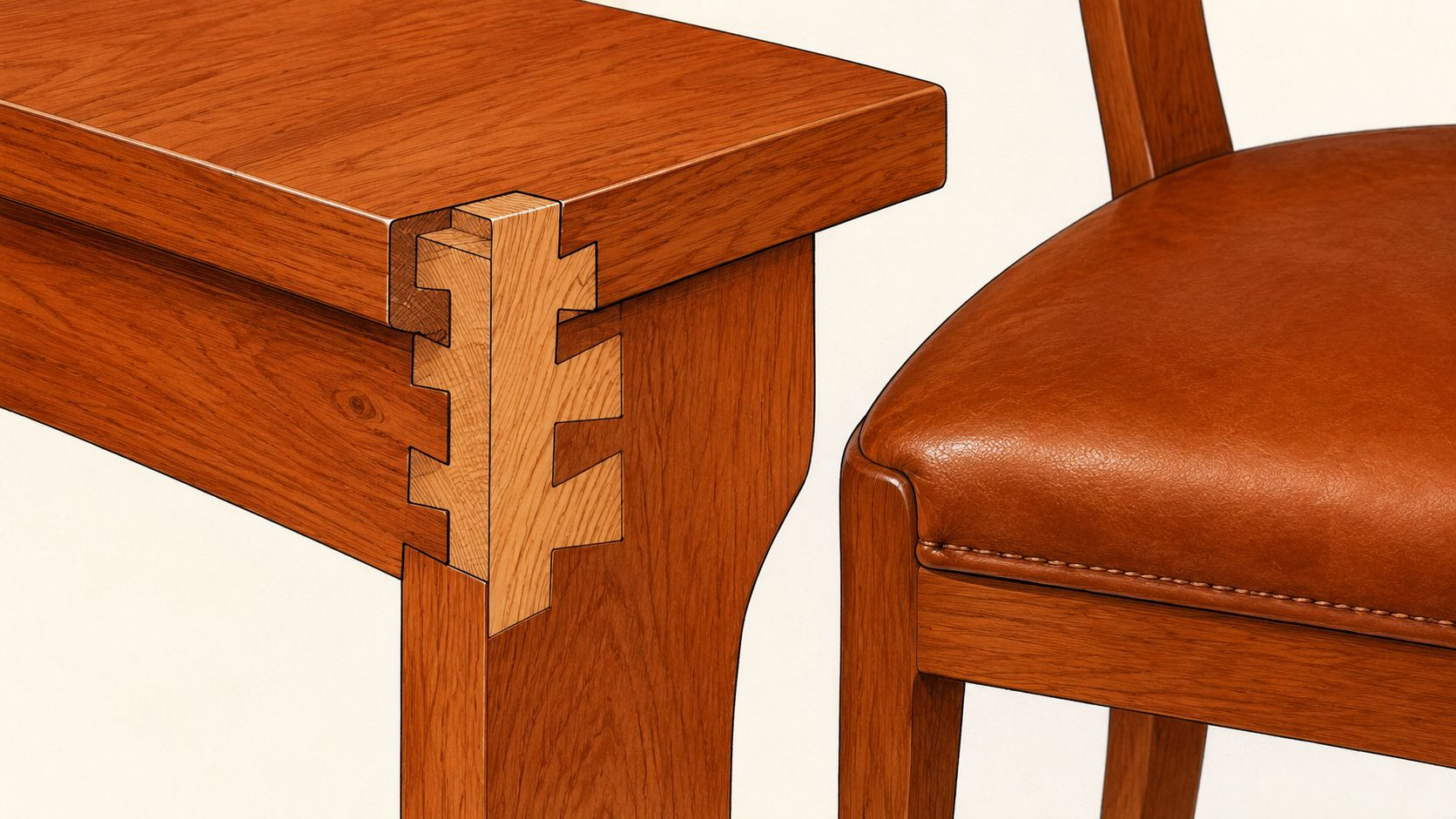
Construction is where good and great separate quickly. A dining set may look similar from across the room, but inside the build there's a major difference between time-tested joinery and shortcut assembly.
A few signs of stronger construction include:
- Mortise-and-tenon connections: These help table bases and chair frames stay stable over time.
- Dovetail joinery in case pieces: Buffets, sideboards, and drawers with dovetail construction usually signal more careful workmanship.
- Tight, clean fit: Gaps, wobble, and uneven alignment suggest weaker execution.
A dining chair reveals quality faster than almost any other piece. If it feels rigid in the right way, balanced, and quiet when shifted, the construction is often telling a good story.
Finish matters just as much. A hand-applied or carefully layered finish tends to have more depth, more touchable texture, and better visual movement across the grain. It doesn't just color the wood. It works with the wood. That's one reason heirloom furniture often becomes more appealing over time. Small signs of use can add character instead of merely looking worn.
True high end dining room sets don't depend on trend language. They earn their place through build quality that can still be appreciated after years of use. That's the standard worth learning before a buyer ever starts comparing styles.
Amish Hand Crafted vs Premium Branded A Value Comparison
There are two common paths into better dining furniture, and both can make sense. One leans into traditional solid-wood craftsmanship. The other leans into design flexibility and made-to-order coordination. The right choice depends on what the household values most.
Two strong paths to quality
Amish hand-crafted dining furniture usually appeals to buyers who highly value wood integrity, old-world joinery, and long-term ownership. These sets often feel grounded and substantial. They're the pieces people buy when they want the table to become part of family life for decades, not just for the next stage of the home.
Premium branded dining collections often attract shoppers who want more control over the final look. They may offer broad customization across table shapes, finishes, chair styles, and storage pieces. For homeowners balancing interior design goals with function, that flexibility can be the deciding factor.
Neither route is automatically better. The better route is the one that matches the buyer's priorities.
For shoppers in Michigan exploring the solid-wood side of the category, Amish furniture in Michigan gives a useful view of what hand-crafted construction looks like in practice.
High End Dining Set Comparison
| Feature | Amish Solid Wood | Premium Brands (e.g., Canadel) | Mass-Produced Furniture |
|---|---|---|---|
| Primary strength | Material integrity and traditional craftsmanship | Broad customization and coordinated design | Lower upfront commitment |
| Construction feel | Dense, substantial, hand-crafted | Refined, engineered, style-driven | Often lighter and less substantial |
| Best fit for | Long-term ownership and heirloom use | Buyers who want made-to-order flexibility | Shorter-term furnishing needs |
| Repair and refinishing potential | Often stronger | Varies by construction and finish | Often more limited |
| Buying mindset | Functional legacy | Personalized design solution | Immediate convenience |
The long-term value question matters here. The average American household can spend up to $12,000 over a decade replacing disposable furniture that lasts 3 to 5 years, while a single Amish dining set often costs $2,500 to $4,000 and is built to last over 50 years. That changes the conversation from purchase price to cost-per-year.
A buyer doesn't need a spreadsheet to see the difference. Replacing an underbuilt table, then replacing chairs that loosen, then replacing the storage piece that no longer matches creates a hidden cycle of spending. The heirloom route often asks for more commitment at the beginning, but less disruption later.
Worth remembering: A dining set isn't only a purchase. It's a maintenance decision, a replacement decision, and a daily-use decision.
This is also where “premium” needs a careful definition. A branded collection may be premium because it offers excellent customization, cleaner coordination across the room, and a polished design process. Amish furniture may be premium because it offers remarkable wood quality, sturdy joinery, and the reassuring weight of a piece built by hand. Those are different forms of value.
For many Southeast Michigan homes, the decision comes down to a simple fork in the road:
- Choose Amish solid wood when durability, hand-crafted character, and a legacy piece matter most.
- Choose a premium branded collection when the household wants a bespoke look with many finish and configuration choices.
- Be cautious with short-term furniture when the goal is long-term satisfaction. What feels easier now can become expensive and frustrating later.
The strongest outcome often comes from understanding that high end dining room sets aren't one category with one answer. They're a set of tradeoffs. The buyer who understands those tradeoffs usually ends up happier with the room.
The Art of Bespoke Dining Your Guide to Customization
Customization used to feel like a luxury extra. Today, it's becoming a normal part of buying better dining furniture. Many households no longer want a one-size-fits-all set if the room, the family, and the entertaining style all say something different.
Custom no longer means unusual
The category has shifted away from fixed sets toward modular dining systems. Ethan Allen's current dining guidance reflects that approach by framing the process around seating needs and room fit. It notes that round or square tables usually seat up to 4, while rectangular tables usually seat 6 to 8, and it also emphasizes mixing chair types and adding storage pieces such as buffets or sideboards. That's a useful snapshot of how modern high end dining room sets have become more personalized and less uniform.
That change helps buyers in a practical way. “Custom” doesn't have to mean complicated. It means the furniture can be matched to the room instead of forcing the room to adapt to the furniture.
One example in this category is custom solid wood dining tables, where the buyer can review options beyond what's sitting on the showroom floor.
What buyers usually get to choose
A made-to-order dining program often lets the buyer shape the room one decision at a time:
- Table shape: Round works differently from rectangular. The room's layout and the household's hosting habits usually decide this.
- Base or leg style: A pedestal can feel more open for seating, while legs at the corners create a different visual rhythm.
- Finish: The finish profoundly influences the room's personality. Warm brown, lighter natural tones, and deeper stained looks all read differently in Southeast Michigan homes depending on flooring and wall color.
- Seating mix: Side chairs, host chairs, and benches can all live in the same composition.
- Storage pieces: A buffet, sideboard, or display cabinet often completes the room and makes the set feel intentional.
Canadel is often part of this conversation because buyers want many combinations in one place, and Stressless tends to come up in other rooms when ergonomic comfort matters. That reflects a broader truth about better furniture shopping. In-stock is only the beginning. The stronger path is often made-to-order.
A common point of confusion is whether customization is only about aesthetics. It isn't. A custom edge profile can change how formal or relaxed a table feels. A bench can solve a circulation issue. A different chair silhouette can make a room feel lighter without losing seating capacity.
Bespoke dining works best when each choice solves a real problem. That's when customization stops feeling indulgent and starts feeling smart.
Planning Your Space Sizing and Layout Essentials
A beautiful dining set can still be the wrong choice if the room can't support it. Space planning is where many expensive mistakes begin. Buyers often focus on how many seats they want, but the more important question is how the room will function once people are sitting, standing, and moving around the table.
Start with the table footprint
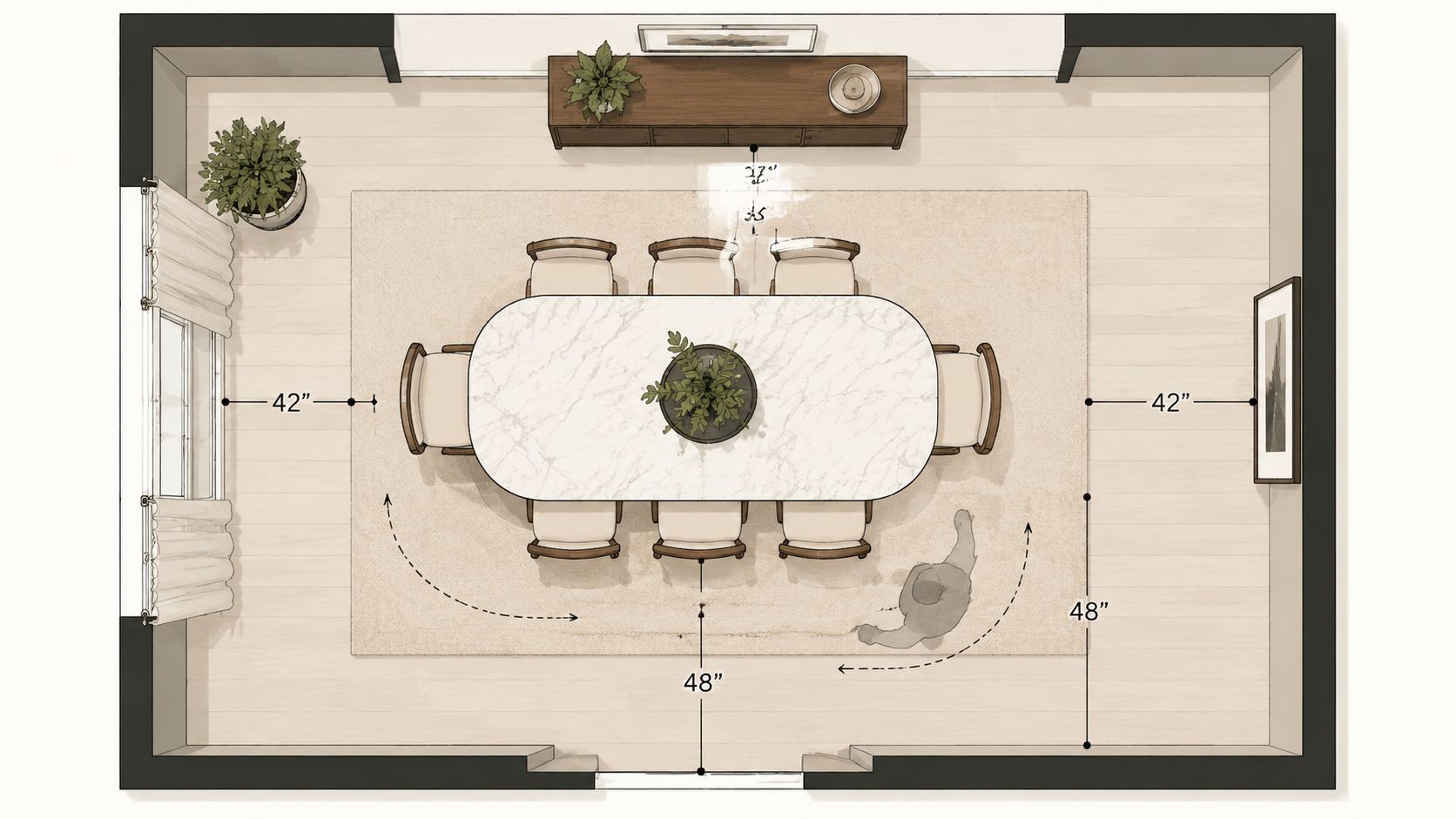
The most useful hard numbers in dining layout relate to height and width. Standard dining table height is 28 to 30 inches, a square table for 4 is typically 34 to 44 inches wide, and a rectangular table for 6 is typically 36 to 40 inches wide. Those measurements are a starting point for room planning, not a guarantee that the set will fit comfortably (Dimensions dining table size reference).
The room has to do more than hold the table. It also has to allow chair pull-back and walking space. That's where many online purchases disappoint. On paper, the table fits. In practice, the room feels pinched once chairs are occupied.
A simple measuring routine helps:
- Measure the room itself. Include wall lengths, windows, doorway swings, vents, and any nearby traffic path.
- Mark the table footprint on the floor. Painter's tape works well for this.
- Add chair space around it. This reveals whether the room still feels open.
- Walk the route people will use. The main pathway matters more than a perfect centered diagram.
How to avoid a crowded dining room
Some layouts look balanced but don't feel comfortable. A square table can be ideal in a compact space. A rectangular table may be better in a longer room. Round tables can soften a room with many hard lines and help conversation feel easier.
A dining room should never make guests negotiate every movement. The best layout feels natural before anyone thinks about it.
Storage matters too. If a buffet or cabinet is part of the set, buyers should account for its doors, drawers, and working clearance. That piece isn't just decoration. It needs breathing room.
For homeowners building out a full entertaining zone, details beyond the table can shape the room's usefulness. A drinks station, serving surface, or adjacent gathering area often improves flow during gatherings. For ideas on how a dedicated beverage area can support entertaining, this home bar and gifting guide offers practical inspiration that connects well to dining-room planning.
A few planning reminders help prevent regret:
- Choose shape before style: The right shape solves more problems than the right stain.
- Respect movement paths: The most attractive set in the wrong footprint will always feel off.
- Think beyond dinner: The dining room may also handle paperwork, projects, and casual conversation.
- Use storage intentionally: A sideboard should support serving, not block circulation.
Good layout makes a dining set work. Great layout makes the whole room feel calmer.
Budgeting for a Lifetime Investment and Financing Options
Sticker shock usually isn't just about price. It's about uncertainty. Buyers can accept that hand-crafted furniture costs more than short-term furniture. What unsettles them is not knowing how much specific custom choices might change the final number.
Why buyers misread custom pricing
That anxiety is more common than many people realize. A J.D. Power study found that 42% of high-end furniture buyers in markets like Ann Arbor overestimate the cost premium of custom solid wood by 30 to 50%, which causes many of them to avoid it even when financing options could make the purchase manageable.
That matters because customization often sounds more expensive than it really is. Buyers may assume that every finish change, edge detail, or chair substitution pushes the order into a completely different budget category. In reality, the actual gap between standard and customized can vary widely by program, material, and build.
Custom pricing feels intimidating when the process is vague. It becomes much easier once the buyer can see which decisions affect cost and which ones mostly affect look.
The same mindset shows up in other home categories. Window treatment shoppers often face a similar question when evaluating staged payments for a larger design purchase, and this guide to payment plans for window coverings is a useful example of how financing can turn a large project into a planning exercise instead of a cash-only decision.
A calmer way to budget
A better budgeting approach starts with priorities, not panic.
- Separate must-haves from nice-to-haves: Wood species, size, and seating count usually matter more than decorative extras.
- Ask for line-by-line clarity: Buyers feel more confident when they can see what a finish upgrade or design change does to the order.
- Think in lifespan, not only purchase day: Heirloom furniture often makes more sense when viewed over years of use.
- Use financing strategically: Furniture financing options can help spread a made-to-order purchase into manageable monthly planning rather than forcing a compromise on quality.
This is one place where Tyner Furniture enters the picture in a practical way. The store offers special financing and a Low Price Promise, which can lower the barrier for buyers who want a custom or hand-crafted piece without paying all at once. That doesn't make every dining set inexpensive. It does make a thoughtful purchase easier to plan.
Budgeting for high end dining room sets works best when buyers stop asking only, “What does it cost today?” and start asking, “What does this choice save, prevent, or improve over time?” That shift tends to produce better furniture decisions and far fewer regrets.
Your Next Steps to the Perfect Dining Room
The best dining room isn't the most formal one or the most expensive one. It's the one that belongs in the home. It supports daily life, feels welcoming when guests arrive, and still looks right after trends move on.
A room that works now and later
That usually means choosing with patience. Materials matter. Construction matters. Customization matters. So does scale. Buyers who slow down and assess those pieces separately tend to make stronger choices than buyers who shop by appearance alone.
For Southeast Michigan households, there's also a local trust factor that shouldn't be ignored. A store with roots in the community since 1957 brings a different kind of continuity to the process. That matters when buyers want guidance on dining, but also when they're furnishing the rest of the home, from the home office to outdoor spaces.
A dining purchase also rarely lives in isolation. It often arrives during a larger home update that includes flooring, cabinetry, lighting, or a kitchen refresh. For readers thinking in that wider, whole-home way, this renovation financing guide focused on home value can help frame how furniture and remodeling decisions sometimes work together.
The final step is simple. Test the furniture with the same care used to choose it. Sit in the chair long enough to notice the back angle. Touch the finish. Pull the chair in and out. Stand beside the table and picture a full holiday meal, a quiet weeknight dinner, and an ordinary Tuesday with mail spread across the top. That's how the right set usually reveals itself.
For anyone ready to narrow the search, Tyner Furniture offers a practical next step. Browse the online Quick Specs for special-order possibilities, or visit the Ann Arbor showroom on South State St. for a sit test and a closer look at what hand-crafted wood, bespoke options, and long-term value really feel like in person.