Mattress Financing Options: How to Choose the Right Plan


Standing in a mattress showroom or tapping through checkout online, it's easy to feel cornered by payment plans that all sound friendly. One banner says low monthly payments. Another says no interest. A third promises easy approval, but the core question is simple: what will this mattress cost over time, and does the plan protect a long-term sleep investment or pad the total? That's the lens to use, especially if the goal is a durable bed that supports health, not just a quick approval at the register.
Mattress purchases are a good place to slow down because they sit in that awkward middle ground between comfort and necessity. A new bed affects sleep quality, body support, and how long the purchase feels useful, which is why people often look at a bed replacement schedule before they even start comparing financing. The smartest buyers think in cost-per-year, not just payment size, and that mindset keeps a fancy promotion from turning into an expensive regret.
Tyner Furniture has been part of Southeast Michigan since 1957, and that long local legacy matters because mattress shopping is rarely just about one item. The same showroom that handles sleep systems also covers the Home Office and Outdoor Spaces, so buyers who want a coordinated home can think beyond a single transaction. That broader perspective is useful when a mattress is part of a bigger home investment.
Why Mattress Financing Deserves a Closer Look
A family walks into the Ann Arbor showroom, likes a mattress with a better support feel, and then sees three payment paths at once. One looks simple. One sounds flexible. One barely asks for anything upfront. The trap is that they all can move the sticker shock around without changing the cost.
That's why financing needs a closer look before a buyer signs anything. Consumer financing is no longer a side feature in this category, it's mainstream. The CFPB reported that five BNPL lenders originated 180 million loans totaling $24.2 billion in 2021, then 335.8 million loans totaling $45.2 billion in 2023 CFPB BNPL market report. That scale explains why mattress retailers now treat payment plans as part of the normal purchase conversation, not as an exception.
Why the monthly payment can fool people
A low monthly payment is appealing because it feels manageable in the moment. The problem is that it can hide a longer timeline, a deferred-interest deadline, or a lease structure that costs much more than the bed itself. The shopper sees comfort today, but the budget carries the burden later.
Practical rule: if the payment plan changes the mattress decision more than the mattress itself does, the financing is doing too much work.
A good mattress should fit the sleeper first, then fit the budget second. That order matters. A buyer who wants help choosing the right product can use a guide like Tyner's mattress selection overview to think about support and comfort before getting distracted by checkout language.
The Main Mattress Financing Options Explained
Mattress financing options are not one category. They are a mix of very different products, and each one shifts the cost in a different direction. Some are built for strong credit and disciplined payoff. Some widen access. Some get the mattress home fast while making the total bill heavier later.
Mattress Financing Options at a Glance
| Financing Type | Typical Terms | Credit Needed | Best For |
|---|---|---|---|
| Store credit card with promotional no-interest period | 0% to 36% APR, terms from 3 to 60 months depending on program and promotion | Usually fair to strong credit, approval required | Buyers who can pay on schedule and want a promotional window |
| BNPL installment plan | Often 3 to 24 months, with short installment schedules | Varies by program, often lighter underwriting | Shoppers who want smaller payments and a clear short-term payoff |
| Personal loan | Fixed monthly payments over a set term | Credit and income review | Buyers who want a predictable payment and full cash price upfront |
| Lease-to-own or rent-to-own | Payments continue until ownership terms are satisfied, total paid can be much higher | Often easiest approval | Shoppers who need access now and have limited credit options |
| Home equity financing | Longer repayment structure tied to the home | Stronger borrower profile, home equity required | Larger purchases where a buyer wants a lower payment and has equity available |
A practical consumer guide can help shoppers compare short-installment offers without getting pulled in by checkout language. The BNPL bed finance guide is useful for that, because it shows how installment wording differs from a true loan and why the final cost still matters.
What each option really does
Store card promotions work best for buyers who can qualify and who have a clear payoff plan before the offer changes. The benefit is simple. If the balance is gone on time, the promotion does what it promised.
BNPL splits the purchase into smaller pieces and can feel cleaner at checkout, but the short repayment window leaves little room for mistakes. It is a fit for buyers who know exactly what they can cover each month and who will not let the schedule slip. Personal loans separate the financing from the store, which usually makes the structure easier to compare, though the borrower still needs to check the full repayment amount.
Lease-to-own is the one to treat with caution. It can put a mattress in the home quickly, but the final total often climbs well beyond the shelf price once fees are added. That is the trade-off, and it is a steep one.
A buyer with solid credit should usually start with a promotional installment plan first, then compare the total paid across every option. Lease-to-own belongs near the bottom of the list, after the cheaper paths have been checked.
True 0% APR Versus Deferred Interest Promotions
The fine print on mattress financing is where people either keep their money or give it away. A true 0% APR plan keeps interest at zero for the full term. A deferred-interest promotion can look just as friendly at checkout, but if the balance is not paid in full by the deadline, interest can be charged back to the original purchase date.
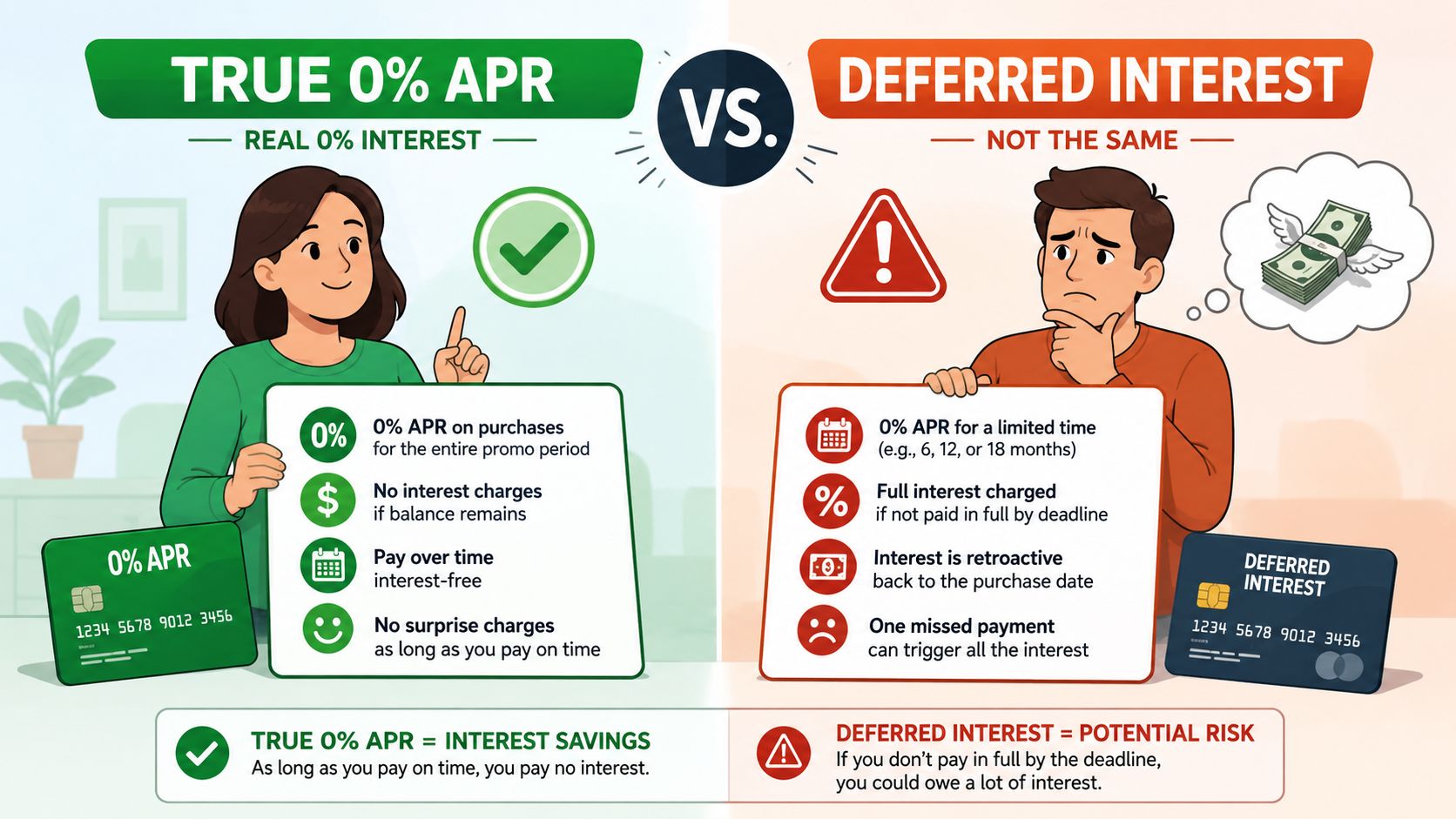
That difference matters because a low monthly payment can hide a hard deadline. A plan with 0% APR for 12, 18, or 24 months gives the buyer a clear payoff path if the payment fits the household budget. A deferred-interest plan becomes expensive the moment the balance misses the cutoff, and that retroactive interest can wipe out the deal very fast. The financing page from an online mattress retailer makes the same point in plain terms, the offer only stays cheap if the balance is gone on time.
The real risk is the deadline
A modest payment can still turn into a costly mistake. If the buyer sets the payment too low, one missed payoff date can erase the savings that made the offer look attractive in the first place. The mattress starts out as a comfort purchase and ends up as a finance lesson.
The safer way to judge these promotions is straightforward. If the offer is true 0% APR, every on-time payment goes straight toward principal. If it is deferred interest, the budget needs a hard stop date, not a hope that the promotion will work itself out.
What to ask before signing
- Is the APR zero for the full term? If yes, interest stays zero the entire time.
- What happens if the balance is still open on the final day? That answer tells you the main risk.
- Is there any retroactive interest charge? If so, treat the offer as high risk.
- Can the purchase be paid off early without penalty? Early payoff flexibility protects the buyer.
For readers who want a refresher on buying for comfort and support before sorting out payment terms, Tyner's mattress buying tips are a sensible place to start with fit first and financing second.
How to Evaluate Any Financing Offer Step by Step
A financing offer deserves the same hard look every time, whether it is printed on a showroom tag or hidden in checkout text online. Start with the total cost. Read the rules next. Then decide whether the payment still fits after the excitement fades and the bill keeps coming.
Step 1, compare the total paid
The monthly payment is not the number that matters most. The number that matters is what leaves the household over the full term if every payment is made on time, and what happens if it is not. A mattress budget should support sleep, not turn into a second bill in disguise.
Ask for the full amount you will pay by the end of the term. If the promotion adds fees, deferred interest, or a required payment schedule that is tighter than your household can handle, the offer is already weaker than it first looked. The sticker may be easy to live with, but the total cost tells the truth.
Step 2, find out how the credit pull works
A shopper should ask whether the application creates a hard pull or a soft pull, because the credit impact can vary by lender and structure. A hard inquiry can matter if a borrower is applying for several forms of credit around the same time. A soft pull is usually easier on the credit file, but the approval terms still deserve scrutiny.
Do not let a quick approval distract you from the fine print. The credit check tells you how the lender reviews the application, but it does not tell you whether the financing is a good long-term fit.
Step 3, check payoff rules and fees
Watch the exit terms, not just the entrance terms. Early payoff penalties, late fees, and deferred-interest deadlines are where the damage usually shows up.
A financing plan can look fair at signing and still be a poor fit if the payoff rules are rigid. That is especially true when the best promotion depends on a minimum purchase threshold, because the shopper may be pushed into a larger order than planned just to qualify.
The safest move is to ask how the balance is handled if the promotion runs out before the purchase is paid off. If the answer includes retroactive interest, treat the offer with caution. That kind of structure can erase the savings fast.
Step 4, match the payment to the actual budget
The monthly payment has to fit alongside rent, utilities, groceries, and the rest of the home budget. If it only works by assuming perfect timing and zero surprises, it is too tight. A good mattress financing decision leaves breathing room.
That means the payment should fit the actual budget, not the hopeful one. If the offer forces the household to squeeze every month just to stay current, the mattress is costing too much, even if the approval was easy.
For buyers who want a deeper framework before they head into a showroom, Tyner's mattress buying advice gives a practical checklist for balancing comfort, support, and purchase timing. The smarter move is still to think like a long-term owner, not a payment-plan optimist.
Financing Your Investment in Quality Sleep at Tyner Furniture
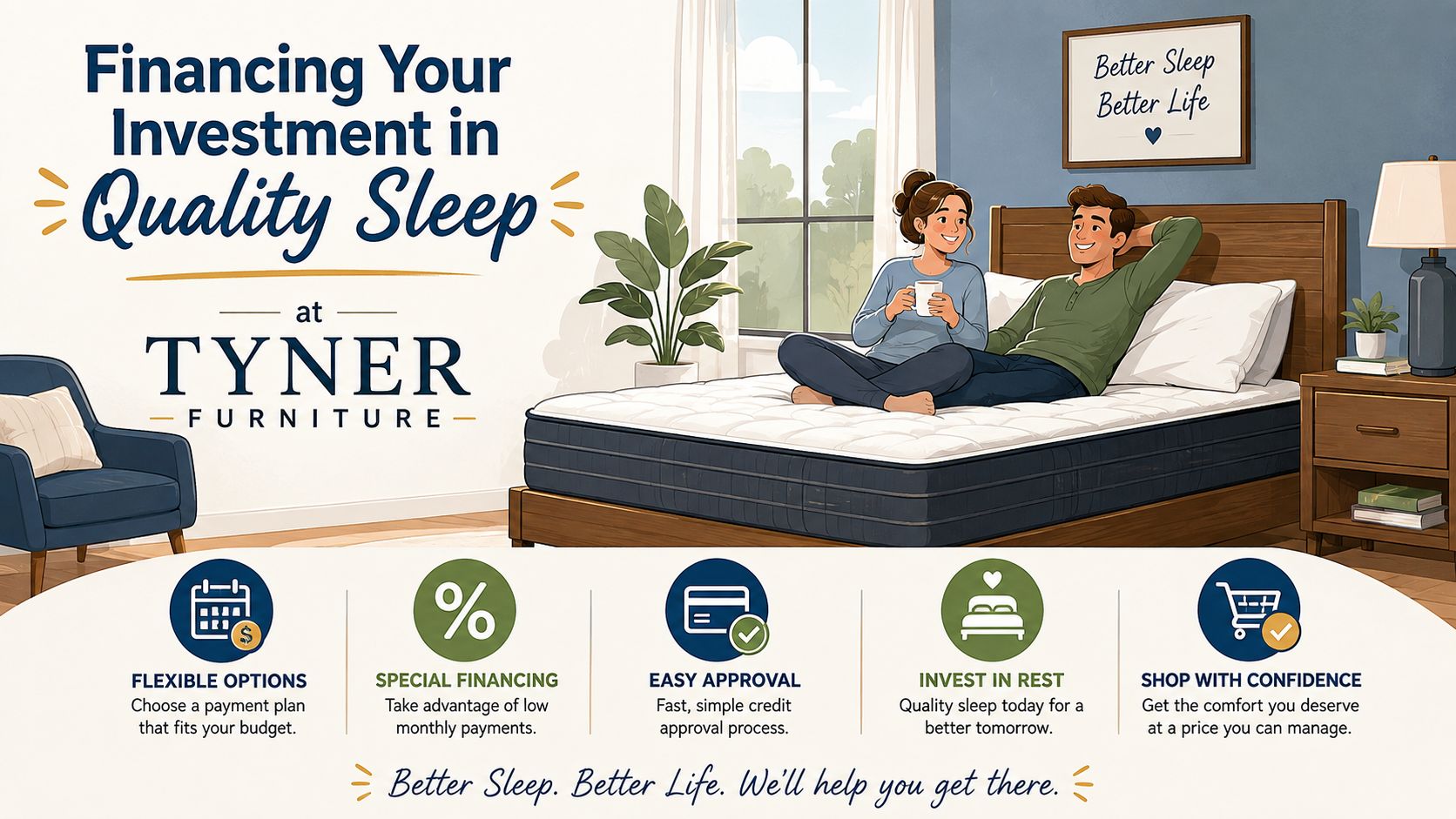
A mattress purchase should be financed as investment, not as a throwaway expense. That matters even more when the bed is part of a larger room plan with heirloom-quality furniture, custom details, or a design you expect to live with for years. The financing should support that choice, not push you into a thinner mattress just because the monthly payment looks smaller.
Tyner Furniture's special financing is built for shoppers who want quality and still need monthly control. The store's Low Price Promise matters for the same reason, because flexible payments only help when the product price stays fair too. Buyers can use financing on showroom pieces and on custom orders, which helps when the right mattress comes from a made-to-order setup instead of an off-the-shelf compromise. For the full terms and current options, see Tyner Furniture financing.
Why financing works better when the product lasts
A mattress that keeps its support longer is easier to defend on a cost-per-year basis. That is the measure of sleep value. If a buyer is already paying for a better sleep surface, the financing should preserve that decision instead of compressing it into the smallest monthly number possible.
Tyner's broader showroom setup helps here too. The same place that handles mattresses can also coordinate interior design across the home, so the purchase does not feel isolated. That gives shoppers more room to think about longevity, craftsmanship, and how the bed fits with the rest of the house.
For shoppers weighing financing terms against the role a mattress plays in long-term health, Tyner's health-focused mattress guide is a useful reminder that sleep quality belongs in the decision. Financing should support that choice, not dilute it.
When Easy Approval Is Not the Best Deal
Easy approval can save a thin-file shopper from going without a bed, but approval speed does not make a deal smart. If the only path is lease-to-own or another no-credit-check structure, the buyer should look hard at the full cost and the ownership terms, not the monthly payment alone. Access has value. Access at a steep markup still drains the budget.
Retail credit is expanding for subprime consumers as more sellers move online, but wider access does not automatically mean better value for the household budget American Banker. The menu is bigger, yet some of the choices cost far more than they should.
When a fallback option can make sense
A no-credit-check plan can work as a short bridge if the alternative is sleeping on a mattress that is already worn out and no longer supporting the body well. It can also make sense when the buyer expects to improve credit soon and already has a realistic payoff plan. Use it as a bridge, not a habit.
The right question is whether the short-term convenience protects sleep quality without creating a long-term money problem. If the answer is yes, the fallback may be justified. If the answer is no, walk away.
When it's the wrong call
- If the total paid is far above retail. Lease-to-own totals can run 80% or more above the store price, and that kind of markup destroys value.
- If the household budget is already tight. Another payment can crowd out essentials.
- If the plan has confusing buyout rules. Ambiguity usually favors the lender.
- If the buyer can wait and save a larger down payment. That often opens better financing later.
A shopper rebuilding credit may do better by finding a co-signer, waiting for a stronger approval profile, or saving longer for a larger upfront payment. Those choices are less exciting than instant approval, but they can protect far more value over time. That matters even more for a purchase that should last.
High-consideration purchases demand that same patience. This explanation of high-consideration furniture buying makes the point clearly, the right purchase is rarely the easiest one.
Your Mattress Financing Decision Checklist
Before you sign, look at the total cost, not the monthly payment banner. A low payment can hide a bigger bill later, so ask whether the offer is true 0% APR or a deferred-interest promotion. Those are different products, and only one keeps the cost honest if you pay on schedule.
Ask one direct question about the credit pull before you apply. A hard inquiry can matter if the household is already planning another loan soon, while a soft pull gives you a cleaner look at eligibility without the same hit to your credit file.
Build the payment around your real budget, not the advertised approval amount. A good rule is to keep the mattress payment comfortably below the amount you could cover without touching groceries, utilities, or savings. If the numbers feel tight on paper, they will feel worse after the first billing cycle.
Then judge the mattress itself. Financing makes sense only if the product is worth keeping for years of steady sleep support, not just because the approval was easy. That is the right standard for the kind of sleep investment described in why a high-quality mattress matters for long-term health. Tyner Furniture's special financing, Low Price Promise, and commitment to hand-crafted quality since 1957 fit that long-view approach.
For shoppers in Ann Arbor and across Southeast Michigan, the next move is simple. Test the mattress in person and ask blunt questions about payment terms, late fees, and payoff timing. A sit test on South State Street tells you more than a checkout banner ever will, and the online Quick Specs can help with special orders when a custom fit is the better choice.
Tyner Furniture pairs special financing with a Low Price Promise, so buyers can compare premium mattresses and sleep systems without losing sight of total value. Visit Tyner Furniture to browse options, then stop by the Ann Arbor showroom for a sit test and a straight answer on which financing plan protects your budget.