Distressed Wood Dining Table: Your Complete Guide for 2026


The first thing many shoppers notice is how two dining tables can look almost identical across a showroom floor, then land in completely different price brackets. One has the weight, grain, and worn edges that feel intentional. The other looks merely old. That difference matters, because a distressed wood dining table is supposed to feel like a piece with history, not a piece that's already been mistreated.
For families in Ann Arbor and across Southeast Michigan, the primary question is usually simpler than the style debate: will this table hold up to weeknight dinners, homework, spills, and Sunday meals without looking tired in a year? That's the right question. A dining table earns its keep by how it performs in an actual home, not by how photogenic it looks under showroom lights.
What a Distressed Wood Dining Table Really Is
A shopper standing between two nearly matching tables usually wants the truth fast. One has crisp edges and a clean finish. The other has worn corners, light rub-through, and little age marks that make it feel lived-in on purpose. That second table isn't damaged. It's been finished that way on purpose, and that distinction is the whole point.
Distressing is an intentional, hand-done finishing step that adds age-like marks such as dents, scratches, rub-through, and worn corners. One furniture guide notes that this extra finish work usually takes more labor than leaving the piece undistressed, which is why a distressed table often costs more to make, not less to make. That labor shows up in the final look, especially when the distressing is subtle instead of heavy-handed. Furniture Cart's distressed furniture guide
Intentional aging is not the same as wear and tear
Real distressing should look controlled. The worn edges should make sense with the shape of the table, and the marks should feel like they belong to the design. Random damage does the opposite. It looks accidental, because it is.
Practical rule: if the finish looks inconsistent in a sloppy way, that's wear. If it looks balanced, layered, and deliberate, that's craftsmanship.
That's why this style has stuck around in modern farmhouse and transitional homes. It softens a room without making it fussy. It also adds visual texture, which helps a dining space feel warmer and more grounded. In a house where the dining table gets used hard, that lived-in character can be an asset instead of a flaw.
The best way to think about a distressed table is this: it's not “old furniture.” It's hand-crafted furniture that has been built and finished to suggest age, while still offering the structure and function of a current dining piece. The value lives in the finish work, but the long-term value still depends on what's underneath.
How a Solid Wood Dining Table Is Built
A distressed top can hide surface wear, but it cannot rescue weak construction. Buyers should read a table the same way they would read a house. A solid wood frame holds up more like a brick home. A veneered piece behaves more like a painted facade. Both can look good at first, but they do not age the same way.
Read the build before you admire the finish
Start with the material. Solid wood means the major parts are made from real hardwood rather than a thin decorative layer over another substrate. That matters for longevity, refinishing, and the way the table feels in daily use. Then look at the joints. Dovetails, dowels, and especially mortise-and-tenon construction tell a different story than simple panel assembly.
Clear rule: if the top is distressed but the structure underneath is flimsy, the table may look good and still disappoint later.
That is why structural details matter as much as style. A well-made dining table should feel steady when someone leans on it, sets down a heavy serving dish, or drags in chairs after dinner. Weight often helps with that sense of steadiness. A retailer may list a distressed brown table with mixed wood construction, a multi-step lacquer finish, mortise-and-tenon joinery, and a heavier overall build, and those are the kinds of specs that point to a sturdier table in daily use.
For shoppers who want a closer look at joinery, start with Tyner Furniture's mortise-and-tenon construction guide. That kind of joinery is the detail that separates an heirloom table from something that just fills a room.
Finish matters too, especially once the table starts dealing with real household messes. A distressed surface with a limewashed look can soften a room, and a Newline Painting limewash guide shows why that muted, layered appearance works so well on walls and other surfaces. On a dining table, the point is different. The finish has to handle spills, hot plates, and repeated wiping without making the surface feel precious. That is where the build underneath starts to matter more than the decorative aging on top.
A simple checklist helps in-store:
- Frame first: check whether the visible structure is solid hardwood, not just a decorative surface.
- Joinery second: look for mortise-and-tenon or other time-honored joints rather than weak shortcuts.
- Weight third: a heavier table often feels calmer and more stable in daily use.
- Finish last: only after the build checks out should the distressed look enter the conversation.
When the build is right, distressing becomes a style choice. When the build is weak, distressing is just camouflage.
Wood Species and Finish Choices That Match Real Life
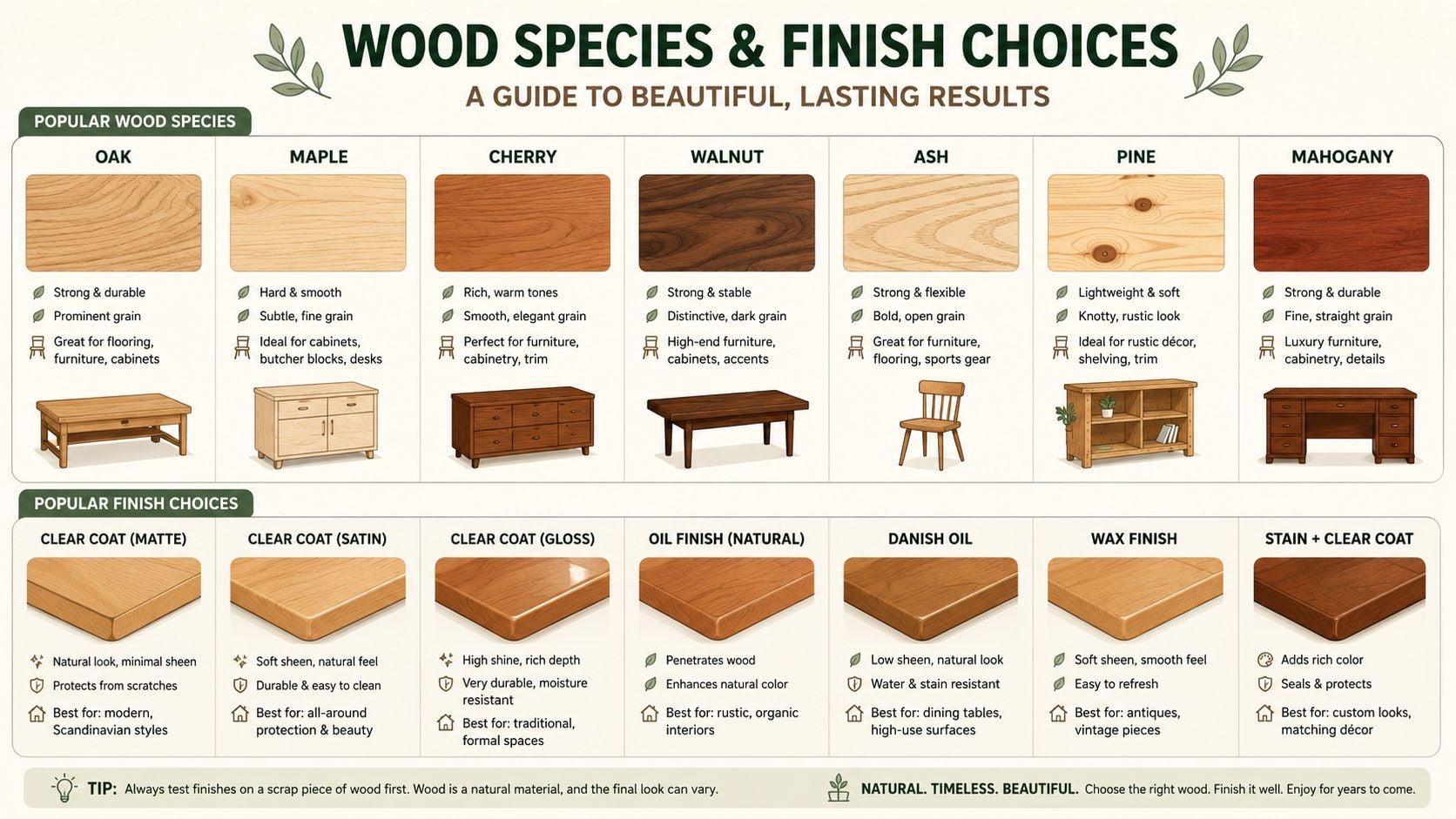
The wood species underneath a distressed finish changes how the table feels in the room and how it ages. Oak looks more open and textured. Maple tends to read smoother and quieter. Cherry brings warmth that deepens over time. Walnut feels rich and more dramatic. None of those choices is automatically better. The right one depends on how the table will be used, how much visual movement the room can handle, and how much character the family wants to see every day.
Match the species to the household
The finish system matters just as much. A matte oil or wax can keep the surface feeling natural, but it usually asks for more thoughtful upkeep. Lacquer gives a more protected surface. A tougher finish such as conversion varnish is often chosen when the table is expected to handle frequent use. In practice, the topcoat affects appearance, moisture resistance, and cleanability far more than the distressed look itself, which is why finish choice should never be an afterthought.
The table below gives a practical way to think about the trade-offs.
| Distressed Wood Species and Finish Match-Up | Feel and Grain | Distressing Character | Best Finish Pairing | Best Household Fit |
|---|---|---|---|---|
| Oak | Open grain, strong texture | Distress marks blend naturally into the grain | Protective lacquer | Busy families who want visible character |
| Maple | Smooth, even feel | Distress reads more subtle and refined | Matte protective finish | Buyers who want a cleaner, quieter look |
| Cherry | Warm, fine-grained, develops depth | Light distressing feels elegant instead of rugged | Clear protective finish | Homeowners who want the table to age gracefully |
| Walnut | Rich tone, more dramatic visual presence | Distress can look bold without getting noisy | Durable topcoat with depth | Frequent entertainers and design-focused rooms |
For a broader hardwood comparison, Tyner Furniture's wood furniture guide is a useful way to think about long-term durability and style fit.
The most practical shopper question is not “What looks pretty?” It's “What will still look intentional after years of meals, homework, and guests?” That's where a finish and species combo earns its keep. A made-to-order table should match the household, not just the mood board.
The visual language of finish matters too. A light limewash treatment, like the one explained in Newline Painting's limewash guide, shows how a surface treatment can shift a room from flat to dimensional. The same idea applies to dining tables. A finish should change the feel of the wood without fighting the wood itself.
Pro tip: choose the species first, then pick the finish based on how much wiping, serving, and spill control the table will handle.
Authentic Distressing Versus Factory Faux Distressing
Not every distressed table tells the same story. Some are hand-finished by skilled furniture makers. Others are mass-produced to look worn in a way that feels repetitive once a shopper starts paying attention. The difference shows up in the edges, the depth of the marks, and the way the table feels when someone runs a hand over the surface.
What to notice in person
Authentic distressing usually looks irregular in a good way. The rub-through isn't copied from one corner to another. The wear feels tied to the lines of the piece. Factory-applied faux distressing can still be attractive, but it often repeats patterns and can look too even once several similar tables are placed side by side.
That's not just an appearance issue. Buyers are also paying attention to material transparency, construction, and indoor-air-quality concerns. The EPA continues to highlight that people spend about 90% of their time indoors, which is why finish chemistry and off-gassing matter in enclosed dining spaces. A distressed table shouldn't just look rustic. It should be honest about what it's made from and how it's finished. EPA on indoor air quality and time indoors
The first question to ask is simple, is the distressing part of the build plan or just surface decoration? Then ask what sits underneath, solid wood, veneer, or a mixed build. Buyers should also ask how the topcoat was applied and whether the finish is meant to handle frequent cleaning without looking patchy over time.
If the table is part of a custom path through a trusted local retailer, that guesswork drops fast. The shopper can see samples, confirm the distress level, and avoid buying a piece that only looks right online. A local legacy showroom makes those questions easier to answer face to face, especially when the table needs to work for family meals rather than staged photos.
A distressed finish should help a table age with dignity, not hide shortcuts in the build.
The most useful mindset is this. Surface weathering is only meaningful when the structure underneath can carry the table for years. Otherwise, the aged look becomes a distraction.
Sizing, Shape, and Distress Level for Your Room
A dining table has to fit the room before it flatters the decor. Measure the wall span, check chair pull-back space, and leave enough room for people to move without squeezing past corners. Shoppers usually start with style and only later discover the shape is wrong. That order creates regret.
Measure the room as it gets used
Length should work with the longer wall or the main axis of the room. Width needs enough breathing room so chairs can slide back without hitting aisles or traffic paths. Height should match standard dining seating so elbows and laps feel natural.
In a narrow room, a rectangular table usually makes the best use of space because it keeps the footprint efficient. A round table can soften traffic flow in smaller spaces. A trestle base helps when leg clearance matters and the family wants a stronger visual anchor.
Tyner Furniture's guide to table shapes and seating arrangements is a useful reference for anyone comparing those shapes in a real room.
For distressing, the word to watch is controlled. A light level leaves corners and edges softly worn, with small dings that read as character instead of damage. A heavier level brings more visible wear, which can suit a room that wants a reclaimed look but can feel too rough in a formal setting. The right sample should show the exact distress pattern before production, because that keeps the final table aligned with the room instead of surprising the buyer.
Use the room first, then the style
A rough-fit rule works well in the showroom. Small, open rooms usually call for a lighter visual profile and less aggressive distressing. Busy family rooms do better with a tougher finish and a distress level that hides everyday scuffs without looking battered. Formal dining spaces need subtler distressing so the table reads elegant, not overly rustic.
A table that is too large feels bossy. A table that is too small feels accidental. The sweet spot is a piece that leaves room for chairs, serving dishes, and people moving around the table without sidestepping corners.
Room-fit rule: if the table forces the room to work too hard, it is the wrong size, even if the finish is perfect.
The best buyer leaves the measurement conversation with a tape-measure number, a shape preference, and a distress level they can describe clearly without guessing. That is where a custom build path matters. A Tyner Furniture custom dining table through the Canadel or Amish programs lets the shopper match shape, size, and distress level to the room instead of forcing the room to accept a stock compromise.
Everyday Care and Long-Term Refinishing
The biggest fear shoppers have is easy to understand. Will the texture trap crumbs, dust, and spills? The honest answer is that the distressing itself is not the main issue. The finish system is. Wood-finish guidance from the USDA Forest Products Laboratory notes that finishes mainly affect appearance, moisture resistance, and cleanability, so the topcoat matters more than the distressed look. That's the part that decides whether a table wipes down easily or starts looking tired after routine use.
What daily use really looks like
A household with kids doesn't need a fragile table. It needs one that handles crumbs, sticky fingers, and the occasional glass ring without drama. A properly finished distressed table should be wiped like any other dining table, with a soft cloth and a sensible routine. The distressed surface can even help disguise small marks, which is one reason many families like the style in the first place.
For broader protection advice, Tyner Furniture's wood furniture care guide is a helpful companion. The practical routine is straightforward:
- Weekly: dust with a soft, dry cloth and wipe crumbs before they get ground into corners.
- After meals: clean spills promptly so liquid doesn't sit on the finish.
- Seasonally: check for dryness, dull spots, or finish wear where plates, serving dishes, and elbows land most often.
A well-finished distressed table can age beautifully. After years of use, it should look intentional, not neglected. That's the difference between character and damage.
What refinishing looks like later
Refinishing depends on how the finish has aged. If the surface just looks dull, a light buff or reconditioning step may be enough. If the topcoat is worn through or stained, a full sand-and-restain becomes the smarter path. That's the kind of decision a furniture professional should help guide, because the wrong approach can erase the distressing that gave the table its personality in the first place.
The long-term goal is simple. Keep the table looking like it belongs in the home, not like it needs to be rescued from it.
Why a Custom Order and a Local Showroom Change Everything
A distressed table gets a lot easier to buy when the shopper can touch the finish, confirm the build, and choose the exact level of character. That's where custom ordering beats settling for whatever happens to be on the floor. In-stock should be treated as the starting point, not the finish line.
Custom beats compromise
A well-run custom path lets the buyer choose the details that matter most, leg style, edge profile, finish, and distress level. That matters because the room, the household, and the way the table gets used are never generic. A family that hosts often needs a different surface than a quiet couple who wants a softer, more formal look. A handcrafted program using solid wood and time-honored joinery also gives the table a different kind of staying power than a mass-produced alternative.
For shoppers who care about that long-life difference, Tyner Furniture's custom solid wood dining tables show how a bespoke dining piece can be built to fit both the room and the family.
The local showroom matters just as much. On South State Street in Ann Arbor, a real sit test tells the truth that photos can't. The table height feels different in person. The edge profile feels different under the forearm. The surface has a different tactile read when the grain is under your hand. That sensory check is what makes a dining table feel like an investment instead of a leap of faith.
Tyner's broader selection also matters. The range extends beyond dining into the Home Office and Outdoor Spaces, which is useful for households that want a connected look across the home. Special Financing and a Low Price Promise lower the barrier to choosing a higher-quality piece without settling for a weaker build. Since 1957, that kind of local follow-through has been part of what makes a furniture visit feel less like retail and more like guidance.

Best move: use the showroom to confirm comfort, then use the custom program to lock in the exact finish and distress level.
Styling, Pairing, and Your Next Step
A distressed table anchors the room best when the surrounding pieces don't fight it. Chairs with clean lines usually balance the texture well. A rug should be large enough that chairs stay on it when pulled out, or the room starts to feel chopped up. Lighting should sit low enough to warm the tabletop without flattening the grain.
Style it like a real dining room
Farmhouse rooms can lean into the texture with simple chairs and layered materials. Transitional rooms look best when the table is the character piece and everything else stays calmer. Modern-rustic spaces can handle a more dramatic distressed finish if the lines stay clean. The safest rule is to let the table lead and the rest of the room support it.
A buyer who wants the piece to feel heirloom-worthy should look for visual balance, not just trend alignment. The table should feel substantial when seated around it and attractive when the room is empty. That's the mark of a good dining anchor.
For anyone in Ann Arbor or Southeast Michigan who wants to compare finishes in person, the next step is simple. Visit the South State St. showroom for a sit test, or browse the online Quick Specs for special orders so the custom path starts with real information instead of guesswork. That's the fastest way to turn a style idea into a table that fits the house.
Tyner Furniture has been serving Southeast Michigan since 1957, and that long local run still matters when a dining table needs to be both beautiful and practical. For a distressed wood dining table that's built with the right construction, finish, and custom options, visit Tyner Furniture and take the next step with a showroom sit test or the online Quick Specs for special orders.