How to Choose Dining Chairs for Lasting Value


A lot of dining chair mistakes start the same way. A table looks beautiful in the showroom or online, the chairs look good beside it, and the set seems finished. Then the first holiday meal arrives, someone shifts their weight, one chair wobbles, another feels too low, and a long dinner turns into a countdown until everyone can stand up.
That's why learning how to choose dining chairs matters more than most shoppers expect. Good dining chairs don't just complete a room. They support conversation, posture, daily use, and the rhythm of family life. For homeowners in Ann Arbor and across Southeast Michigan, that decision often sits at the intersection of comfort, interior design, and long-term value.
Furniture shopping can feel crowded with options, especially when every retailer promises style and convenience. A more useful way to think about the purchase is cost-per-year. A chair that serves well through weeknight meals, celebrations, homework sessions, and game nights earns its place differently than one that only looks right for a season. For broader inspiration on how furnishings support a room's function, these residential and commercial design strategies offer a thoughtful lens on how spaces work over time.
For anyone building a dining room from the ground up, a practical starting point is this guide to designing a dining room from the start. That bigger-room perspective helps shoppers choose chairs that belong to the home, not just to a product photo.
Table of Contents
- Beyond the Look An Introduction to Choosing Chairs for Life
- Perfecting Your Fit with Pro-Level Measurements
- Matching Style Scale and the Power of Customization
- Prioritizing Ergonomics for Hours of Comfortable Dining
- Investing in Heirloom Quality Amish Solid Wood and Materials
- Your Guide to a Lifetime of Gatherings
Beyond the Look An Introduction to Choosing Chairs for Life
A dining chair has to do more than match a table. It has to welcome people in, hold up under daily use, and still feel right years from now when the room has changed around it. That's the difference between buying for the moment and buying for life.
Since 1957, families in Ann Arbor have relied on local guidance when the choices start to blur together. That long view matters. Shoppers rarely regret buying a chair that's well-built, properly sized, and comfortable through an entire meal. They often regret buying one that won the room for a minute but lost on use.
Why the quick purchase often disappoints
A chair can fail in several quiet ways. The back may hit the table at the wrong height. The seat may look generous but feel shallow. The frame may seem sturdy until it starts twisting under regular use. None of those flaws shows up clearly in a styled photo.
Practical rule: Judge a dining chair by what it will feel like after years of sitting, sliding, lifting, and gathering, not by how it looks in the first five minutes.
That's where the heirloom mindset helps. A hand-crafted chair built from sound materials, with an ergonomic fit and durable upholstery, usually costs more upfront. But cost-per-year often favors the better chair because it keeps serving instead of needing replacement.
The investment lens
A smart dining purchase usually balances four things:
- Fit: The chair must work with the table's actual dimensions, not just its listed height.
- Comfort: A good chair supports posture through dinner, coffee, and conversation.
- Craftsmanship: Joinery, wood quality, foam density, and fabric choice all affect lifespan.
- Flexibility: Made-to-order options let the chair fit the room instead of forcing the room to accept a compromise.
That's why this topic connects to the rest of the home as well. A store that helps furnish dining rooms with care often helps customers carry the same standards into the Home Office, bedroom, living room, and Outdoor Spaces. The goal isn't to fill square footage. It's to create a local legacy of rooms that work beautifully and last.
Perfecting Your Fit with Pro-Level Measurements
Measurements decide whether a dining chair feels natural or awkward. Style can be adjusted. Comfort problems caused by poor fit usually can't.
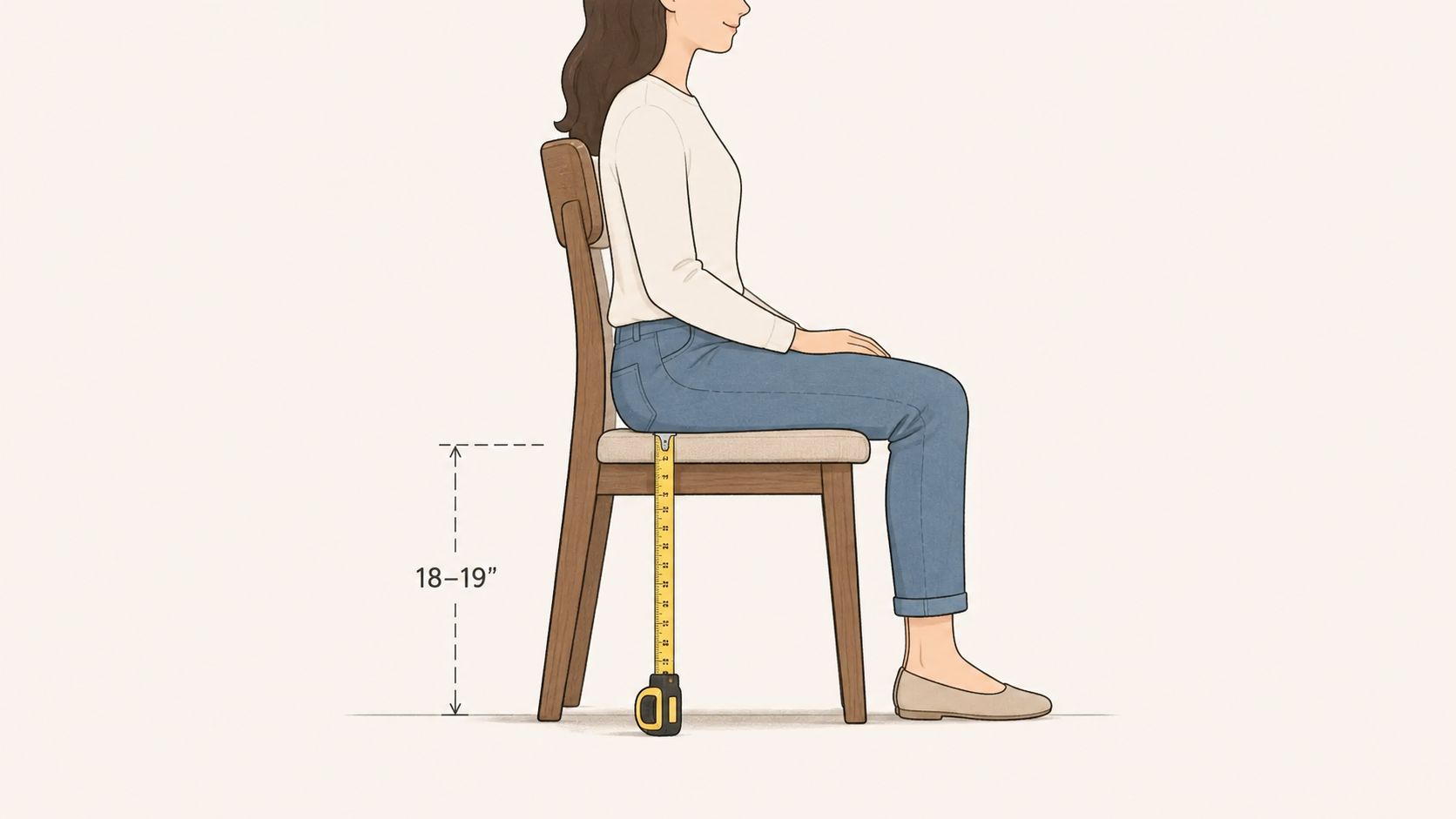
For anyone measuring a room before shopping, this guide on how to measure furniture is worth keeping open while working through the numbers.
Start with the chair and table relationship
The foundational sizing rules are clear. The ideal seat height for a dining chair is 18 to 19 inches, which pairs well with standard dining tables that stand 29 to 30 inches high and creates 10 to 12 inches of clearance between the seat and tabletop for comfortable legroom, according to Houzz's dining chair measurement guide.
That same source notes several other dimensions that matter in daily use:
- Seat depth: 20 to 24 inches
- Chair width: at least 22 inches for armless models
- Table width per person: about 24 inches
- Clearance behind each chair: at least 36 inches
- Space between adjacent chairs: at least 6 inches
- Back height above the tabletop: 2 to 4 inches
Those measurements help a room breathe. They also stop a common mistake, which is buying chairs that technically fit under the table but crowd the room once people pull them out.
The measurement most shoppers miss
Seat height gets the attention. Apron clearance is what often decides whether the chair works.
A table apron is the structural band beneath the tabletop. If it's thick or drops low, it reduces usable legroom even when the table's listed height seems standard. A chair can meet the usual height rule and still feel cramped because the user's thighs or knees meet the apron too soon.
A 2025 survey of interior design professionals found that 68% of dining chair complaints stem from hidden table apron interference, not seat height itself, and that nuance is absent from 92% of consumer buying guides, as noted in this discussion on table and chair fit.
A chair should be measured against the usable space under the table, not just the tabletop above it.
That point matters even more for taller family members, households that linger over meals, and tables that double as workspaces for crafts or homework.
A practical measuring checklist
Bring a tape measure and check the room in this order:
Measure floor to tabletop underside.
This reveals the true clearance zone the chair has to work with.Measure the seat height of the chair.
Compare it to the underside, not just the top surface of the table.Check seat depth and width.
A seat can be the right height and still feel stingy if it doesn't support the body well.Test push-in depth.
Make sure the chair slides in neatly without forcing knees into the apron.Map circulation space.
Leave the recommended clearance behind the chair so people can sit and pass through comfortably.
| Measurement | What works |
|---|---|
| Seat height | 18 to 19 inches |
| Table height | 29 to 30 inches |
| Seat-to-table clearance | 10 to 12 inches |
| Seat depth | 20 to 24 inches |
| Per-person table width | 24 inches |
| Behind-chair clearance | 36 inches minimum |
The result is simple. A chair should fit the body, the table, and the room at the same time.
Matching Style Scale and the Power of Customization
A dining chair can be the right size and still feel wrong in the room. That usually comes down to scale, visual weight, and finish harmony.

Anyone sorting through silhouettes, backs, and materials can narrow the field faster with this overview of different dining chair styles.
Scale matters as much as style
A thick-legged farmhouse table usually wants chairs with enough presence to stand beside it. A slim modern table often looks better with cleaner lines and less visual bulk. The mismatch shows up quickly. Chairs can look undersized and fussy, or oversized and crowded, even before anyone sits down.
Three details usually determine whether a pairing feels resolved:
- Visual mass: Open-back chairs feel lighter. Fully upholstered chairs read heavier.
- Leg profile: Tapered legs can slim the look. Blockier legs add weight.
- Back shape: Tall or broad backs can dominate a smaller dining space.
The right chair doesn't compete with the table. It completes its proportion.
Interior design becomes tangible. The grain of wood, the sheen of a finish, and the shape of a back all change how the room feels. The buttery feel of top-grain leather suggests one mood. The clean grain and visible weight of solid cherry wood suggest another.
In-stock is just the beginning
For many shoppers, the biggest style breakthrough comes when they stop treating the showroom floor as the final answer. In-stock is just the beginning. Made-to-order dining opens the door to a better fit in both function and appearance.
According to this overview of custom dining options from Canadel, Canadel offers thousands of combinations for dining chairs, including leg styles, table edges, finishes, and distress levels, allowing buyers to create pieces suited to their spatial and aesthetic needs.
That kind of bespoke flexibility solves real problems:
- A room needs a warmer stain to connect with existing floors.
- A table wants a lighter chair profile so the space doesn't feel heavy.
- A household needs practical upholstery in a finish that still feels refined.
- A buyer wants a made-to-order set instead of settling for a close-enough match.
Stressless belongs in that broader customization conversation too. While it's best known for ergonomic seating in other parts of the home, it reinforces the same lesson. Proper sizing and personalized comfort matter. Furniture works better when it's selected for the person and the room, not just for inventory convenience.
For Southeast Michigan shoppers visiting the South State St. showroom, the useful shift is this: don't ask only, “What's available today?” Ask, “What combination actually belongs in this dining room?”
Prioritizing Ergonomics for Hours of Comfortable Dining
A dining chair shouldn't only survive a quick sit. It should still feel good halfway through dessert, during a long conversation, or while someone stays at the table to read, work, or help with homework.

For shoppers comparing support across categories, these ergonomic seating solutions help frame what proper body support looks like in everyday furniture.
What comfort feels like in real use
Comfort starts with proportions. According to this ergonomic dining chair guide, dining chairs with a seat height of 17 to 19 inches pair well with standard 28 to 31-inch tables, and high-density polyurethane foam rated between 1.8 and 2.5 lb/ft³ is the technical benchmark for durability and comfort.
That foam detail matters. Cushions that feel soft at first can flatten quickly if the density isn't right. A better cushion supports without feeling stiff, and it keeps that support through years of regular use.
A few physical cues separate a merely attractive chair from an ergonomic one:
- Seat depth support: The chair should support the thighs without pressing behind the knees.
- Back contact: The backrest should meet the body naturally instead of forcing a slouch.
- Ease of entry and exit: The chair should allow smooth movement in and out, especially for older adults.
- Balanced cushioning: The seat should feel resilient, not hollow or mushy.
How to do a real sit test
Most shoppers sit for a few seconds and decide too quickly. A better test takes a little more patience.
Try this sequence:
- Sit all the way back: Check whether the lower back feels supported.
- Place feet flat on the floor: If the feet dangle or knees lift awkwardly, the proportions are off.
- Rest forearms naturally: The body shouldn't feel pinched at the shoulders.
- Stay seated for a few minutes: Discomfort often shows up after the first impression.
- Stand up and sit down again: A good chair makes movement feel easy, not clumsy.
Sit test advice: If a chair only feels comfortable in one exact posture, it usually won't perform well through a full evening.
Households with children or older family members should also pay attention to how easy the chair is to move. A frame that's too bulky or awkward to grip can become frustrating in daily use, even if it looks substantial.
Good ergonomics often looks quiet. It doesn't call attention to itself. It lets people stay at the table longer, with better posture and less fidgeting.
Investing in Heirloom Quality Amish Solid Wood and Materials
The longest-lasting dining chairs rarely announce themselves with flashy details. Their quality shows up in the weight of the frame, the steadiness of the joints, the way the wood grain reads through the finish, and how the seat and back keep their shape over time.
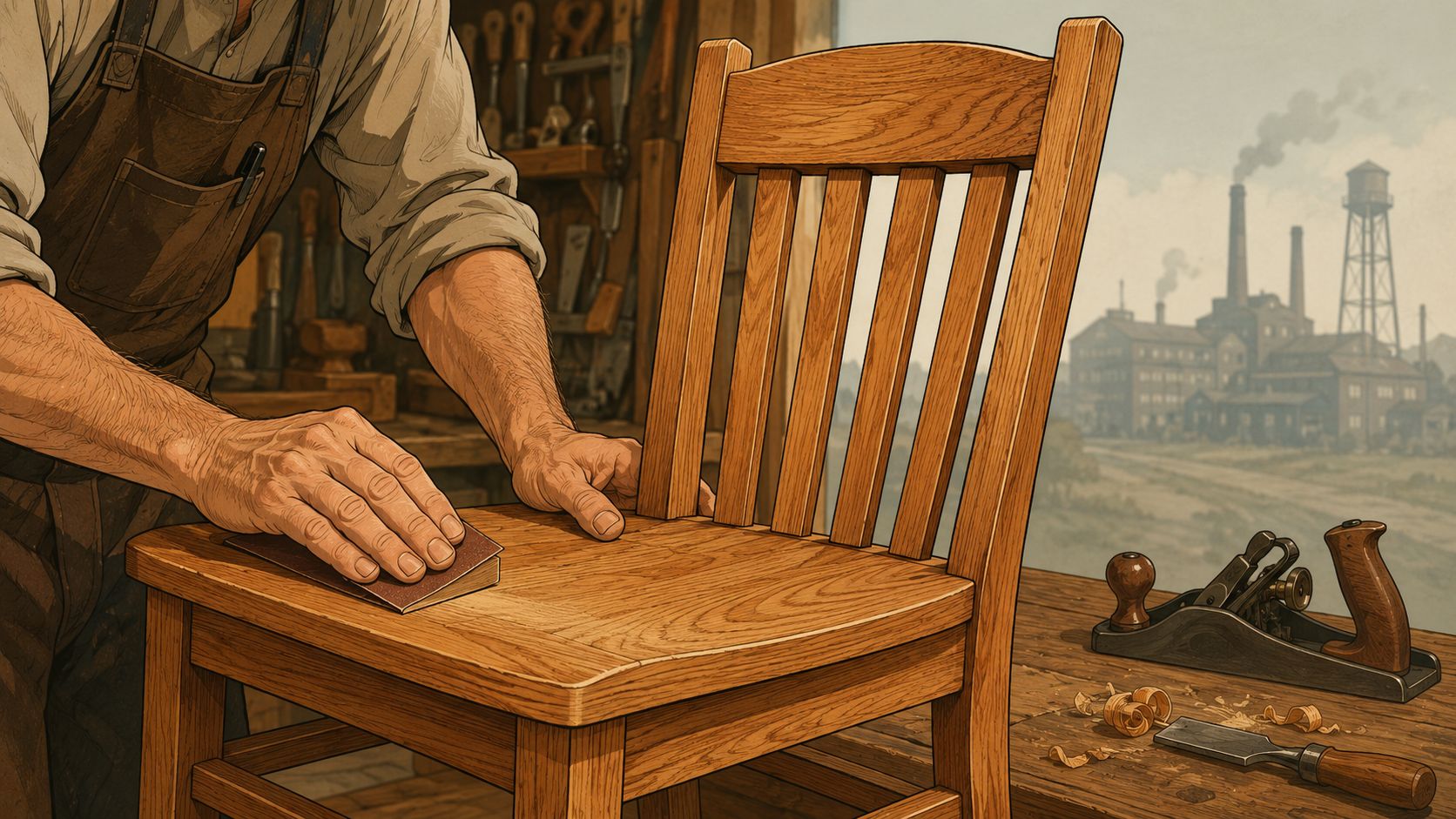
For shoppers comparing frame materials and construction, this collection of Amish solid wood furniture offers a useful benchmark for what hand-crafted, made-to-order case goods and dining pieces look like in practice.
What solid wood changes
There's a real difference between a chair built from solid North American hardwood and one built to hit a lower threshold of convenience. Solid cherry, oak, and maple bring density, repairability, and visual depth that veneer-heavy construction often can't match. The wood feels substantial in the hand. It also tends to age with more character.
That matters for cost-per-year. A chair that can be tightened, maintained, and kept in service is a different investment from one that's replaced when the structure starts to give way. The sustainable choice often aligns with the durable one.
For households planning a move, renovation, or temporary transition, protecting that investment matters too. Good pieces deserve good handling, and these affordable furniture storage tips are useful for preserving wood, upholstery, and finishes during in-between periods.
The joinery behind long life
Joinery is where a serious dining chair separates itself from a short-lived one. According to this explanation of Amish furniture joinery, Amish furniture builders use mortise-and-tenon joints for structural frames, creating interlocking connections that significantly outperform mass-produced alternatives in structural integrity and longevity, helping furniture last for generations.
That single detail explains a lot of what shoppers feel when they test chairs side by side. Better joinery resists the twisting motion known as racking. The chair feels planted instead of loose. It keeps its shape under everyday movement, not just under static display conditions.
A quality frame often includes these advantages:
- Solid wood members: Better resistance to daily wear and humidity changes.
- Traditional joinery: Stronger connection points than quick-assembly construction.
- Long-term stability: Less wobble, less shifting, better structural confidence.
- Repair potential: Better-built chairs are often maintainable rather than disposable.
A wobbly chair usually doesn't become a stable one with age. Construction quality shows itself early.
Upholstery and surfaces that age well
Materials above the frame matter just as much. The Aosom dining chair guide notes that durable upholstery options include leather, imitation leather, Ultrasuede, cotton blends, and commercial fabrics, while heavy-nap fabrics such as velvet or chenille tend to show wear more quickly. That same guide also notes that premium chairs often use high-density polyurethane foam rated 1.8 to 2.5 lb/ft³, and that standard dining chairs are typically engineered to support 250 to 300 pounds per seat, while heavier-duty metal models can support up to 500 pounds in some cases, according to this material and durability overview.
For everyday family life, practical upholstery usually wins:
- Top-grain leather: Smooth hand, easier wipe-down, rich aging over time.
- Performance-oriented fabric blends: Better resilience against repeated use.
- Textured but low-maintenance weaves: More forgiving than delicate nap surfaces.
- Thoughtful chair weight: Easy enough to move, substantial enough to feel grounded.
This is also where hand-crafted dining becomes personal. Buyers may want a warm stain on solid maple, a darker finish on oak, or an upholstered seat that softens the feel of a wood table. Tyner Furniture is one local option in Ann Arbor for shoppers who want to compare those choices in person, including bespoke dining configurations and hand-crafted solid wood pieces that emphasize material integrity over short-term trends.
Your Guide to a Lifetime of Gatherings
The strongest dining chair decisions usually come from a simple sequence. First, measure carefully. Then judge comfort with real attention. Finally, invest in materials and construction that can carry the room for years instead of just finishing it for now.
That's the practical answer to how to choose dining chairs for lasting value. The chair has to fit the table, support the body, and justify its place through cost-per-year. When those three line up, the purchase feels less like décor and more like infrastructure for daily life.
For households across Ann Arbor and Southeast Michigan, that long-view approach can make a higher-quality purchase feel more manageable. Special Financing and a Low Price Promise help lower the barrier to entry on pieces that are built for longer service, whether the project is a dining room refresh or a broader home plan that stretches from the Home Office to Outdoor Spaces.
Cleanability and upkeep matter after the purchase too. Dining spaces often share visual territory with wool rugs and other soft surfaces, so resources on care can be helpful. For example, families maintaining layered dining rooms may find this guide to Chicago professional rug cleaning useful when planning long-term upkeep for surrounding textiles.
The best next step is a real sit test. The hand on the chair back, the feel of the seat cushion, the soundness of the frame, and the visual harmony beside the table tell the story far better than a spec sheet alone. Still, the spec sheet matters too, especially for special orders and made-to-order planning.
Visit Tyner Furniture in the Ann Arbor South State St. showroom for a proper sit test, material comparison, and design guidance, or browse the online Quick Specs for special orders if a bespoke dining chair, custom finish, or made-to-order configuration is the better fit for the home.