
Patio Furniture Care: A Seasonal Guide for Michigan Homes


A frozen cushion in early April tells a familiar story in Southeast Michigan. A homeowner pulls it off a chair, finds a damp smell underneath, and realizes the set spent all winter sealed in moisture instead of breathing through it. Around Ann Arbor, that's usually how patio furniture care starts, not with a deep cleaning day, but with a small warning sign that the furniture was protected the wrong way.
That matters here more than in milder places. Freeze-thaw swings, lake-effect moisture, humid summers, and condensation under covers all work on outdoor pieces differently, and they punish hidden joints, cushions, and finishes long before the damage looks serious. Since 88% of homeowners own outdoor products and two-thirds reported damage to at least one of them in the prior year, the habit of cleaning, covering, and storing outdoor pieces is clearly part of the cost of ownership, not an optional extra. (2022 survey on outdoor-living damage)
For a homeowner comparing options on a porch, deck, or patio, the question isn't whether the furniture can handle one sunny weekend. It's whether the set can survive repeated seasons of dampness, thawing, drying, and being used hard by family and guests. That's why local buyers in Ann Arbor, Southeast Michigan, and the South State St. showroom often think in cost-per-year, not just upfront price, especially when they're choosing outdoor pieces that need to last. Tyner's broader outdoor living selection sits alongside home office, dining, and bedroom furnishings, so the same value-and-longevity mindset carries across the house and the patio. The full assortment is easy to browse through the outdoor living page, and planning layouts in advance can also be helped by an ai patio design generator when someone wants a quick visual before buying.
Why Michigan Patios Need a Different Kind of Care
By the time a Southeast Michigan homeowner drags cushions back onto a chair in early April, the damage is often already hidden. A set that looked fine in October may have spent months collecting moisture under a cover, then freezing, thawing, and re-freezing around seams, bolts, and fabric edges. That cycle is rough on finishes and hardware, and it's why a generic “just clean it in spring” approach falls short here.
The weather pattern does the real work
Michigan patios see more than rain. They get condensation under covers, wet snow, icy mornings, warm afternoons, and abrupt temperature swings that push materials to expand and contract. On wood, that can mean swelling and dull finish breakdown. On metal, it can mean rust starting where water sits in a joint or under a cap. On cushions, it means damp fabric that doesn't fully dry before the next cold snap.
A practical regional habit is to think in terms of exposure, not calendar dates. If furniture sits on a concrete slab that stays cold and damp, the underside needs attention. If a cover traps moisture, it can do more harm than a brief stretch of uncovered dry weather. Breathable protection, airflow, and dry storage often beat the illusion of a tight seal.
Practical rule: In this climate, the goal is not to keep every drop of water away. The goal is to keep water from lingering where it can't escape.
Why the showroom mindset matters
Local shoppers often ask for furniture that looks good now and still feels solid after several seasons. That's where customization matters, because in-stock is just the beginning. For many households, the right finishes, fabrics, and configurations make care easier, especially when upholstery, frame material, and storage needs all have to fit the same space. The best setups aren't always the fanciest ones. They're the ones that match the way the family uses the patio.
A neighborly, informed care plan also reduces regret later. A chair that can dry quickly, a table that resists trapped moisture, and cushions that can be brought in without wrestling all save time every season. That same value-first thinking is why many homeowners want to see and feel pieces in person before they commit, especially when the furniture has to live through real weather, not showroom weather.
A local habit that pays off
When the first warm week arrives, inspect the furniture before the first cookout, not after.
That simple habit catches loosened hardware, faded finish, and damp storage problems while they're still manageable. It also fits the rhythm of an Ann Arbor yard, where spring can feel real one afternoon and vanish the next morning. For households that want outdoor pieces to last, local care always starts with local weather.
Matching Care Effort to Your Furniture Material
Not every patio set ages the same way, and the cleaning method that helps one material can hurt another. A soft wash that keeps a powder-coated frame looking fresh can leave a wood surface thirsty if it's overdone, while a wood-safe cleaner can be too aggressive for delicate woven surfaces. Buyers who think about long-term maintenance instead of just the first season usually make calmer decisions and keep their furniture longer.
Material by material, the maintenance picture changes
Teak and other hardwoods reward attention. They can be repaired, refinished, and kept handsome for years, but they expect seasonal care. Wrought iron brings strong presence and classic weight, yet it asks for rust checks and quick touch-ups when finish scratches appear. Extruded aluminum is easier to live with because it stays lighter and doesn't rust the way iron does, though its finish still needs protection from grit, chips, and pooled water. All-weather wicker usually sits somewhere in the middle, with a forgiving look but a weave that needs gentle cleaning. Upholstered cushions add comfort and polish, but they also add the most fabric care and drying discipline.
The right choice depends on how a family uses the patio. A quiet side porch with a few chairs can handle a more delicate routine. A busy deck with kids, guests, and late-season meals needs furniture that tolerates quicker wipe-downs and less fuss. Shoppers who want a softer outdoor feel can compare cushion-forward options through the outdoor upholstered furniture page, then match that choice to how much upkeep feels realistic.
Material Maintenance Comparison
| Material | Routine Effort | Biggest Risk | Typical Lifespan with Care |
|---|---|---|---|
| Teak and other hardwoods | Moderate to high | Finish breakdown and weathering | 7 to 10 years, often longer with steady care |
| Wrought iron | Moderate | Rust at scratches and joints | 7 to 10 years, sometimes more with quick repairs |
| Extruded aluminum | Low to moderate | Finish wear and trapped moisture | 7 to 10 years with regular cleaning |
| All-weather wicker | Moderate | Dirt in the weave and fiber wear | 7 to 10 years if cleaned gently |
| Upholstered cushions | Moderate to high | Mildew, compression, and slow drying | 7 to 10 years when fully dried and stored well |
Care trade-off: The easiest material to clean isn't always the easiest to own. The best long-term choice is the one that matches the household's routine, not the one that only looks easiest in the catalog.
The value question behind the material choice
Wood often wins on warmth and repairability. Metal often wins on simple wiping and structure. Wicker often wins on comfort and texture. Cushions win on sitting comfort, but they also demand the most follow-through once humidity and evening moisture arrive. That's why material choice should be treated as part of the home's interior design language, not just a patio purchase. The right surface can lower maintenance stress every season.
Cleaning Routines That Actually Work on Each Material
The safest cleaning routine starts with restraint. Strong chemicals, abrasive pads, and pressure washing solve the wrong problem by removing finish along with dirt. The better habit is to match the cleaner, brush, and drying time to the material itself, then repeat the process often enough that buildup never gets a chance to set in.
Wood needs a gentle hand
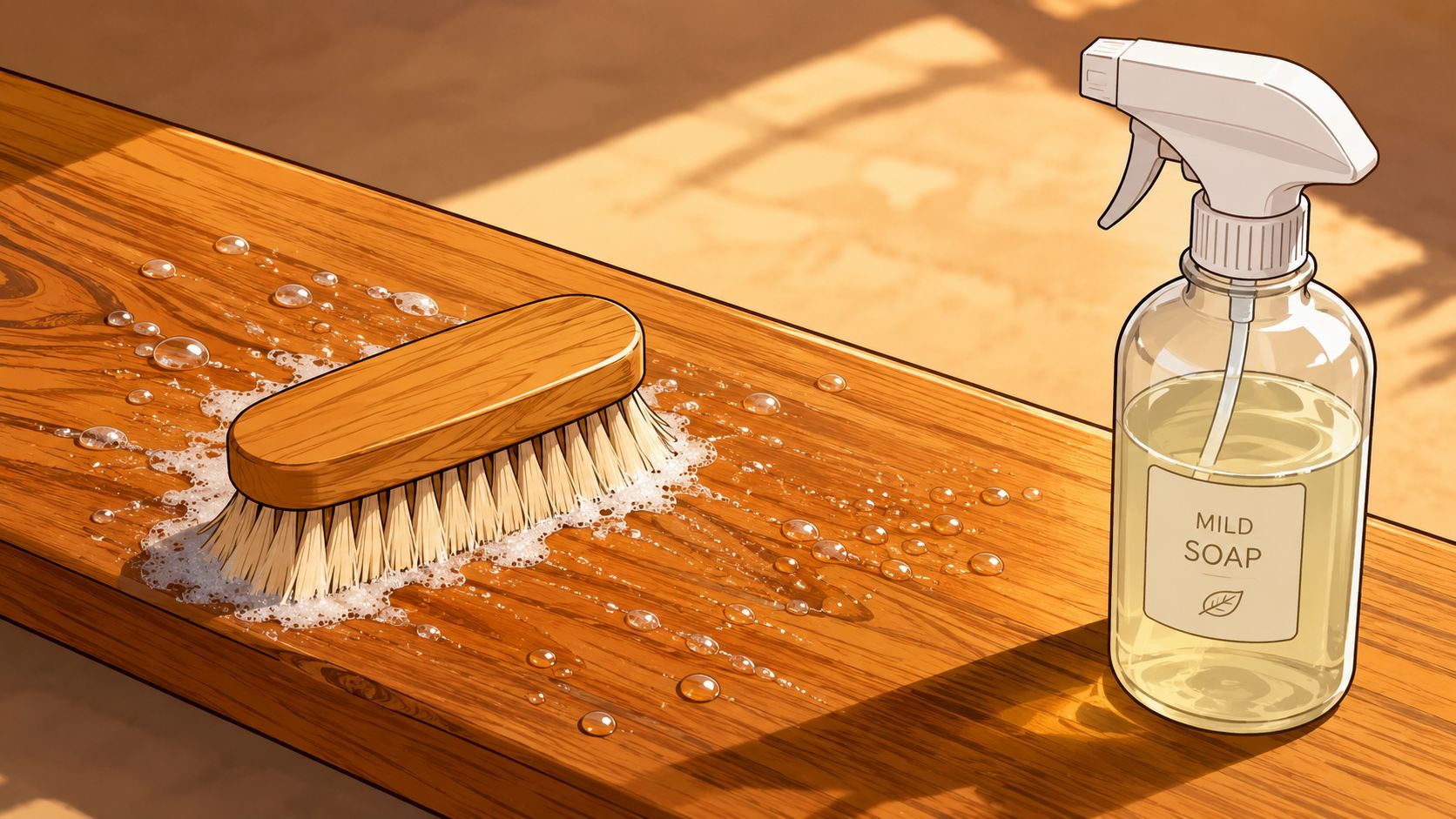
For wood patio furniture, the sequence is simple and disciplined. Remove loose debris with a soft brush, wash with a mild soap solution made from 1 tablespoon of dish soap per gallon of water, scrub gently with a soft-bristle brush, rinse thoroughly, and let the piece air-dry completely before sealing or staining. For deeper seasonal cleaning, an oxygen bleach solution works for most wood species, while oxalic acid is the better fit for redwood. That deeper cleaning should happen in shade, and the solution should foam for 15 to 20 minutes before scrubbing and rinsing. Working too hot or letting cleaner dry too quickly can leave uneven results or residue.
Showroom-floor wisdom: If the wood still feels cool and damp under the hand, it isn't ready for finish work yet.
For homeowners who want a deeper care routine for hardwood pieces, the teak furniture care guide is the most useful place to start. Light sanding belongs only where needed, not as a blanket habit.
Metal needs drying discipline
Metal patio furniture responds well to mild soap and water, but the key step is drying. A soft damp cloth, mild soap, and a clean towel are enough for routine maintenance. If rust shows up, the right move is to sand the spot lightly and apply a rust-resistant sealant or paint, not to keep wiping over the same area and hoping it disappears. A dry, covered storage spot or a waterproof cover also helps keep moisture from sitting on the frame after rain.
Wicker and cushions need patience
All-weather wicker should be rinsed gently, not blasted clean. Dirt likes to lodge in the weave, so a soft brush and careful rinse usually do more than harsh scrubbing. Upholstered cushions need deeper care on a schedule. They should be deep-cleaned quarterly, covers washed every few months if removable, and everything dried completely before stacking or storage. Mildew doesn't need much room to start, especially when damp fabric sits under a closed cover.
Pro-Tips for a Saturday routine
Pro-Tip: Inspect the hidden underside first. Corrosion and mildew usually start where the eye skips.
- Wood: Clean in shade and let it dry fully before any sealing.
- Metal: Dry every joint and leg cap before the set goes back in place.
- Wicker: Use a soft brush for the weave, not a stiff scrub pad.
- Cushions: Stand them on edge if they get wet so air can reach both sides.
For general refreshes, the same disciplined routine works season after season, and it's the kind of care that keeps a set looking intentional instead of tired. That's especially important for homeowners who want the outdoor space to feel like part of the house, not an afterthought.
Seasonal Prep Through the Michigan Calendar
Patio furniture care works best as a rhythm. Spring wake-up, summer checks, fall prep, and winter storage each ask for a different kind of attention, and the timing should follow the weather, not a rigid date on the calendar. In Southeast Michigan, the first warm day can fool people into overcommitting too soon, and the first cold snap can punish anything left exposed too long.
Spring wake-up and summer upkeep
When the snow has left and the ground stops feeling soggy underfoot, the furniture can come out for inspection. Check seams, underside rails, hardware, and any place where water could have pooled under a cover. If the piece has sat closed up all winter, let it dry before cushions go back on. A quick weekly wipe through the warm months keeps pollen, sap, and soil from building into a sticky layer that takes more effort later.
A seasonal habit that helps is to set one day for bolts, screws, and moving parts. Industry guidance recommends tightening hardware once per season, and that's smart because loose connections often start as a tiny rattle and turn into a wobble by midseason. The same source also recommends wiping surfaces weekly, inspecting for rust or mildew monthly, deep-cleaning cushions quarterly, washing removable covers every 2 to 3 months, applying wood sealant or oil 1 to 2 times per year, and lubricating moving metal parts with silicone spray every 3 to 6 months. Those intervals catch the failure points before they spread. (Patio furniture cleaning and care guide)
Fall prep and winter storage
Fall is when the furniture either gets protected properly or starts next year with a problem. Dry every surface before storage, because moisture trapped under a cover grows into mildew and stale odors quickly. For homeowners with screened porches, the guide from Sparkle Tech Screen Service offers a useful parallel on preparing an enclosed outdoor space for the cold months.
Dry first, cover second, store third. Reverse that order, and the cover becomes part of the problem.
The fall furniture maintenance checklist is a practical reminder to look for loose hardware, worn finish, and cushion issues before the freeze arrives. Once temperatures start dropping for good, winter storage becomes less about convenience and more about preserving the set's next season.
A short seasonal checklist
- Spring: Inspect hidden joints, clean grime, and check for winter damage.
- Summer: Wipe weekly, dry after storms, and keep fabric from staying damp.
- Fall: Deep-clean, fix small problems, and store only after full drying.
- Winter: Use breathable covers or indoor storage, with airflow underneath.
The families who keep a patio set longest usually aren't the ones doing dramatic repairs. They're the ones doing small, regular work at the right moment.
Covers, Storage, and the Moisture Trap Problem
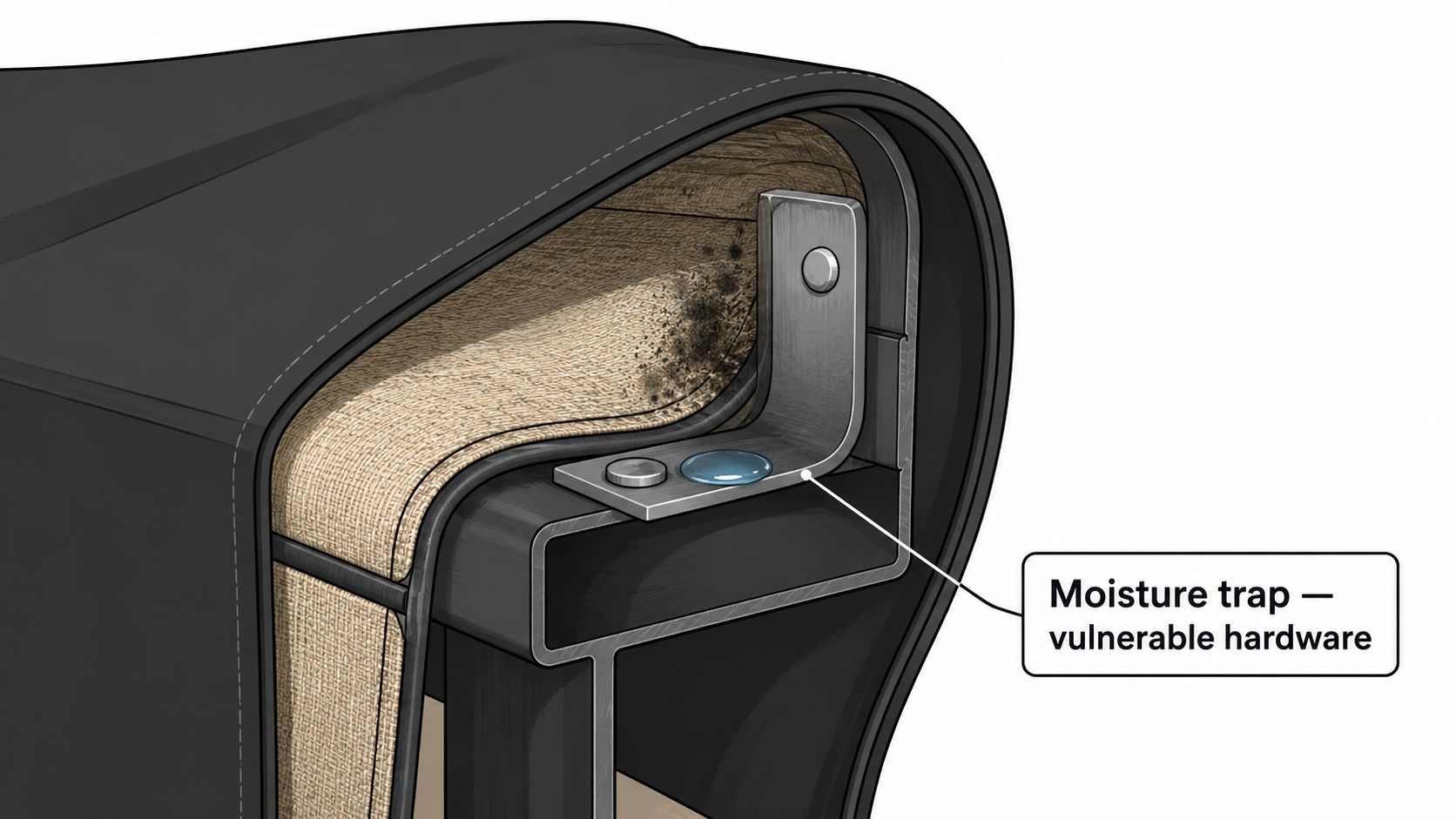
The biggest mistake in Great Lakes patio care is treating a cover like a cure-all. A cheap cover can keep off leaves and sun, but if it traps damp air, it creates a sheltered pocket where mildew and rust can do their work. That's especially true in a region where temperatures swing enough to create condensation under the fabric and then lock it in again overnight.
Breathable covers beat sealed traps
Breathable fabric outperforms vinyl in freeze-thaw weather because it gives moisture a way to escape. Vinyl can look tidier at first, but if water gets underneath, it tends to stay there longer. Furniture should also be lifted off concrete or another cold, flat surface when possible, because airflow under the base helps the underside dry instead of staying damp against the slab.
A dry garage, basement, or storage room is worth the effort when cushions and frames are expected to sit unused for a long stretch. For households that need a separate holding place for seasonal pieces, furniture self storage is the kind of option people explore when the patio set is too valuable to leave exposed and too bulky to tuck anywhere else. The point isn't to overcomplicate storage. It's to give the furniture a dry, stable place to wait out the weather.
What to check after snow melts
The hidden damage usually shows up in the corners people forget to look at. Undersides, leg caps, bolt heads, and joints often reveal the first signs of trouble. White residue, dark spots on fabric, rough patches on metal, or a faint smell inside cushions all deserve attention before the piece goes back into full use. Small issues are easier to solve in May than after another humid month has passed.
A cover that stays wet for days is not protecting the furniture, it's helping the wrong kind of growth.
When storage beats covering
Not every piece has to come indoors every year. A covered deck with good airflow can work for sturdier frames if the cover is breathable and the furniture is fully dry. But cushions, loose pillows, and smaller accent pieces usually do better inside, where they won't collect condensation. The more upholstered the piece, the more valuable indoor storage becomes.
Stain Repair and Damage Restoration
Even careful owners eventually face a wine spill, a rust bloom, or a cloudy ring on a tabletop. The smartest response is calm, not aggressive. A small repair done early often keeps a piece in service for many more seasons, while a rushed fix can make a surface worse than the original problem.
Know what can be repaired at home
Wood weathering often responds to cleaning, light sanding, and refinishing if the damage hasn't gone deep. A scratched powder-coated frame can sometimes be touched up before corrosion spreads. Cushions with surface stains are usually manageable if the fabric is cleaned quickly and dried completely. The issue is timing. Once moisture or corrosion has settled into a seam, the repair takes more work and patience.
For heirloom-quality pieces, maintenance is part of the value. A well-made set that gets regular cleaning and light restoration can make more sense than replacing a whole arrangement every few years, especially when the frame, joinery, and finish are built to be repaired rather than discarded. That's the cost-per-year logic behind stronger construction. A family that protects a quality set is spending time to protect durability, craftsmanship, and appearance all at once.
Repair rule: If the damage is only on the surface, it belongs in the repair bucket. If it has reached the structure, it deserves a closer look.
When a professional makes more sense
Deep rust, warped wood, torn seams, and widespread mildew usually move beyond a simple weekend project. A homeowner can spot the problem early, but a full restoration may need a professional touch to avoid making the issue larger. That's especially true when the finish is custom or the furniture has mixed materials that respond differently to cleaning.
The strongest outdoor purchases are the ones built for repair. Solid frames, replaceable cushions, and quality finishes turn maintenance into stewardship instead of disposal. For families comparing an heirloom approach to a short-lived alternative, that difference matters more than any single season.
Your Annual Patio Furniture Care Schedule
A good annual routine keeps outdoor furniture from becoming a springtime rescue project. Weekly wiping, monthly inspection, seasonal tightening, and fall drying sound simple because they are, but that simplicity is what protects the set over time. The furniture doesn't need constant fuss. It needs consistent attention at the right moments.
For many Ann Arbor households, that mindset matches the rest of the home. They want bespoke finishes, ergonomic comfort, and hand-crafted or made-to-order pieces that last. They also want a local legacy they can trust, especially from a business serving Southeast Michigan since 1957. Tyner Furniture's broader selection covers everything from the Home Office to Outdoor Spaces, and that continuity matters when families are building rooms and patios that need to work together for years.
A simple annual rhythm
- Weekly: Wipe surfaces and keep debris from settling.
- Monthly: Check for rust, mildew, loose hardware, and trapped moisture.
- Each season: Tighten bolts, inspect undersides, and dry everything fully.
- Yearly: Refinish wood if needed, review cushions, and replace worn covers.
That schedule protects the cost-per-year value of a set far better than occasional scrubbing. It also supports the kind of sustainable buying decision that favors repair, longevity, and good materials over repeated replacement. Families who want to feel the difference between surfaces, cushion fills, and frame weight can do that in the South State St. showroom, where the buttery feel of top-grain leather inside the store and the weight of solid wood in hand both make quality easier to judge.
If the next outdoor upgrade needs to be easier to live with, not just easier to buy, a visit to Tyner Furniture is the right next step. The showroom team can help match materials, finishes, and custom options to the way the patio gets used, then point shoppers toward a care routine that keeps the investment looking good season after season.